
ITL-5e5aea0fad8c
Watch the video

Figure 1. Medication timing, dietary preparation, and the anesthetic plan belong in the same conversation. Conceptual illustration.
Key points
- Holding a dose is not a certificate of an empty stomach; neither is the absence of gastrointestinal symptoms.
- GLP-1 receptor agonist use is associated with more residual gastric contents. An increase in clinical pulmonary aspiration has not been established by the pooled observational evidence.
- The 2026 OCULUS trial found less clinically significant gastric residue after holding one dose before upper endoscopy, but it did not demonstrate fewer aspiration events.
- Current guidance generally favors individualized continuation with risk mitigation; recommendations for dietary preparation differ.
- If retained contents remain a concern, use a competent gastric ultrasound assessment when available and decide explicitly between postponement and an appropriate airway-protection strategy.
A patient reports, “I skipped last week's semaglutide, so I should be safe.” Another has continued treatment but followed a prescribed clear-fluid diet. Neither answer, by itself, settles the anesthetic decision. The task is to assess the stomach and the consequences of proceeding—not merely count days since the last injection.
The review by Li and colleagues emphasizes this individualized approach, incorporating medication characteristics, comorbidity, procedure, and gastric ultrasound where useful. Newer studies sharpen the distinction between gastric residue and actual aspiration.[1]
Residual contents and aspiration are different outcomes
Elkin and colleagues pooled observational evidence separately for these outcomes. GLP-1 exposure was associated with increased residual gastric contents despite fasting: odds ratio 5.96 (95% CI, 3.96–8.98). For pulmonary aspiration, the pooled odds ratio was 1.04 (95% CI, 0.87–1.25), based on nine studies and 185,414 patients. Both estimates were judged low-certainty evidence.[2]
This is useful reassurance, but it is not proof of no aspiration hazard. Aspiration is uncommon, the studies were observational, and clinical precautions may influence what happens after a full stomach is recognized. Conversely, seeing residue does not mean aspiration will occur. The two endpoints should not be substituted for one another when counselling patients or setting policy.
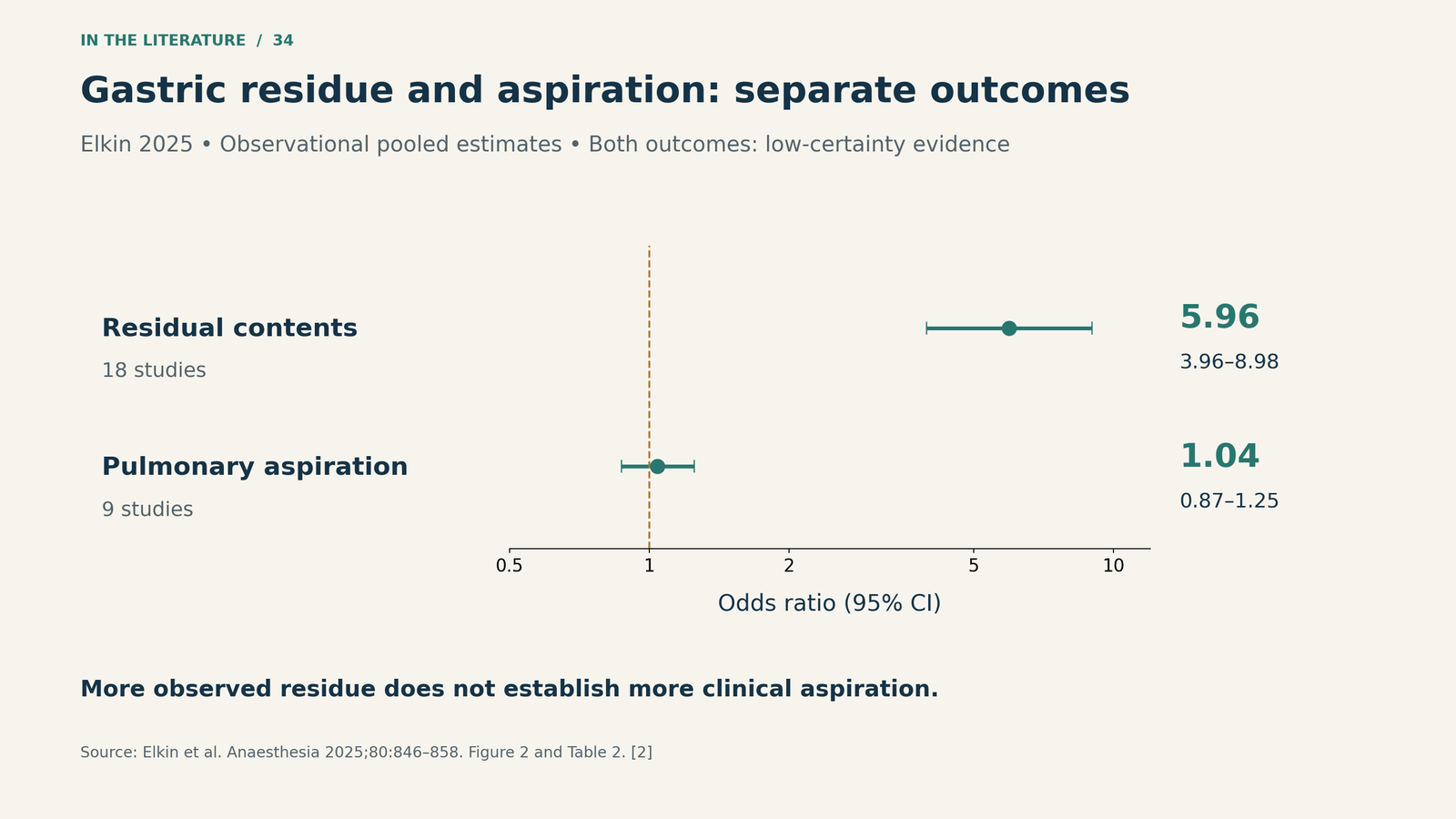
Figure 2. Different outcomes, different pooled estimates. Odds ratios compare GLP-1 users with nonusers; horizontal lines show 95% confidence intervals. These are not absolute event rates or results of a randomized comparison.[2]

What does the randomized trial change?
OCULUS studied adults on a stable GLP-1 or GLP-1/GIP dose undergoing upper endoscopy with moderate sedation or monitored anesthesia care. Planned general anesthesia and documented gastroparesis were excluded. Participants held one dose—7–13 medication-free days for weekly formulations, at least one day for daily formulations—or continued treatment.[3]
At the prespecified interim analysis, 60 patients were analyzed after eight postrandomization exclusions. Clinically significant residue occurred in 7/28 continuing treatment (25.0%) versus 1/32 holding treatment (3.1%); the trial stopped early. Every qualifying event was residue that prevented adequate examination. There were no aspiration events. This supports a reduction in this endoscopic endpoint, not proof that holding prevents aspiration during surgery.[3]
All events occurred in the upper-endoscopy-only subgroup. None occurred among the 25 patients also having colonoscopy, who had clear liquids and bowel preparation. Diet was not randomized, so this does not prove that clear liquids alone eliminate risk. Also, patients with qualifying residue had no upper gastrointestinal symptoms that day; an asymptomatic interview cannot establish an empty stomach.[3]
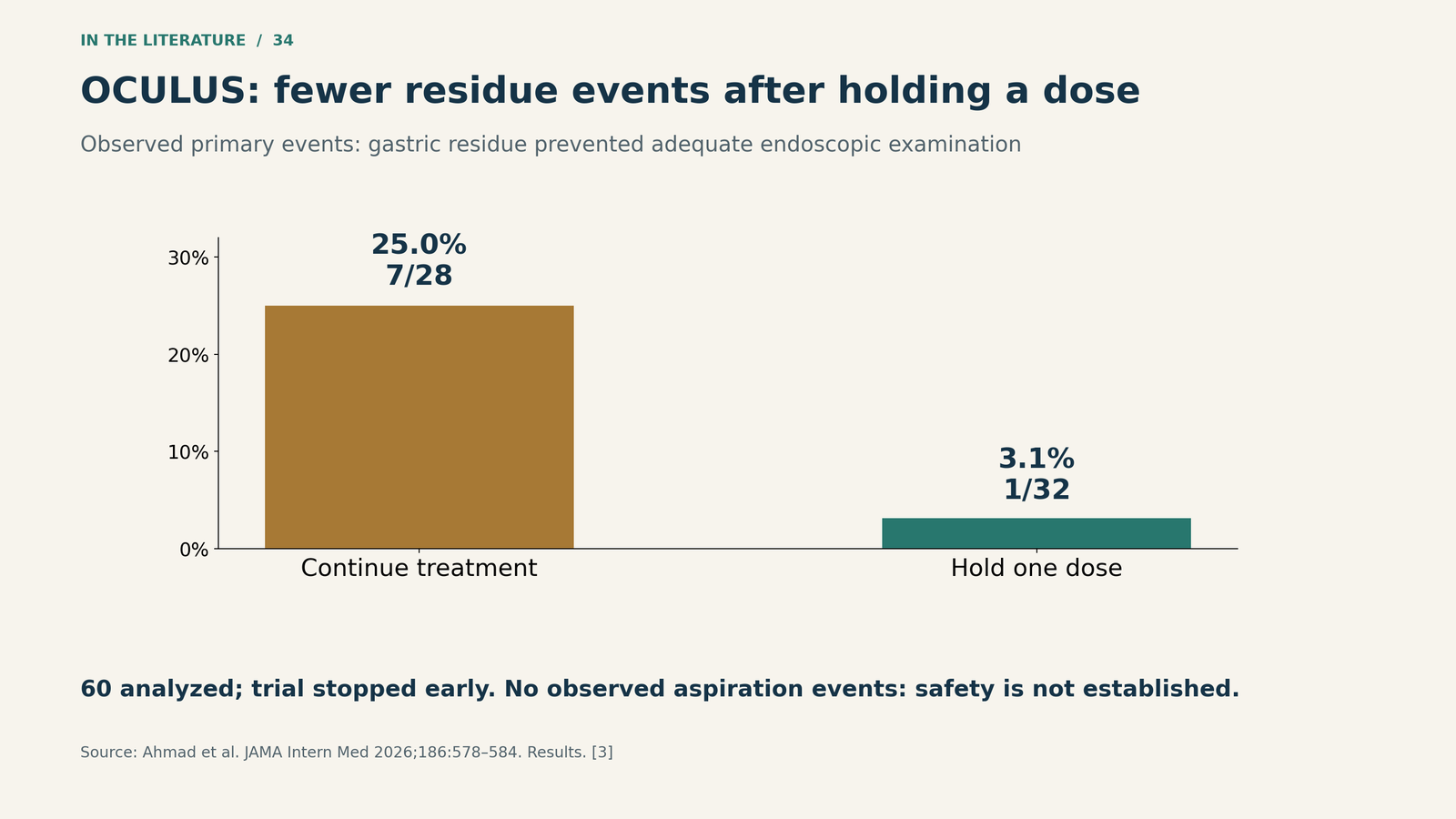
Figure 3. The observed OCULUS primary-outcome events all prevented adequate endoscopic examination. The result should not be presented as an aspiration risk reduction.[3]

Why do instructions still differ?
The 2024 US multisociety guidance permits continuation in patients without elevated risk. It highlights dose escalation, higher doses, gastrointestinal symptoms, and other disorders that delay emptying. For patients with concern about delayed emptying, it allows a liquid diet for at least 24 hours and consideration of gastric ultrasound or an altered anesthetic plan. If withholding is chosen, the ideal interval remains unknown; its suggested daily/weekly intervals are not guarantees of gastric clearance.[4]
SPAQI's 2025 consensus takes a broader dietary approach: continue treatment in patients without significant symptoms, but withhold solids for 24 hours, allowing only clear liquids during that preparation period. It also specifies longer fasting intervals for clear liquids according to carbohydrate content.[5] The ANZCA guidance likewise recommends continuation and a preceding clear-fluid diet, but its current FAQ specifies water only from six hours before induction and nothing by mouth during the final two hours.[6]
The practical lesson is to give one coherent institutional instruction sheet. “Liquid diet” must identify permitted drinks and their stopping times; it should not be interpreted as permission to drink until induction or as 24 hours with nothing by mouth. Coordinate diabetes treatment and glucose monitoring when intake or medication changes.[4, 5, 6]
Make the day-of-procedure decision explicit
First, confirm the actual drug, dose, recent escalation, last administration, symptoms, dietary adherence, and other causes of delayed emptying. Persistent vomiting or inability to tolerate intake calls for evaluation and coordination with the prescriber before elective anesthesia. Absence of symptoms does not remove the need to verify preparation.[3, 4, 5]
If concern persists and expertise is available, gastric ultrasound can help assess retained contents. An inconclusive scan does not provide reassurance. When contents are suspected or confirmed, discuss postponement versus proceeding with a suitable protective anesthetic strategy, considering urgency, airway difficulty, and the planned procedure. Rapid sequence induction with tracheal intubation is one option discussed in the multisociety guidance; it is not a universal substitute for judgment.[1, 4]
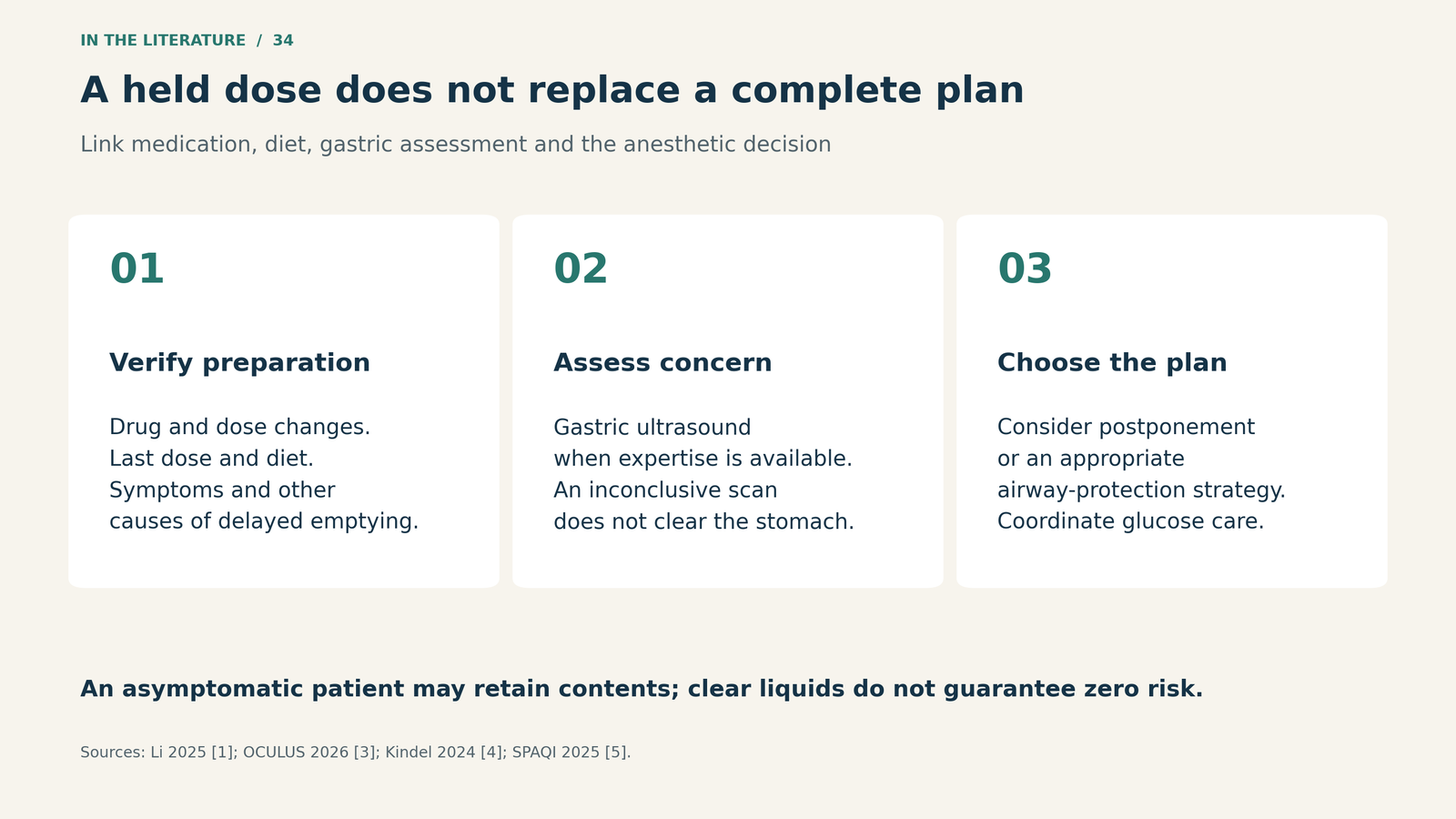
Figure 4. A practical synthesis: verify preparation, assess unresolved concern, then choose the procedural and airway plan. Holding a dose does not replace these steps.[1, 3, 4, 5]

Three takeaways
- Separate residue from aspiration. More gastric content is established more clearly than an increase in clinical aspiration.
- Use the trial for the question it answered. Holding one dose reduced examination-limiting residue in OCULUS; an aspiration-prevention benefit remains unproven.
- Document a complete plan. Medication, diet, glucose management, gastric assessment when indicated, and the airway decision should fit together.
References
- Li J, Mohamed B, Huang S, Peng YG. Aspiration risk and strategic approach for patients receiving GLP-1 receptor agonists undergoing elective surgery. Curr Med Res Opin. 2025;41(4):699–712. doi:10.1080/03007995.2025.2494646.
- Elkin J, Rele S, Sumithran P, Hii M, Thuraisingam S, Spelman T, et al. Association between glucagon-like peptide-1 receptor agonist use and peri-operative pulmonary aspiration: a systematic review and meta-analysis. Anaesthesia. 2025;80(7):846–858. doi:10.1111/anae.16601.
- Ahmad AI, Garg S, Jacobs J, Ansari Z, Jamal Al-Din T, Almomani A, et al. Holding vs continuing GLP-1/GIP agonists before upper endoscopy: the OCULUS randomized clinical trial. JAMA Intern Med. 2026;186(5):578–584. doi:10.1001/jamainternmed.2026.0027.
- Kindel TL, Wang AY, Wadhwa A, Schulman AR, Sharaiha RZ, Kroh M, et al. Multisociety clinical practice guidance for the safe use of glucagon-like peptide-1 receptor agonists in the perioperative period. Surg Obes Relat Dis. 2024;20(12):1183–1186. doi:10.1016/j.soard.2024.08.033.
- Oprea AD, Ostapenko LJ, Sweitzer B, Selzer A, Irizarry-Alvarado JM, Hurtado Andrade MD, et al. Perioperative management of patients taking glucagon-like peptide 1 receptor agonists: Society for Perioperative Assessment and Quality Improvement (SPAQI) multidisciplinary consensus statement. Br J Anaesth. 2025;135(1):48–78. doi:10.1016/j.bja.2025.04.001.
- Australian and New Zealand College of Anaesthetists. GLP-1 receptor agonists: clinical practice recommendations and frequently asked questions. Updated October 22, 2026; accessed November 16, 2026. ANZCA guidance and FAQs.