ITL-9eed124eba8f
Juan Li, MD · Updated November 17, 2026
Watch the video
Key points
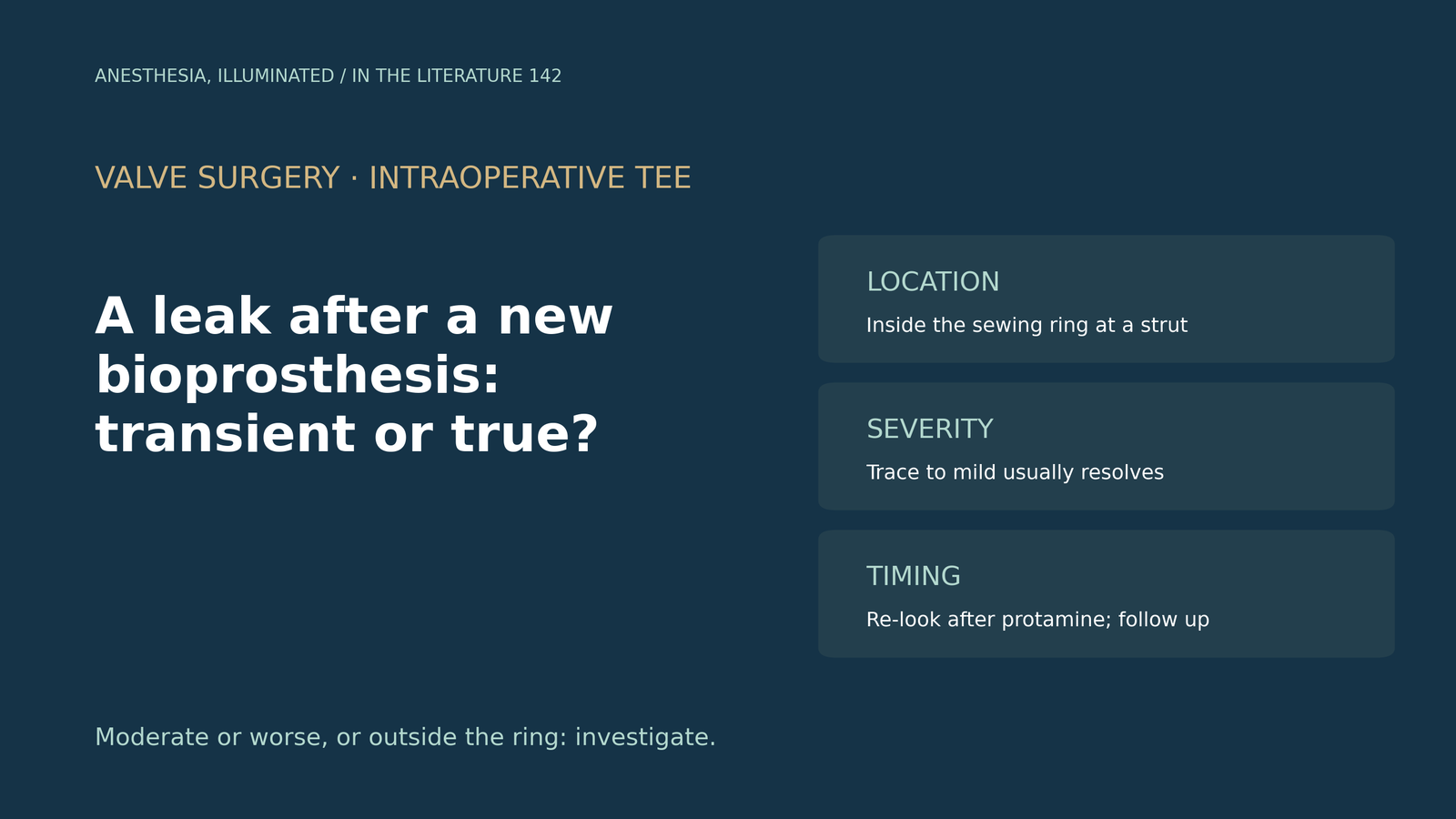
- Small intravalvular jets are common. With one bovine pericardial valve, 69.1% of 81 patients had a strut leak at implantation; only 1 needed a return to bypass, and no leak persisted on follow-up imaging.[1]
- Timing matters. Strut leaks were seen most often immediately after release of the aortic cross-clamp, and the authors recommend watchful waiting after protamine for trace to mild leaks arising from the struts.[1]
- Location and severity separate benign from true leaks. A benign wire-frame leak is unlikely to be more than mild, whereas a moderate or severe jet, even at a stent post, should prompt investigation.[2]
- Paravalvular jets behave differently. Transvalvular leaks are small central jets, whereas paravalvular leaks are high-velocity and turbulent, and a perpendicular jet is not always transvalvular.[3]
- Mild paravalvular leak can still change. In 948 aortic replacements, paravalvular leak occurred in 8.1%; some mild leaks progressed after surgery, so follow-up is needed even when the intraoperative leak is mild or absent.[4]
After aortic valve replacement with a bioprosthesis, TEE before protamine shows a narrow eccentric jet near one of the stent posts. Is this a transient intravalvular leak that will disappear, or a paravalvular leak that needs the valve looked at again?[1], [2]
How common transient leaks are
Berry and colleagues reviewed intraoperative TEE in 81 adults receiving a bovine pericardial valve with a novel frame. Strut leaks, defined as jets arising inside the sewing ring at the struts, were found in 69.1% at implantation, mostly trace or mild. They were seen most often immediately after cross-clamp release; only 1 patient needed a return to bypass, and follow-up transthoracic reports for 50 patients showed no persistent leaks, although transthoracic echo is likely less sensitive than TEE. The authors recommend watchful waiting after protamine and outpatient follow-up imaging for trace to mild strut leaks, but state that severe jets warrant further investigation.[1]
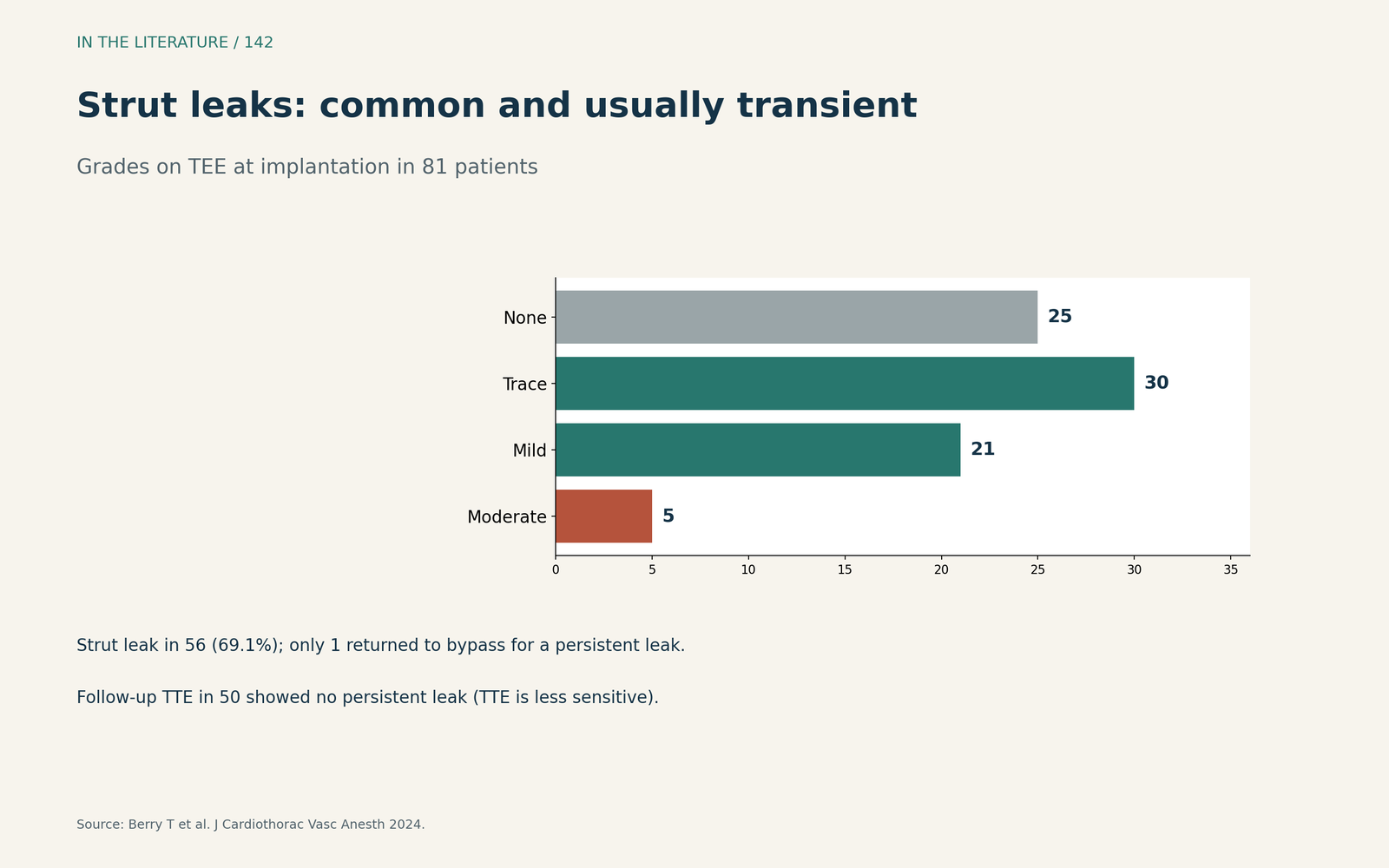
Figure 1. Strut leaks are common and usually resolve. Redrawn from Berry et al.[1] View larger.

Telling a benign leak from a true leak
Vanneman and Dalia describe benign jets located at the stent posts of the same valve type. They frequently resolve spontaneously or disappear after protamine, and are unlikely to be more than mild; a moderate or severe jet, even near a stent post, should prompt further investigation. They also proposed that in the two largest sizes, without laser-etched holes, any jet should be treated as a true paravalvular leak, but Berry and colleagues later observed benign strut leaks in these sizes as well, so this rule is contested.[2], [1]
Iwata and colleagues describe a patient in whom a perpendicular turbulent jet after replacement was not purely transvalvular: paravalvular and transvalvular leaks coexisted. They note that transvalvular leaks are small central jets that often decrease or disappear by the end of surgery, whereas paravalvular leaks are high-velocity and turbulent, and that more-than-moderate regurgitation requires immediate repair.[3]
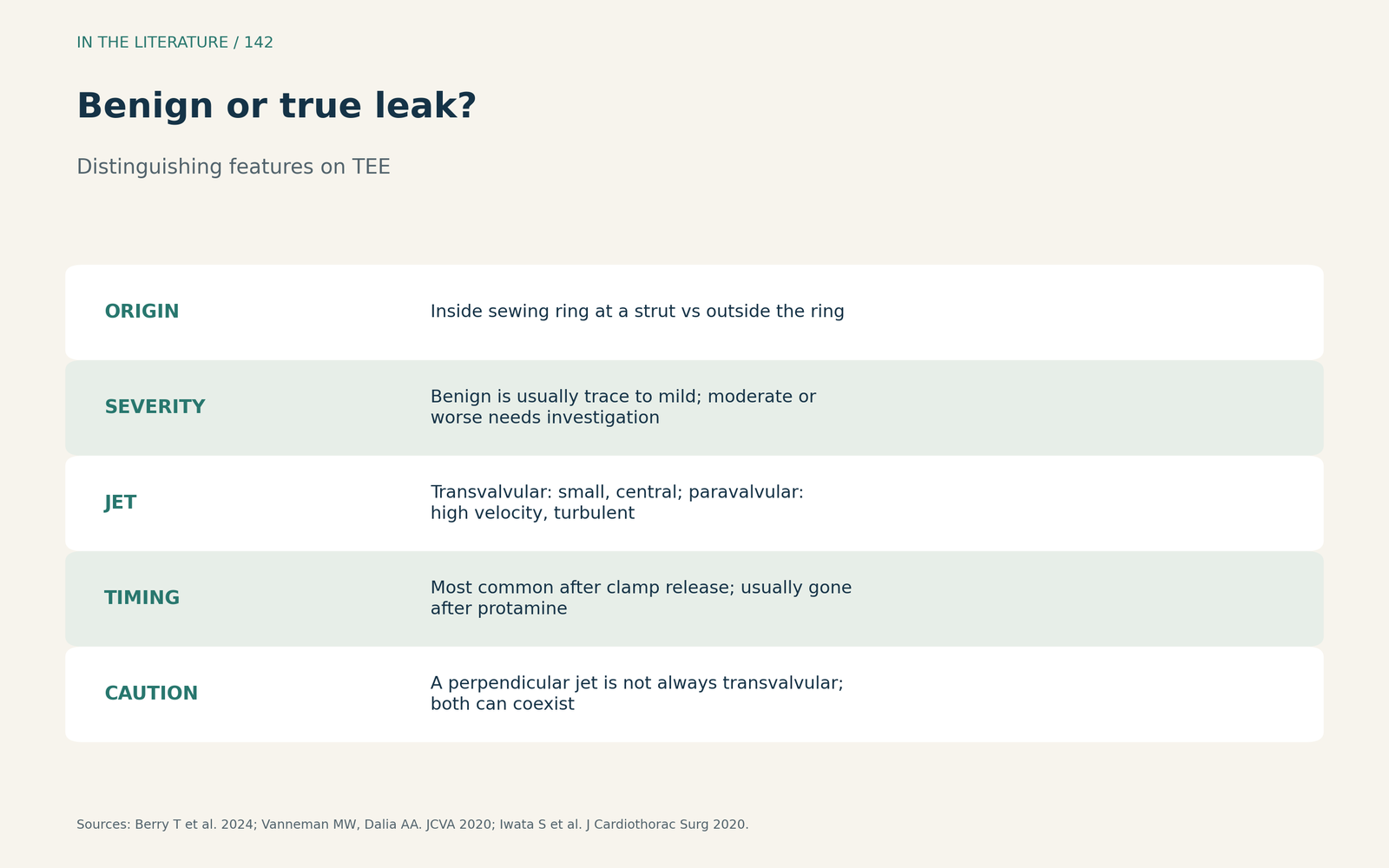
Figure 2. Benign or true leak? Synthesized from Berry et al., Vanneman and Dalia, and Iwata et al.[1], [2], [3] View larger.

Follow-up of paravalvular leaks
Hayashi and colleagues reviewed 948 surgical aortic replacements: paravalvular leak was identified in 8.1%. Some mild intraoperative leaks progressed to moderate after surgery, and some leaks were first seen only postoperatively, so careful monitoring is needed even when the intraoperative leak is mild or absent.[4]
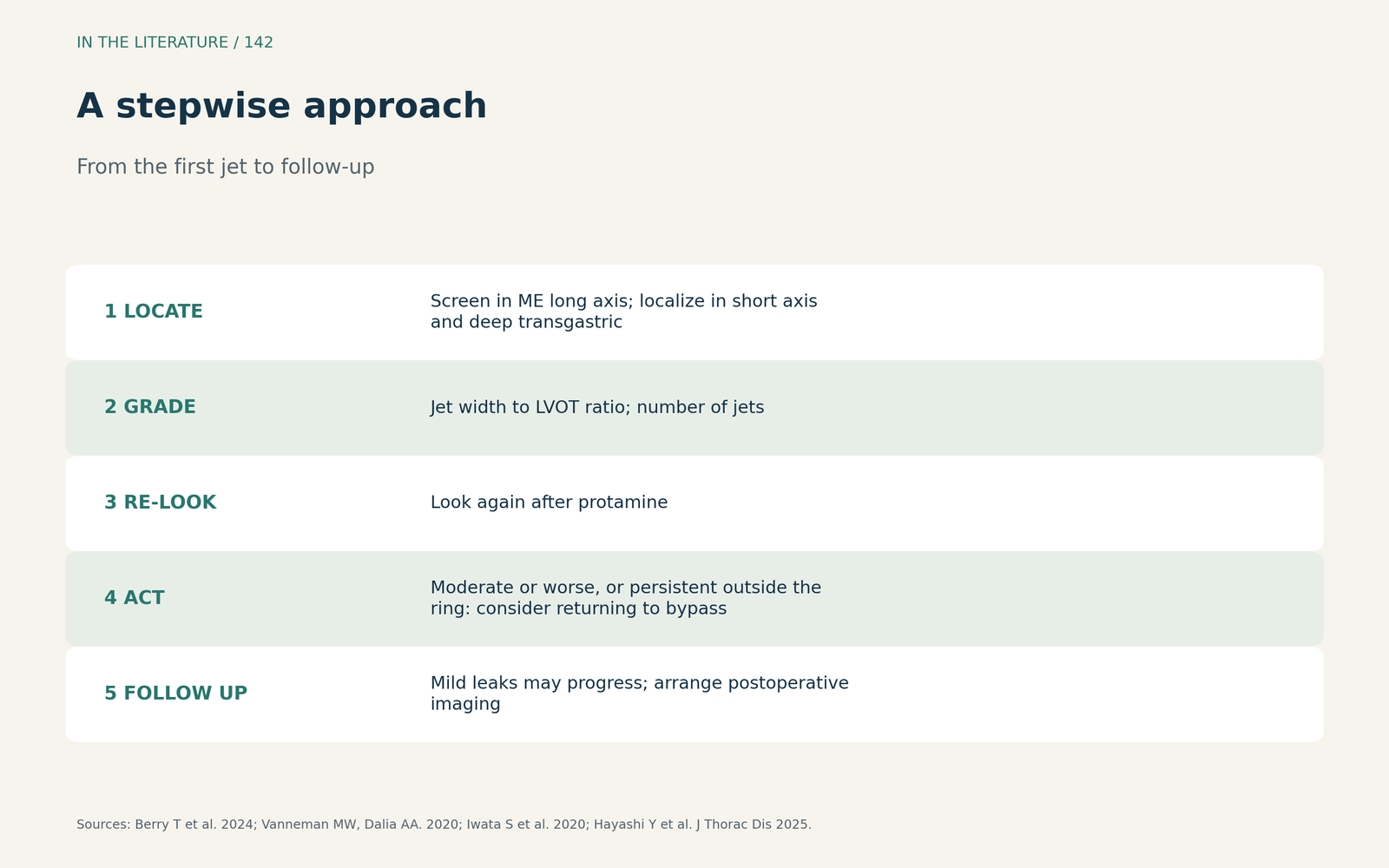
Figure 3. A stepwise approach. Synthesized from Berry et al., Vanneman and Dalia, Iwata et al. and Hayashi et al.[1], [2], [3], [4] View larger.

Three takeaways
- Locate the jet. Inside the sewing ring at a strut suggests a benign leak; outside the ring suggests a paravalvular leak.[1], [3]
- Grade it and re-look after protamine. Trace to mild strut leaks usually resolve; moderate or worse needs action.[1], [2]
- Follow up. Mild leaks can progress, and transthoracic echo may miss small jets.[1], [4]
References
- Berry T, Elnaggar AS, Walker JW. Benign intravalvular strut leak after placement of the Inspiris Resilia valve. J Cardiothorac Vasc Anesth. 2024;38(11):2601–2605. doi:10.1053/j.jvca.2024.07.004
- Vanneman MW, Dalia AA. Perioperative and echocardiographic considerations for the Inspiris Resilia aortic valve: current and future. J Cardiothorac Vasc Anesth. 2020;34(10):2807–2812. doi:10.1053/j.jvca.2020.03.056
- Iwata S, Inano C, Ozaki M. Perpendicular and turbulent flow after aortic valve replacement: paravalvular or transvalvular leakage? A case report. J Cardiothorac Surg. 2020;15(1):19. doi:10.1186/s13019-020-1050-4
- Hayashi Y, Russell JK, Dvorak CJ, et al. Echocardiographic characteristics of paravalvular leak following surgical aortic valve replacement: a retrospective cohort study. J Thorac Dis. 2025;17(3):1249–1258. doi:10.21037/jtd-2024-1989