ITL-8adfedabed9a
Juan Li, MD · Updated November 17, 2026
Watch the video
Key points
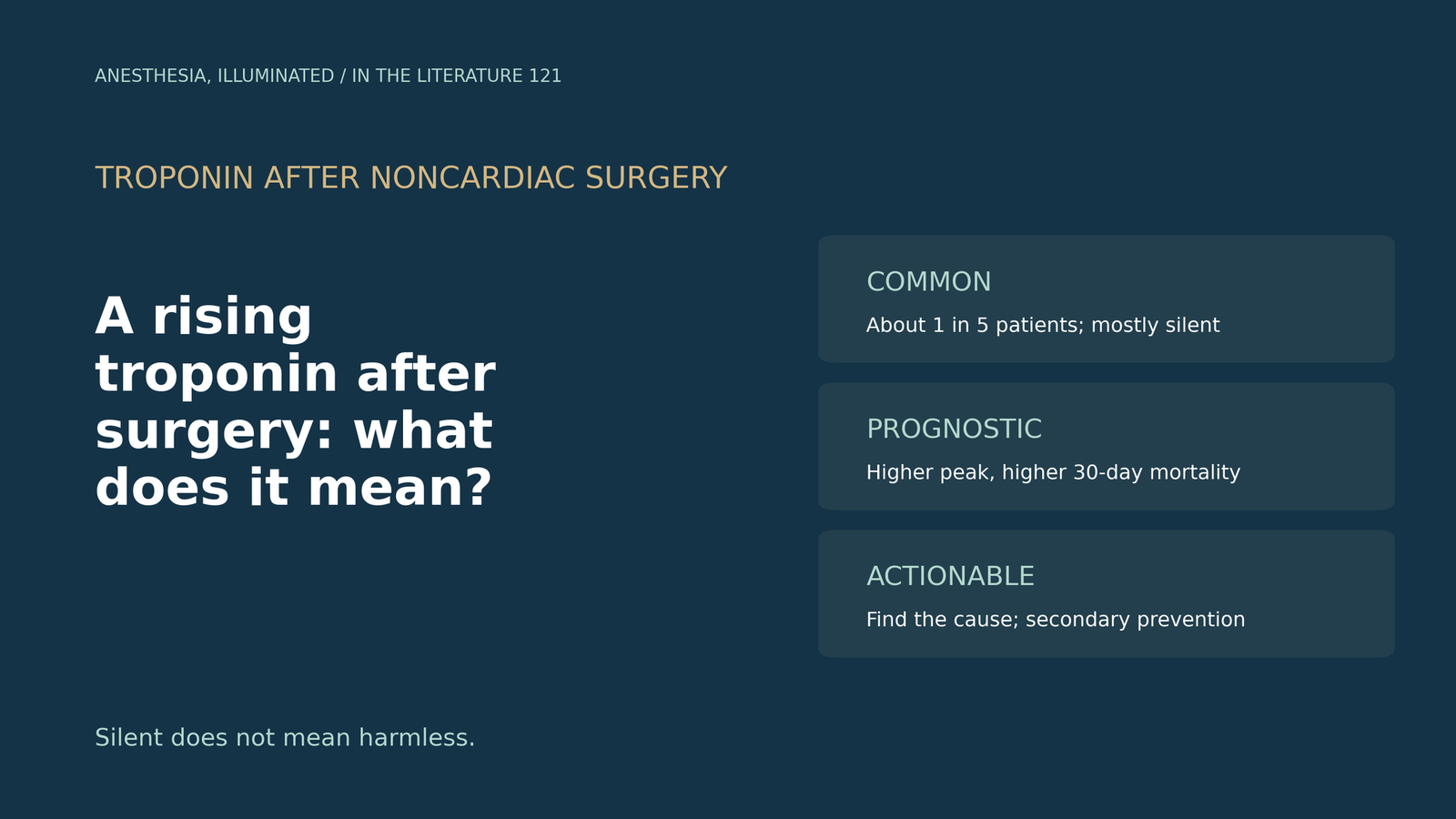
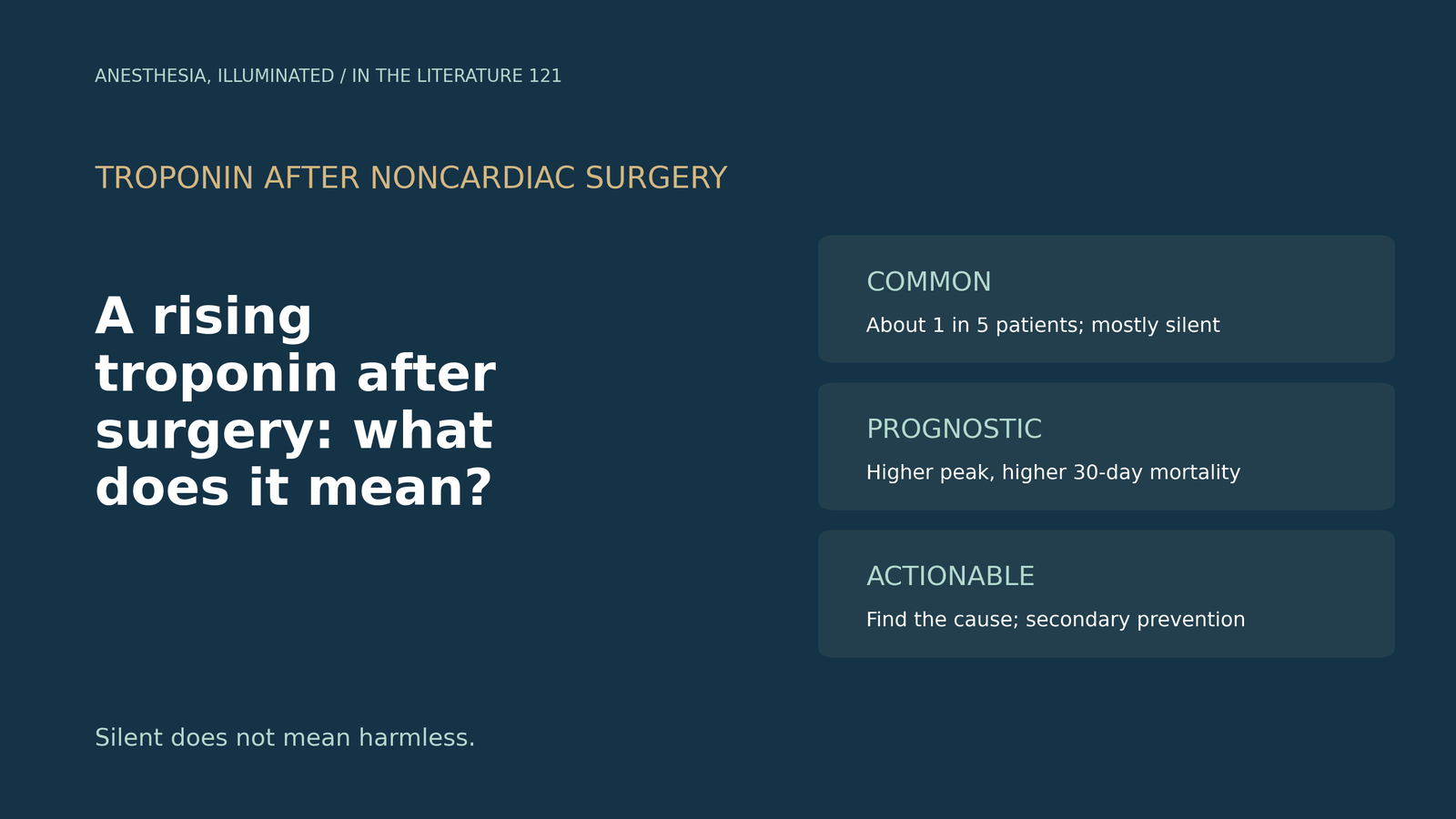
- Myocardial injury after noncardiac surgery (MINS) is usually silent. In the VISION cohort of 15,065 patients, only 15.8% of patients with MINS had an ischemic symptom, yet their 30-day mortality was 9.8%, compared with 1.1% without MINS.[1]
- The size of the rise matters. With high-sensitivity troponin T, 30-day mortality was 3.0% at a peak of 20 to less than 65 ng/L, 9.1% at 65 to less than 1000 ng/L and 29.6% at 1000 ng/L or more; elevation without any ischemic feature still predicted death.[2], [3]
- Injury is not the same as infarction. Injury means troponin above the 99th percentile, acute injury needs a rise or fall (ideally against a preoperative value), and infarction needs evidence of ischemia. Definitions vary widely: a meta-analysis found a pooled incidence of 20% and eight different definitions.[4], [5]
- The AHA scientific statement supports serial troponin over the first 48 to 72 hours in high-risk patients, notes that only 22% of MINS meets the universal definition of myocardial infarction, and considers routine invasive testing unlikely to help.[6]
- Treatment starts with the cause. In MANAGE, dabigatran reduced major vascular complications (11% vs 15%; hazard ratio 0.72) in patients with MINS. Type 2 infarction, most often from tachyarrhythmia, is common, and no troponin threshold separates it reliably from type 1.[7], [8]
On the second day after a hip fracture repair, an older patient with diabetes has a high-sensitivity troponin well above the reference limit. There is no chest pain and the ECG is unchanged. Is this a myocardial infarction, does it matter if the patient feels well, and what should be done about it?[1], [6]
Common, silent and prognostic
The VISION investigators defined MINS as prognostically relevant myocardial injury due to ischemia within 30 days of surgery, excluding injury from a documented nonischemic cause. Among 15,065 patients, only 15.8% of those with MINS had an ischemic symptom, and 87.1% of events occurred within the first 2 days. MINS was an independent predictor of 30-day mortality: 9.8% versus 1.1% in patients without it. The authors suggest that aspirin and statin therapy may benefit patients with MINS.[1]
How high is too high?
In the high-sensitivity troponin T phase of VISION (21,842 patients), 30-day mortality rose with the peak value: 3.0% at 20 to less than 65 ng/L, 9.1% at 65 to less than 1000 ng/L and 29.6% at 1000 ng/L or more. An absolute change of 5 ng/L or more was also associated with death (adjusted hazard ratio 4.69), and elevation without an ischemic feature was associated with 30-day mortality (adjusted hazard ratio 3.20).[2] Januzzi and colleagues, summarizing these data, note that mortality was 1.1% for peak values of 14 to 20 ng/L, and warn against terms that trivialize the prognostic meaning of an elevated troponin.[3]
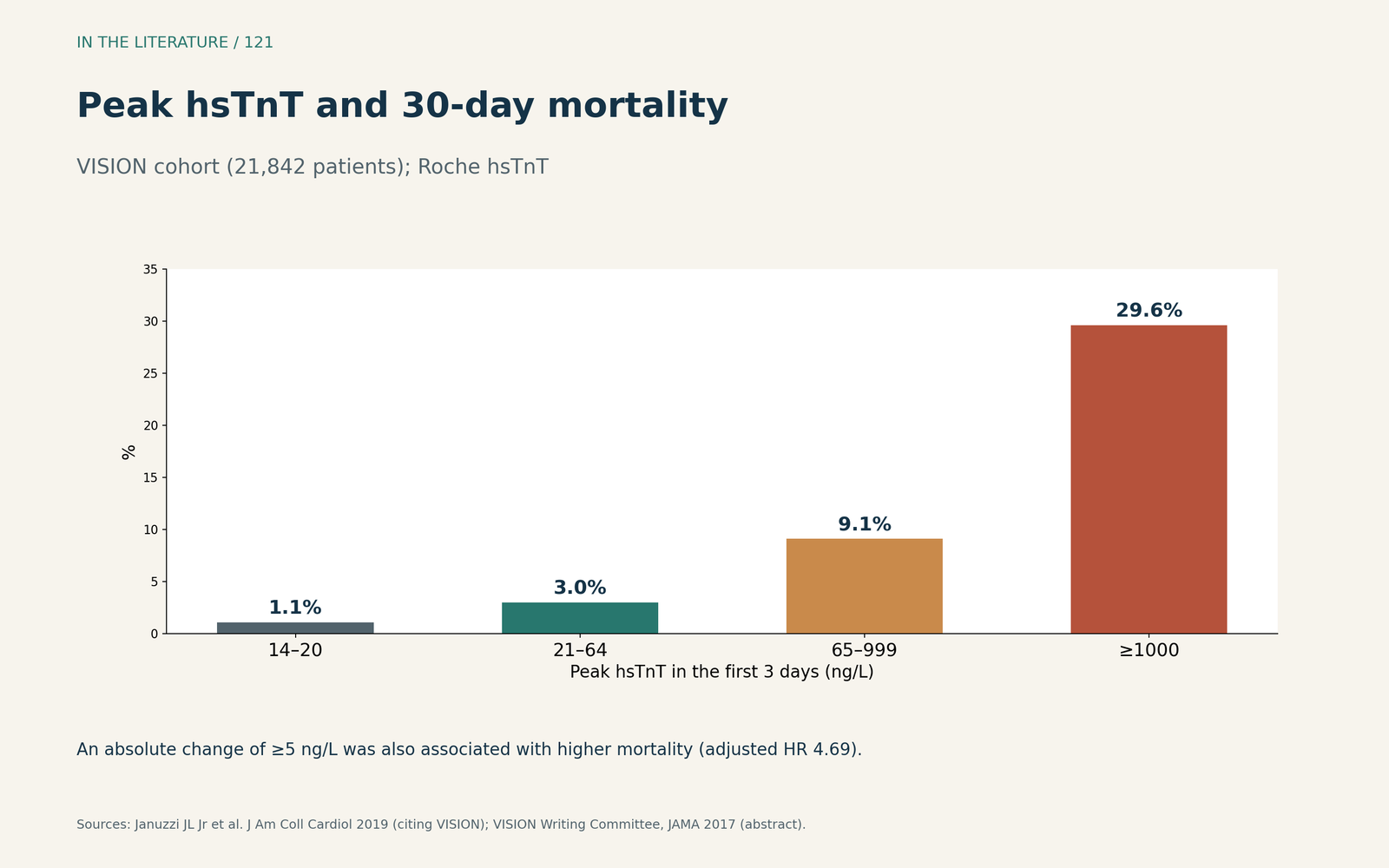
Figure 1. Peak hsTnT and 30-day mortality. Redrawn from Januzzi et al. and the VISION abstract; single assay (Roche hsTnT), observational data.[3], [2] View larger.

Injury, infarction and MINS
The Fourth Universal Definition considers myocardial injury acute when troponin rises and/or falls, and notes that a preoperative value is necessary to tell acute from chronic elevation. Infarction requires clinical evidence of ischemia; type 2 infarction reflects an oxygen supply–demand mismatch rather than an atherothrombotic event. Perioperative injury is as strongly associated with 30-day mortality when silent as when symptomatic.[4] A 2023 meta-analysis found a pooled incidence of postoperative myocardial injury of 20% (95% CI 16% to 23%), with eight different definitions in use.[5]
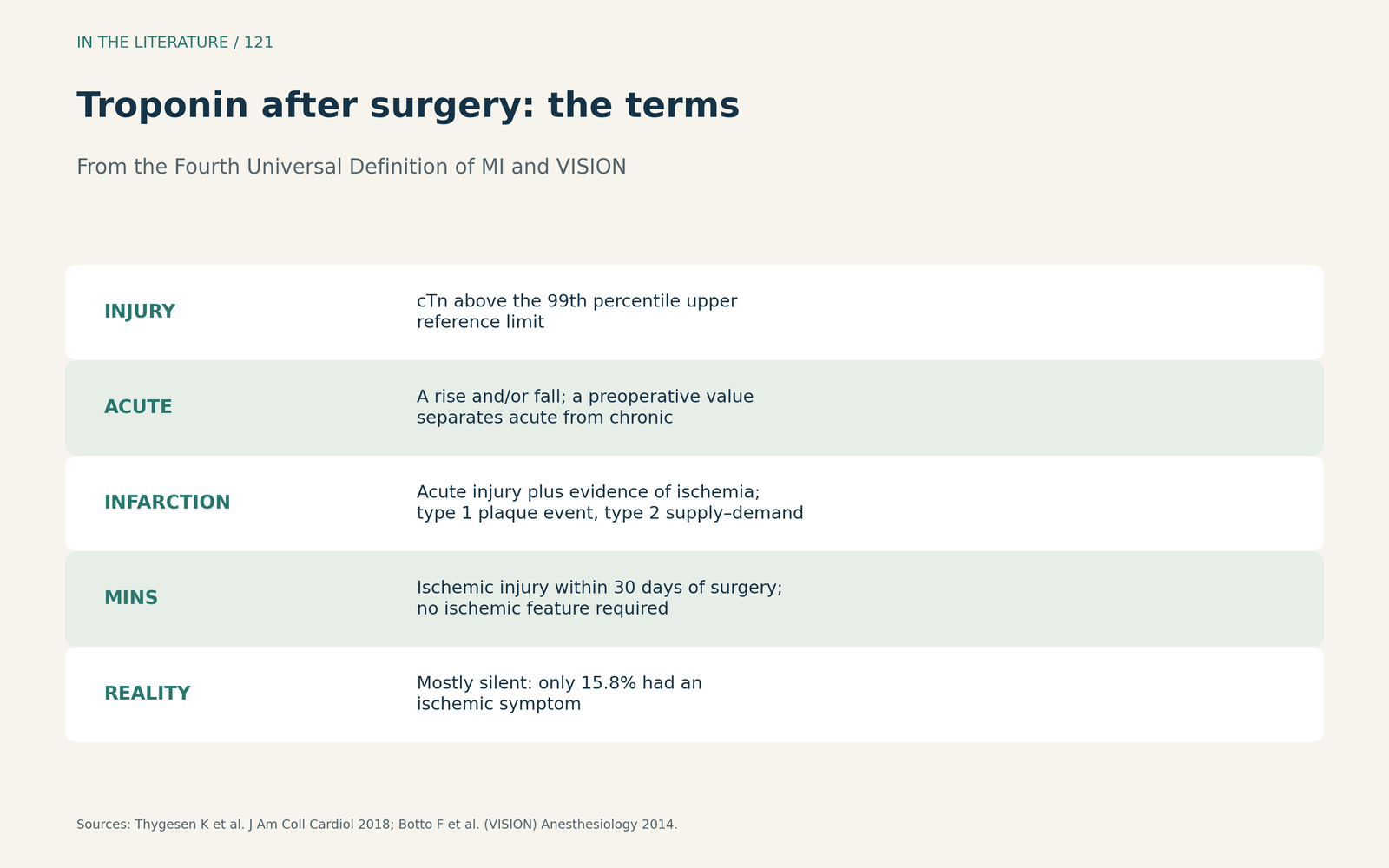
Figure 2. Troponin after surgery: the terms. Synthesized from the Fourth Universal Definition and VISION.[4], [1] View larger.

Surveillance and evaluation
The 2021 AHA scientific statement concludes that surveillance for MINS is warranted in patients at high risk, who should have serial troponin measurements during the first 48 to 72 hours while hospitalized. Only 22% of patients with MINS fulfilled the universal definition of myocardial infarction. There are currently no proven methods to prevent perioperative infarction, and routine invasive testing in patients with MINS is unlikely to provide benefit.[6]
What to do about it
In MANAGE, dabigatran 110 mg twice daily lowered the risk of major vascular complications in patients with MINS (11% vs 15%; hazard ratio 0.72), a number needed to treat of 24; 91% of the qualifying MINS events had no ischemic symptom or sign.[7] Chapman and colleagues emphasize that troponin elevation alone is not specific for infarction, that tachyarrhythmia is the most frequent cause of type 2 infarction, and that no troponin decision threshold discriminates type 1 from type 2 well enough to use in practice.[8]
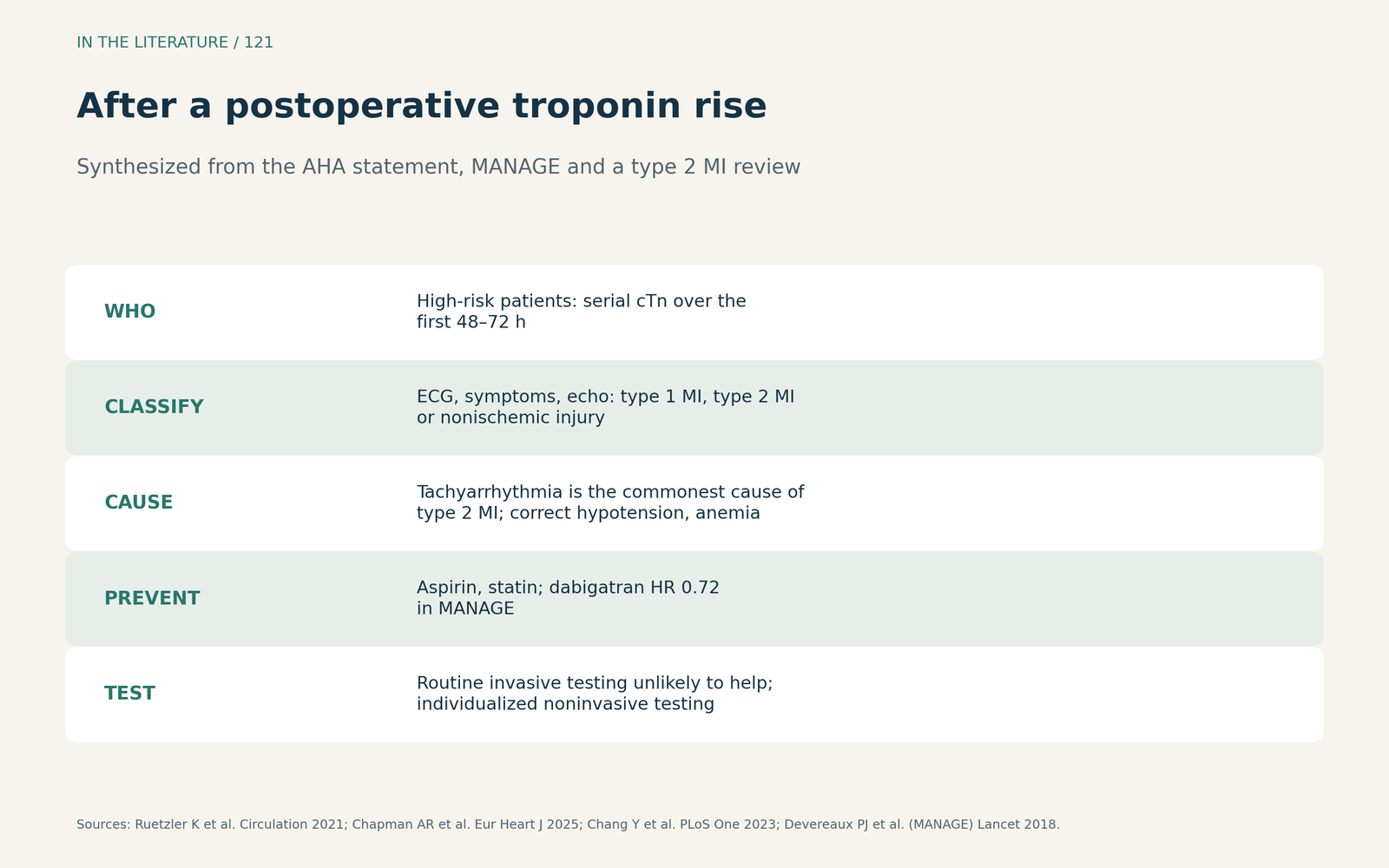
Figure 3. After a postoperative troponin rise. Synthesized from the AHA statement, Chapman et al., Chang et al. and MANAGE.[6], [8], [5], [7] View larger.

Three takeaways
- Silent does not mean harmless. Most postoperative troponin rises cause no symptoms but carry higher 30-day mortality, rising with the peak value.[1], [2]
- Name it correctly. Use a baseline and the rise or fall to define acute injury, and reserve "infarction" for injury with evidence of ischemia.[4], [8]
- Look for the cause and protect the patient. Measure troponin in high-risk patients, treat tachyarrhythmia, hypotension and anemia, and consider secondary prevention rather than routine catheterization.[6], [7], [5]
References
- Botto F, Alonso-Coello P, Chan MT, et al. Myocardial injury after noncardiac surgery: a large, international, prospective cohort study establishing diagnostic criteria, characteristics, predictors, and 30-day outcomes. Anesthesiology. 2014;120(3):564–578. doi:10.1097/ALN.0000000000000113
- Writing Committee for the VISION Study Investigators; Devereaux PJ, Biccard BM, et al. Association of postoperative high-sensitivity troponin levels with myocardial injury and 30-day mortality among patients undergoing noncardiac surgery. JAMA. 2017;317(16):1642–1651. Abstract only. doi:10.1001/jama.2017.4360
- Januzzi JL Jr, Mahler SA, Christenson RH, et al. Recommendations for institutions transitioning to high-sensitivity troponin testing: JACC Scientific Expert Panel. J Am Coll Cardiol. 2019;73(9):1059–1077. doi:10.1016/j.jacc.2018.12.046
- Thygesen K, Alpert JS, Jaffe AS, et al. Fourth universal definition of myocardial infarction (2018). J Am Coll Cardiol. 2018;72(18):2231–2264. doi:10.1016/j.jacc.2018.08.1038
- Chang Y, Zhou M, Huang J, et al. Incidence and risk factors of postoperative acute myocardial injury in noncardiac patients: a systematic review and meta-analysis. PLoS One. 2023;18(6):e0286431. doi:10.1371/journal.pone.0286431
- Ruetzler K, Smilowitz NR, Berger JS, et al. Diagnosis and management of patients with myocardial injury after noncardiac surgery: a scientific statement from the American Heart Association. Circulation. 2021;144(19):e287–e305. doi:10.1161/CIR.0000000000001024
- Devereaux PJ, Duceppe E, Guyatt G, et al. Dabigatran in patients with myocardial injury after non-cardiac surgery (MANAGE): an international, randomised, placebo-controlled trial. Lancet. 2018;391(10137):2325–2334. doi:10.1016/S0140-6736(18)30832-8
- Chapman AR, Taggart C, Boeddinghaus J, et al. Type 2 myocardial infarction: challenges in diagnosis and treatment. Eur Heart J. 2025;46(6):504–517. doi:10.1093/eurheartj/ehae803