ITL-ebcd6d9c9dd5
Juan Li, MD · Updated November 17, 2026
Watch the video
Key points
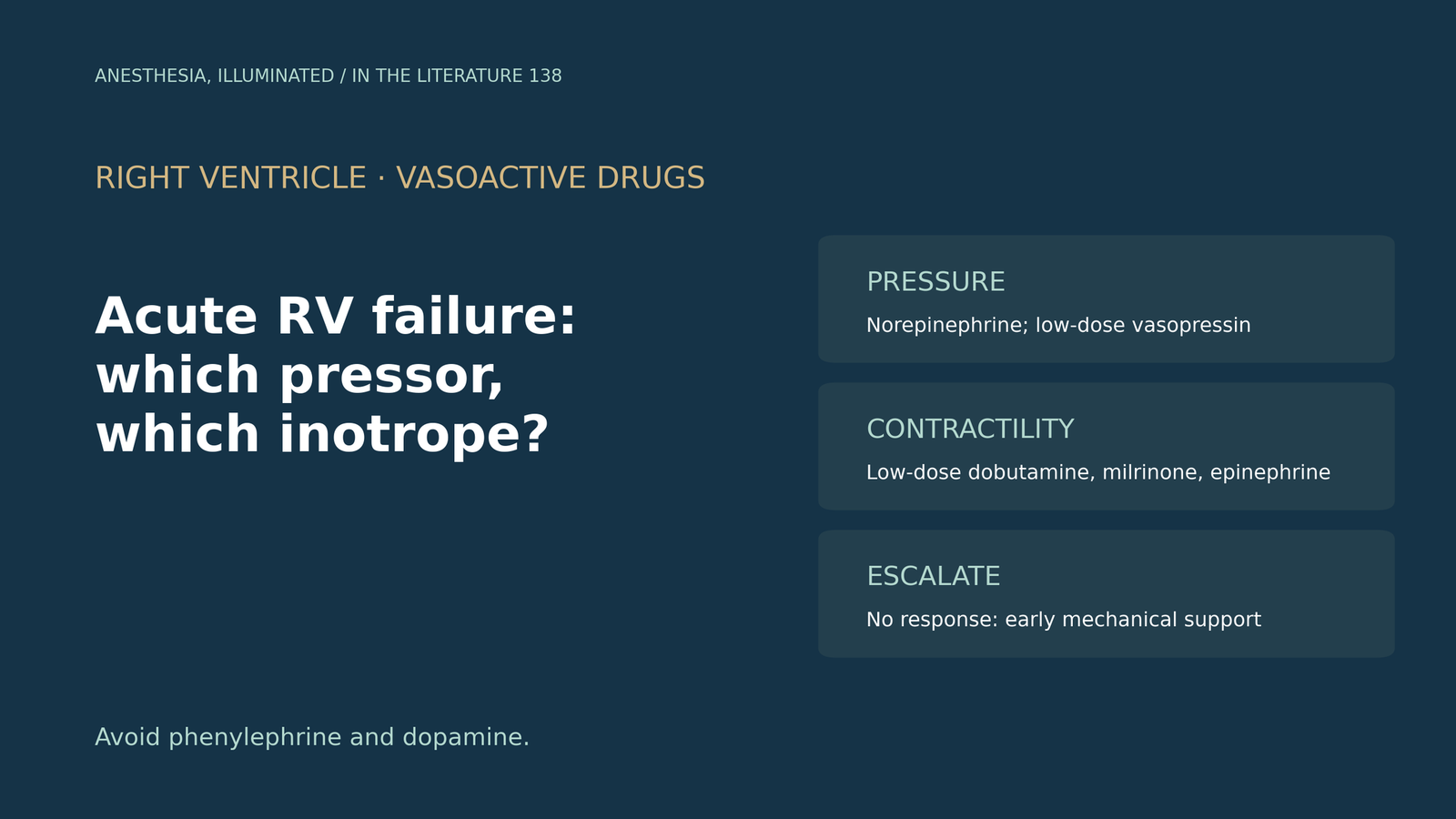
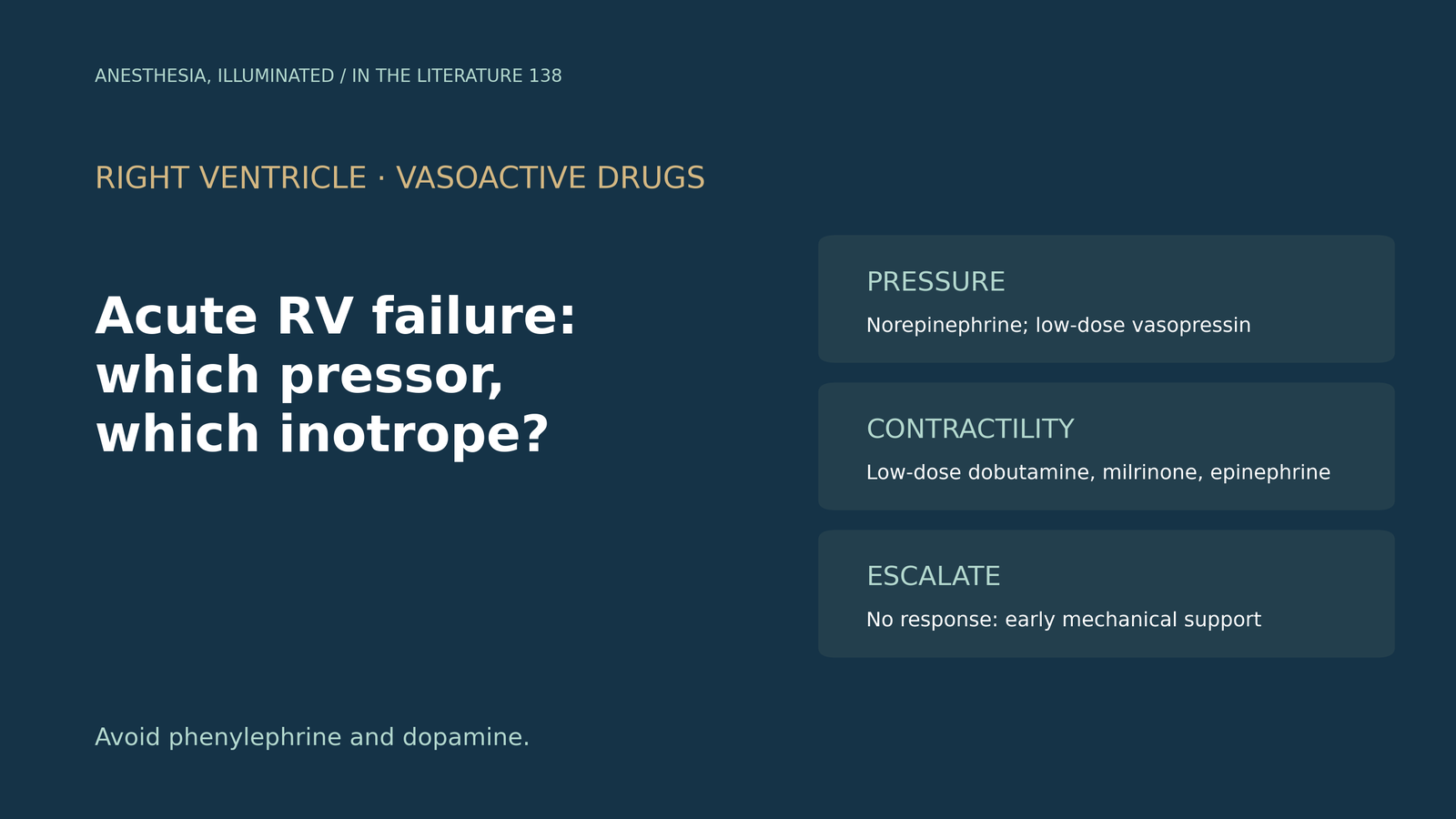
- The first goal is perfusion of the right ventricle. Its coronary flow during systole can fall close to zero, so systemic pressure should be kept above pulmonary artery pressure.[1], [2]
- Norepinephrine is the usual first vasopressor; its adverse effect on pulmonary vascular resistance is likely only at high doses. Low-dose vasopressin (0.03–0.067 U/min) is an option, but doses above 0.08 U/min should be avoided.[1], [2], [3]
- Phenylephrine can raise pulmonary artery pressure and cause reflex bradycardia, and dopamine is not recommended in cardiogenic shock.[2], [1]
- For contractility, low-dose dobutamine improves right ventricular–pulmonary arterial coupling; milrinone often needs a vasopressor, and epinephrine is an appropriate inotrope when the patient is hypotensive. Levosimendan data are limited.[2], [1], [3], [4]
- If blood pressure or cardiac index fails to improve despite an inotrope or vasopressor, early mechanical right ventricular support should be considered. The evidence base for all drug choices is generally low.[5], [1]
After weaning from bypass, a patient has a dilated, hypokinetic right ventricle, a mean arterial pressure of 55 mmHg and a rising central venous pressure. Which vasopressor and which inotrope should come first, and when should the team stop adding drugs?[1], [2]
Why systemic pressure comes first
A failing right ventricle depends on its coronary perfusion. Kermanian and colleagues note that right coronary perfusion during systole can be close to zero when right ventricular pressure is high, and recommend considering vasopressors and inotropes early.[2] Price and colleagues, in a systematic review with GRADE recommendations, describe maintaining systemic blood pressure above pulmonary arterial pressure as an essential goal and warn that unmonitored fluid challenges are inadvisable.[1]
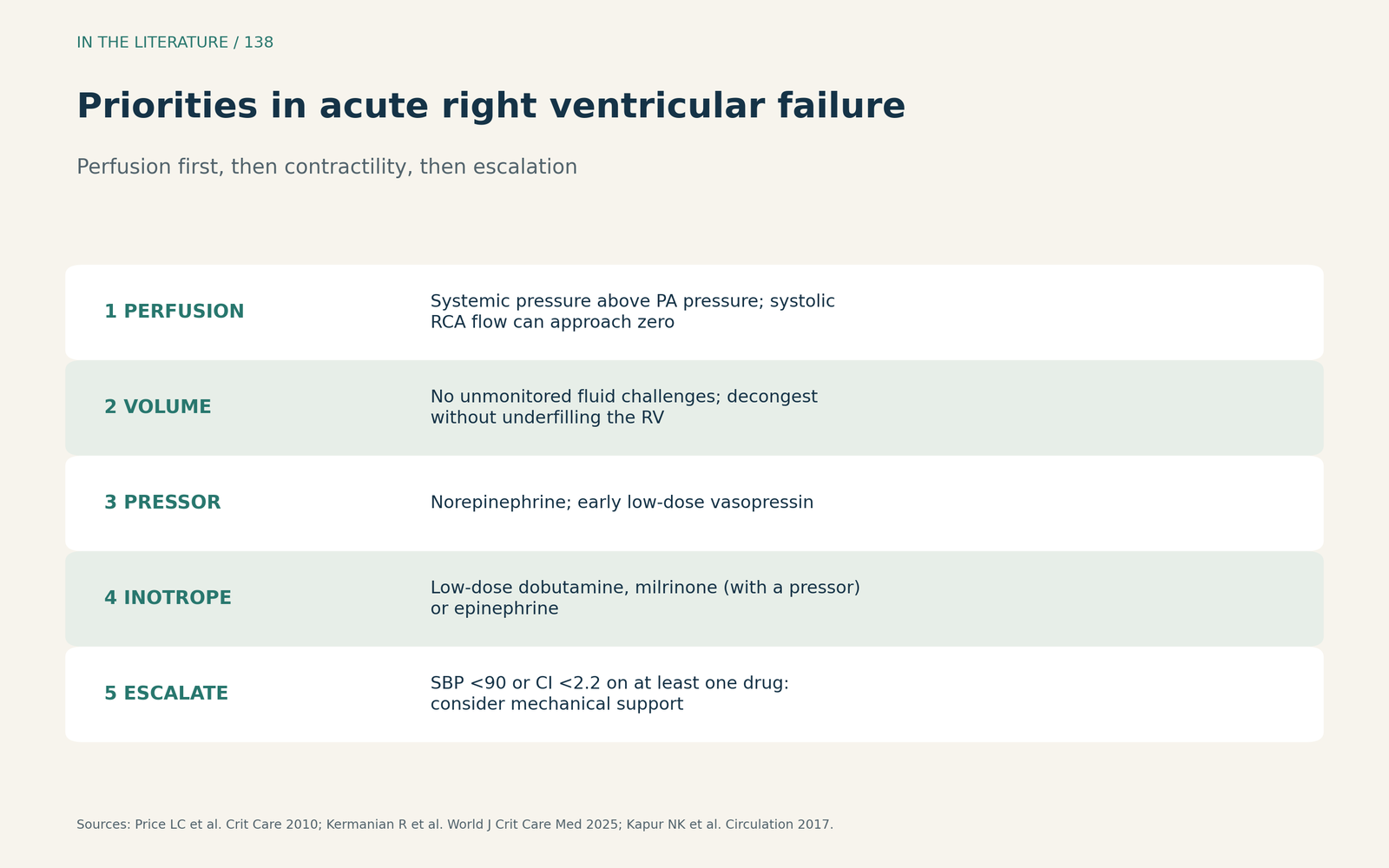
Figure 1. Priorities in acute right ventricular failure. Synthesized from Price et al., Kermanian et al. and Kapur et al.[1], [2], [5] View larger.

Choosing the vasopressor
Norepinephrine can improve systemic hemodynamics without meaningfully changing pulmonary artery pressure or resistance, although at higher doses it can increase pulmonary and coronary vasoconstriction.[2] Price and colleagues judge its adverse effects on pulmonary resistance likely only at high doses. Vasopressin at 0.03 to 0.067 U/min has been used safely in sepsis, but harm has been reported above 0.08 U/min in cardiogenic shock; the combination of milrinone with vasopressin may be preferable to milrinone with norepinephrine in right ventricular dysfunction.[1] The 2023 AHA statement likewise advises avoiding vasopressin above 0.08 to 0.1 U/min.[3] Kermanian and colleagues suggest adding low-dose vasopressin early to limit the arrhythmogenic effects of catecholamines, and caution that phenylephrine can increase pulmonary artery pressure and cause reflex bradycardia.[2]
Choosing the inotrope
Dobutamine at low doses has been shown to improve right ventricular–pulmonary arterial coupling, and vasopressors and inotropes should be titrated to separate targets: pressure for the vasopressor, output for the inotrope.[2] Dopamine may increase tachyarrhythmias and is not recommended in cardiogenic shock.[1] The AHA statement notes that epinephrine does not lower systemic vascular resistance and is an appropriate inotrope when the patient is hypotensive.[3] Levosimendan has inotropic and vasodilator effects, but a meta-analysis of 8 studies with 390 patients found no significant overall improvement in tricuspid annular excursion or pulmonary vascular resistance, and some patients needed a lower dose because of hypotension.[4]
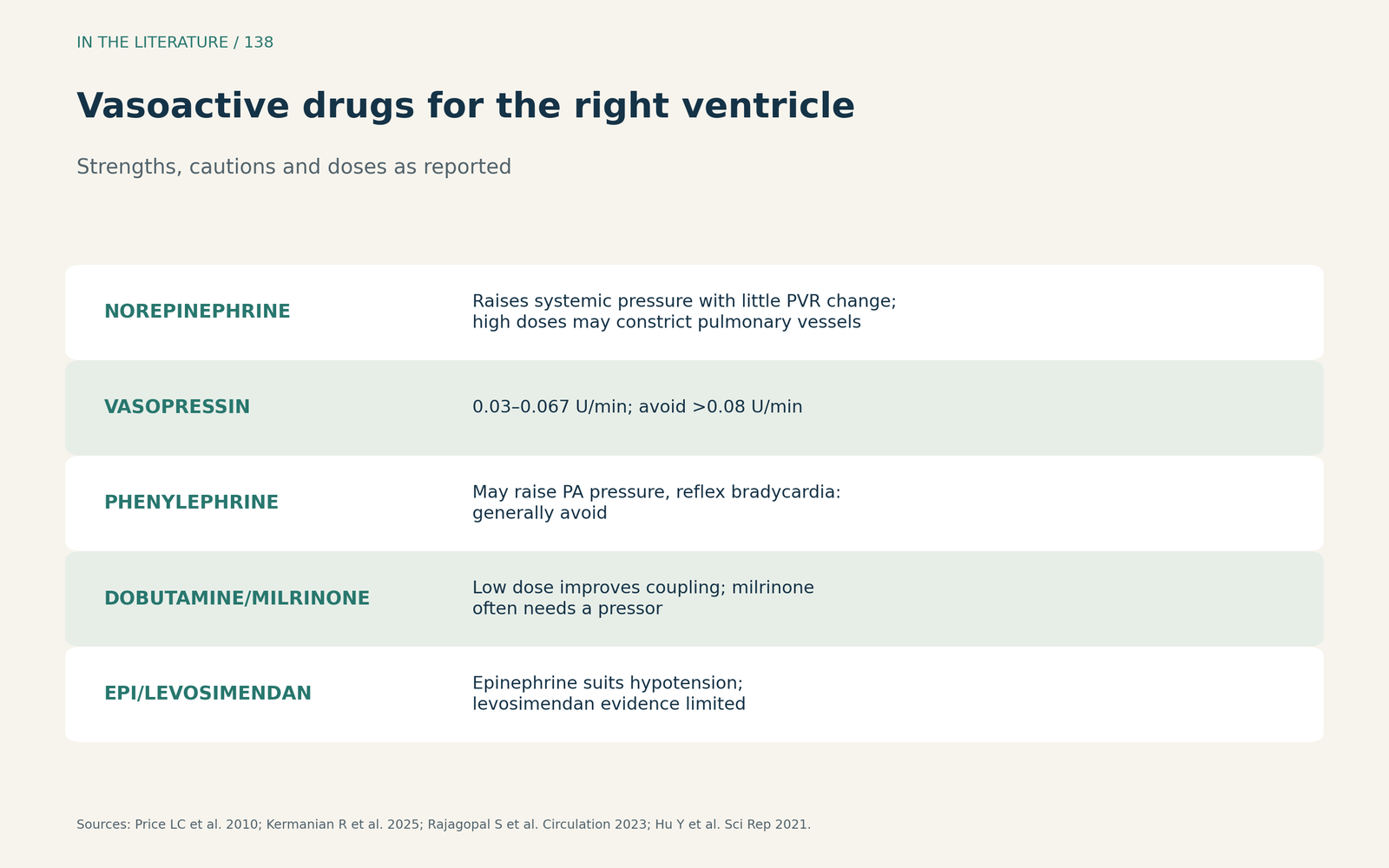
Figure 2. Vasoactive drugs for the right ventricle. Synthesized from Price et al., Kermanian et al., the AHA statement and Hu et al.[1], [2], [3], [4] View larger.

When drugs are not enough
Kapur and colleagues propose that when blood pressure or cardiac index fails to improve despite initial treatment with an inotrope or a vasopressor, early use of mechanical right ventricular support should be considered; they define nonresponse as systolic pressure below 90 mmHg or cardiac index below 2.2 L/min/m² despite at least one drug, with worsening end-organ perfusion.[5] Price and colleagues stress that the quality of the evidence base is generally low.[1]
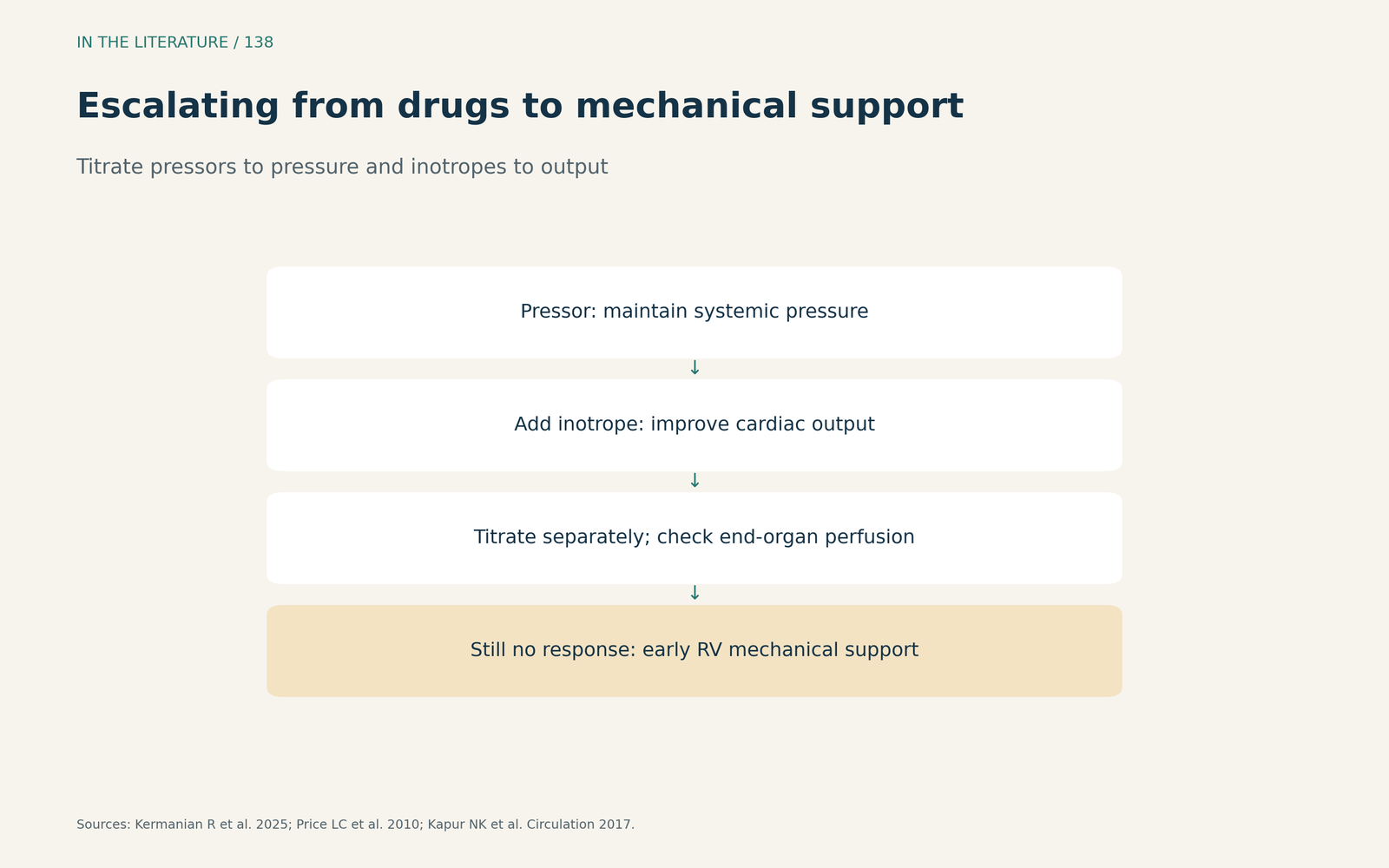
Figure 3. Escalating support. Synthesized from Kermanian et al., Price et al. and Kapur et al.[2], [1], [5] View larger.

Three takeaways
- Pressure first. Keep systemic pressure above pulmonary pressure, usually with norepinephrine, and consider low-dose vasopressin.[1], [2]
- Then contractility. Add low-dose dobutamine, milrinone with a vasopressor, or epinephrine; avoid phenylephrine and dopamine.[2], [1], [3]
- Know when to stop adding drugs. If pressure or output does not improve, consider mechanical support early.[5]
References
- Price LC, Wort SJ, Finney SJ, Marino PS, Brett SJ. Pulmonary vascular and right ventricular dysfunction in adult critical care: current and emerging options for management: a systematic literature review. Crit Care. 2010;14(5):R169. doi:10.1186/cc9264
- Kermanian R, Dosanjh H, Lewis MI, Matusov Y. Pathophysiology and management of right ventricular failure in critically ill patients: a narrative review. World J Crit Care Med. 2025;14(4):111434. doi:10.5492/wjccm.v14.i4.111434
- Rajagopal S, Ruetzler K, Ghadimi K, et al. Evaluation and management of pulmonary hypertension in noncardiac surgery: a scientific statement from the American Heart Association. Circulation. 2023;147(17):1317–1343. doi:10.1161/CIR.0000000000001136
- Hu Y, Wei Z, Zhang C, Lu C, Zeng Z. The effect of levosimendan on right ventricular function in patients with heart dysfunction: a systematic review and meta-analysis. Sci Rep. 2021;11(1):24097. doi:10.1038/s41598-021-03317-5
- Kapur NK, Esposito ML, Bader Y, et al. Mechanical circulatory support devices for acute right ventricular failure. Circulation. 2017;136(3):314–326. doi:10.1161/CIRCULATIONAHA.116.025290