ITL-44492ce94ffe
Juan Li, MD · Updated November 17, 2026
Watch the video
Key points
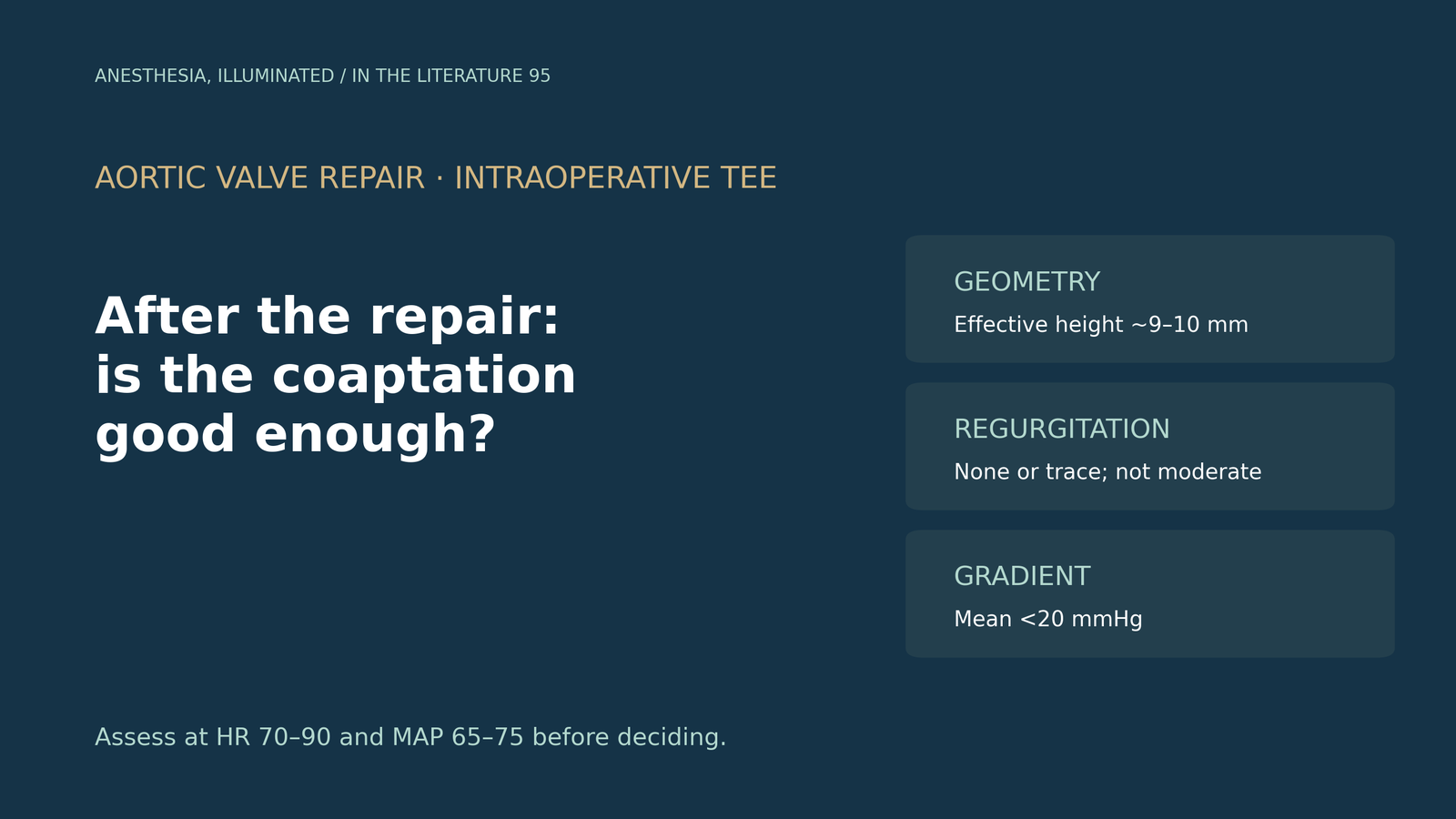
- The post-bypass transesophageal echocardiogram (TEE) decides whether an aortic valve repair is accepted. Assess it under standardized loading conditions, because heart rate and diastolic pressure change the regurgitant volume.[1], [2]
- Proposed coaptation targets are an effective height of about 9–10 mm and a coaptation height of at least 4 mm, with coaptation well above the annular plane. These cut-offs come from surgical measurements and are not yet validated by echocardiography.[1], [2]
- Residual regurgitation matters. In one series, intraoperative mild residual regurgitation and an effective height below 9 mm independently predicted recurrent regurgitation; moderate or worse residual regurgitation calls for a return to bypass.[1], [3]
- A longer coaptation line on TEE was associated with less residual regurgitation, and jet direction points to the mechanism: away from a cusp suggests prolapse, toward it suggests restriction.[1], [4]
- Before repair, cusp geometric height predicts how repairable the valve is. After repair, check the gradient, especially after internal ring annuloplasty, and follow patients because regurgitation tends to progress early.[5], [6], [7]
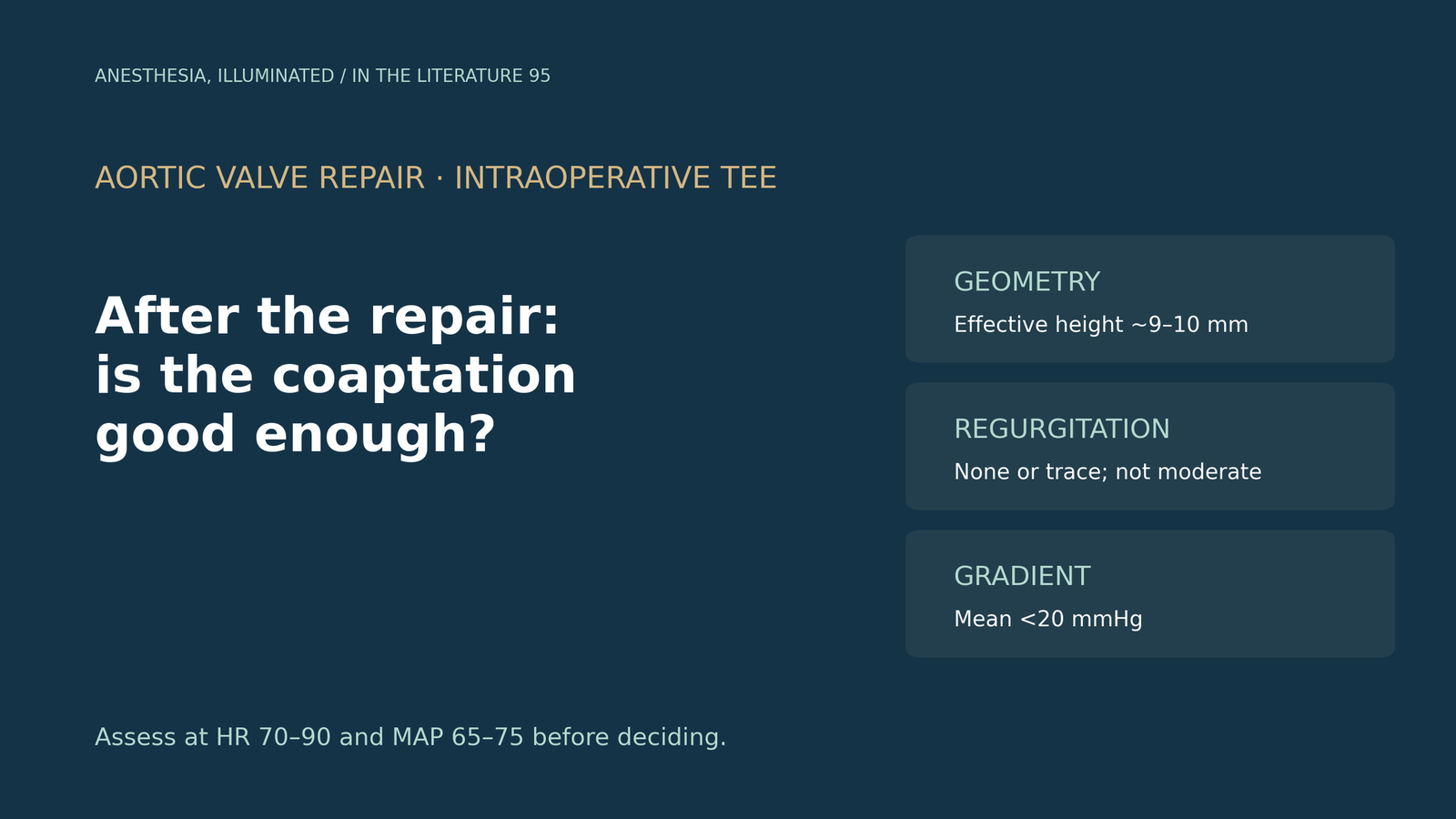
Cardiopulmonary bypass has just ended after a valve-sparing aortic root replacement. On TEE the leaflets close, but there is a small eccentric jet, and the coaptation looks short. The surgeon asks whether the repair is good enough to leave. What should you measure, which thresholds matter, and when should the team go back on bypass?[1], [2]
Before the repair: how much cusp tissue is there?
Repairability depends on cusp quality and size. Dodge and colleagues list a geometric height below 17 mm in a tricuspid valve or below 20 mm in a bicuspid valve as a pre-bypass warning sign, and note that an annulus greater than 28 mm has been associated with more reintervention.[1] Jaworski and colleagues add that an annulus above 25 mm typically requires stabilization for a durable repair.[2]
Three-dimensional TEE can estimate geometric height before the root is opened. In Yamanaka and colleagues' series, cut-offs of 15.9 mm for tricuspid and 19.8 mm for bicuspid valves discriminated patients selected for valve-sparing surgery (area under the curve 0.81 and 0.67). The endpoint was the surgeon's choice of operation rather than long-term durability.[5]
After bypass: standardize the conditions first
Loading changes what you see. Higher diastolic pressure and slower heart rate increase the regurgitant fraction, so Dodge and colleagues recommend final assessment at a heart rate of 70–90 beats/min, a mean arterial pressure of 65–75 mmHg and a stable rhythm.[1] The post-repair examination should then cover coaptation geometry, residual regurgitation, the transvalvular gradient and new regional wall-motion abnormalities, which after root procedures can signal coronary ostial compromise.[2]
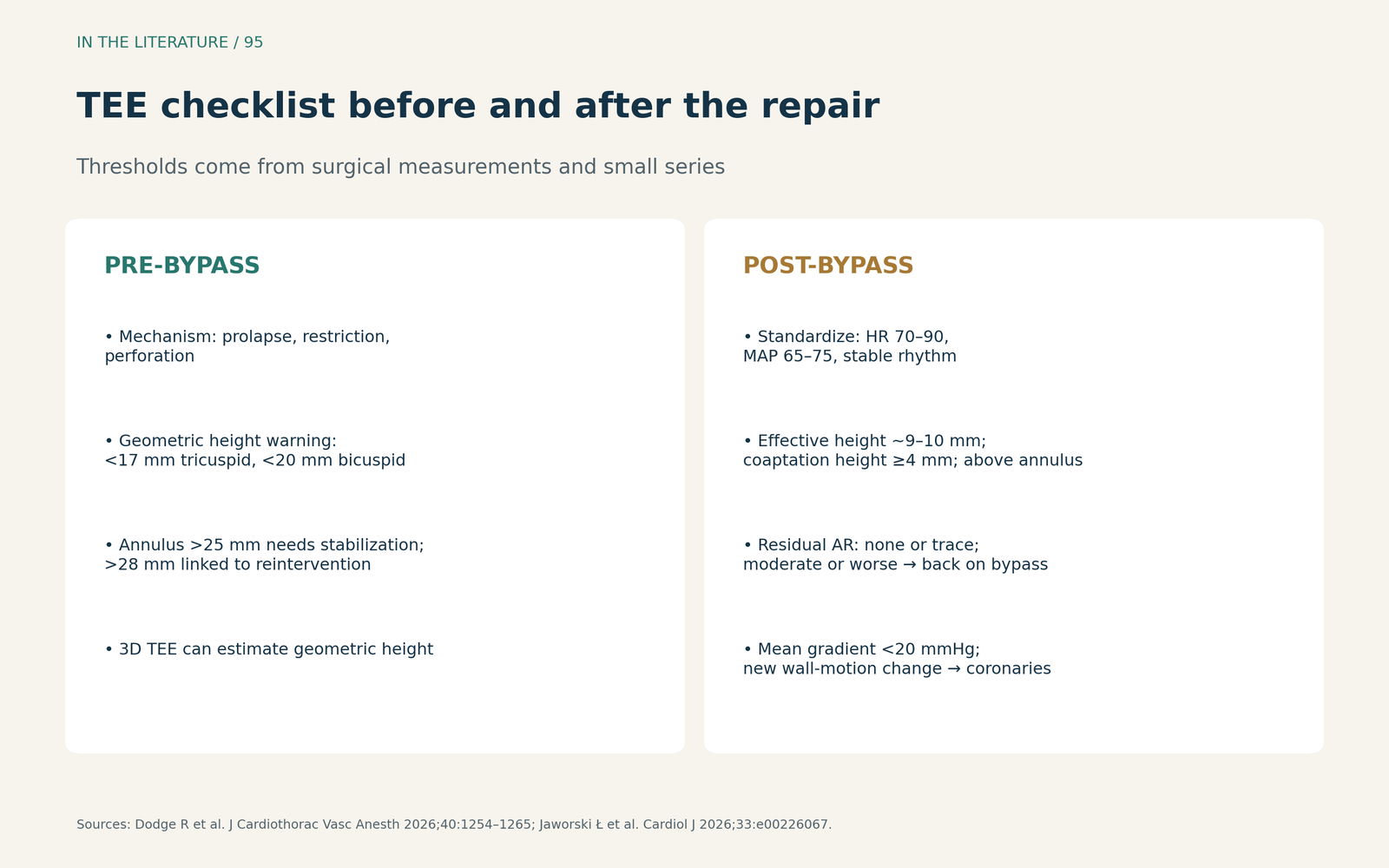
Figure 1. What to check before and after the repair. Synthesized from the review by Dodge and colleagues and the state-of-the-art review by Jaworski and colleagues; not a validated protocol.[1], [2] View larger.

Coaptation: height, length and level
Effective height is the vertical distance from the annular plane to the free margin at the point of coaptation. Jaworski and colleagues describe about 9–10 mm as a normal adult target and below 9 mm as indicating cusp prolapse.[2] Dodge and colleagues propose a coaptation height above 4 mm and an effective height above 9–10 mm, while cautioning that these values have not yet been validated with echocardiographic data. Coaptation that occurs lower, toward the left ventricular outflow tract, is associated with more post-repair regurgitation.[1]
The coaptation line itself is informative. In Kari and colleagues' series, the length of the coaptation line in the long-axis view was the main TEE predictor of residual regurgitation, with a cut-off of 8 to 9 mm. Effective height measured by TEE did not separate patients with and without residual regurgitation in that series.[4]
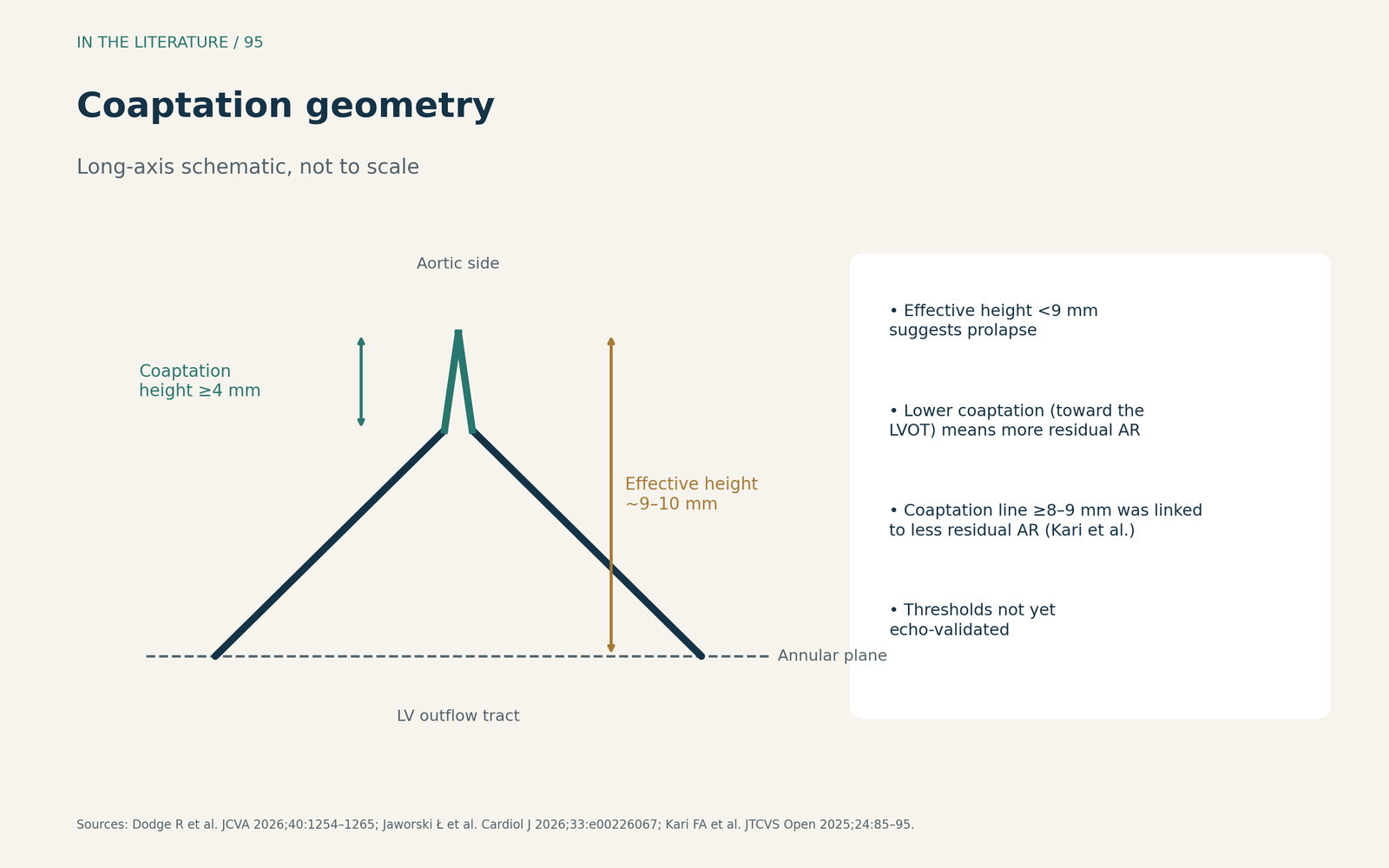
Figure 2. Coaptation geometry. Schematic based on the definitions and proposed targets in Dodge et al. and Jaworski et al.; thresholds are surgical and not echo-validated.[1], [2] View larger.

Residual regurgitation: what to accept
The jet tells you why. Dodge and colleagues note that a jet directed away from the abnormal cusp suggests prolapse, whereas a jet directed toward it suggests restriction. Trace or mild residual regurgitation may be tolerated depending on the cause, but moderate or worse regurgitation after repair should prompt reinstitution of bypass.[1] Jaworski and colleagues are stricter, stating that mild residual regurgitation on post-pump TEE predicts later failure and warrants prompt revision.[2]
Outcome data support caution. Karciauskas and colleagues followed 81 patients after valve-sparing or cusp repair. Intraoperative mild residual regurgitation (hazard ratio 24.9; 95% CI 5.6–120) and an effective height below 9 mm (hazard ratio 5.1; 95% CI 1.3–19.1) independently predicted recurrent regurgitation greater than 2+. Two patients needed immediate re-repair for moderate regurgitation, and none left the operating room with more than mild regurgitation.[3] The confidence intervals are very wide because there were only 11 recurrence events. In Kari and colleagues' larger series, 26% left the operating room with residual regurgitation greater than trace.[4]
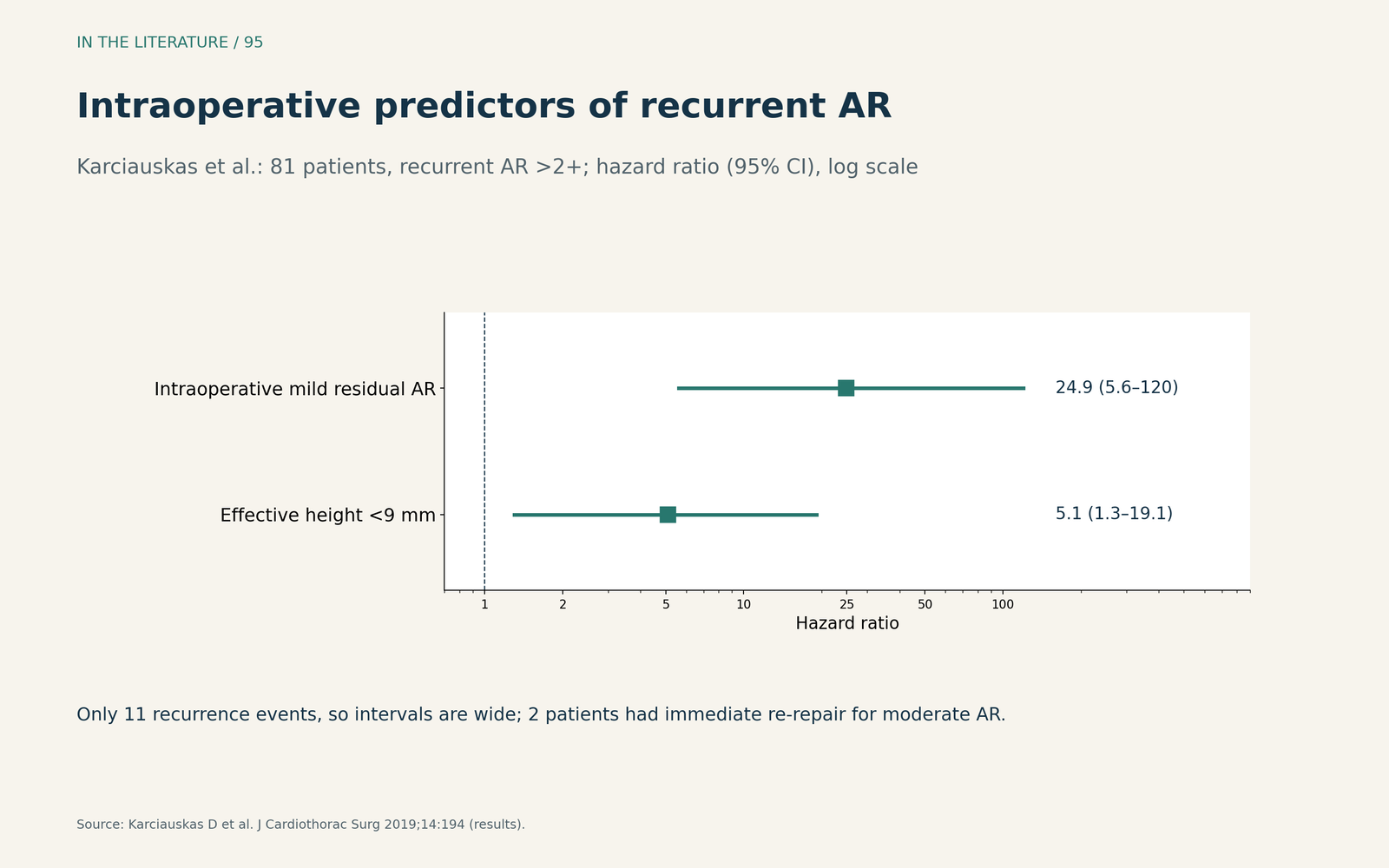
Figure 3. What predicted recurrence. Redrawn from the results of Karciauskas et al. (hazard ratios with 95% confidence intervals, log scale); small cohort with few events.[3] View larger.

Gradient, ring and follow-up
A repair can also be too tight. Jaworski and colleagues describe a mean gradient below 20 mmHg as generally acceptable, with higher values suggesting over-correction.[2] After internal ring annuloplasty, Tabrizi and colleagues observed the outflow tract narrowing from 24.5 to 16.3 mm, and patients with the smallest rings had mean gradients of about 24 mmHg.[6]
Durability is judged over years. In a series of 7,126 adults, Zito and colleagues found that regurgitation progressed mainly in the first 2 years after surgery, and that pericardial patch use was associated with more reintervention.[7]
Three takeaways
- Measure under the right conditions. Assess the repair at a heart rate of about 70–90 beats/min and a mean pressure of 65–75 mmHg, and check the coronaries as well as the valve.[1], [2]
- Look at height, length and level of coaptation. Effective height near 9–10 mm and a coaptation line well above the annulus are the targets; jet direction explains the mechanism.[1], [2], [4]
- Do not accept moderate regurgitation, and be wary of mild. Residual regurgitation strongly predicted recurrence; also check the gradient after ring annuloplasty.[1], [3], [6]
References
- Dodge R, Miranda D, Bloom J, Dalia A. Intraoperative management for valve-sparing aortic root replacement. J Cardiothorac Vasc Anesth. 2026;40(4):1254–1265. doi:10.1053/j.jvca.2025.11.023
- Jaworski Ł, Beta S, Nowak M, Fijałkowski M. Aortic valve repair in 2026 — state of the art: what every cardiologist should know. Cardiol J. 2026;33:e00226067. doi:10.5603/cj.112928
- Karciauskas D, Mizariene V, Jakuska P, et al. Long-term outcomes and predictors of recurrent aortic regurgitation after aortic valve-sparing and reconstructive cusp surgery: a single centre experience. J Cardiothorac Surg. 2019;14(1):194. doi:10.1186/s13019-019-1019-3
- Kari FA, Czerny M, Borger MA, et al. Valve-sparing aortic root replacement: strategies to avoid residual aortic regurgitation. JTCVS Open. 2025;24:85–95. doi:10.1016/j.xjon.2025.02.015
- Yamanaka S, Takanashi S, Shimokawa T, Kunihara T. Exploratory study of the measurement of geometric height in 3D transesophageal echocardiography as a predictor of valve-sparing root replacement for aortic regurgitation. J Clin Med. 2024;13(24):7835. doi:10.3390/jcm13247835
- Tabrizi NS, Stout P, Richvalsky T, et al. Aortic valve repair using HAART 300 geometric annuloplasty ring: a review and echocardiographic case series. J Cardiothorac Vasc Anesth. 2022;36(11):3990–3998. doi:10.1053/j.jvca.2022.03.013
- Zito F, Veen KM, Melina G, et al. Aortic valve repair in adults: long-term clinical outcomes and echocardiographic evolution in different valve repair techniques. Eur J Cardiothorac Surg. 2025;67(3):ezaf020. doi:10.1093/ejcts/ezaf020