ITL-7681dae12d33
Juan Li, MD · Updated November 17, 2026
Watch the video
Key points
- A persistent left-to-right shunt at one month does not, by itself, establish a benefit from closure; MITHRAS did not demonstrate improved 12-month clinical outcomes.1
- New hypoxemia with right-to-left shunting after sheath withdrawal is a different problem, requiring prompt assessment and consideration of rescue closure.2
- Clinically important left-to-right shunting can also accompany right-sided heart failure; the patient's physiology matters more than simply seeing a defect.3
- Some persistent defects close spontaneously, but natural-history estimates come from selected follow-up populations.4
- A single intraprocedural shunt velocity-time integral (VTI) is neither shunt volume nor a validated closure threshold.5
The mitral repair looks satisfactory, but color Doppler shows flow through the transseptal access site. The useful next question is not simply whether an opening remains. It is whether that opening is contributing to a clinically important problem—and whether closing it is likely to help. Timing, flow direction, oxygenation and right-heart findings separate two very different decisions.
A stable shunt at one month: what MITHRAS actually tested
MITHRAS randomized 80 patients with a persistent, predominantly left-to-right iASD shunt and Qp:Qs ≥1.3 at 30 days after mitral edge-to-edge repair to closure or conservative treatment. In the published abstract of its 12-month report, death or heart-failure hospitalization occurred in 35% versus 50%, respectively, with P=0.26. Only the formal abstract of that report was available for this article.1
That result did not demonstrate a clinical benefit from closure. It also did not establish equivalence: a small trial with a nonsignificant result cannot exclude a meaningful difference. Most importantly, this was a delayed left-to-right-shunt population. It does not answer whether an acutely hypoxemic patient with right-to-left shunting should receive rescue closure. The full-text natural-history substudy confirms that right-to-left shunting was excluded from MITHRAS.4
The report also compared the randomized iASD cohort with 235 patients without iASD. This was an observational comparison, not a third randomized arm. The higher heart-failure hospitalization rate among patients with iASD supports attention to follow-up; it does not prove that the opening caused their subsequent events.1
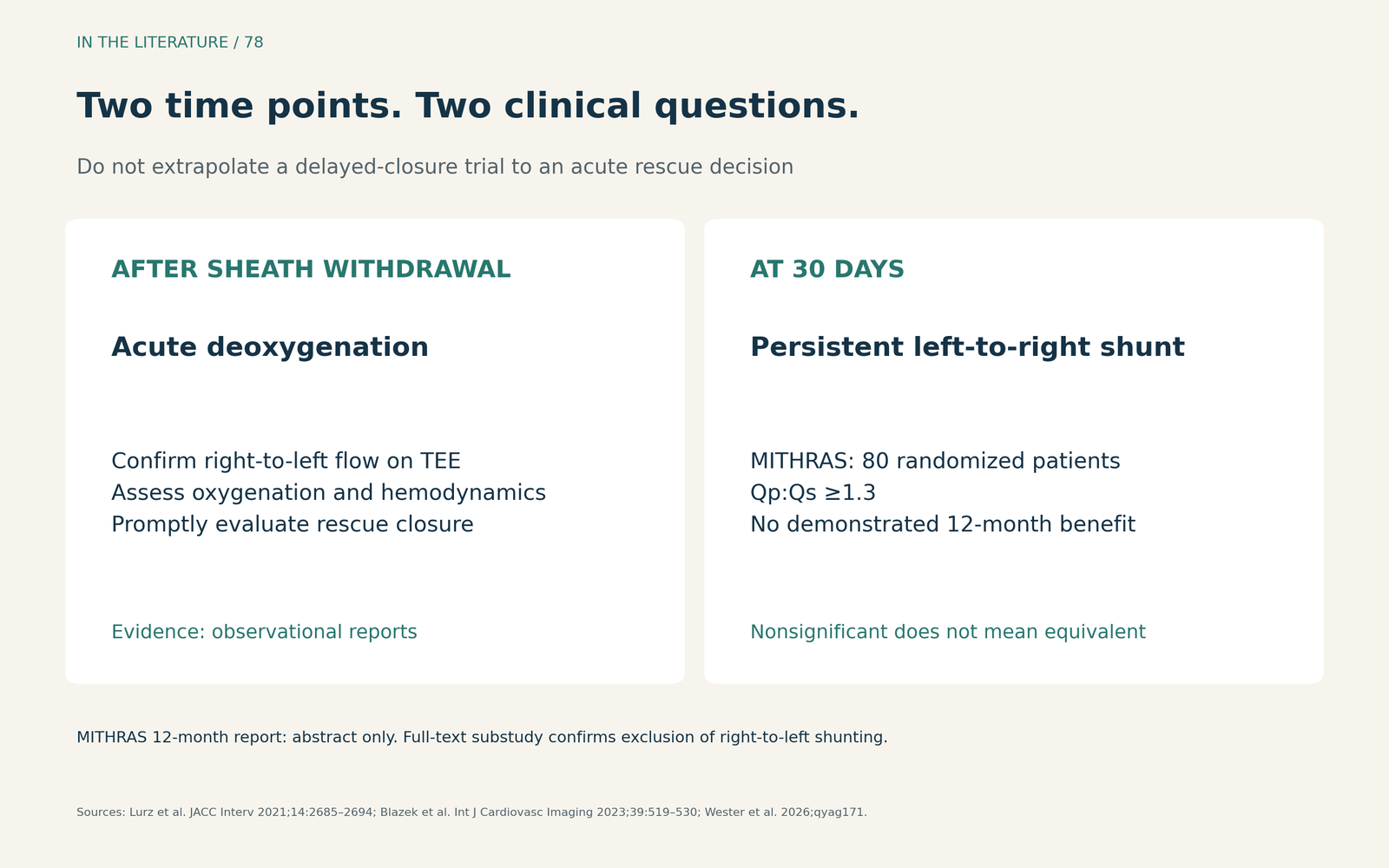
Figure 1. Timing changes the clinical question. MITHRAS: formal abstract only for the 12-month report; its full-text substudy describes eligibility. Acute rescue evidence is observational.1,2,4 View larger

After sheath withdrawal: connect the shunt to the deterioration
In a 2026 single-center retrospective series of 444 successful M-TEER procedures, Wester and colleagues described six patients who required immediate closure for right-to-left shunting and acute deoxygenation. TEE identified predominant right-to-left flow after withdrawal of the steerable sheath. All six had severe tricuspid regurgitation and a dilated, impaired right ventricle. These findings are warning signs, not validated predictors or automatic indications for prophylactic closure.2
For the anesthesia and imaging teams, the practical implication is to interpret the TEE finding together with the oxygenation change and hemodynamics. Track inspired oxygen as well as saturation: an increase in FiO₂ can partly mask deterioration. The observation that a shunt is present should not replace assessment of its direction and physiological consequences.2
Takaya and colleagues' Japanese retrospective survey provides a broader view. Among 2,722 MitraClip procedures, 30 patients were judged to require iASD closure; 22 required it within 24 hours. The clinical settings included hypoxemia with right-to-left shunting and right-sided heart failure with left-to-right shunting. The authors reported resolution of deterioration in the 21 patients who actually underwent immediate closure. This supports selective rescue practice, while the absence of an untreated comparator limits causal conclusions.3
Thus, left-to-right flow is not automatically harmless, and right-to-left flow must be interpreted with its clinical impact. A patient with new hypoxemia or circulatory deterioration needs prompt team assessment of whether the shunt is contributing; the neutral delayed-closure trial should not be used to defer that assessment.123
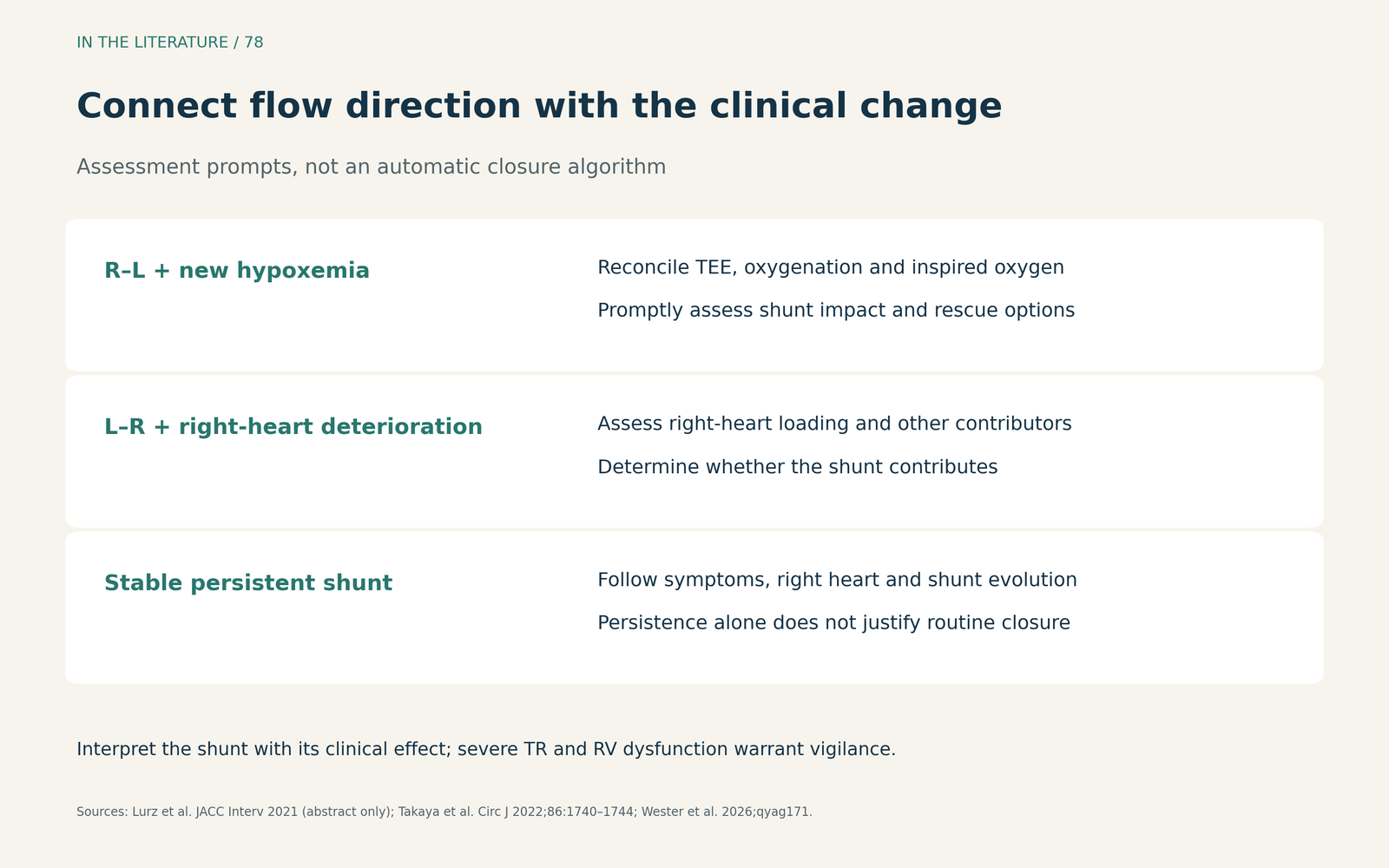
Figure 2. Match the direction of flow to the clinical problem. These are prompts for individualized assessment, not a validated closure algorithm.1,2,3 View larger

Persistent defects call for clinical reassessment
The MITHRAS natural-history substudy followed conservatively treated patients with adequate TEE at one and six months. Six of 36 patients (17%) had spontaneous closure. Four of the original 40 conservative-treatment patients lacked paired imaging, including one who died and three hospitalized elsewhere with decompensation. This selected denominator matters: 17% is not the spontaneous-closure rate for every patient undergoing TEER.4
Among those with persistent defects, the defect area could decrease over time. The clinical inference is to reassess the course of the patient alongside the shunt—symptoms, right-heart findings and the underlying valve and filling-pressure problem—rather than treating persistence alone as failure. The study's exploratory geometric predictors do not supply a validated threshold for intervention.4
A November 2026 study by Amsalem and colleagues reinforces the limits of a single Doppler number. Its primary analysis included 160 patients with positive net iASD VTI, calculated as left-to-right minus right-to-left VTI. Because VTI does not incorporate defect area, it does not quantify shunt volume or Qp:Qs. The study identified neither a statistically significant prognostic association nor an outcome-associated threshold. This is not proof that shunt physiology is irrelevant; it argues against using a single intraprocedural VTI to decide closure.5
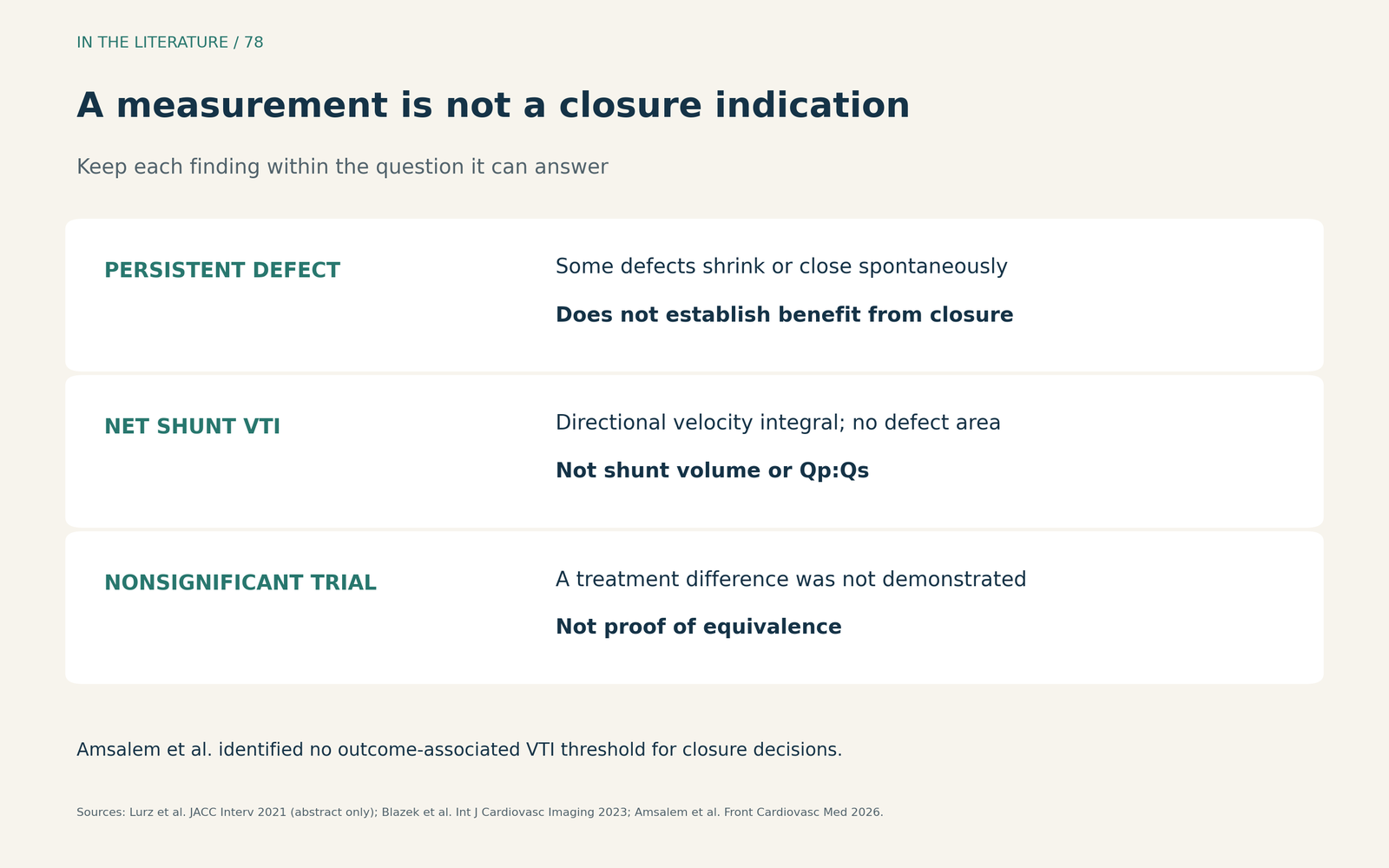
Figure 3. Keep the measurement and the decision separate. Persistence, Doppler velocity and clinical outcomes answer different questions.1,4,5 View larger

Three takeaways
- Separate elective follow-up from acute rescue. MITHRAS does not justify routine closure of a stable persistent shunt, and it does not settle acute right-to-left hypoxemia.
- Connect flow direction to physiology. After sheath withdrawal, reconcile TEE, oxygenation, inspired oxygen and right-heart findings; clinically important left-to-right shunting also deserves attention.
- Follow the patient, not one number. Neither defect persistence nor an isolated VTI establishes that closure will improve outcomes.
References
- Lurz P, Unterhuber M, Rommel KP, et al. Iatrogenic Atrial Septal Defects Following Transcatheter Mitral Valve Repair and Implications of Interventional Closure. JACC Cardiovasc Interv. 2021;14(24):2685-2694. doi:10.1016/j.jcin.2021.09.023 Abstract only.
- Wester M, Paulus M, Luchner A, et al. Acute deoxygenation during M-TEER: a note of caution. Eur Heart J Imaging Methods Pract. 2026;4(4):qyag171. doi:10.1093/ehjimp/qyag171
- Takaya Y, Akagi T, Hara H, et al. Iatrogenic Atrial Septal Defect Requiring Transcatheter Closure Following Transcatheter Mitral Valve Repair. Circ J. 2022;86(11):1740–1744. doi:10.1253/circj.CJ-22-0048
- Blazek S, Unterhuber M, Rommel KP, et al. Fate of iatrogenic atrial septal defects following mitral transcatheter edge-to-edge repair - a subanalysis of the MITHRAS trial. Int J Cardiovasc Imaging. 2023;39(3):519-530. doi:10.1007/s10554-022-02750-5
- Amsalem I, Shemesh E, Denekamp H, et al. Association between iatrogenic atrial septal shunt VTI and clinical outcomes after mitral transcatheter edge-to-edge repair. Front Cardiovasc Med. 2026;13:1969083. doi:10.3389/fcvm.2026.1969083