ITL-958c26109ba5
Juan Li, MD · Updated November 17, 2026
Watch the video
Key points
- An apparently adequate pump flow may include blood circulating back through an incompetent aortic valve. It does not guarantee adequate systemic perfusion.[1]
- New congestion or low-output symptoms warrant reassessment of the patient, the pump and the valve together; do not wait for the next surveillance study.[1]
- Grade regurgitation with an integrated examination, including its duration, ventricular response and circuit flow. A single jet measurement can miss the clinical burden.[2], [3]
- Pump-speed adjustment is a tradeoff: increasing support can improve unloading while worsening regurgitation; promoting valve opening must not compromise perfusion.[1], [2]
- Persistent, clinically important regurgitation despite optimization merits a multidisciplinary valve discussion. Transcatheter treatment is an option for selected patients, with anatomy and procedural risk central to the decision.[2]
A patient with a durable LVAD returns with breathlessness, edema or declining exercise tolerance, yet the displayed flow looks satisfactory. Before concluding that the device is providing enough support, ask where that flow is going. Aortic regurgitation (AR) can create a loop from the LV through the pump to the aorta and back into the LV. Blood moving through the pump is not necessarily blood reaching the organs.[1], [3]
Recognize the loop, then establish its clinical importance
The recirculation mechanism explains how substantial pump flow can coexist with incomplete unloading and congestion. It does not prove that every episode of breathlessness is caused by AR. Blood pressure, volume status, RV function, arrhythmia and mechanical problems can alter the same clinical picture. Compare symptoms, perfusion, pump parameters and imaging with the patient's previous baseline.[1], [2]
If deterioration is acute or perfusion is impaired, involve the LVAD team urgently. In a more stable patient, establish whether AR has progressed alongside increasing LV size, impaired unloading or worsening filling pressures. Persistent or recurrent heart-failure symptoms, uncertain unloading and suspected RV or device dysfunction are reasons to consider right-heart catheterization. The useful endpoint is an explanation for inadequate support, not simply a larger number on the controller.[1]
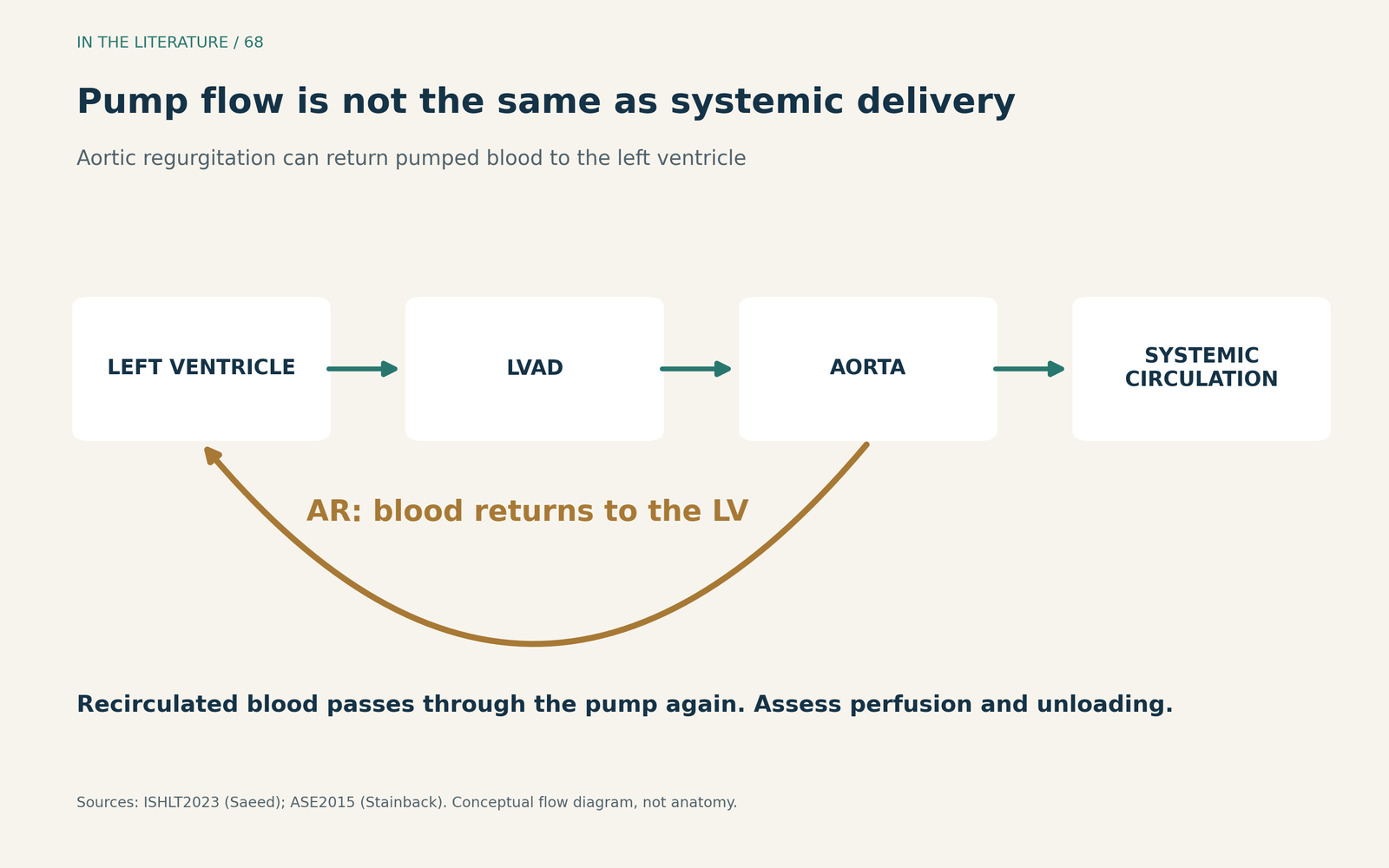
Figure 1. Pump flow and systemic flow are different questions when blood recirculates. This conceptual diagram is not an anatomical image or a formula for calculating regurgitant fraction.[1], [3] View larger.

Ask the echocardiogram four questions
First, when and how much does the aortic valve open? Describe persistent closure, intermittent opening or opening with every beat, using several cardiac cycles. HeartMate 3's artificial pulse does not establish that the leaflets actually open.[2], [3]
Second, what is the duration and pattern of regurgitation? With continuous-flow support, AR can extend beyond diastole. Integrate jet characteristics and duration with LV size, unloading and comparative circuit flow. Do not interpret a static color jet or an isolated vena contracta measurement as the whole diagnosis.[3]
Third, do the physiology and the apparent grade agree? Outflow-graft Doppler measurements, including the systolic-to-diastolic velocity ratio and diastolic acceleration, can add information. The ASE update notes that the supporting observations are limited and further validation is lacking. Treat these indices as adjuncts, not universal standalone HeartMate 3 thresholds.[2]
Fourth, what else explains the symptoms? Reassess RV function, filling, mitral regurgitation and the inflow/outflow pathways. When symptoms, echo and controller findings disagree, additional hemodynamic assessment may be more useful than repeatedly relabeling the color jet.[1], [2]
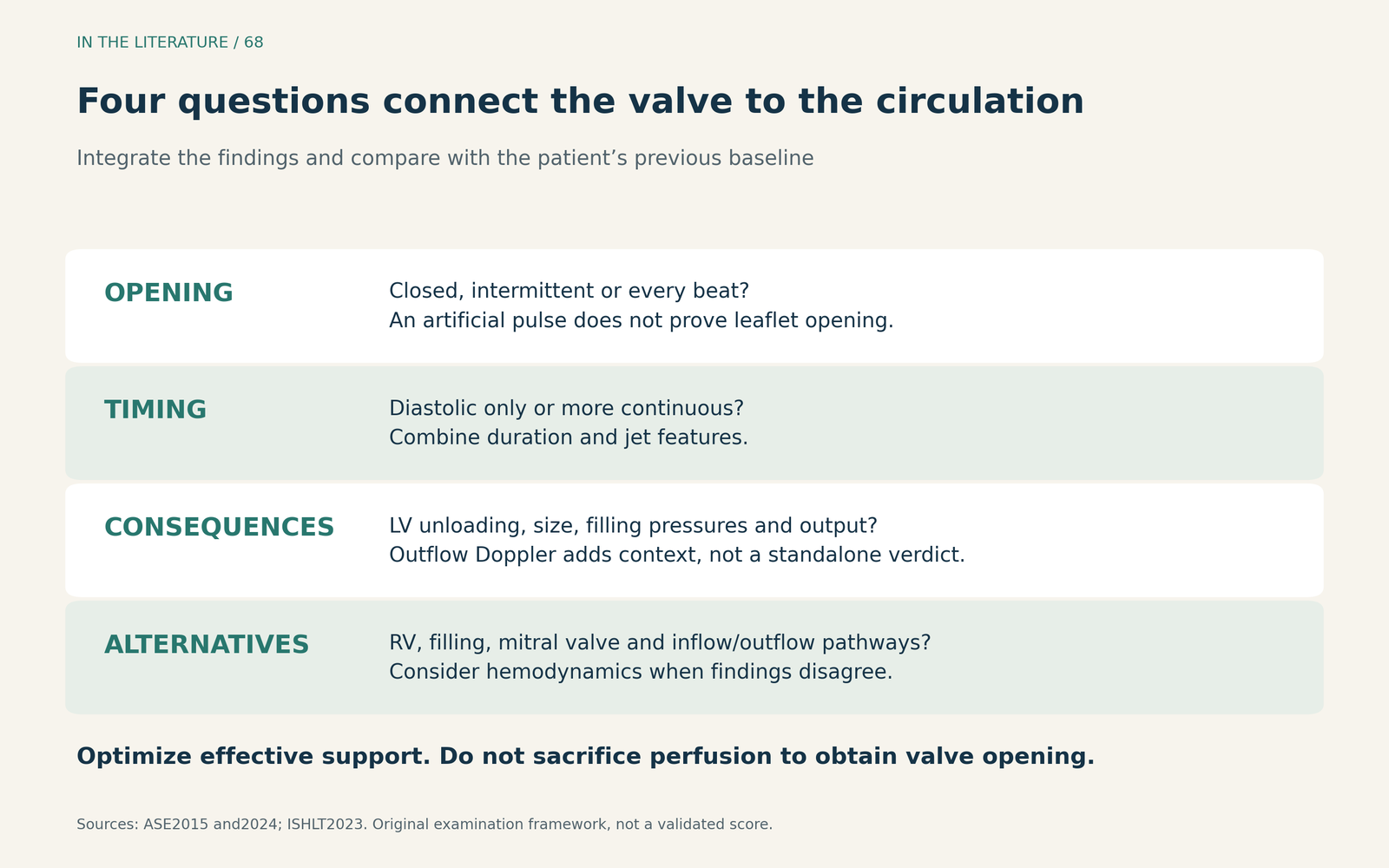
Figure 2. An integrated assessment connects the valve lesion to the patient's physiology. These questions organize the examination; they are not a validated diagnostic score.[1], [2], [3] View larger.

A recent longitudinal cohort illustrates why that connection matters. Legtenberg and colleagues studied 199 LVAD recipients, including 176 with HeartMate 3; 19 met the study definition of clinically significant AR during variable follow-up. The definition included moderate or severe AR, or a need for aortic valve replacement. Hemodynamic differences were not uniform across all measured parameters. Moreover, catheterization timing depended partly on transplant strategy and clinical need, and long-term observations were concentrated in transplant candidates. These descriptive associations support assessing the whole circulation; they do not show that AR caused every abnormal pressure or that correcting it improves survival.[4]
Optimize support without chasing valve opening alone
Review blood-pressure control, congestion and medical therapy with the LVAD team, then assess whether the current speed achieves adequate unloading. Raising speed may improve symptoms in some patients, but can also increase AR. Reducing speed merely to obtain intermittent valve opening can worsen unloading or organ perfusion. The 2024 ASE recommendations place relief of heart-failure signs and symptoms ahead of valve opening as an isolated target.[1], [2]
Speed changes should therefore be planned and interpreted with echocardiographic and, when needed, invasive hemodynamic guidance. If aortic-root thrombus is suspected, avoid lowering pump speed because it may trigger sudden valve opening; obtain LVAD-team reassessment.[2], [3]
When should the valve team become involved?
Persistent congestion or inadequate support attributable to significant AR despite medical and device optimization should prompt joint discussion among advanced-heart-failure, imaging, structural-heart and surgical teams. Transplantation, surgical valve treatment and transcatheter intervention depend on candidacy, anatomy and procedural risk. The recommendation to address more-than-mild AR at LVAD implantation should not be repurposed as an automatic TAVR threshold years later.[1], [2]
Pure AR often lacks the calcification that helps anchor conventional transcatheter valves. Migration, embolization, residual leak and a need for an additional valve remain relevant even when reducing AR appears technically achievable.[2], [5], [6]
Two 2026 reports add practical information:
- Dedicated-valve multicenter registry: Hinkov and colleagues treated 30 LVAD recipients with JenaValve Trilogy across five centers. VARC-3 device success at 30 days was 28/30 (93.3%); one patient died within 30 days, following a hemorrhagic stroke. This is encouraging feasibility evidence in selected patients, without a randomized comparator.[5]
- Balloon-expandable single-center series: Duran Karaduman and colleagues reported 14 HeartMate 3 recipients. Four required a second valve, and three died in hospital and within 30 days. The full text records one valve embolization requiring surgery followed by death; the other two deaths involved low cardiac output and multiorgan dysfunction. Device-related complications therefore remain part of the risk discussion.[6]
These separate cohorts do not establish superiority of one valve platform. They support careful selection and planning for procedural rescue, while leaving uncertainty about durability and comparative long-term benefit.
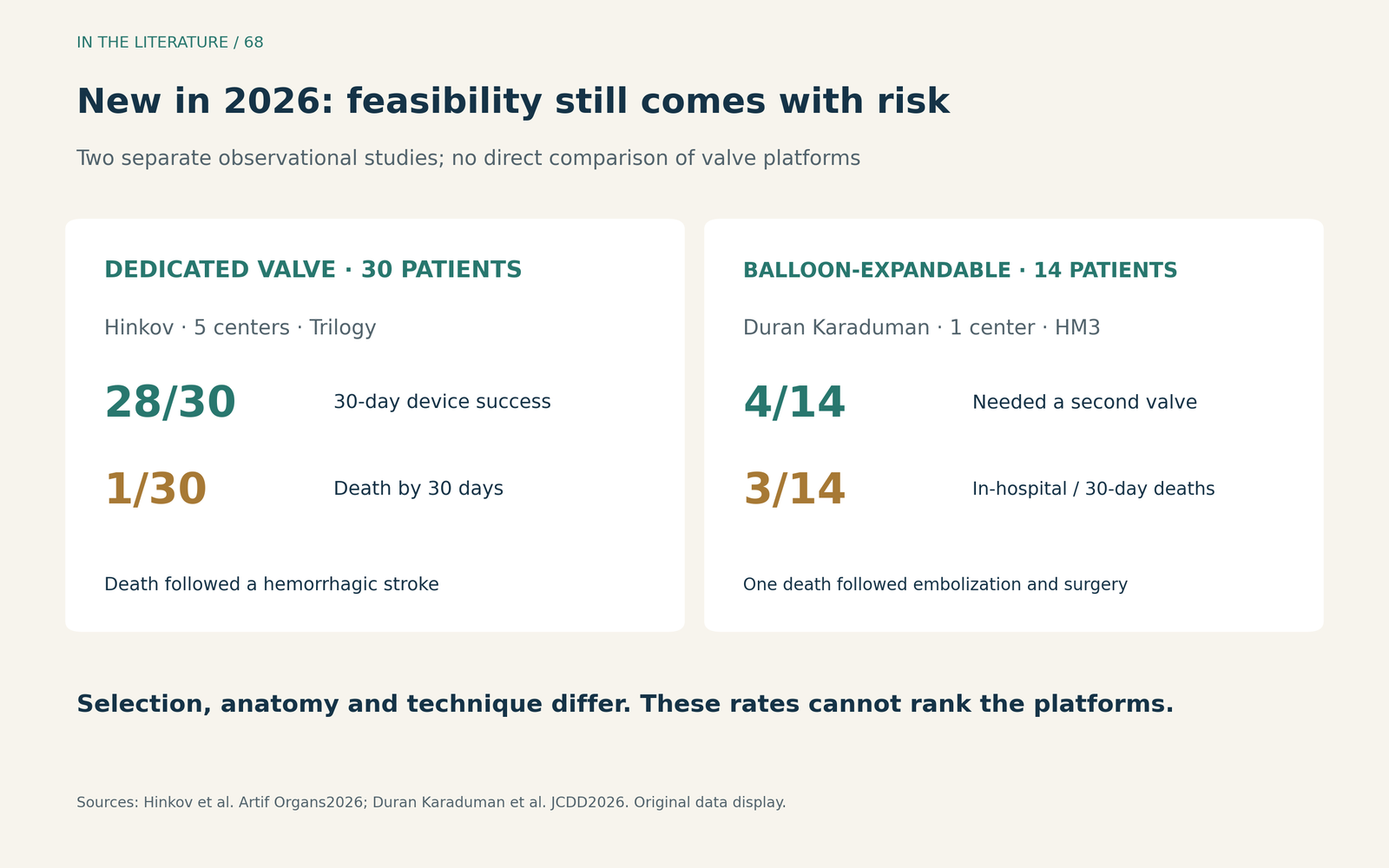
Figure 3. Contemporary feasibility data still require a risk discussion. The studies differ in selection, anatomy and technique; their event rates cannot rank the valve platforms.[5], [6] View larger.

Three takeaways
- Follow effective support, not the displayed flow alone. AR can recycle blood through the pump while congestion or hypoperfusion persists.[1], [3]
- Connect the valve to the physiology. Integrate AR timing, ventricular unloading, RV function and, when needed, invasive pressures; preserve perfusion during speed optimization.[1], [2], [3]
- Escalate persistent, clinically important AR to the multidisciplinary team. TAVR is feasible in selected patients, but anchoring complications and uncertain long-term comparative benefit remain part of the decision.[2], [5], [6]
References
- Saeed D, Feldman D, Banayosy AE, et al. The 2023 International Society for Heart and Lung Transplantation Guidelines for Mechanical Circulatory Support: A 10-Year Update. J Heart Lung Transplant. 2023;42(7):e1-e222. doi:10.1016/j.healun.2022.12.004.
- Estep JD, Nicoara A, Cavalcante J, et al. Recommendations for Multimodality Imaging of Patients With Left Ventricular Assist Devices and Temporary Mechanical Support: Updated Recommendations from the American Society of Echocardiography. J Am Soc Echocardiogr. 2024;37(9):820-871. doi:10.1016/j.echo.2024.06.005.
- Stainback RF, Estep JD, Agler DA, et al. Echocardiography in the Management of Patients with Left Ventricular Assist Devices: Recommendations from the American Society of Echocardiography. J Am Soc Echocardiogr. 2015;28(8):853-909. doi:10.1016/j.echo.2015.05.008.
- Legtenberg S, ter Maaten JM, Erasmus ME, et al. Long-term trajectories of invasive hemodynamic parameters and clinical outcomes after durable left ventricular assist device implantation. JHLT Open. 2027;15:100711. Published online October 21, 2026. doi:10.1016/j.jhlto.2026.100711.
- Hinkov H, Yousefzada S, Just IA, et al. Early Multicenter Outcomes of Dedicated Transcatheter Aortic Valve Replacement for Left Ventricular Assist Device-Associated Pure Aortic Regurgitation. Artif Organs. 2026;50(10):1427–1433. doi:10.1111/aor.70226.
- Duran Karaduman B, Keleş T, Özcan Çelebi Ö, et al. Balloon-Expandable Transcatheter Aortic Valve Implantation for LVAD-Associated Native Aortic Insufficiency: A Single-Center Experience. J Cardiovasc Dev Dis. 2026;13(8):355. doi:10.3390/jcdd13080355.