ITL-0fea56c578c3
Juan Li, MD · Updated November 18, 2026
Watch the video
Key points
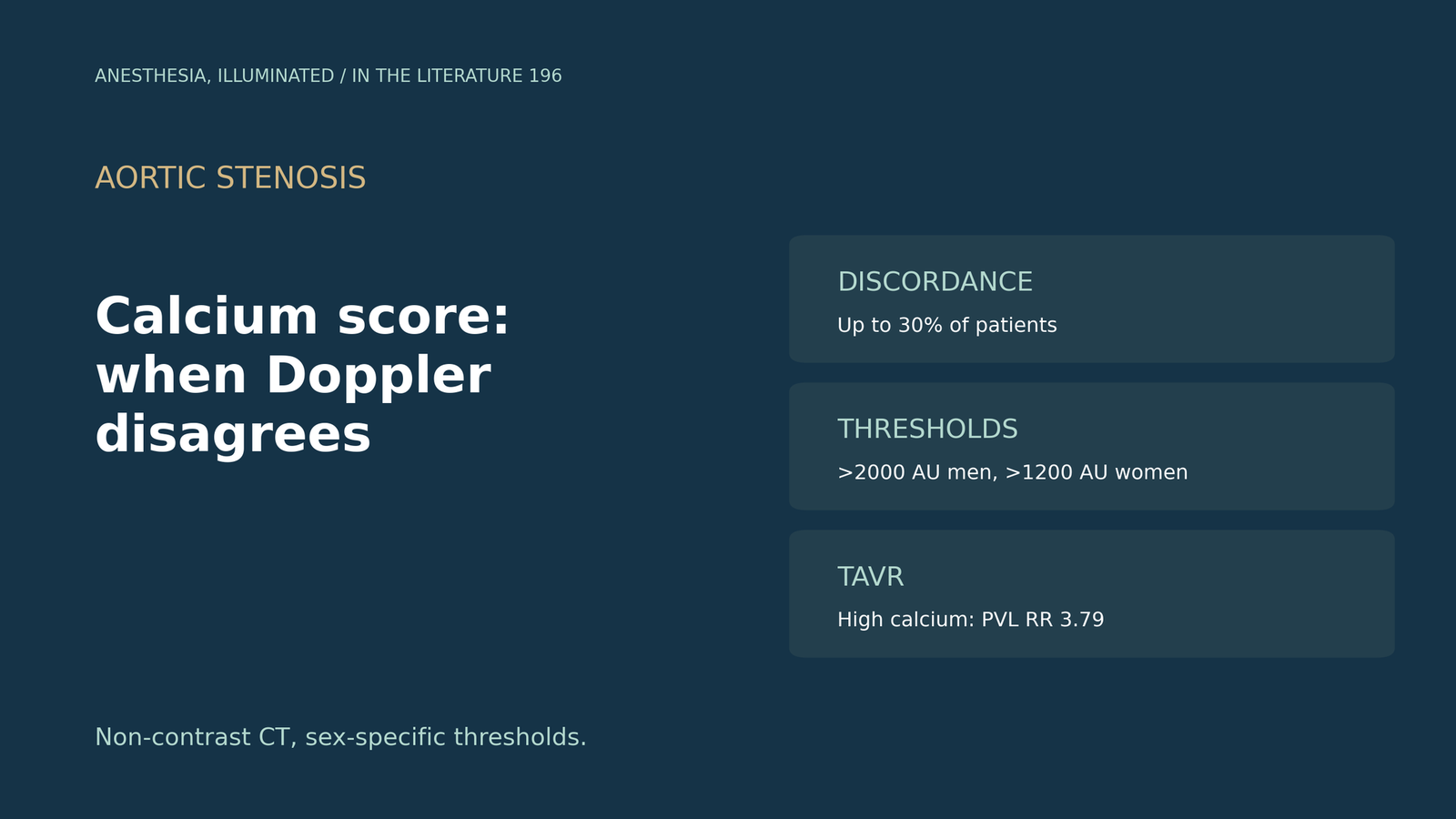
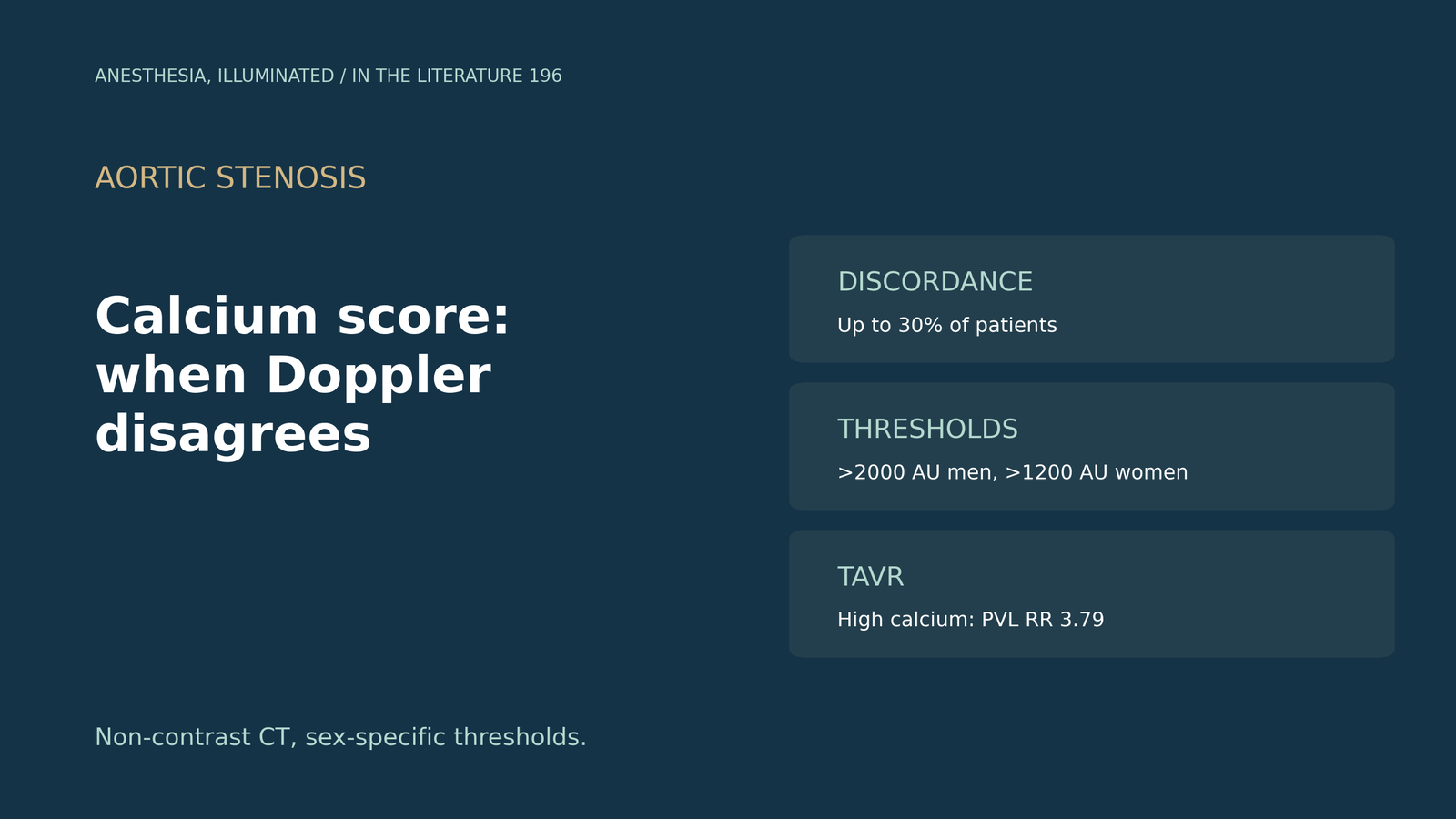
- Discordance is common. Grading discordance has been reported in up to 30% of patients, and CT calcium scoring can discriminate severe from non-severe AS in such cases.[1]
- The score measures the valve, not the flow. Calcium scoring recognized severe AS with 82% sensitivity and 78% specificity.[1]
- Thresholds are sex specific. Severe AS is likely above 2000 AU in men or 1200 AU in women, and contrast CT gives a lower score.[2]
- It resolves inconclusive stress echo. In classical low-flow AS, DSE was inconclusive in 20% of patients, and LVEF improvement was expected mainly when DSE and calcium agreed.[3]
- It helps when rhythm misleads Doppler. In atrial fibrillation, the mean gradient underestimated AS severity relative to the calcium score.[4]
During pre-TAVR TEE, a patient in atrial fibrillation with an LVEF of 55% has a valve area of 0.8 cm² but a mean gradient of only 28 mmHg. Is this severe aortic stenosis, and when should a CT calcium score settle the question?[1], [4]
Why calcium can settle a disagreement
Krzowski and colleagues report that grading discordance has been reported in up to 30% of patients, and that in such cases CT calcium scoring can act as a discriminator between severe and non-severe AS. In pooled data it recognized severe AS with 82% sensitivity and 78% specificity; it may help separate true-severe from pseudo-severe AS, and 36 to 55% of patients with paradoxical low-flow AS met the criteria for severe AS by calcium.[1] Gać and colleagues describe calcium scoring as a complementary tool, note that about 40% of standard TTE studies are inconclusive, and explain the method: a 130 HU detection threshold, with LVOT, coronary and mitral calcium excluded.[2]
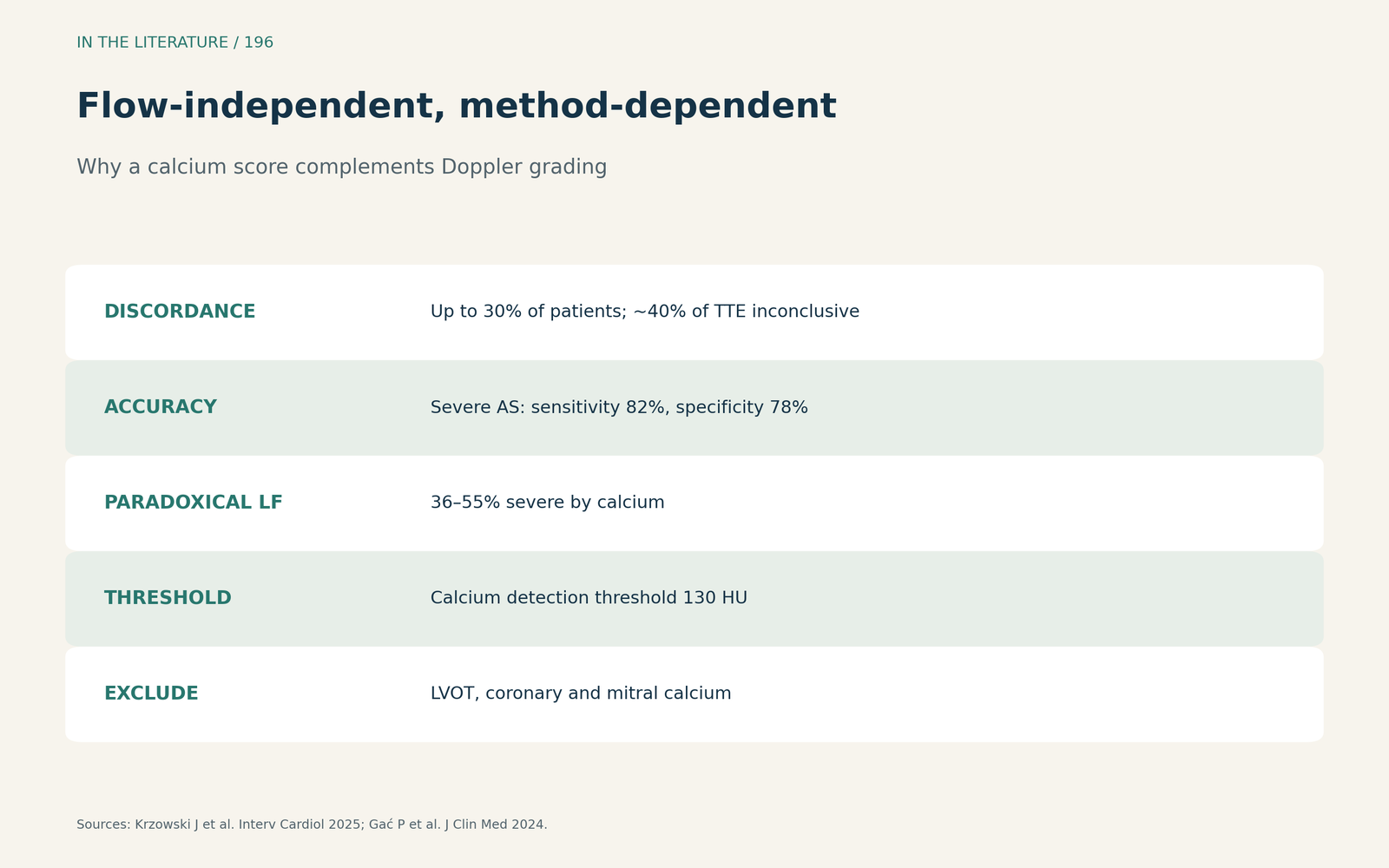
Figure 1. Flow-independent, but method-dependent. Synthesized from Krzowski et al. and Gać et al.[1], [2] View larger.

Thresholds and the settings where they help
Severe AS is likely when the score exceeds 2000 AU in men or 1200 AU in women, and contrast-enhanced CT gives a lower score than non-contrast CT.[2] Women develop AS with lower calcium scores than men.[1] Kragholm and colleagues studied classical low-flow, low-gradient AS: DSE was inconclusive in 11 patients (20%), 26 of 37 patients (70.3%) classified as true severe by DSE were concordant on calcium, and LVEF improvement after valve replacement was expected mainly when DSE and calcium agreed.[3] Alkurashi and colleagues found atrial fibrillation in 109 (17%) of TAVR patients; low-gradient AS was more common in AF (41% vs 21%), and the mean gradient during AF underestimated AS severity. They note that calcium thresholds for severe AS differ between men and women.[4]
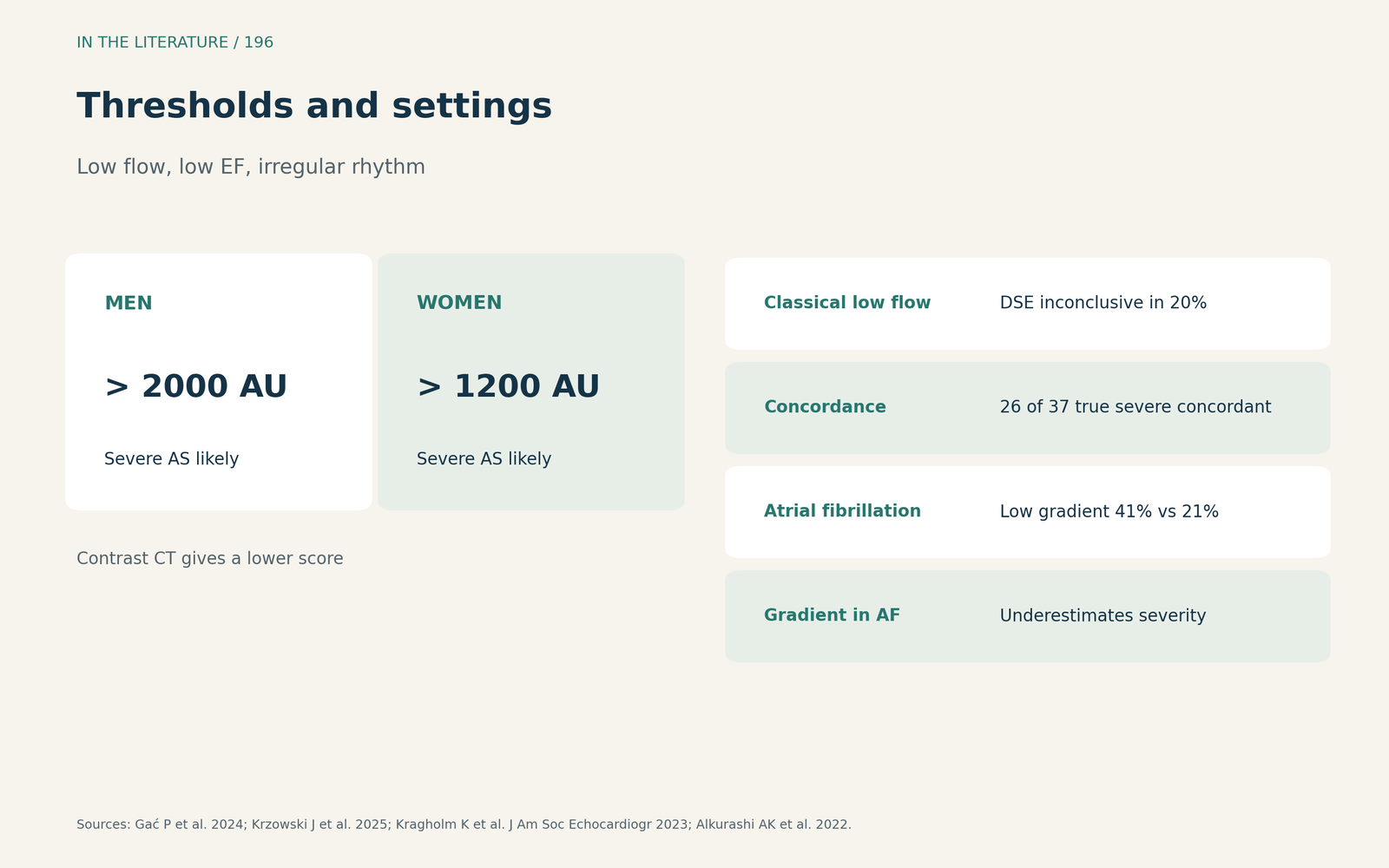
Figure 2. Low flow, low EF, irregular rhythm. Redrawn from Gać et al., Krzowski et al., Kragholm et al. and Alkurashi et al.[2], [1], [3], [4] View larger.

Beyond grading: planning TAVR
Calcium is a marker of severity and matters for procedure planning.[1] Shi and colleagues pooled 24 studies with 6,846 patients: a high calcium burden raised the risk of paravalvular leak (RR 3.79), and calcification in the LVOT also increased that risk. All of the included studies were retrospective.[5]
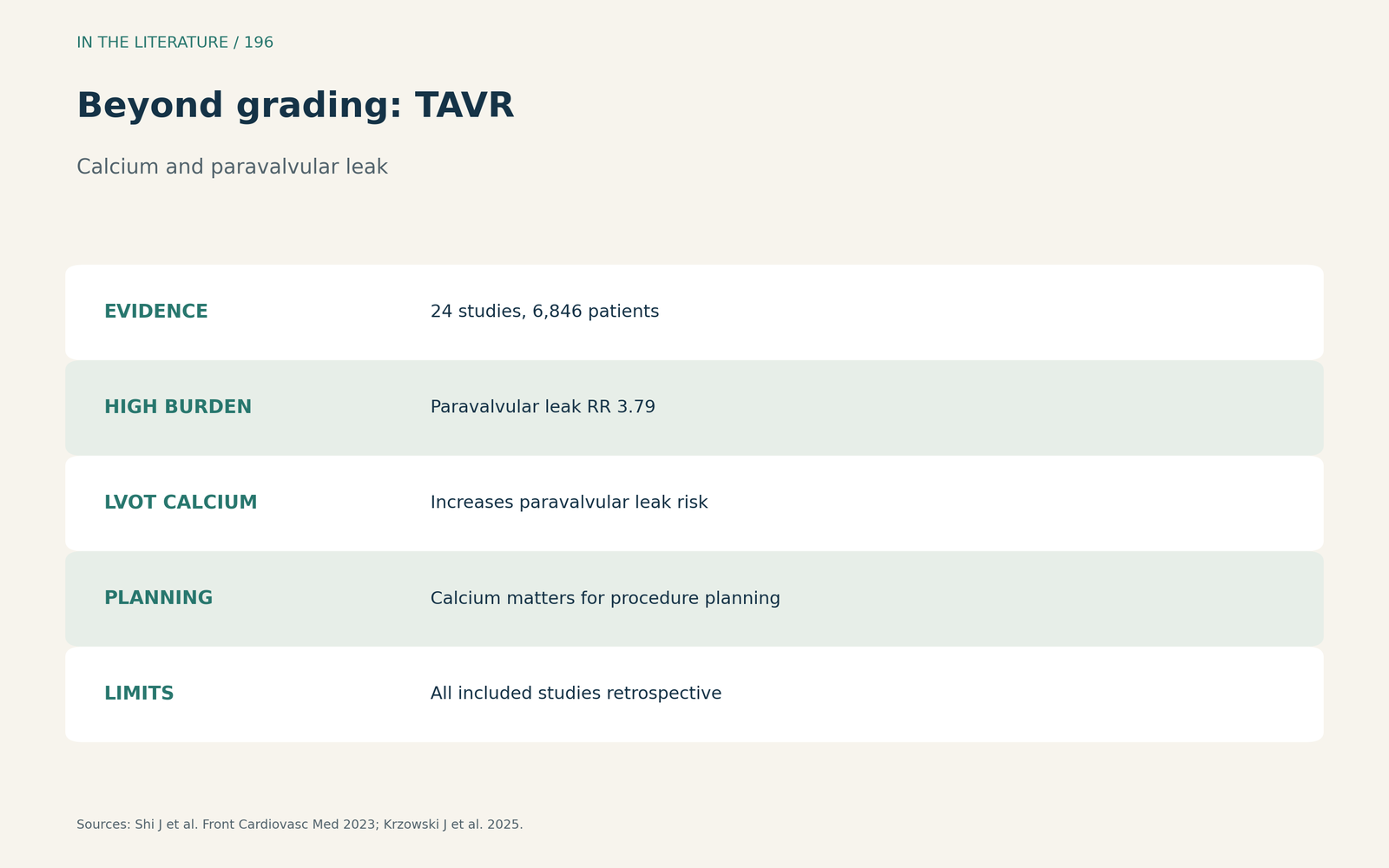
Figure 3. The same calcium that confirms severity can complicate the valve. Synthesized from Krzowski et al. and Shi et al.[1], [5] View larger.

Three takeaways
- Order a calcium score when Doppler measures disagree, especially with low flow, low EF or atrial fibrillation.[1], [4]
- Use non-contrast CT and sex-specific thresholds; contrast CT underestimates calcium.[2]
- Calcium supports, but does not replace, hemodynamic grading, and it also predicts paravalvular leak.[3], [5]
References
- Krzowski J, Weir-McCall J, D’Errico L, et al. Aortic valve calcium: a narrative review of its role in the assessment of aortic stenosis and as a predictor of post-transcatheter aortic valve implantation outcomes. Interv Cardiol. 2025;20:e16. doi:10.15420/icr.2024.17
- Gać P, Jaworski A, Grajnert F, et al. Aortic valve calcium score: applications in clinical practice and scientific research—a narrative review. J Clin Med. 2024;13(14):4064. doi:10.3390/jcm13144064
- Kragholm K, Abdelkarim O, Sinha A, et al. Aortic valve calcium score in addition to dobutamine stress echocardiography for low-flow, low-gradient aortic stenosis assessment. J Am Soc Echocardiogr. 2023;36(12):1324–1326. doi:10.1016/j.echo.2023.08.009
- Alkurashi AK, Pislaru SV, Thaden JJ, et al. Doppler mean gradient is discordant to aortic valve calcium scores in patients with atrial fibrillation undergoing transcatheter aortic valve replacement. J Am Soc Echocardiogr. 2022;35(1):116–123. doi:10.1016/j.echo.2021.08.024
- Shi J, Li W, Zhang T, et al. Quantity and location of aortic valve calcification predicts paravalvular leakage after transcatheter aortic valve replacement: a systematic review and meta-analysis. Front Cardiovasc Med. 2023;10:1170979. doi:10.3389/fcvm.2023.1170979