ITL-1cf3dbf85bde
Juan Li, MD · Updated November 17, 2026
Watch the video
Key points
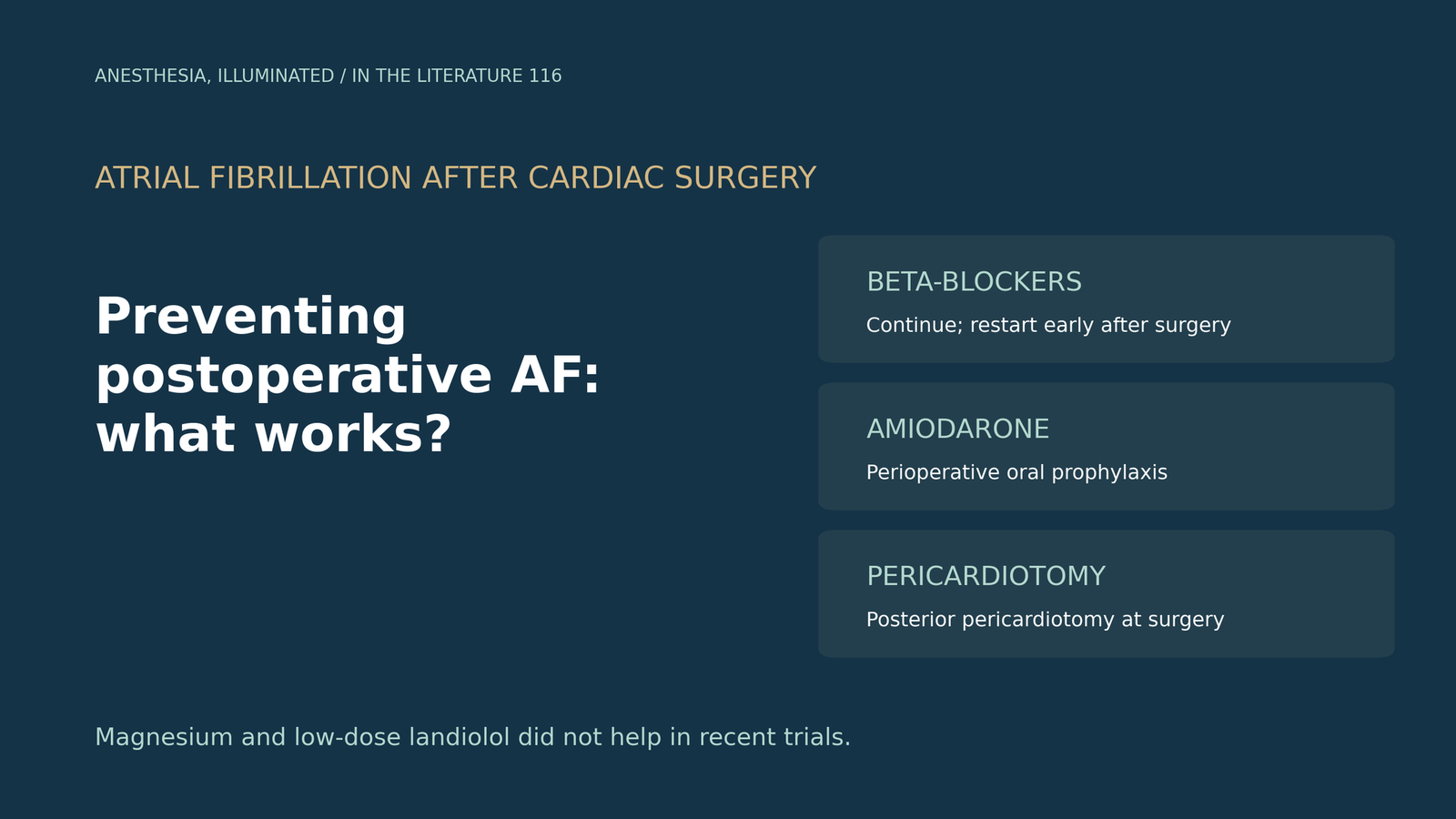
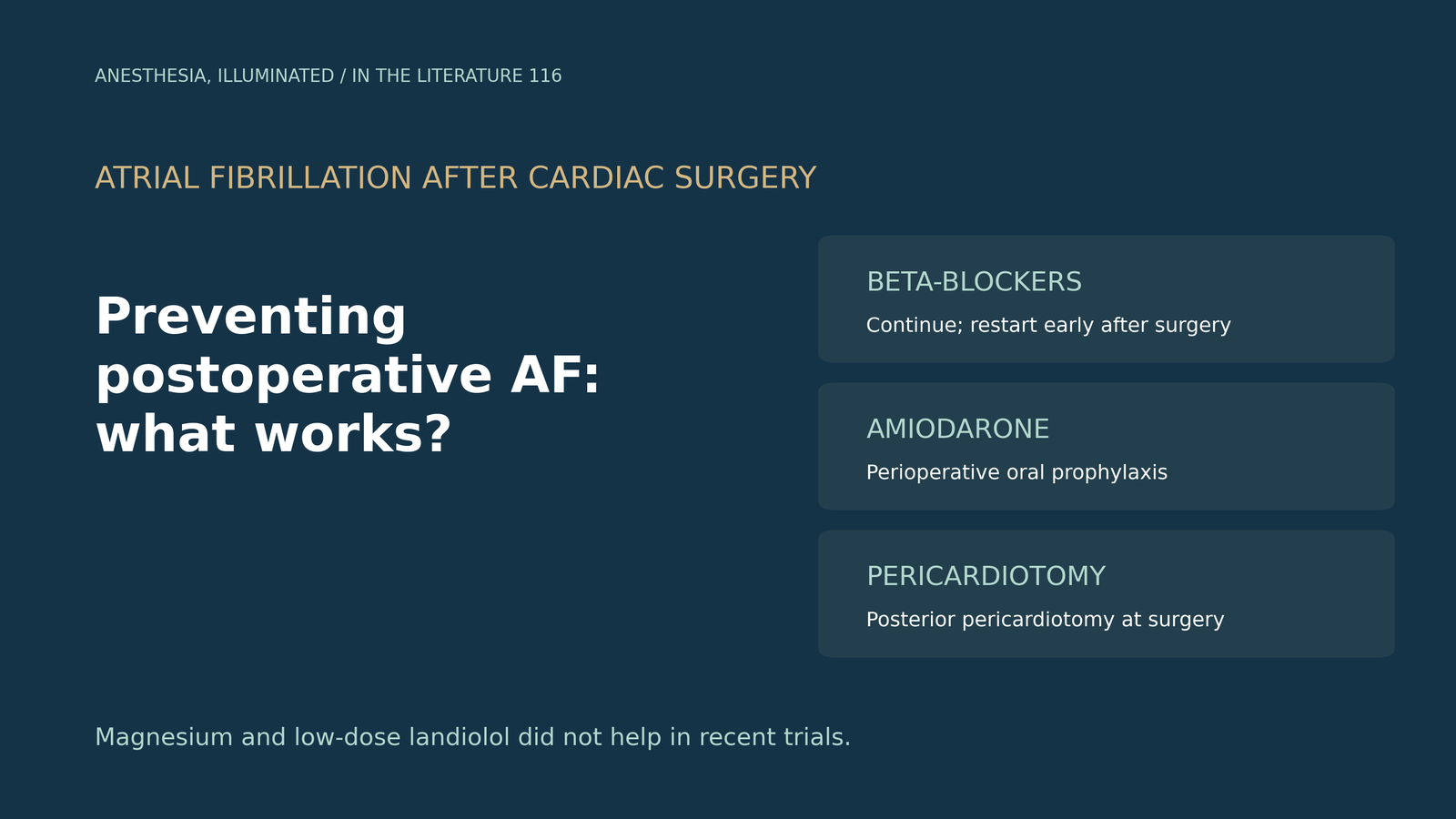
- The 2026 Society of Thoracic Surgeons (STS) guideline, available to us only as an abstract, gives a Class I recommendation to perioperative oral amiodarone and Class IIa recommendations to posterior pericardiotomy and perioperative beta-blockers.[1]
- Do not let beta-blockers lapse. Withdrawal is associated with postoperative atrial fibrillation (odds ratio 1.91), and in a prospective cohort, reintroduction by the 72-hour landmark was associated with less of it (adjusted odds ratio 0.58).[2], [3]
- Amiodarone has the largest body of evidence: 40 randomized trials with 6,166 patients gave an odds ratio of 0.39, at the cost of more bradycardia (odds ratio 2.33). Posterior pericardiotomy also significantly reduced atrial fibrillation.[4], [3]
- Landiolol looked effective in small, mostly Japanese trials (relative risk 0.40), but a low-dose infusion did not reduce atrial fibrillation in a randomized trial of 318 non-Asian patients (relative risk 0.93).[5], [6]
- Routine magnesium is not supported: a randomized trial was stopped for futility. Doing simple things well, such as a care bundle built around early beta-blockade, was associated with a fall from 35.4% to 23.3% in one center.[7], [8]
A patient is scheduled for combined valve and coronary surgery. The team asks which measures are worth adding to prevent atrial fibrillation after surgery. Which interventions have evidence behind them, and which recent trials have been disappointing?[1], [3]
Why it matters
Suero and colleagues, in a 2024 clinical practice review, describe patients having cardiac surgery as having a postoperative atrial fibrillation risk of 15% to 50%.[3] The 2026 STS guideline abstract describes it as the most frequent complication after cardiac surgery. The writing group made 15 recommendations, of which 8 were Class IIb because of uncertainty and limited data, and 3 were Class III for therapies without demonstrated benefit.[1]
Beta-blockers: continue, then restart early
Suero and colleagues state that the general recommendation is to continue beta-blockers until surgery.[3] In a prospective French cohort of 663 chronic beta-blocker users, Couffignal and colleagues report that withdrawal is associated with postoperative atrial fibrillation (odds ratio 1.91). Reintroduction by the 72-hour landmark was associated with less atrial fibrillation (adjusted odds ratio 0.58; 0.38 to 0.89), but reintroduction decreased it only at later time points and the analysis is observational.[2]
Amiodarone and posterior pericardiotomy
In a 2026 meta-analysis of 40 randomized trials with 6,166 patients, Li and colleagues found that perioperative amiodarone was associated with less atrial fibrillation (odds ratio 0.39; 95% CI 0.31 to 0.49). The 95% prediction interval ranged from 0.14 to 1.06, bradycardia was more common (odds ratio 2.33), and no significant differences were found in mortality, heart block or hypotension. Certainty across all studies was rated very low.[4] Suero and colleagues call preoperative oral amiodarone the single most powerful preoperative intervention, and report that patients who had posterior pericardiotomy had significantly less atrial fibrillation than those who did not.[3]
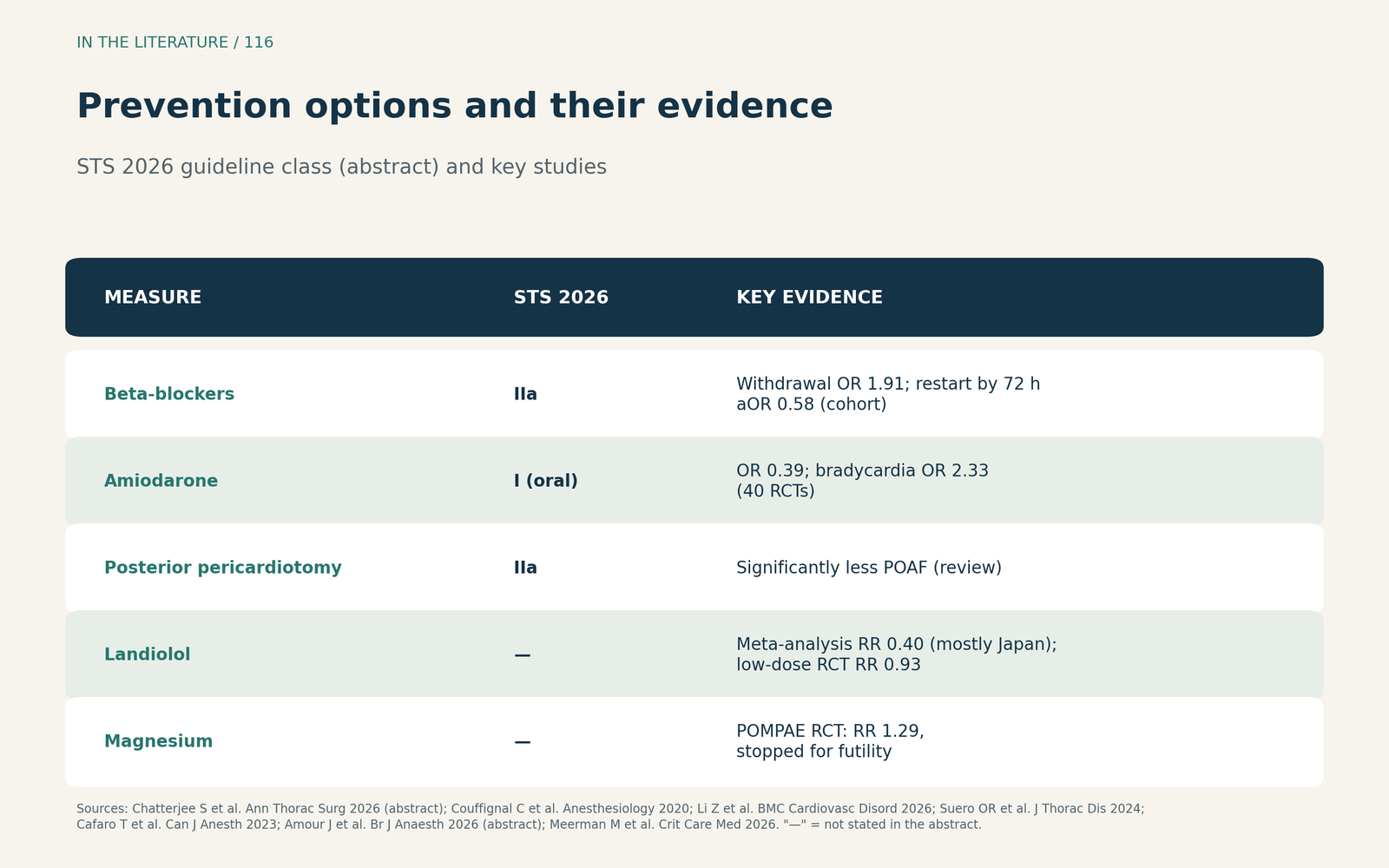
Figure 1. Prevention options and their evidence. Classes from the STS 2026 guideline abstract; effect sizes from the cited studies.[1], [2], [3], [4], [5], [6], [7] View larger.

Landiolol: promising but not confirmed
Landiolol is an ultra-short-acting beta-1 blocker. In a meta-analysis of 9 randomized trials with 868 participants, Cafaro and colleagues found less atrial fibrillation with landiolol (56/460 vs 133/408; relative risk 0.40). Most of the trials (8 of 9) were conducted in Japan, raising the question of generalizability.[5] In a French multicenter randomized trial in non-Asian patients 65 years or older, a low-dose 24-hour infusion used as a bridge to oral beta-blockers did not reduce atrial fibrillation in the intensive care unit (29.8% vs 31.9% with placebo; relative risk 0.93; 95% CI 0.67–1.30).[6]
Magnesium: not routinely
Older meta-analyses suggested that intravenous magnesium reduced postoperative atrial fibrillation by 36%.[3] In the randomized POMPAE trial, however, Meerman and colleagues found atrial fibrillation in 37.9% of the magnesium group and 28.6% of the placebo group (relative risk 1.29; 95% CI 0.92–1.83). The trial met its prespecified futility criteria, and the authors conclude that their findings do not support routine prophylactic magnesium.[7]
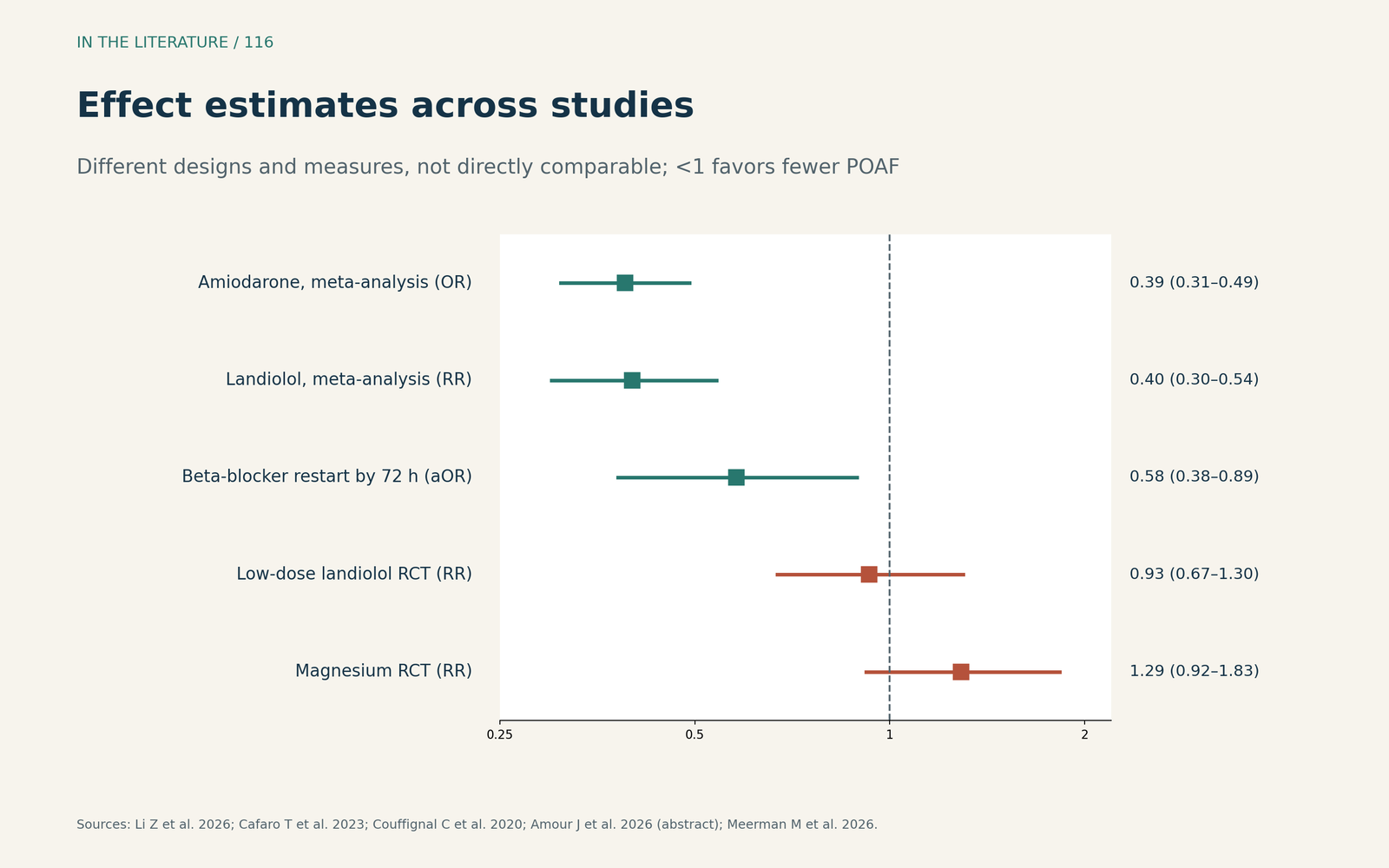
Figure 2. Effect estimates across studies. Redrawn from the results of the cited meta-analyses, cohort and trials; different designs and effect measures, not directly comparable.[4], [5], [2], [6], [7] View larger.

Doing simple things well
Buerge and colleagues implemented a practice advisory in 384 consecutive patients having open cardiac surgery. The bundle included early beta-blockade, potassium and magnesium replacement, fluid balance, analgesia and oxygenation. Postoperative atrial fibrillation fell from 35.4% to 23.3%. As a before-and-after study, it cannot exclude other changes in practice over the same period.[8]
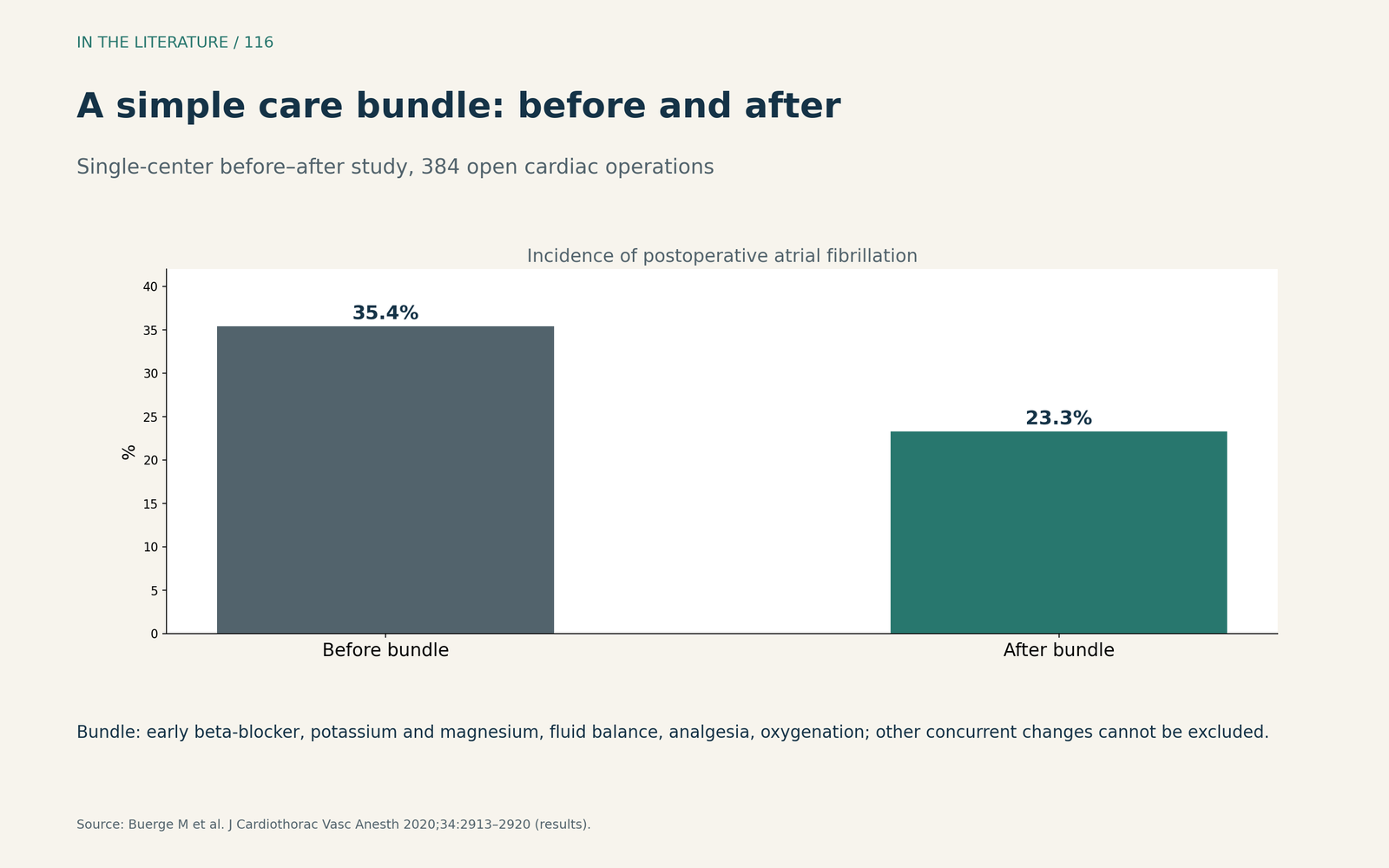
Figure 3. A simple care bundle. Redrawn from the results of Buerge et al.; single-center before-and-after study.[8] View larger.

Three takeaways
- Keep beta-blockers going. Continue them until surgery and restart them early afterward; withdrawal is linked to more atrial fibrillation.[1], [2], [3]
- Use the measures with the most evidence. Perioperative oral amiodarone (watch for bradycardia) and posterior pericardiotomy carry the strongest guideline support.[1], [3], [4]
- Do not rely on magnesium or low-dose landiolol. Recent trials did not show benefit, and a well-run bundle of basic measures may matter more.[6], [7], [8]
References
- Chatterjee S, Grant MC, Hui DS, et al. The Society of Thoracic Surgeons 2026 clinical practice guidelines for the prevention and treatment of new-onset postoperative atrial fibrillation after cardiac surgery. Ann Thorac Surg. 2026;122(2):255–277. Abstract only. doi:10.1016/j.athoracsur.2026.04.002
- Couffignal C, Amour J, Ait-Hamou N, et al. Timing of β-blocker reintroduction and the occurrence of postoperative atrial fibrillation after cardiac surgery: a prospective cohort study. Anesthesiology. 2020;132(2):267–279. doi:10.1097/ALN.0000000000003064
- Suero OR, Ali AK, Barron LR, et al. Postoperative atrial fibrillation (POAF) after cardiac surgery: clinical practice review. J Thorac Dis. 2024;16(2):1503–1520. doi:10.21037/jtd-23-1626
- Li Z, Wang S, An L, et al. Meta-analysis of perioperative amiodarone for prevention of postoperative atrial fibrillation (POAF) in cardiac surgery patients: update and reevaluation of timing, route, and dosage. BMC Cardiovasc Disord. 2026;26(1):547. doi:10.1186/s12872-026-05813-w
- Cafaro T, Allwood M, McIntyre WF, et al. Landiolol for the prevention of postoperative atrial fibrillation after cardiac surgery: a systematic review and meta-analysis. Can J Anaesth. 2023;70(11):1828–1838. doi:10.1007/s12630-023-02586-0
- Amour J, Naudin C, Besnard A, et al. Low dose of landiolol does not prevent postoperative atrial fibrillation after cardiac surgery in non-Asian patients: a multicentre randomised study. Br J Anaesth. 2026;136(1):65–73. Abstract only. doi:10.1016/j.bja.2025.09.019
- Meerman M, Buijser M, Serpa Neto A, et al. Magnesium sulfate to prevent perioperative atrial fibrillation in cardiac surgery: a randomized clinical trial. Crit Care Med. 2026;54(7):1635–1646. doi:10.1097/CCM.0000000000007162
- Buerge M, Magboo R, Wills D, et al. Doing simple things well: practice advisory implementation reduces atrial fibrillation after cardiac surgery. J Cardiothorac Vasc Anesth. 2020;34(11):2913–2920. doi:10.1053/j.jvca.2020.06.078