
ITL-1b3b3d923e18
Juan Li, MD · Updated November 18, 2026
Key points
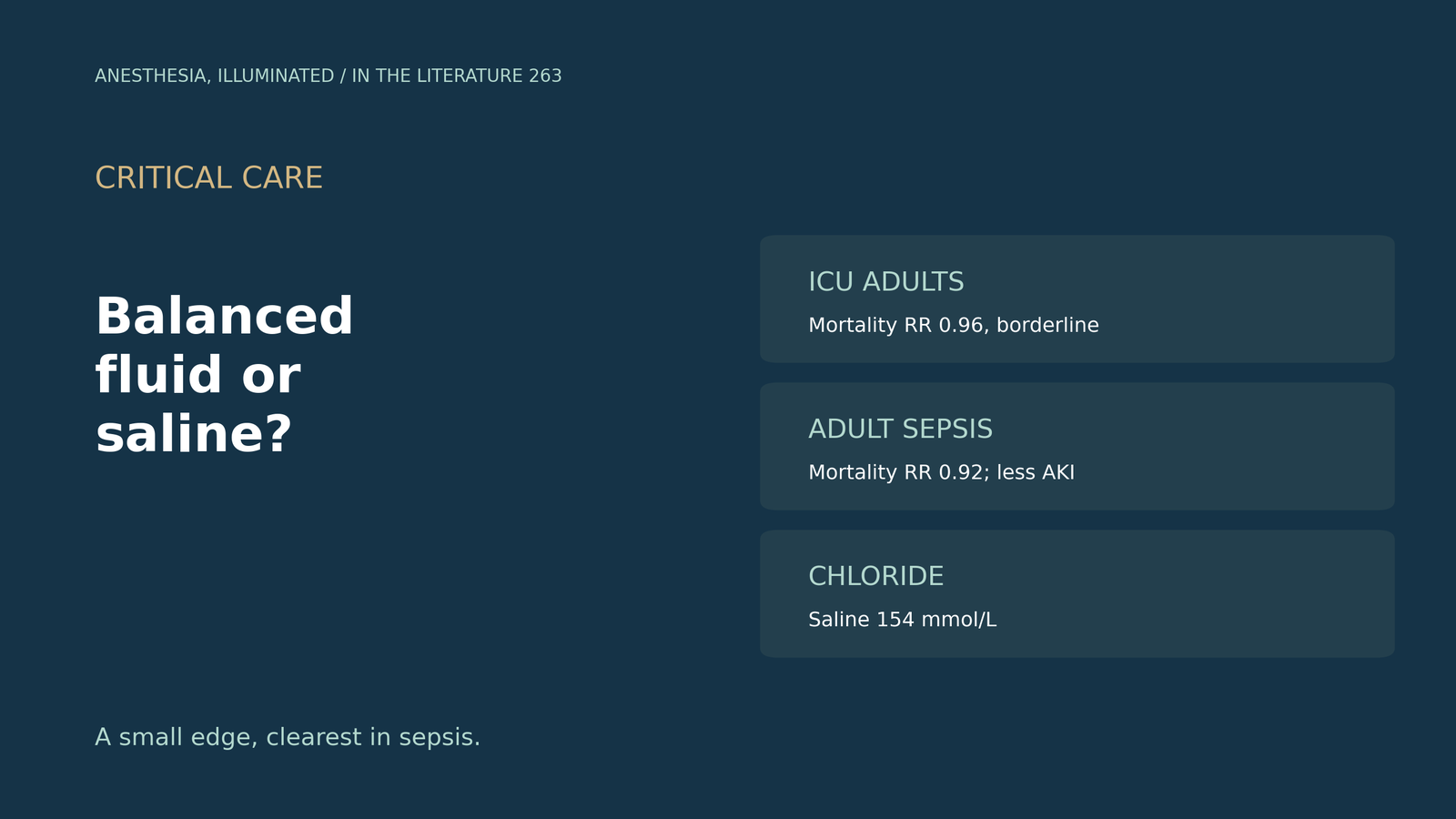
- A small, borderline edge. Across 18 trials in critically ill adults, mortality RR was 0.96 (0.93–1) with balanced crystalloids.[1]
- Not a large effect. Trial sequential analysis suggests any benefit is under a 10% relative reduction.[1]
- Clearest in adult sepsis. Mortality RR was 0.92 and AKI fell from 39.1% to 34.3%.[2]
- Children are different. In paediatric septic shock, mortality did not differ significantly.[3]
- Chloride matters, but not alone. Hyperchloraemia remained common after cardiac surgery even with low-chloride fluids.[4]
A patient in septic shock will need several litres of crystalloid over the next hours. Does the choice between a balanced solution and 0.9% saline change the outcome?
What the ICU trials show overall
A meta-analysis (Chen and Gao, Ther Clin Risk Manag 2023) pooled eighteen randomized trials with 36,224 critically ill adults. Balanced crystalloids were associated with lower mortality, RR 0.96 (95% CI 0.93–1), but with the DerSimonian–Laird method the estimate (RR 0.96, 0.92–1.01) was no longer statistically significant. Trial sequential analysis indicated, with 80% power, that any effect is not larger than a 10% relative reduction. Acute kidney injury or renal failure was less frequent (RR 0.93, 0.87–0.99), renal replacement therapy did not differ (RR 0.95, 0.83–1.08), and in the sepsis subgroup mortality was lower (RR 0.91, 0.85–0.99).[1]
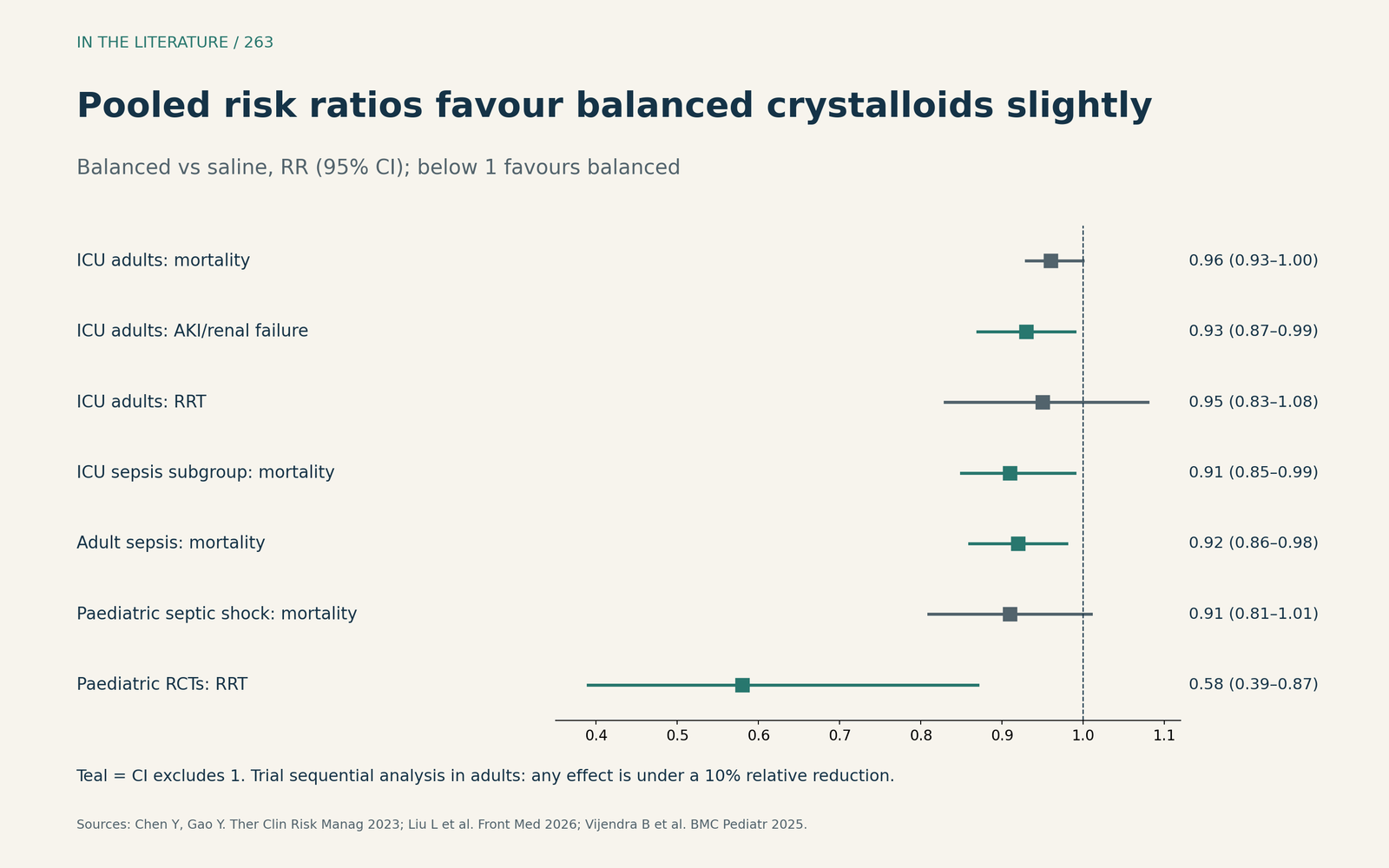
Figure 1. Most pooled risk ratios sit just below 1. Data from Chen and Gao, Liu et al. and Vijendra et al.[1], [2], [3] View larger.

Sepsis: where the signal is clearest
Normal saline contains 154 mmol/L of chloride, far above the concentration in plasma. In adult sepsis (Liu et al., Front Med 2026), balanced solutions were associated with lower mortality than saline (RR 0.92, 95% CI 0.86–0.98), and acute kidney injury occurred in 34.3% versus 39.1% (RR 0.86). Certainty was moderate for mortality and kidney injury and low for other outcomes, and most data came from sepsis subgroups of broader ICU trials, so baseline imbalances cannot be excluded.[2] In paediatric septic shock (Vijendra et al., BMC Pediatr 2025; 12,231 patients from 8 studies, 4 randomized), hospital mortality did not differ significantly (RR 0.91, 0.81–1.01). In the randomized trials, balanced solutions were associated with less renal replacement therapy (RR 0.58, 0.39–0.87), but hospital stay was longer (mean difference 3.38 days), and half of the studies were observational.[3]
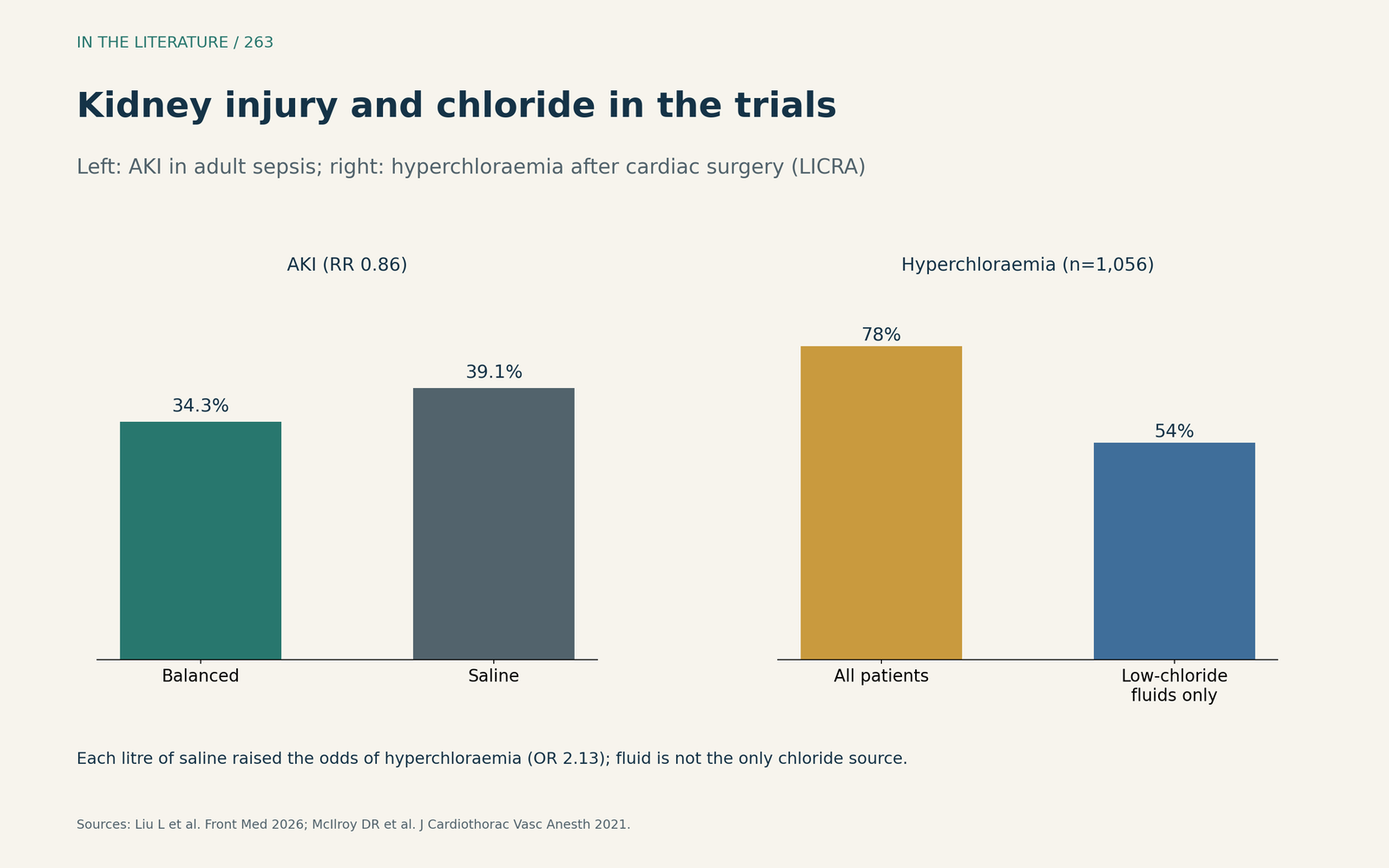
Figure 2. Balanced solutions lowered AKI in adult sepsis, yet hyperchloraemia was common after cardiac surgery even with low-chloride fluids. Data from Liu et al. and McIlroy et al.[2], [4] View larger.

Chloride in surgery and transplantation
In a post hoc analysis of the LICRA trial (McIlroy et al., J Cardiothorac Vasc Anesth 2021), 1,056 cardiac surgery patients had a mean peak chloride of 114 mmol/L, and 78.0% developed hyperchloraemia, including 54% of those assigned only low-chloride fluids; each litre of saline was associated with higher odds of hyperchloraemia (OR 2.13).[4] In the SOLAR trial of elective surgery, patients received an average of 1.9 L during surgery and the lowest mean pH was 7.36 with lactated Ringer's versus 7.32 with saline; the accompanying editorial (Story, Anesthesiology 2020) argued that resuscitation with larger volumes may well be better with lower-chloride fluids.[5] In kidney transplantation (Chang et al., Br J Anaesth 2024; 11 RCTs, 1717 patients), balanced crystalloids were associated with less delayed graft function (RR 0.82, 0.69–0.98) and a higher postoperative pH (mean difference 0.05).[6]
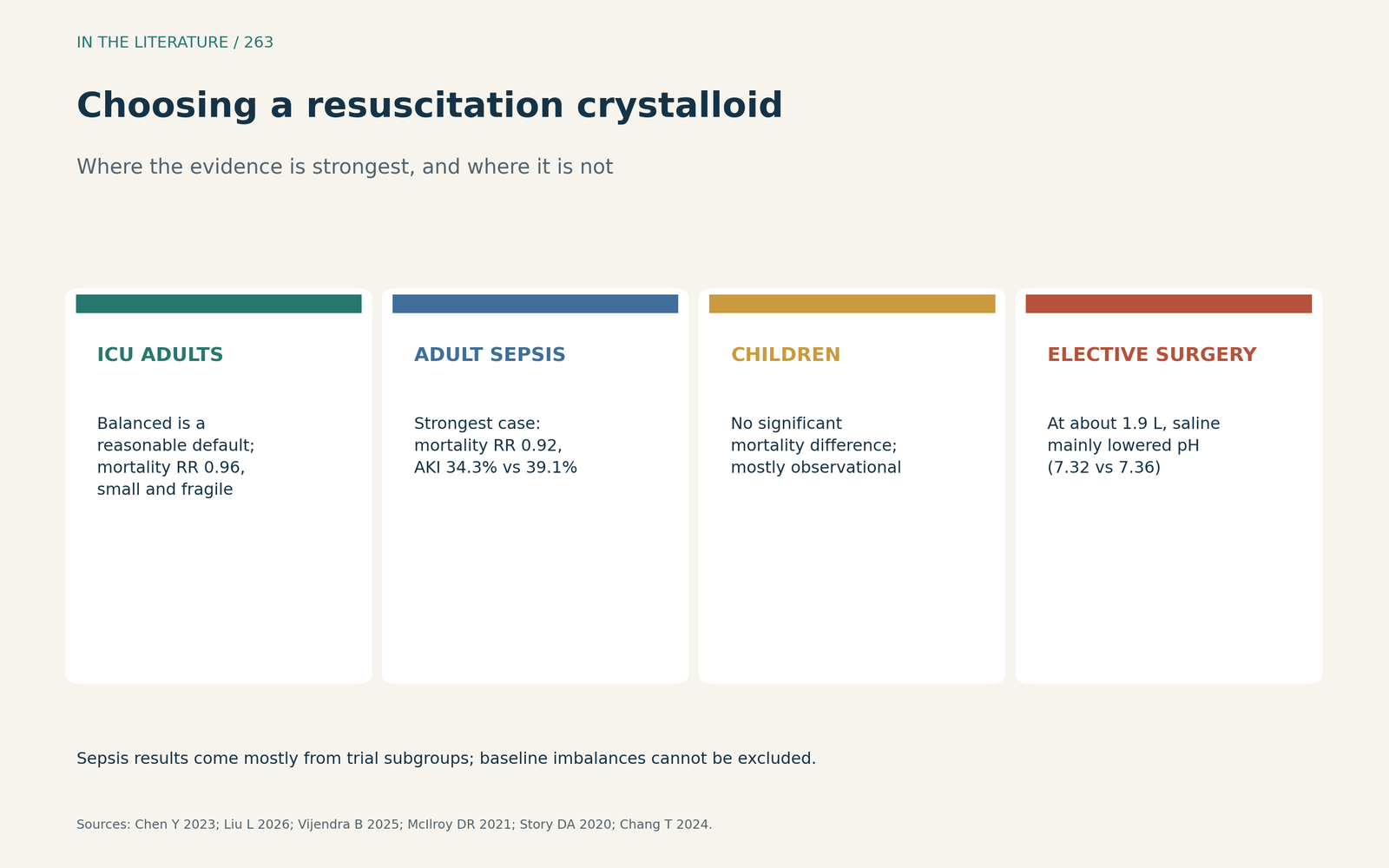
Figure 3. Choosing a resuscitation crystalloid. Synthesized from Chen and Gao, Liu et al., Vijendra et al., McIlroy et al., Story and Chang et al.[1], [2], [3], [4], [5], [6] View larger.

Three takeaways
- For large-volume resuscitation in critically ill adults, balanced crystalloids are a reasonable default, but the expected mortality gain is small and statistically fragile.[1]
- The case is strongest in adult sepsis; in children, mortality did not differ and the evidence is mostly observational.[2], [3]
- Fluid choice is only one source of chloride; with the small volumes of elective surgery, saline mainly lowered pH slightly.[4], [5], [6]
References
- Chen Y, Gao Y. Comparison of balanced crystalloids versus normal saline in critically ill patients: a systematic review with meta-analysis and trial sequential analysis of randomized controlled trials. Ther Clin Risk Manag. 2023;19:783–799. doi:10.2147/TCRM.S416785
- Liu L, Cai B, He B. Balanced crystalloid versus saline for resuscitation in adult sepsis: a systematic review and meta-analysis. Front Med (Lausanne). 2026;13:1906761. doi:10.3389/fmed.2026.1906761
- Vijendra B, Bertol AB, de Almeida MMG, et al. Balanced crystalloid versus saline for resuscitation in pediatric septic shock: a systematic review and meta-analysis. BMC Pediatr. 2025;25:81. doi:10.1186/s12887-025-05442-w
- McIlroy DR, Murphy D, Shotwell MS, et al. Peak serum chloride and hyperchloremia in patients undergoing cardiac surgery is not explained by chloride-rich intravenous fluid alone: a post-hoc analysis of the LICRA trial. J Cardiothorac Vasc Anesth. 2021;35(5):1321–1331. doi:10.1053/j.jvca.2020.07.085
- Story DA. Intravenous fluids: which recipe? Anesthesiology. 2020;132(4):609–611. doi:10.1097/ALN.0000000000003161
- Chang T, Shih M-C, Wu Y-L, et al. Comparative efficacy of balanced crystalloids versus 0.9% saline on delayed graft function and perioperative outcomes in kidney transplantation: a meta-analysis of randomised controlled trials. Br J Anaesth. 2024;133(6):1173–1182. doi:10.1016/j.bja.2024.08.008