ITL-efbb1cac8f58
Juan Li · In the Literature · Updated November 16, 2026
Watch the video
Key points
- A residual leak, a high gradient and an asymmetric frame are different findings; identify the problem another inflation is intended to correct.
- Incomplete frame expansion can cause regurgitation or elevated gradients, but a high Doppler gradient alone does not establish this mechanism.
- Balloon choice must account for the valve platform and surrounding anatomy; more expansion is not automatically worth more procedural risk.
- Recent balloon-expandable valve studies support improved geometry with same-volume “double-tap”; they do not yet establish better survival or long-term durability.
- Observational comparisons of postdilation and no postdilation are strongly affected by why operators chose to intervene.
Name the problem before adding another inflation
After valve deployment, the team sees a residual paravalvular jet, an unexpectedly high gradient or a frame that appears incompletely expanded. These findings may coexist, but they should not be treated as interchangeable indications. The useful question is: what is still wrong, and why should another balloon inflation improve it?
Hameau and colleagues' practical review, focused predominantly on self-expanding valves, describes postdilation decisions in relation to residual paravalvular leak and transvalvular gradients, together with the mechanism of underexpansion. The ASE prosthetic-valve guideline explains that calcific restriction can prevent complete frame expansion and contribute to paravalvular or intravalvular regurgitation and higher gradients. Neither source establishes a single universal postdilation trigger. [1, 2]
For a residual jet, establish its origin and severity and assess whether incomplete expansion plausibly explains the leak. For a high Doppler gradient, revisit acquisition and consider high flow, prosthesis–patient mismatch, supra- or subvalvular obstruction and pressure recovery before attributing the finding to prosthetic obstruction. A number alone cannot tell the operator that the frame needs another inflation. [2]
That reasoning distinguishes corrective postdilation for a residual functional problem from routine geometric optimization after deployment. Recent studies of the latter deserve attention, but their results do not automatically answer the former question.
Read the anatomy before adding force
The same anatomy that prevents expansion can make further expansion hazardous. Landing-zone and left ventricular outflow tract calcium, the sinotubular junction and the relationship to the coronary arteries therefore belong in the decision. Hameau and colleagues describe leaflet injury, annular rupture, stroke and coronary obstruction among the possible complications of balloon oversizing. This is a reason to individualize the decision, not to turn any calcification into an absolute contraindication. [1]
The procedural aim is adequate prosthesis expansion within the tolerance of the surrounding anatomy. Nominal valve size alone cannot supply a universal balloon diameter or extra-volume prescription. [1] “Same-volume double-tap” also needs a precise meaning: repeating inflation with the delivery balloon at the original filling volume is a defined strategy, distinct from escalating balloon volume to treat a persistent problem. [3]
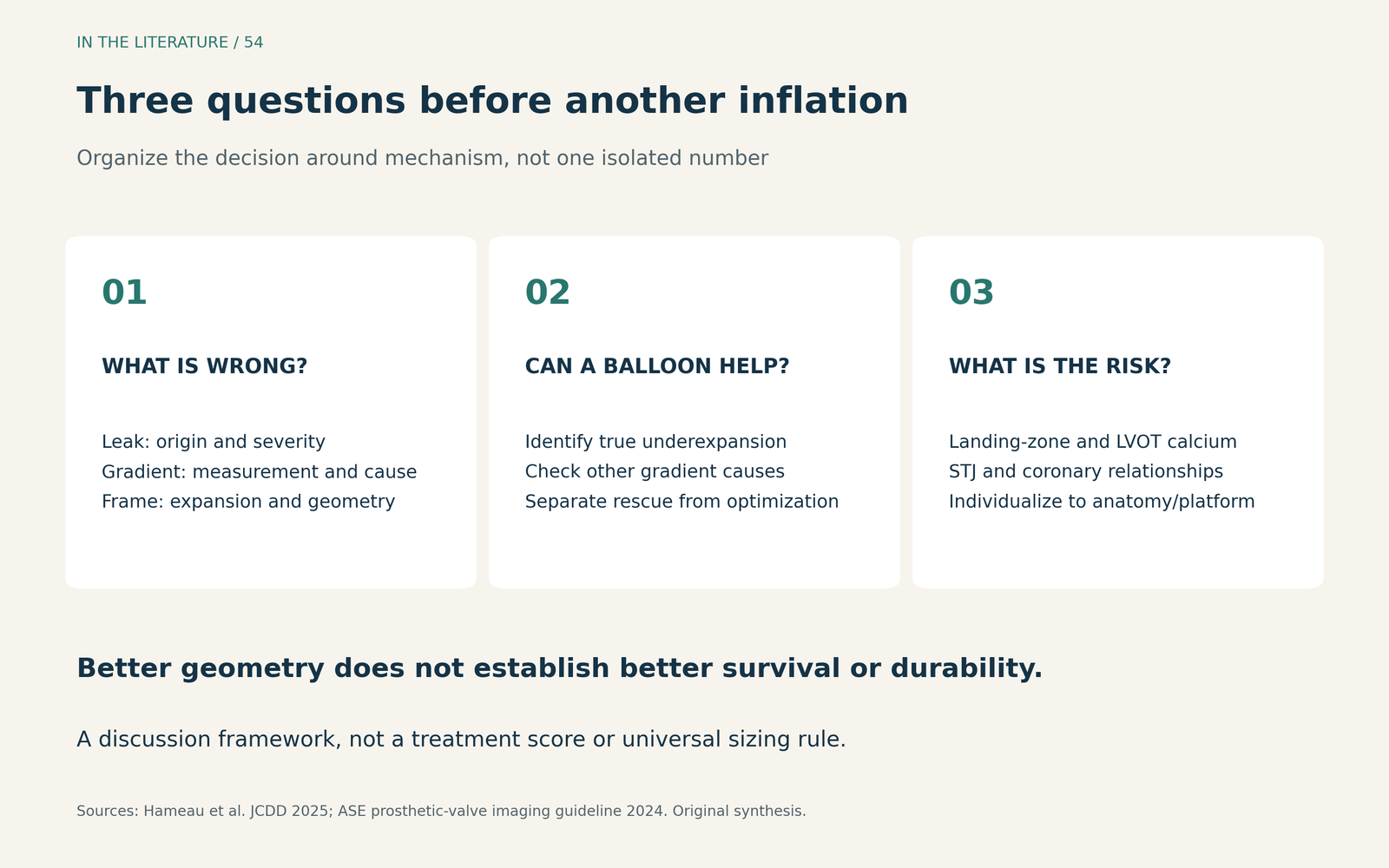
Figure 1. An original clinical synthesis of diagnostic guidance and procedural principles. These questions organize discussion; they are not a validated treatment score or a fixed balloon-sizing algorithm. [1, 2] View figure

What same-volume double-tap changes
Maznyczka and colleagues studied 113 selected recipients of SAPIEN-3 Ultra RESILIA valves in a retrospective, single-center series. Severe annular or left ventricular outflow tract calcification was among the exclusions. The team repeated inflation with the delivery balloon using the same volume as the initial deployment; that original volume was not necessarily the manufacturer's nominal fill. [3]
Median mid-portion expansion increased from 80.1% (IQR, 77.3–82.3) to 90.8% (IQR, 88.6–92.9). This was a fluoroscopically estimated cross-sectional area relative to the manufacturer's nominal area, calculated from measured diameter. It was not a diameter ratio and not a clinical outcome. Fourteen of the 113 patients subsequently needed additional postdilation with more volume. [3]
The practical contribution is evidence that a second inflation can change frame geometry even without increasing the initial filling volume. The study had no concurrent randomized control group and did not establish whether the amount of geometric improvement translates into better clinical outcomes or durability. [3]
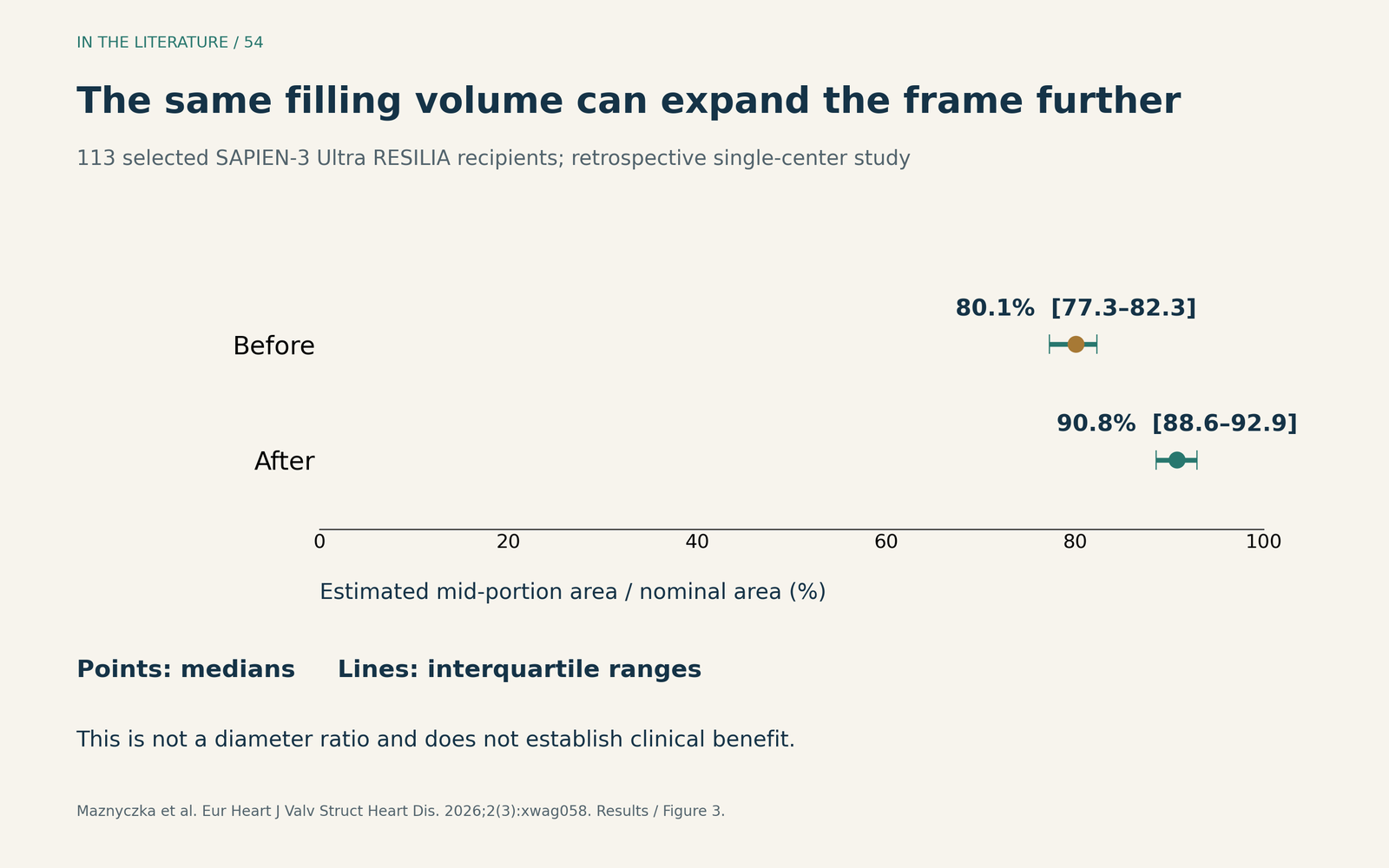
Figure 2. Original display of aggregate results from Maznyczka and colleagues. Points are medians and horizontal lines are interquartile ranges, not confidence intervals. Expansion is estimated area divided by nominal area; the before-and-after cohort medians do not describe an individual patient's change. Selected balloon-expandable valve cohort, n=113. [3] View figure

The new randomized trial answers a narrower question
The DUOTAP trial, published online on November 3, 2026, adds randomized evidence. Only its published abstract was available for this discussion. This single-center trial randomized 148 selected patients, 74 per group, undergoing balloon-expandable TAVI without high-risk CT or coronary-angiographic features. The intervention repeated inflation using the original delivery balloon at identical filling volume; the control group underwent a sham procedure. [4]
The primary endpoint was fluoroscopic transcatheter-heart-valve asymmetry. The abstract reported medians of 1.2% with postdilation versus 2.8% with control, with a geometric mean ratio of 0.30 (95% CI, 0.18–0.47). These are two different summaries of the same comparison: the reported 70% reduction relates to the reported geometric mean ratio, not to arithmetic applied to the displayed medians. This asymmetry measure is also different from the area-based expansion measure in the preceding study. [4]
The abstract reports favorable secondary imaging findings and no detected between-group difference in procedure-related adverse events assessed at 30 days. It does not provide enough detail to turn that finding into equivalent safety, exclusion of rare injury, improved survival or proven long-term durability. Its selected population and routine same-volume intervention also differ from rescue postdilation for substantial residual regurgitation. [4]
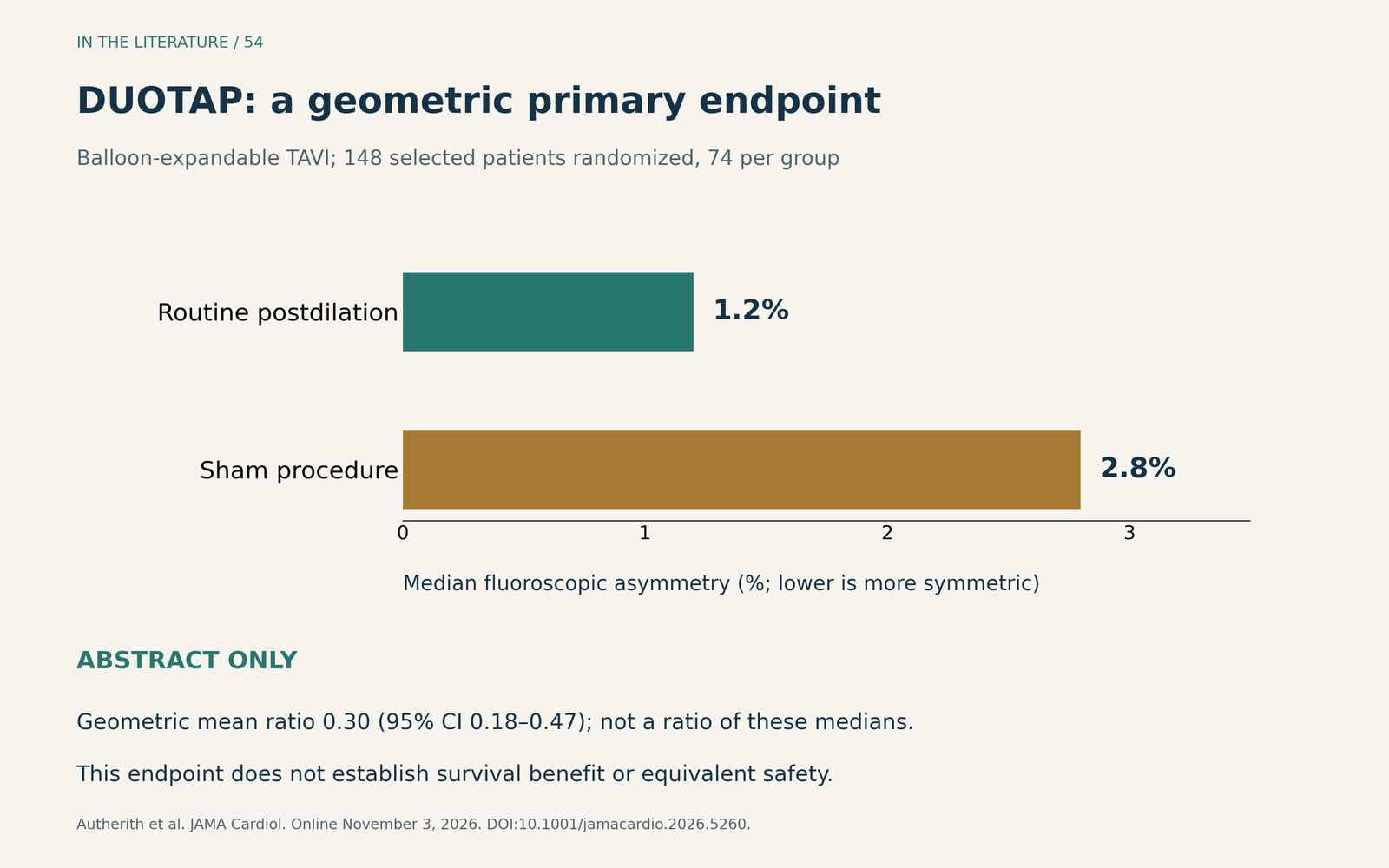
Figure 3. Original display of the abstract's reported medians; individual distributions are unavailable here. Lower asymmetry is a geometric endpoint, not a demonstrated clinical-outcome benefit. The separately reported geometric mean ratio was 0.30 (95% CI, 0.18–0.47). Abstract only. [4] View figure

Why outcome associations can point in different directions
Soh and colleagues' 2026 meta-analysis included five observational postdilation studies with 7,526 self-expanding TAVI recipients. It found higher observed 30-day mortality with postdilation: OR 1.39 (95% CI, 1.18–1.63). But patients selected for postdilation already had more difficult anatomy or an unsatisfactory procedural result. The comparison cannot isolate the effect of the extra inflation from the problem that prompted it. Its search ended in November 2024, so it does not include the new DUOTAP trial. [5]
The same review detected no significant difference in 30-day stroke (OR 0.99; 95% CI, 0.56–1.75) or new permanent pacemaker implantation (OR 1.05; 95% CI, 0.82–1.34). Those estimates do not establish equivalent safety. They also should not be transferred without qualification from self-expanding platforms to a selected balloon-expandable trial. [5]
The earlier JCVA study by Shimokawa and colleagues illustrates the other side of this problem. In 180 retrospectively analyzed patients, operators performed postdilation in 44; the authors reported successful reduction of paravalvular regurgitation in 39 of those 44. They also reported an association with lower long-term mortality. Operator selection, a small treated group and inconsistencies among the reported survival analyses make that association unsuitable as a reason to promise a survival benefit. The immediate procedural response and the causal effect on later mortality are different questions. [6]
Taken together, the evidence supports a mechanism-based discussion: define the residual problem, decide whether further expansion is a plausible remedy, and weigh that expected gain against the patient's anatomy. Routine same-volume optimization now has encouraging randomized geometric data in a selected setting; that is a more precise conclusion than recommending another inflation for every valve.
Three takeaways
- Identify what is being corrected. Distinguish significant residual regurgitation or true underexpansion from a high gradient with another explanation and from geometric optimization alone.
- Match the intervention to the anatomy and platform. Same-volume delivery-balloon inflation and escalation for a residual lesion are different strategies; neither provides a universal sizing rule.
- Keep geometry and patient benefit separate. Recent studies show improved expansion or symmetry in selected balloon-expandable valves. Survival, durability and equivalent safety remain different claims requiring direct evidence.
References
- Hameau R, Ancona MB, Romano V, et al. Management of TAVI Underexpansion with Self-Expanding Valves: A Practical Approach. J Cardiovasc Dev Dis. 2025;12(6):215. doi:10.3390/jcdd12060215.
- Zoghbi WA, Jone PN, Chamsi-Pasha MA, et al. Guidelines for the Evaluation of Prosthetic Valve Function With Cardiovascular Imaging: A Report From the American Society of Echocardiography Developed in Collaboration With the Society for Cardiovascular Magnetic Resonance and the Society of Cardiovascular Computed Tomography. J Am Soc Echocardiogr. 2024;37(1):2–63. doi:10.1016/j.echo.2023.10.004.
- Maznyczka A, Norman S, Ali N, et al. Post-dilatation using the balloon-expandable valve delivery balloon with same volume (double-tap) to optimize transcatheter aortic valve expansion. Eur Heart J Valv Struct Heart Dis. 2026;2(3):xwag058. doi:10.1093/ehjvshd/xwag058.
- Autherith M, Singer K, Hauptmann L, et al. Efficacy and Safety of Routine Postdilation in Balloon-Expandable Transcatheter Aortic Valve Implantation Platform: The DUOTAP Randomized Clinical Trial. JAMA Cardiol. Published online November 3, 2026. doi:10.1001/jamacardio.2026.5260. Abstract only.
- Soh BWT, Pollock A, Butler D, et al. Pre- and post-dilatation in transcatheter aortic valve implantation with self-expanding valves: a systematic review and meta-analysis. Front Cardiovasc Med. 2026;13:1883882. doi:10.3389/fcvm.2026.1883882.
- Shimokawa A, Yoshitani K, Hayashi H, et al. Impact of Balloon Postdilation on Six-Year Mortality After Transcatheter Aortic Valve Replacement. J Cardiothorac Vasc Anesth. 2021;35(9):2626–2630. doi:10.1053/j.jvca.2020.11.037.