
ITL-3b06487a8899
Watch the video

Figure 1. Two ways to replace coagulation factors after bypass. Conceptual illustration; the choice depends on the bleeding mechanism.
Key points
- Consider four-factor prothrombin complex concentrate (4F-PCC) when clinically important bleeding after cardiopulmonary bypass reflects coagulation-factor deficiency, after addressing surgical bleeding and other correctable defects.
- FARES-II found better hemostatic effectiveness with PCC: 77.9% versus 60.4% with plasma, an absolute difference of 17.6 percentage points.[1]
- That endpoint meant avoiding additional hemostatic intervention during a defined interval. It did not mean that all bleeding stopped or that no red cells were transfused.
- Thromboembolic events occurred in 8.5% versus 7.2%. The trial does not establish equal thrombotic safety or a reduction in thrombosis.[1]
- Use the studied product, local protocol and current jurisdiction-specific labeling to guide implementation. A cardiac-surgery dose is not interchangeable with a warfarin-reversal regimen.
Start with the defect you are treating
After separation from bypass and heparin reversal, the field remains diffusely oozy. The question is whether the patient needs coagulation-factor replacement—and, if so, whether PCC offers an advantage over plasma.
FARES-II directly informs that decision. It studied adults undergoing cardiac surgery with bypass who required factor replacement for bleeding. It did not test prophylactic PCC for every complex operation or treatment of an isolated abnormal INR without clinically important bleeding.[1]
First, reassess the surgical field, residual heparin effect, temperature and other physiological contributors. Use available laboratory and viscoelastic results to distinguish deficient clot initiation from inadequate fibrinogen or platelet contribution. These problems can coexist. PCC supplies vitamin K–dependent factors II, VII, IX and X; it does not supply platelets or replace fibrinogen therapy.[1, 2]
The 2024 EACTS/EACTAIC blood-management guideline recommends considering PCC instead of fresh frozen plasma for significant bleeding due to coagulation-factor deficiency. It also emphasizes correcting low fibrinogen before considering PCC. For persistent bleeding with fibrinogen below 1.5 g/L, or the corresponding viscoelastic finding, fibrinogen replacement should be considered.[2] A prolonged clotting time therefore needs interpretation alongside clot strength and the clinical picture.
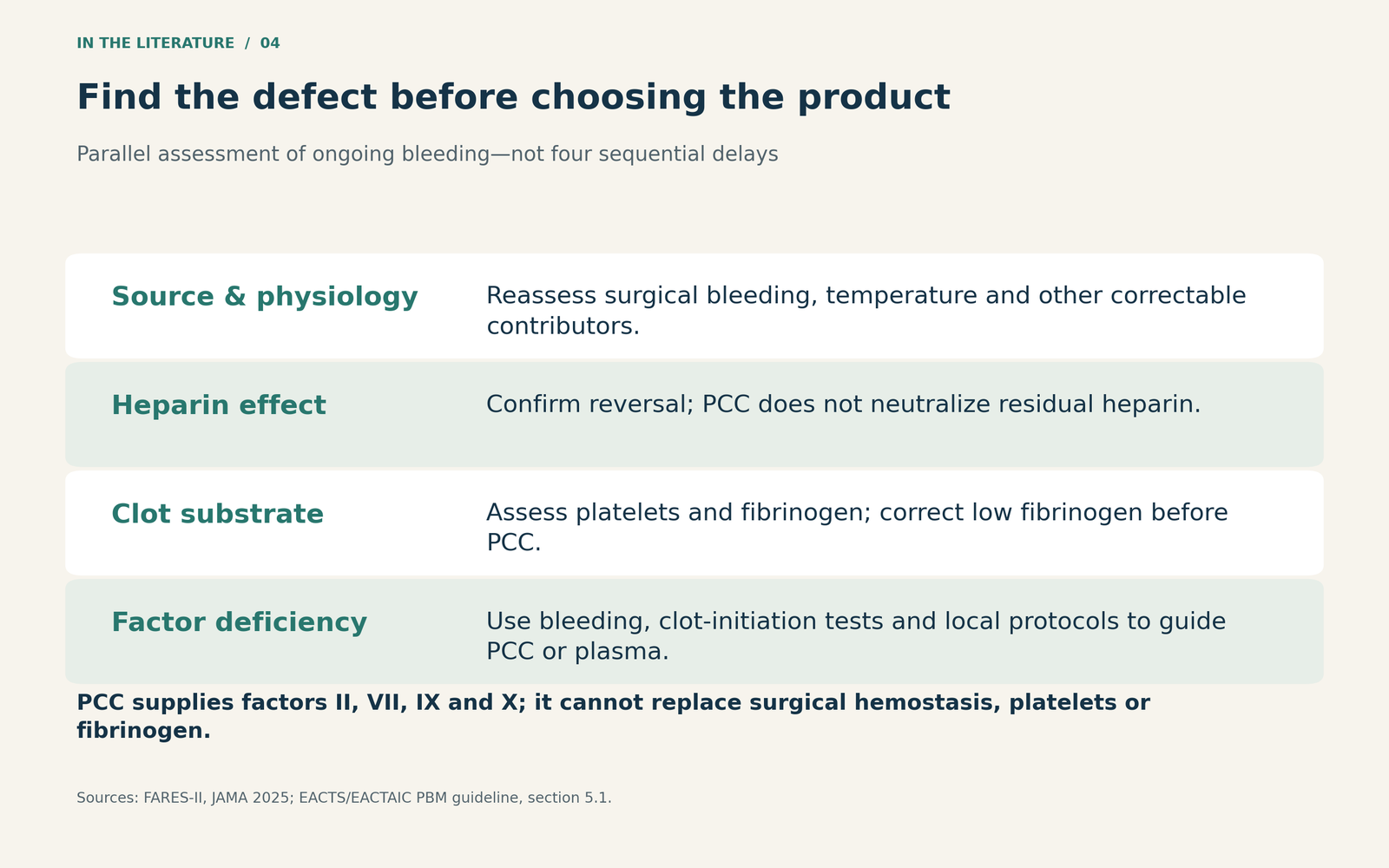

Figure 2. Match treatment to the defect. This clinical synthesis is based on the guideline and FARES-II eligibility; it is not a validated treatment score.[1, 2]
What FARES-II actually demonstrated
The multicenter trial randomized 528 patients at 12 Canadian and US centers. Its primary analysis included 420 patients who received study treatment and provided consent: 213 received PCC and 207 received plasma. About 70% underwent complex procedures.[1]
Treatment generally required at least moderate bleeding after heparin neutralization and an INR of at least 1.5. The INR-confirmation requirement could be waived when bleeding was severe enough to demand immediate treatment. These were trial administration criteria, not a universal stand-alone INR trigger.
The primary endpoint was hemostatic effectiveness: no additional hemostatic intervention from 60 minutes to 24 hours after the first study infusion began. Additional interventions included surgical reopening, another study dose, non-red-cell blood products and other factor concentrates. Red-cell transfusion itself did not count as endpoint failure.
PCC achieved that endpoint in 166/213 patients (77.9%), compared with 125/207 (60.4%) receiving plasma. The absolute difference was 17.6 percentage points (95% CI, 8.7–26.4); the prespecified analysis established both noninferiority and superiority. The reported relative risk of 0.56 applies to hemostatic failure, not successful hemostasis.[1]
There was also less red-cell exposure in the first 24 hours after the study infusion began: 45.5% versus 63.8%. Total allogeneic transfusion through 24 hours after bypass was lower even when the assigned study plasma was excluded: estimated means of 6.6 versus 9.3 units. These totals combined red cells, platelets and non-study plasma under the trial's counting convention; they are not red-cell units alone.[1]
This is meaningful evidence for a factor-replacement strategy. Its interpretation still depends on the endpoint: treating clinicians knew the allocated treatment, and their subsequent treatment decisions contributed to the primary outcome. The study was funded by Octapharma and the Canadian Institutes of Health Research, with sponsor involvement in trial conduct.[1]
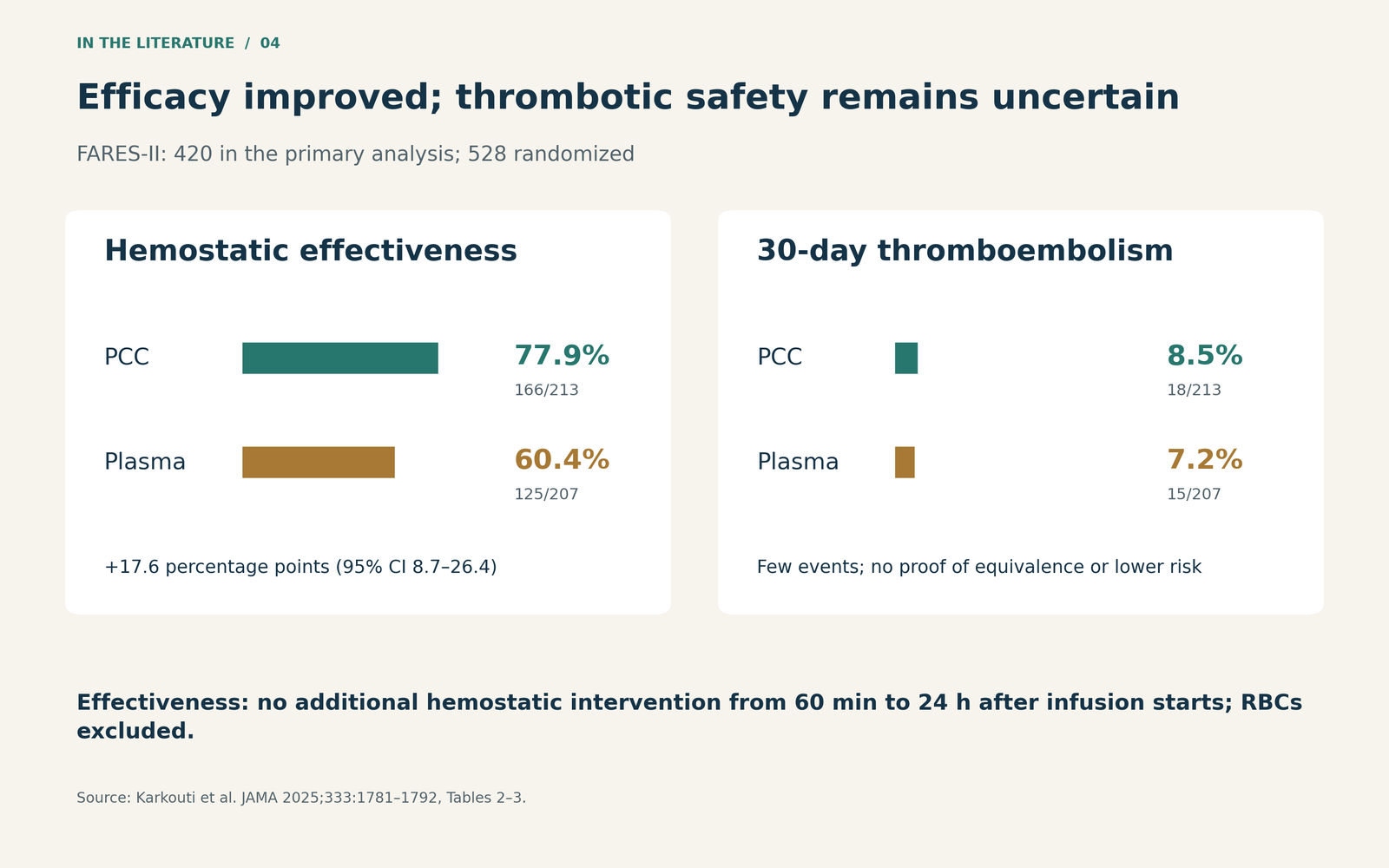

Figure 3. A demonstrated efficacy advantage and an unresolved safety comparison. The efficacy difference was 17.6 percentage points (95% CI, 8.7–26.4); the thromboembolism comparison does not establish equivalence.[1]
Keep the safety conclusion proportionate
Thirty-day thromboembolic events occurred in 18/213 PCC recipients (8.5%) and 15/207 plasma recipients (7.2%). Deaths were 7 versus 8, and strokes were 5 versus 5. These small event counts cannot establish that the treatments have identical risk.[1]
Acute kidney injury was less frequent with PCC—10.3% versus 18.8%—as were serious adverse events, 36.2% versus 47.3%. These were exploratory analyses without adjustment for multiple comparisons. They are encouraging signals, but they do not justify prescribing PCC as a renal-protection intervention or describing it as conclusively safer overall.[1]
Applicability also matters. Patients with a recent thromboembolic event, severe right-heart failure, heart transplantation or ventricular-assist-device procedures were among those excluded. The trial cannot settle the benefit–risk balance in these groups.[1] Product-specific contraindications, including heparin allergy or a history of heparin-induced thrombocytopenia for Balfaxar, remain relevant.[3]
Translate the trial into a local treatment pathway
FARES-II used nonactivated 4F-PCC, Balfaxar or Octaplex, at 1,500 IU for patients weighing 60 kg or less and 2,000 IU for those weighing more than 60 kg. The comparator was three or four units of plasma, respectively. One additional study dose was permitted within 24 hours; subsequent management followed the protocol and clinical need.[1] This was a weight-band regimen, not precisely 25 IU/kg for every patient.
Regulatory context changes how those findings are implemented. As checked on November 15, 2026, the US Balfaxar label covers urgent vitamin K antagonist reversal for an urgent operation or invasive procedure. It does not list non-VKA coagulopathic bleeding after bypass as an indication; that use is off-label in the United States. Its VKA-reversal instructions also do not recommend repeat dosing.[3]
By contrast, the Canadian Octaplex monograph revised August 13, 2026 includes bleeding from acquired prothrombin-complex factor deficiency during cardiac surgery. It gives the same 1,500/2,000-IU weight bands and permits one repeat dose if required.[4] A US warfarin-reversal table and a Canadian cardiac-surgery regimen therefore answer different clinical questions.
After factor replacement, reassess the surgical field, bleeding trajectory and coagulation results. Persistent bleeding should reopen the diagnostic assessment, including surgical bleeding and fibrinogen or platelet deficits, rather than automatically trigger escalating PCC. Local protocols should identify the available formulation, initial dose, reassessment criteria and rescue options before an emergency occurs.[1, 2, 3, 4]
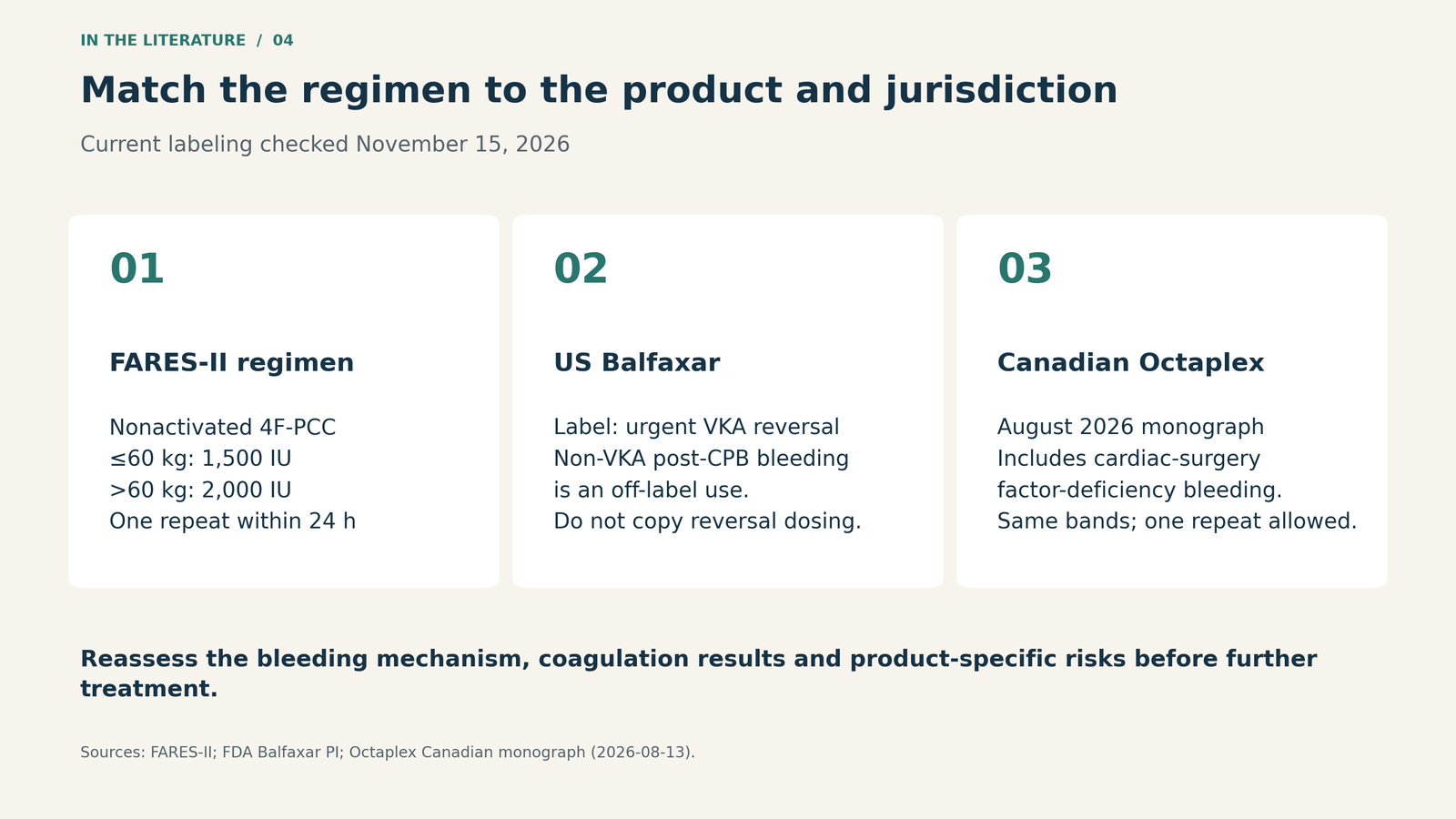

Figure 4. Evidence, product and jurisdiction must align. Doses shown describe the trial and Canadian labeling; they are not a universal PCC prescription. Label status checked November 15, 2026.[1, 3, 4]
Three takeaways
- Choose PCC for an identified factor-replacement problem. It belongs within a bleeding algorithm that also addresses surgical causes, heparin, fibrinogen and platelets.
- Explain the benefit accurately. FARES-II demonstrated better hemostatic effectiveness and reduced transfusion exposure; it did not prove lower thrombotic risk or safety equivalence.
- Make implementation product-specific. Match the regimen to local labeling and protocol, then reassess bleeding before considering further treatment.
References
- Karkouti K, Callum JL, Bartoszko J, et al. Prothrombin complex concentrate vs frozen plasma for coagulopathic bleeding in cardiac surgery: the FARES-II multicenter randomized clinical trial. JAMA. 2025;333(20):1781–1792. doi:10.1001/jama.2025.3501. Includes online Supplement 3, eligibility criteria.
- Casselman FPA, Lance MD, Ahmed A, et al. 2024 EACTS/EACTAIC Guidelines on patient blood management in adult cardiac surgery in collaboration with EBCP. Eur J Cardiothorac Surg. 2025;67(5):ezae352. doi:10.1093/ejcts/ezae352.
- Octapharma. Balfaxar (prothrombin complex concentrate, human-lans): US prescribing information. Revised July 2023; current FDA listing accessed November 15, 2026. FDA prescribing information.
- Octapharma Canada. Octaplex: product monograph. Revised August 13, 2026. Canadian product monograph.