ITL-7fdf2a5ebf2d
Juan Li, MD · Updated November 17, 2026
Watch the video
Key points
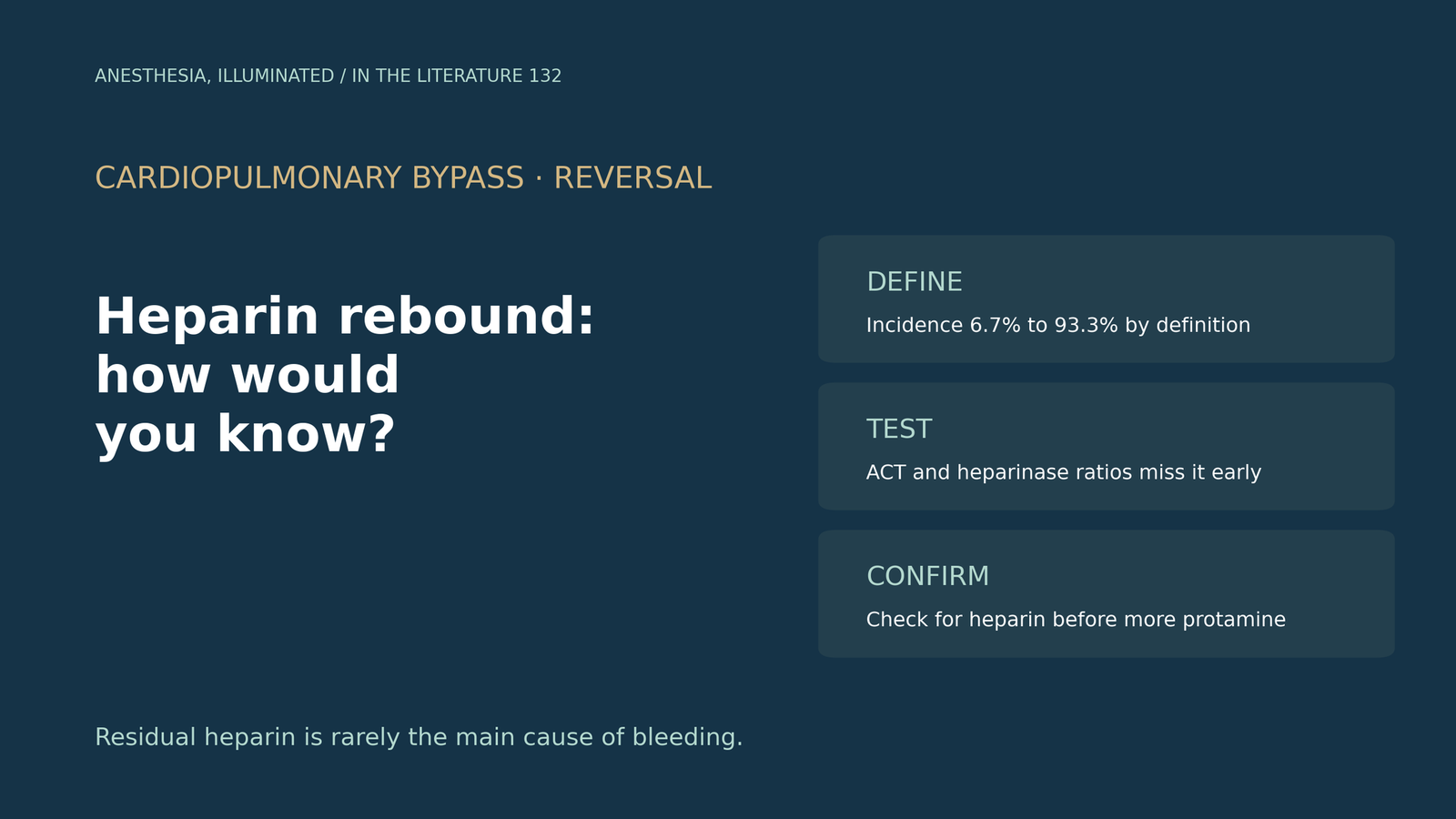
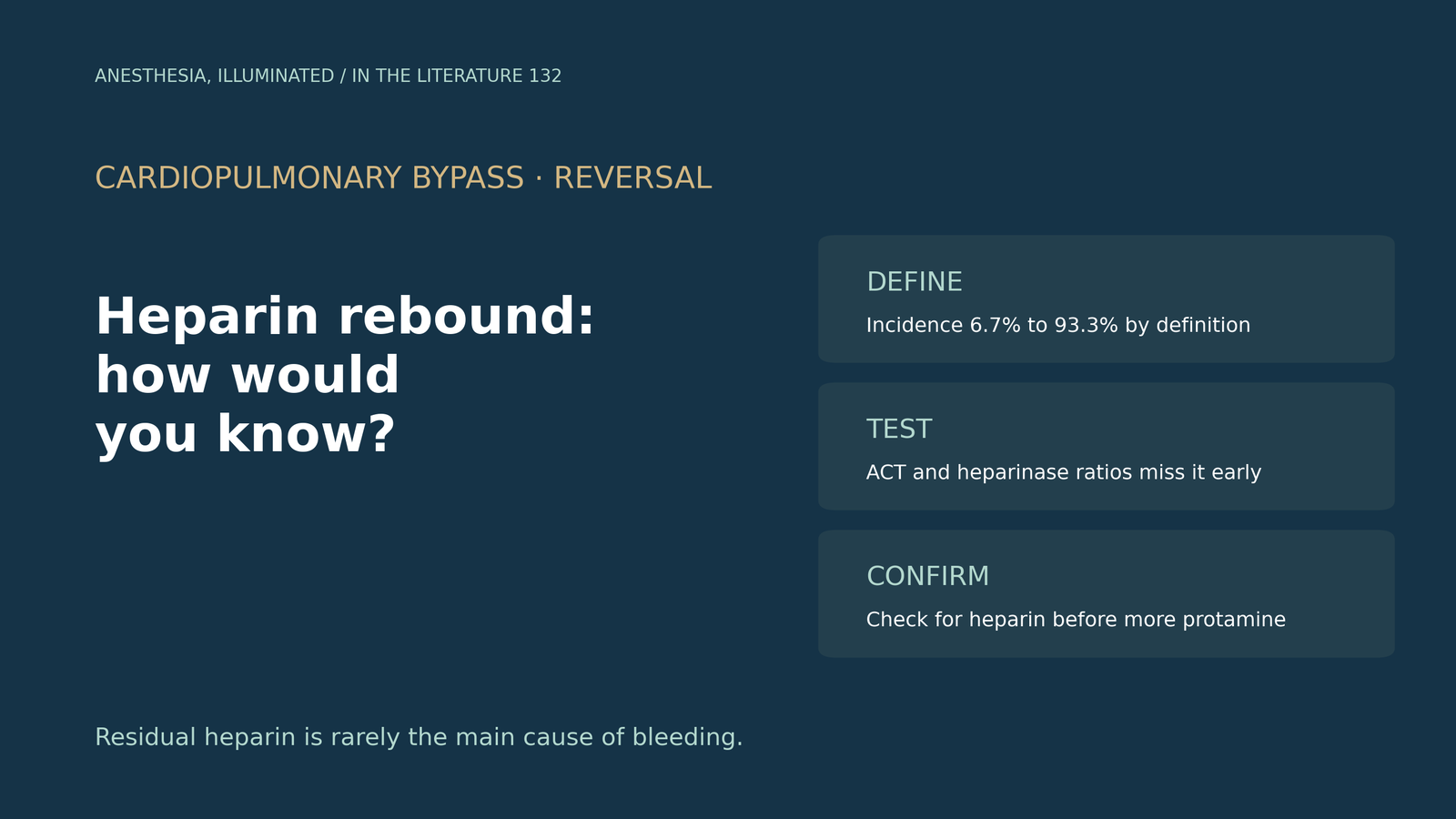
- Heparin rebound is the reappearance of anticoagulant activity after adequate neutralization, but there is no standard definition. In one dataset, its incidence was 93.3%, 60% or 6.7% depending on which definition was applied.[1]
- Residual levels are very low. In a pharmacokinetic study, anti-Xa activity after neutralization peaked at 0.04 IU/mL at 8 hours and stayed above 0.02 IU/mL at 24 hours.[2]
- Common tests miss it early. Fifteen minutes after protamine, neither a heparin-protamine titration nor a ROTEM heparinase ratio identified raised anti-Xa activity, and in another cohort the heparinase ratio had a sensitivity of 0%.[3], [4]
- Detectable heparin is common but poorly linked to bleeding. In one study, 98% of patients had detectable anti-Xa 3 hours after ICU arrival without more bleeding, although a retrospective off-pump cohort reported more reoperation in patients meeting a composite rebound definition.[5], [6], [1]
- Do not give protamine empirically. The 2024 EACTS guideline warns that additional doses may cause overdosing, and a randomized trial found more bleeding with a protamine-to-heparin ratio of 1.3 than 0.8.[7], [8]
Two hours after coronary surgery, chest drain output is rising and the ACT is a little longer than it was after protamine. Is this heparin rebound, and what test would show it before more protamine is given?[1], [7]
What heparin rebound means
Stone and Vespe define heparin rebound as the reappearance of anticoagulant activity after adequate heparin neutralization, but note that published definitions range from a small ACT rise to anti-Xa activity, heparinase-based viscoelastic tests or bleeding with abnormal tests. Applied to the same patients, these definitions gave an incidence of 93.3% if any increase in heparin activity counted, 60% if ACT more than 10 seconds above the post-reversal value was required, and 6.7% if bleeding with prolonged tests was required.[1]
The amounts involved are small. Jia and colleagues modeled heparin kinetics in cardiac surgery: after neutralization, anti-Xa activity peaked at 0.04 IU/mL at 8 hours and remained above 0.02 IU/mL at 24 hours, which they attribute to heparin returning from peripheral tissues.[2] Stone and Vespe calculate that less than 10 mg of protamine would neutralize 0.2 U/mL of anti-Xa activity in an adult.[1]
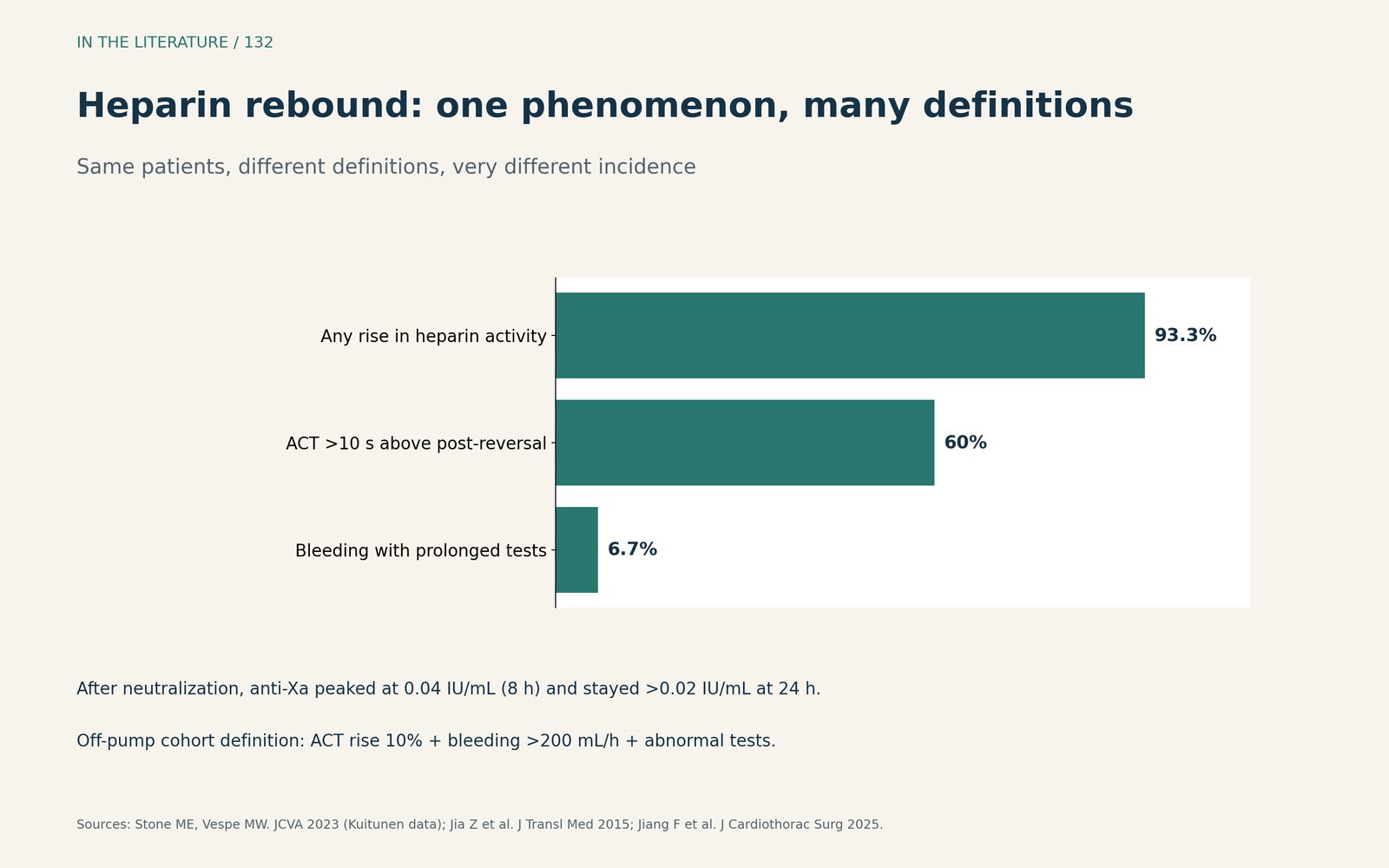
Figure 1. One phenomenon, many definitions. Synthesized from Stone and Vespe, Jia et al. and Jiang et al.[1], [2], [6] View larger.

Why the usual tests mislead
The ACT is insensitive to low heparin levels and is prolonged by hemodilution, low platelets, factor deficiency and excess protamine; one study found the ACT did not correlate with anti-Xa. A prolonged aPTT was corrected by mixing studies in 82% of samples, pointing to factor deficiency rather than heparin.[1]
Point-of-care heparin tests have a blind spot. Wand and colleagues sampled 97 patients 15 minutes after protamine; neither the heparin-protamine titration nor the ROTEM INTEM:HEPTEM ratio identified patients with raised anti-Xa, although both did after heparin-containing pump blood was returned.[3] Moilanen and colleagues tested 51 patients 10 to 15 minutes after protamine: all had an INTEM:HEPTEM ratio below 1.1, a sensitivity of 0%, and an ACT rise of at least 10% had a sensitivity of 17% with one device. They also found that different ACT devices cannot be used interchangeably.[4]
Anti-Xa has its own problems. Bolliger and Tanaka note that anti-Xa reagents with and without dextran sulfate can overestimate or underestimate residual heparin after bypass and cannot be assumed interchangeable.[5]
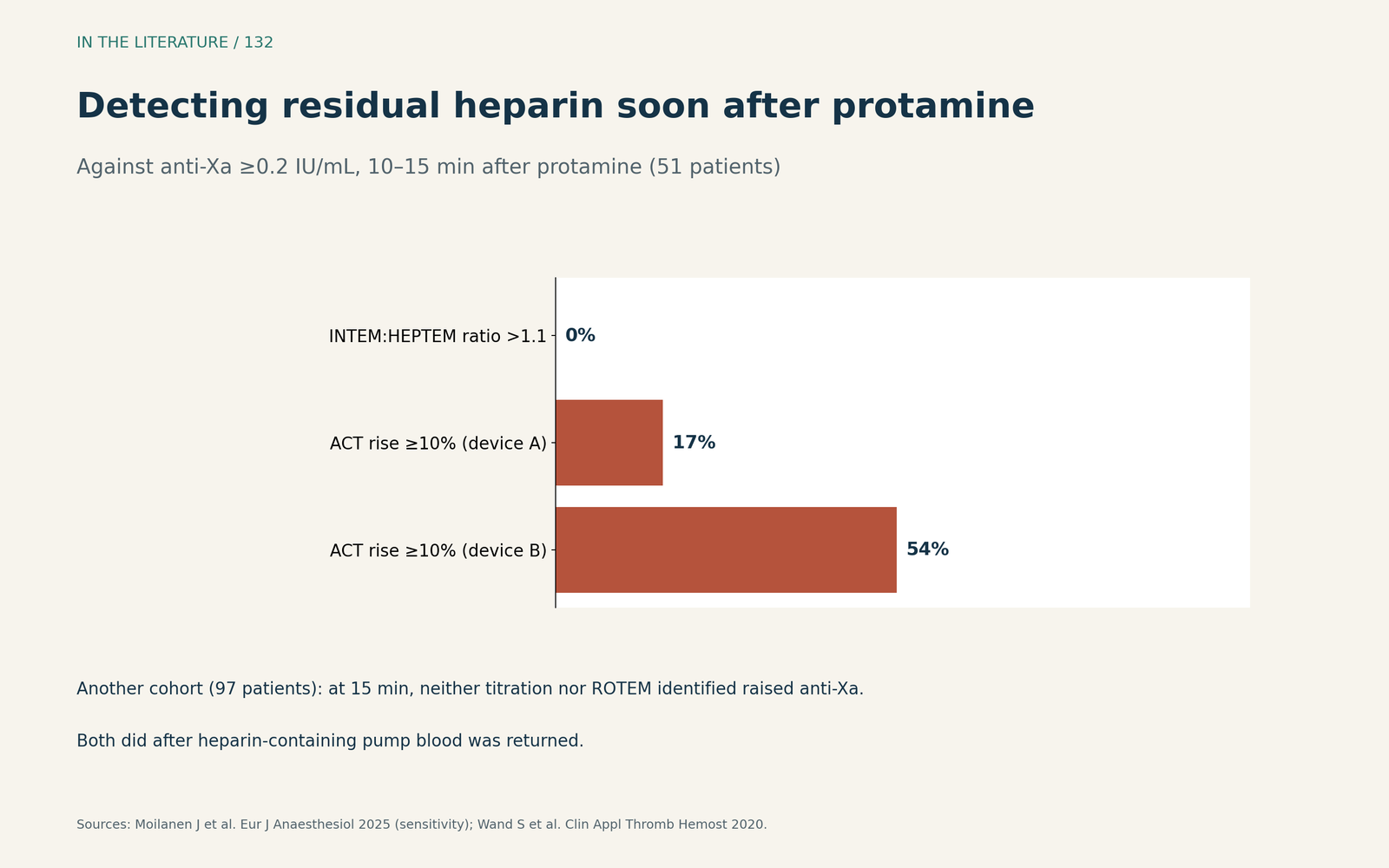
Figure 2. Tests for residual heparin soon after protamine. Redrawn from Wand et al. and Moilanen et al.[3], [4] View larger.

Does it cause bleeding?
The link is weak. In a study summarized by Bolliger and Tanaka, 98% of patients had detectable anti-Xa 3 hours after ICU arrival, yet raised values were not associated with more bleeding; with a viscoelastic clot time ratio above 1.4, only 5 of 174 patients (3%) had residual heparin.[5] Jiang and colleagues retrospectively studied 503 off-pump patients and defined rebound as an ACT rise of 10% with bleeding over 200 mL/h and abnormal tests; reoperation for bleeding was more common in that group, but bleeding was part of the definition.[6] Stone and Vespe conclude that the very low anti-Xa levels found after surgery have never been correlated with actual bleeding.[1]
What to do
The 2024 EACTS/EACTAIC/EBCP guideline notes that additional protamine is often given for oozing although prolonged ACTs may not reflect residual heparin, and that extra doses may cause overdosing; it suggests evaluating residual heparin with a heparin-protamine titration system or viscoelastic testing.[7] In the trial by Meesters and colleagues, a protamine-to-heparin ratio of 1.3 rather than 0.8 increased 24-hour blood loss (615 vs 470 mL) and plasma transfusion (11% vs 0%).[8] Bolliger and Tanaka recommend viscoelastic testing despite its limited sensitivity, because it also shows fibrinogen and platelet contributions, and they judge residual heparin rarely the main driver of bleeding after bypass.[5]
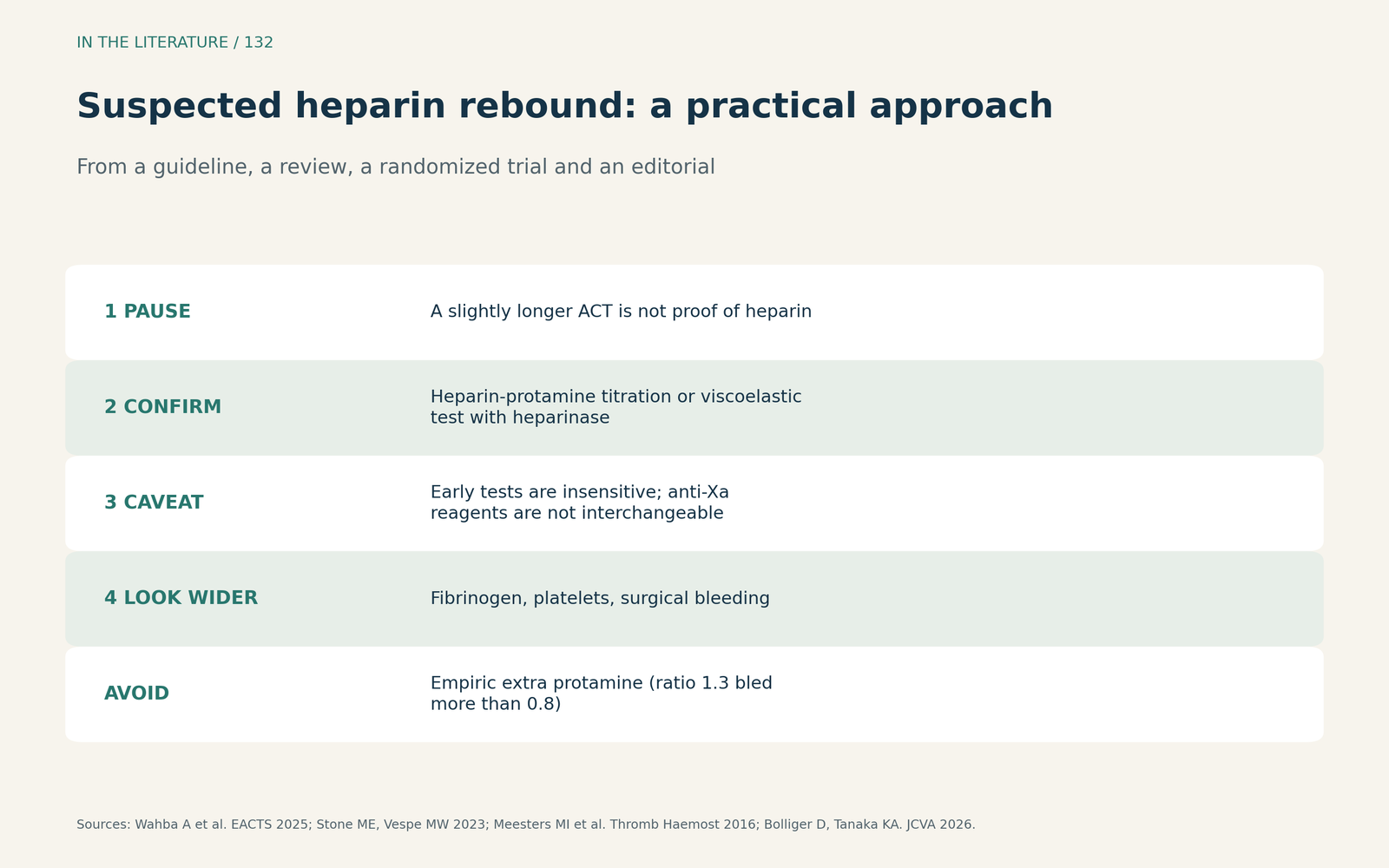
Figure 3. A practical approach to suspected rebound. Synthesized from the 2024 EACTS guideline, Stone and Vespe, Meesters et al. and Bolliger and Tanaka.[7], [1], [8], [5] View larger.

Three takeaways
- Name the definition. Incidence depends on the test; very low anti-Xa levels are common after bypass.[1], [2]
- Know the blind spot. ACT, aPTT and heparinase ratios are unreliable soon after protamine, and anti-Xa reagents differ.[3], [4], [5]
- Confirm before you give more protamine. Extra protamine can worsen bleeding; look for other causes with viscoelastic testing.[7], [8], [5]
References
- Stone ME, Vespe MW. Heparin rebound: an in-depth review. J Cardiothorac Vasc Anesth. 2023;37(4):601–612. doi:10.1053/j.jvca.2022.12.019
- Jia Z, Tian G, Ren Y, Sun Z, Lu W, Hou X. Pharmacokinetic model of unfractionated heparin during and after cardiopulmonary bypass in cardiac surgery. J Transl Med. 2015;13:45. doi:10.1186/s12967-015-0404-5
- Wand S, Heise D, Hillmann N, et al. Is there a "blind spot" in point-of-care testing for residual heparin after cardiopulmonary bypass? A prospective, observational cohort study. Clin Appl Thromb Hemost. 2020;26:1076029620946843. doi:10.1177/1076029620946843
- Moilanen J, Pada M, Ohtonen P, et al. Thromboelastometry and two activated clotting tests in detecting residual heparin after protamine in cardiac surgical patients: a prospective cohort study. Eur J Anaesthesiol. 2025;42(5):398–406. doi:10.1097/EJA.0000000000002122
- Bolliger D, Tanaka KA. Monitoring residual heparin activity after protamine reversal in cardiac surgery. J Cardiothorac Vasc Anesth. 2026;40(10):3127–3129. doi:10.1053/j.jvca.2026.06.046
- Jiang F, Xu Y, Hu SS, Wang JQ, Yao YT. Heparin rebound in patients undergoing off-pump coronary artery bypass grafting surgery: a single-center retrospective study. J Cardiothorac Surg. 2025;20:18. doi:10.1186/s13019-024-03267-9
- Wahba A, Kunst G, De Somer F, et al. 2024 EACTS/EACTAIC/EBCP guidelines on cardiopulmonary bypass in adult cardiac surgery. Eur J Cardiothorac Surg. 2025;67(2):ezae354. doi:10.1093/ejcts/ezae354
- Meesters MI, Veerhoek D, de Lange F, et al. Effect of high or low protamine dosing on postoperative bleeding following heparin anticoagulation in cardiac surgery: a randomised clinical trial. Thromb Haemost. 2016;116(8):251–261. doi:10.1160/TH16-02-0117