ITL-6205faa479c7
Juan Li, MD · Updated November 18, 2026
Key points
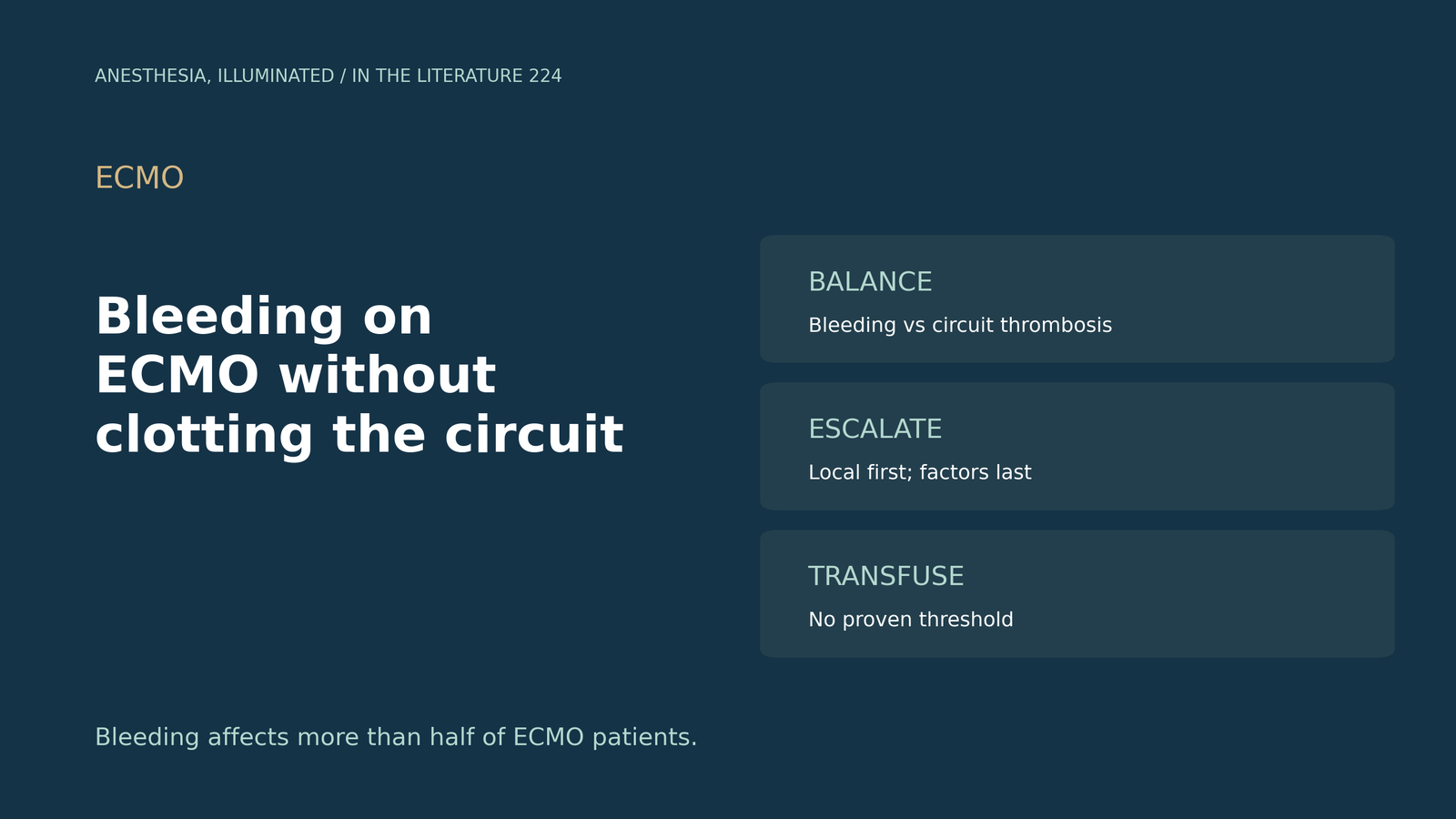
- Common problem. Bleeding occurs in more than 50% of ECMO patients.[1]
- Two-sided risk. Management must balance ongoing bleeding against circuit or patient thrombosis, with frequent reassessment when anticoagulation is reduced or withheld.[2]
- Careful with factors. Concentrated factors such as PCC or recombinant factor VIIa require caution because of catastrophic thrombosis risk.[3]
- Local measures help. Topical hemostatic agents improved cannulation-site hemostasis (42% vs 18%).[4]
- Thresholds are uncertain. A threshold of 8 g/dL gave outcomes comparable to 10 g/dL, and higher thresholds were associated with greater mortality in observational data.[3], [5]
A patient on VA ECMO bleeds from the cannulation site and chest drains, and the oxygenator pressure drop is creeping up. How far can you push hemostasis before the circuit clots?[2], [3]
Balancing bleeding and clotting
Tenure et al. (J Cardiothorac Vasc Anesth 2021) note that bleeding occurs in more than 50% of ECMO patients.[1] The PEACE consensus (Rintoul et al., Pediatr Crit Care Med 2024) states that management must balance ongoing bleeding against circuit or patient thrombosis; reducing or withholding anticoagulation requires frequent reassessment, empirically raising flow to prevent thrombus should be viewed cautiously, changing a component rather than the whole circuit is reasonable for localized clot, and life-threatening hemorrhage may use plasma:RBC:platelet ratios of 1:1:1 to 1:1:2.[2] In a case series, four of 10 VV ECMO patients with COVID pneumonia had hemorrhagic strokes, 3 of them fatal, and VV ECMO bleeding is typically associated with platelet dysfunction.[6]
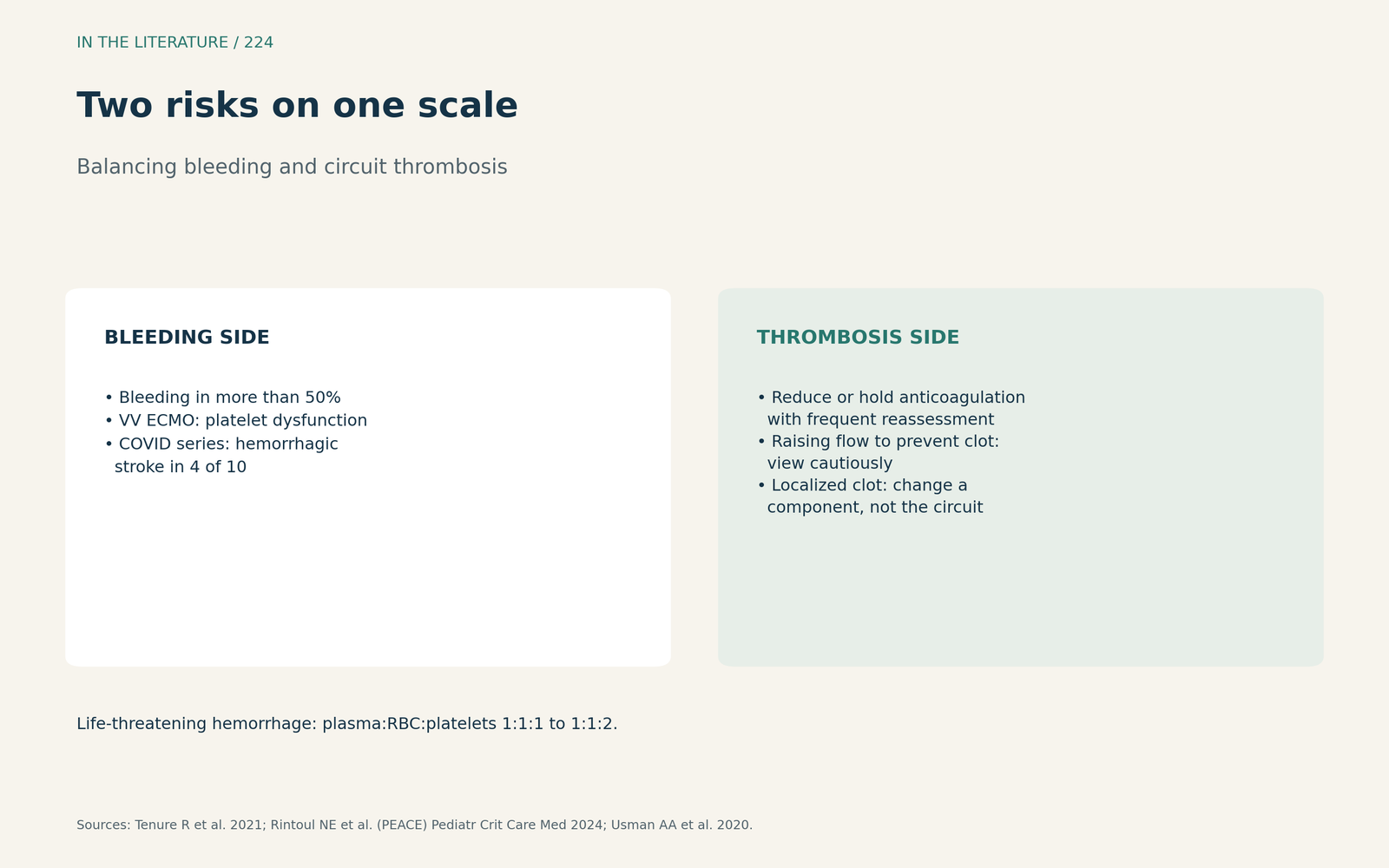
Figure 1. Two risks on one scale. Synthesized from Tenure et al., Rintoul et al. and Usman et al.[1], [2], [6] View larger.

Hemostatic tools and their cost
The SCA consensus (Mazzeffi et al., J Cardiothorac Vasc Anesth 2021) advises caution with concentrated factors such as PCC or recombinant factor VIIa because of catastrophic circuit, cardiac or pulmonary thrombosis.[3] The PEACE antifibrinolytic consensus (Moynihan et al., Pediatr Crit Care Med 2024) advises against recombinant factor VIIa except for life-threatening bleeding, after thrombotic events in 25% of treated children; topical hemostatic agents improved cannulation-site hemostasis (42% vs 18%), and tranexamic acid was linked to a seven-fold increase in seizure risk.[4]
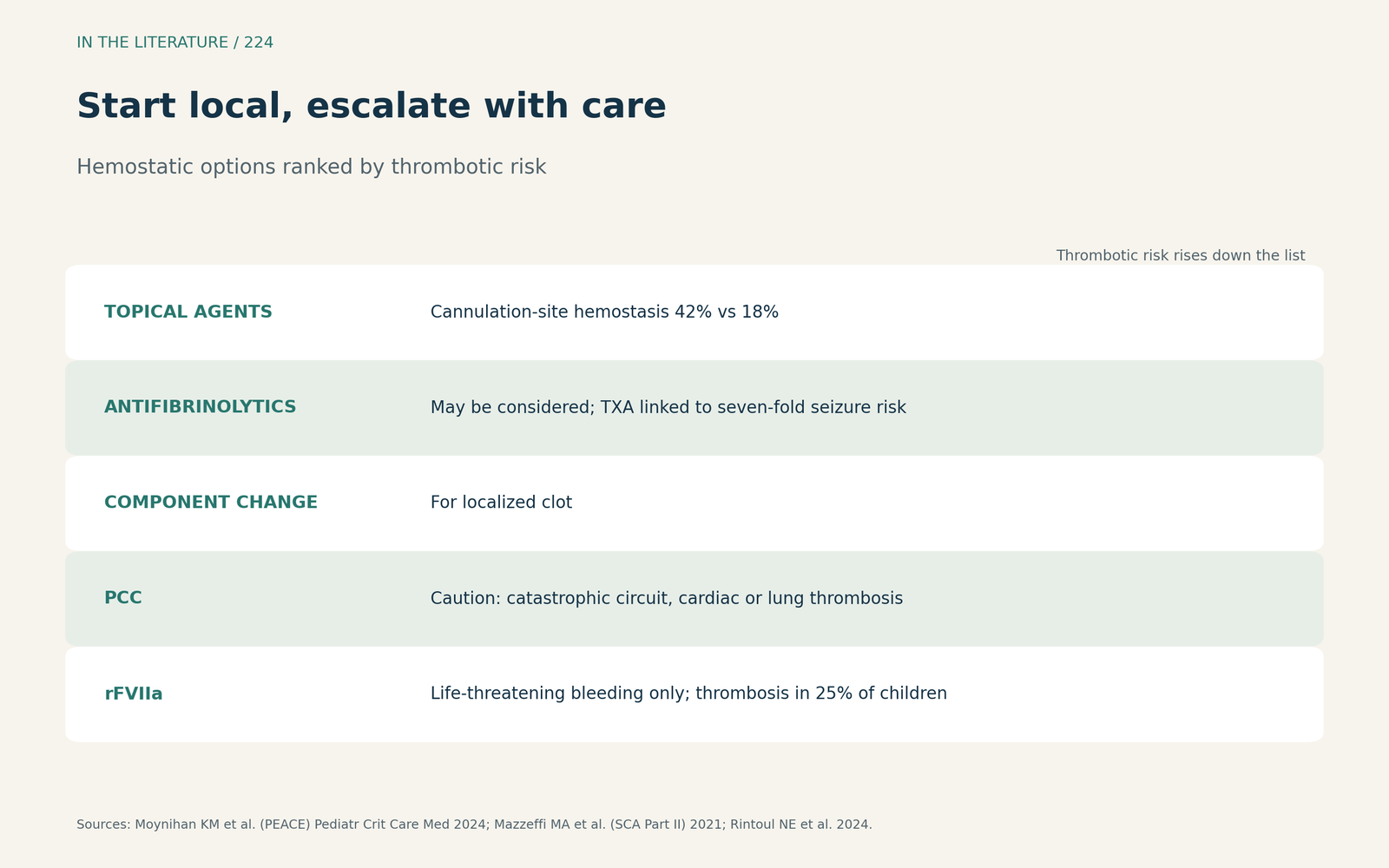
Figure 2. Start local, escalate with care. Synthesized from Mazzeffi et al. and Moynihan et al.[3], [4] View larger.

How much to transfuse
A transfusion threshold of 8 g/dL gave outcomes comparable to 10 g/dL.[3] Abbasciano et al. (J Cardiothorac Vasc Anesth 2021) pooled 1,070 patients from observational studies with high risk of bias: 86% were transfused, higher thresholds were associated with greater mortality, and threshold was not associated with bleeding or thrombosis.[5] In contrast, a target trial emulation of 534 VA ECMO patients (Thao et al., Crit Care 2025), 46% of whom died, found a modest survival benefit with liberal transfusion at days 2 and 3 (12% and 13%); nearly 90% were transfused, and the authors did not support immediate practice change.[7]
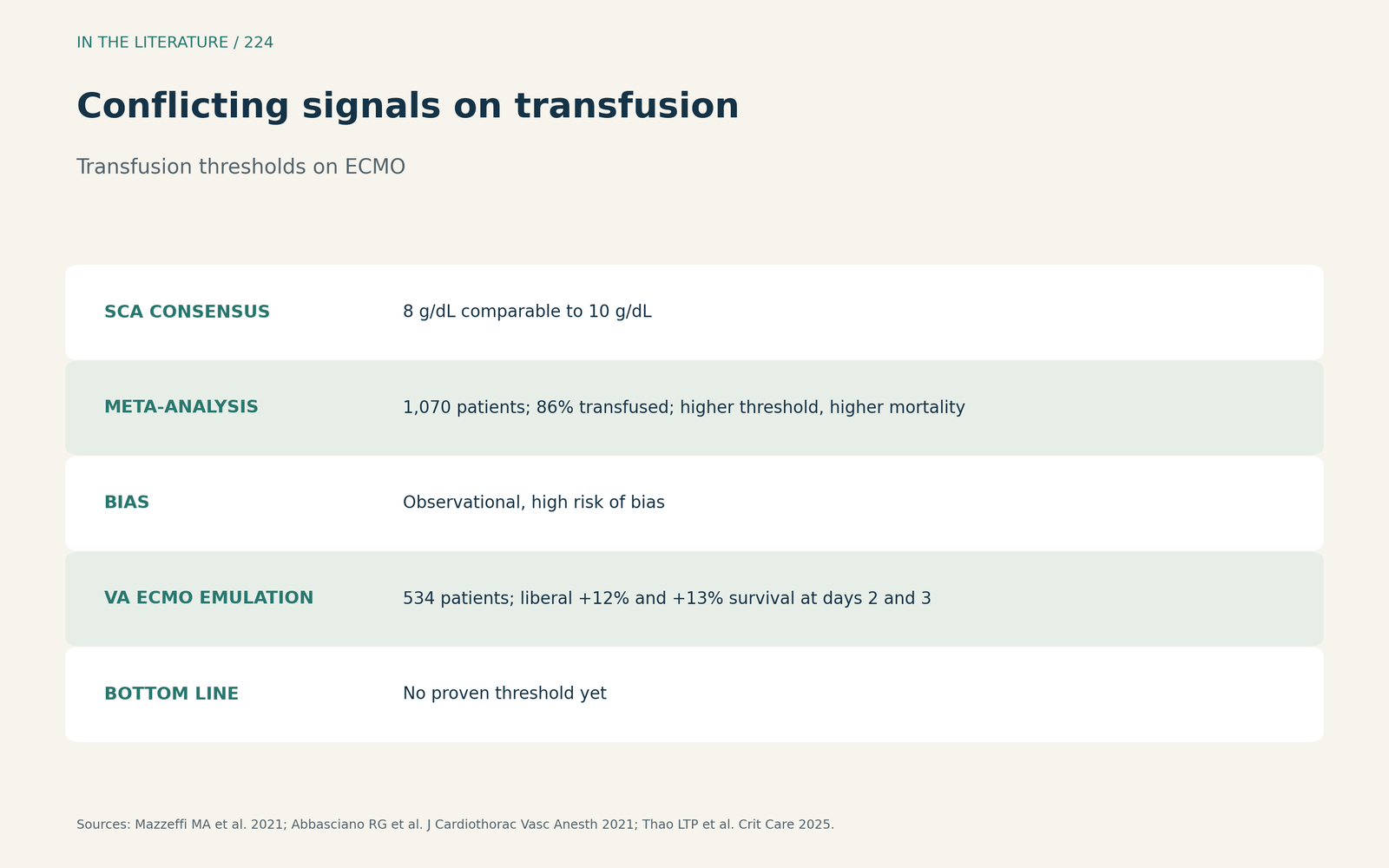
Figure 3. Conflicting signals on transfusion. Synthesized from Mazzeffi et al., Abbasciano et al. and Thao et al.[3], [5], [7] View larger.

Three takeaways
- Treat ECMO bleeding as a balance with circuit thrombosis, and reassess often.[2]
- Start with local measures and targeted replacement; reserve PCC or factor VIIa for life-threatening bleeding.[3], [4]
- There is no proven transfusion threshold on ECMO; avoid reflexively high targets.[3], [5], [7]
References
- Tenure R, Kiefer JJ, Augoustides JG. Blood transfusion in extracorporeal membrane oxygenation—defining thresholds and unresolved questions. J Cardiothorac Vasc Anesth. 2021;35(4):1203–1204. doi:10.1053/j.jvca.2020.11.019
- Rintoul NE, McMichael ABV, Bembea MM, et al. Management of bleeding and thrombotic complications during pediatric extracorporeal membrane oxygenation: the Pediatric Extracorporeal Membrane Oxygenation Anticoagulation CollaborativE consensus conference recommendations. Pediatr Crit Care Med. 2024;25(7):e66–e77. doi:10.1097/PCC.0000000000003489
- Mazzeffi MA, Rao VK, Dodd-o J, et al. Intraoperative management of adult patients on extracorporeal membrane oxygenation: an expert consensus statement from the Society of Cardiovascular Anesthesiologists—Part II, intraoperative management and troubleshooting. J Cardiothorac Vasc Anesth. 2021;35(12):3513–3527. doi:10.1053/j.jvca.2021.07.047
- Moynihan KM, Ryerson LM, Le J, et al. Antifibrinolytic and adjunct hemostatic agents: the Pediatric Extracorporeal Membrane Oxygenation Anticoagulation CollaborativE consensus conference recommendations. Pediatr Crit Care Med. 2024;25(7):e44–e52. doi:10.1097/PCC.0000000000003491
- Abbasciano RG, Yusuff H, Vlaar APJ, et al. Blood transfusion threshold in patients receiving extracorporeal membrane oxygenation support for cardiac and respiratory failure—a systematic review and meta-analysis. J Cardiothorac Vasc Anesth. 2021;35(4):1192–1202. doi:10.1053/j.jvca.2020.08.068
- Usman AA, Han J, Acker A, et al. A case series of devastating intracranial hemorrhage during venovenous extracorporeal membrane oxygenation for COVID-19. J Cardiothorac Vasc Anesth. 2020;34(11):3006–3012. doi:10.1053/j.jvca.2020.07.063
- Thao LTP, Buscher H, Nguyen TL, et al. Liberal or restrictive transfusion for veno-arterial extracorporeal membrane oxygenation patients: a target trial emulation using the OBLEX study data. Crit Care. 2025;29(1):360. doi:10.1186/s13054-025-05606-1