ITL-2f17801d2e08
Juan Li, MD · Updated November 17, 2026
Watch the video
Key points
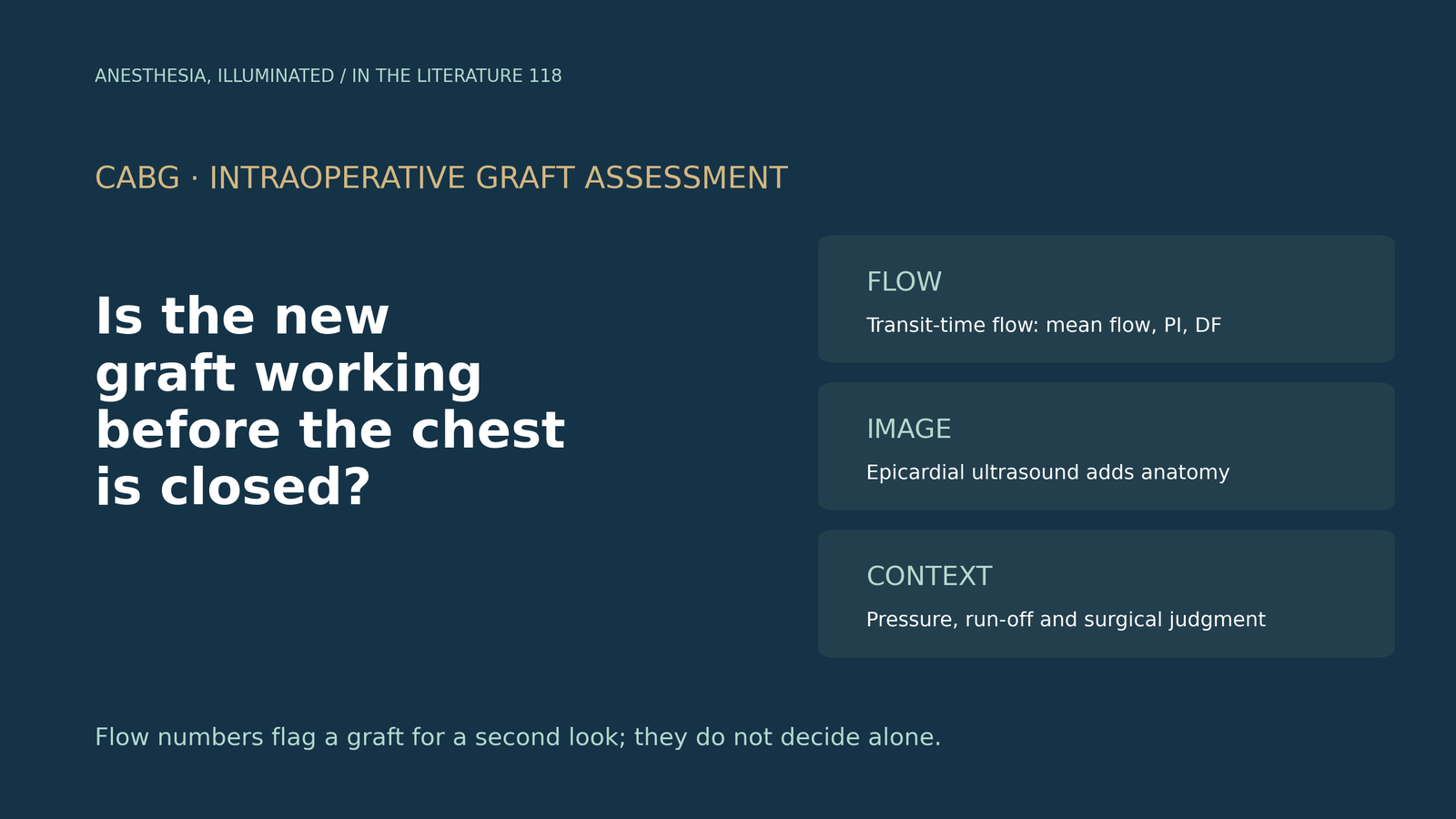
- Transit-time flow measurement (TTFM) is the most widely adopted method because intraoperative angiography needs infrastructure that standard operating rooms rarely have. The 2018 ESC/EACTS guideline gave it a Class IIa recommendation.[1]
- Four numbers matter: mean graft flow, pulsatility index (PI), diastolic filling and backward flow. Commonly used abnormal values are a mean flow below 15–20 mL/min, a PI above 5 and diastolic filling below 50%. Readings depend on blood pressure, so doubtful values are repeated with a mean arterial pressure above 80 mmHg.[2]
- Assessment changes operations. In a meta-analysis, 4.3% of patients had a graft revised; in the REQUEST registry, flow measurement and epicardial ultrasound contributed to changes in 25.2% of operations, including graft revision in 7.8%.[1], [3]
- TTFM alone misses failing grafts: reported sensitivity was 0.250 to 0.457, against a specificity of 0.939 to 0.984. Evidence is stronger for arterial grafts, and flow cut-offs alone are not enough to guide practice.[1], [4], [5]
- The anesthesiologist contributes stable hemodynamics during measurement and transesophageal echocardiography (TEE). Coronary sinus flow and Doppler can add clues, but only small studies and case reports support them.[2], [6], [7]
After three grafts have been completed, the surgeon places a flow probe on each conduit and asks for a steady blood pressure. What do the flow numbers mean, how reliable are they, and what else can confirm that a graft is working before the chest is closed?[1], [2]
Why measure at all
In their 2019 meta-analysis, Thuijs and colleagues note that angiography is thought to be the best and most reliable method for assessing flow, but the infrastructure it requires is rarely available in standard operating rooms. Transit-time flow measurement has therefore become the most adopted strategy, and the 2018 ESC/EACTS guideline gave it a Class IIa recommendation.[1]
Reading the numbers
Leviner and colleagues, in a 2024 review, describe four parameters. Mean graft flow is considered abnormal below 15–20 mL/min. The PI, the difference between peak and minimum flow divided by mean flow, reflects resistance, and a value above 5 is considered abnormal. Diastolic filling below 50% is abnormal, and backward flow above 3% suggests competitive flow. Flow values are affected by blood pressure during the measurement.[2]
Leviner and colleagues also summarize an expert consensus: place the probe on the mid or distal graft, repeat questionable readings with a mean arterial pressure above 80 mmHg, and do not decide to revise a graft on TTFM alone. A good graft with poor numbers is often explained by competitive flow.[2] The consensus by Gaudino and colleagues comprised 10 expert statements and judged the evidence more robust for arterial than for venous grafts.[4]
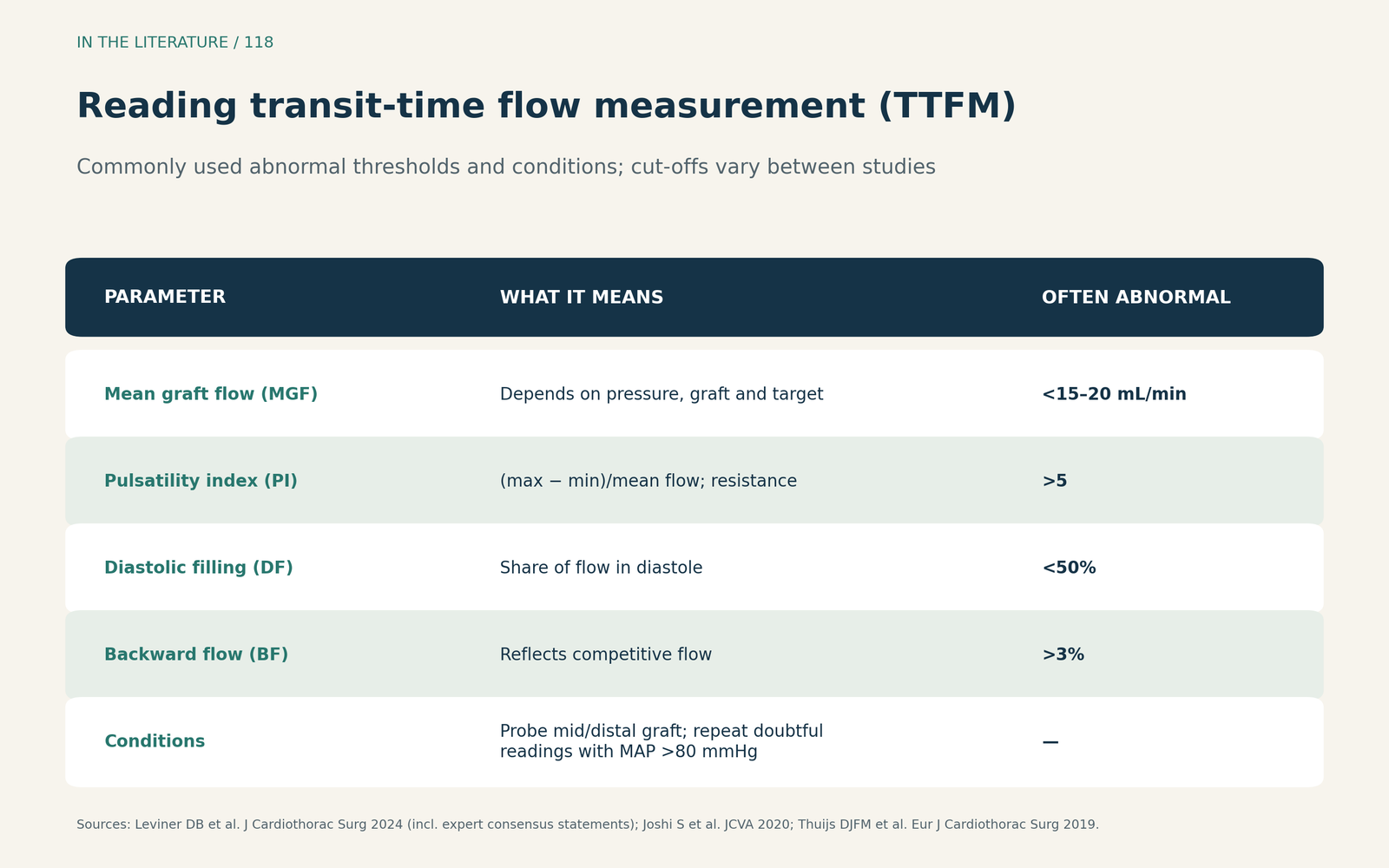
Figure 1. Reading transit-time flow measurement. Synthesized from Leviner et al. (including the expert consensus statements), Joshi et al. and Thuijs et al.; cut-offs vary between studies.[2], [6], [1] View larger.

How often does it change the operation?
Across 35 studies with 8,943 patients, a revision was required in 4.3% of patients (95% CI 3.3–5.7%), 2.0% of grafts were revised, and 25.1% of grafts classified as abnormal were revised.[1] In the prospective REQUEST registry of 1,016 analyzed patients, the planned operation changed in 25.2%, including decisions about the aorta and coronary targets as well as completed grafts, and graft revision occurred in 7.8%. In-hospital mortality was 0.6%.[3]
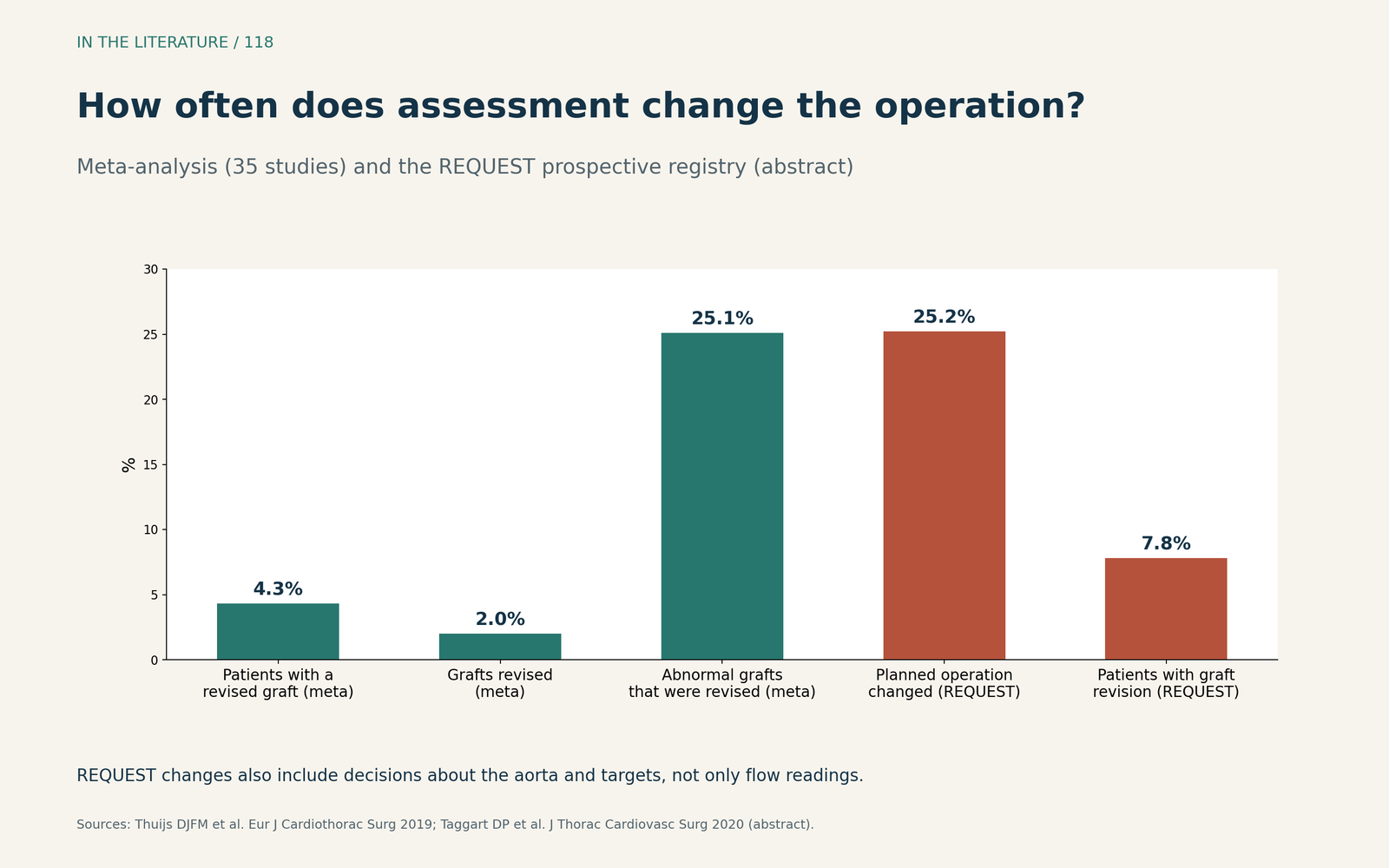
Figure 2. How often assessment changes the operation. Redrawn from the meta-analysis by Thuijs et al. and the REQUEST abstract.[1], [3] View larger.

How accurate is it?
Studies in the meta-analysis reported sensitivity of 0.250 to 0.457 and specificity of 0.939 to 0.984, so TTFM rarely flags a good graft but misses some failing ones. In one study, combining TTFM with high-resolution epicardial ultrasound raised the negative and positive predictive values to 100%. In the only small randomized trial of intraoperative graft imaging, 1-year graft occlusion did not differ significantly (30.9% vs 28.9%).[1]
Over the long term, Zeng and colleagues followed 202 off-pump patients with angiography at 5 years. The best mean-flow cut-off for left internal mammary artery graft failure was 14.5 mL/min, but the authors conclude that a mean-flow cut-off alone is insufficient to guide clinical practice.[5]
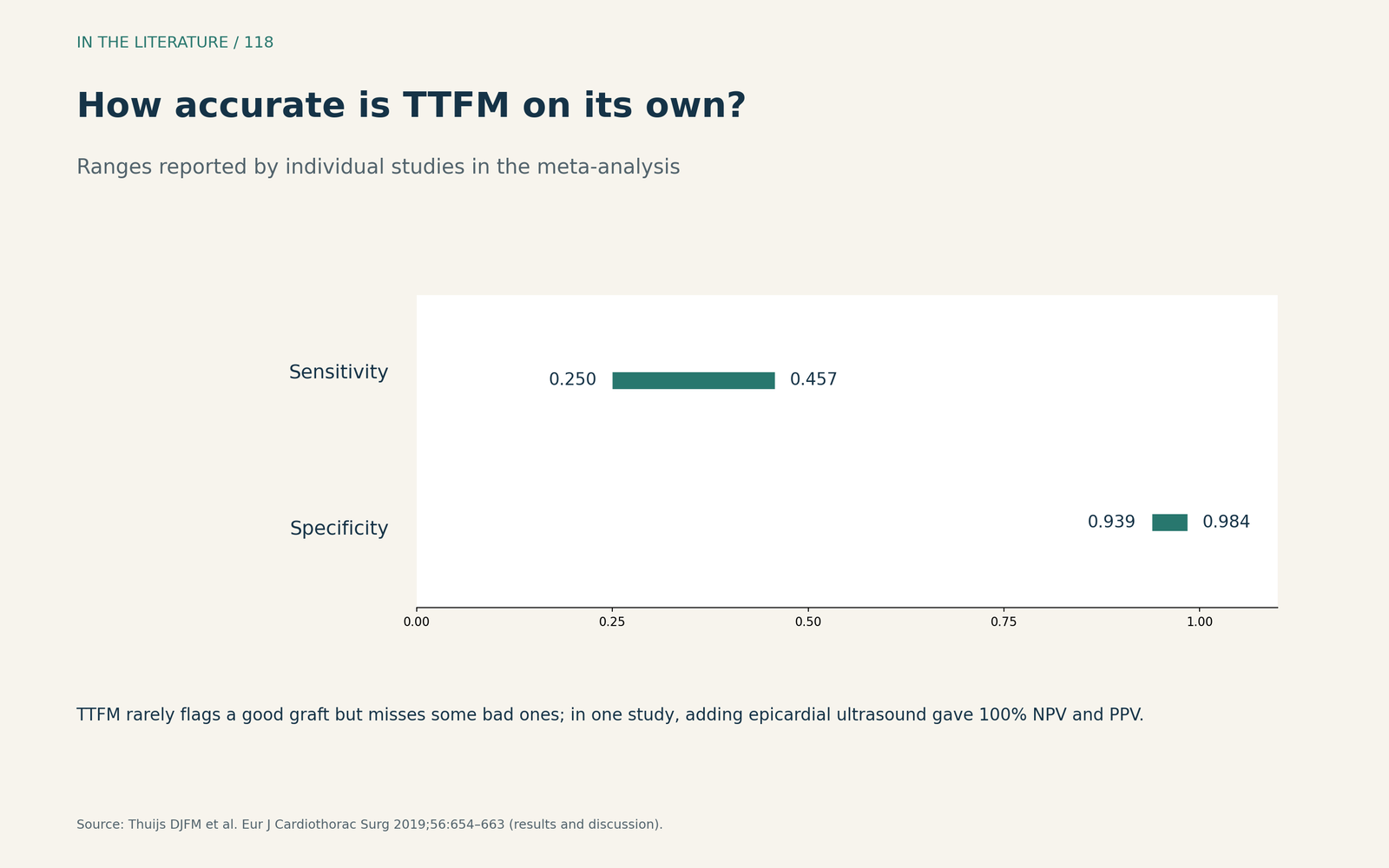
Figure 3. How accurate TTFM is on its own. Redrawn from the ranges reported in Thuijs et al.[1] View larger.

The anesthesiologist's part
Because flow depends on pressure, a stable blood pressure during measurement makes the numbers interpretable.[2] Joshi and colleagues cite a diastolic filling above 50% with a PI below 5 as indicating a well-functioning graft, and a PI above 3 as an independent predictor of graft failure. In a pilot study of 40 patients, they found that a larger rise in TEE-measured coronary sinus flow after grafting tracked favorable flow values; the study was small.[6] Wozolek and colleagues describe how TEE imaging of the graft and coronary sinus detected, at a later operation, a vein graft sewn to a coronary vein, and they consider coronary sinus imaging with intraoperative TEE easy.[7]
Three takeaways
- Know the four flow numbers. Mean flow, PI, diastolic filling and backward flow, interpreted against blood pressure and the target vessel.[2]
- Treat abnormal readings as a reason to look again. TTFM misses some failing grafts and may flag good ones with competitive flow; epicardial ultrasound and surgical judgment decide revision.[1], [2], [5]
- Help the measurement. Keep pressure steady during flow readings and use TEE to look for new wall motion changes and coronary sinus clues.[2], [6], [7]
References
- Thuijs DJFM, Bekker MWA, Taggart DP, et al. Improving coronary artery bypass grafting: a systematic review and meta-analysis on the impact of adopting transit-time flow measurement. Eur J Cardiothorac Surg. 2019;56(4):654–663. doi:10.1093/ejcts/ezz075
- Leviner DB, Puskas JD, Taggart DP. Transit time flow measurement in arterial grafts. J Cardiothorac Surg. 2024;19(1):224. doi:10.1186/s13019-024-02670-6
- Taggart DP, Thuijs DJFM, Di Giammarco G, et al. Intraoperative transit-time flow measurement and high-frequency ultrasound assessment in coronary artery bypass grafting. J Thorac Cardiovasc Surg. 2020;159(4):1283–1292.e2. Abstract only. doi:10.1016/j.jtcvs.2019.05.087
- Gaudino M, Sandner S, Di Giammarco G, et al. The use of intraoperative transit time flow measurement for coronary artery bypass surgery: systematic review of the evidence and expert opinion statements. Circulation. 2021;144(14):1160–1171. Abstract only. doi:10.1161/CIRCULATIONAHA.121.054311
- Zeng C, Li X, Dai Y, et al. Transit time flow measurement predicts graft patency in off-pump coronary artery bypass grafting upon 5-year angiographic follow-up. J Cardiothorac Surg. 2021;16(1):334. doi:10.1186/s13019-021-01716-3
- Joshi S, Choudhury A, Magoon R, et al. Transesophageal echocardiographic estimation of coronary sinus blood flow for predicting favorable postoperative transit time coronary graft flow measurements: a pilot study. J Cardiothorac Vasc Anesth. 2020;34(1):58–64. doi:10.1053/j.jvca.2019.05.027
- Wozolek A, Courbe A, Martins MR, et al. Transesophageal echocardiographic identification of an inadvertent coronary vein bypass graft. J Cardiothorac Vasc Anesth. 2025;39(3):755–758. doi:10.1053/j.jvca.2024.11.035