
ITL-b1b457b90f82
Watch the video

Figure 1. The goal is useful shoulder analgesia with a respiratory burden the patient can tolerate. Editorial illustration; no patient or diagnostic ultrasound data are depicted.
Key points
- A phase I/II study identified 25 mL of 0.5% ropivacaine as a promising volume for a single-injection retroclavicular block: all 12 patients at that volume met the study’s block-success definition, with no hemidiaphragmatic paralysis detected at 30 minutes.
- The actual regimen also included 5 mL for a separate supraclavicular nerve block, and every patient received general anesthesia. This was not proof of a standalone surgical anesthetic.
- Obstructive or restrictive pulmonary disease was excluded. The result cannot establish safety in the very patients with poor respiratory reserve who most need diaphragm preservation.
- “No events in 12 patients” and the study’s modeled 1% paralysis estimate are different statements. Neither guarantees an unaffected diaphragm in the next patient. [1]
A patient needs shoulder arthroscopy but has little respiratory reserve to spare. Conventional interscalene blockade raises concern about losing ipsilateral diaphragm function. A distal block is attractive—but can it cover the shoulder reliably without replacing one clinical problem with another?
The retroclavicular study offers a useful lead. Its value becomes clearer when we keep the entire anesthetic regimen, the measured outcomes, and the enrolled population in view.
What was actually tested?
Zhang and colleagues studied 54 adults in a single-center, single-arm, adaptive phase I/II trial. This was a volume-finding study, not a randomized comparison with interscalene block. The investigators explored different volumes of 0.5% ropivacaine and selected 25 mL as the volume offering the most favorable balance between their block-success outcome and diaphragm impairment. [1]
The retroclavicular injection was followed by a separate block of the supraclavicular nerves, the cutaneous branches of the cervical plexus, using another 5 mL of 0.5% ropivacaine. This should not be confused with a supraclavicular brachial plexus block. All patients subsequently received standardized general anesthesia and multimodal postoperative analgesia.
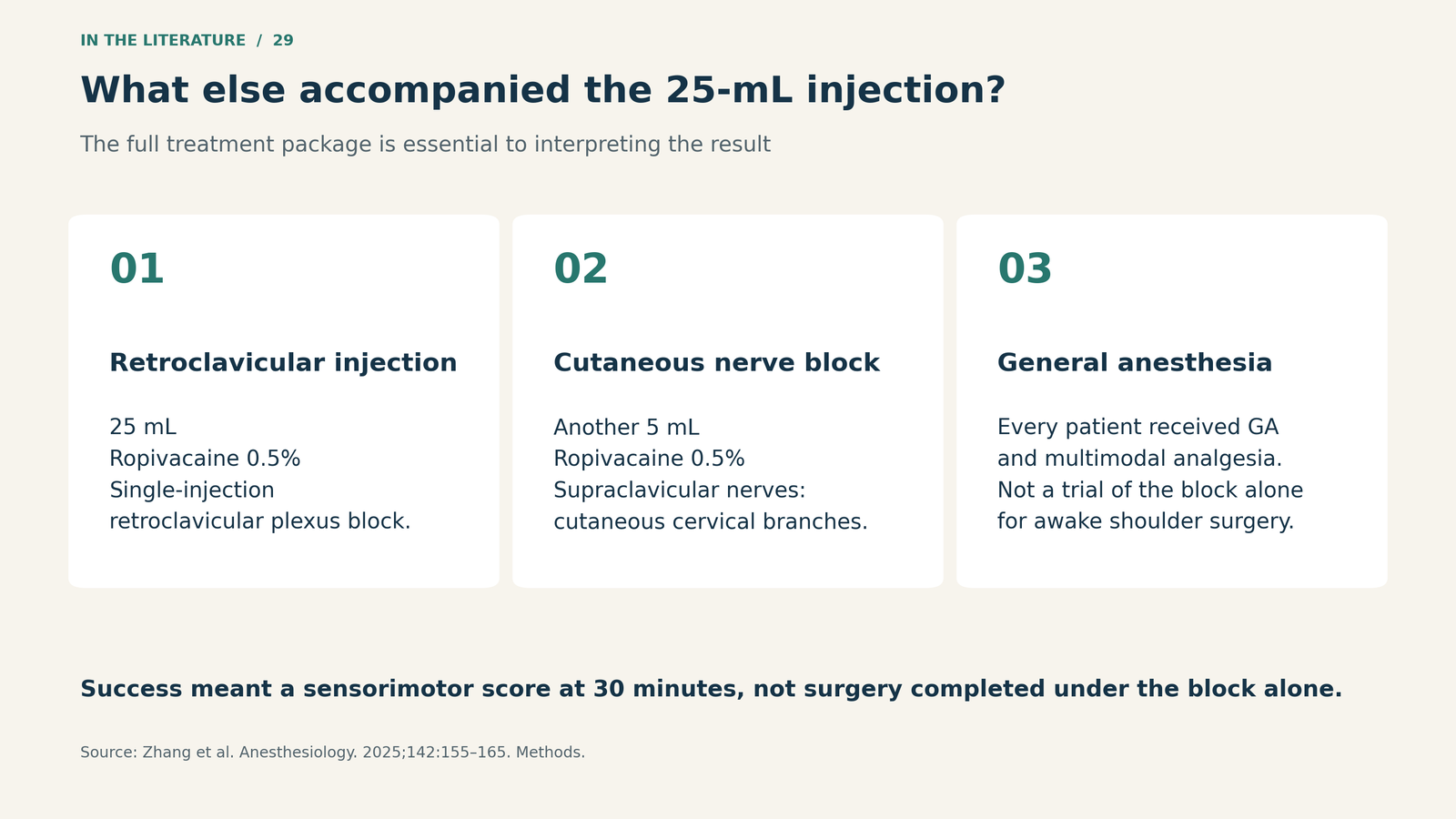
Figure 2. The treatment package matters. The 25-mL result belongs to this combined regimen; it should not be described as a 25-mL block used alone for awake shoulder surgery. Source: Zhang et al., Methods.

“Block success” meant reaching specified sensory and motor scores 30 minutes after injection: a total sensorimotor score of at least 12/14 and a sensory score of at least 3/4. It did not mean completing surgery without general anesthesia, rescue medication, or airway support. The accompanying editorial also emphasizes the contribution of the additional supraclavicular nerve block to that sensory score. [1, 2]
The 25-mL result is promising—and the denominator is 12
At 25 mL, 12/12 patients met the sensorimotor definition of success and 0/12 had ultrasound-defined hemidiaphragmatic paralysis at 30 minutes. At 20 mL, only 3/6 met the success criterion. At higher volumes, diaphragm impairment appeared: 1/12 at 30 mL, 1/12 at 35 mL, and 2/12 at 40 mL. These were small, adaptively assigned cohorts, not randomized head-to-head volume groups. [1]
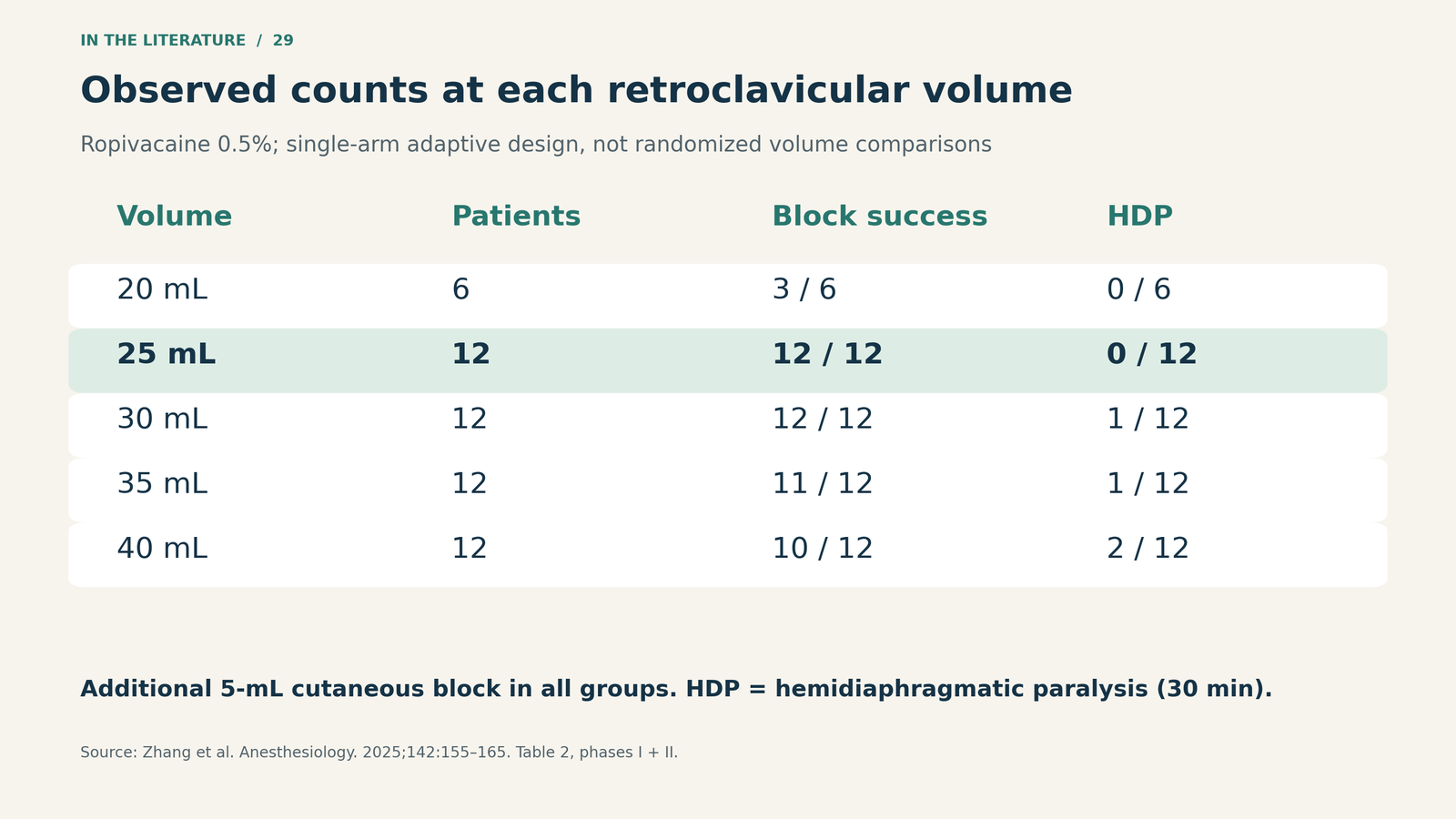
Figure 3. Observed counts across both study phases. Success was a composite sensorimotor endpoint. Diaphragm impairment was assessed at 30 minutes; the additional 5-mL supraclavicular nerve block was given at every volume. These counts are not estimates of comparative efficacy from a randomized trial. Source: Zhang et al., Table 2.

The diaphragm endpoint included both partial impairment (25–75% reduction in excursion) and complete paralysis (greater than 75% reduction or paradoxical movement). All four observed events in this study were complete paralysis. [1]
The often-quoted “1% paralysis risk” at 25 mL is a Bayesian posterior estimate, reported with a 95% credible interval of 0–6%. It is not an observed event in one of 100 patients. The direct observation was zero events among twelve patients at that volume. [1]
Across the entire study, four patients developed complete hemidiaphragmatic paralysis, and two of them had symptomatic dyspnea. The editorial rightly draws attention to those symptoms: a favorable average ultrasound result should not make a clinician unprepared to recognize and manage respiratory compromise. [1, 2]
Who was missing from the study?
Patients with obstructive or restrictive pulmonary disease were excluded, as were those with BMI above 35. Although ASA I–III patients were eligible, the enrolled cohort consisted of ASA I and II patients. The study therefore does not validate this regimen in a patient with severe COPD, marked respiratory limitation, or inability to tolerate even transient diaphragm dysfunction. [1]
Timing matters too. Diaphragm movement was assessed before the block and at 30 minutes afterward. The reassuring result at that time point is not continuous surveillance of diaphragm function throughout the postoperative period.
For a patient with limited reserve, the evidence supports considering a distal strategy and discussing its uncertainties. It does not justify promising “zero phrenic risk” or dispensing with a plan for incomplete analgesia and respiratory deterioration.
Would simply lowering the interscalene volume solve the problem?
A separate randomized trial illustrates why “less volume” is not a complete answer. Renard et al. compared extrafascial interscalene injections of 10 versus 20 mL of 0.75% ropivacaine, with general anesthesia. The reported 30-minute hemidiaphragmatic paralysis rate fell from 80% to 19% with the lower volume. However, mean time to first intravenous morphine shortened from 873 to 550 minutes, and mean 24-hour intravenous morphine use increased from 12 to 20 mg. [3]
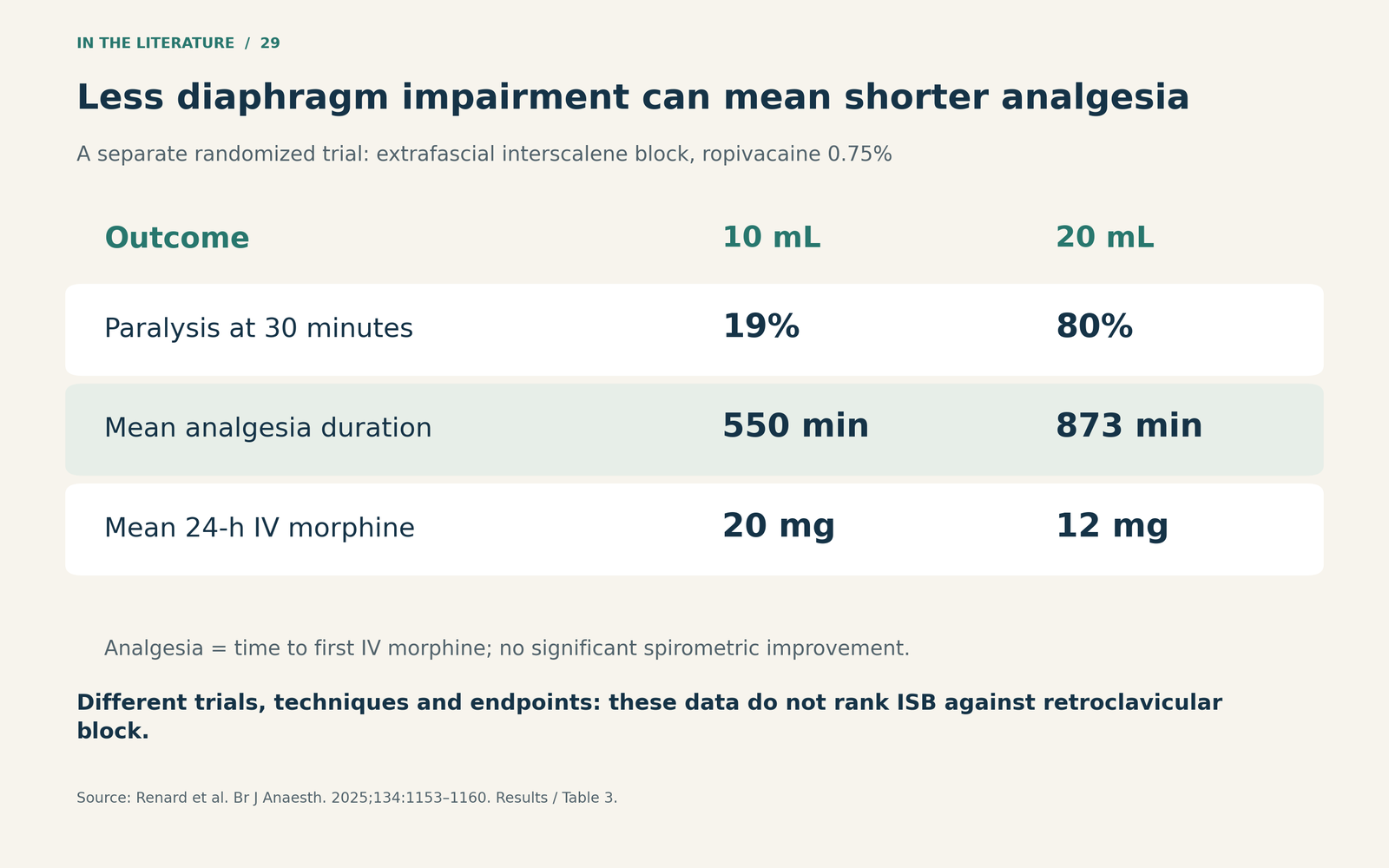
Figure 4. A separate randomized trial of extrafascial interscalene block. Analgesia duration and morphine values are means. Paralysis was defined as a greater than 75% reduction in excursion. These results cannot be directly ranked against the retroclavicular cohorts, which used a different technique, concentration, and diaphragm endpoint. Source: Renard et al., Results and Table 3.

The lower-volume trial did not demonstrate a significant improvement in measured spirometric outcomes, and moderate-to-severe pulmonary disease was also excluded. Thus, reducing ultrasound-defined paralysis does not automatically demonstrate better respiratory outcomes in high-risk patients. It may also require an earlier and stronger analgesic rescue plan. [3]
The practical decision starts with what the patient can tolerate, what the surgery requires, and whether the block is intended for analgesia with general anesthesia or for surgical anesthesia itself. Those distinctions are more useful than assigning a block a blanket “phrenic-sparing” label.
Three takeaways
- Remember the whole regimen: 25 mL retroclavicular injection, an additional 5-mL supraclavicular nerve block, and general anesthesia.
- Keep the claim proportionate: 12 successful blocks with no paralysis detected at 30 minutes are promising preliminary observations, not proof of safety in severe lung disease.
- Plan both sides of the tradeoff: preserve respiratory reserve while anticipating incomplete or shorter analgesia and the need for monitoring and rescue treatment.
References
- Zhang H, Wu J, Miao Y, Yuan Y, Qu Z, Zhang Y, et al. Determination of the optimal volume of 0.5% ropivacaine in single-injection retroclavicular brachial plexus block for arthroscopic shoulder surgery: a phase I/II trial. Anesthesiology. 2025;142(1):155–165. doi:10.1097/ALN.0000000000005159.
- Georgiadis PL, Vlassakov KV. Phrenic-sparing analgesia after shoulder surgery: deep sigh or pain relief—are we there yet? Anesthesiology. 2025;142(1):15–18. doi:10.1097/ALN.0000000000005258.
- Renard Y, Grape S, Gonvers E, Rossel JB, Goetti P, Albrecht E. Respiratory impact of local anaesthetic volume after interscalene brachial plexus block with extrafascial injection: a randomised controlled double-blinded trial. Br J Anaesth. 2025;134(4):1153–1160. doi:10.1016/j.bja.2024.12.010.