ITL-c1131fc3dc19
Juan Li · In the Literature · Updated November 16, 2026
Watch the video
Key points
- Muscle measurements on the planning CT can flag vulnerability, but they do not assess the whole patient.
- Muscle size, muscle function and multidomain frailty are related concepts with different clinical meanings.
- A CT measurement with low sensitivity cannot reliably exclude frailty when it is normal.
- Use a structured assessment to identify deficits in function, nutrition, cognition and support—and connect them to a care plan.
- A score predicting poor outcome after TAVR does not, by itself, show that the patient would gain no benefit from TAVR.
Start with the question the scan cannot answer
A TAVR planning CT already contains information about skeletal muscle. It is tempting to use that information as a shortcut: if muscle looks preserved, can the team dispense with a formal frailty assessment?
No. The scan can inform the assessment, but cannot replace it. The 2025 ESC/EACTS guideline calls for assessment of frailty, including nutritional state, alongside valve disease and other comorbidities. The practical question is broader than whether the psoas is small: what can this person do now, what limits recovery, and what improvement matters to them? [1]
Muscle quantity is only one part of vulnerability
CT can estimate muscle area or volume and attenuation, which reflects aspects of muscle composition. These measurements do not directly measure walking, strength, cognition, daily independence or caregiver support. A patient can have relatively preserved muscle quantity and still struggle in several of those domains. [2, 3]
In Furzan and colleagues' retrospective study of 245 TAVR patients, psoas characteristics were explored as additional risk information. The 25-HU psoas-density threshold in that study was derived from the same cohort's outcome curves. It should not become a universal definition of frailty or an automatic eligibility threshold. The useful clinical idea is to treat CT muscle findings as a prompt to investigate vulnerability more carefully. [2]
The 2024 JACC review by Damluji and colleagues recommends moving beyond a binary frail/not-frail label. Comprehensive geriatric assessment considers physical health, daily function, cognition and mood, and social or environmental circumstances. Those domains explain why an isolated image measurement cannot substitute for the whole assessment. [3]
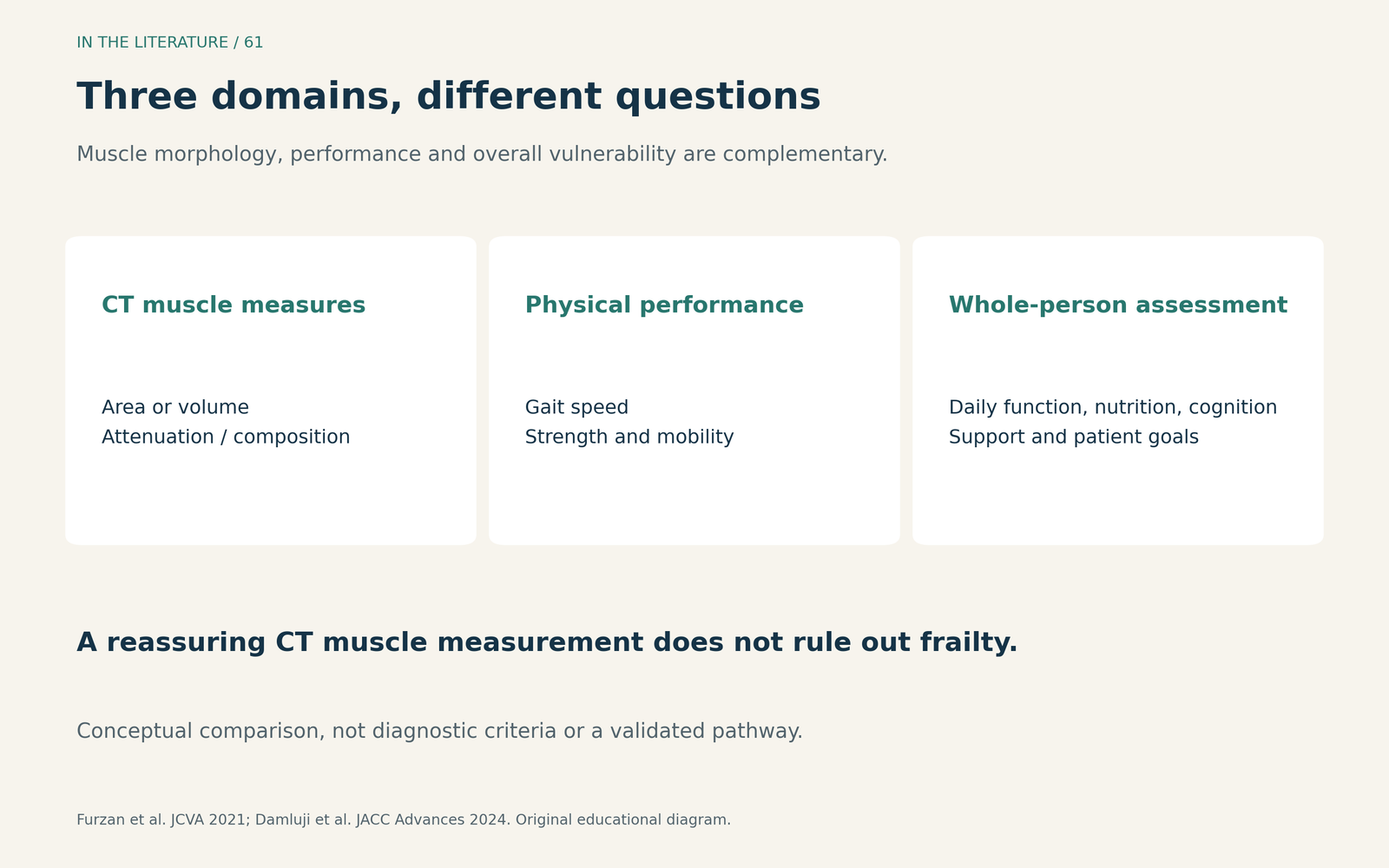
Figure 1. Original conceptual comparison. These are complementary domains, not interchangeable definitions or a validated diagnostic pathway. [2, 3] View figure

Measure function rather than inferring it from anatomy
Stein and colleagues' 2024 study analyzed 445 of 923 patients in a prospective multicenter TAVR registry. In adjusted analyses, slower gait speed was associated with mortality; the corresponding overall associations for lower grip strength and lower indexed psoas area did not reach statistical significance. [4]
For each measure's own one-standard-deviation decrease, adjusted hazard ratios were 1.38 (95% CI 1.11–1.72) for gait speed, 1.16 (0.91–1.48) for grip strength and 1.02 (0.85–1.23) for indexed psoas muscle area. Expressed in clinical units, each 0.1 m/s lower gait speed was associated with HR 1.12 (1.04–1.21). [4]
This supports measuring physical performance rather than assuming that muscle size reveals it. It does not establish that gait speed is universally superior to every CT measure, nor that CT has no prognostic value. These are observational associations, the study included only a subset of the registry, and few participants were at low surgical risk. The confidence intervals and the population matter. [4]
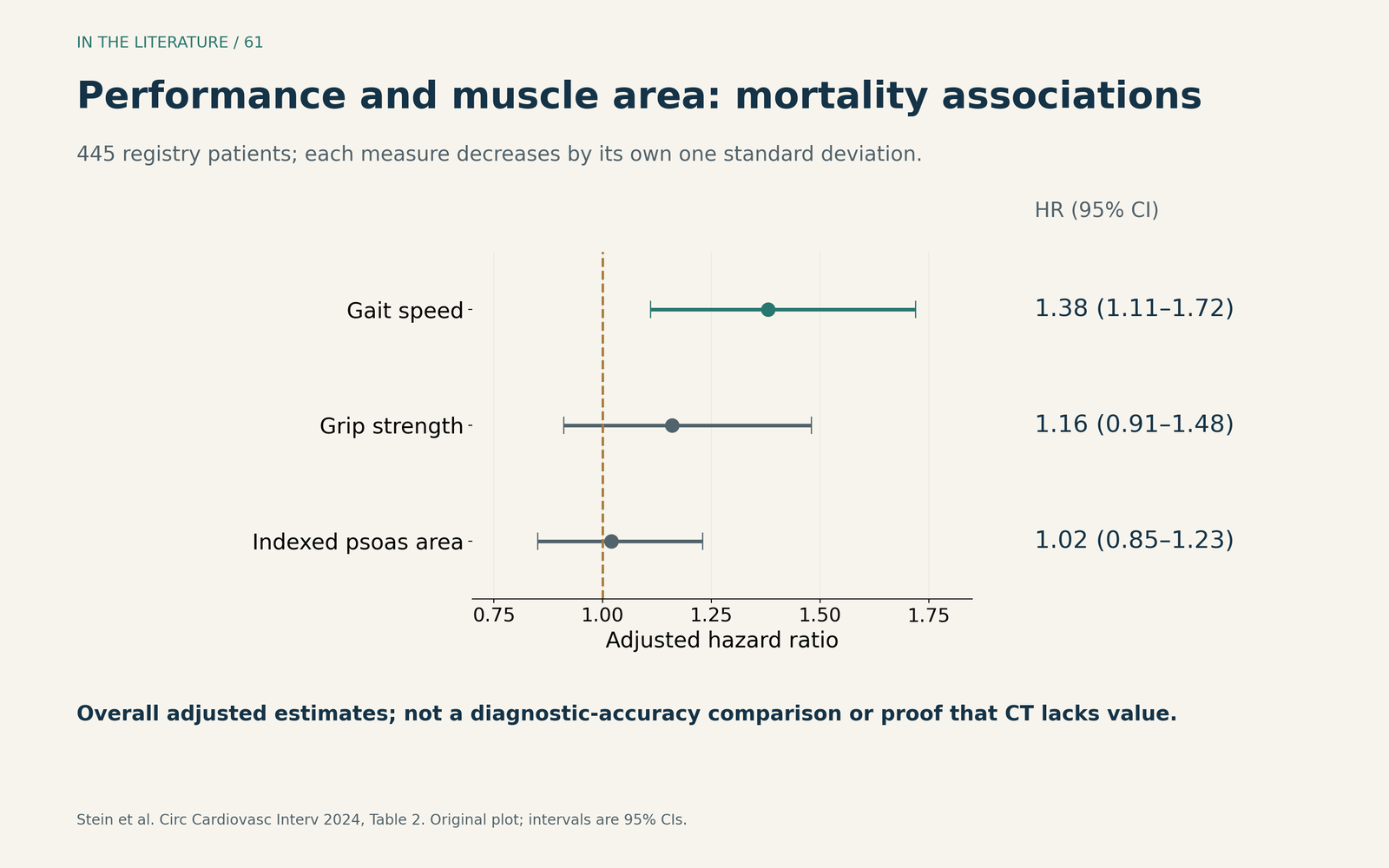
Figure 2. Original plot of reported overall adjusted hazard ratios and 95% confidence intervals. Each estimate is per one-standard-deviation decrease in its own measurement, not a common physical unit. The vertical line marks HR 1; this is not a formal head-to-head test of diagnostic superiority. [4] View figure

A newer study directly illustrates the screening problem. Vollmer and colleagues' 2026 report, available here as a formal abstract only, describes a retrospective single-center cohort of 197 elective TAVI patients aged at least 65 years. Against the Fried frailty phenotype, total psoas volume index had 28% sensitivity and 84% specificity. Full-text methods, thresholds and confidence intervals were not available for verification. The low reported sensitivity argues against using a reassuring CT muscle result to rule out frailty. This comparison concerns Fried frailty; it does not make frailty and sarcopenia interchangeable diagnoses. [5]
A structured assessment should produce a care plan
A brief validated tool can organize the first assessment. Damluji and colleagues identify the Essential Frailty Toolset as a feasible option for severe aortic stenosis. It should be applied according to its validated method, with a broader geriatric assessment when deficits or uncertainty warrant it. The aim is to identify what needs attention, not merely to attach a label. [3]
Useful questions include:
- Function: What can the patient do independently? How are mobility and strength limiting daily life?
- Nutrition and cognition: Is there nutritional risk, cognitive impairment or a communication barrier that changes preparation and recovery planning?
- Support and goals: Who can help after discharge, and what specific functional improvement would make the procedure worthwhile to the patient?
These domains guide individualized nutritional support, rehabilitation, medication review, caregiver planning and follow-up. They do not prove that correcting a single deficit will reverse all procedural risk. The Heart Team should explain the recommendation and give the patient and family time to express their priorities. [1, 3]
What does the new GASS-TAVR score add?
The 2026 GASS-TAVR study followed 562 adults aged at least 75 years at three Italian centers. Its model combines nutritional status, basic activities of daily living, estimated glomerular filtration rate and pulmonary artery systolic pressure to predict one-year death or poor functional outcome. The functional endpoint included loss of independence and failure to improve in patients already dependent; it was not mortality alone. [6]
The same cohort was randomly divided into 372 derivation and 190 validation patients. In the validation group, discrimination was AUC 0.87 (95% CI 0.79–0.95). This was internal validation, not testing in a separate external population. Severe cognitive impairment was excluded, so the result should not be assumed to apply unchanged to every frail patient. [6]
GASS-TAVR strengthens the case for multidomain assessment, but it answers a prognostic question: who is more likely to have a poor outcome after TAVR? Without an untreated comparison, it cannot establish who would benefit more or less from TAVR. A high-risk score is therefore a reason for careful counseling and care planning, not a stand-alone futility verdict. [6]
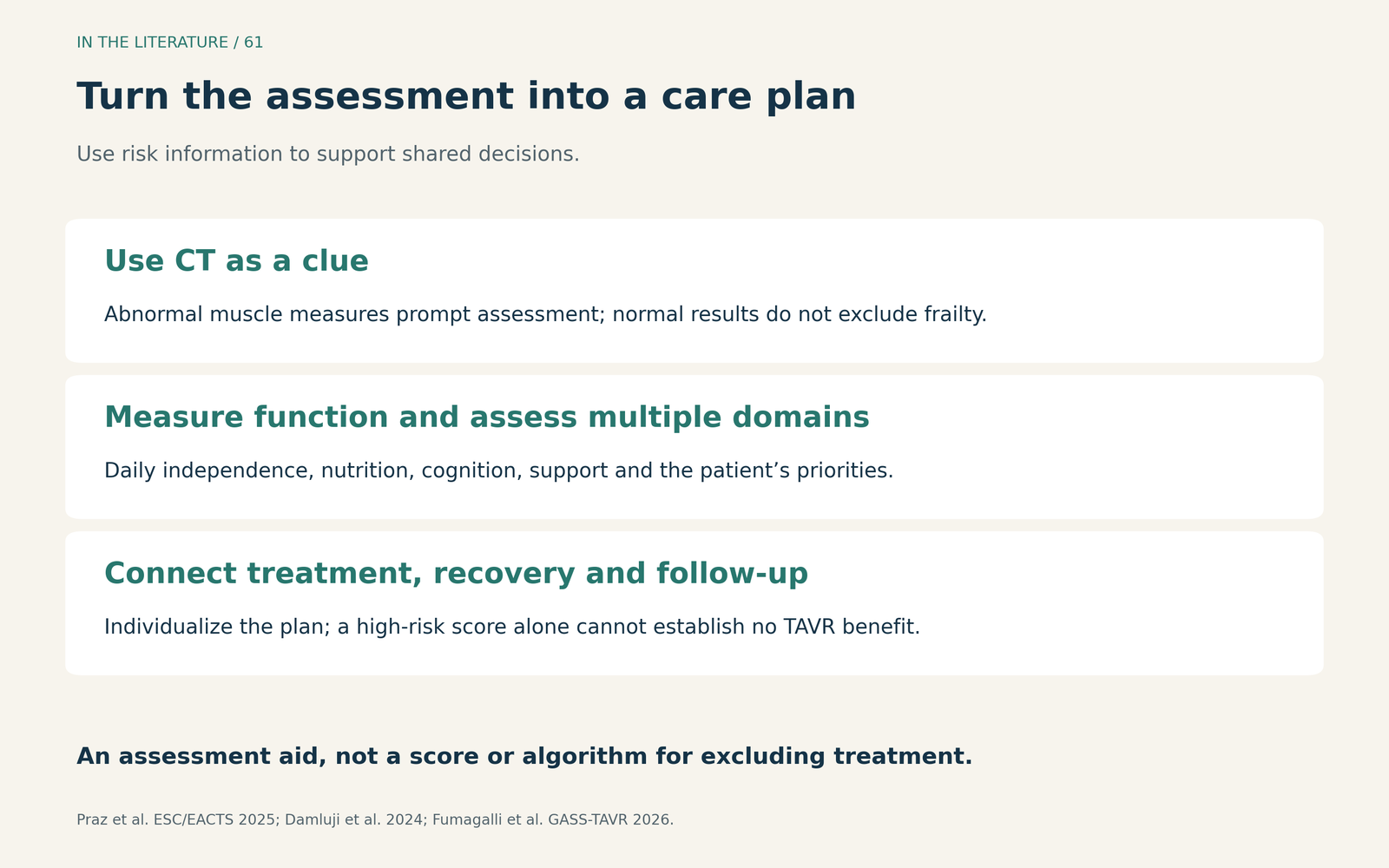
Figure 3. Original clinical assessment aid. It links a risk signal to evaluation, patient priorities and a care plan; it is not a validated exclusion algorithm. [1, 3, 6] View figure

Optimization also needs an appropriate timetable. For symptomatic severe aortic stenosis with heart failure, the ESC/EACTS guideline states that starting medical treatment or temporary symptom improvement should not delay intervention. Frailty assessment should help the team plan treatment and recovery without turning an unproven prehabilitation target into an open-ended delay. [1]
Three takeaways
- Use CT muscle findings as additional information. A normal-looking muscle measurement does not exclude clinically important frailty.
- Measure function and assess the whole person. Daily independence, nutrition, cognition, support and patient goals make the assessment clinically useful.
- Separate prognosis from treatment benefit. A poor-outcome prediction should inform shared decisions and support planning; it is not an automatic reason to withhold TAVR.
References
- Praz F, Borger MA, Lanz J, et al. 2025 ESC/EACTS Guidelines for the management of valvular heart disease. Eur J Cardiothorac Surg. 2025;67(8):ezaf276. doi:10.1093/ejcts/ezaf276
- Furzan A, Quraishi SA, Brovman E, et al. Skeletal Muscle Characteristics May Inform Preprocedural Risk Stratification in Transcatheter Aortic Valve Replacement Patients. J Cardiothorac Vasc Anesth. 2021;35(9):2618–2625. doi:10.1053/j.jvca.2020.12.024
- Damluji AA, Bernacki G, Afilalo J, et al. TAVR in older adults: moving toward a comprehensive geriatric assessment and away from chronological age: JACC Family Series. JACC Adv. 2024;3(4):100877. doi:10.1016/j.jacadv.2024.100877
- Stein EJ, Neill C, Nair S, et al. Associations of Sarcopenia and Body Composition Measures With Mortality After Transcatheter Aortic Valve Replacement. Circ Cardiovasc Interv. 2024;17(2):e013298. doi:10.1161/CIRCINTERVENTIONS.123.013298
- Vollmer T, Steins L, Zabel R, et al. Exploring the Role of Computer Tomography-Derived Psoas Muscle Volume in Frailty Screening and Sarcopenia Assessment for Older Adult Patients Undergoing Transcatheter Aortic Valve Implantation. J Cardiothorac Vasc Anesth. 2026;40(3):855–863. doi:10.1053/j.jvca.2025.09.007 [Abstract only]
- Fumagalli C, Baldasseroni S, Fraccaro C, et al. A Geriatric Assessment Score Predicting 1-Year Mortality and Functional Decline After TAVR: The GASS-TAVR Study. JACC Cardiovasc Interv. 2026;19(7):813–824. doi:10.1016/j.jcin.2025.12.018