ITL-c0efe6fb6702
Juan Li, MD · Updated November 18, 2026
Key points
- Bleeding vs limbs. Peripheral cannulation was associated with less major bleeding (RR 0.55) but more limb ischemia (RR 1.43).[1]
- Postcardiotomy signal. In a large registry, central cannulation was associated with higher in-hospital mortality (OR 1.54) and more reoperation for bleeding (OR 1.96).[2]
- But not proven. Pooled adjusted estimates showed no significant mortality difference (RR 1.27), and central ECMO is often used in higher-risk patients.[2], [1]
- Central has physiology on its side. It gives antegrade aortic flow and better unloading, and avoids differential oxygenation.[3]
- No trials. No randomized trials address the optimal cannulation strategy.[3]
A patient cannot be weaned from bypass after valve surgery. The surgeon asks whether to stay central through the chest or switch to the groin. What does the evidence favor?[2], [3]
What the comparisons show
In the PC-ECMO registry (Mariscalco et al., J Thorac Cardiovasc Surg 2020), central cannulation was used in 245 patients (31.4%) and peripheral in 536 (68.6%); after weighting, central cannulation was associated with higher in-hospital mortality (OR 1.54) and more reoperation for bleeding or tamponade (OR 1.96), but pooled adjusted estimates showed no significant mortality difference (RR 1.27).[2] Chilingarashvili et al. (Cureus 2026) found less major bleeding (RR 0.55) and more limb ischemia (RR 1.43) with peripheral cannulation, and no significant difference in infection (RR 1.03); they note central ECMO is often reserved for higher-risk postcardiotomy or ECPR patients.[1] After heart transplantation, Ródenas-Alesina et al. (JHLT Open 2025) pooled 16 studies with 874 patients: peripheral cannulation decreased bleeding but increased limb ischemia and infection, with low certainty of evidence.[4]
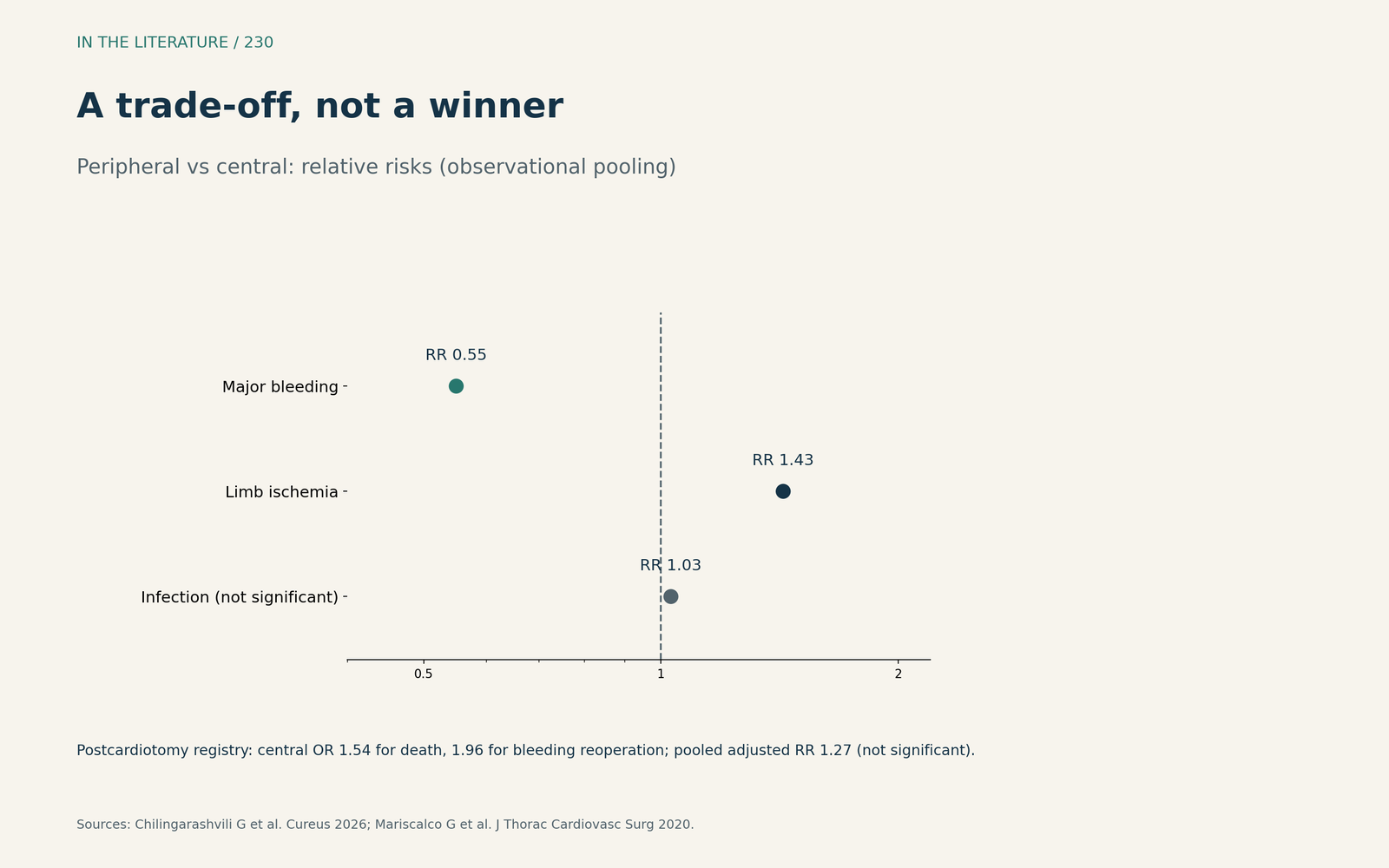
Figure 1. A trade-off, not a winner. Redrawn from Chilingarashvili et al. and Mariscalco et al.[1], [2] View larger.

Why each approach is chosen
The 2020 EACTS/ELSO/STS/AATS consensus (Lorusso et al., J Thorac Cardiovasc Surg 2021) notes that central cannulation gives antegrade aortic flow and better cardiac unloading and avoids differential oxygenation, whereas peripheral cannulation allows sternal closure, which may reduce bleeding and infection; central cannulation can also be configured to allow chest closure.[3] Ródenas-Alesina et al. add that central ECMO uses the bypass cannulas and avoids harlequin syndrome but defers extubation, requires chest re-entry and increases bleeding and mediastinitis; it is still used in 30% to 50% of postcardiotomy shock cases.[4] Central cannulation also offers multiple LV venting options.[2]
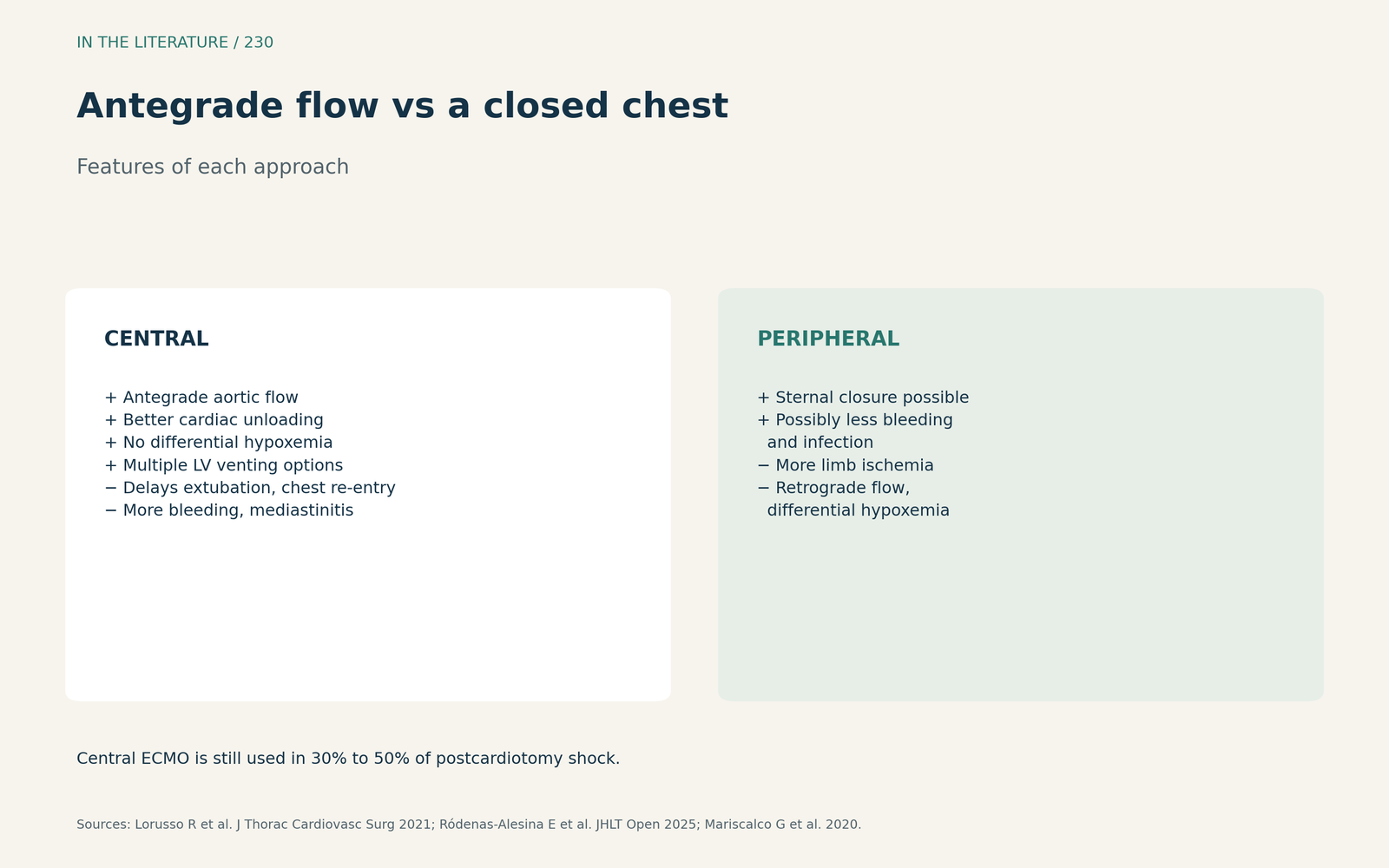
Figure 2. Antegrade flow vs a closed chest. Synthesized from Lorusso et al., Ródenas-Alesina et al. and Mariscalco et al.[3], [4], [2] View larger.

Newer options and caveats
In infarct-related shock, Kuzmin et al. (J Cardiothorac Surg 2026) used an aortic graft that allows complete chest closure; peripheral ECMO had more acute leg ischemia (18.8% vs 3.0%), but groups differed in lactate acidosis before ECMO, limiting comparison.[5] No randomized trials address the optimal strategy,[3] and central cannulation remains important when antegrade flow is prioritized.[1]
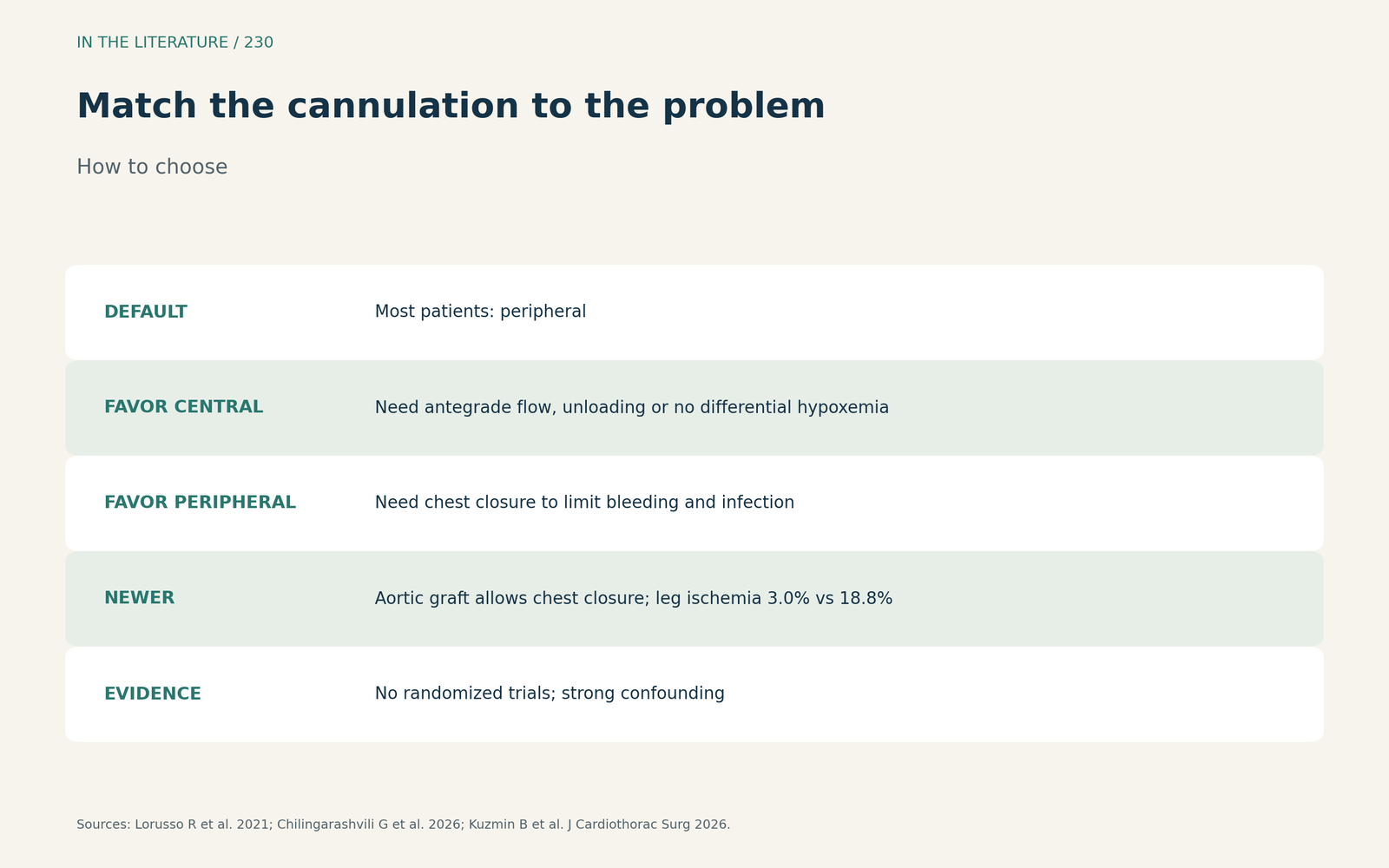
Figure 3. Match the cannulation to the problem. Synthesized from Lorusso et al., Chilingarashvili et al. and Kuzmin et al.[3], [1], [5] View larger.

Three takeaways
- Peripheral cannulation is the usual default: less bleeding and a closed chest, but watch the leg.[1], [3]
- Central cannulation fits when antegrade flow, unloading or avoiding differential hypoxemia matters most.[3], [4]
- Read the mortality differences as confounded; no trial has compared the strategies.[1], [2], [3]
References
- Chilingarashvili G, Maisuradze G, Shah A, et al. Peripheral versus central cannulation for venoarterial extracorporeal membrane oxygenation (VA-ECMO): a meta-analysis of bleeding and vascular complications. Cureus. 2026;18(1):e101271. doi:10.7759/cureus.101271
- Mariscalco G, Salsano A, Fiore A, et al. Peripheral versus central extracorporeal membrane oxygenation for postcardiotomy shock: multicenter registry, systematic review, and meta-analysis. J Thorac Cardiovasc Surg. 2020;160(5):1207–1216.e44. doi:10.1016/j.jtcvs.2019.10.078
- Lorusso R, Whitman G, Milojevic M, et al. 2020 EACTS/ELSO/STS/AATS expert consensus on post-cardiotomy extracorporeal life support in adult patients. J Thorac Cardiovasc Surg. 2021;161(4):1287–1331. doi:10.1016/j.jtcvs.2020.09.045
- Ródenas-Alesina E, Olivella A, Orchanian-Cheff A, et al. Peripheral versus central cannulation of VA-ECMO for primary graft dysfunction after heart transplantation: a systematic review and meta-analysis. JHLT Open. 2025;7:100174. doi:10.1016/j.jhlto.2024.100174
- Kuzmin B, Ponomarenko-Jakunin J, Fadel M, et al. Central veno-arterial ECMO via an aortic prosthetic graft as significant alternative to peripheral ECMO cannulation: evaluation of patient outcomes in infarct-related cardiogenic shock. J Cardiothorac Surg. 2026;21(1):103. doi:10.1186/s13019-026-03849-9