ITL-f443f282927a
Watch the video
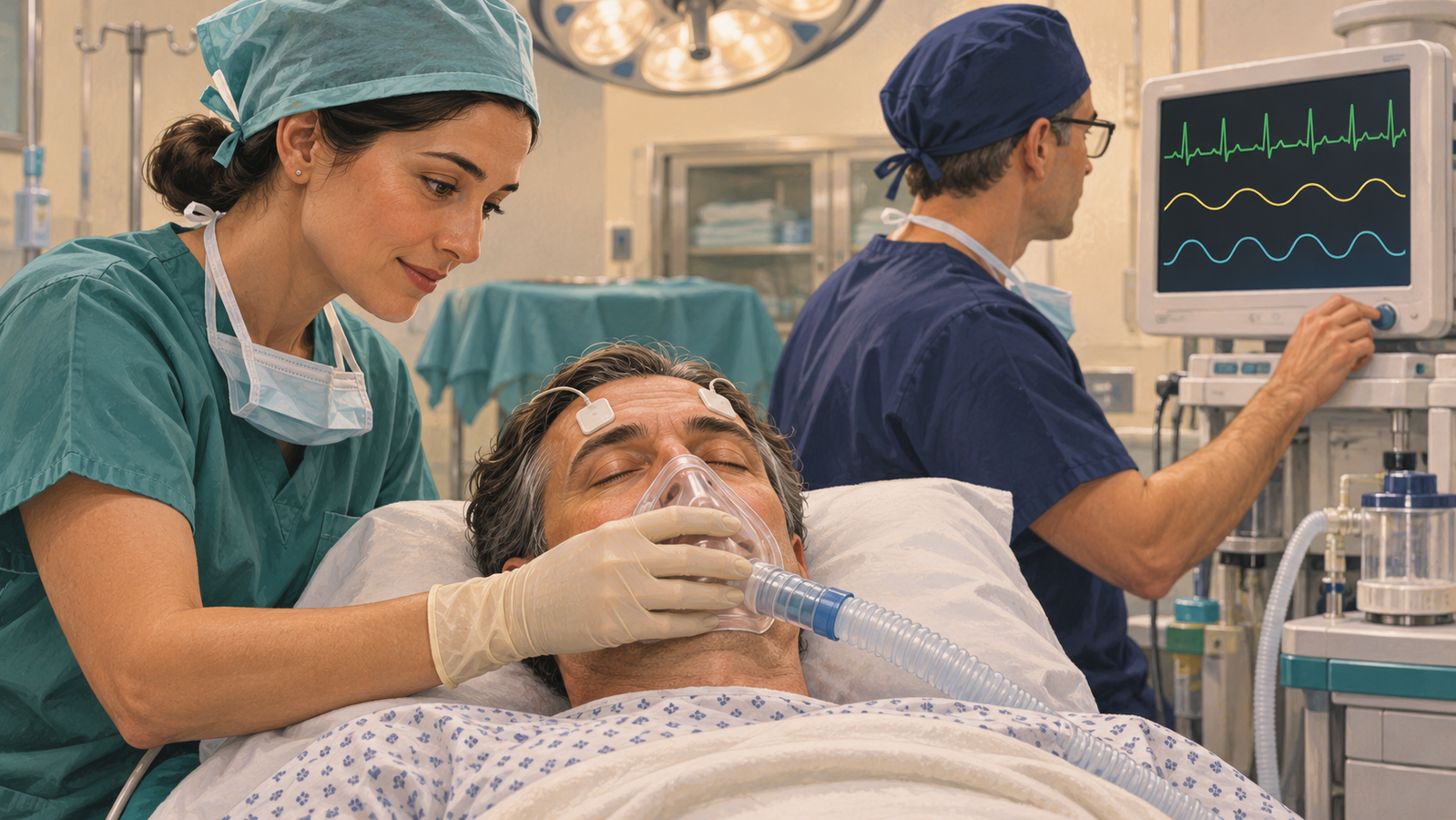
Figure 1. Oxygen delivery and circulation change together during induction; the cerebral oximeter must be interpreted in that context. Conceptual illustration.
Key points
- Regional cerebral oxygen saturation can rise during induction even while mean arterial pressure falls.
- In an elective cardiac surgical cohort, changes in inspired oxygen were closely associated with the cerebral oximetry trend.
- A reassuring NIRS value does not exclude inadequate perfusion, and a fall after reducing FiO2 does not identify hypotension as the sole cause.
- Review oxygenation, ventilation, pressure, flow, and the measurement together; treat the clinical problem rather than only the display.
- Higher cerebral oximetry values have not consistently translated into better postoperative outcomes in randomized trials.
The tube is secured, the pulse oximeter reads 100%, and regional cerebral saturation is higher than it was before induction. Meanwhile, MAP has fallen. Should the cerebral reading make the hypotension less concerning?
No single monitor resolves that question. Lam and colleagues show why a rise in regional cerebral oxygen saturation (rScO2) can coexist with falling pressure—and why changing FiO2 must be part of interpreting the trace.[1]
What happened during induction?
This prospective observational study analyzed 188 elective cardiac surgical patients from 251 available patients; rapid-sequence induction and incomplete recordings were excluded. Investigators followed bilateral forehead NIRS, MAP, inspired oxygen and end-tidal oxygen, with the timing of induction interventions recorded.[1]
During preoxygenation and induction with FiO2 1.0, rScO2 and end-tidal oxygen increased while MAP fell. After intubation, rScO2 began to fall around the time FiO2 was reduced; its decline preceded the subsequent MAP decline. This temporal pattern supports oxygen administration as an important contributor to the observed signal. It does not prove that oxygen was the only cause or that cerebral blood flow remained adequate.[1]
Postinduction hypotension—MAP below 65 mm Hg for more than 60 seconds within 15 minutes of starting anesthesia—occurred in 79/188 patients (42%). Before intubation, the rScO2 trajectory did not differ significantly by hypotension status. After intubation, however, the modeled rScO2 was 1.94 percentage points lower in the hypotension group (95% CI, 0.67–3.22). “Blood pressure had no effect” is therefore too broad a reading of the study.[1]
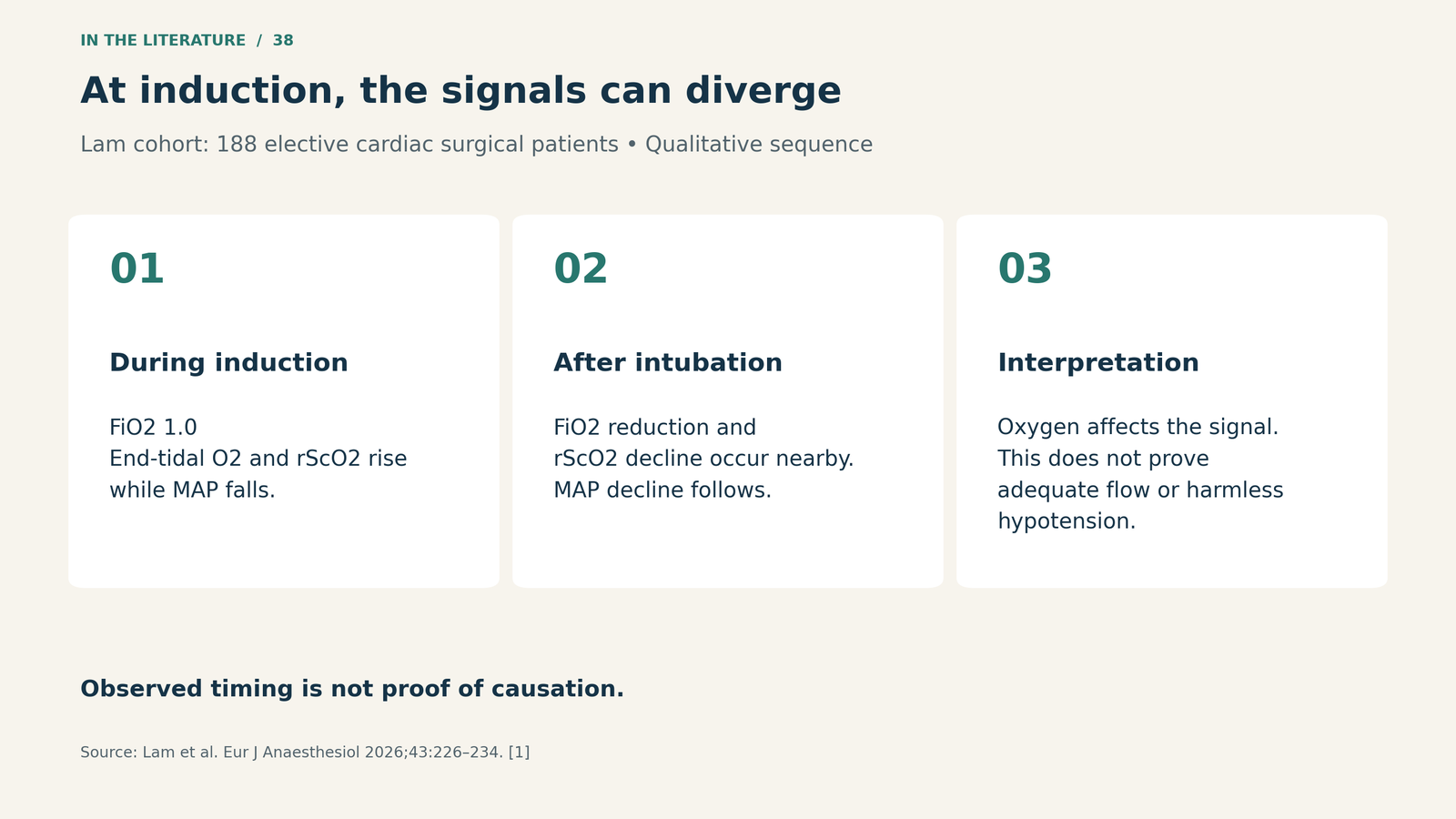
Figure 2. Qualitative sequence from Lam et al.; these are directions of observed change, not reconstructed patient curves or proof of causation.[1]

NIRS is an oxygen-balance signal, not a flow meter
Forehead NIRS estimates regional hemoglobin oxygen saturation, with substantial venous contribution and possible extracranial influence. It does not directly measure global cerebral blood flow. Oxygen content, blood flow, extraction, and metabolic demand can change simultaneously during induction. Anesthesia-related reductions in demand may also influence the reading.[1]
The complementary 2026 analysis by Wang and colleagues examined intraoperative signals from the Bottomline-CS cohort. After adjustment, cerebral oxygenation was associated with both MAP and cardiac index. This was an observational secondary analysis during off-pump CABG, not a randomized comparison of induction interventions. Its modeled pressure and flow relationships do not establish treatment targets.[2]
The useful clinical inference is that a normal-looking saturation cannot tell us, by itself, whether pressure, flow and oxygen delivery are all satisfactory. Conversely, raising MAP does not guarantee that every other determinant has improved.
Does keeping FiO2 high solve the problem?
Adequate preoxygenation and management of genuine hypoxemia remain essential. The Lam authors suggested avoiding an automatic reduction in FiO2 immediately after intubation before circulatory stability is established. That is a physiological proposal from an observational study, not a tested timing rule or proof that prolonged maximal oxygen improves recovery.[1]
The ROCS randomized trial helps separate a better oxygenation display from clinical benefit. Among 200 analyzed cardiac surgical patients, hyperoxia improved cerebral oximetry and reduced desaturation exposure compared with normoxia, but increased intraoperative oxidative-stress markers. The primary creatinine-change endpoint did not differ significantly; AKI occurred in 21/100 patients in each arm. The normoxia arm also experienced more brief hypoxemic events. These findings support careful oxygen titration and avoidance of hypoxemia, rather than treating either extreme as universally preferable.[3]
Both ROCS groups received FiO2 1.0 during induction and intubation. The randomized oxygen separation began afterward, so the trial does not answer precisely when to reduce FiO2 in an unstable newly intubated patient.[3]
Improving the trace is not the same as improving the outcome
Bottomline-CS randomized 1,960 adults aged at least 60 years undergoing elective off-pump CABG. Guided care aimed to keep cerebral and forearm oxygenation within ±10% of a preoperative baseline and used hemodynamic information to guide management. It improved control of tissue oxygenation, but the 30-day complication composite occurred in 457/967 analyzed guided-care patients (47.3%) versus 466/974 usual-care patients (47.8%): risk ratio 0.99 (95% CI, 0.90–1.08).[4]
That finding does not make a sudden cerebral desaturation irrelevant. It shows that successful numerical control with this particular strategy did not establish better clinical outcomes in that population.
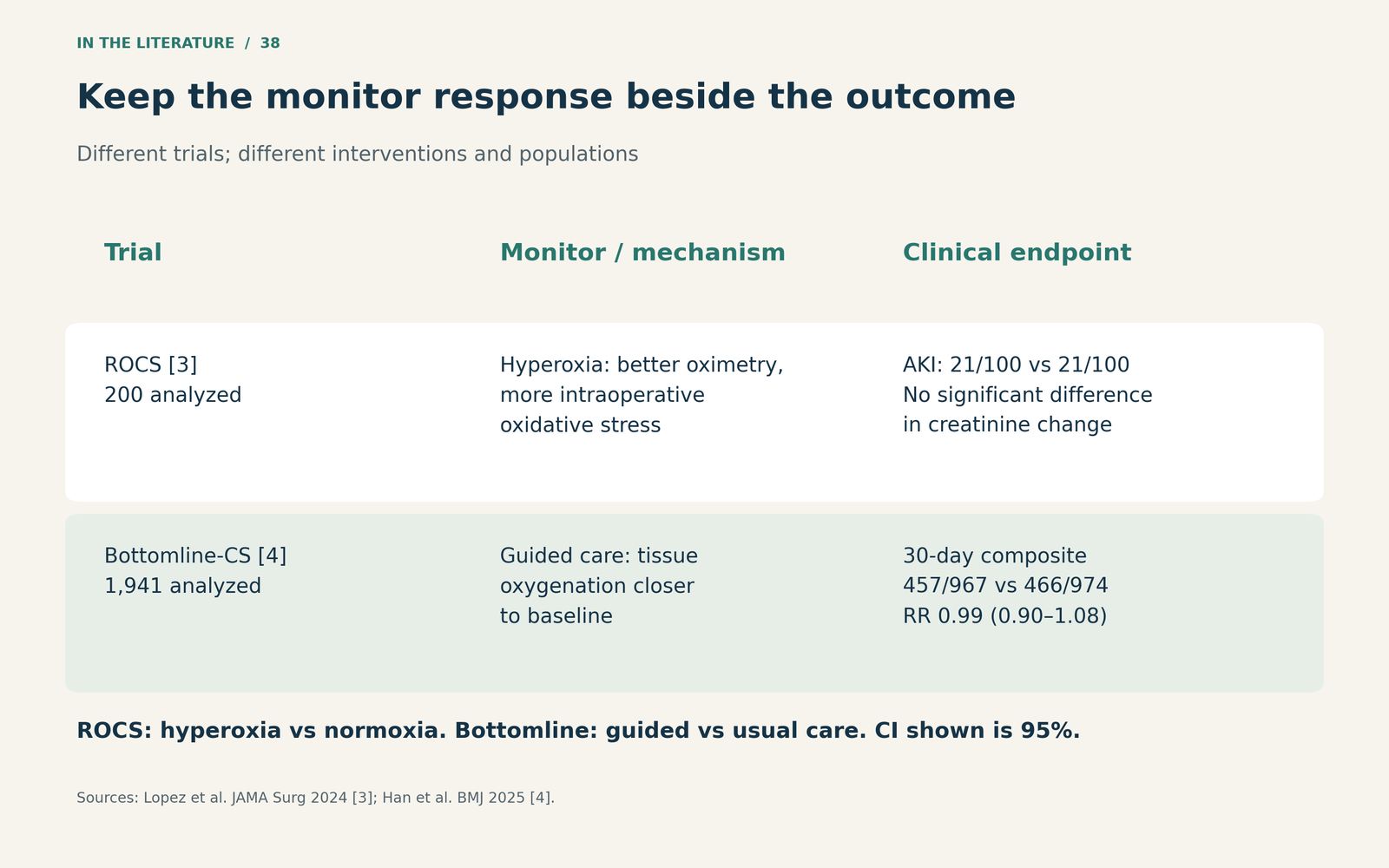
Figure 3. Different interventions and populations, the same interpretive lesson: retain the clinical endpoint alongside the monitor response.[3, 4]

A practical response to an unexpected change
First check whether the signal is credible and what changed immediately beforehand: sensor contact, airway management, ventilation, FiO2, blood pressure or medication. Review pulse oximetry and ventilation, including carbon dioxide, alongside the arterial pressure and evidence of systemic flow. Hemoglobin and blood gas information may help when the clinical picture warrants them.[1, 2, 4]
Correct a recognized oxygenation or circulatory problem promptly, then reassess the combined picture. A rise in rScO2 after an intervention is useful feedback; it does not certify that brain perfusion is safe. Persistent or asymmetric deterioration requires further assessment rather than repeated attempts to make a single number look normal. This sequence is a clinical synthesis, not a validated protocol from these trials.
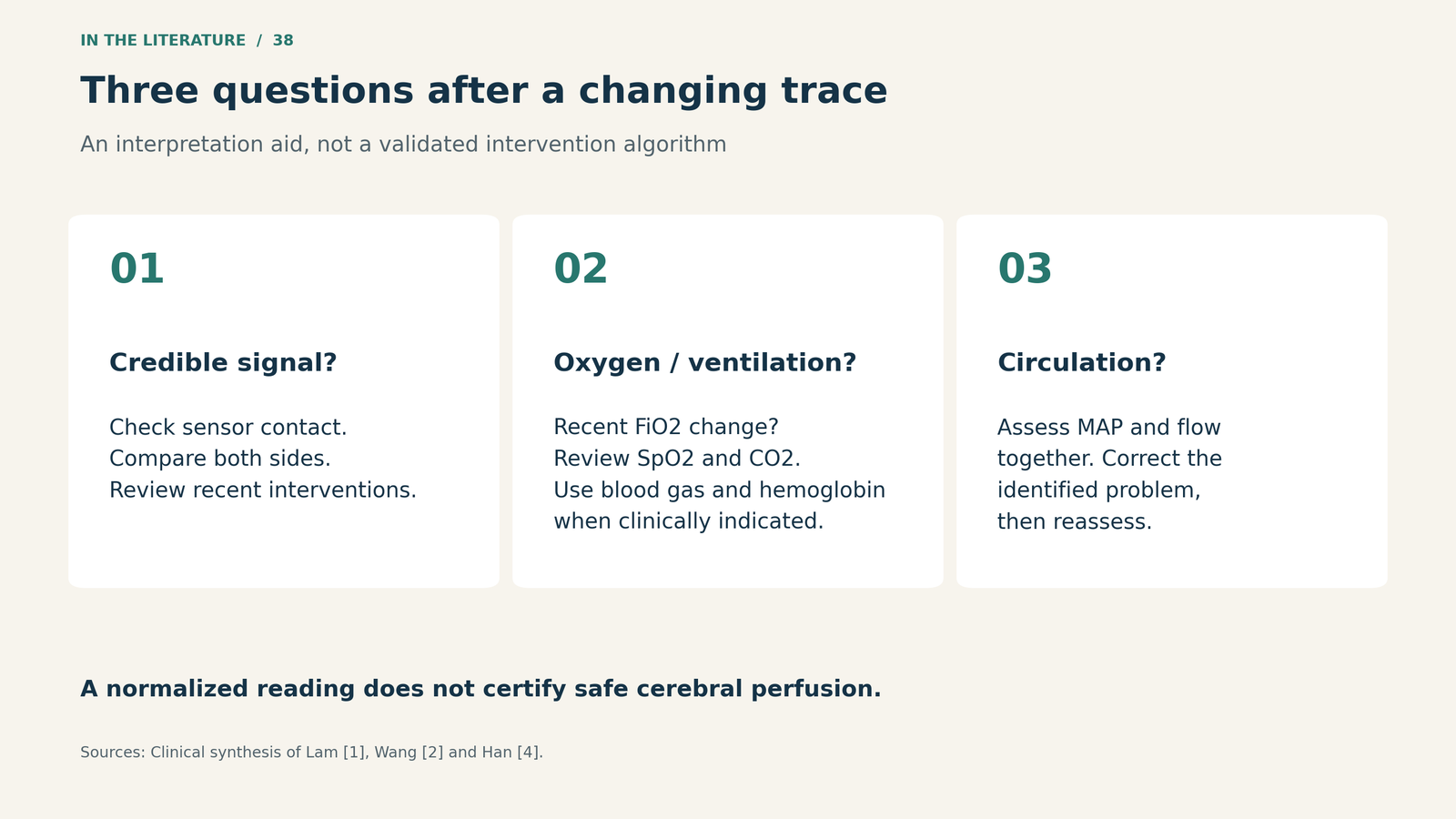
Figure 4. An interpretation aid for induction: verify the trace, examine oxygen and ventilation, and assess circulation together. No single branch replaces clinical judgment.[1, 2, 4]

Three takeaways
- A rising NIRS value does not clear hypotension. Oxygen administration can improve the reading while pressure falls.
- Interpret the timing. Record FiO2 and ventilation changes alongside pressure and flow; avoid assigning every fall to one cause.
- Treat the patient and reassess. Correct physiological problems without assuming that a normalized trace guarantees better neurological outcomes.
References
- Lam YK, Immink RV, Schenk J, van den Dool REC, Hollmann MW, Veelo DP, et al. The role of blood pressure versus oxygen administration on cerebral oxygenation during and after anaesthesia induction: a prospective cohort study. Eur J Anaesthesiol. 2026;43(3):226–234. doi:10.1097/EJA.0000000000002245.
- Wang T, Zhang Z, Guo Z, Liu Z, Han J, Meng L. Adjusted relationships between mean arterial pressure, cardiac index, and tissue oxygenation during off-pump coronary bypass. Anesthesiology. 2026;145(5):1145–1159. doi:10.1097/ALN.0000000000006204.
- Lopez MG, Shotwell MS, Hennessy C, Pretorius M, McIlroy DR, Kimlinger MJ, et al. Intraoperative oxygen treatment, oxidative stress, and organ injury following cardiac surgery: a randomized clinical trial. JAMA Surg. 2024;159(10):1106–1116. doi:10.1001/jamasurg.2024.2906.
- Han J, Zhai W, Wu Z, Zhang Z, Wang T, Ren M, et al. Care guided by tissue oxygenation and haemodynamic monitoring in off-pump coronary artery bypass grafting (Bottomline-CS): assessor blind, single centre, randomised controlled trial. BMJ. 2025;388:e082104. doi:10.1136/bmj-2024-082104.