
ITL-44d03103dac4
Juan Li, MD · Updated November 18, 2026
Key points
- Fixed versus proportional. Pressure support gives the same pressure every breath; proportional modes follow the patient.[1]
- Too little effort harms too. Insufficient effort puts the diaphragm at risk of disuse.[2]
- PAV+ can rescue asynchrony. Switching cut the asynchrony index by 78% in refractory ineffective triggering.[3]
- Modest outcome gains. PAV+ (RR 1.12) and NAVA (OR 1.93) improved weaning success, and NAVA added ventilator-free days, without survival benefit.[4], [5], [6]
- Spontaneous breathing is not a cure. Pressure control plus spontaneous ventilation did not change ARDS mortality.[7]
A patient recovering from pneumonia is moved to pressure support, but the ventilator display shows wasted efforts and the patient looks uncomfortable. Should the team change the mode, the level, or both?
How the modes differ and how much effort to allow
In pressure support, the ventilator delivers the same pressure for every breath; in proportional modes, assist levels close to 100% put the patient at risk of over-assistance, and for most patients the NAVA level can be kept below 2.5 cmH2O per microvolt (Jonkman et al., Intensive Care Med 2020).[1] When effort is insufficient, patients are at high risk of diaphragm disuse; occlusion pressure and P0.1 accurately detect insufficient effort but are less accurate for elevated effort, and the authors propose measuring them as routinely as plateau and driving pressure (Dianti and Goligher, Anesthesiology 2023).[2] In patients with refractory ineffective triggering on pressure support (Haudebourg et al., Ann Intensive Care 2021), the median PAV+ gain was 73% and switching decreased the asynchrony index by 78%.[3]
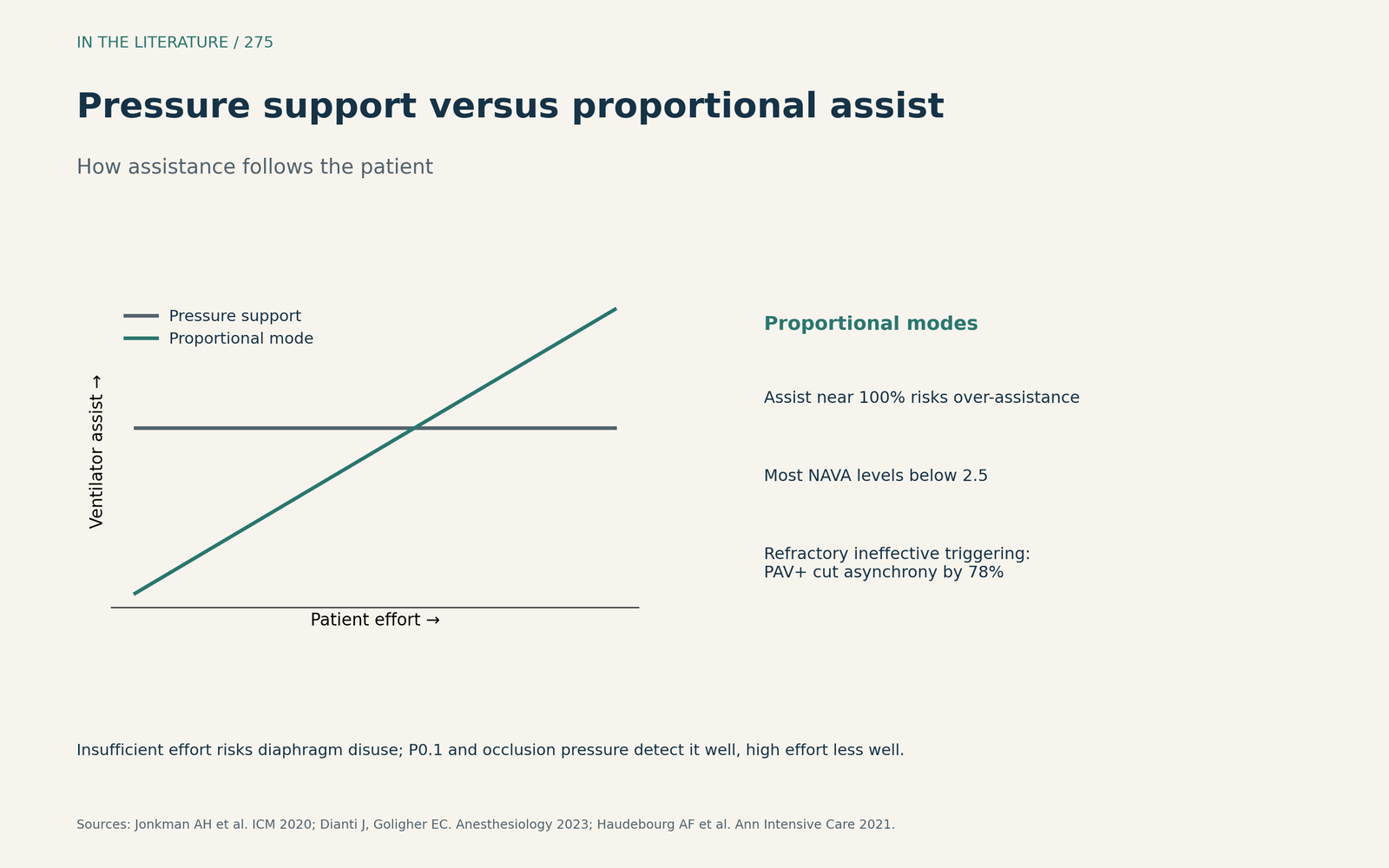
Figure 1. How assistance tracks the patient in each mode. Synthesized from Jonkman et al., Dianti and Goligher and Haudebourg et al.[1], [2], [3] View larger.

What the outcome trials show
Across seven RCTs (Wang et al., Front Med 2026), PAV+ improved weaning success compared with pressure support (RR 1.12), without differences in reintubation, mortality, weaning duration or ICU stay.[4] In seven studies with 693 patients (Yuan et al., Crit Care 2021), NAVA improved weaning success over other partial modes (OR 1.93), although setting the NAVA level is not one size fits all.[5] In NAVIATOR (Kacmarek et al., Intensive Care Med 2020), ventilator-free days were higher with NAVA (22 vs 18), but NAVA did not improve survival.[6] In seven hundred adults with moderate or severe ARDS (Richard et al., Intensive Care Med 2024), pressure control plus spontaneous ventilation did not change hospital mortality (34.6% vs 33.5%) but reduced sedation and neuromuscular blockade.[7]
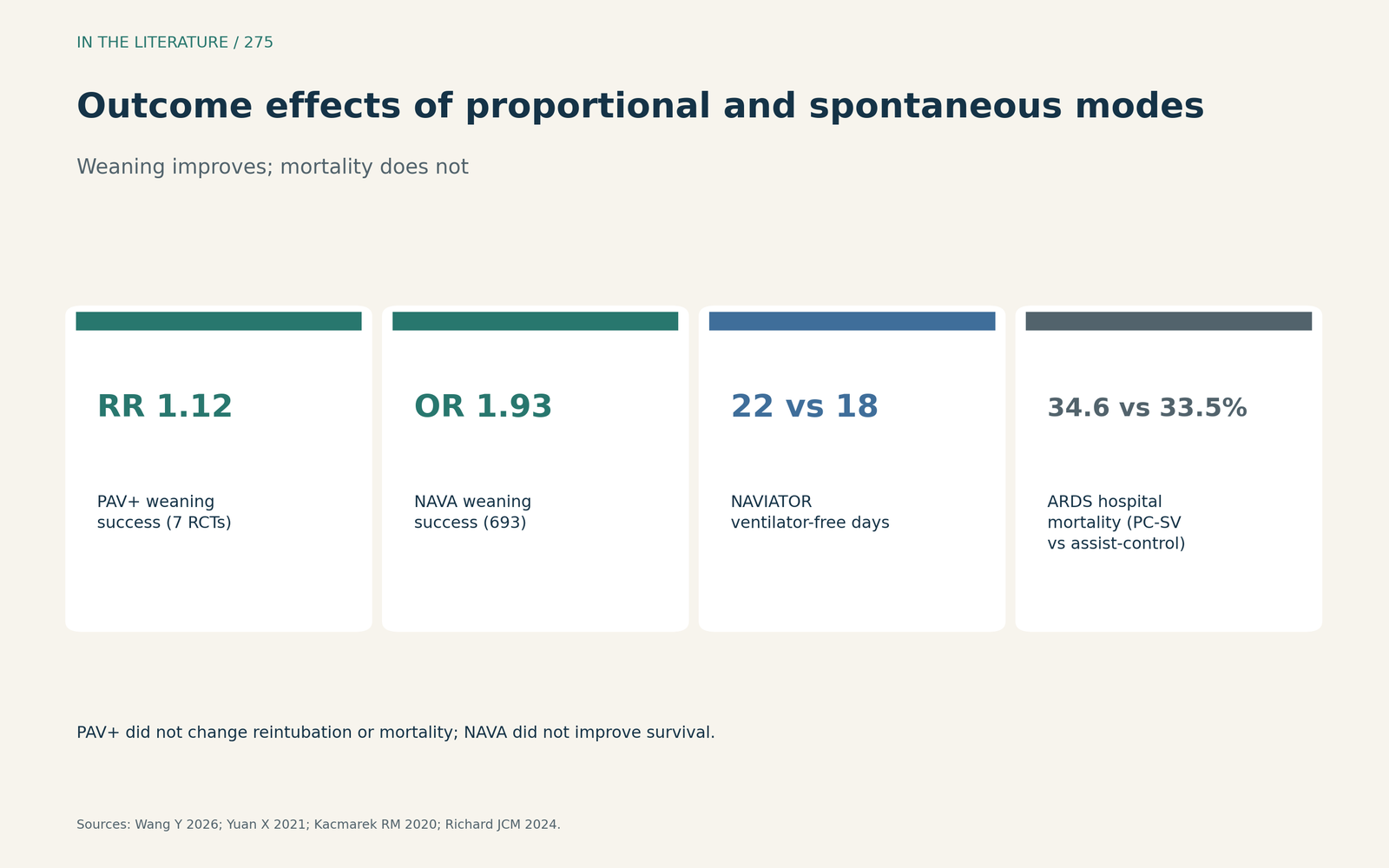
Figure 2. Weaning and ventilator-free days improved; mortality did not. Data from Wang et al., Yuan et al., NAVIATOR and Richard et al.[4], [5], [6], [7] View larger.

Setting NAVA in practice
About 75% of patients whose NAVA level is set by the pressure-support reference method need further adjustment, and NAVA requires an intact neuromuscular pathway (Tian et al., J Thorac Dis 2025).[8]
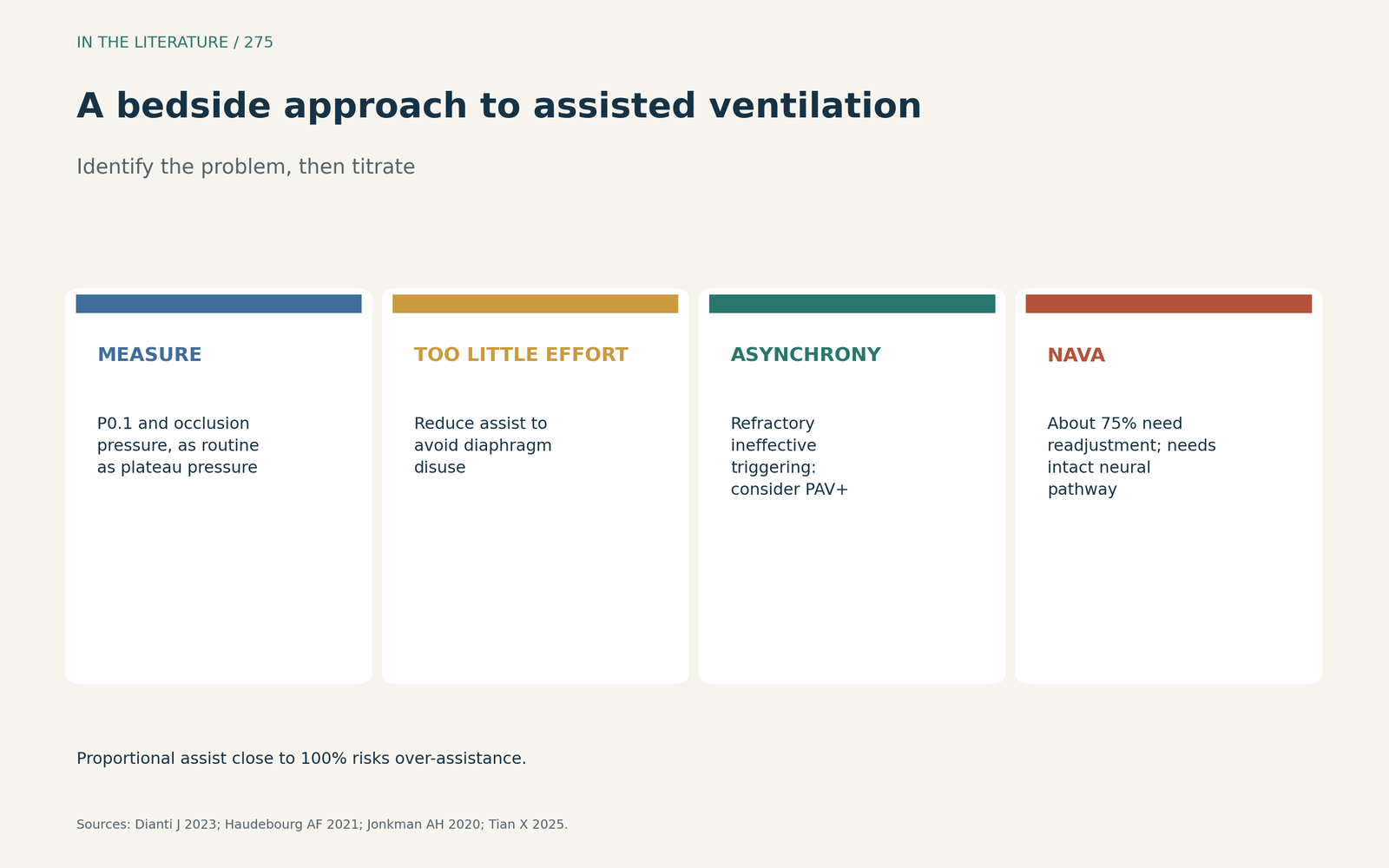
Figure 3. Match the mode to the problem, then titrate to effort. Synthesized from Dianti and Goligher, Haudebourg et al., Jonkman et al. and Tian et al.[2], [3], [1], [8] View larger.

Three takeaways
- Measure effort with P0.1 or occlusion pressure, and avoid both over-assistance and insufficient effort.[1], [2]
- Consider PAV+ or NAVA for persistent asynchrony; they modestly improve weaning, not survival.[3], [4], [5], [6]
- Reassess settings often: initial NAVA levels usually need adjustment, and NAVA needs an intact neural pathway.[8]
References
- Jonkman AH, Rauseo M, Carteaux G, et al. Proportional modes of ventilation: technology to assist physiology. Intensive Care Med. 2020;46(12):2301–2313. doi:10.1007/s00134-020-06206-z
- Dianti J, Goligher EC. Monitoring respiratory effort and lung-distending pressure noninvasively during mechanical ventilation: ready for prime time. Anesthesiology. 2023;138(3):235–237. doi:10.1097/ALN.0000000000004489
- Haudebourg AF, Maraffi T, Tuffet S, et al. Refractory ineffective triggering during pressure support ventilation: effect of proportional assist ventilation with load-adjustable gain factors. Ann Intensive Care. 2021;11(1):147. doi:10.1186/s13613-021-00935-0
- Wang Y, Da X, Kang X, et al. Effect of proportional assist ventilation plus versus pressure support ventilation on successful weaning in critically ill adults: a systematic review, meta-analysis, and trial sequential analysis. Front Med (Lausanne). 2026;13:1775614. doi:10.3389/fmed.2026.1775614
- Yuan X, Lu X, Chao Y, et al. Neurally adjusted ventilatory assist as a weaning mode for adults with invasive mechanical ventilation: a systematic review and meta-analysis. Crit Care. 2021;25(1):222. doi:10.1186/s13054-021-03644-z
- Kacmarek RM, Villar J, Parrilla D, et al. Neurally adjusted ventilatory assist in acute respiratory failure: a randomized controlled trial. Intensive Care Med. 2020;46(12):2327–2337. doi:10.1007/s00134-020-06181-5
- Richard JCM, Beloncle FM, Béduneau G, et al. Pressure control plus spontaneous ventilation versus volume assist-control ventilation in acute respiratory distress syndrome: a randomised clinical trial. Intensive Care Med. 2024;50(10):1647–1656. doi:10.1007/s00134-024-07612-3
- Tian X, Alizadeh M, Qi H, Shang Y. Application of neurally adjusted ventilatory assist (NAVA): a narrative review. J Thorac Dis. 2025;17(10):9178–9199. doi:10.21037/jtd-2025-835