
ITL-481ef0ec0841
Juan Li · In the Literature · Updated November 16, 2026
Watch the video

AI-generated clinical illustration; not a patient photograph or a study image.
Key points
- Choose a complete sedation strategy: intended depth, analgesia, co-administered drugs, monitoring, and emergence all affect the result.
- Comparisons of propofol with remifentanil suggest a tradeoff between blood pressure support and hypoxemia; observational data do not establish a universal winner.
- A small dexmedetomidine trial found less deterioration on a 48-hour cognitive test, without establishing prevention of delirium or lasting cognitive benefit.
- Remimazolam-based strategies can shorten emergence, but the timing of reversal matters, and faster awakening does not guarantee better ventilation.
- Define the sedation target before starting, monitor ventilation, and prepare to rescue deeper-than-intended sedation.
Start with the patient’s most consequential risk
Once a patient has been selected for transfemoral TAVR under monitored anesthesia care, the next decision is how to provide comfort and procedural stillness while preserving circulation, ventilation, and timely communication. “Which drug is best?” becomes more useful when reframed as “Which complete regimen best fits this patient and this procedure?”
The 2026 ERAS Cardiac Working Group order set, published by Engelman and colleagues in JTCVS Structural and Endovascular, recommends specifying the intended sedation depth, titrating with a validated sedation scale, using capnography, and maintaining rescue capability. It provides a practical framework rather than evidence that one sedative improves outcomes over all others. [1]
Propofol or remifentanil: watch which problem you trade
Doan and colleagues’ JCVA 2022 retrospective study compared 130 propofol-treated patients with 129 remifentanil-treated patients. Hypoxemia, defined as oxygen saturation below 92%, occurred in 38.8% with remifentanil versus 14.6% with propofol. Higher body mass index and obstructive sleep apnea were also associated with hypoxemia. Propofol, however, was associated with more vasopressor infusion use. [2]
For the clinician, this is a reason to consider respiratory vulnerability and blood pressure support together. It does not establish that propofol is intrinsically “respiratory-safe” or that remifentanil is the preferred drug for every patient with limited circulatory reserve. The groups were treated largely in different periods, baseline risk differed, and additional medications were used. Vasopressor use was recorded as yes or no, without accounting for dose or duration; it was not a measure of organ injury. [2]
In a patient with obstructive sleep apnea, the observed remifentanil-associated hypoxemia deserves attention when planning analgesia and monitoring. In a patient with little blood pressure reserve, a low recorded rate of hypoxemia alone is not enough to justify a regimen. The practical decision is how the combined drugs will be titrated and how respiratory or circulatory deterioration will be recognized and treated.
Does dexmedetomidine protect cognition?
Vovk Racman and colleagues’ JCVA 2023 randomized trial provides a specific signal. Of 78 randomized patients, 71 entered the final analysis: 34 receiving propofol and 37 receiving dexmedetomidine. At 48 hours, the study-defined cognitive endpoint—a fall of at least 2 points on the Mini-Mental State Examination (MMSE)—occurred in 20/34 (58.8%) versus 9/37 (24.3%), respectively (P = 0.005). [3]
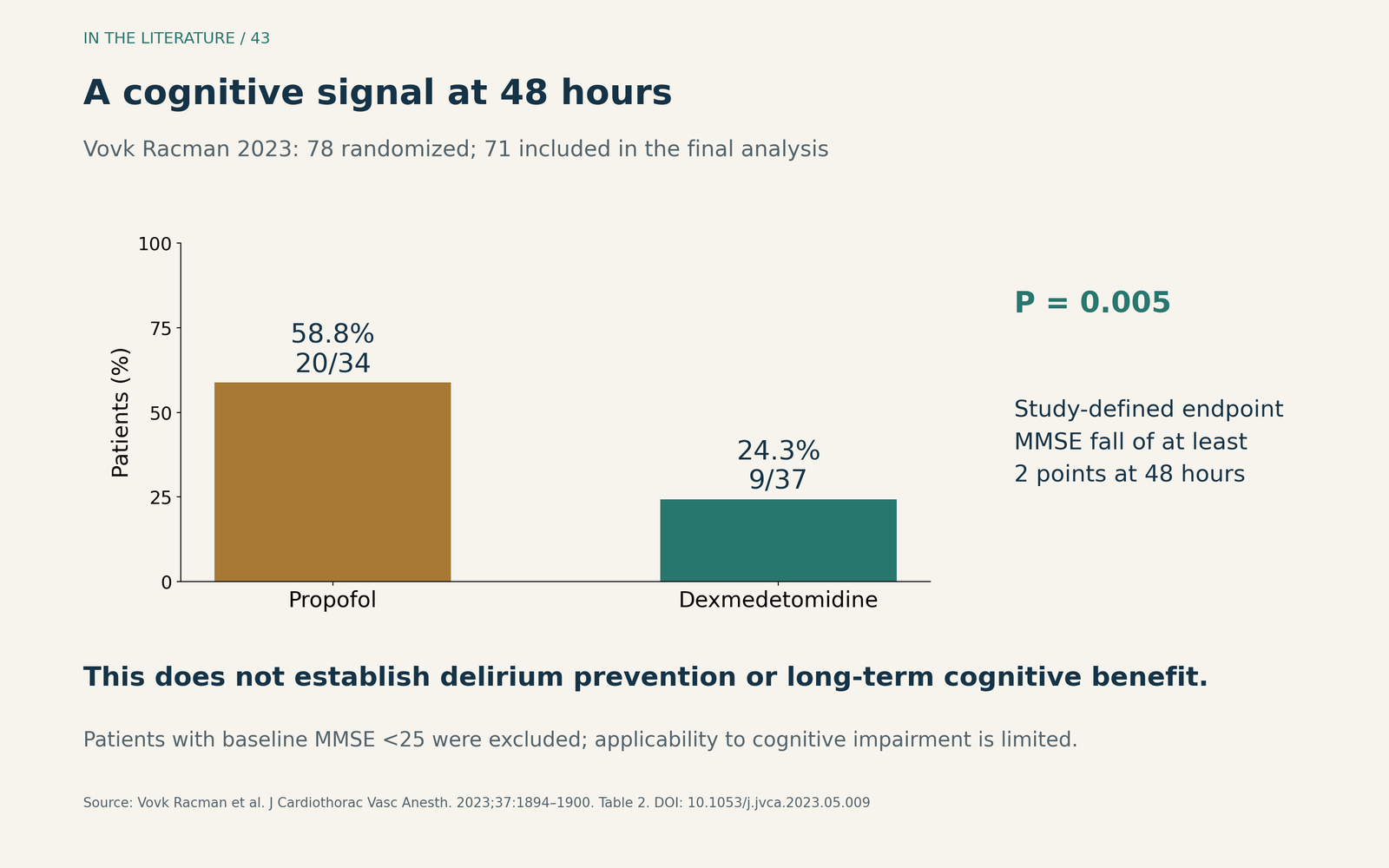
Figure 1. A short-term cognitive-test result. Bars show the proportion with an MMSE decline of at least 2 points at 48 hours. This endpoint differs from delirium and long-term cognitive recovery. Data: Vovk Racman et al., JCVA 2023. [3] View scalable figure

Delirium occurred in 4 propofol patients and 1 dexmedetomidine patient; that difference was not statistically significant (P = 0.126). Patients with baseline MMSE scores below 25 were excluded, and some patients were excluded after randomization. The findings therefore support a possible early cognitive advantage in a selected population, while leaving prevention of delirium and durable cognitive protection unproven. A familiar drug reputation should not replace the actual endpoint measured. [3]
Remimazolam: faster awakening depends on the clock
Kitaura and colleagues’ Journal of Clinical Medicine 2026 trial randomized 84 patients and analyzed 83. The comparison was remimazolam–remifentanil with flumazenil reversal versus dexmedetomidine–remifentanil with propofol as needed. This distinction matters: the study tested two workable strategies, including their adjuncts and reversal plans. [4]
All anesthetic infusions stopped after valve deployment. The active awakening attempt occurred later, after completion of the procedure and chest radiography; flumazenil was given at that later point. Arousal meant achieving a Modified Observer’s Assessment of Alertness/Sedation (MOAA/S) score of 5. The published abstract reports:
- From stopping all infusions: median 19.05 versus 24.09 minutes, favoring the remimazolam–flumazenil strategy.
- From the awakening attempt: median 0.60 versus 1.00 minutes, again favoring that strategy. [4]
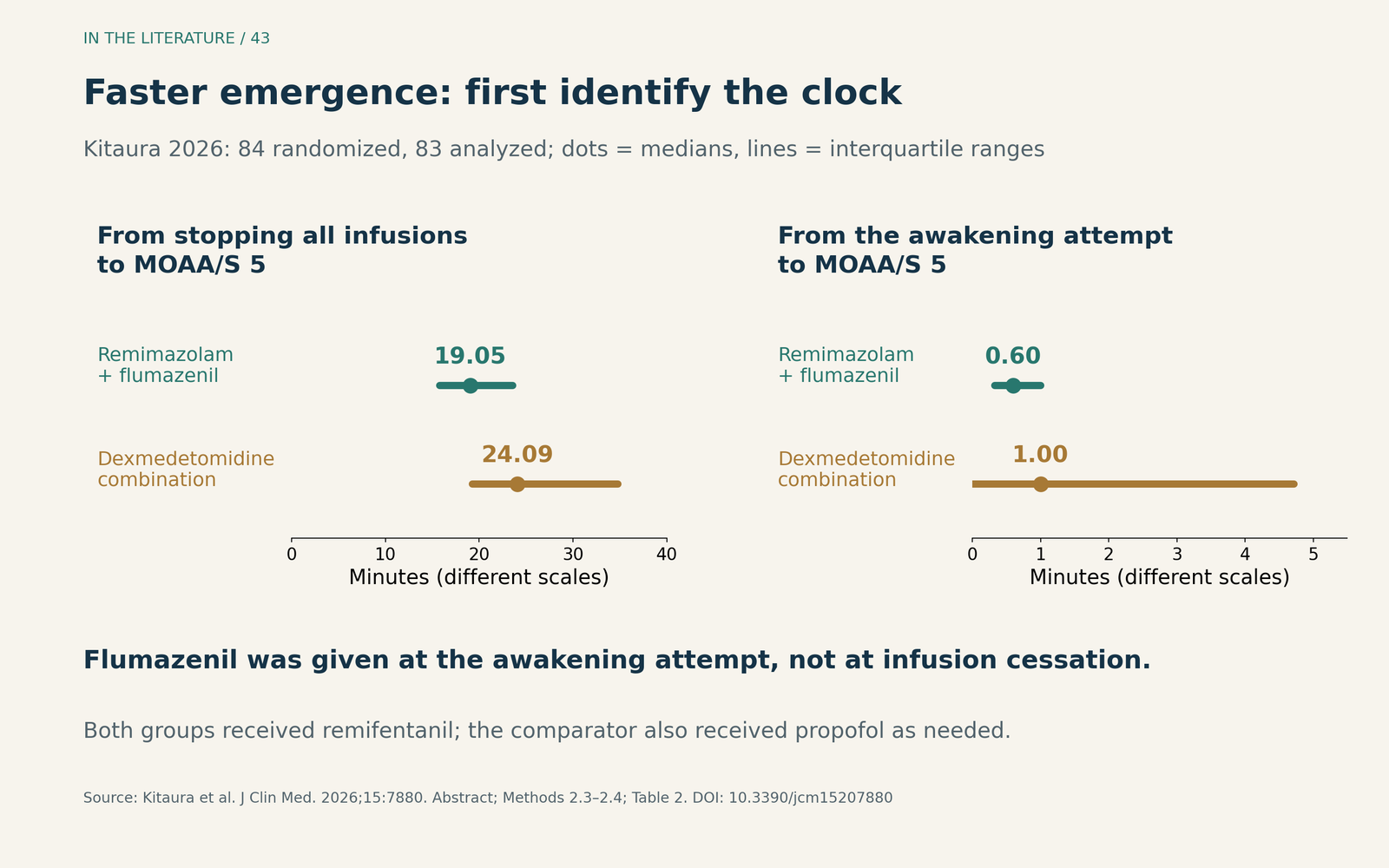
Figure 2. Two starting points, one arousal endpoint. Points and lines show published medians and interquartile ranges; the panels have different horizontal scales. Flumazenil was administered at the awakening attempt. Both groups received remifentanil, and the dexmedetomidine protocol included propofol as needed. Data: Kitaura et al., J Clin Med 2026. [4] View scalable figure

The 0.60-minute result should therefore not be described as awakening 0.60 minutes after stopping sedation. Pharmacological reversal contributed to the intervention. Earlier reliable communication may be useful for postoperative assessment, but this trial did not establish earlier stroke treatment, better neurological outcomes, or improved operating-room throughput. [4]
Faster recovery can coexist with carbon dioxide retention
Hyung and colleagues’ separate Journal of Clinical Medicine 2026 randomized trial enrolled 34 patients. Both groups received remifentanil and high-flow nasal oxygen, with a deep sedation target. Recovery, measured from stopping the assigned sedative to a Ramsay Sedation Scale score of 2, was faster with remimazolam: 13.5 ± 7.2 versus 32.4 ± 12.5 minutes (mean ± SD). This differs from the endpoint and timing used by Kitaura and colleagues. [5]
Yet arterial carbon dioxide tension was higher with remimazolam immediately before rapid ventricular pacing and at procedure completion, with estimated between-group differences of 11.14 mmHg (95% CI, 5.32–16.96) and 14.06 mmHg (95% CI, 6.28–21.85). Arterial pH was also lower. These findings illustrate why oxygenation and ventilation must be assessed separately. The absence of airway rescue in this small trial does not negate the measured carbon dioxide retention. [5]
The trial did not detect significant differences in hypotensive episode counts or vasopressor doses. It was not powered to establish hemodynamic equivalence. Its physiological findings are useful when planning surveillance, but cannot support a broad claim that one strategy is safer for every TAVR patient. [5]
Put the evidence into the sedation plan
Before starting, agree on the required depth and procedural analgesia, including local anesthesia. Identify whether hypoventilation, hypotension or bradycardia, or delayed communication would be particularly consequential. Then choose and titrate the complete regimen within the team’s monitoring and rescue capabilities. This is a clinical synthesis of the evidence, not a validated drug-selection algorithm. [1, 2, 4, 5]
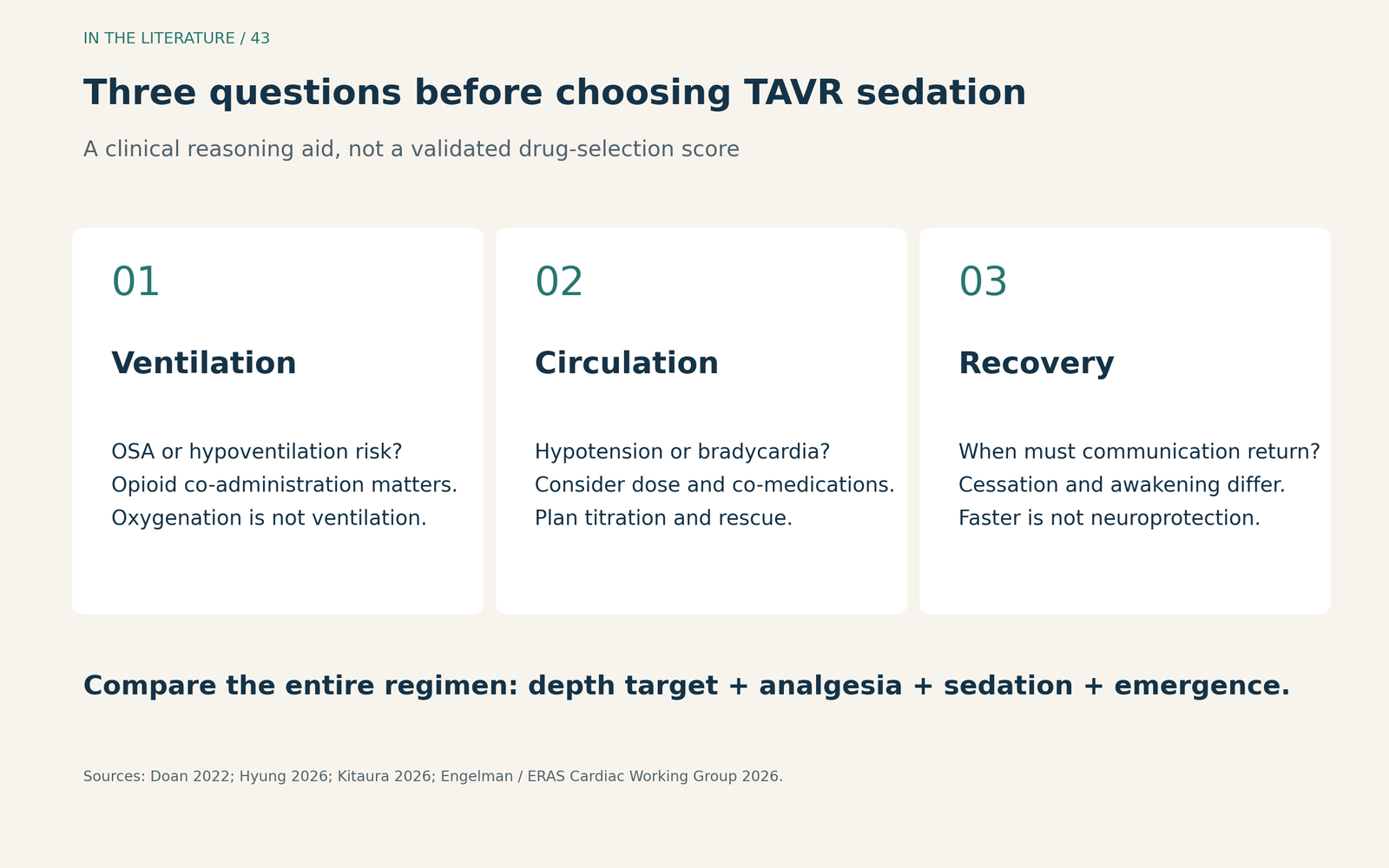
Figure 3. Three questions to make the drug choice clinically meaningful. Consider the patient’s vulnerabilities, the combined regimen, and the intended recovery endpoint. This reasoning aid does not assign a preferred drug to each risk category. Sources: Engelman et al., Doan et al., Kitaura et al., and Hyung et al. [1, 2, 4, 5] View scalable figure

For a patient who needs prompt postoperative communication, a planned reversible strategy may be attractive; its value still depends on adequate ventilation during the procedure and the timing of reversal. For a patient vulnerable to respiratory depression or circulatory instability, the name of the primary sedative is only one part of the plan. Target depth, adjunctive opioid exposure, local anesthesia, monitoring, and readiness to intervene are the controllable decisions.
Three takeaways
- Select the whole regimen. Balance respiratory vulnerability, circulation, procedural analgesia, and the recovery task rather than choosing from a drug ranking.
- Keep outcomes distinct. A 48-hour MMSE signal, a faster arousal time, and a vasopressor requirement answer different clinical questions.
- Plan ventilation and rescue alongside emergence. Rapid reversal can help restore communication; it does not establish freedom from hypercapnia or better neurological outcomes.
References
- Engelman DT, Ailawadi G, Russo MJ, et al. Enhanced recovery after surgery turnkey order set for periprocedural care of the patient undergoing transcatheter aortic valve replacement. JTCVS Struct Endovasc. 2026;12:100146. doi:10.1016/j.xjse.2026.100146.
- Doan V, Liu Y, Teeter EG, et al. Propofol Versus Remifentanil Sedation for Transcatheter Aortic Valve Replacement: A Single Academic Center Experience. J Cardiothorac Vasc Anesth. 2022;36(1):103–108. doi:10.1053/j.jvca.2021.04.038.
- Vovk Racman P, Kšela J, Racman M, et al. Comparison of Procedural Sedation With Propofol and Dexmedetomidine During Transcatheter Aortic Valve Replacement Using the Transfemoral Approach. J Cardiothorac Vasc Anesth. 2023;37(10):1894–1900. doi:10.1053/j.jvca.2023.05.009.
- Kitaura A, Mino T, Yoshino Y, et al. Rapidly Reversible Monitored Anesthesia Care with Remimazolam and Flumazenil Reversal for Transcatheter Aortic Valve Replacement: A Randomized Controlled Trial. J Clin Med. 2026;15(20):7880. doi:10.3390/jcm15207880.
- Hyung SW, Choi M, Chung MY, et al. Remimazolam Versus Dexmedetomidine for Monitored Anesthesia Care in Patients Undergoing Transfemoral Transcatheter Aortic Valve Implantation: A Randomized Clinical Trial. J Clin Med. 2026;15(18):7182. doi:10.3390/jcm15187182.