ITL-cd2def1e84a3
Juan Li, MD · Updated November 18, 2026
Key points
- The trials enrolled different patients. Mean EROA was 0.40 cm² in COAPT, 0.31 in MITRA-FR and 0.25 in RESHAPE-HF2, and the key discrepancy lies in proportionality.[1]
- COAPT treated more MR in smaller hearts. At 5 years, death occurred in 57.3% with the device versus 67.2% without.[2]
- RESHAPE-HF2 reduced hospitalization. Heart failure hospitalization was 26.9 versus 46.6 per 100 patient-years.[3]
- Pooled trials agree on hospitalization, not survival. TEER reduced HF hospitalization (RR 0.71), but mortality differences appeared only when matched observational studies were added.[4]
- Proportionality is not proven in individual patients. EROA:LVEDV did not predict mortality after TEER, and LV dysfunction may matter most.[5]
During TEER for secondary mitral regurgitation, the TEE shows an EROA of 0.30 cm² in a ventricle with an end-diastolic volume of 260 mL. Which trial does this patient resemble, and what benefit can be expected?[1], [2]
Different patients, different answers
Lancellotti and colleagues argue that the key discrepancy between COAPT and MITRA-FR lies in proportionality. Mean EROA was 0.40 cm² in COAPT, 0.31 in MITRA-FR and 0.25 in RESHAPE-HF2; only 16 and 14% of MITRA-FR and RESHAPE-HF2 patients had severe MR. RESHAPE-HF2 patients had a mean LVEDV of 211 mL, lower natriuretic peptides and higher eGFR, and its results align more closely with COAPT than MITRA-FR. The authors suggest that above an LVEDV of 200 to 220 mL the myocardial burden may dominate, but state that this remains a hypothesis.[1] Tachibana and Bainbridge note that COAPT patients had more MR and smaller ventricles than MITRA-FR patients and that COAPT intervention was more aggressive.[2] McGregor and colleagues likewise attribute the differences to MR severity and LV remodeling.[3]
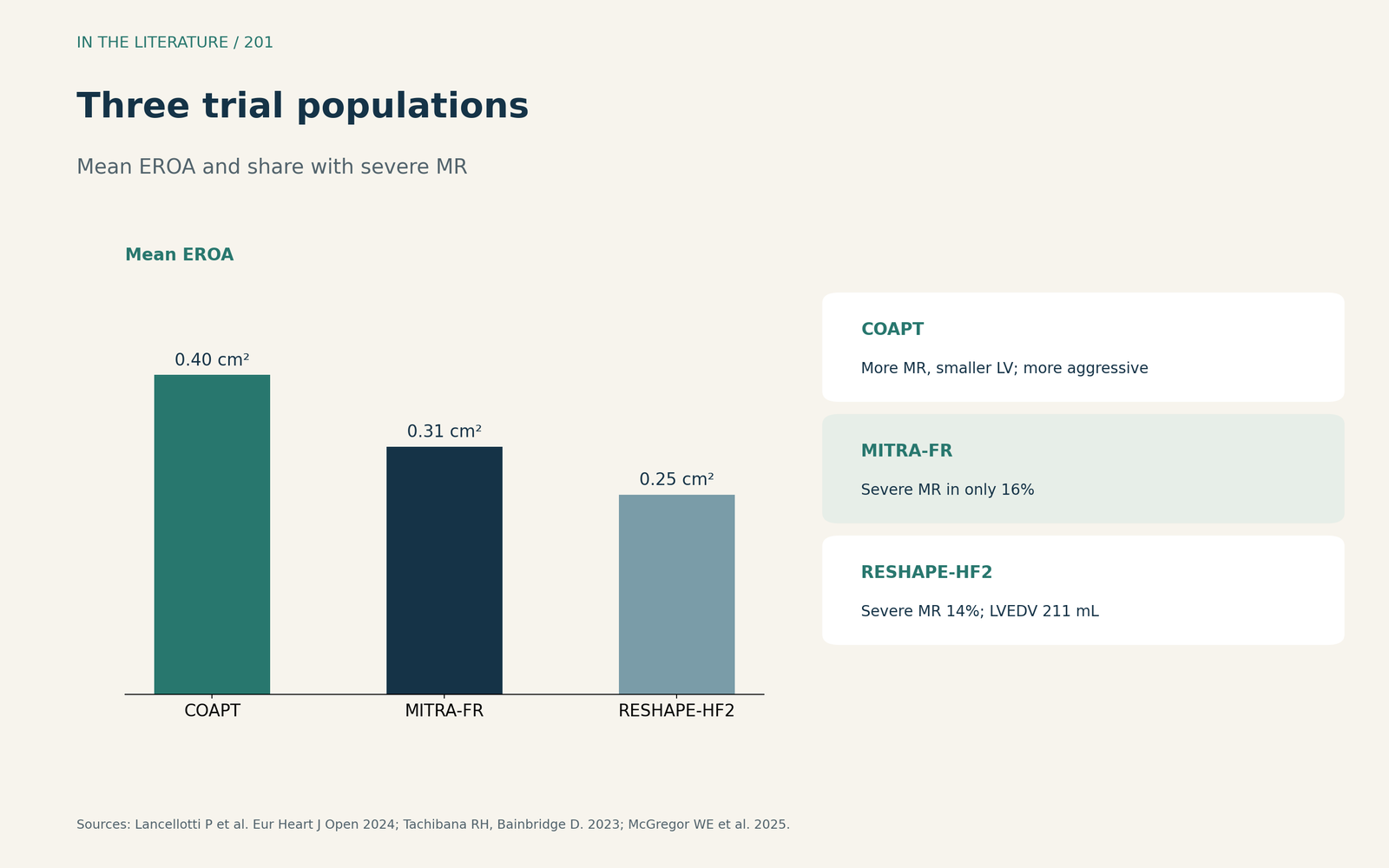
Figure 1. More regurgitation, smaller ventricle, more benefit. Redrawn from Lancellotti et al., Tachibana and Bainbridge, and McGregor et al.[1], [2], [3] View larger.

What the outcomes show
In COAPT at 5 years, death occurred in 57.3% of the device group and 67.2% of the control group.[2] RESHAPE-HF2 included 505 patients; heart failure hospitalization was 26.9 versus 46.6 per 100 patient-years, although the trial did not reach its intended sample size.[3] Bendaham and colleagues pooled 3 RCTs and 5 matched studies (n = 2588). In RCTs alone, TEER showed no significant mortality difference but reduced HF hospitalization (RR 0.71); mortality differences appeared only when matched studies were added.[4]
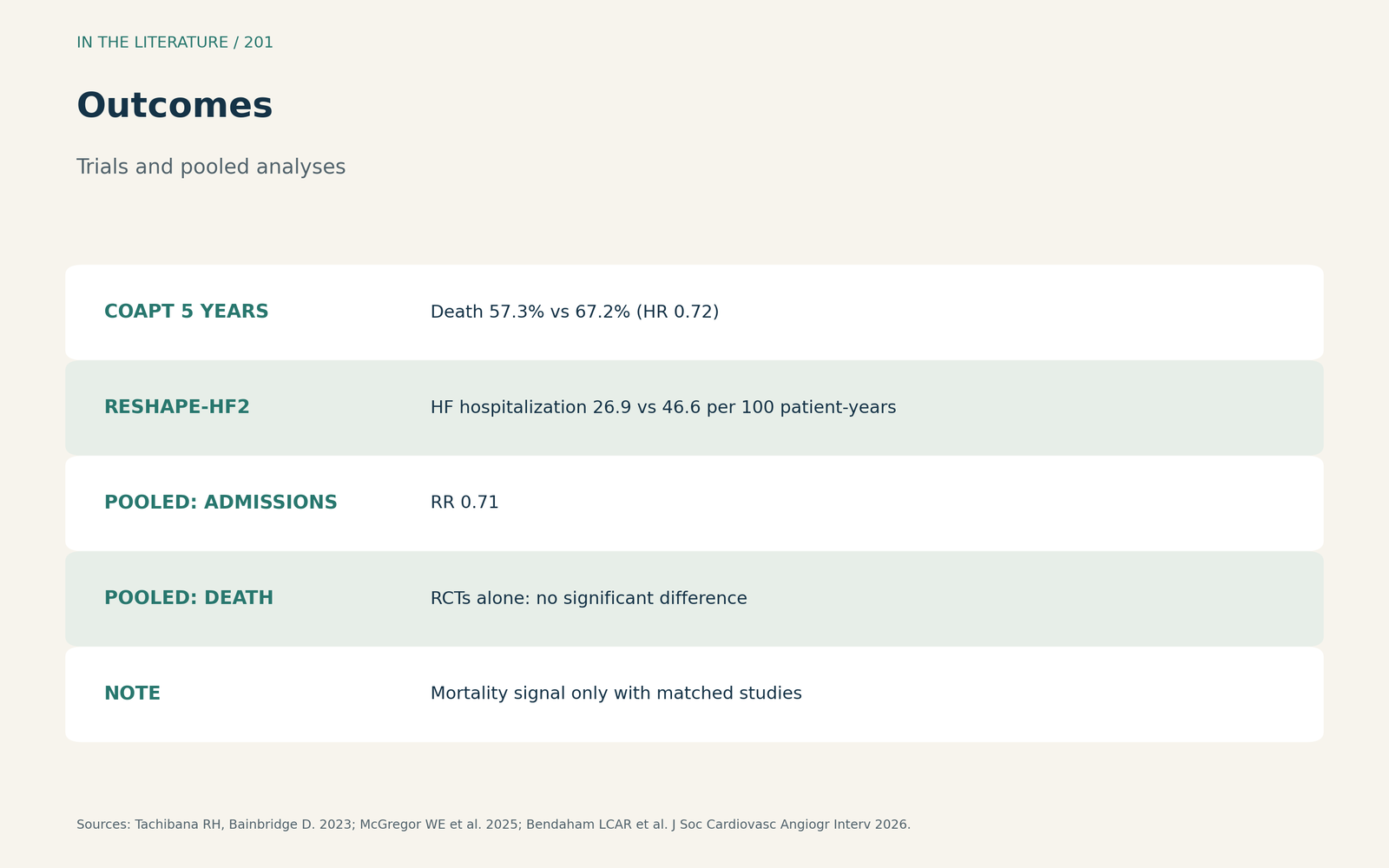
Figure 2. Fewer admissions everywhere; survival only in COAPT. Redrawn from Tachibana and Bainbridge, McGregor et al. and Bendaham et al.[2], [3], [4] View larger.

Does proportionality hold for individual patients?
Marchetti and colleagues describe proportionate versus disproportionate MR as a recently emphasized concept.[6] In Moonen and colleagues' meta-analysis of observational cohorts, however, proportionality by EROA:LVEDV was not associated with mortality after TEER, there is no agreed method to assess it, and LV dysfunction may be the main factor driving mortality and HF hospitalization.[5]
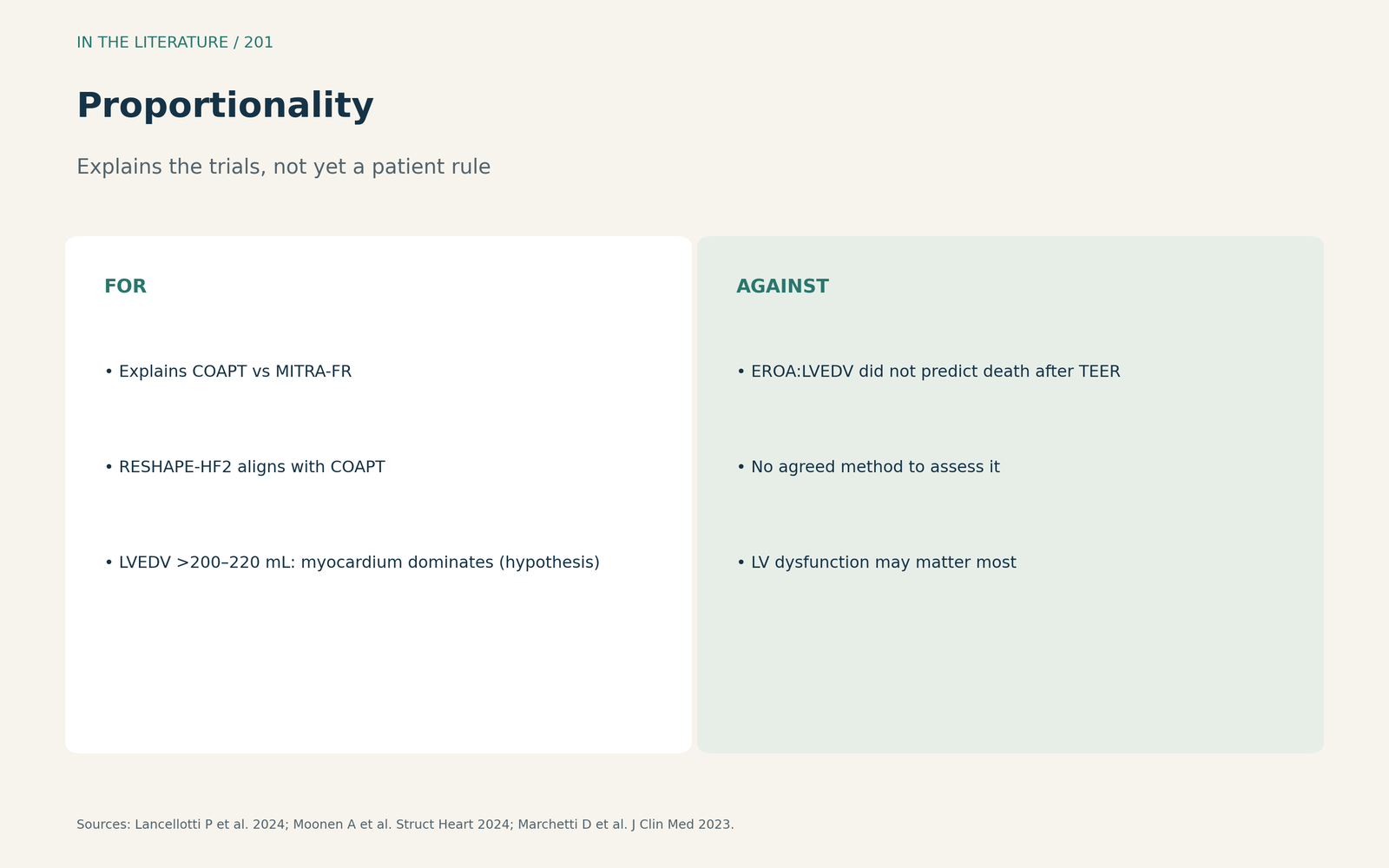
Figure 3. A useful lens, not a selection rule. Synthesized from Moonen et al., Marchetti et al. and Lancellotti et al.[5], [6], [1] View larger.

Three takeaways
- The trials disagreed mainly because they enrolled different MR severity and ventricular size.[1], [2]
- TEER consistently reduces heart failure hospitalization; survival benefit is shown in COAPT but not in pooled randomized data.[3], [4]
- Proportionality is a trial-level explanation; in individual patients, LV dysfunction may matter more.[5]
References
- Lancellotti P, Sugimoto T, Bäck M, Zannad F. Revisiting secondary mitral regurgitation threshold severity: insights and lessons from the RESHAPE-HF2 trial. Eur Heart J Open. 2024;4(5):oeae084. doi:10.1093/ehjopen/oeae084
- Tachibana RH, Bainbridge D. 5-year results of the COAPT trial: what did we learn? J Cardiothorac Vasc Anesth. 2023;37(12):2423–2424. doi:10.1053/j.jvca.2023.08.003
- McGregor WE, D’Orsi G, Cormican DS. RESHAPE HF2 trial for mitral valve edge-to-edge repair for mitral regurgitation in heart failure: more information without more clear answers. J Cardiothorac Vasc Anesth. 2025;39(5):1106–1108. doi:10.1053/j.jvca.2025.02.005
- Bendaham LCAR, Doma M, de Melo Neto AP, et al. Mitral transcatheter edge-to-edge repair versus guideline-directed medical therapy for functional mitral regurgitation with heart failure: an updated meta-analysis. J Soc Cardiovasc Angiogr Interv. 2026;5(3):104165. doi:10.1016/j.jscai.2025.104165
- Moonen A, Cao J, Celermajer DS, Ng MKC. Mitral regurgitation “proportionality” in functional mitral regurgitation and outcomes after mitral valve transcatheter edge-to-edge repair: a systematic review and meta-analysis. Struct Heart. 2024;8(3):100284. doi:10.1016/j.shj.2024.100284
- Marchetti D, Di Lenarda F, Novembre ML, et al. Contemporary echocardiographic evaluation of mitral regurgitation and guidance for percutaneous mitral valve repair. J Clin Med. 2023;12(22):7121. doi:10.3390/jcm12227121