ITL-ce244e4e31d4
Juan Li, MD · Updated November 17, 2026
Watch the video
Key points
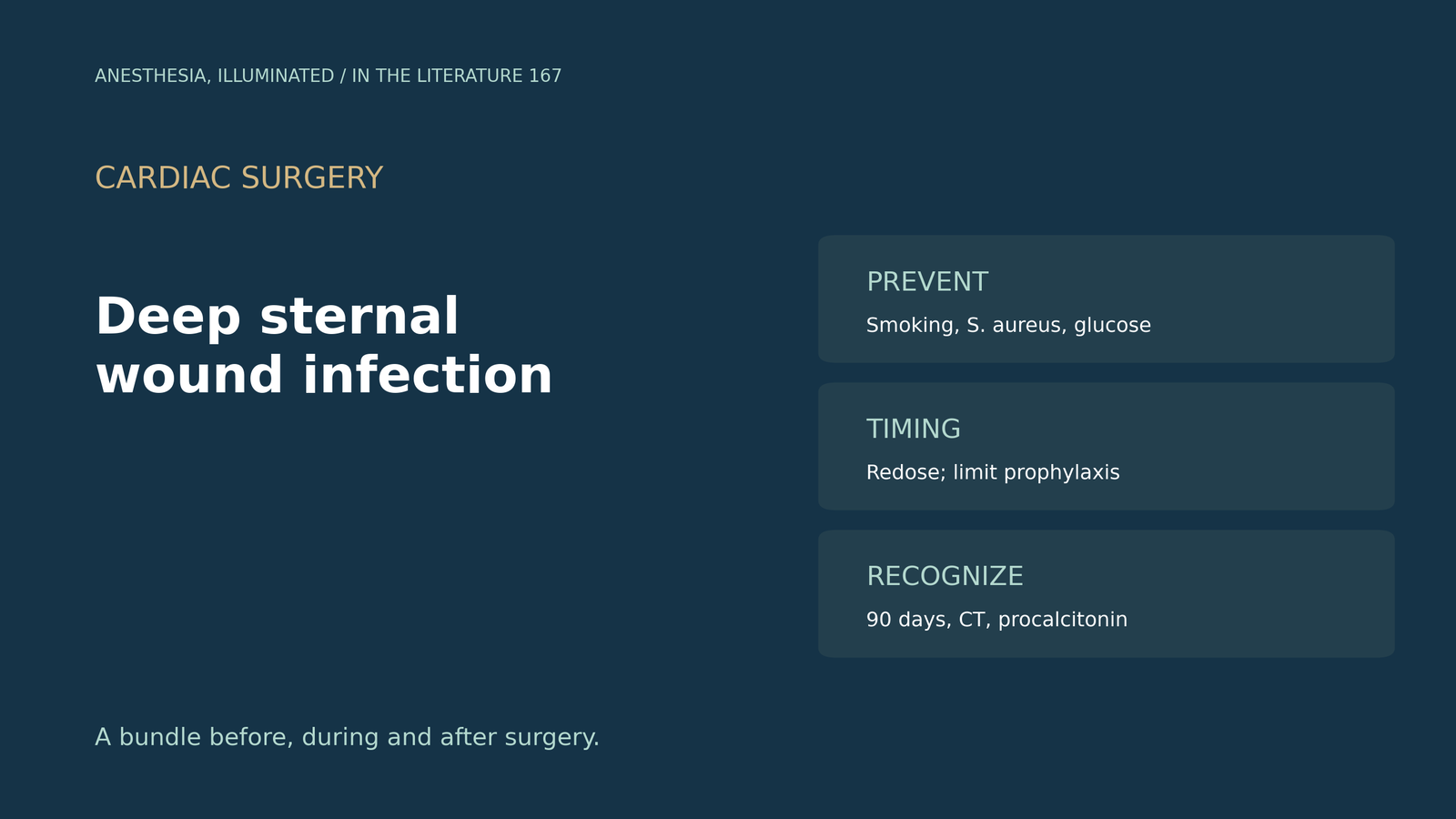
- It is uncommon but serious. Deep sternal wound infection occurs in 0.2% to 3%, usually presents within 30 days, and MRSA mediastinitis carries high 1-year mortality.[1]
- Prevention starts weeks before surgery. Stop smoking at least 30 days before, screen for nasal S. aureus within 15 days and decolonize with mupirocin, and control glucose during surgery.[2]
- Carriers are at higher risk. S. aureus infection risk is 3-fold higher in carriers, and bone wax is not recommended on the cut sternum.[3]
- Open chests are vulnerable. Delayed sternal closure was linked to more postoperative infection (31.6% vs 3.5%), although mediastinitis did not differ significantly.[4]
- Procalcitonin rules out better than it rules in. Pooled sensitivity was 0.70 and specificity 0.76, and positive predictive value never exceeded 60%.[5]
On the sixth day after coronary bypass, a patient with diabetes and obesity has fever, sternal drainage and a clicking sternum. Is this deep sternal infection, and what could have prevented it?[1], [2]
How common, and who is at risk
Phoon and Hwang report an incidence of 0.2% to 3%; acute infection usually presents within 30 days, re-exploration for bleeding is a recognized risk factor, and MRSA mediastinitis carries high 1-year mortality.[1] The Spanish consensus regards mediastinitis rates above 2% as a marker of poor quality of care.[2] The AATS consensus by Lazar and colleagues notes that sternal wound infection has fallen to 1% to 4% of procedures and that S. aureus carriers have a 3-fold higher risk.[3]
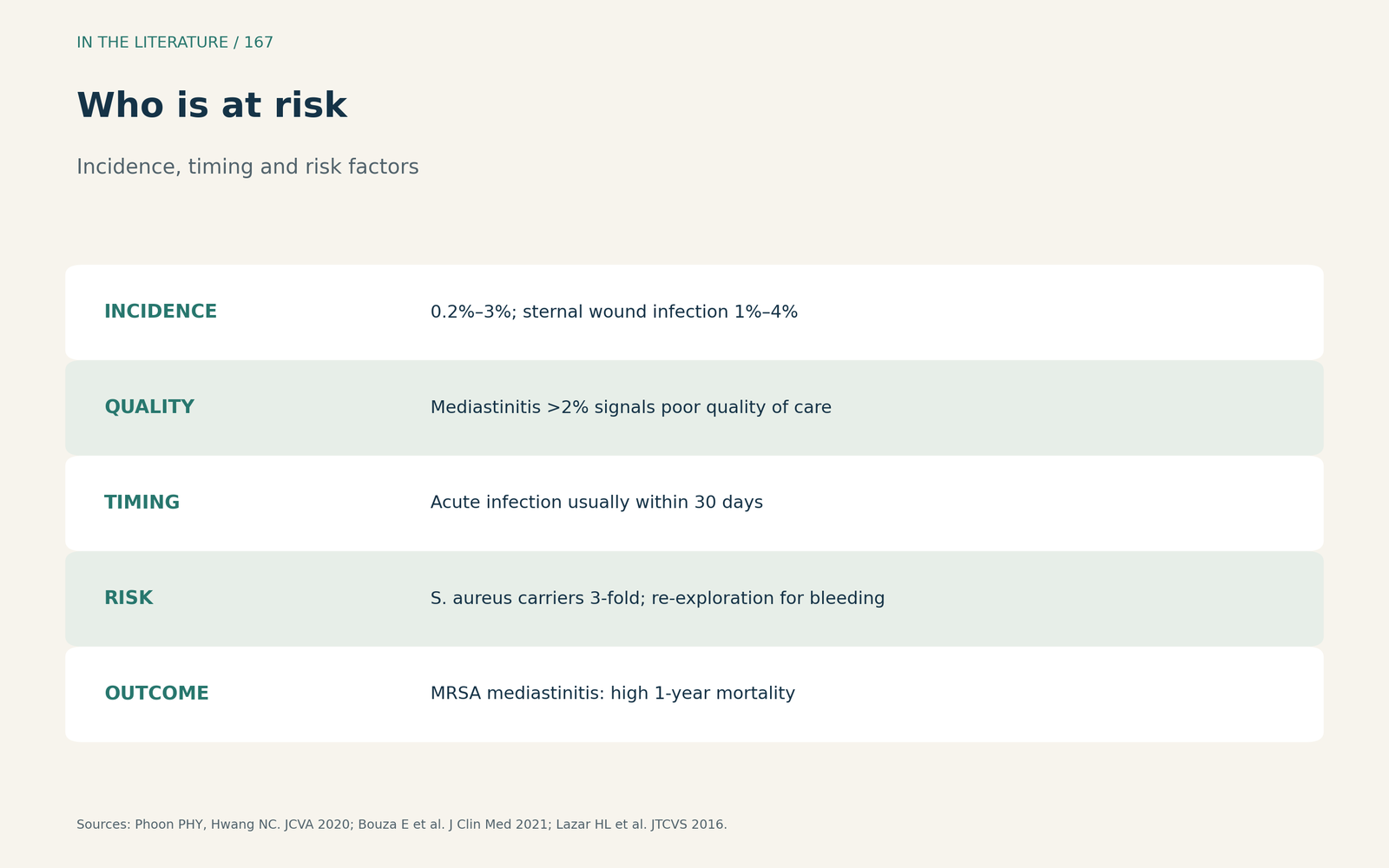
Figure 1. Who is at risk. Synthesized from Phoon and Hwang, Bouza et al. and Lazar et al.[1], [2], [3] View larger.

A prevention bundle
The Spanish consensus recommends smoking cessation at least 30 days before surgery, nasal S. aureus screening within 15 days, topical mupirocin for decolonization, glucose control during surgery and prophylactic negative pressure wound therapy in high-risk patients.[2] Phoon and Hwang advise redosing prophylactic antibiotics for procedures longer than 4 hours and limiting postoperative prophylaxis.[1] The AATS consensus does not recommend bone wax on the cut sternum.[3] With delayed sternal closure, Li and colleagues found more postoperative infection (31.6% vs 3.5%); mediastinitis was 5.3% vs 0%, a difference that was not significant, and their protocol continued prophylaxis until 48 hours after closure.[4]
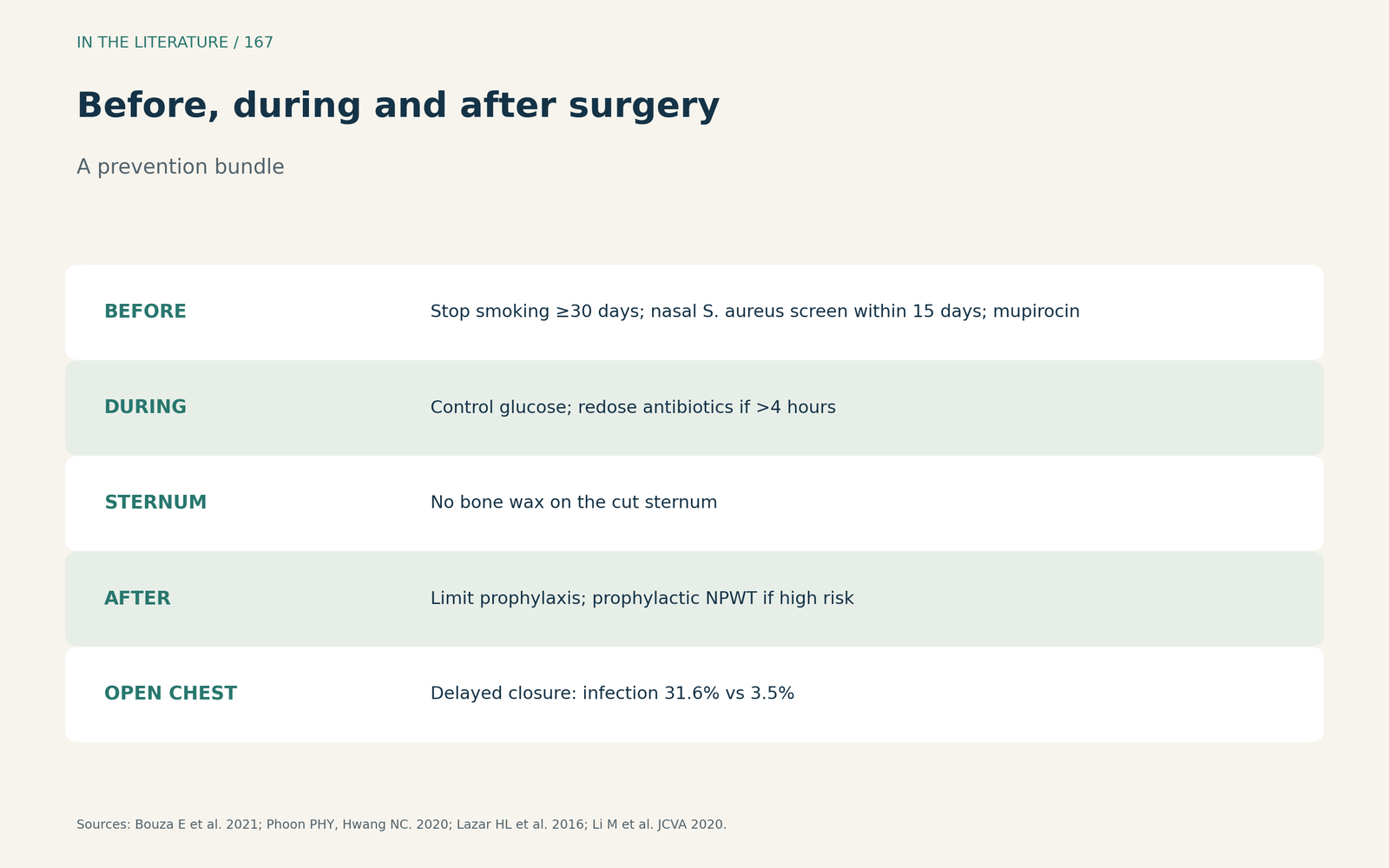
Figure 2. Before, during and after surgery. Synthesized from Bouza et al., Phoon and Hwang, Lazar et al. and Li et al.[2], [1], [3], [4] View larger.

Recognizing it
The Spanish consensus treats infection within 90 days after surgery as potentially indicative of mediastinitis and regards sternal separation over 4 mm on CT as suggestive.[2] Debridement on the day of diagnosis shortened hospital stay in a cited study.[1] Nicolotti and colleagues pooled procalcitonin data after cardiac surgery: sensitivity 0.70 and specificity 0.76; it may help rule out infection, but positive predictive value never exceeded 60%, and five studies addressed only pulmonary infection.[5]
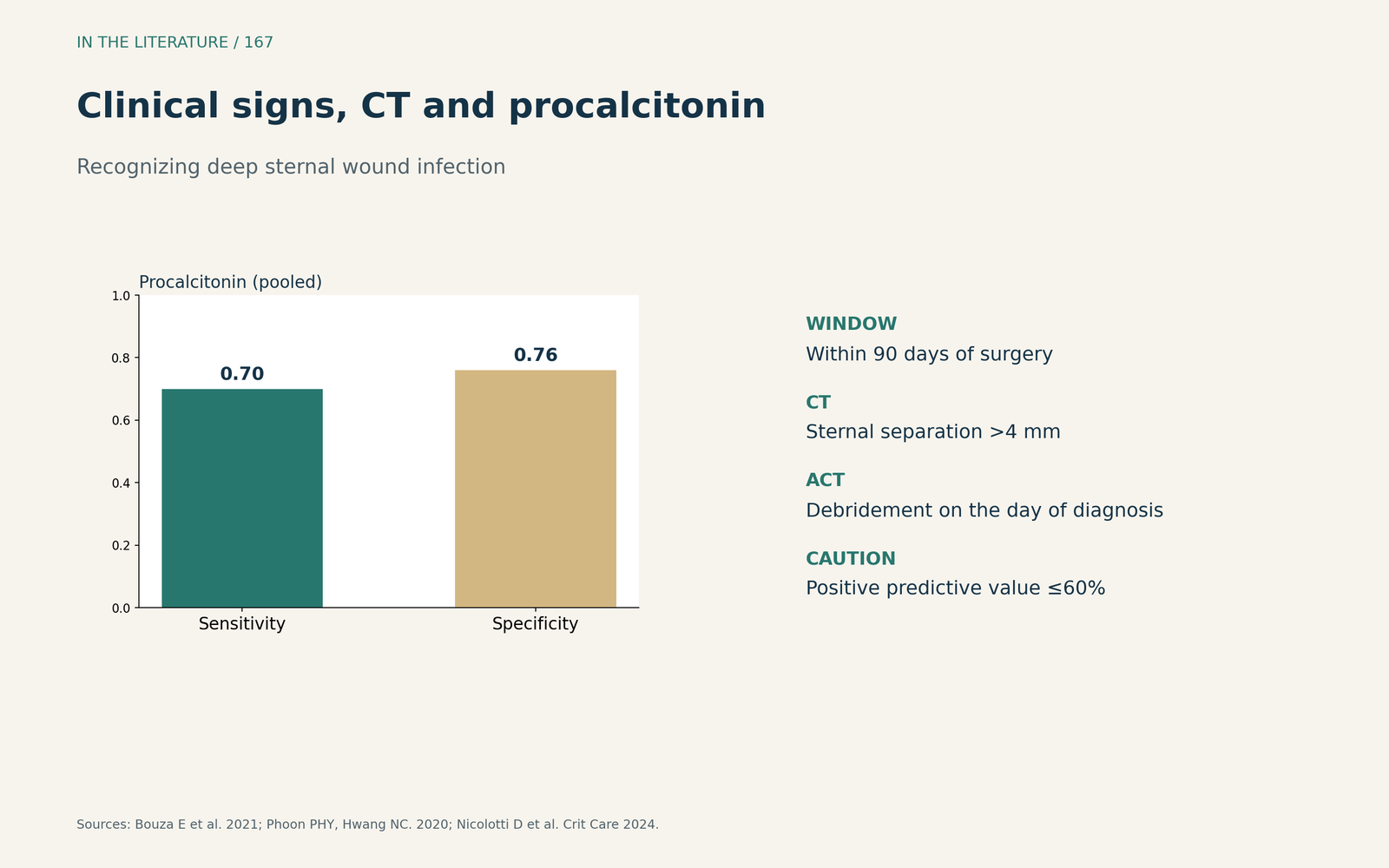
Figure 3. Clinical signs, CT and procalcitonin. Synthesized from Bouza et al., Phoon and Hwang and Nicolotti et al.[2], [1], [5] View larger.

Three takeaways
- Prevention is a bundle, and it starts early. Smoking, S. aureus carriage and glucose all matter.[2], [3]
- The anesthesiologist owns the timing. Redose antibiotics in long cases and limit postoperative prophylaxis.[1]
- Think infection for 90 days. Use clinical signs and CT; a normal procalcitonin helps, a high one does not prove infection.[2], [5]
References
- Phoon PHY, Hwang NC. Deep sternal wound infection: diagnosis, treatment and prevention. J Cardiothorac Vasc Anesth. 2020;34(6):1602–1613. doi:10.1053/j.jvca.2019.09.019
- Bouza E, de Alarcón A, Fariñas MC, et al. Prevention, diagnosis and management of post-surgical mediastinitis in adults consensus guidelines of the Spanish Society of Cardiovascular Infections (SEICAV), the Spanish Society of Thoracic and Cardiovascular Surgery (SECTCV) and the Biomedical Research Centre Network for Respiratory Diseases (CIBERES). J Clin Med. 2021;10(23):5566. doi:10.3390/jcm10235566
- Lazar HL, Vander Salm T, Engelman R, et al. Prevention and management of sternal wound infections. J Thorac Cardiovasc Surg. 2016;152(4):962–972. doi:10.1016/j.jtcvs.2016.01.060
- Li M, Mazzeffi MA, Gammie JS, et al. Characterization of postoperative infection risk in cardiac surgery patients with delayed sternal closure. J Cardiothorac Vasc Anesth. 2020;34(5):1238–1243. doi:10.1053/j.jvca.2020.01.010
- Nicolotti D, Grossi S, Palermo V, et al. Procalcitonin for the diagnosis of postoperative bacterial infection after adult cardiac surgery: a systematic review and meta-analysis. Crit Care. 2024;28(1):44. doi:10.1186/s13054-024-04824-3