ITL-a254f62a6439
Juan Li, MD · Updated November 18, 2026
Key points
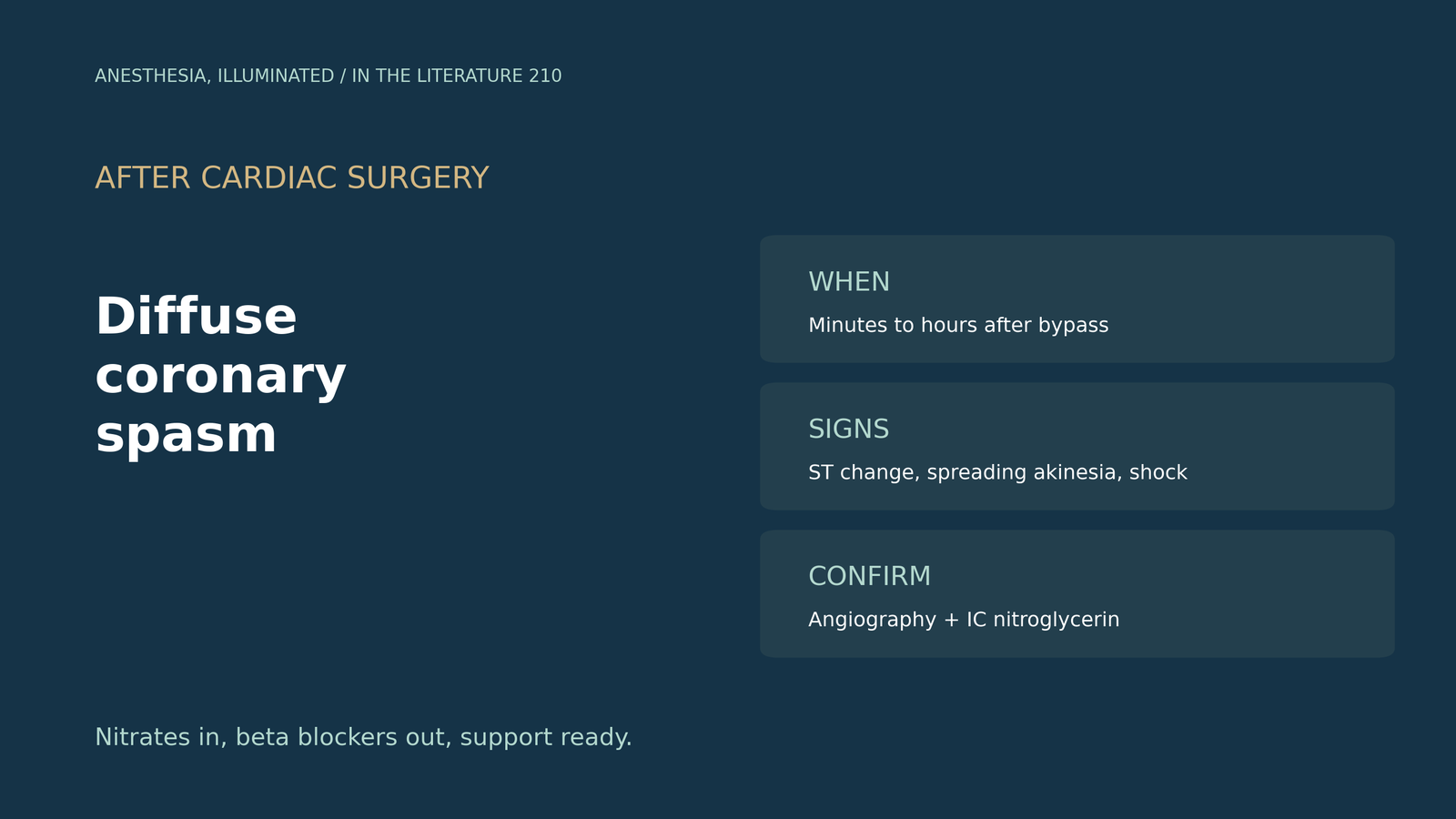
- It is rare but lethal. Refractory spasm has been reported in 0.8% to 1.3% of CABG procedures, and in one series all diffuse events occurred 3 to 8 hours after surgery.[1]
- Timing varies. Arterial graft spasm typically appears 30 to 40 minutes after bypass, but lethal spasm can develop as late as 15 hours.[2]
- The grafts may be open. Angiography can show patent grafts with diffuse native spasm, and the presentation is typically cardiogenic shock.[3]
- Treat with nitrates, not beta blockers. Intravenous nitrates are the primary acute intervention, and beta blockers may worsen spasm.[4]
- Angiography decides. It shows diffuse multivessel spasm without thrombus or dissection, relieved by intracoronary nitroglycerin.[5]
Four hours after CABG with arterial grafts, a patient develops ST elevation in several leads, ventricular ectopy and falling blood pressure; TEE shows new inferolateral hypokinesis that is spreading. Is this graft failure, or diffuse coronary spasm, and how can the team tell quickly?[1], [3]
When and how it appears
Lorusso and colleagues note that refractory spasm has been reported in 0.8% to 1.3% of CABG procedures. In their series, all diffuse spasm events occurred 3 to 8 hours after surgery, five patients rapidly developed cardiogenic shock in the ICU, and echo showed akinesia that began regionally and progressed.[1] He and Taggart describe arterial graft spasm as typically occurring 30 to 40 minutes after bypass, often suddenly, with diffuse spasm on angiography, but note that lethal spasm can develop as late as 15 hours; TEE may help detect it.[2] Sweeney and Chaney cite an incidence of about 0.43% to 1.3% of CABG patients.[4]
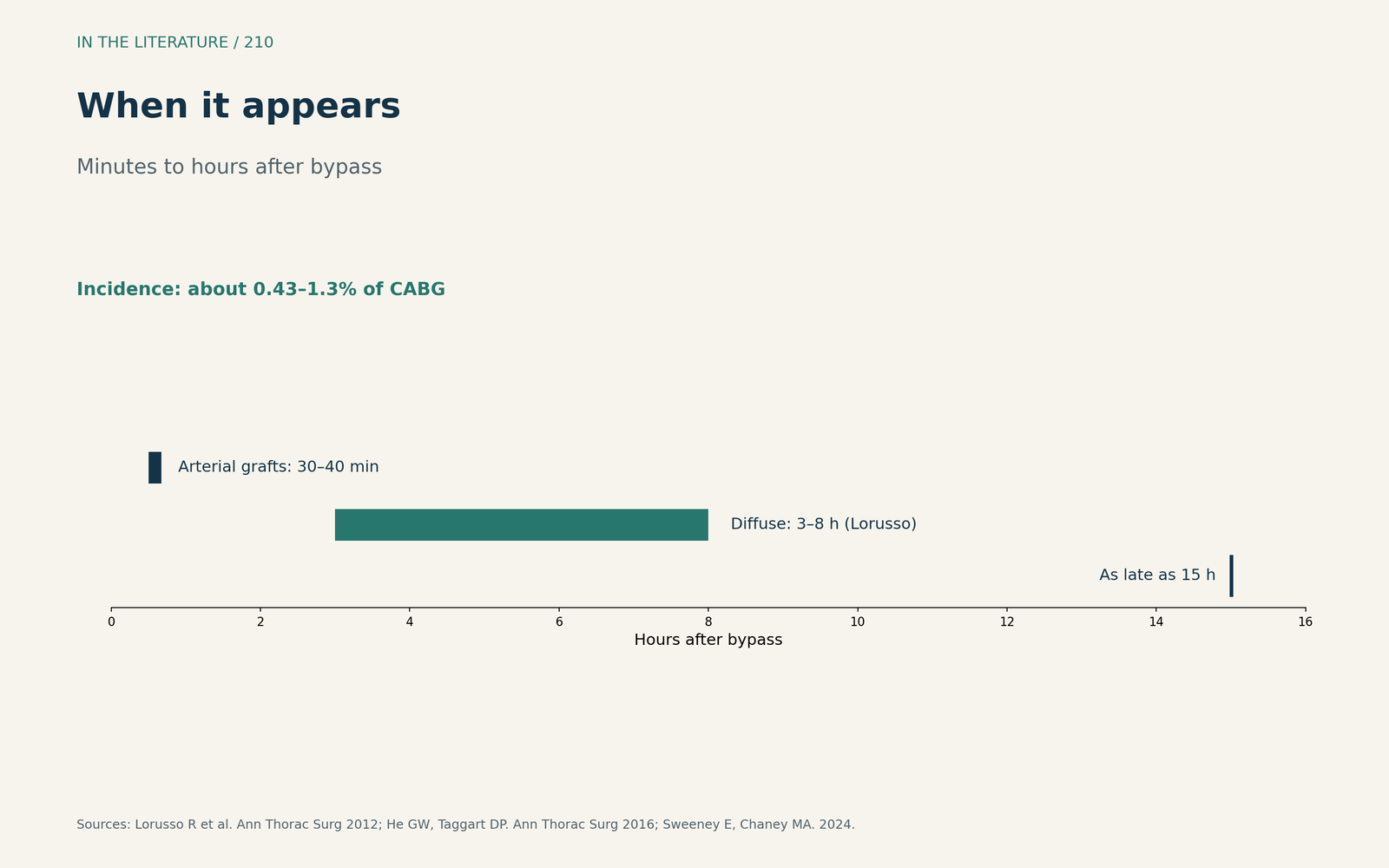
Figure 1. Minutes to hours after bypass. Redrawn from Lorusso et al., He and Taggart, and Sweeney and Chaney.[1], [2], [4] View larger.

Confirming the diagnosis
Del Valle and Hollander stress that a high index of suspicion is needed; in their case, angiography showed patent grafts with diffuse native spasm that was transiently relieved, and diffuse spasm typically presents as cardiogenic shock.[3] Chen and colleagues found diffuse multivessel spasm without thrombus or dissection, resolved by intracoronary nitroglycerin with no residual stenosis, and emphasize the crucial role of angiography.[5] Lorusso and colleagues warn that without prompt catheterization the diagnosis cannot be made.[1] Outpatient criteria, as summarized in the 2023 chronic coronary disease guideline, define spasm as transient occlusion above 90% with angina and ischemic ECG changes, supported by nitrate-responsive angina during spontaneous episodes.[6]
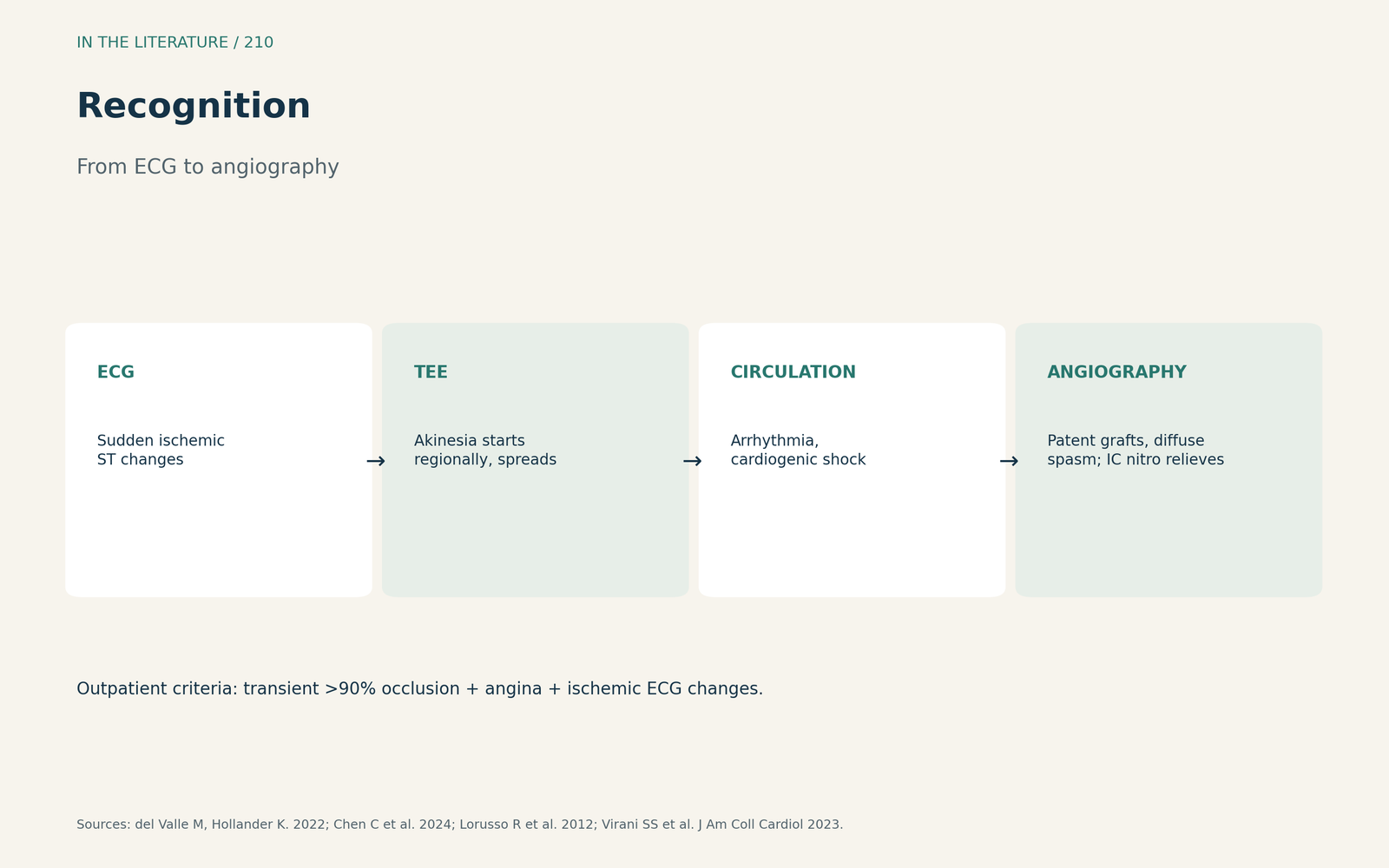
Figure 2. ECG, spreading wall motion loss, then angiography. Synthesized from del Valle and Hollander, Chen et al., Lorusso et al. and Virani et al.[3], [5], [1], [6] View larger.

First steps once suspected
Sweeney and Chaney recommend intravenous nitrates as the primary acute intervention and avoiding beta blockers, which may worsen spasm.[4] The guideline likewise notes that calcium channel blockers, not beta blockers, suppress episodes.[6] He and Taggart warn that high-dose inotropes may provoke arterial graft contraction.[2] In Lorusso's series, ECMO was quickly instituted in the last patients.[1]
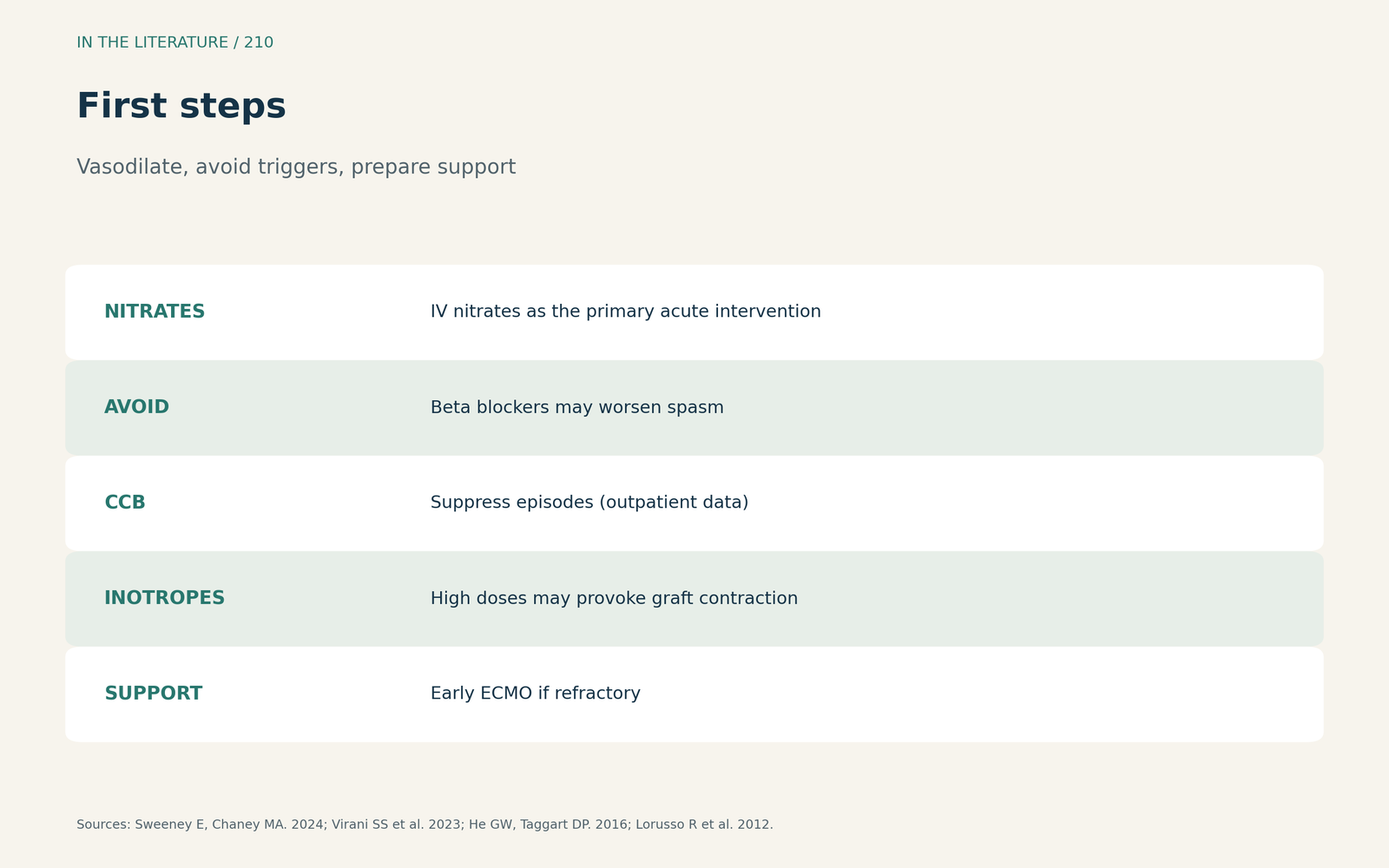
Figure 3. Vasodilate, avoid triggers, prepare support. Synthesized from Sweeney and Chaney, Virani et al., He and Taggart, and Lorusso et al.[4], [6], [2], [1] View larger.

Three takeaways
- Suspect diffuse spasm when ischemic ECG changes and spreading wall motion loss appear within hours of surgery.[1], [2]
- Patent grafts do not exclude it; angiography with intracoronary nitroglycerin confirms it.[3], [5]
- Give nitrates, avoid beta blockers and prepare mechanical support early.[4], [1]
References
- Lorusso R, Crudeli E, Lucà F, et al. Refractory spasm of coronary arteries and grafted conduits after isolated coronary artery bypass surgery. Ann Thorac Surg. 2012;93(2):545–551. doi:10.1016/j.athoracsur.2011.09.078
- He GW, Taggart DP. Spasm in arterial grafts in coronary artery bypass grafting surgery. Ann Thorac Surg. 2016;101(3):1222–1229. doi:10.1016/j.athoracsur.2015.09.071
- del Valle M, Hollander K. Diffuse coronary artery spasm after coronary artery bypass graft surgery. J Cardiothorac Vasc Anesth. 2022;36(8):2575–2577. doi:10.1053/j.jvca.2021.08.101
- Sweeney E, Chaney MA. Diffuse coronary artery vasospasm following aortic valve replacement in a patient with scleroderma. J Cardiothorac Vasc Anesth. 2024;38(11):2812–2816. doi:10.1053/j.jvca.2024.06.026
- Chen C, Chen Y, Zhang X, Zou L. Perioperative multivessel coronary artery spasm and cardiac arrest after cardiac surgery. Interdiscip Cardiovasc Thorac Surg. 2024;38(5):ivae085. doi:10.1093/icvts/ivae085
- Virani SS, Newby LK, Arnold SV, et al. 2023 AHA/ACC/ACCP/ASPC/NLA/PCNA guideline for the management of patients with chronic coronary disease. J Am Coll Cardiol. 2023;82(9):833–955. doi:10.1016/j.jacc.2023.04.003