ITL-76fa69b32f33
Juan Li, MD · Updated November 17, 2026
Watch the video
Key points
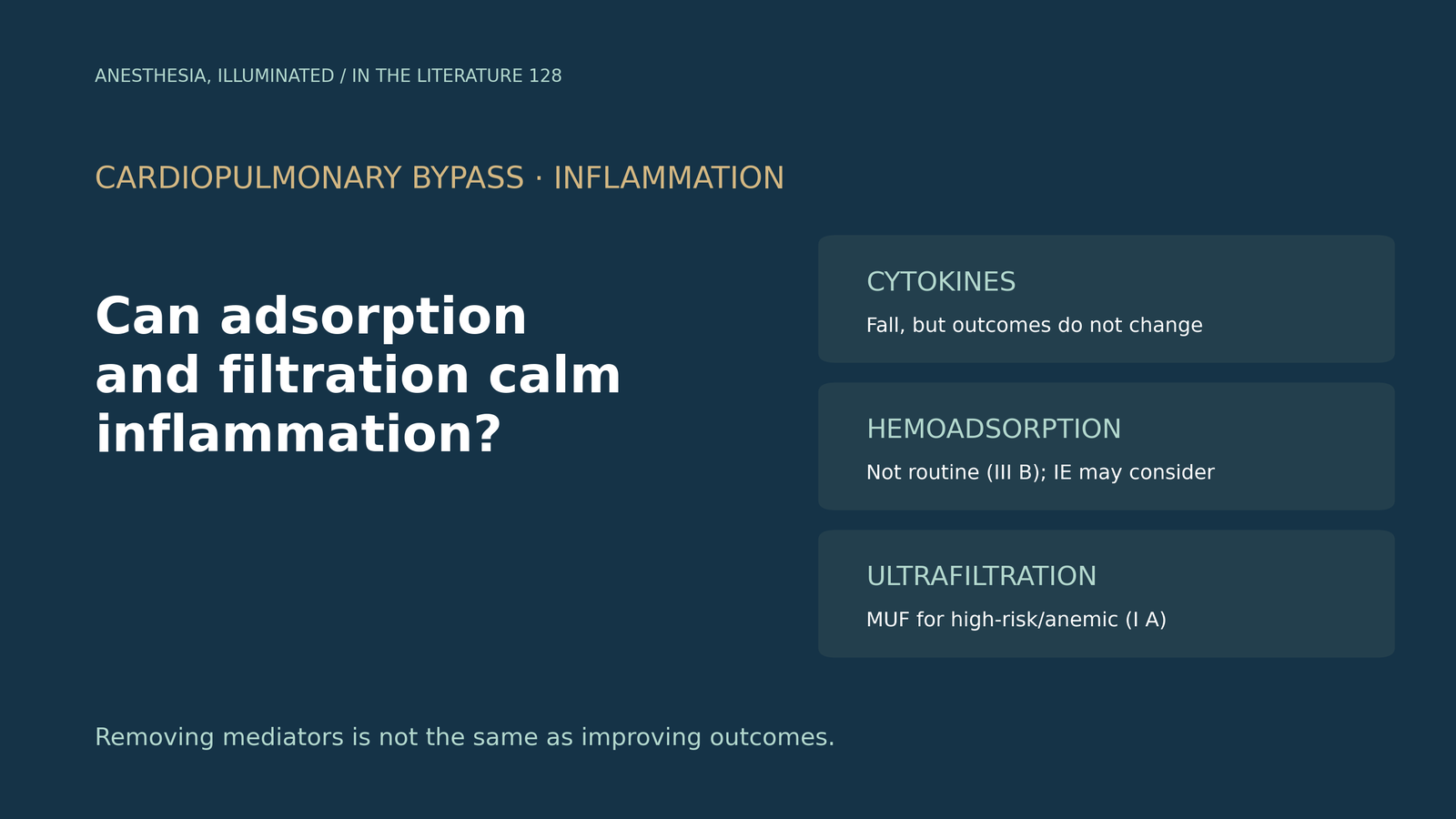
- The 2024 EACTS/EACTAIC/EBCP guideline does not recommend routine hemoadsorption during bypass (Class III B); it may be considered in infective endocarditis (Class IIb B). Modified ultrafiltration, alone or with conventional ultrafiltration, is recommended in high-risk or anemic patients to reduce bleeding and transfusion (Class I A).[1]
- Lower cytokines did not mean better outcomes. In REMOVE, 288 patients having endocarditis surgery were randomized; hemoadsorption lowered some cytokines, but organ failure scores and 30-day mortality (21% vs 22%) did not differ.[2]
- The kidney signal is mixed. In SIRAKI02, an adsorptive membrane during bypass reduced AKI from 39.7% to 28.4%, and a meta-analysis of 16 trials found less AKI, but no difference in dialysis or mortality.[3], [4]
- More filtration is not better. In a cohort of 1641 patients, removing more than about 32 mL/kg by conventional ultrafiltration was associated with more AKI and did not reduce transfusion.[5]
- A leukocyte-depleting filter did not protect the kidney in a small randomized feasibility trial (AKI 44% vs 23%).[6]
A patient with a long, complex valve operation planned asks whether a cytokine filter will be used to "clean the blood" on bypass. Does removing inflammatory mediators change outcomes, and when is filtration worth adding?[1], [2]
What the guideline says
The 2024 EACTS/EACTAIC/EBCP guideline describes hemoadsorption as a cartridge in the bypass circuit that can remove both pro- and anti-inflammatory substances. It judges the evidence in elective surgery insufficient, citing small trials with divergent results, and does not recommend routine use (Class III B); in infective endocarditis it may be considered (Class IIb B). For ultrafiltration, it recommends modified ultrafiltration, or conventional combined with modified ultrafiltration, in high-risk or anemic patients to reduce chest tube bleeding and transfusion (Class I A).[1]
Hemoadsorption trials
Diab and colleagues randomized 288 patients undergoing surgery for infective endocarditis to hemoadsorption during bypass or usual care. Interleukin-1β and interleukin-18 were lower at the end of bypass, but the change in organ failure score did not differ, nor did 30-day mortality (21% vs 22%), ventilation, vasopressor use or dialysis.[2] In RECCAS, 38 older patients were randomized; interleukin-6 at ICU admission did not differ, and dialysis was needed in 3 patients in each group.[7]
In SIRAKI02, Pérez-Fernández and colleagues randomized 343 patients with expected bypass longer than 90 minutes to an adsorptive hemofilter or usual care. AKI occurred in 28.4% vs 39.7%; most AKI was early and mild, the operating team was not blinded, and the trial was partly funded by the device maker.[3] A 2026 meta-analysis of 16 trials with 1133 patients found less AKI with hemoadsorption (relative risk 0.75) but no difference in dialysis or 30-day mortality; the authors warn that extracorporeal clearance of creatinine may lower values without true kidney protection and do not support routine use.[4]
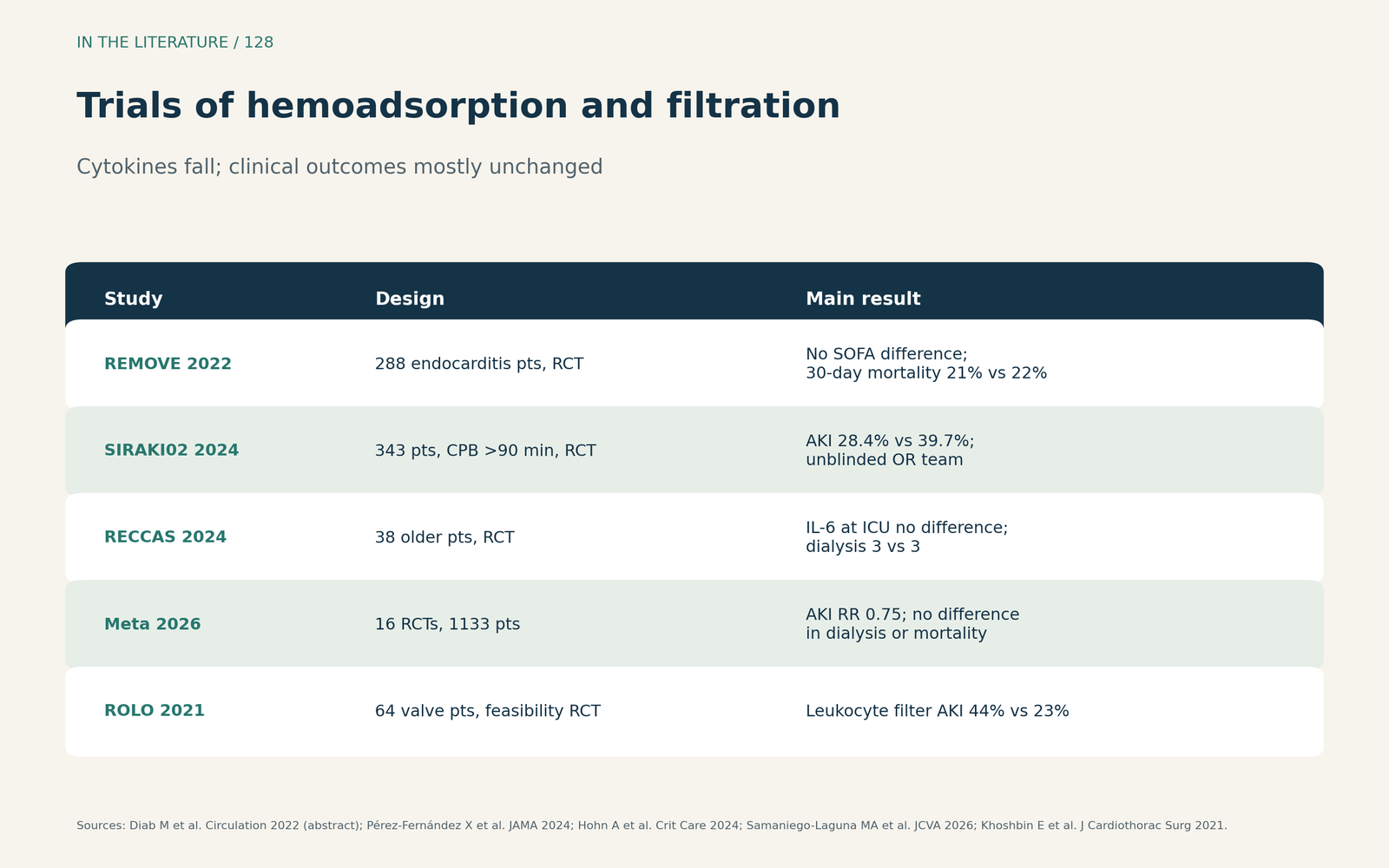
Figure 1. Trials of hemoadsorption and filtration. Synthesized from REMOVE, SIRAKI02, RECCAS, ROLO and the meta-analysis by Samaniego-Laguna et al.[2], [3], [7], [6], [4] View larger.

Ultrafiltration and leukocyte filters
Manning and colleagues studied 1641 elective patients; AKI occurred in 50.4%. Removing more than about 32 mL/kg by conventional ultrafiltration was associated with higher AKI risk, despite similar nadir hematocrit, and ultrafiltration of any volume did not reduce transfusion.[5] In the ROLO feasibility trial, 64 patients having valve surgery were randomized to a leukocyte-depleting or standard arterial filter; AKI was 44% vs 23%, and the authors concluded routine leukodepletion cannot be supported.[6]
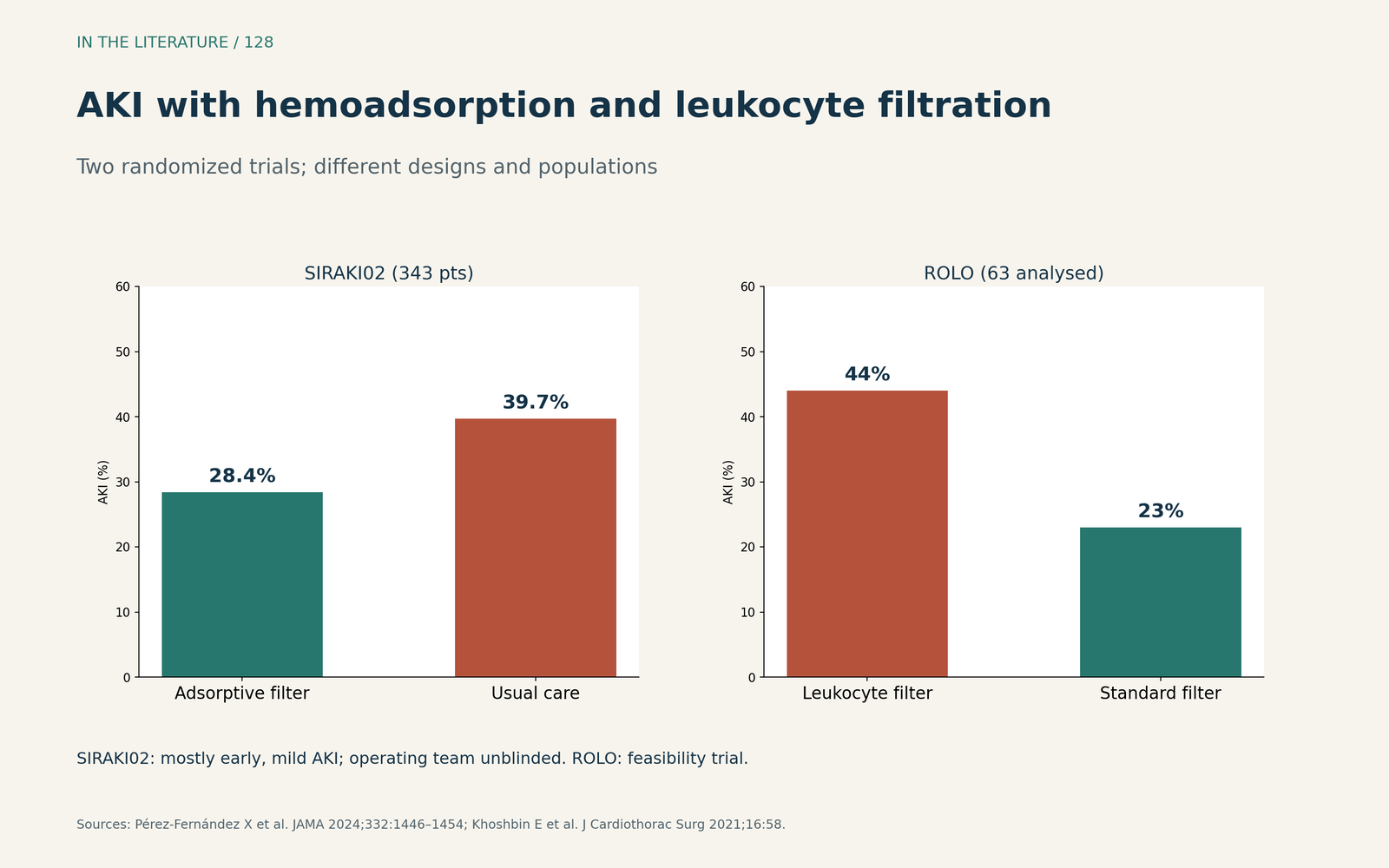
Figure 2. AKI with hemoadsorption and leukocyte filtration. Redrawn from SIRAKI02 and ROLO; designs and populations differ.[3], [6] View larger.

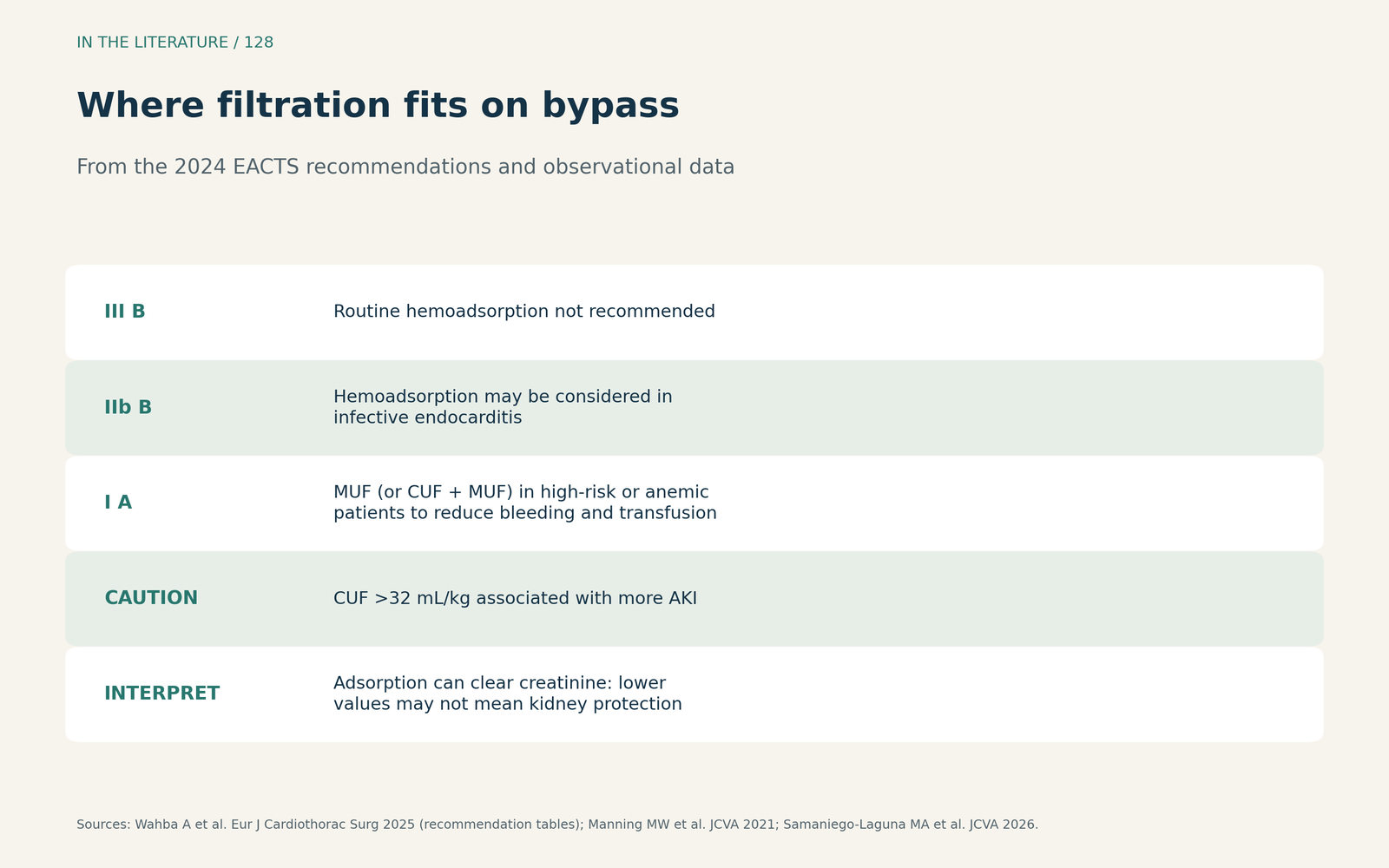
Figure 3. Where filtration fits on bypass. Synthesized from the 2024 EACTS guideline recommendation tables, Manning et al. and the meta-analysis by Samaniego-Laguna et al.[1], [5], [4] View larger.

Three takeaways
- Cytokine removal is not outcome benefit. Hemoadsorption lowers some mediators but has not improved organ failure, dialysis or survival.[2], [4], [7]
- Do not use hemoadsorption routinely. The AKI signal from one trial and pooled data is uncertain, and creatinine may be lowered artificially.[1], [3], [4]
- Use ultrafiltration for blood conservation, with limits. Modified ultrafiltration helps high-risk or anemic patients; large conventional volumes may harm the kidney.[1], [5]
References
- Wahba A, Kunst G, De Somer F, et al. 2024 EACTS/EACTAIC/EBCP guidelines on cardiopulmonary bypass in adult cardiac surgery. Eur J Cardiothorac Surg. 2025;67(2):ezae354. doi:10.1093/ejcts/ezae354
- Diab M, Lehmann T, Bothe W, et al. Cytokine hemoadsorption during cardiac surgery versus standard surgical care for infective endocarditis (REMOVE): results from a multicenter randomized controlled trial. Circulation. 2022;145(13):959–968. Abstract only. doi:10.1161/CIRCULATIONAHA.121.056940
- Pérez-Fernández X, Ulsamer A, Cámara-Rosell M, et al. Extracorporeal blood purification and acute kidney injury in cardiac surgery: the SIRAKI02 randomized clinical trial. JAMA. 2024;332(17):1446–1454. doi:10.1001/jama.2024.20630
- Samaniego-Laguna MA, Queiroz I, Pinilla J, et al. Efficacy of hemoadsorption in cardiac surgery with cardiopulmonary bypass: a systematic review and meta-analysis of randomized controlled trials. J Cardiothorac Vasc Anesth. 2026;40(9):2966–2978. doi:10.1053/j.jvca.2026.01.012
- Manning MW, Li YJ, Linder D, et al. Conventional ultrafiltration during elective cardiac surgery and postoperative acute kidney injury. J Cardiothorac Vasc Anesth. 2021;35(5):1310–1318. doi:10.1053/j.jvca.2020.11.036
- Khoshbin E, Spencer S, Solomon L, et al. Is there a renoprotective value to leukodepletion during heart valve surgery? A randomized controlled trial (ROLO). J Cardiothorac Surg. 2021;16:58. doi:10.1186/s13019-021-01402-4
- Hohn A, Malewicz-Oeck NM, Buchwald D, et al. REmoval of cytokines during CArdiac surgery (RECCAS): a randomised controlled trial. Crit Care. 2024;28:406. doi:10.1186/s13054-024-05175-9