ITL-3e168bd9c838
Juan Li · In the Literature · Updated November 17, 2026
Watch the video
Key points
- Hospital volume, individual operator volume and actual outcomes answer different questions.
- Contemporary registries still find volume–outcome associations, but they do not establish that increasing case counts alone improves care.
- Study cutoffs should not become universal referral or credentialing rules.
- Current US Medicare policy emphasizes hospital infrastructure and quality improvement while retaining individual operator experience requirements.
- For referral, ask about comparable cases, risk-adjusted outcomes and the team's response to complications.
Start with the patient being referred
A TAVR program advertises hundreds of procedures a year. That is useful information, but is it enough to choose the program for a patient with challenging anatomy or substantial comorbidity? Volume is one signal of experience; it is not a complete measure of quality. The 2025 ESC/EACTS guideline supports regional networks that concentrate complex procedures in experienced centres. It also emphasizes Heart Team function, imaging, clinical and patient-reported outcomes, and regular audit. It does not establish one universally applicable minimum caseload. [1]
The practical distinction is between how often a hospital performs TAVR, how often the relevant operator performs it, and how well the whole team manages patients like the one being referred. These measures should inform each other, rather than be treated as interchangeable. [1, 2]
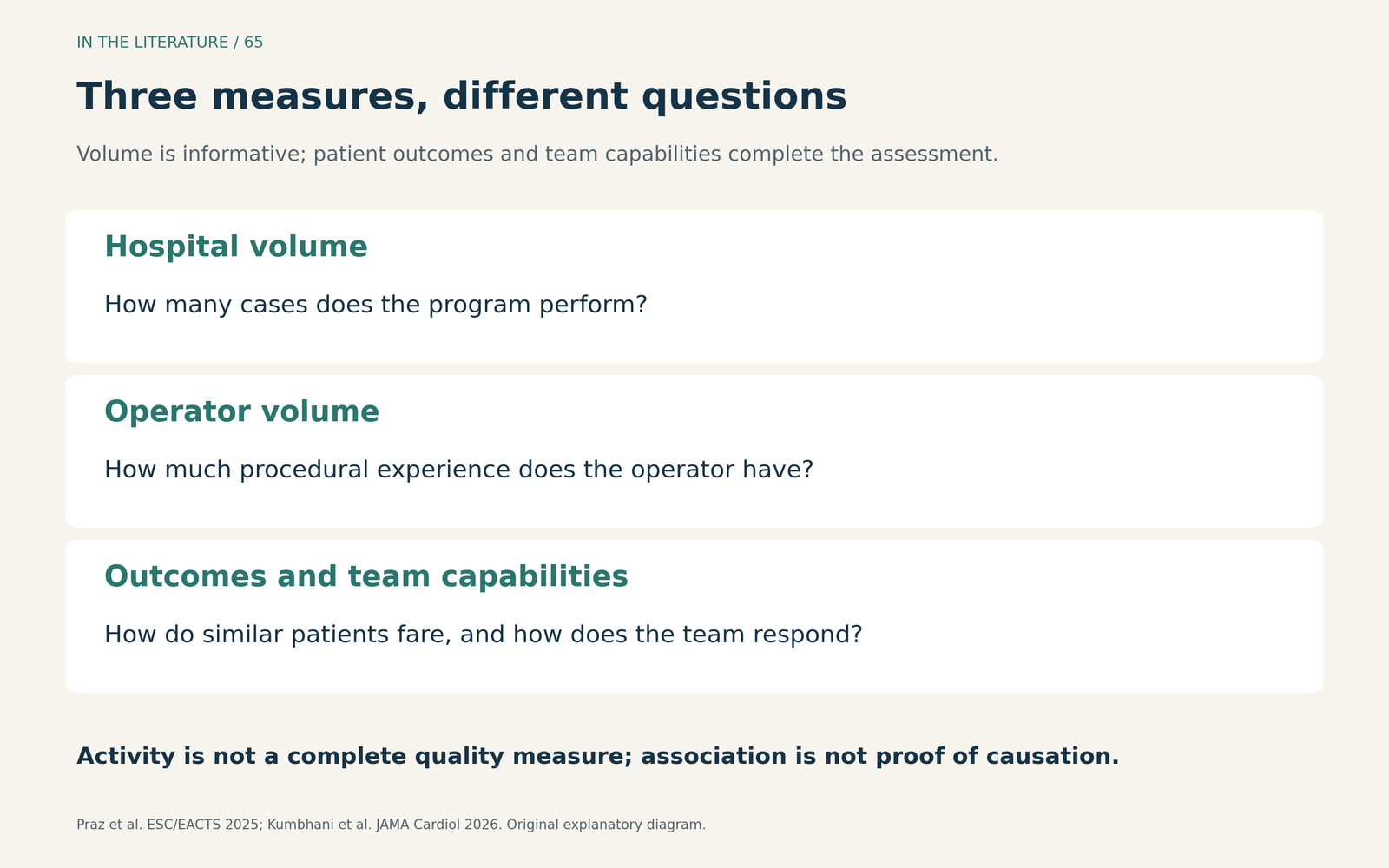
Figure 1. Original explanatory diagram. Case counts describe activity and exposure; outcome review and assessment of team capabilities provide additional information about quality. [1, 2] View figure

What does contemporary operator evidence show?
Kumbhani and colleagues analyzed 358,943 TAVR patients at 827 US hospitals from 2020 through 2023. For the principal analysis, they assigned each case to the operator with the highest lifetime registry volume among the listed operators. Annualized operator volumes were grouped into tertiles: <15, 15–37 and >37 procedures. These are study categories for operators, not hospital thresholds. [2]
Unadjusted 30-day mortality was 2.4% with low-volume operators versus 2.0% with high-volume operators. The adjusted low-versus-high odds ratio was 1.13 (95% CI 1.02–1.26). This supports an association with operator experience, but the percentages and adjusted odds ratio are different statistical summaries. Neither proves that moving a particular patient, or simply increasing an operator's annual count, would produce the observed difference. [2]
The analysis was retrospective, outcomes were site-reported, and assigning a multidisciplinary procedure to one primary operator is necessarily incomplete. Operator volume is worth asking about; it should be interpreted alongside training, team experience and actual outcomes. [2]
A precise cutoff can still be an uncertain rule
Kumar and colleagues' 2026 study included 6,663 patients across 25 TAVR programs in one integrated US health system. Its primary one-year composite combined cardiac death, myocardial infarction, stroke and all-cause readmission. An exploratory analysis identified 314 annual institutional cases as a discriminator within that dataset. [3]
That number is not a universal boundary between safe and unsafe programs. It was derived within one network and assessed with internal resampling, without external validation. The composite also includes readmission; it cannot be relabeled as a mortality endpoint. The useful question is whether volume helps identify differences in a particular system, not whether every hospital below 314 should stop TAVR. [3]
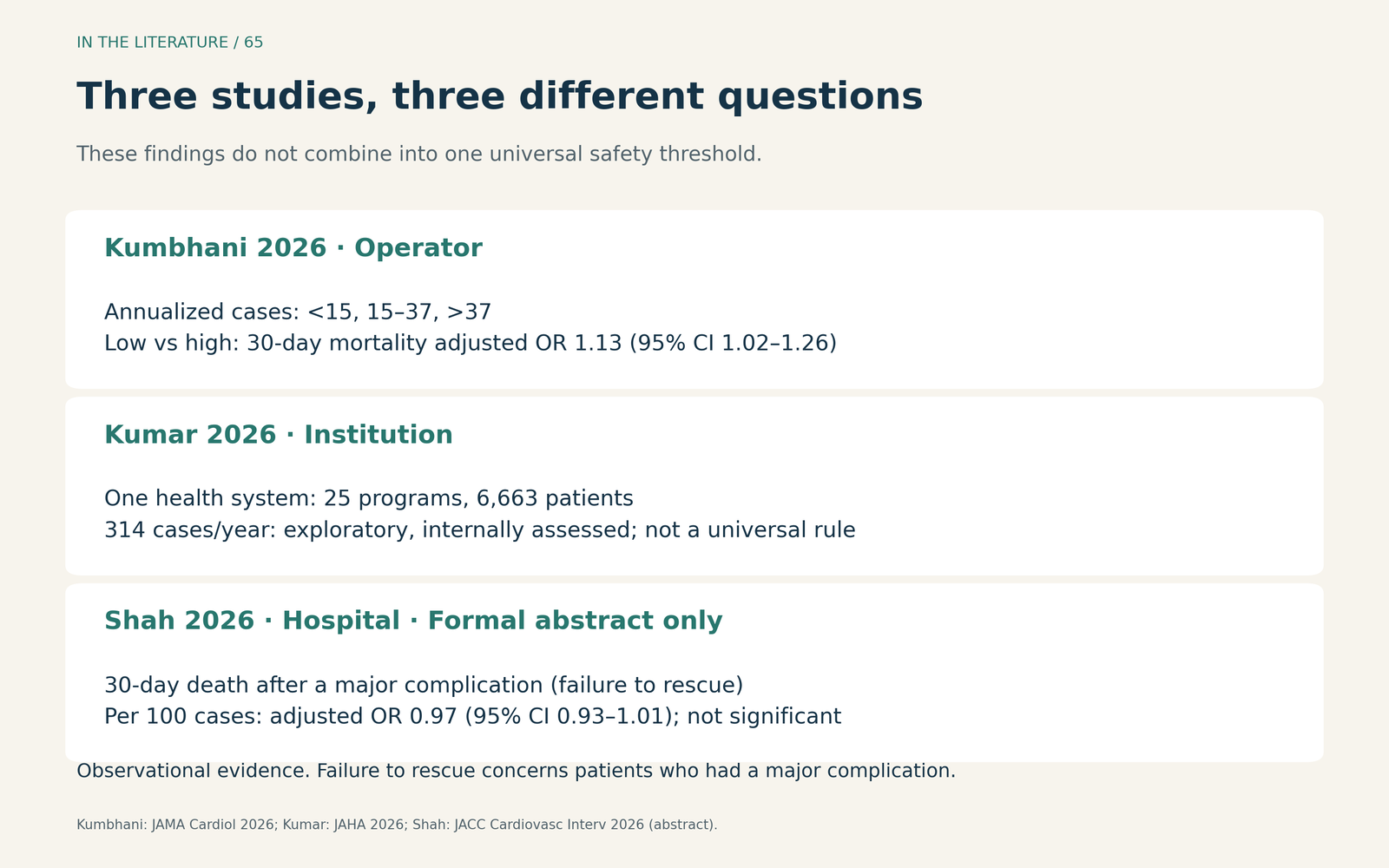
Figure 2. Original evidence comparison. Operator-volume categories, an exploratory institutional cutoff and hospital failure-to-rescue analyses should not be pooled into one threshold. Shah and colleagues' study is available here as a formal abstract only. [2–4] View figure

Does a larger hospital rescue complications better?
Shah and colleagues examined 487,159 TAVR patients at 808 sites in another 2026 registry analysis, available here as a formal abstract only. Hospitals in the lowest volume quartile had greater adjusted odds of major complications than those in the highest quartile: OR 1.19 (95% CI 1.08–1.32). [4]
However, hospital volume was not significantly associated with failure to rescue, defined as risk-adjusted 30-day mortality after a major complication: OR 0.97 per 100 cases (95% CI 0.93–1.01). This does not establish equivalence between rescue systems. It means the reported analysis did not demonstrate a significant volume association for that conditional outcome. The full complication definitions and adjustment methods could not be checked from the abstract. [4]
Rescue capability therefore deserves a direct discussion. A volume number cannot tell the referring team how promptly imaging, interventional cardiology, cardiac surgery and intensive care will coordinate when a complication occurs. Those capabilities are part of the centre assessment in the ESC/EACTS guideline. [1]
What does current US policy actually require?
The September 10, 2026 final CMS decision is particularly relevant when older volume rules are quoted. Its hospital criteria specify on-site structural interventional cardiology and cardiac surgery programs, postoperative intensive care staffed by personnel experienced in open-heart valve care, and continuous quality improvement. The current hospital list does not specify an annual hospital TAVR-count minimum. [5]
Individual operator requirements remain distinct: at least 20 transcatheter valve procedures, including at least 15 TAVR procedures, per year; or at least 40, including at least 30 TAVR procedures, over two years. These are US Medicare coverage requirements, not a globally validated clinical safety threshold. CMS also makes clear that participating in a registry alone does not satisfy the continuous quality-improvement requirement: the program must evaluate outcomes and make appropriate changes. [5]
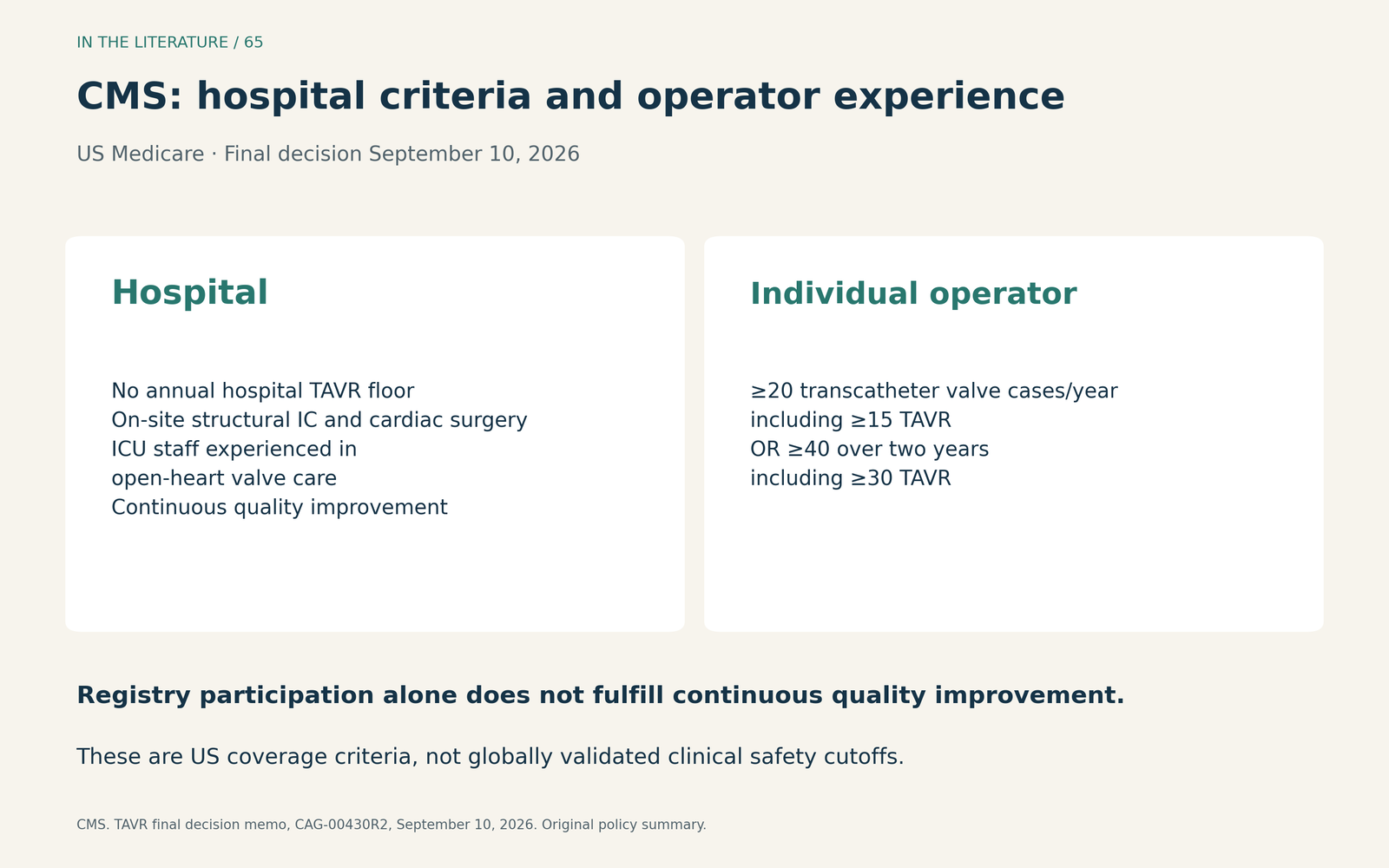
Figure 3. Original summary of the final CMS decision dated September 10, 2026. Hospital requirements and operator experience criteria apply at different levels; coverage policy should not be mistaken for proof of clinical superiority. [5] View figure

Three takeaways
- Ask whose volume is being reported. Hospital totals and individual operator experience are related but different measures.
- Ask how similar patients have done. Request relevant experience and risk-adjusted outcomes; do not turn an exploratory study cutoff into a universal referral rule.
- Ask what happens when something goes wrong. Discuss team availability, rescue arrangements and how adverse outcomes lead to program improvement.
References
- Praz F, Borger MA, Lanz J, et al. 2025 ESC/EACTS Guidelines for the management of valvular heart disease. Eur J Cardiothorac Surg. 2025;67(8):ezaf276. doi:10.1093/ejcts/ezaf276. PubMed.
- Kumbhani DJ, Girotra S, Dong H, et al. Contemporary Operator Procedural Volumes and Outcomes for TAVR and MTEER in the US. JAMA Cardiol. 2026;11(3):268–280. doi:10.1001/jamacardio.2025.5645. PubMed.
- Kumar S, Pershad A, Naik H, et al. Institutional Volume Thresholds and Risk-Adjusted Outcomes After Transcatheter Aortic Valve Replacement: Contemporary Evidence From the Society of Thoracic Surgeons/American College of Cardiology Transcatheter Valve Therapy Registry. J Am Heart Assoc. 2026;15(19):e050694. doi:10.1161/JAHA.126.050694. PubMed.
- Shah T, Sreenivasan J, Shah M, et al. Hospital Volume and Failure to Rescue Post-TAVR: Insights From the STS/ACC TVT Registry. JACC Cardiovasc Interv. 2026;19(13):1735–1744. doi:10.1016/j.jcin.2026.03.036. PubMed. Formal abstract only.
- Centers for Medicare & Medicaid Services. Decision Memo for Transcatheter Aortic Valve Replacement (TAVR) (CAG-00430R2). September 10, 2026. Final CMS decision.