ITL-f02ad1c64de6
Watch the video
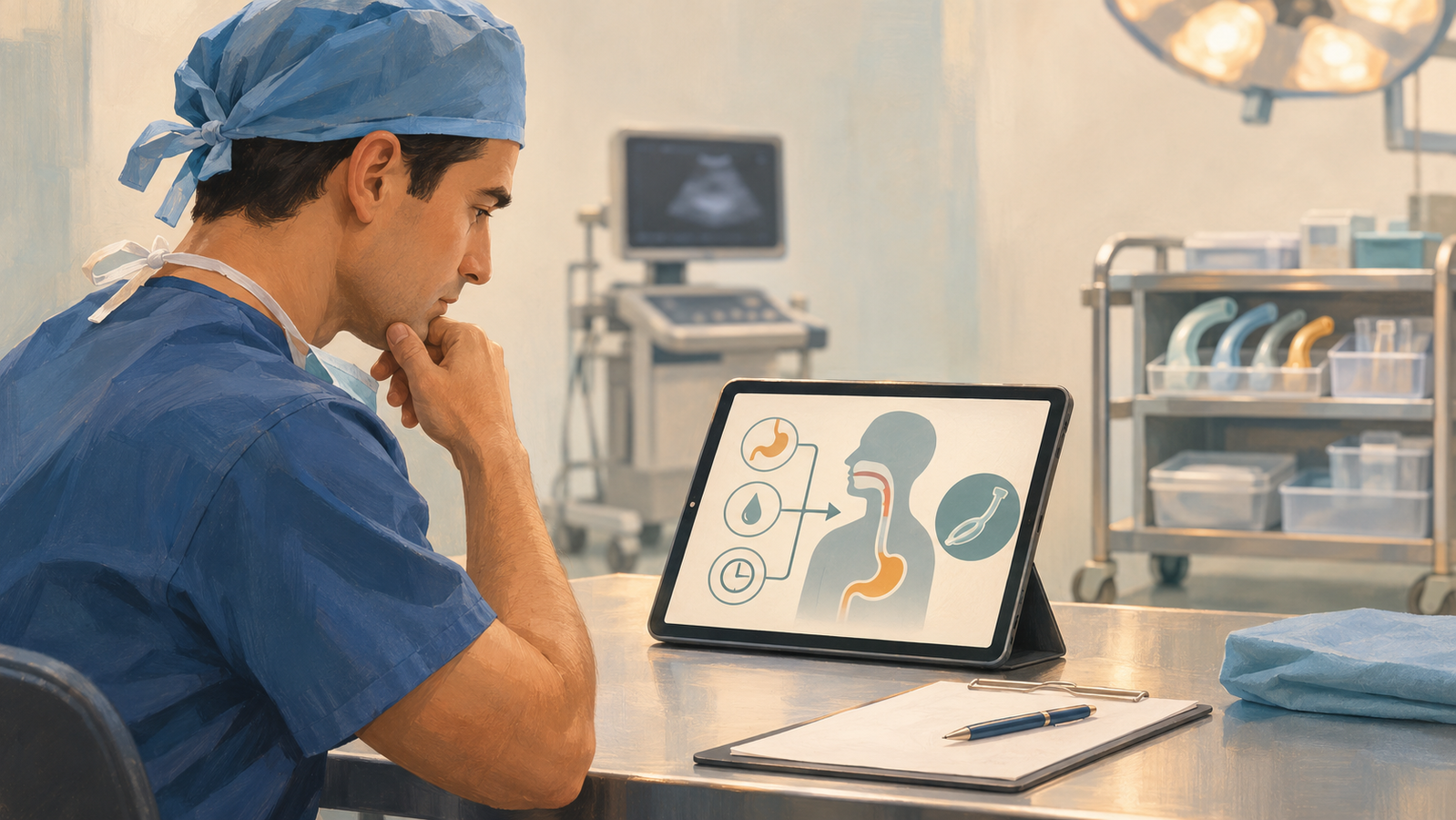
Figure 1. Editorial illustration of airway planning; the tablet symbols are conceptual, not an anatomical or procedural guide.
Key points
- A drainage channel provides gastric access; evidence that placing a gastric tube through it prevents pulmonary aspiration remains very uncertain.[1]
- The often-cited 65,712-procedure cohort studied the classic laryngeal mask in a selected population, not second-generation devices in patients at high aspiration risk.[2]
- Few aspiration events and a wide confidence interval cannot establish equivalent safety.[2]
- When fasting status or gastric contents are uncertain, gastric ultrasound can inform an individualized plan; an apparently empty stomach does not by itself validate a particular airway device.[3]
A patient is scheduled for general anesthesia, and a second-generation supraglottic airway is available. Its gastric drainage channel is reassuring—but what exactly does that feature establish?
It establishes a route for gastric access and decompression. Whether a gastric tube should be placed, and whether that strategy reduces aspiration, are separate clinical questions. Device capability should not replace assessment of the patient and procedure.[1, 3]
A large cohort still depends on who received the device
Bernardini and Natalini analyzed 65,712 procedures with positive-pressure ventilation. Clinically detected aspiration occurred in 3 of 35,630 procedures using a classic laryngeal mask and 7 of 30,082 using a tracheal tube. The adjusted odds ratio was 1.06, with a 95% confidence interval of 0.20–5.62.[2]
This was an observational comparison. Institutional restrictions generally directed patients with conditions such as inadequate fasting, intestinal obstruction or pregnancy away from a laryngeal mask. Those were the study's historical selection rules, not a current universal contraindication list. The findings cannot establish equivalence, or justify extending a different device to a higher-risk population.[2]
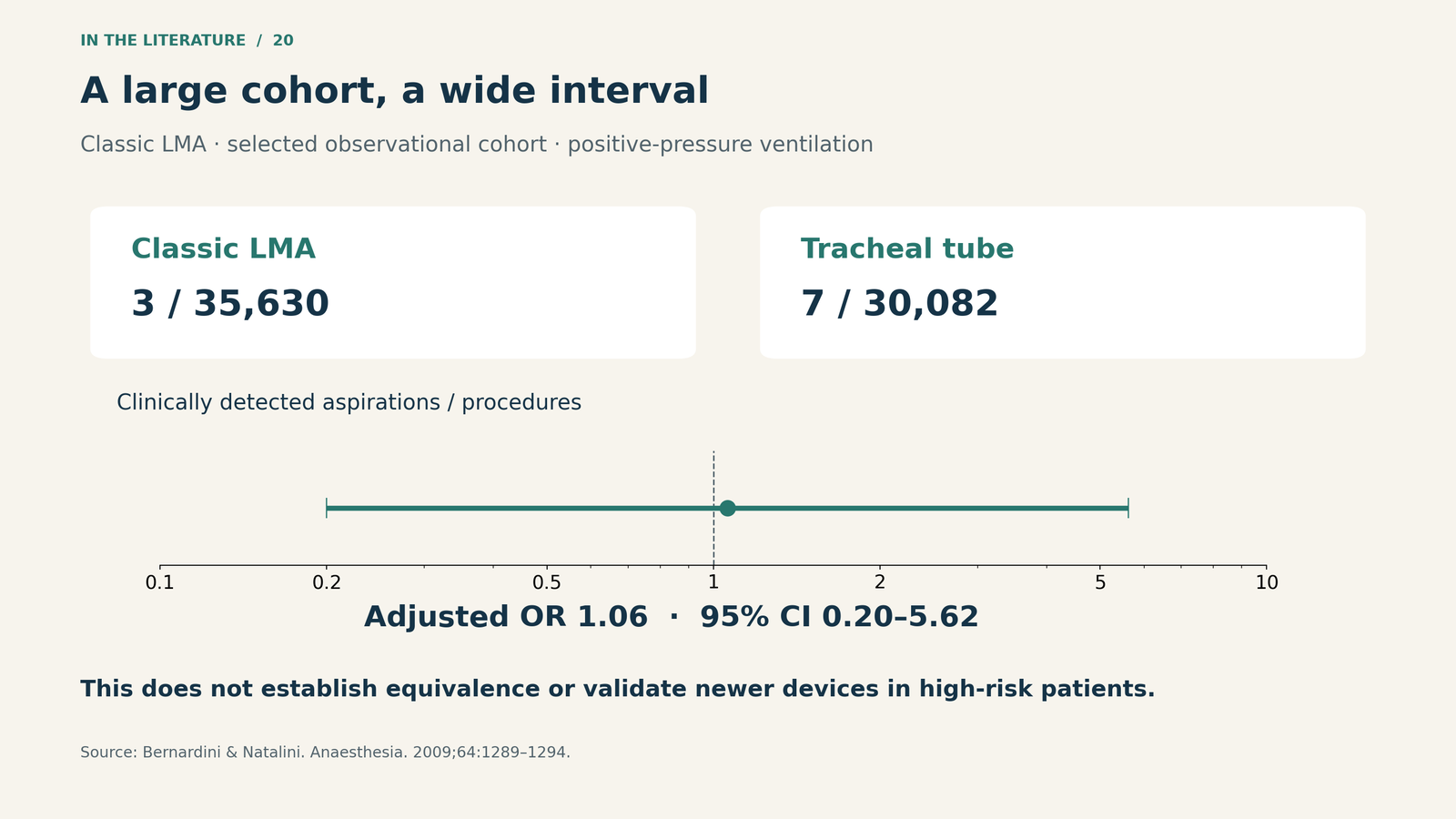
Figure 2. Raw event counts and the adjusted estimate from a nonrandomized, selected cohort. The broad interval permits clinically important differences in either direction.[2]

The drainage channel and the gastric-tube strategy are different questions
A 2026 systematic review by Yin and Du focused specifically on gastric-tube placement through second-generation supraglottic airway devices. Among 36 included studies, only two directly compared gastric-tube strategies. Most clinical evidence was indirect, often comparing devices rather than isolating the effect of inserting a gastric tube.[1]
The review rated evidence for aspiration as very low certainty. Its aspiration evidence came from nine studies involving 1,589 patients; the absence of clinically confirmed events in these studies did not provide enough precision to exclude an important difference. The much larger total enrollment across the review should not be mistaken for the number assessed for aspiration.[1]
Gastric insufflation, oropharyngeal leak pressure and successful tube passage can describe useful aspects of device performance. They are not interchangeable with pulmonary aspiration. The review therefore supports a scenario-specific decision about gastric-tube use, rather than a rule to insert or avoid one in every patient. Its proposed framework is an interpretation of limited evidence, not a formal airway guideline.[1]
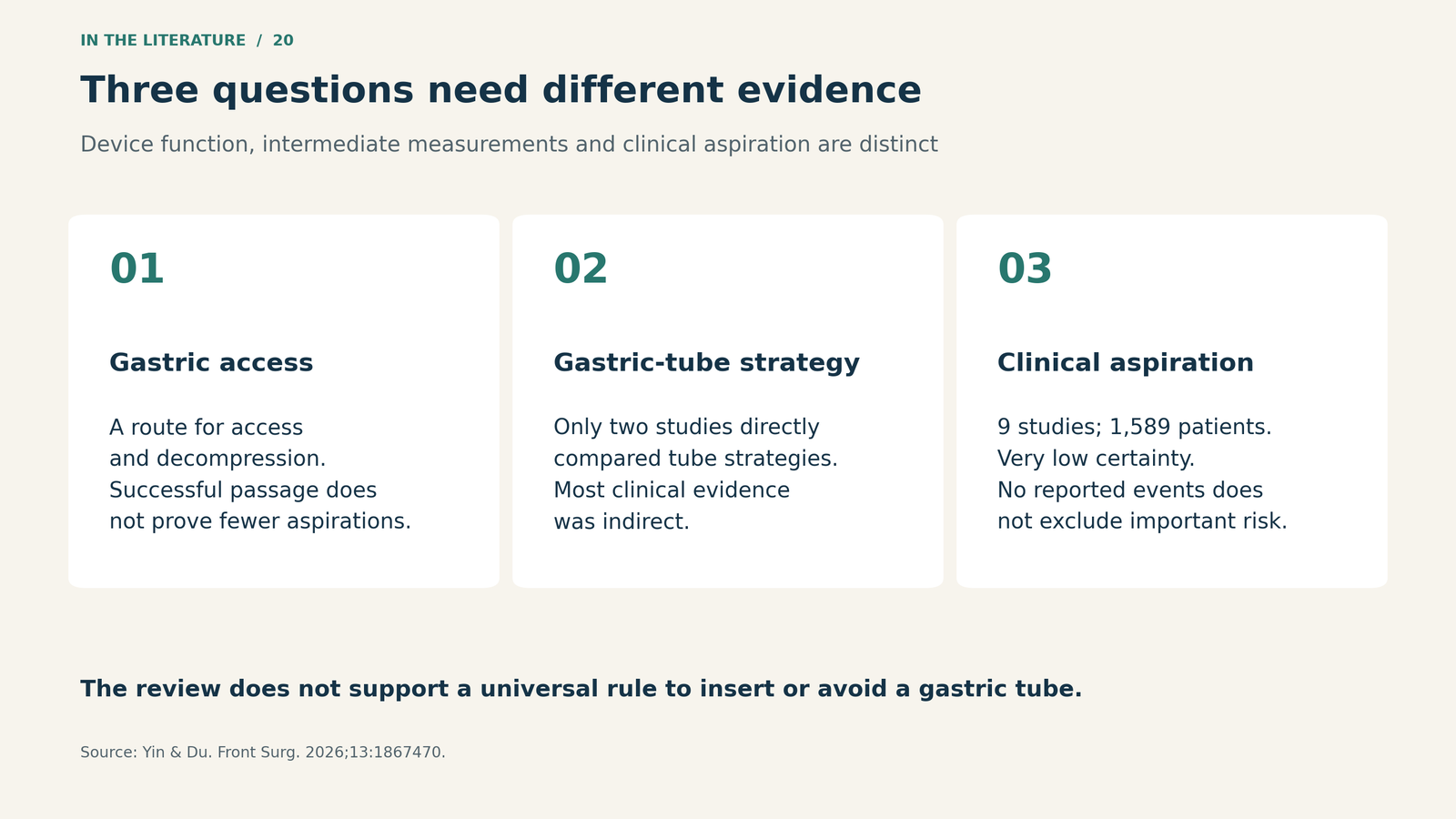
Figure 3. Keep the clinical endpoint separate from device function and intermediate measurements. The 2026 review does not establish that routine gastric-tube placement prevents aspiration.[1]

Let the risk assessment determine the plan
The practical starting point is the history, fasting status, circumstances of surgery and factors that may delay gastric emptying. If uncertainty would change management, gastric ultrasound can add information. The 2026 Swiss consensus supports its use in situations such as unclear fasting status and selected emergency presentations.[3]
That consensus allows an apparently empty stomach to support omitting rapid sequence induction after an individual risk–benefit assessment. This is a national consensus informed by a departmental survey and expert review; it is not a trial proving aspiration prevention. Nor is a decision about induction technique automatically a decision to use a supraglottic airway.[3]
For a patient judged at increased aspiration risk, the same statement emphasizes a coordinated airway plan, preoxygenation, appropriate equipment and immediately available suction. The useful implication is to resolve the risk and rescue plan before induction. A gastric drainage channel is one feature within that plan, not a substitute for it.[1, 3]
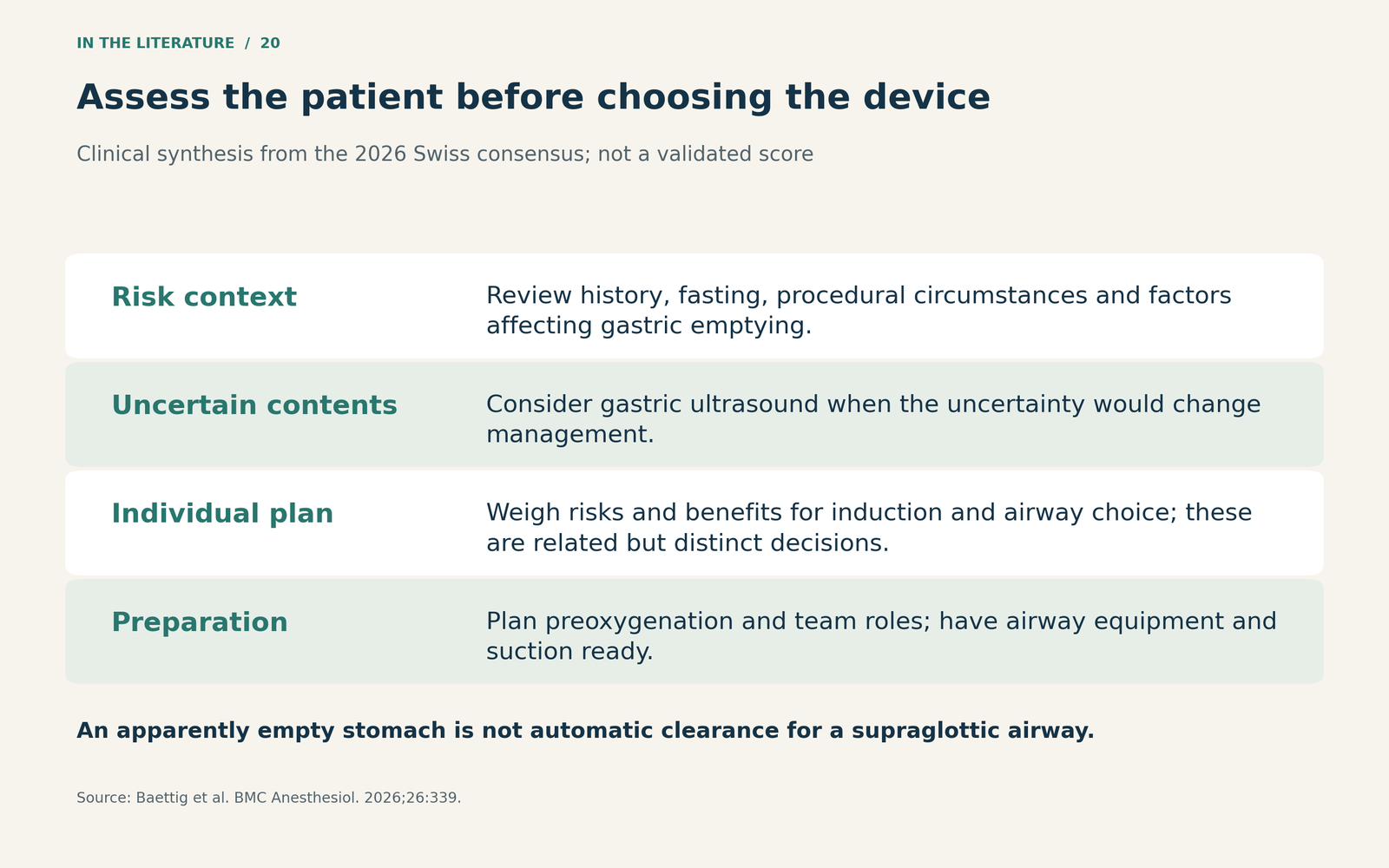
Figure 4. A clinical synthesis informed by the Swiss consensus. Gastric ultrasound contributes to judgment; an empty appearance is not an automatic clearance for a supraglottic airway.[3]

Three takeaways
- Choose the airway in the context of the patient. A drainage channel does not remove the need to assess aspiration risk.
- Ask what the study actually measured. Better gastric access or leak pressure does not demonstrate fewer aspirations.
- Make uncertainty actionable. Use additional assessment when it changes management, and agree on the induction and rescue plan before proceeding.
References
- Yin X, Du S. Gastric tube placement through the drainage channel of second-generation supraglottic airway devices: a systematic review with evidence mapping. Front Surg. 2026;13:1867470. doi:10.3389/fsurg.2026.1867470.
- Bernardini A, Natalini G. Risk of pulmonary aspiration with laryngeal mask airway and tracheal tube: analysis on 65 712 procedures with positive pressure ventilation. Anaesthesia. 2009;64(12):1289–1294. doi:10.1111/j.1365-2044.2009.06140.x.
- Baettig SJ, Filipovic MG, Bomberg H, Hofer CK, Ganter MT. Anaesthesiologic management of patients at risk of pulmonary aspiration: a Swiss consensus statement. BMC Anesthesiol. 2026;26:339. doi:10.1186/s12871-026-03835-7.