ITL-1cbb8f4f8bad
Juan Li, MD · Updated November 18, 2026
Key points
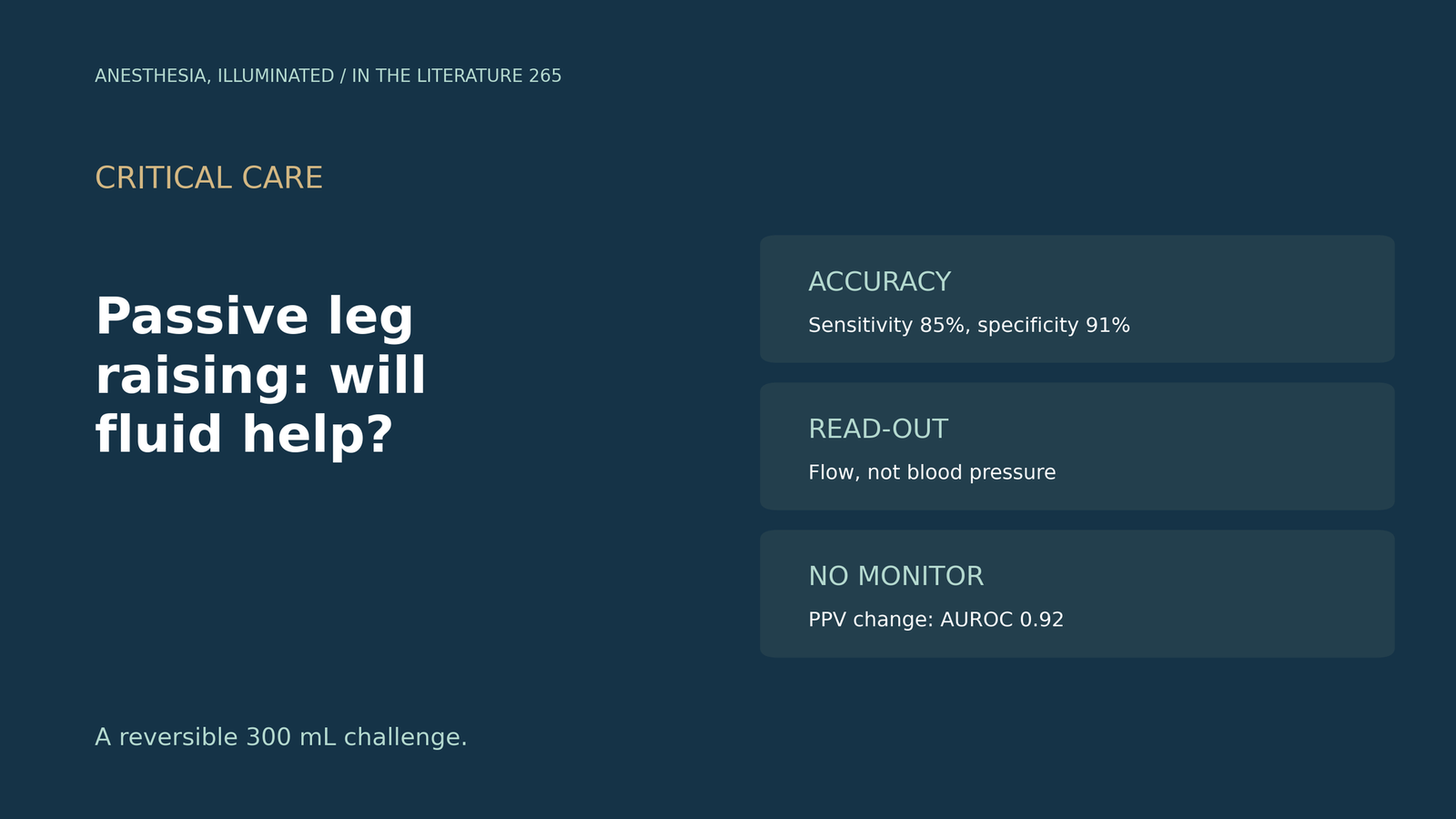
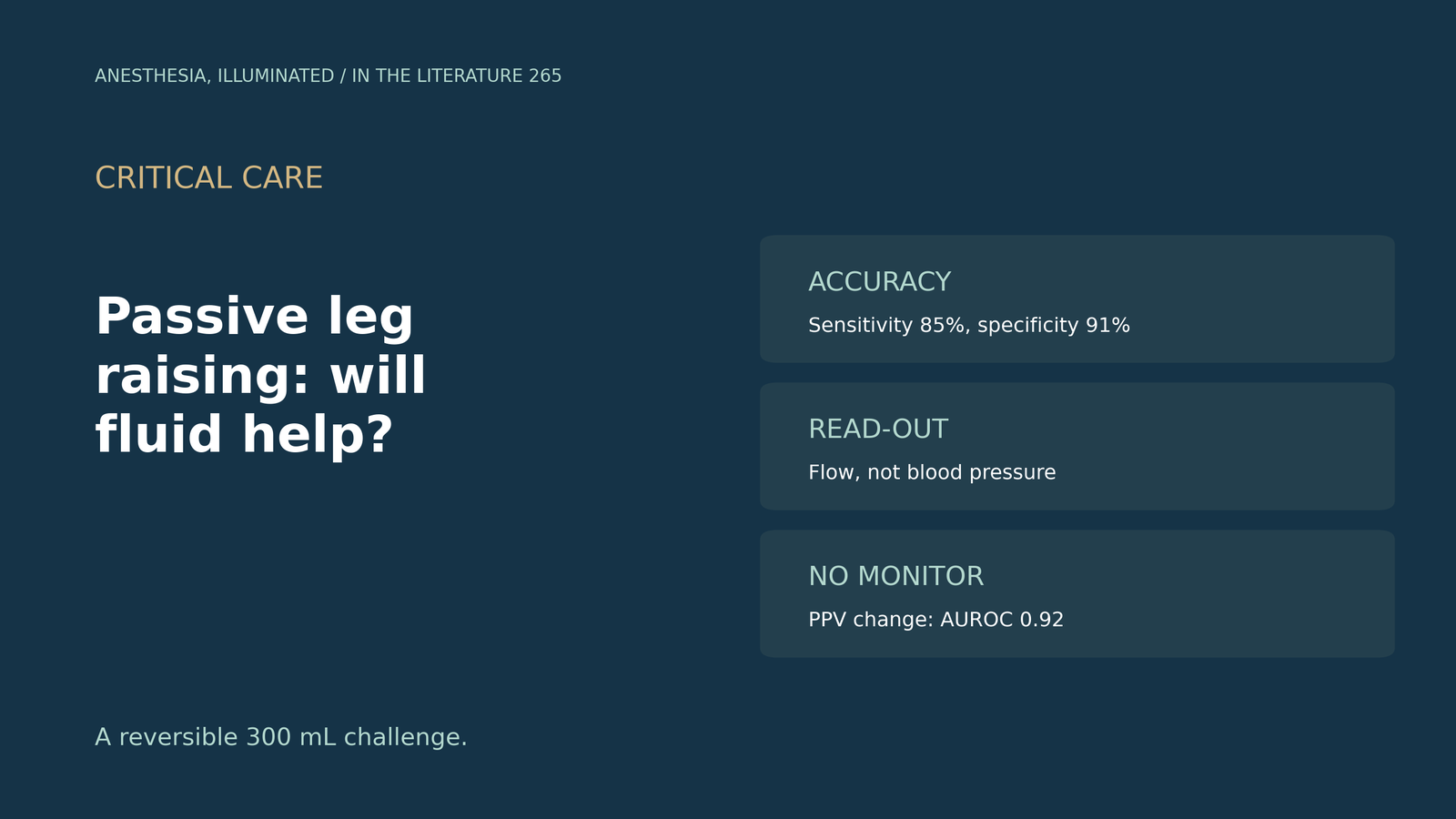
- A reversible fluid challenge. Raising the legs shifts about 300 mL of blood toward the heart, then returns it.[1]
- Accurate when read correctly. Sensitivity and specificity were 85 and 91% in meta-analysis, if the effect is measured on cardiac output.[1]
- Flow beats surrogates. Direct flow measures gave significantly better performance than cardiac output surrogates.[2]
- An arterial-line option. In ventilated patients, the change in pulse pressure variation predicted response with an AUROC of 0.92.[3]
- Works at low tidal volume. Pooled sensitivity and specificity of that change were 0.88 and 0.83.[4]
A ventilated patient in shock has already received several litres of fluid, and the team wonders whether another bolus will raise cardiac output. Can a passive leg raising test answer that before more fluid is given?
How the test works and how accurate it is
Passive leg raising transfers about 300 mL of blood toward the heart, and its effect is reversible. In meta-analysis (Monnet et al., Ann Intensive Care 2022), the test had sensitivity and specificity of 85 and 91%, but its effects should be measured directly on cardiac output. It is contraindicated in intracranial hypertension, is difficult during surgery and cannot be performed in prone patients, where a Trendelenburg manoeuvre may be an alternative.[1] A meta-analysis of 149 studies (Alvarado Sánchez et al., Crit Care 2023) found that direct flow measures such as cardiac output, stroke volume and VTI gave significantly better performance, surrogates of cardiac output reduced it, and the norepinephrine dose during testing also mattered.[2]
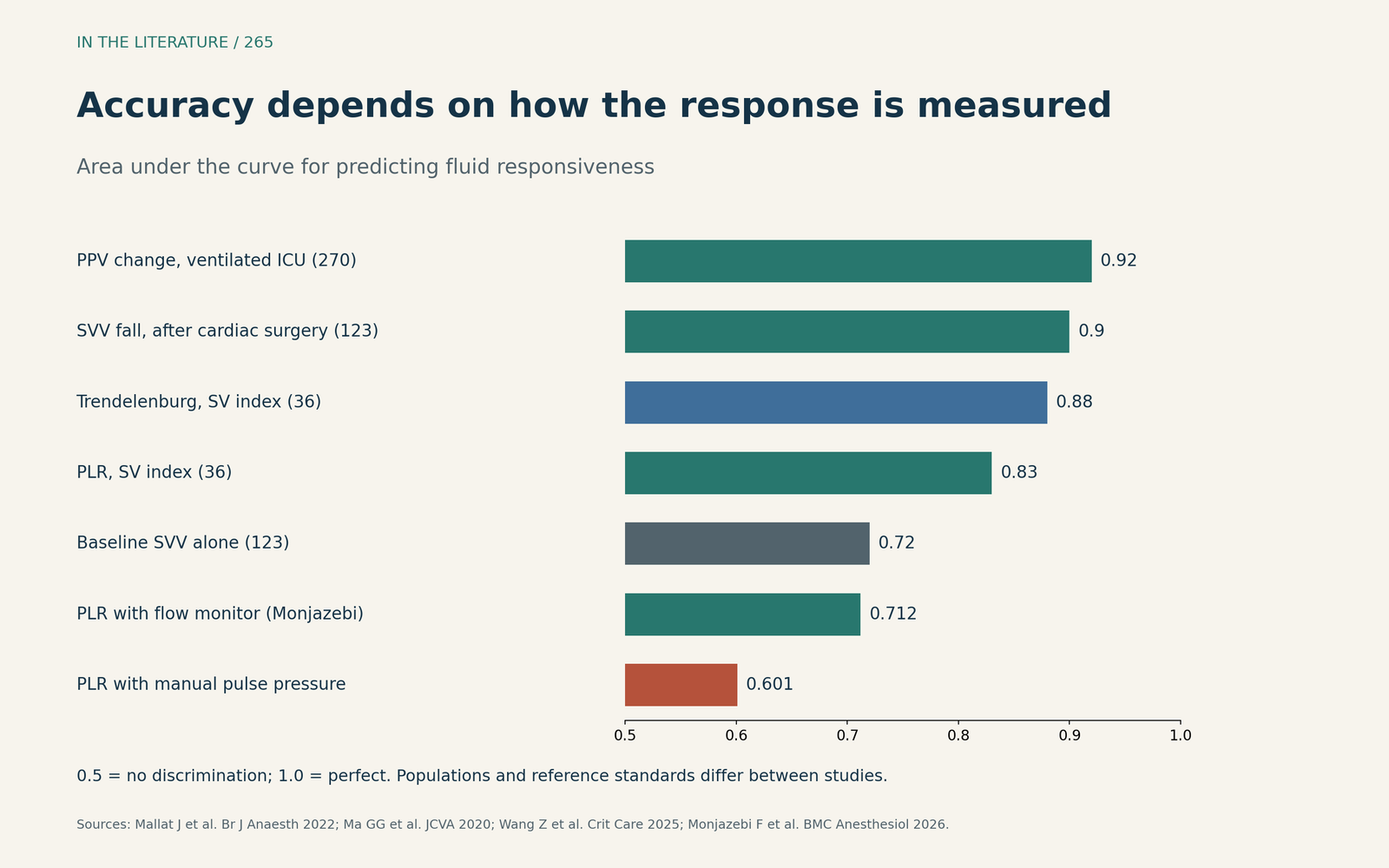
Figure 1. Flow-based and ventilator-based read-outs outperform blood pressure. Data from Mallat et al., Wang et al., Ma et al. and Monjazebi et al.[3], [5], [6], [7] View larger.

Reading the test without a cardiac output monitor
In 270 ventilated ICU patients (Mallat et al., Br J Anaesth 2022), 61% responded to a fluid challenge, and the change in pulse pressure variation during passive leg raising predicted fluid responsiveness with an AUROC of 0.92; the grey zone included 4.8% of patients for the relative change and 22.6% for the absolute change.[3] At low tidal volume (Mallat et al., Crit Care 2025; five studies, 474 patients), pooled sensitivity and specificity of this change were 0.88 and 0.83.[4] In 36 ventilated ICU patients (Wang et al., Crit Care 2025), 15 (42%) responded to 250 mL of 4% albumin; the area under the curve was 0.83 for passive leg raising and 0.88 for a Trendelenburg manoeuvre.[5] After cardiac surgery with protective ventilation (Ma et al., J Cardiothorac Vasc Anesth 2020; 123 patients), the fall in stroke volume variation during the test had an AUC of 0.90, with 15.45% in the grey zone, whereas baseline stroke volume variation alone performed worse (AUC 0.72).[6] In a 2026 diagnostic study (Monjazebi et al., BMC Anesthesiol 2026), the test read with continuous flow monitoring had acceptable accuracy (AUC 0.712), but manual pulse pressure had significantly inferior discrimination (AUC 0.601), with a sensitivity of 32.8% and a negative predictive value of 57.8%.[7]
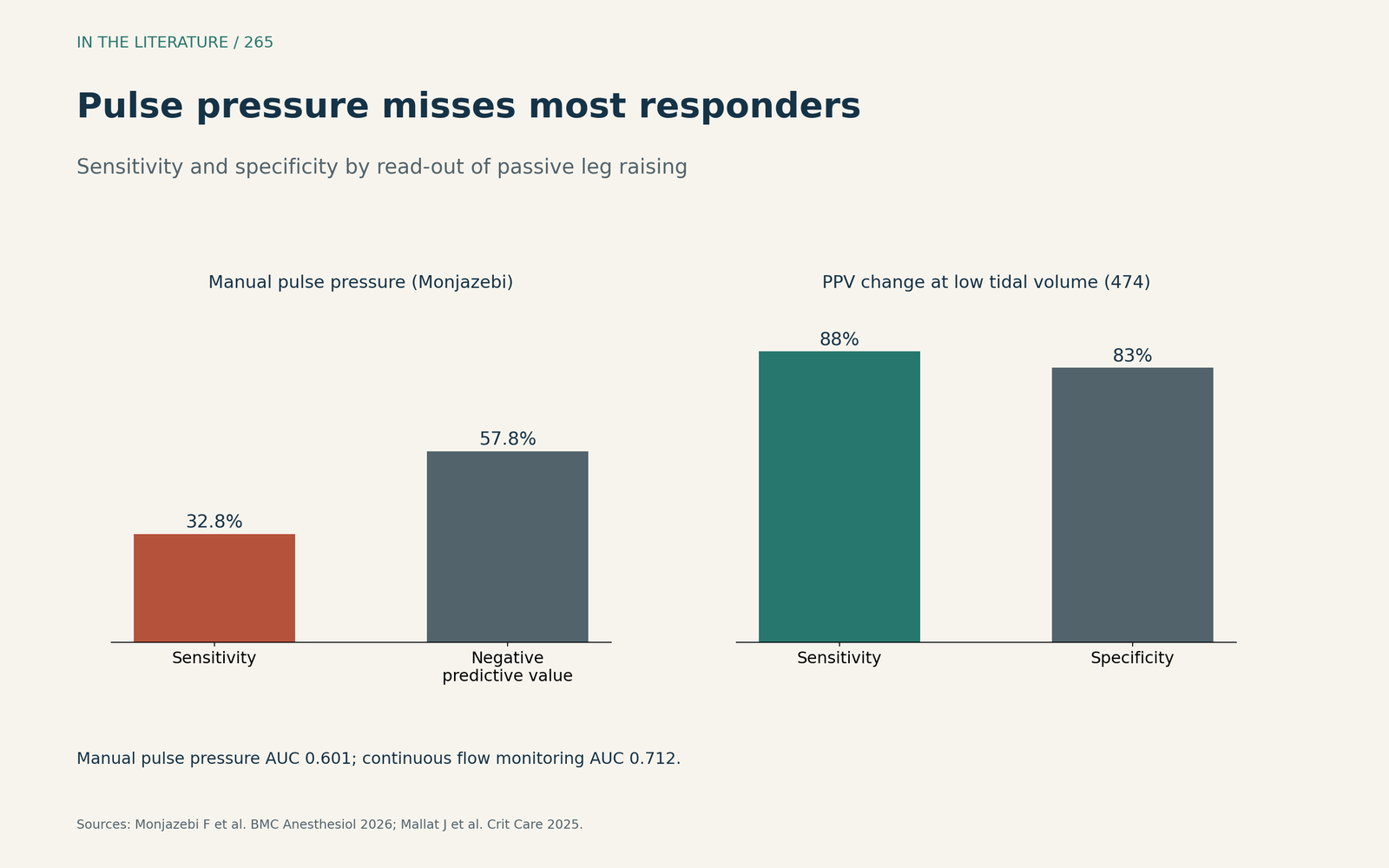
Figure 2. Read through manual pulse pressure, the test misses most fluid responders. Data from Monjazebi et al. and Mallat et al.[7], [4] View larger.

Does PLR-guided resuscitation change outcomes?
The FRESH trial (Douglas et al., Chest 2020) randomized patients with septic shock at 13 hospitals to passive leg raising-guided resuscitation or usual care. Fewer patients in the guided arm required renal replacement therapy (5.1% vs 17.5%), and only 42% of patients were fluid responsive on presentation, with responsiveness often changing over the next 72 hours.[8]
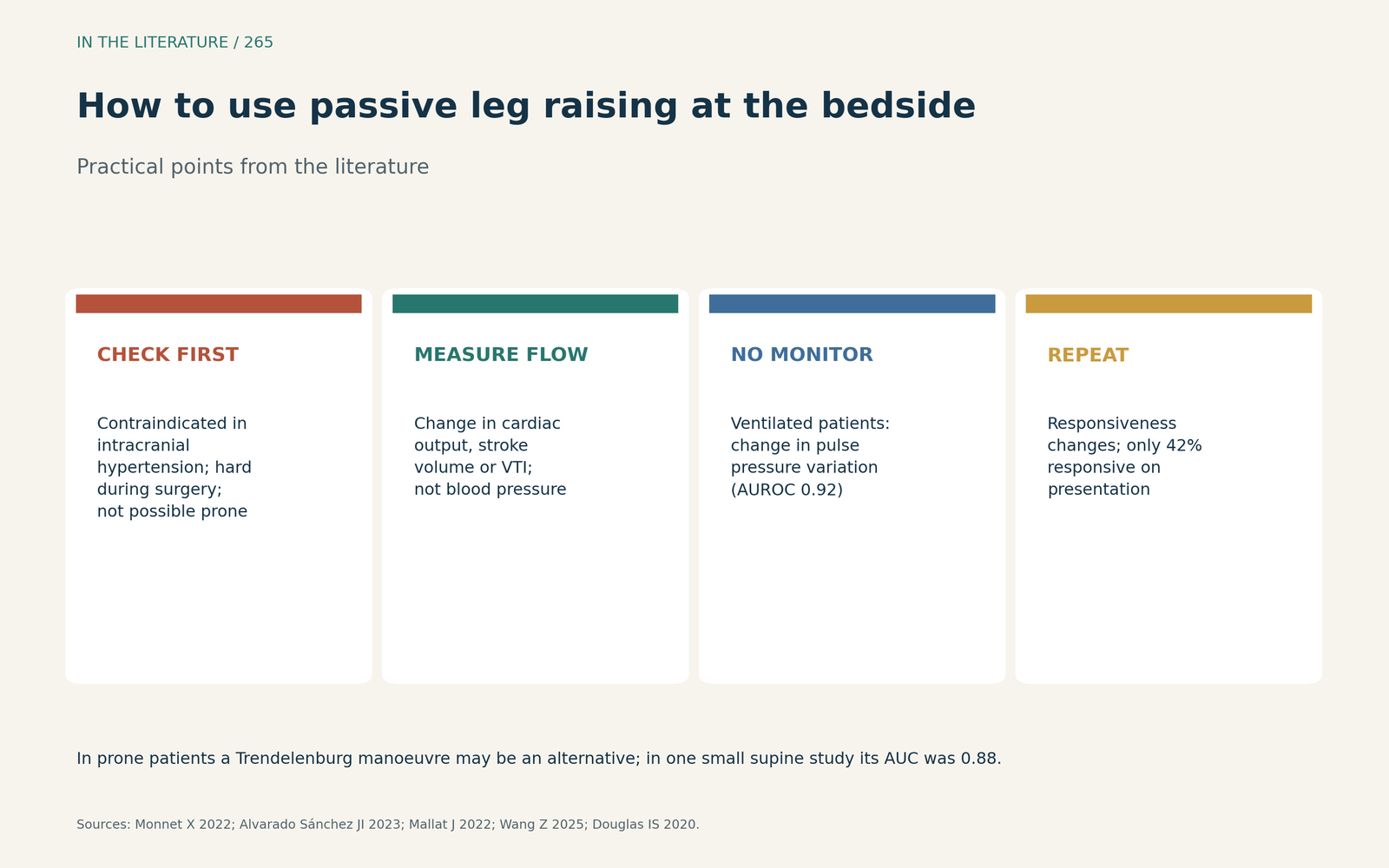
Figure 3. A bedside approach to passive leg raising. Synthesized from Monnet et al., Alvarado Sánchez et al., Mallat et al., Wang et al. and the FRESH trial.[1], [2], [3], [5], [8] View larger.

Three takeaways
- Passive leg raising is a reliable, reversible test of fluid responsiveness when its effect is measured on cardiac output or stroke volume.[1], [2]
- Without a flow monitor, the change in pulse pressure variation is a reasonable read-out in ventilated patients; manual pulse pressure is not.[3], [4], [7]
- Responsiveness changes over time, so repeat the test before each bolus; a guided strategy reduced renal replacement therapy in one trial.[8]
References
- Monnet X, Shi R, Teboul JL. Prediction of fluid responsiveness. What’s new? Ann Intensive Care. 2022;12(1):46. doi:10.1186/s13613-022-01022-8
- Alvarado Sánchez JI, Caicedo Ruiz JD, Diaztagle Fernández JJ, et al. Variables influencing the prediction of fluid responsiveness: a systematic review and meta-analysis. Crit Care. 2023;27(1):361. doi:10.1186/s13054-023-04629-w
- Mallat J, Fischer MO, Granier M, et al. Passive leg raising-induced changes in pulse pressure variation to assess fluid responsiveness in mechanically ventilated patients: a multicentre prospective observational study. Br J Anaesth. 2022;129(3):308–316. doi:10.1016/j.bja.2022.04.031
- Mallat J, Siuba MT, Abou-Arab O, et al. Changes in pulse pressure variation induced by passive leg raising test to predict preload responsiveness in mechanically ventilated patients with low tidal volume in ICU: a systematic review and meta-analysis. Crit Care. 2025;29(1):18. doi:10.1186/s13054-024-05238-x
- Wang Z, Zhang J, Zhao J, et al. Trendelenburg position is a reasonable alternative to passive leg raising for predicting volume responsiveness in mechanically ventilated patients in the ICU. Crit Care. 2025;29(1):60. doi:10.1186/s13054-025-05301-1
- Ma GG, Tu GW, Zheng JL, et al. Changes in stroke volume variation induced by passive leg raising to predict fluid responsiveness in cardiac surgical patients with protective ventilation. J Cardiothorac Vasc Anesth. 2020;34(6):1526–1533. doi:10.1053/j.jvca.2019.10.002
- Monjazebi F, Zamanzadeh V, Ashoub M, et al. Pulse pressure versus continuous flow monitoring for fluid responsiveness prediction during passive leg raising: a prospective diagnostic accuracy study. BMC Anesthesiol. 2026;26:578. doi:10.1186/s12871-026-04072-8
- Douglas IS, Alapat PM, Corl KA, et al. Fluid response evaluation in sepsis hypotension and shock: a randomized clinical trial. Chest. 2020;158(4):1431–1445. doi:10.1016/j.chest.2020.04.025