ITL-880058a12120
Juan Li, MD · Updated November 18, 2026
Key points
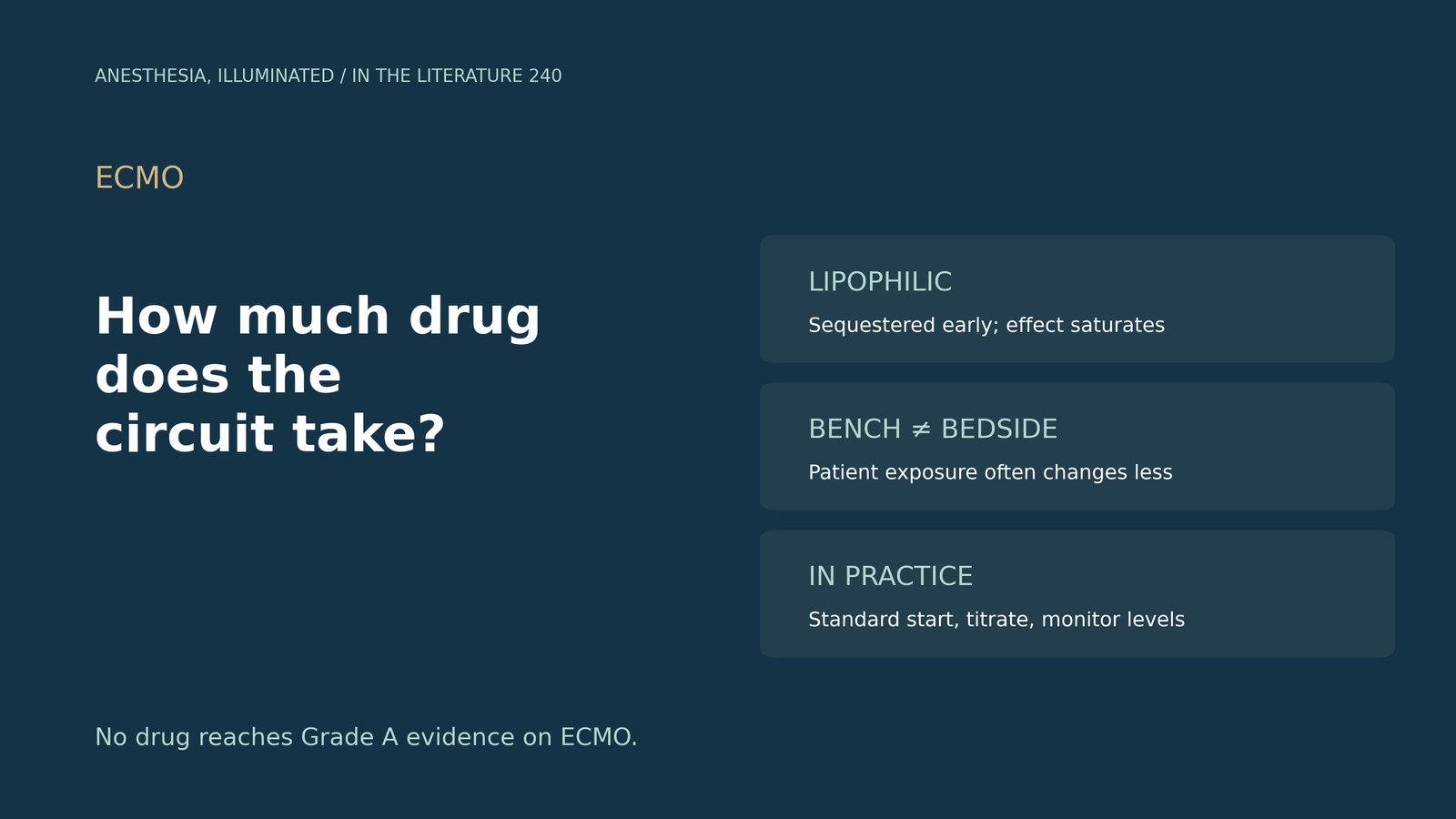
- Lipophilicity drives loss. In ex vivo circuits, sequestration rose 8.2% per logP unit; protein binding had no additional effect.[1]
- Loss is early and saturable. Half of sequestration occurred within 3 h, and the effect may be limited by early saturation.[1]
- Bench is not bedside. Propofol fell 86 to 98% ex vivo, yet ECMO had no substantial impact on propofol PK in patients.[2]
- Some drugs still need care: fentanyl showed significant circuit adsorption, requiring higher doses and titration.[3]
- Evidence is thin. No single drug's ECMO dosing evidence reaches Grade A.[3]
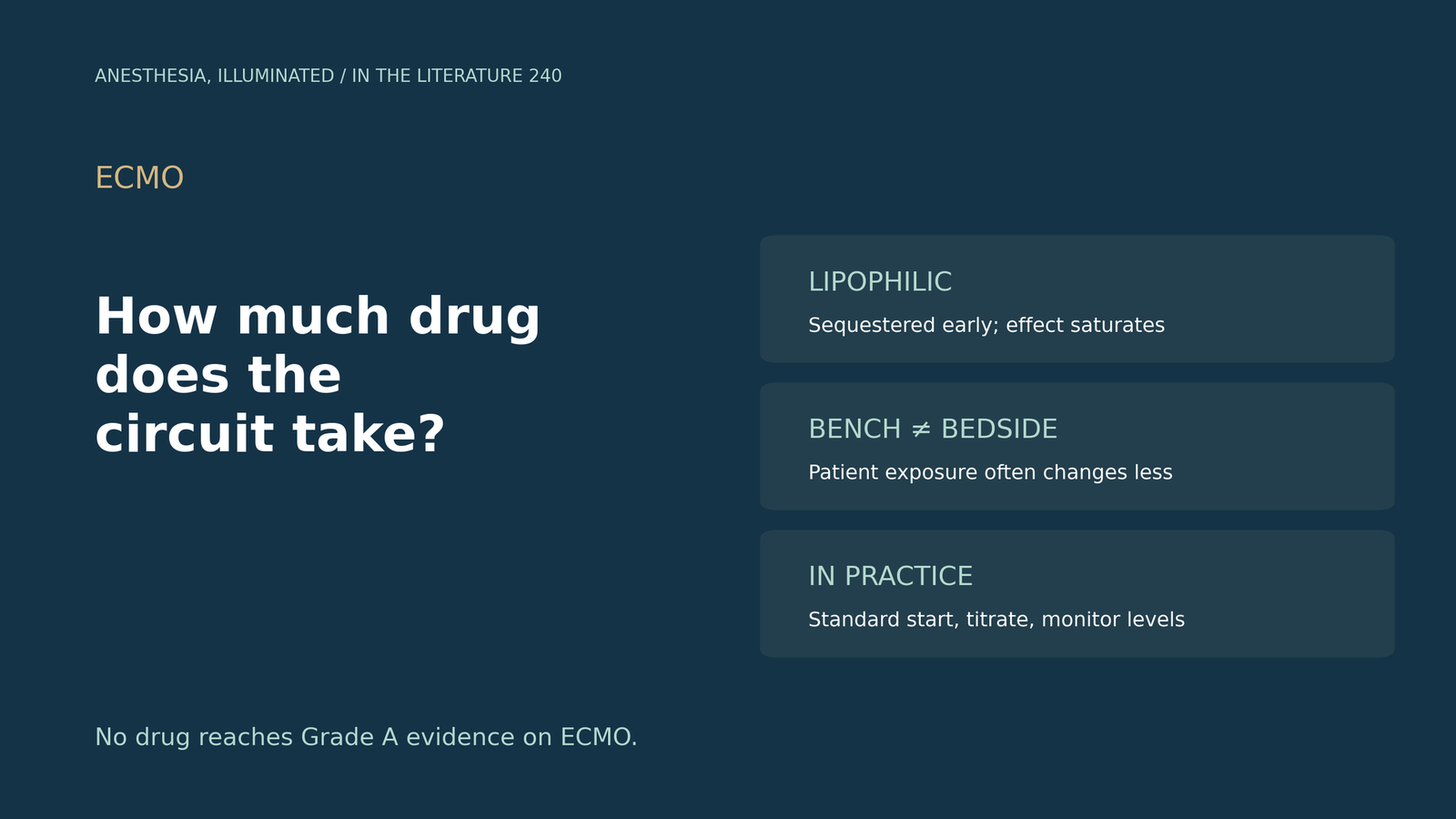
A patient is starting VV-ECMO on propofol, fentanyl and dexmedetomidine. The nurse asks whether the infusions should be increased now that a new circuit is primed. How much drug does the circuit really remove?[1], [2]
Which drugs are sequestered
Bertin et al. (J Clin Med 2025) analysed 21 ex vivo studies covering 41 drugs: lipophilicity had the highest effect on sequestration (+8.2% per logP unit), protein binding had no additional effect, and 50% sequestration was reached within 3 h, an effect that may be limited by early saturation.[1] Rocha-Romero et al. (Pharmacy 2025) found that hydrophilic, low-protein-bound agents such as beta-lactams and aminoglycosides generally showed minimal ECMO-specific changes, while lipophilic, highly bound drugs often required higher loading doses, prolonged infusions and rigorous drug monitoring; risk is greatest with protein binding above 70% and log P above 2.[3]
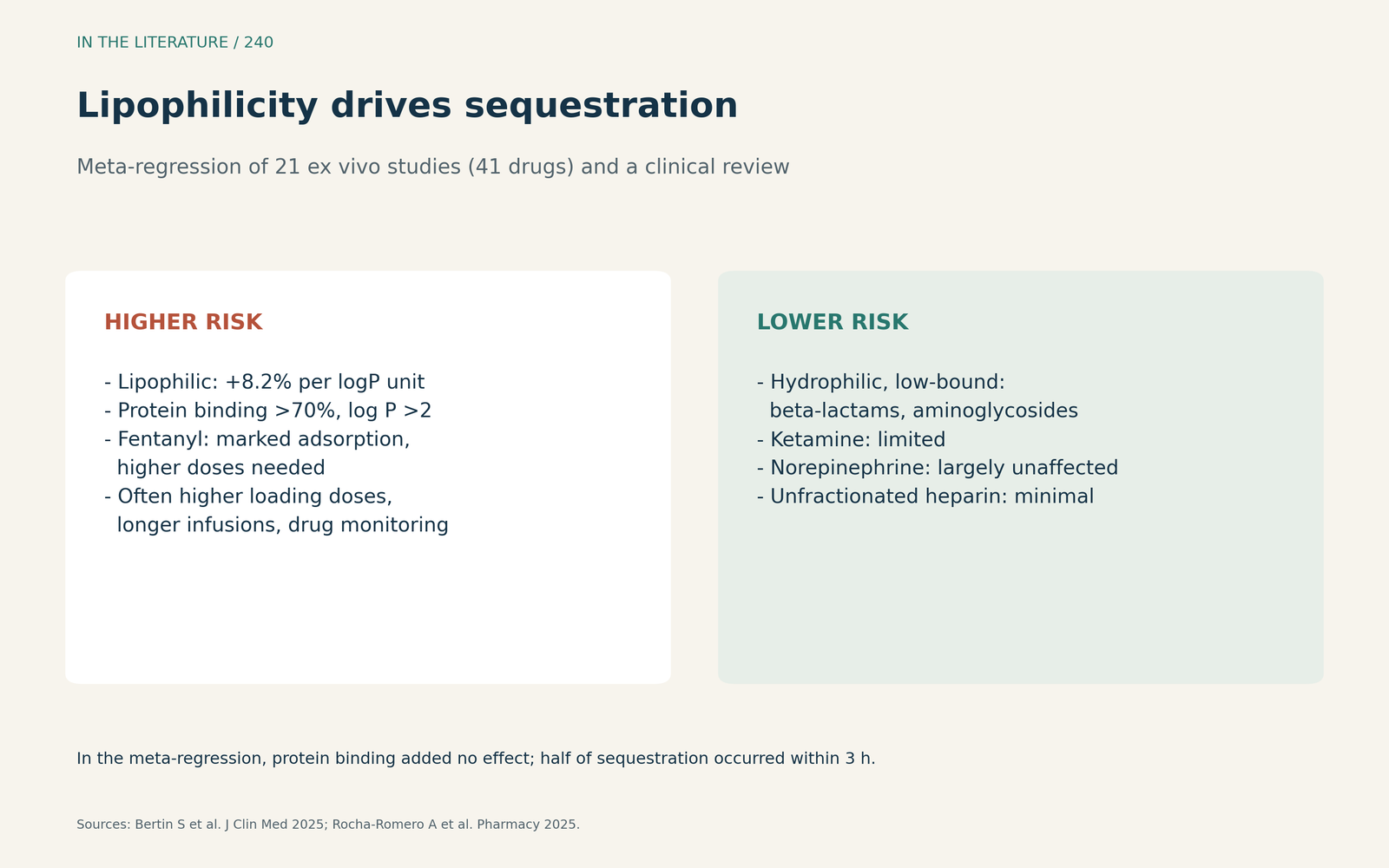
Figure 1. Lipophilic drugs are lost to the circuit; hydrophilic drugs mostly are not. Synthesized from Bertin et al. and Rocha-Romero et al.[1], [3] View larger.

Bench versus bedside
Ex vivo sequestration does not appear to consistently affect drug PK in clinical studies, partly because ex vivo experiments do not account for the larger volume of distribution caused by the circuit.[1] In a population PK study of 40 patients, 20 on ECMO (Bertin et al., Clin Pharmacokinet 2026), ECMO had no substantial impact on propofol PK, even though propofol concentrations fell 86 to 98% ex vivo; sedative requirements may at most be briefly higher at ECMO initiation.[2] For dexmedetomidine, which more than 70% of centers use, the circuit concentration fell 13.91% after 60 minutes and 26.04% after 5 hours, but in pigs this adsorption was not sufficient to change in vivo PK significantly (Wang et al., J Cardiothorac Vasc Anesth 2025).[4]
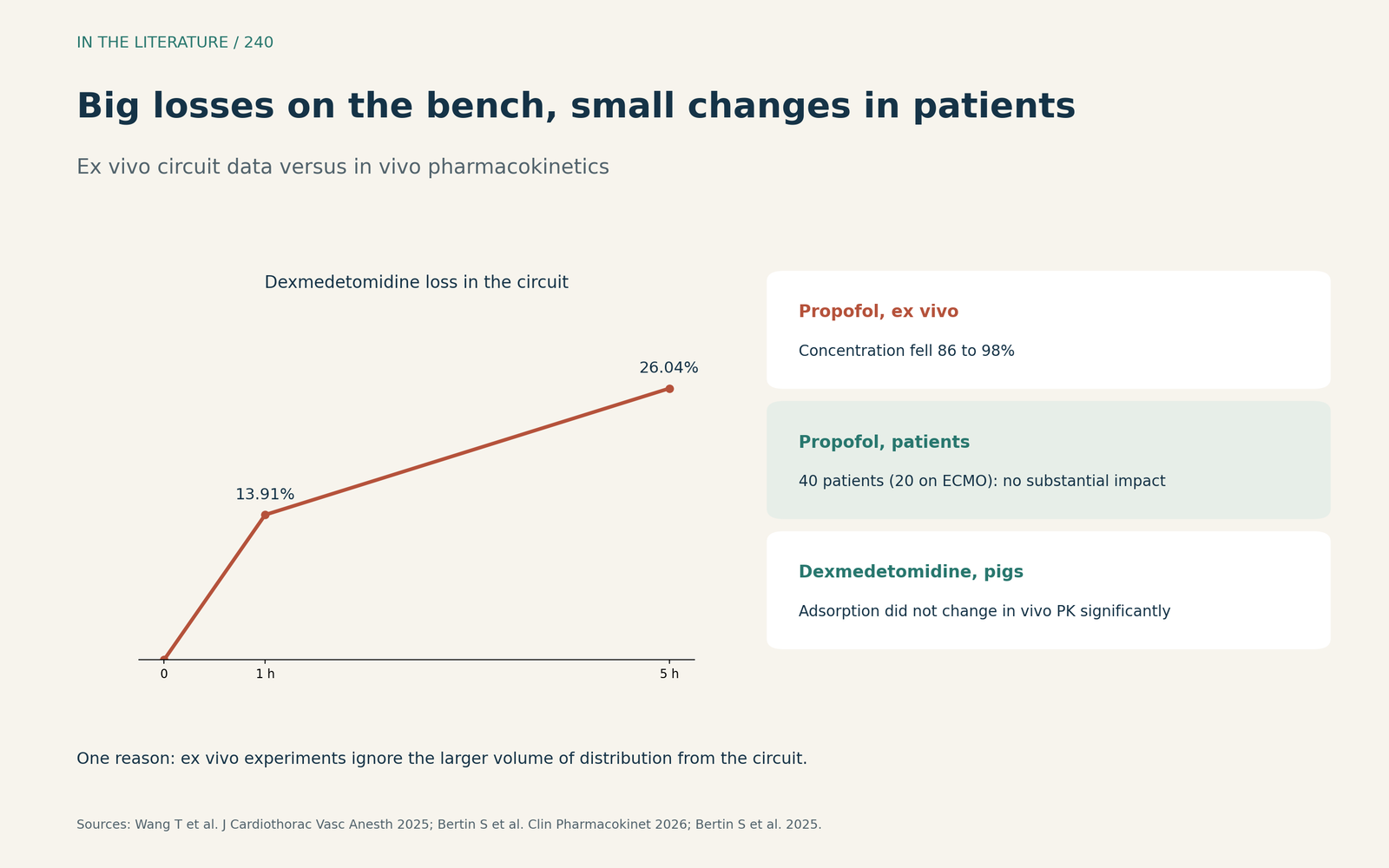
Figure 2. Large losses in a primed circuit, small changes in patients. Data from Bertin et al. (2026) and Wang et al.[2], [4] View larger.

Drug by drug
Fentanyl showed significant circuit adsorption, requiring higher doses and individualized titration; ketamine showed limited sequestration; norepinephrine PK appeared largely unaffected; and unfractionated heparin has minimal circuit sequestration.[3] Propofol can be started at the standard dose and then adjusted.[2] Wang et al. suggest dexmedetomidine dosing may not need adjustment during VV-ECMO, but their study was based on an animal model.[4] Current evidence is constrained by small, retrospective or ex vivo studies.[3]
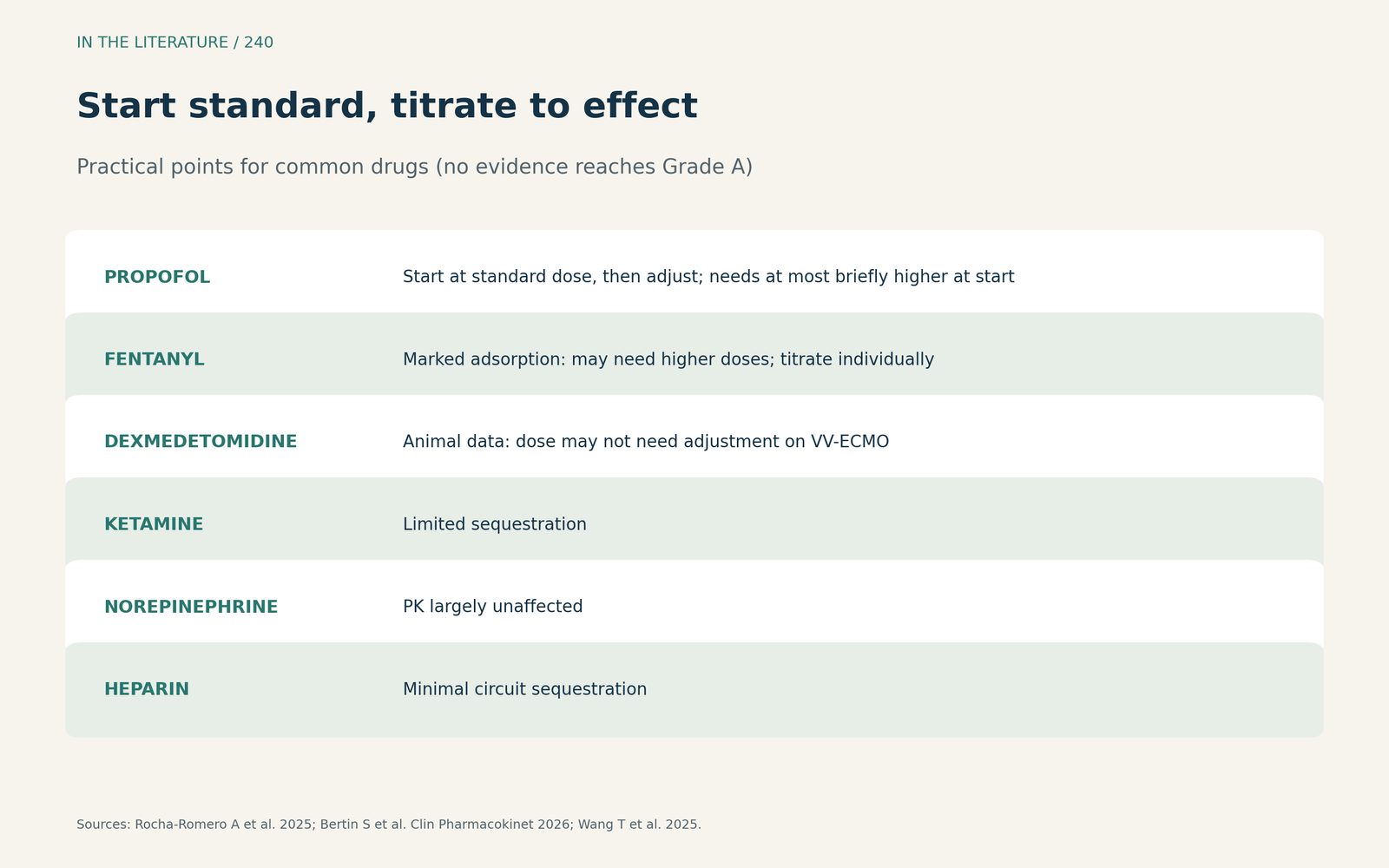
Figure 3. Start standard, titrate to effect. Synthesized from Rocha-Romero et al., Bertin et al. (2026) and Wang et al.[3], [2], [4] View larger.

Three takeaways
- Expect early, saturable loss of lipophilic drugs; hydrophilic, low-bound drugs change little.[1], [3]
- Do not translate ex vivo loss directly into dose increases; start standard doses and titrate.[1], [2]
- Watch fentanyl and use drug monitoring where available, because no drug's evidence reaches Grade A.[3]
References
- Bertin S, Haefliger D, Schneider AG, et al. Effects of extracorporeal membrane oxygenation circuits on drug sequestration: a review of ex vivo experiments. J Clin Med. 2025;14(22):8060. doi:10.3390/jcm14228060
- Bertin S, Haefliger D, Mercier T, et al. Population pharmacokinetics of propofol in critically ill patients with and without extracorporeal membrane oxygenation. Clin Pharmacokinet. 2026;65(2):229–240. doi:10.1007/s40262-025-01585-2
- Rocha-Romero A, Chaverri-Fernandez JM, Chaves-Fernández F, Zavaleta-Monestel E. Optimizing drug therapy in ECMO-supported critically ill adults: a narrative review and clinical guide. Pharmacy (Basel). 2025;13(6):151. doi:10.3390/pharmacy13060151
- Wang T, Zhang H, Tian R, et al. The effect of extracorporeal membrane oxygenation on the pharmacokinetics of dexmedetomidine hydrochloride. J Cardiothorac Vasc Anesth. 2025;39(3):616–624. doi:10.1053/j.jvca.2024.12.029