ITL-a490e3a4cfe1
Juan Li, MD · Updated November 17, 2026
Watch the video
Key points
- Moderate tricuspid regurgitation (TR) and mild secondary TR with annular dilatation warrant different discussions: the 2025 ESC/EACTS recommendations are Class IIa/B and selected-patient Class IIb/B, respectively.1
- In the CTSN randomized trial, adding annuloplasty reduced the two-year composite outcome chiefly through less TR progression, while increasing permanent pacemaker implantation.2
- In a secondary analysis of the same trial, most pacemaker implantations occurred within 30 days; older age and lower baseline left ventricular ejection fraction were associated with two-year pacemaker risk.3
- Long-term observational data associate postoperative pacemaker implantation with worse outcomes, but do not establish that the pacemaker caused them.4
- For less-than-moderate TR, an enlarged annulus alone does not settle the decision; selected long-term cohort data do not establish either universal benefit or equivalence of repair and observation.15
A patient needs surgery for severe degenerative mitral regurgitation. The tricuspid valve is also leaking, but not severely. Adding a ring now may prevent later deterioration; it also adds an intervention close to the conduction system. The practical question is whether this patient's likely benefit justifies the additional risk, rather than whether the tricuspid annulus exceeds one number.
What did adding repair achieve in the randomized trial?
The CTSN trial randomized 401 patients undergoing surgery for degenerative mitral regurgitation to mitral surgery alone or surgery with tricuspid annuloplasty. Eligibility required moderate TR, or less-than-moderate TR with annular dilatation. The results therefore should not automatically be extended to ischemic mitral regurgitation or primary tricuspid leaflet disease.2
At two years, the primary composite occurred in 3.9% with annuloplasty versus 10.2% with mitral surgery alone: relative risk 0.37, 95% confidence interval 0.16–0.86. These were the trial's estimates after imputation for missing data. The composite included death, reoperation for TR, or TR progression by two grades or to severe TR. The difference chiefly reflected prevention of TR progression; the trial did not establish a survival, functional-status or quality-of-life benefit at two years.2
The main trial report also recorded conduction abnormalities or sustained bradycardia leading to permanent pacemaker implantation in 28/198 patients (14.1%) with annuloplasty versus 5/203 (2.5%) without it. That is a meaningful tradeoff, not a reason to dismiss either endpoint. Avoid equating an echocardiographic progression event with a pacemaker implantation, or promising that preventing one necessarily improves long-term survival.2
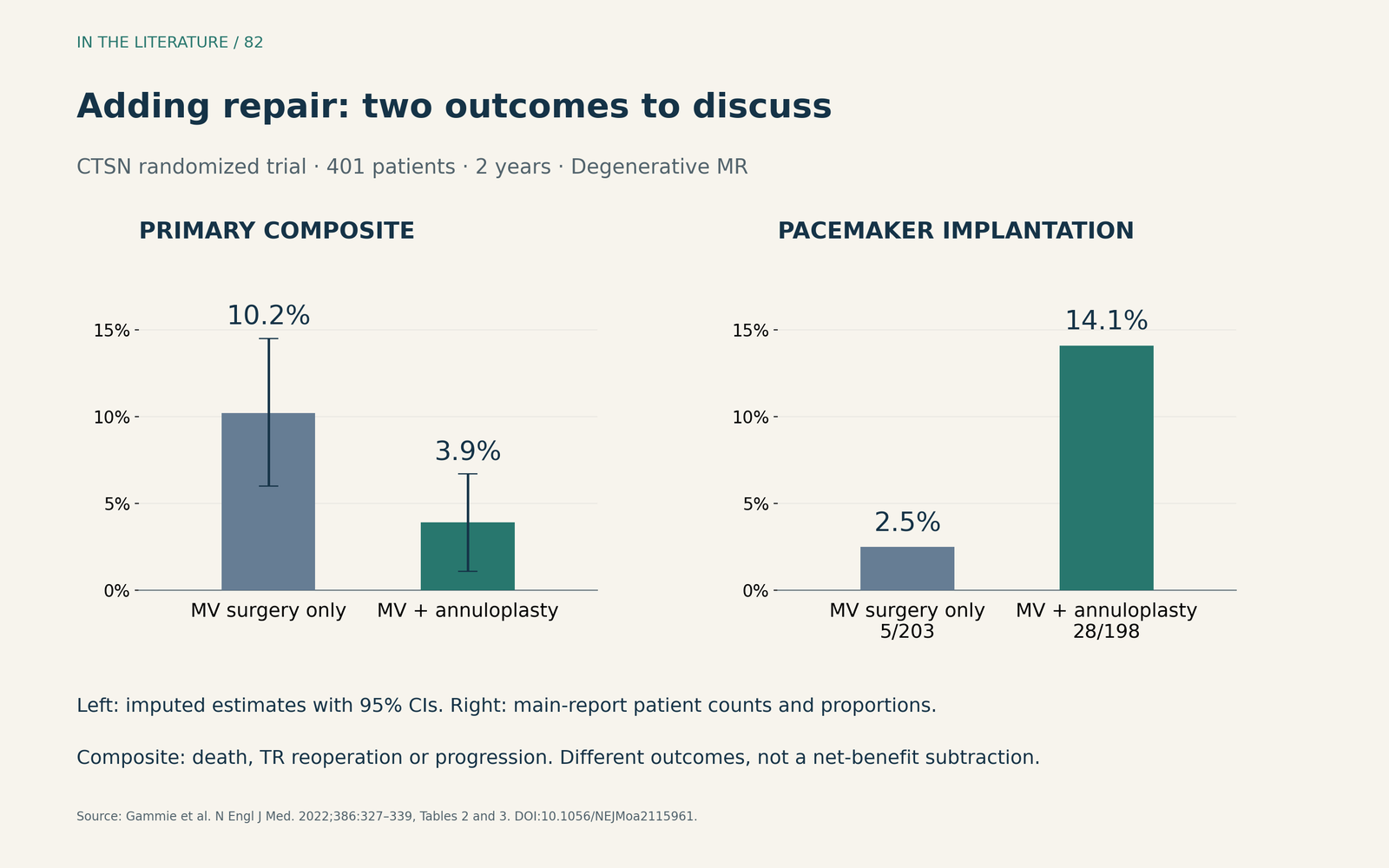
Figure 1. Two different outcomes from the main CTSN trial report. Composite estimates include imputation and their 95% confidence intervals; pacemaker bars show observed patient proportions, with counts. The outcomes differ in clinical meaning and should not be subtracted to calculate a net benefit.2 View larger

Moderate TR is different from mild TR with a large annulus
The 2025 ESC/EACTS guideline distinguishes these situations during required left-sided valve surgery. Severe primary or secondary TR carries a recommendation for concomitant tricuspid surgery, Class I/B. For moderate primary or secondary TR, repair should be considered, Class IIa/B; the recommendation does not additionally require annular dilatation.1
For selected patients with mild secondary TR, repair may be considered when the annular diameter is ≥40 mm or >21 mm/m², Class IIb/B. This is a consideration threshold, not an automatic instruction to operate. The guideline calls for balancing the risk of progression—including atrial fibrillation, right atrial enlargement and pulmonary pressures—against possible postoperative pacemaker implantation.1
The trial helps explain that distinction without resolving it completely. Its exploratory subgroup analysis suggested that TR progression occurred mainly among patients who had moderate TR at baseline. However, the trial was not powered to establish treatment effects separately within the moderate and less-than-moderate groups.2
Du and colleagues' 2025 single-centre cohort adds longer observation for less-than-moderate TR: 541 patients, 207 propensity-matched pairs, and median follow-up of eight years. Moderate TR developed in 2/207 repair patients and 8/207 nonrepair patients after matching, without a statistically significant difference. Few events, exclusion of preoperative atrial fibrillation and incomplete follow-up limit the interpretation. This supports caution about a universal repair policy; it does not prove that repair has no benefit.5
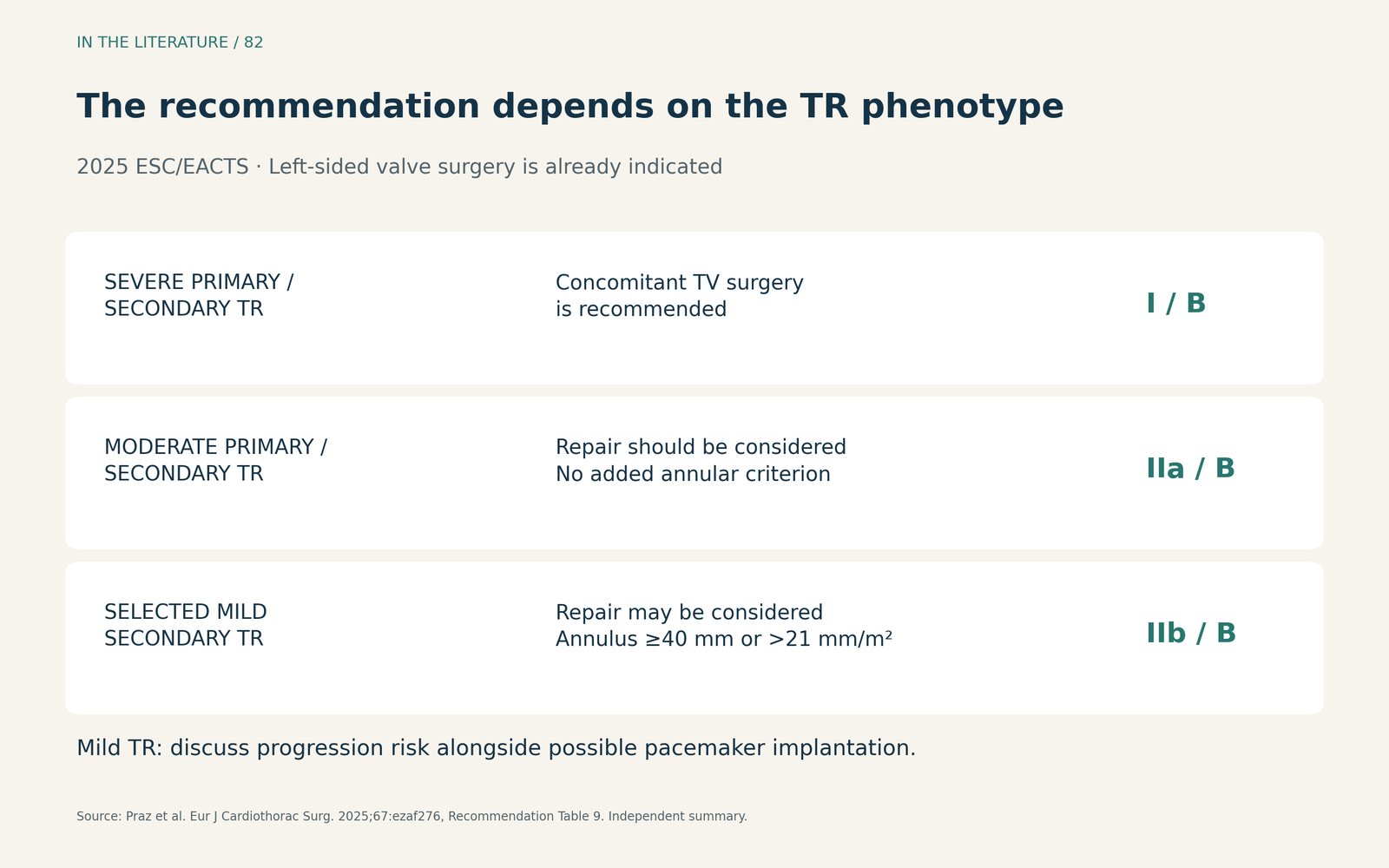
Figure 2. An independent summary of the 2025 ESC/EACTS recommendations. Moderate TR does not need an additional annular-dilatation criterion; the mild-TR recommendation applies to selected patients with secondary TR.1 View larger

Take the pacemaker risk seriously without overstating it
Ailawadi and colleagues examined pacemaker outcomes within the same CTSN trial, rather than a second independent randomized study. In that analysis, 29 of 36 implantations occurred within 30 days. Older age, concomitant annuloplasty and lower baseline ejection fraction were associated with implantation within two years. These findings inform discussion, but do not provide a validated individual risk calculator. Long-term pacing dependence was not assessed: implantation and persistent dependence are different outcomes.3
Iribarne and colleagues studied 32,736 patients in New York and California administrative databases. Pacemaker implantation within 90 days occurred in 7.7% after mitral repair without tricuspid annuloplasty and 14.0% with annuloplasty. In adjusted analyses beginning 90 days after surgery, pacemaker recipients had higher subsequent mortality. Important variables—including TR severity and ventricular function—were unavailable, so residual confounding remains. The study reinforces the importance of avoiding preventable conduction injury; it cannot quantify a causal survival penalty for adding a tricuspid ring.4
Bring two risks to the preoperative discussion
First establish the TR grade and mechanism, annular size, and right-heart findings. For moderate TR, explicitly discuss concomitant repair. For mild secondary TR with annular dilatation, ask what makes progression sufficiently likely to justify intervention in this patient. Then discuss pacemaker risk, baseline rhythm and ventricular function, and the planned operation with the surgical team.134
The counseling message should match the evidence: repair can reduce progression of TR in the studied population, but the two-year trial does not establish a survival advantage. The decision is stronger when its rationale identifies both the anticipated valve benefit and the conduction risk, rather than relying solely on annular diameter.12
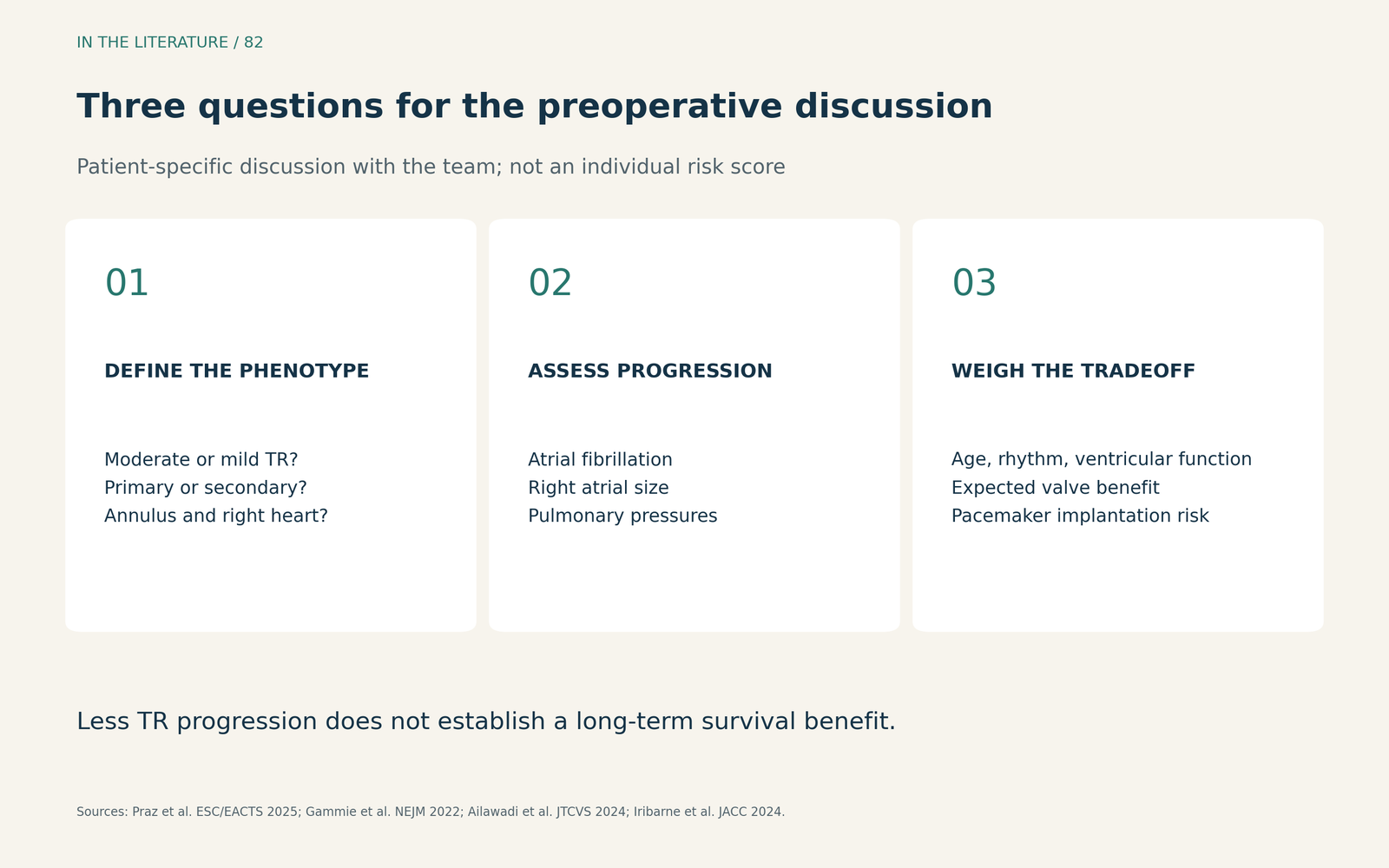
Figure 3. Questions that organize a patient-specific discussion. These are a clinical synthesis of the guideline and studies, not a scoring system or a rule that replaces individual judgment.1–4 View larger

Three takeaways
- Separate moderate TR from mild TR with annular dilatation. They have different recommendation strengths and should not share an automatic operative rule.
- Describe the demonstrated benefit accurately. The randomized benefit chiefly prevented TR progression; it did not establish improved survival or quality of life at two years.
- Discuss pacemaker risk before the operation. Weigh it alongside progression risk, while distinguishing implantation from dependence and observational associations from causal harm.
References
- Praz F, Borger MA, Lanz J, et al. 2025 ESC/EACTS Guidelines for the management of valvular heart disease. Eur J Cardiothorac Surg. 2025;67(8):ezaf276. doi:10.1093/ejcts/ezaf276
- Gammie JS, Chu MWA, Falk V, et al. Concomitant Tricuspid Repair in Patients with Degenerative Mitral Regurgitation. N Engl J Med. 2022;386(4):327-339. doi:10.1056/NEJMoa2115961
- Ailawadi G, Voisine P, Raymond S, et al. Pacemaker implantation associated with tricuspid repair in the setting of mitral valve surgery: Insights from a Cardiothoracic Surgical Trials Network randomized trial. J Thorac Cardiovasc Surg. 2024;167(6):2104-2116.e5. doi:10.1016/j.jtcvs.2022.11.031
- Iribarne A, Alabbadi SH, Moskowitz AJ, et al. Permanent pacemaker implantation and long-term outcomes of patients undergoing concomitant mitral and tricuspid valve surgery. J Am Coll Cardiol. 2024;83(17):1656–1668. doi:10.1016/j.jacc.2024.02.042
- Du J, Zhao Y, Liu K, et al. Impact of Tricuspid Valve Repair on Less Than Moderate Tricuspid Regurgitation After Degenerative Mitral Repair. JACC Asia. 2025;5(3 Pt 2):467-475. doi:10.1016/j.jacasi.2025.01.012