ITL-ddf4017e7ee1
Juan Li, MD · Updated November 17, 2026
Watch the video
Key points
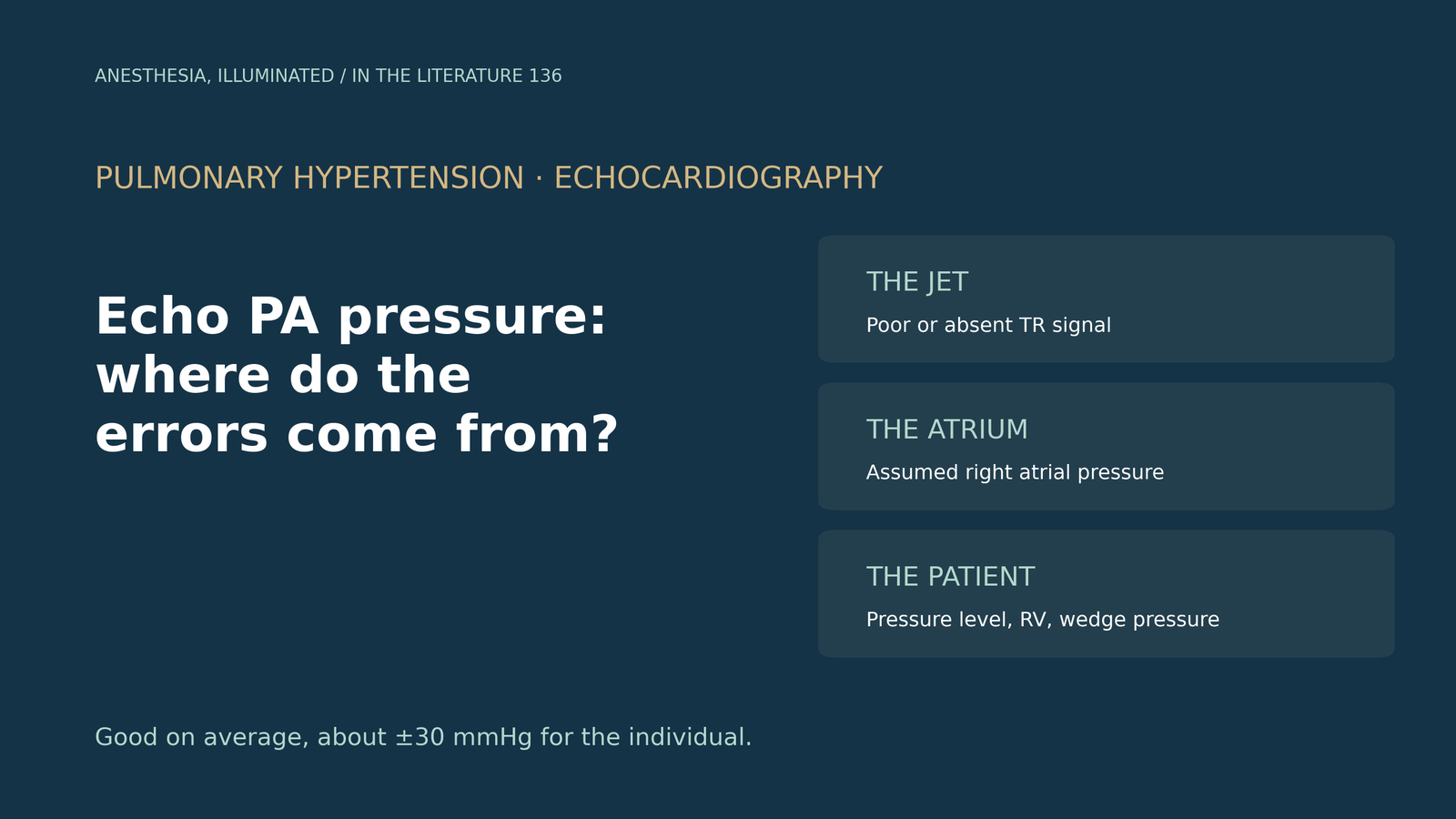
- Echo and catheter values agree on average but not for the individual. In 218 patients, the mean bias was 0.1 mmHg but the limits of agreement ran from about −32 to +32 mmHg; in another cohort, 46% of estimates differed by more than 10 mmHg.[1], [2]
- The tricuspid regurgitation signal is the first source of error. A poor envelope leads to underestimation, and the error is squared by the Bernoulli equation; when no jet is measurable, pulmonary hypertension was still present in 47% of patients.[1], [3]
- The right atrial pressure estimate adds error. Fixed values of 3, 8 or 15 mmHg from the inferior vena cava may be too low in some patients, so the 2022 ESC/ERS guidelines rely on tricuspid regurgitant velocity above 2.8 m/s rather than estimated systolic pressure.[1], [2], [4]
- Physiology shifts the error. Echo tends to overestimate at low pressures and underestimate at high pressures and when wedge pressure rises; correlation was not significant in postcapillary pulmonary hypertension.[1], [2]
- Use echo for probability, not for a number. Resting estimated systolic pressure is not prognostic in pulmonary arterial hypertension, and catheterization should be considered when the answer matters.[4], [2], [3]
Before a high-risk operation, a report gives an estimated pulmonary artery systolic pressure of 38 mmHg in one patient and "TR not measurable" in another. How far can these numbers be trusted, and where could they be wrong?[1], [3]
How large is the error?
Lv and colleagues compared Doppler estimates with catheterization in 218 patients. The average bias was close to zero, but the limits of agreement were wide, and estimates were overestimated in 36% and underestimated in 27% of patients by more than 10%.[1] Sid and colleagues found limits of agreement from −27.6 to +30.0 mmHg in 112 patients, with 46% of estimates differing by more than 10 mmHg, and concluded that echo cannot be used interchangeably with catheterization for decision-making.[2]
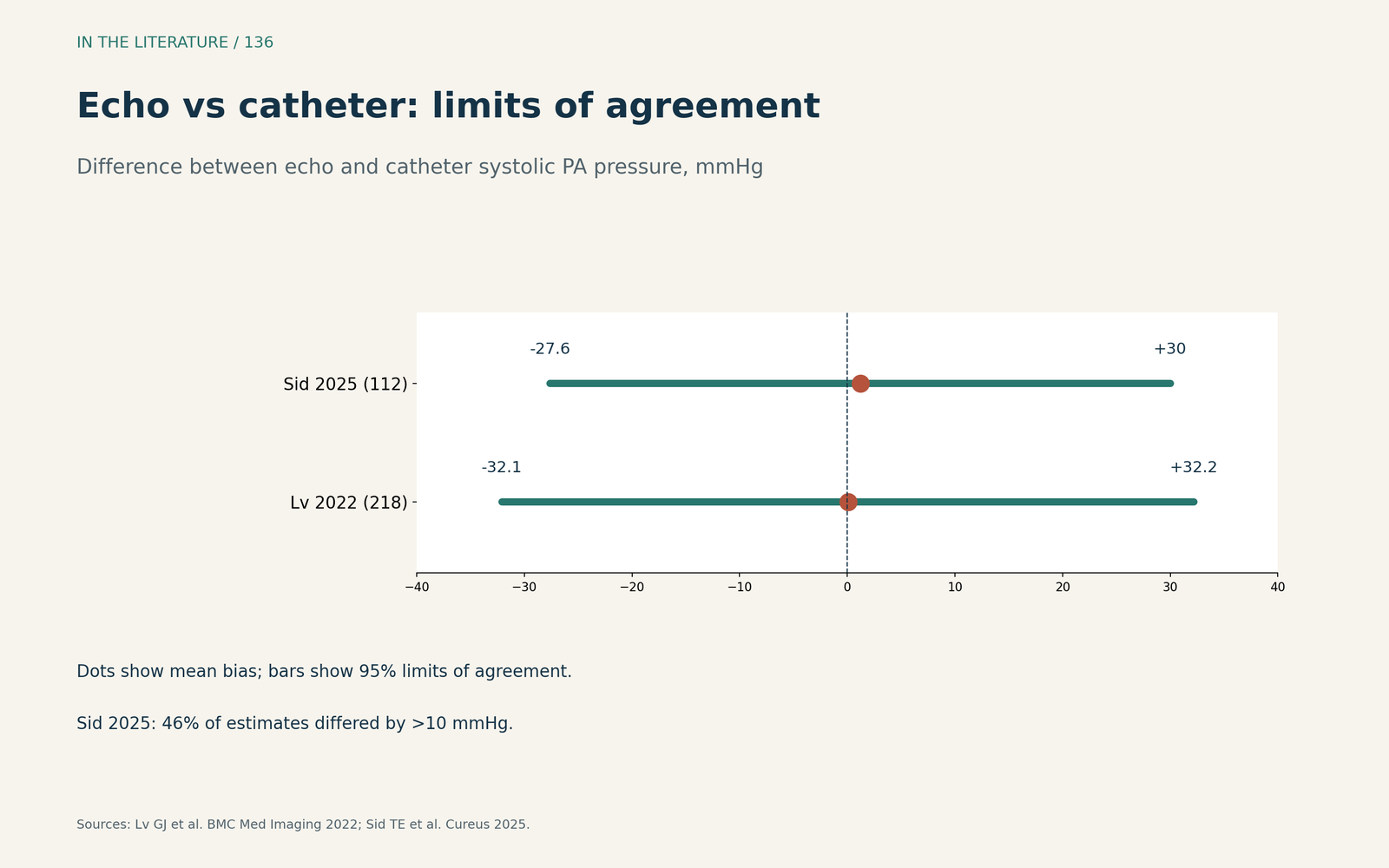
Figure 1. Good on average, wide for the individual. Redrawn from Lv et al. and Sid et al.[1], [2] View larger.

Where the errors come from
The jet. Poor signal quality leads to underestimation, because an error in peak velocity is amplified by the square in the Bernoulli equation; atrial fibrillation and eccentric jets also degrade accuracy.[1], [2] When no jet is reported, the problem is larger: in 1262 patients, pulmonary hypertension was present in 47% of those without a measurable velocity, mean pressure exceeded 35 mmHg in 20% of them, and absence of a jet had a negative predictive value of only 53%. Absent signals were more common with a large chest wall, as in men and obese patients.[3]
The right atrial pressure. Systolic pressure is calculated as the gradient plus an estimated right atrial pressure, often assigned as 3, 8 or 15 mmHg from the inferior vena cava, and guidelines recommend tricuspid velocity partly to avoid this added error.[1] In postcapillary disease, estimates from the vena cava may be disproportionately low.[2]
The physiology. Even with a good signal, estimates were too high in 41% of patients, mostly at low pressures; at high pressures, and as wedge pressure rose, echo tended to underestimate.[1] Correlation was weaker when right ventricular function was impaired (rho 0.48 vs 0.78) and was not significant in postcapillary pulmonary hypertension.[2]
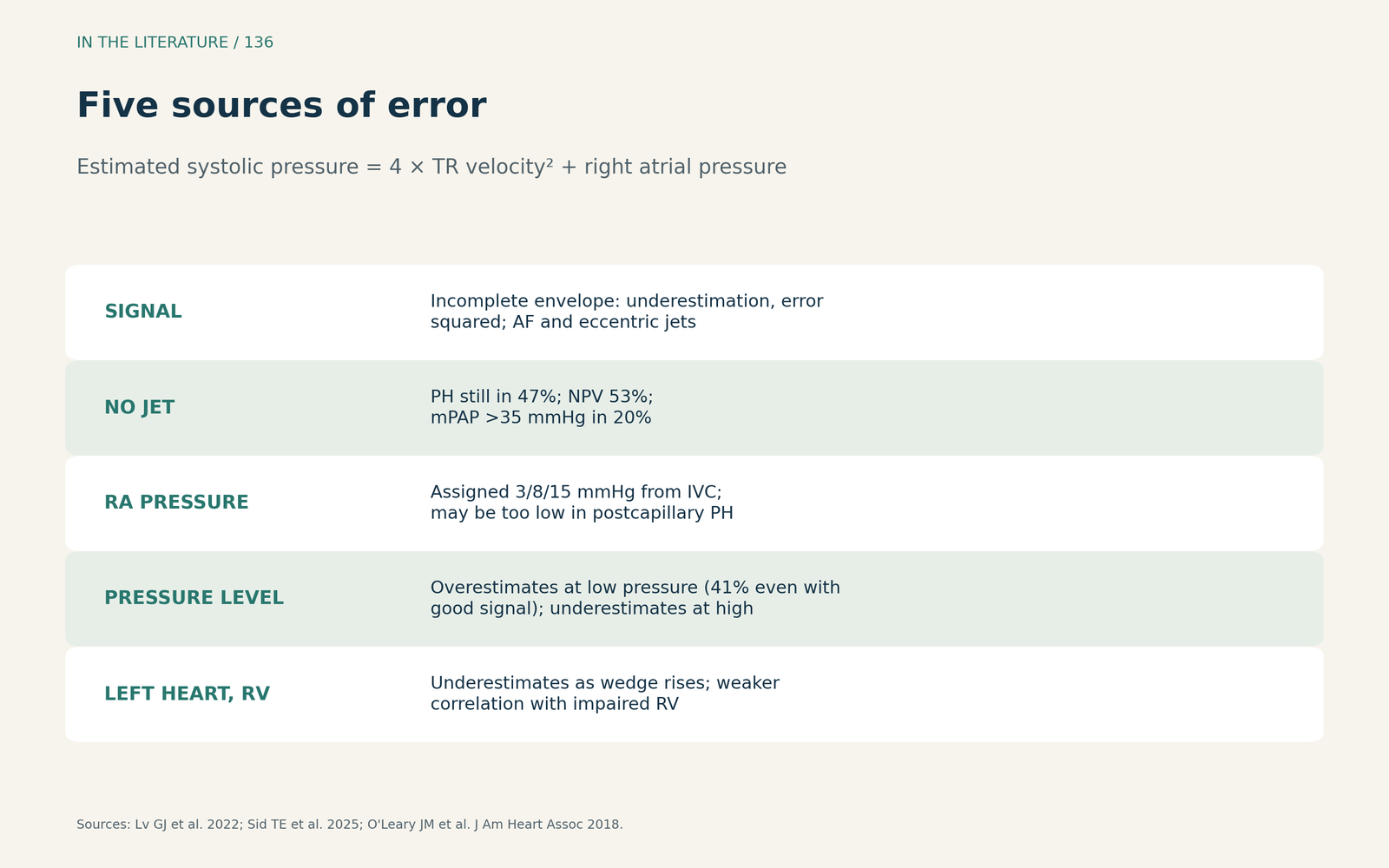
Figure 2. Five sources of error. Synthesized from Lv et al., Sid et al. and O'Leary et al.[1], [2], [3] View larger.

What guidelines changed
Mohananey and colleagues summarize the 2022 ESC/ERS guidelines: because estimated systolic pressure rests on often incorrect assumptions about right atrial pressure, the guidelines recommend a tricuspid regurgitant velocity above 2.8 m/s, together with other right heart signs, to grade the probability of pulmonary hypertension (Class I), and note that estimated systolic pressure at rest is not prognostic in pulmonary arterial hypertension.[4] O'Leary and colleagues advise considering invasive assessment in patients without a reported velocity.[3]
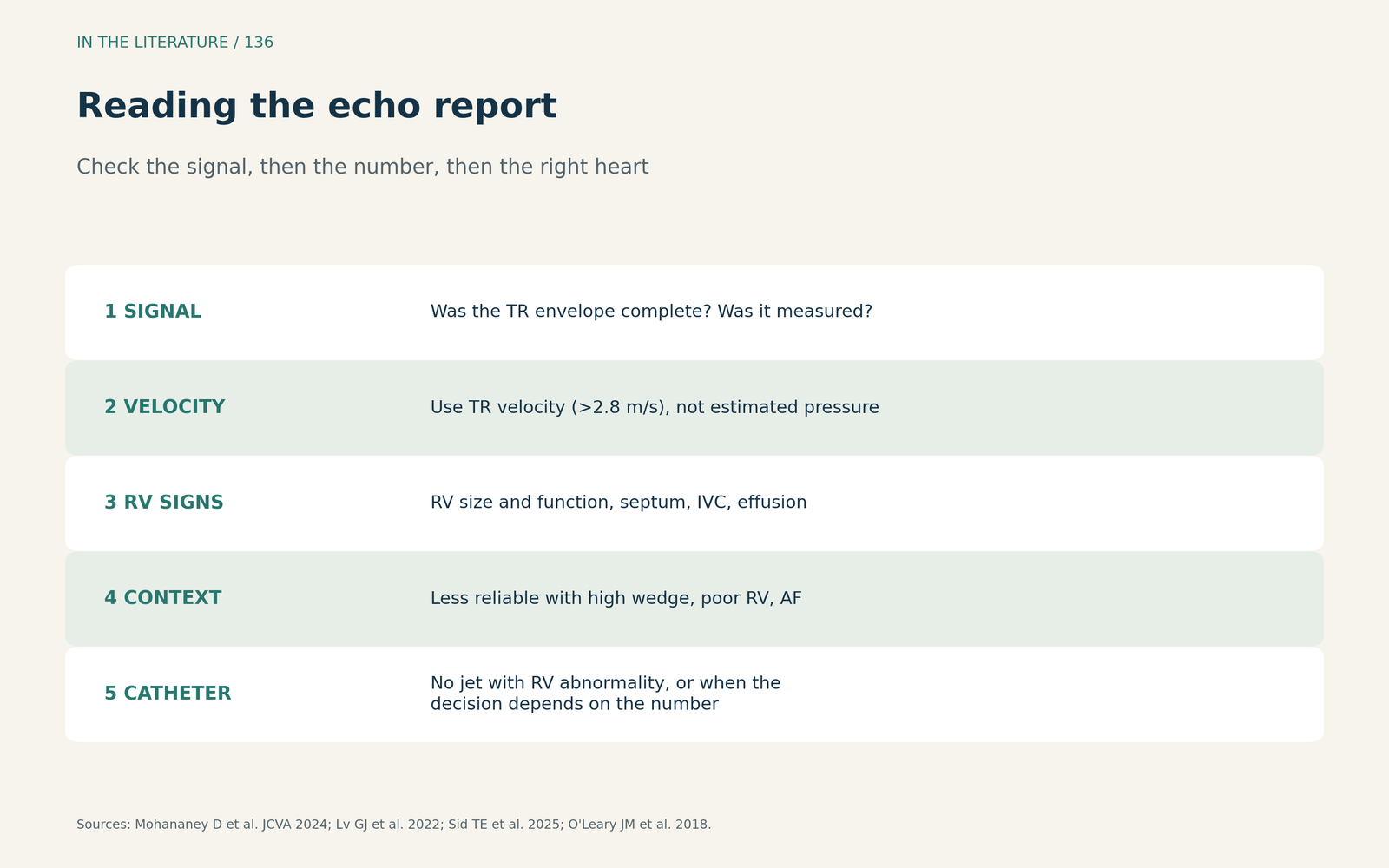
Figure 3. Reading the echo report. Synthesized from the ESC/ERS guideline analysis, Lv et al., Sid et al. and O'Leary et al.[4], [1], [2], [3] View larger.

Three takeaways
- Expect ±30 mmHg. Average agreement hides wide individual error.[1], [2]
- Check the jet and the atrial pressure. A poor or absent signal and an assumed right atrial pressure are the commonest traps.[1], [3]
- Think in probabilities. Use velocity and right heart signs, and catheterize when the decision depends on the number.[4], [2]
References
- Lv GJ, Li AL, Tao XC, et al. The accuracy and influencing factors of Doppler echocardiography in estimating pulmonary artery systolic pressure: comparison with right heart catheterization: a retrospective cross-sectional study. BMC Med Imaging. 2022;22(1):91. doi:10.1186/s12880-022-00806-5
- Sid TE, Bauer V, Stumpf C. Impact of tricuspid regurgitation severity and right ventricular function on the correlation and agreement between transthoracic echocardiography- and right heart catheterization-derived systolic pulmonary artery pressure. Cureus. 2025;17(12):e99318. doi:10.7759/cureus.99318
- O'Leary JM, Assad TR, Xu M, et al. Lack of a tricuspid regurgitation Doppler signal and pulmonary hypertension by invasive measurement. J Am Heart Assoc. 2018;7(13):e009362. doi:10.1161/JAHA.118.009362
- Mohananey D, Martin AK, Mandawat H, Hauser JM, Ramakrishna H. Analysis of the 2022 European Society of Cardiology/European Respiratory Society guidelines for the diagnosis and treatment of pulmonary hypertension. J Cardiothorac Vasc Anesth. 2024;38(2):534–541. doi:10.1053/j.jvca.2023.10.037