
ITL-8c4b6da942bc
Juan Li, MD · Updated November 18, 2026
Key points
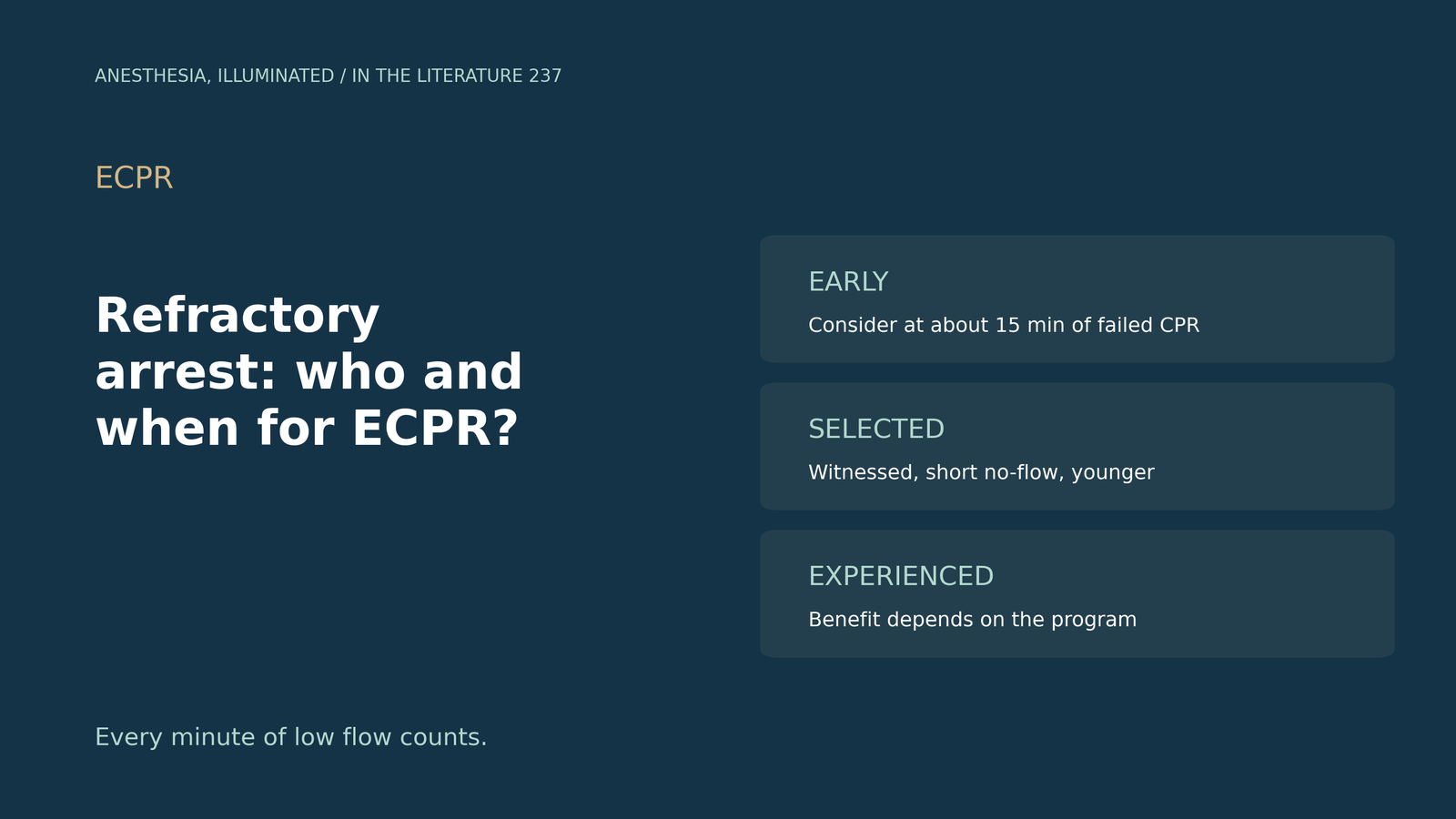
- Possible benefit. Pooled data associate ECPR with lower in-hospital mortality (OR 0.63), but residual confounding remains.[1]
- Trials disagree. The multicenter INCEPTION trial did not show a significant effect, and ECPR may help less in low-volume centers.[2]
- Refractory means persistent arrest after about 15 min of conventional CPR.[3]
- Time is tissue. Mortality rose with each minute of low-flow time (HR 1.01 per min), but no universal time threshold is supported.[1], [4]
- Few qualify. Only 5 to 10% of out-of-hospital arrests are eligible, and criteria are empirical.[3]
A man in his fifties collapses in front of his family; bystander CPR starts at once and the initial rhythm is ventricular fibrillation. After 15 minutes and several shocks there is still no pulse, and the hospital has an ECMO team. Should he go on ECPR?[3], [5]
Does ECPR help?
Low et al. (Crit Care 2024) pooled 13 studies with 6336 ECPR and 7712 conventional CPR patients: ECPR was associated with lower in-hospital mortality (OR 0.63), though residual confounding remains an issue in propensity-matched studies.[1] Heuts et al. (Crit Care 2024) note that the two positive single-center trials were done at centers with extensive expertise, the multicenter INCEPTION trial did not demonstrate a statistically significant effect, and in inexperienced, low-volume centers ECPR may provide less benefit.[2] In an individual patient data analysis (Taccone et al., Resuscitation 2024), ECPR effects were stronger in patients with an initial non-shockable rhythm.[6] After prehospital ECPR, survival at discharge was 23.4% (Kruit et al., J Cardiothorac Vasc Anesth 2023).[7] In INCEPTION itself (Suverein et al., N Engl J Med 2023), among 160 randomized patients, 30-day survival with a favorable neurologic outcome was 20% with ECPR versus 16% with conventional CPR (OR 1.4, not significant); the authors note that broad and regular ECPR experience is hard to obtain outside large metropolitan areas.[8] The 2023 AHA update (Perman et al., Circulation 2024) found insufficient evidence to recommend routine ECPR.[9]
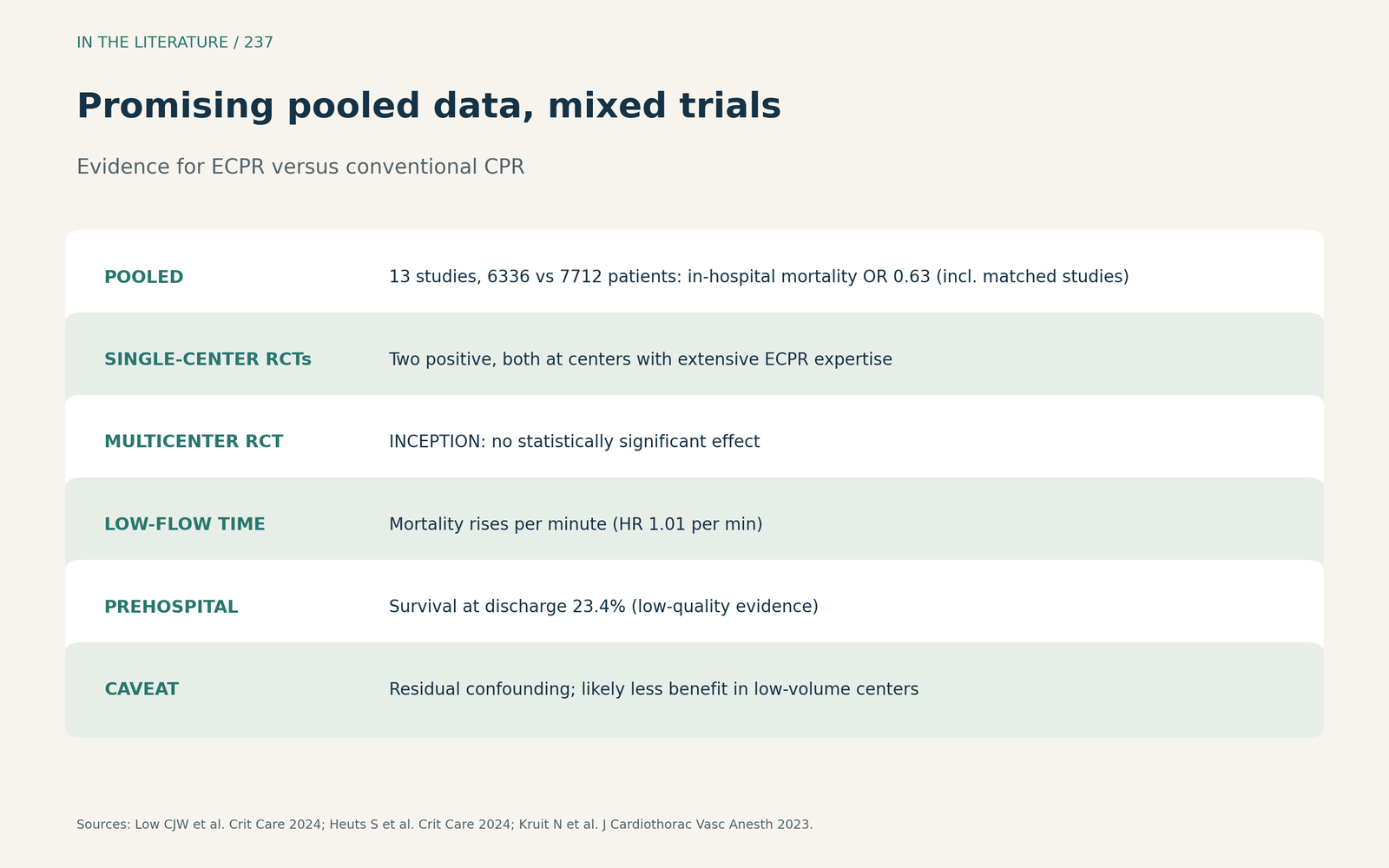
Figure 1. Promising in pooled data, inconsistent in trials. Data from Low et al., Heuts et al. and Kruit et al.[1], [2], [7] View larger.

Who is selected
Vranken et al. (J Extra Corpor Technol 2026) describe refractory arrest as persistent arrest after 15 min of conventional CPR, call current criteria empirical and inconsistent, and note that only 5 to 10% of out-of-hospital arrests are eligible; ECPR should be a highly specialized intervention at experienced centers.[3] One program (Hickey et al., J Cardiothorac Vasc Anesth 2025) required a witnessed arrest with under 5 minutes of no CPR, CPR under 60 minutes before arrival, a nonasystolic rhythm and age under 75.[5] In Pozzi et al. (J Cardiothorac Vasc Anesth 2022), a sustained shockable rhythm was the only independent predictor of survival, and after a stricter protocol survival to discharge was 29.4 vs 8.8%.[10] Age matters too: in one cohort survival improved below about 60 years, and 24% of 54 patients left hospital with good neurologic function (Axtell et al., 2020); editorialists consider a cutoff of 65 probably reasonable.[11], [12] An AHA scientific statement (Tamis-Holland et al., Circulation 2024) lists age under 70, short no-flow and low-flow times and a likely reversible cardiac cause as selection features, and expects hospital ECMO teams to have solid experience with cannulation and ICU care.[13]
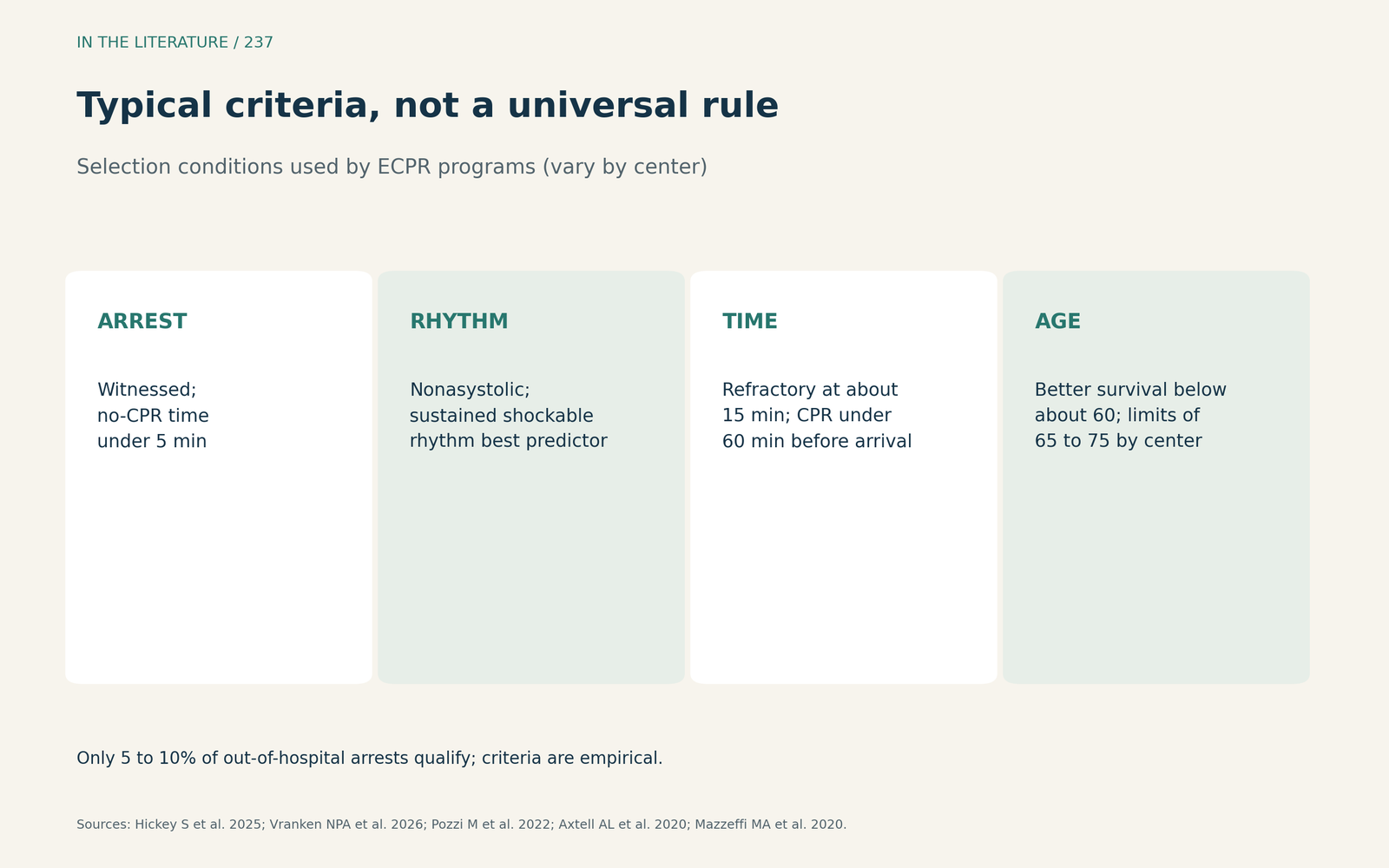
Figure 2. Typical criteria, not a universal rule. Synthesized from Hickey et al., Vranken et al., Pozzi et al., Axtell et al. and Mazzeffi et al.[5], [3], [10], [11], [12] View larger.

When to start
Several studies recommend starting ECPR within 60 minutes of conventional CPR, and low-flow duration showed the most consistent association with outcomes (Alverina et al., J Crit Care Med 2026).[4] Yet GRADE certainty ranged from low to very low, and the evidence is insufficient to support a definitive universal time threshold.[4]
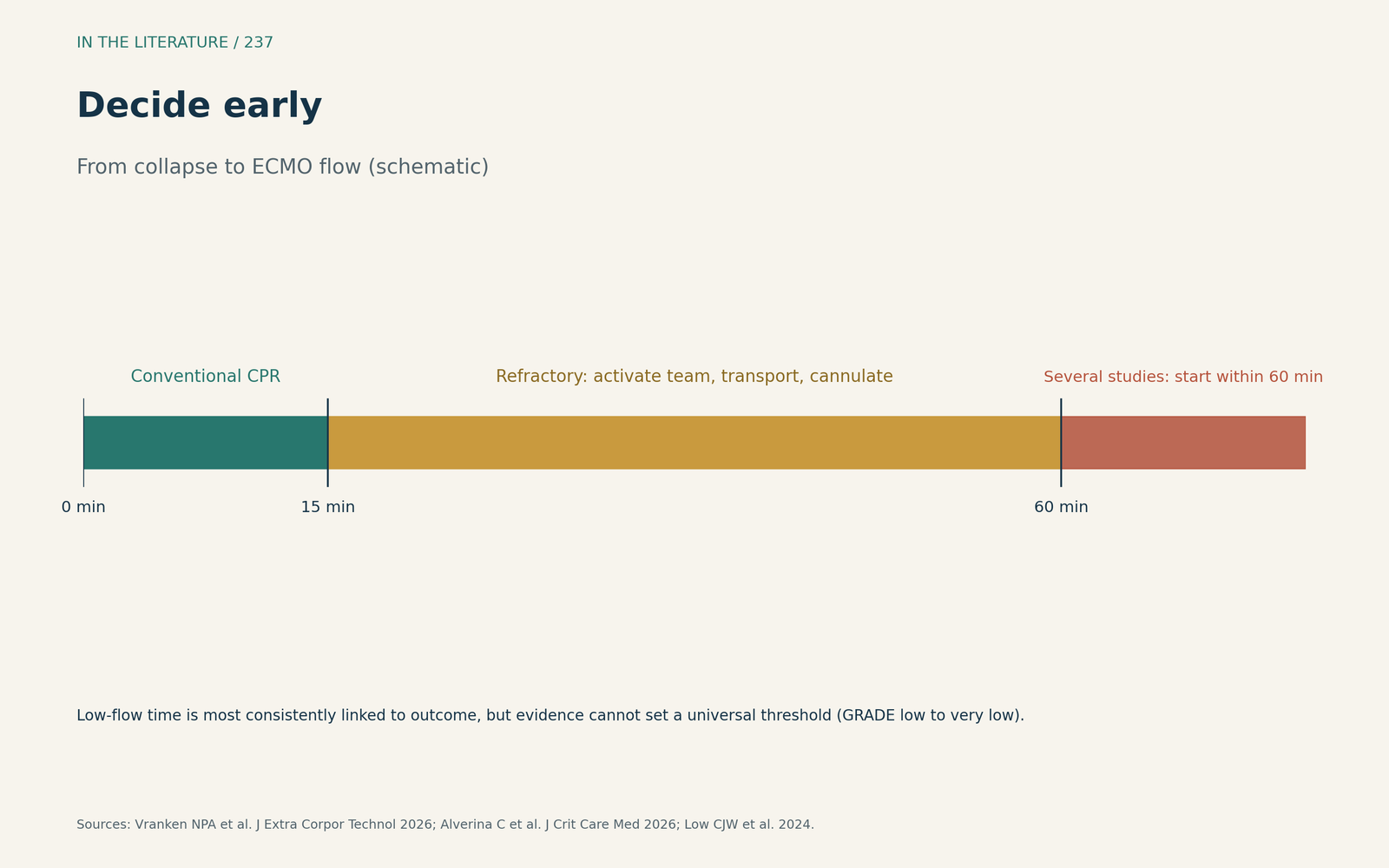
Figure 3. Decide early; every minute of low flow counts. Synthesized from Vranken et al., Alverina et al. and Low et al.[3], [4], [1] View larger.

Three takeaways
- Consider ECPR early, at about 15 minutes of failed CPR, so cannulation can happen while low flow is still short.[3], [4]
- Select carefully: witnessed arrest, short no-flow, shockable or nonasystolic rhythm and younger age are common criteria.[5], [10]
- Benefit depends on the system; ECPR belongs in experienced, high-volume programs.[2], [3]
References
- Low CJW, Ling RR, Ramanathan K, et al. Extracorporeal cardiopulmonary resuscitation versus conventional CPR in cardiac arrest: an updated meta-analysis and trial sequential analysis. Crit Care. 2024;28(1):57. doi:10.1186/s13054-024-04830-5
- Heuts S, Ubben JFH, Kawczynski MJ, et al. Extracorporeal cardiopulmonary resuscitation versus standard treatment for refractory out-of-hospital cardiac arrest: a Bayesian meta-analysis. Crit Care. 2024;28(1):217. doi:10.1186/s13054-024-05008-9
- Vranken NPA, Weerwind PW, Wong RK. From arrest to circuit: mapping twenty years of progress and pitfalls in ECPR implementation, patient selection, and initiation timing. J Extra Corpor Technol. 2026;58(3):267–279. doi:10.1051/ject/2026019
- Alverina C, Salwaa SF, Kamaruddin MF, et al. Impact of timing parameters on outcomes following extracorporeal cardiopulmonary resuscitation: a systematic review and meta-analysis. J Crit Care Med. 2026;12(4):528–545. doi:10.62838/jccm-2026-0049
- Hickey S, Ortiz C, Chen WT, et al. Implementation of a multidisciplinary team for initiation of extracorporeal cardiopulmonary resuscitation in patients presenting after out-of-hospital cardiac arrest. J Cardiothorac Vasc Anesth. 2025;39(5):1236–1241. doi:10.1053/j.jvca.2025.02.018
- Taccone FS, Minini A, Avalli L, et al. Impact of extracorporeal cardiopulmonary resuscitation on neurological prognosis and survival in adult patients after cardiac arrest: an individual pooled patient data meta-analysis. Resuscitation. 2024;202:110357. doi:10.1016/j.resuscitation.2024.110357
- Kruit N, Rattan N, Tian D, et al. Prehospital extracorporeal cardiopulmonary resuscitation for out-of-hospital cardiac arrest: a systematic review and meta-analysis. J Cardiothorac Vasc Anesth. 2023;37(5):748–754. doi:10.1053/j.jvca.2022.12.004
- Suverein MM, Delnoij TSR, Lorusso R, et al. Early extracorporeal CPR for refractory out-of-hospital cardiac arrest. N Engl J Med. 2023;388(4):299–309. doi:10.1056/NEJMoa2204511
- Perman SM, Elmer J, Maciel CB, et al. 2023 American Heart Association focused update on adult advanced cardiovascular life support: an update to the American Heart Association guidelines for cardiopulmonary resuscitation and emergency cardiovascular care. Circulation. 2024;149(5):e254–e273. doi:10.1161/CIR.0000000000001194
- Pozzi M, Grinberg D, Armoiry X, et al. Impact of a modified institutional protocol on outcomes after extracorporeal cardiopulmonary resuscitation for refractory out-of-hospital cardiac arrest. J Cardiothorac Vasc Anesth. 2022;36(6):1670–1677. doi:10.1053/j.jvca.2021.05.034
- Axtell AL, Funamoto M, Legassey AG, et al. Predictors of neurologic recovery in patients who undergo extracorporeal membrane oxygenation for refractory cardiac arrest. J Cardiothorac Vasc Anesth. 2020;34(2):356–362. doi:10.1053/j.jvca.2019.08.003
- Mazzeffi MA, Madathil RJ, Gutsche JT. In extracorporeal cardiopulmonary resuscitation, it's great to be young. J Cardiothorac Vasc Anesth. 2020;34(2):363–364. doi:10.1053/j.jvca.2019.08.040
- Tamis-Holland JE, Menon V, Johnson NJ, et al. Cardiac catheterization laboratory management of the comatose adult patient with an out-of-hospital cardiac arrest: a scientific statement from the American Heart Association. Circulation. 2024;149(5):e274–e295. doi:10.1161/CIR.0000000000001199