ITL-1172cea62c7e
Juan Li, MD · Updated November 18, 2026
Key points
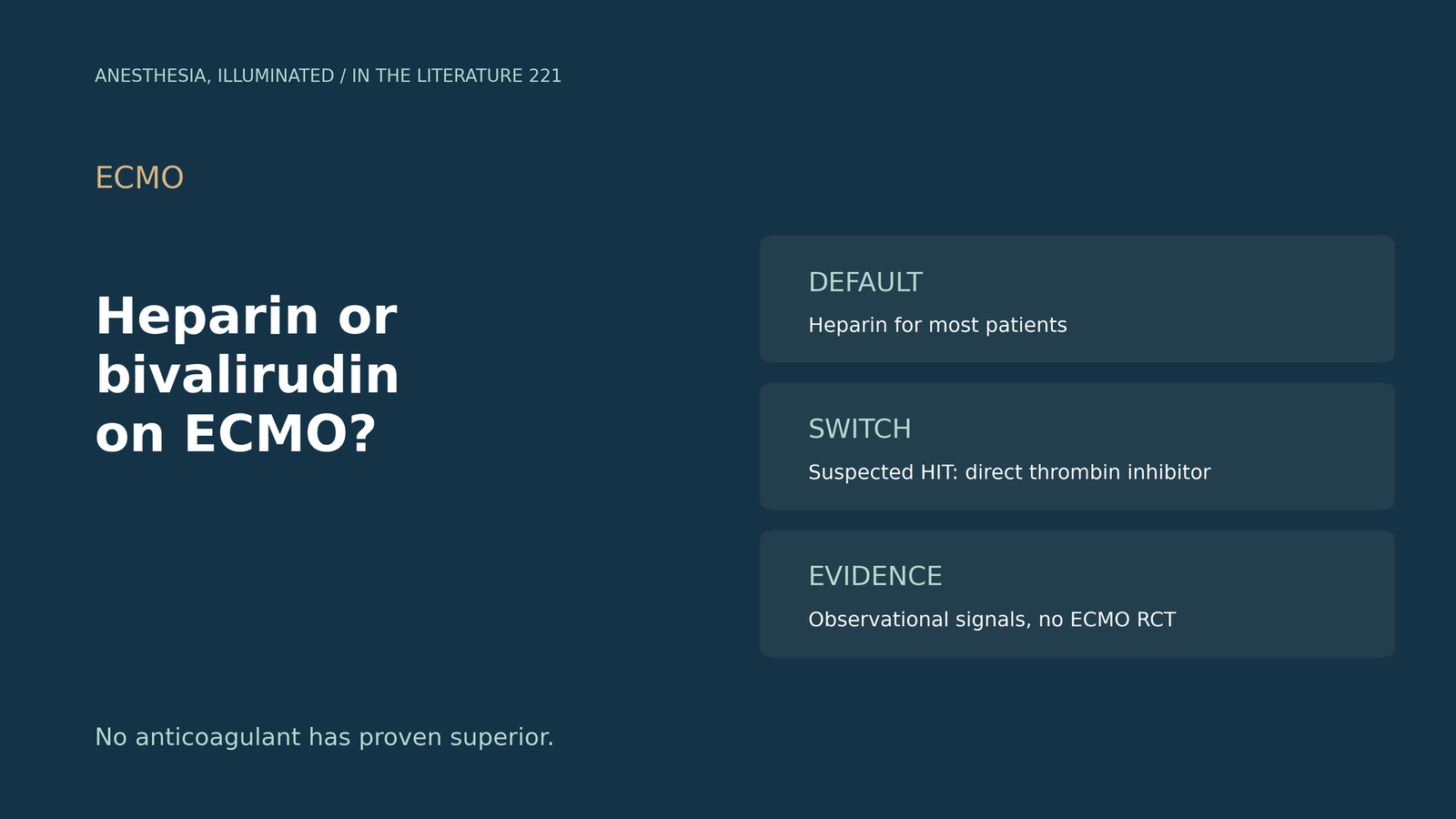
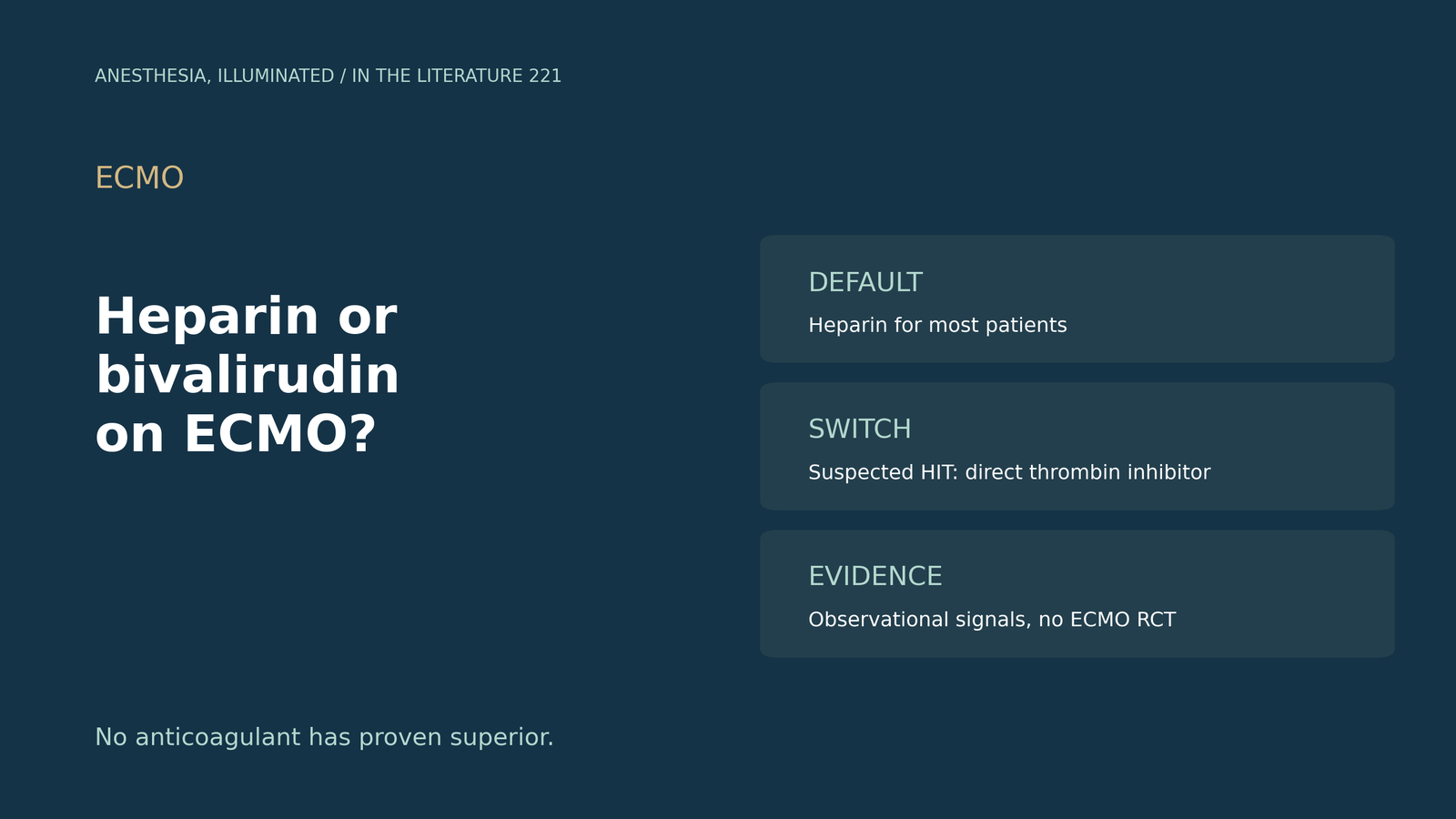
- Default is still heparin. Heparin remains the preferred drug for most ECMO patients, and no controlled trial shows any anticoagulant superior.[1]
- Switch for HIT. With suspected HIT, heparin should be held and a direct thrombin inhibitor such as bivalirudin or argatroban started.[1]
- Different pharmacology. Heparin depends on antithrombin and has a half-life of about 90 minutes; bivalirudin lasts 25 minutes and carries no HIT risk.[2]
- Observational signal. Retrospective pooling linked bivalirudin to lower mortality (OR 0.74) and fewer thrombotic events (OR 0.52), without a significant bleeding difference.[3]
- Not proven. Larger prospective randomized trials are required before abandoning routine heparin in patients without HIT.[4]
A patient on VV ECMO has falling platelets and a clotting oxygenator. Should you stay with heparin or switch to bivalirudin?[1], [2]
Why heparin is still the default
Mazzeffi et al. (SCA expert consensus, J Cardiothorac Vasc Anesth 2021) note that no controlled trials show superiority of any ECMO anticoagulant and that heparin remains preferred for most patients, partly because of low cost. Thrombosis still occurs in 15% to 20% of patients despite anticoagulation. Argatroban and bivalirudin are used for suspected or confirmed HIT, and with suspected HIT heparin should be held and a direct thrombin inhibitor started.[1] Erdoes et al. (J Cardiothorac Vasc Anesth 2020) cite a HIT prevalence of only 0.37% in one strictly defined series, so wide preemptive bivalirudin use would not be justified, and there is no standard bivalirudin dosing protocol.[5] Heparin resistance is one reason clinicians switch: acquired antithrombin deficiency, including with extracorporeal circuits such as ECMO, is a common cause (Levy and Connors, N Engl J Med 2021).[6]
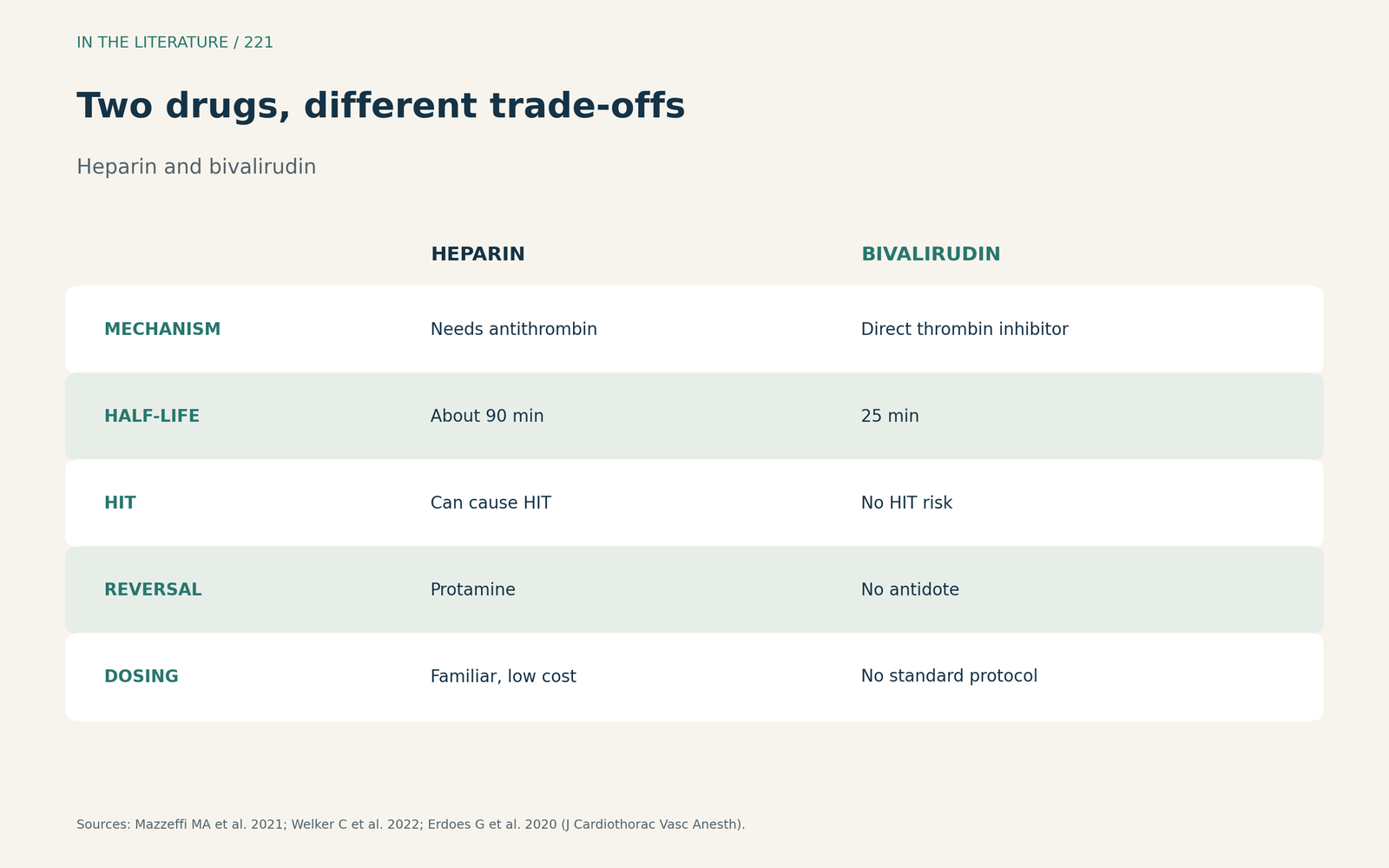
Figure 1. Two drugs, different trade-offs. Synthesized from Mazzeffi et al., Welker et al. and Erdoes et al.[1], [2], [5] View larger.

The case for bivalirudin
Welker et al. (J Cardiothorac Vasc Anesth 2022) contrast heparin, which depends on antithrombin and has a half-life of about 90 minutes, with bivalirudin (25 minutes) and argatroban (50 minutes), neither of which carries HIT risk. In their view, heparin complications, resistance and a moving therapeutic window may make it an inferior first-line choice; bleeding is the most common ECLS complication, occurring in 10% to 30%.[2] Hu et al. (Medicine 2025) pooled 1360 adult ECMO patients from retrospective studies: bivalirudin was associated with lower mortality (OR 0.74), fewer thrombotic events (OR 0.52) and more successful decannulation (OR 1.87), while the bleeding difference was not statistically significant (OR 0.69); randomized trials are needed.[3] In coded US data, Arenella et al. (J Extra Corpor Technol 2026) instead found that heparin plus antithrombin concentrate had lower odds of thrombotic and bleeding events than bivalirudin (bleeding aOR 0.38); the study was industry funded.[7] In children on mechanical circulatory support, a small before-and-after study (Giorni et al., J Cardiothorac Vasc Anesth 2025) found Berlin Heart thrombosis in 12.5% with bivalirudin versus 80% with historical heparin controls, without significant differences on ECMO.[8]
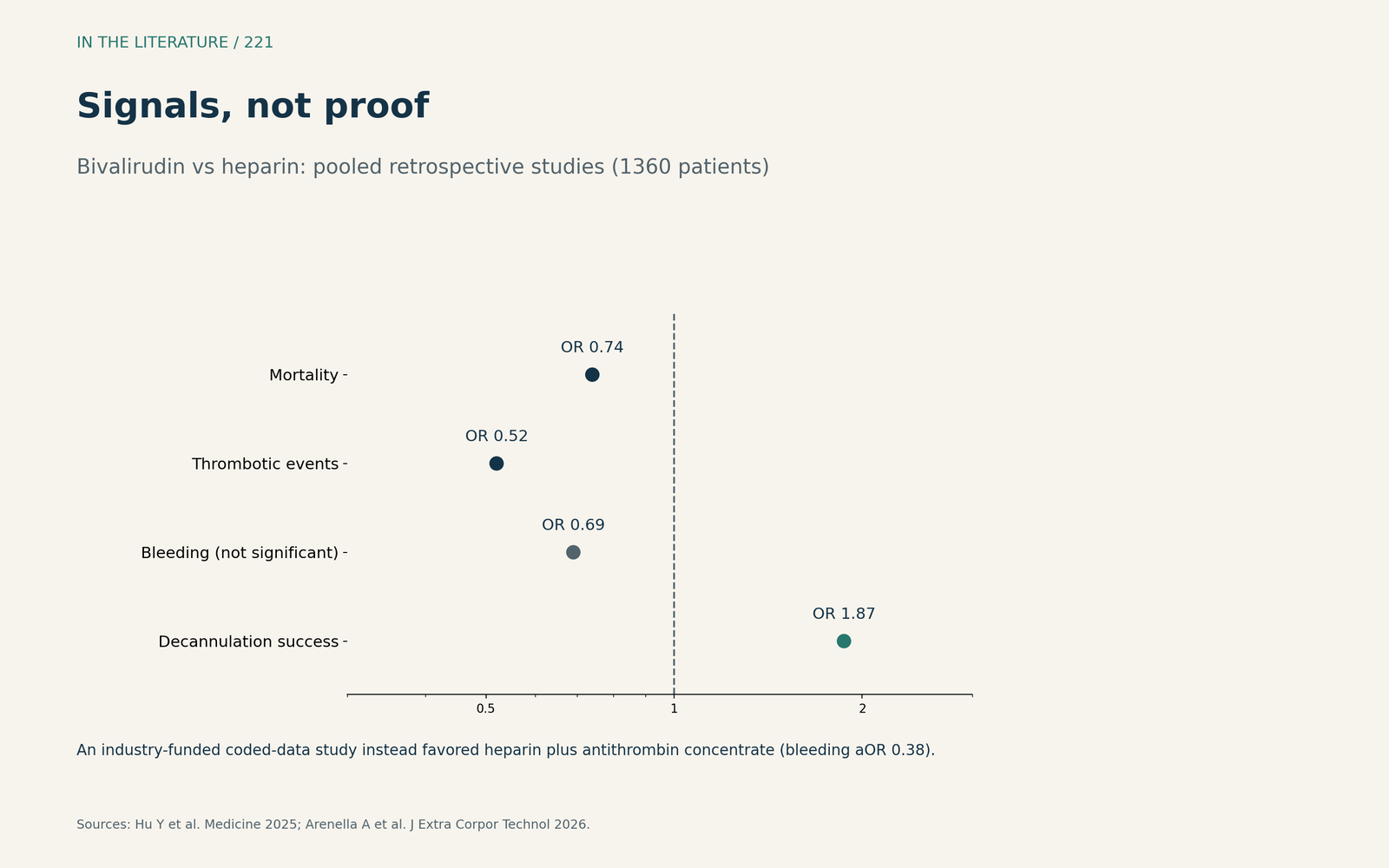
Figure 2. Signals, not proof. Redrawn from Hu et al. and Arenella et al.[3], [7] View larger.

Randomized evidence comes from elsewhere
In TAVR, the BRAVO-3 trial (Dangas et al., J Am Coll Cardiol 2015) found that bivalirudin did not significantly lower 48-hour major bleeding (6.9% vs 9.0%); heparin remained the standard of care, with bivalirudin an alternative.[9] El Tahan (J Cardiothorac Vasc Anesth 2022) concludes that larger prospective randomized trials are required and that it may be early to abandon routine heparin in patients without HIT.[4] In STEMI, the open-label BRIGHT-4 trial (Li et al., Lancet 2022) randomized 6016 patients; the 30-day primary endpoint occurred in 92 with bivalirudin plus a high-dose infusion versus 132 with heparin, a result from a different setting than ECMO.[10]
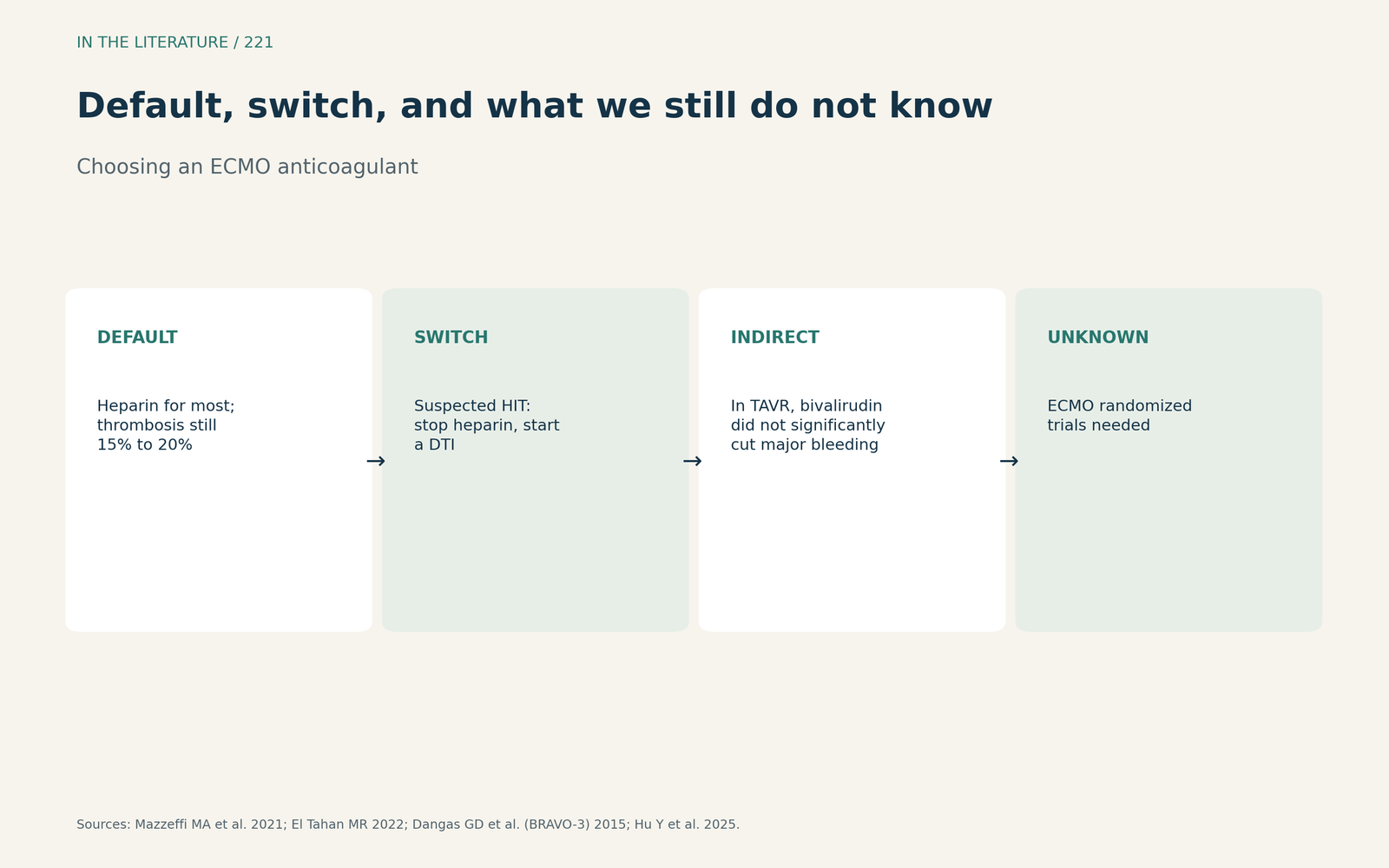
Figure 3. Default, switch, and what we still do not know. Synthesized from Mazzeffi et al., El Tahan, Dangas et al. and Hu et al.[1], [4], [9], [3] View larger.

Three takeaways
- Use heparin as the default for most ECMO patients; no anticoagulant has proven superior.[1], [4]
- When HIT is suspected, stop heparin and start a direct thrombin inhibitor such as bivalirudin.[1]
- Treat favorable bivalirudin data as observational signals that still need randomized confirmation.[3], [7]
References
- Mazzeffi MA, Rao VK, Dodd-o J, et al. Intraoperative management of adult patients on extracorporeal membrane oxygenation: an expert consensus statement from the Society of Cardiovascular Anesthesiologists—Part I, technical aspects of extracorporeal membrane oxygenation. J Cardiothorac Vasc Anesth. 2021;35(12):3496–3512. doi:10.1053/j.jvca.2021.07.046
- Welker C, Huang J, Ramakrishna H. Analysis of the 2020 EACTS/ELSO/STS/AATS expert guidelines on the management of adult postcardiotomy extracorporeal life support. J Cardiothorac Vasc Anesth. 2022;36(7):2207–2219. doi:10.1053/j.jvca.2021.06.022
- Hu Y, Yu L, Yang W. Effectiveness and safety of bivalirudin anticoagulation therapy in adult patients receiving extracorporeal membrane oxygenation: a systematic review and meta-analysis. Medicine (Baltimore). 2025;104(33):e42696. doi:10.1097/MD.0000000000042696
- El Tahan MR. The emerging role of bivalirudin for therapeutic anticoagulation in patients with coronavirus disease 2019 requiring extracorporeal membrane oxygenation support: is it time to change the routine practice? J Cardiothorac Vasc Anesth. 2022;36(2):419–421. doi:10.1053/j.jvca.2021.11.003
- Erdoes G, Ortmann E, Martinez Lopez De Arroyabe B, et al. Role of bivalirudin for anticoagulation in adult perioperative cardiothoracic practice. J Cardiothorac Vasc Anesth. 2020;34(8):2207–2214. doi:10.1053/j.jvca.2019.08.022
- Levy JH, Connors JM. Heparin resistance — clinical perspectives and management strategies. N Engl J Med. 2021;385(9):826–832. doi:10.1056/NEJMra2104091
- Arenella A, Zhou J, Oh J, et al. Real-world outcomes of unfractionated heparin plus antithrombin concentrate versus bivalirudin in adult patients undergoing extracorporeal membrane oxygenation. J Extra Corpor Technol. 2026;58(3):237–245. doi:10.1051/ject/2026015
- Giorni C, Cantarutti N, Olimpieri A, et al. Heparin versus bivalirudin in pediatric patients assisted with mechanical circulatory support: a retrospective before-and-after study. J Cardiothorac Vasc Anesth. 2025;39:1242–1249. doi:10.1053/j.jvca.2025.01.041
- Dangas GD, Lefèvre T, Kupatt C, et al. Bivalirudin versus heparin anticoagulation in transcatheter aortic valve replacement: the randomized BRAVO-3 trial. J Am Coll Cardiol. 2015;66(25):2860–2868. doi:10.1016/j.jacc.2015.10.003
- Li Y, Liang Z, Qin L, et al. Bivalirudin plus a high-dose infusion versus heparin monotherapy in patients with ST-segment elevation myocardial infarction undergoing primary percutaneous coronary intervention: a randomised trial. Lancet. 2022;400(10366):1847–1857. doi:10.1016/S0140-6736(22)01999-7