ITL-eb8057f6a0c2
Juan Li, MD · Updated November 17, 2026
Watch the video
Key points
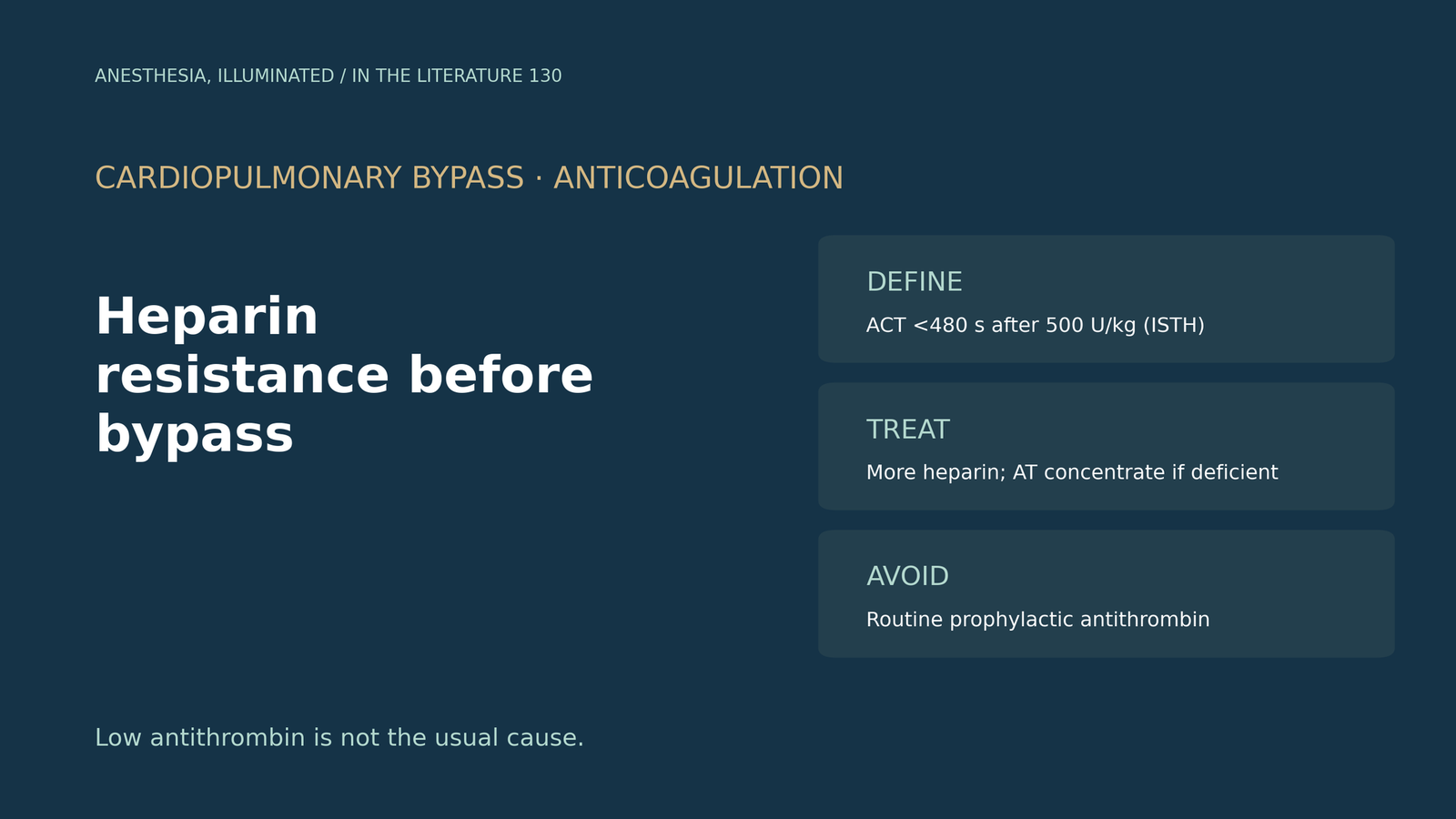
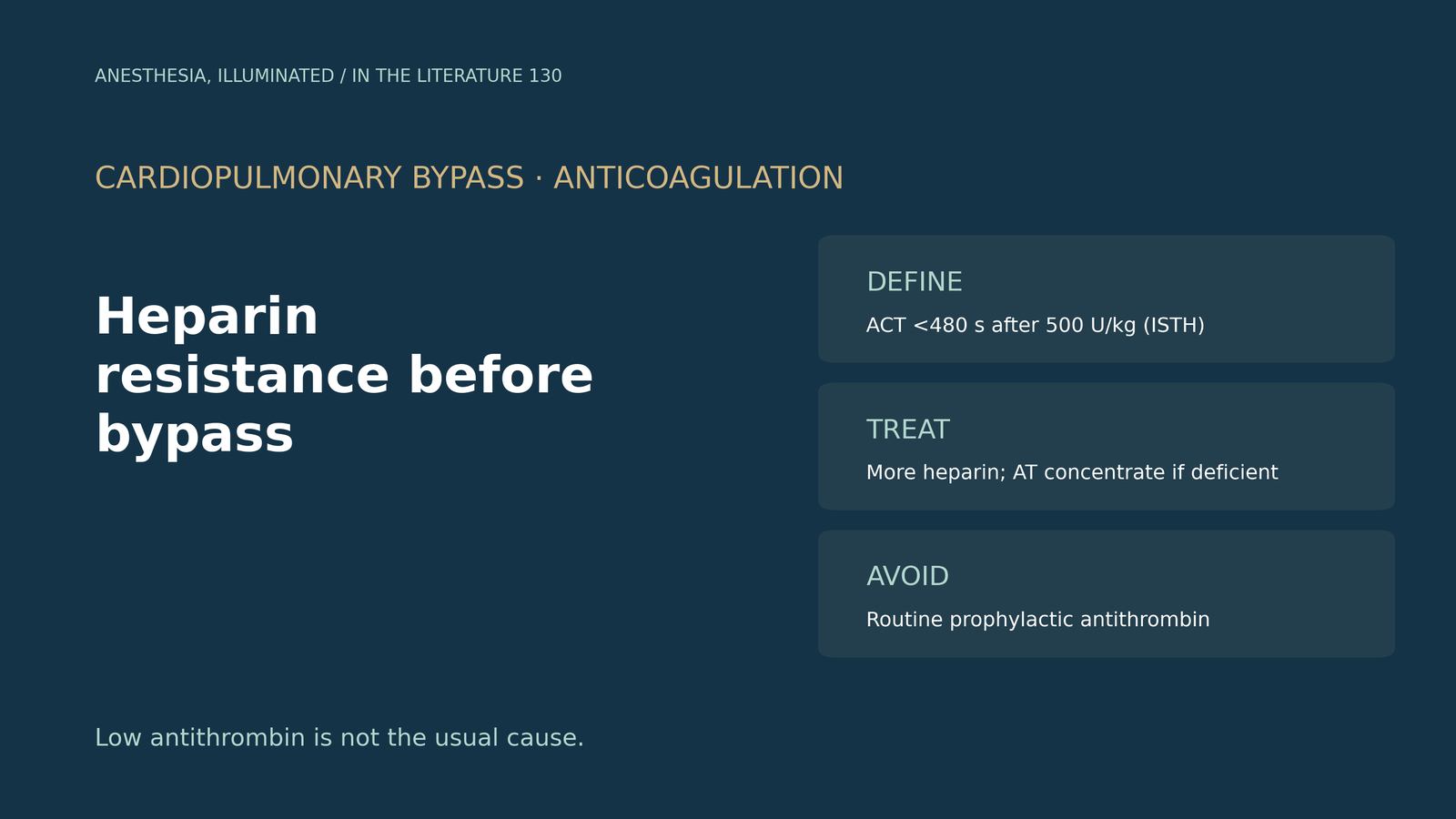
- An international working group proposes defining heparin resistance as failure to reach an activated clotting time (ACT) of 480 seconds or more after 500 U/kg of heparin. Across 28 studies with 11,382 patients, its incidence was 17.5%, but definitions varied widely.[1]
- Low antithrombin is not the usual cause. In 605 patients, preoperative antithrombin activity did not predict resistance; active infection, endocarditis, low albumin and aortic surgery did.[2], [3]
- Most patients respond to more heparin. When antithrombin deficiency is likely, antithrombin concentrate may be favored over plasma, which supplies only about 500 IU of antithrombin per 2 units.[3], [4], [5]
- Prophylaxis is not supported. One trial reduced resistance with preoperative antithrombin (17% vs 38.2%), but a meta-analysis of 13 trials linked perioperative antithrombin to higher in-hospital mortality and AKI.[6], [7]
- Andexanet alfa causes a distinct, severe resistance that more heparin cannot overcome; antithrombin restored the ACT in a reported case.[8]
Before aortic valve replacement in a patient with active endocarditis, the ACT is 380 seconds after the planned heparin dose. Is this heparin resistance, and what should the team do before going on bypass?[1], [3]
Defining and confirming it
Levy and colleagues, for an ISTH subcommittee, reviewed 28 adult cardiac surgery studies. The most common ACT target was 480 seconds (46% of studies), maximum heparin doses ranged from 300 to 500 U/kg, and the pooled incidence was 17.5%; they propose failure to reach 480 seconds after 500 U/kg as a common definition.[1] Bolliger and colleagues note that the ACT itself is affected by hemodilution, temperature and platelets, and that many cohorts use lower doses and higher targets, which inflates incidence.[4] Butt and colleagues describe a heparin sensitivity index below 1 s/U/kg as a sign of resistance and antithrombin activity below 80% as deficiency.[5]
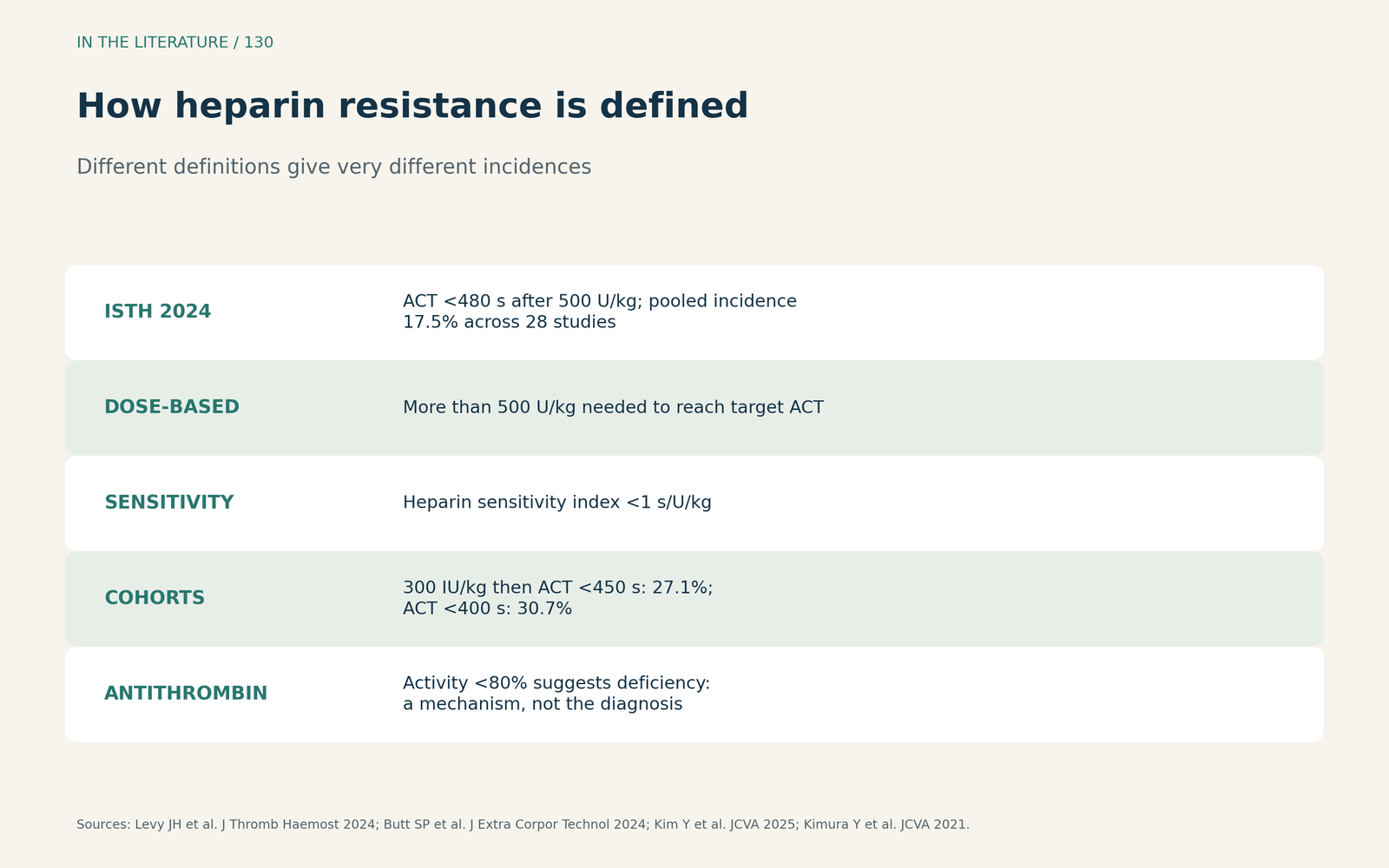
Figure 1. How heparin resistance is defined. Synthesized from the ISTH communication by Levy et al., Butt et al. and Bolliger et al.[1], [5], [4] View larger.

Who is at risk
Kim and colleagues studied 605 patients, 164 of whom had resistance; preoperative antithrombin activity was not associated with it, whereas active infection (odds ratio 2.30) and isolated aortic surgery (odds ratio 1.74) were.[2] Kimura and colleagues found resistance in 30.7% of 287 patients, independently associated with infective endocarditis (odds ratio 4.57) and hypoalbuminemia (odds ratio 3.17).[3]
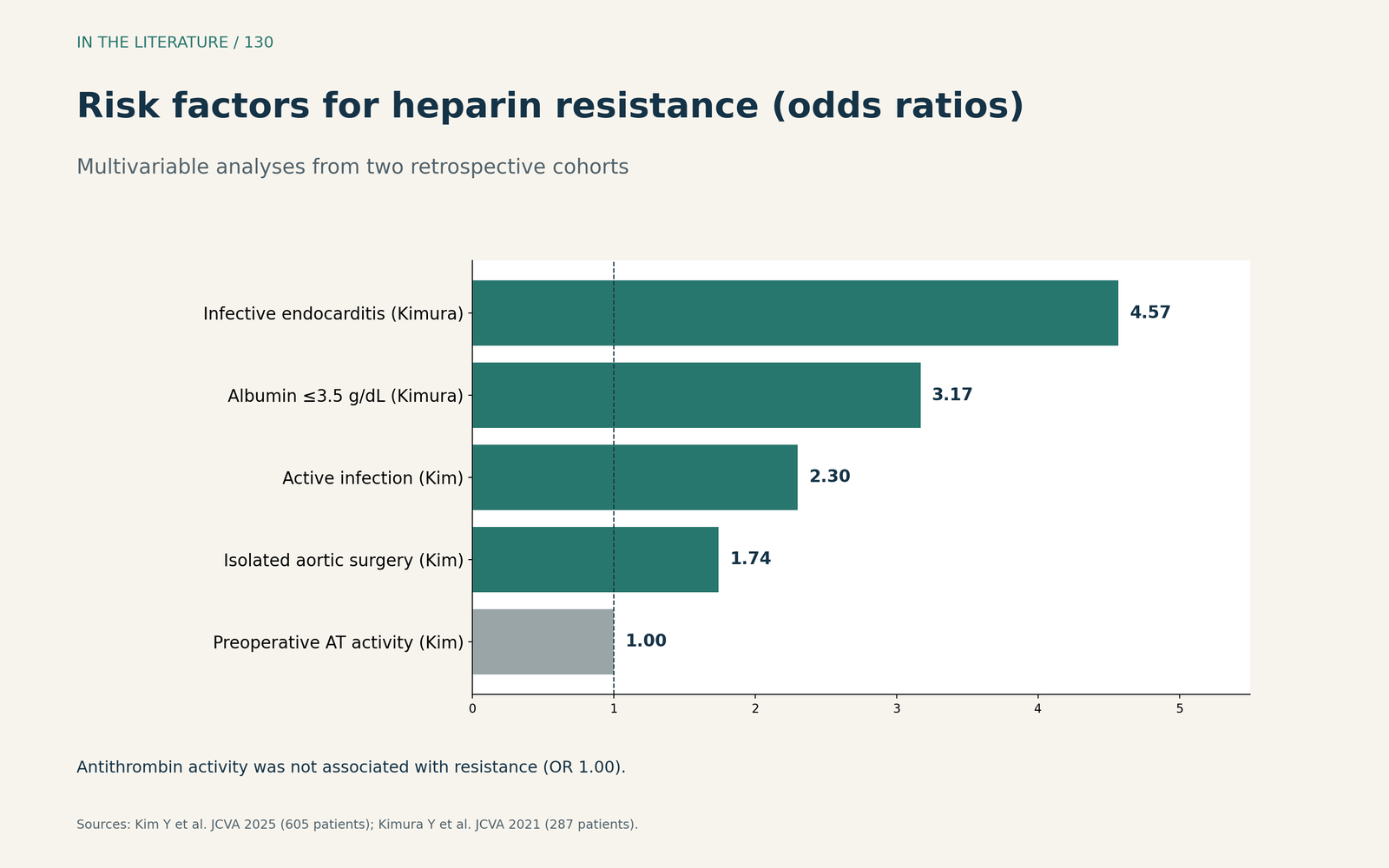
Figure 2. Risk factors for heparin resistance in two cohorts. Redrawn from Kim et al. and Kimura et al.[2], [3] View larger.

Treating it
In Kimura's cohort, all resistant patients received additional heparin, up to 450 IU/kg in total, and most reached the target without antithrombin.[3] Bolliger and colleagues divide resistance into antithrombin-dependent and antithrombin-independent forms and suggest antithrombin concentrate might be favored over plasma.[4] Butt and colleagues note that 2 units of plasma contribute about 500 IU of antithrombin, the same as one vial of concentrate, and that the average concentrate dose reported for resistance was about 1,029 IU.[5]
Preventing resistance is a different question. Ranucci and colleagues randomized 200 patients with preoperative antithrombin activity of 60% to 100% to manufacturer-funded supplementation or none; resistance occurred in 17% vs 38.2% of controls.[6] A meta-analysis of 13 randomized trials found that perioperative antithrombin did not conserve blood and was associated with higher in-hospital mortality (relative risk 2.53) and AKI (relative risk 3.72).[7] Kim and colleagues conclude that preoperative supplementation to prevent resistance may not be necessary.[2]
Andexanet alfa is an exception. Apostel and colleagues describe a patient who needed 1,250 IU/kg of heparin without an adequate ACT; after 1,000 IU of antithrombin, the ACT rose beyond the measurable range.[8]
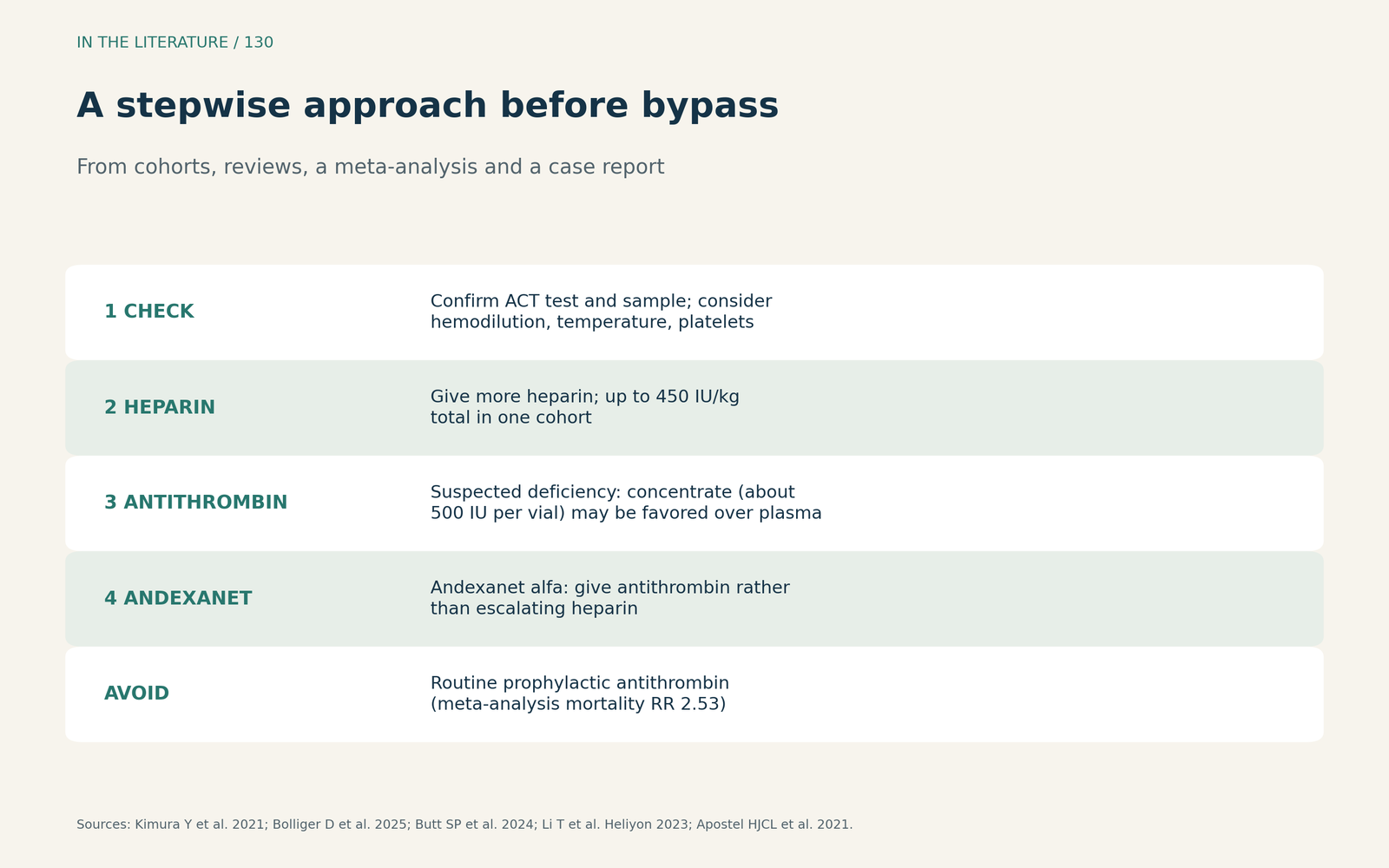
Figure 3. A stepwise approach before bypass. Synthesized from Kimura et al., Bolliger et al., Butt et al., Li et al. and Apostel et al.[3], [4], [5], [7], [8] View larger.

Three takeaways
- Use a common definition. ACT below 480 seconds after 500 U/kg; check the test before blaming the patient.[1], [4]
- Treat by mechanism. Give more heparin first; use antithrombin concentrate when deficiency is likely, and think of andexanet.[3], [4], [8]
- Do not give antithrombin routinely. Prophylaxis reduced resistance in one trial but was linked to harm in pooled trials.[6], [7]
References
- Levy JH, Sniecinski RM, Maier CL, et al. Finding a common definition of heparin resistance in adult cardiac surgery: communication from the ISTH SSC subcommittee on perioperative and critical care thrombosis and hemostasis. J Thromb Haemost. 2024;22(4):1249–1257. doi:10.1016/j.jtha.2024.01.001
- Kim Y, Kim SY, Chang HW, et al. Analysis of risk factors for heparin resistance during cardiac surgery: does antithrombin deficiency cause heparin resistance? J Cardiothorac Vasc Anesth. 2025;39(9):2274–2283. doi:10.1053/j.jvca.2025.04.004
- Kimura Y, Okahara S, Abo K, et al. Infective endocarditis is a risk factor for heparin resistance in adult cardiovascular surgical procedures: a retrospective study. J Cardiothorac Vasc Anesth. 2021;35(12):3568–3573. doi:10.1053/j.jvca.2021.05.024
- Bolliger D, Erdoes G, Mauermann E. Heparin resistance: definition, risk factors, and therapeutic approaches. J Cardiothorac Vasc Anesth. 2025;39(9):2293–2295. doi:10.1053/j.jvca.2025.05.057
- Butt SP, Kakar V, Kumar A, et al. Heparin resistance management during cardiac surgery: a literature review and future directions. J Extra Corpor Technol. 2024;56(3):136–144. doi:10.1051/ject/2024015
- Ranucci M, Baryshnikova E, Crapelli GB, et al. Preoperative antithrombin supplementation in cardiac surgery: a randomized controlled trial. J Thorac Cardiovasc Surg. 2013;145(5):1393–1399. doi:10.1016/j.jtcvs.2012.09.061
- Li T, Bo F, Meng X, et al. The effect of perioperative antithrombin supplementation on blood conservation and postoperative complications after cardiopulmonary bypass surgery: a systematic review, meta-analysis and trial sequential analysis. Heliyon. 2023;9(11):e22266. doi:10.1016/j.heliyon.2023.e22266
- Apostel HJCL, Winckers K, Bidar E, Schreiber JU. Successful antithrombin administration in andexanet alfa-associated heparin resistance. J Cardiothorac Vasc Anesth. 2021;35(3):904–907. doi:10.1053/j.jvca.2020.10.042