ITL-fe19243f9343
Juan Li, MD · Updated November 17, 2026
Watch the video
Key points
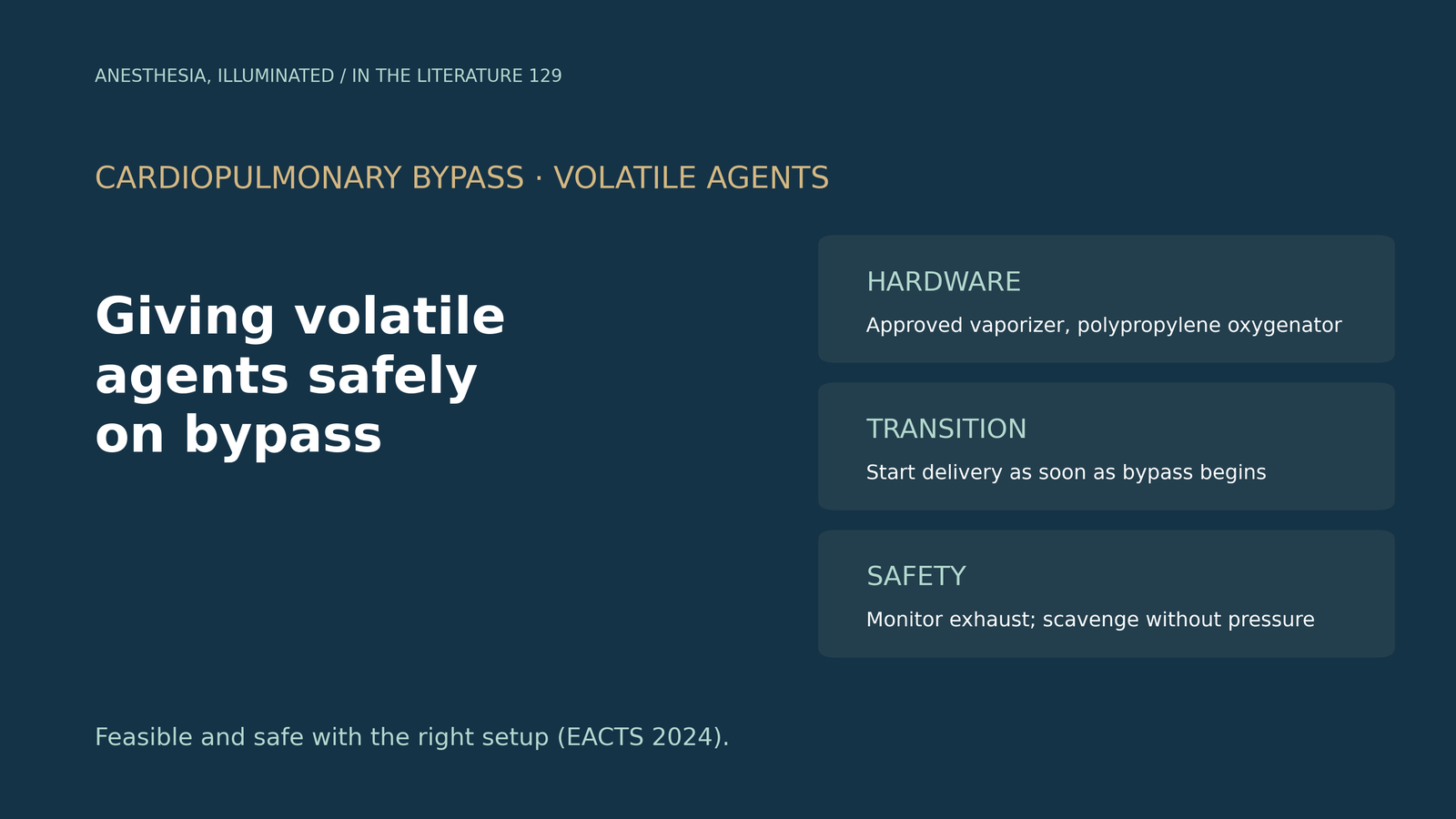
- The 2024 EACTS/EACTAIC/EBCP guideline says volatile agents may be considered to maintain anesthesia during bypass (Class IIb B), using approved equipment (Class I C) and a scavenging system at the oxygenator outlet (Class I C). Polymethylpentene oxygenators are not recommended with volatile agents (Class III B).[1]
- Blood concentration falls fast when the lungs stop. In one study, blood sevoflurane fell to about 25% of its pre-bypass level within 5 minutes unless delivery through the oxygenator started immediately.[2]
- Polypropylene oxygenators transfer agents well. Two randomized studies found no significant difference between polypropylene designs, while polymethylpentene membranes limit transfer and risk awareness.[3], [4], [1]
- Monitoring depth is hard. Oxygenator exhaust concentration tracks arterial concentration, but processed EEG is confounded by hypothermia; pooled data suggest about 0.88 vol% sevoflurane during bypass, with very low certainty.[4], [1], [5]
- Safety depends on the setup: scavenging must not over- or depressurize the oxygenator, spilled liquid agent can crack its shell, and delivery should be done only by trained teams.[6], [7], [3]
A team that maintains anesthesia with sevoflurane through the ventilator wants to continue it on bypass instead of switching to propofol. What equipment, monitoring and precautions are needed to do this safely?[1]
What the guideline says
The 2024 EACTS/EACTAIC/EBCP guideline states that giving volatile agents during bypass is feasible and safe. It recommends approved equipment for delivery (Class I C) and a scavenging system at the oxygenator outlet whenever volatile agents are supplied (Class I C), and says oxygenator exhaust concentrations should be considered for monitoring (Class IIa B). Because polymethylpentene membranes have low permeability to volatile agents, these oxygenators are not recommended when volatile agents are used (Class III B). Volatile agents may be considered for maintenance (Class IIb B); the guideline describes equipoise on whether they lower mortality.[1]
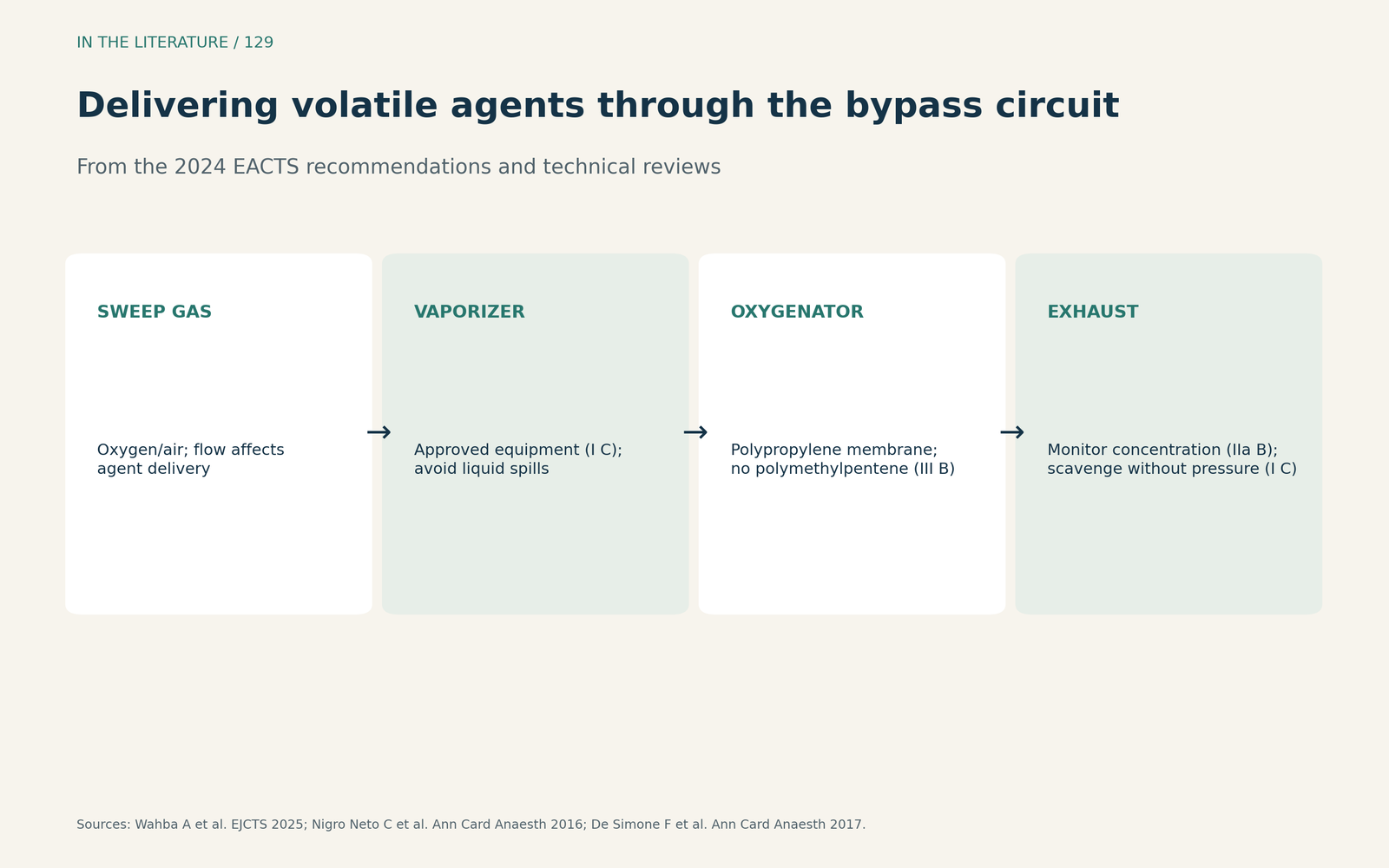
Figure 1. Delivering volatile agents through the bypass circuit. Synthesized from the 2024 EACTS guideline, Nigro Neto et al. and De Simone et al.[1], [6], [7] View larger.

The transition onto bypass
When the lungs are excluded, the agent is no longer delivered. Tamura and colleagues showed that blood sevoflurane fell sharply after bypass began, reaching about 25% of the lung-delivered level 5 minutes into the conversion if no agent was given through the oxygenator; they recommend introducing oxygen and agent into the oxygenator immediately after bypass starts. In their series, conversion took under 8 minutes and no patient awakened.[2] During hypothermic bypass, blood concentration then rose to about 1.4 times the equilibrium value at a fixed vaporizer setting, while processed EEG indices fell toward zero.[8]
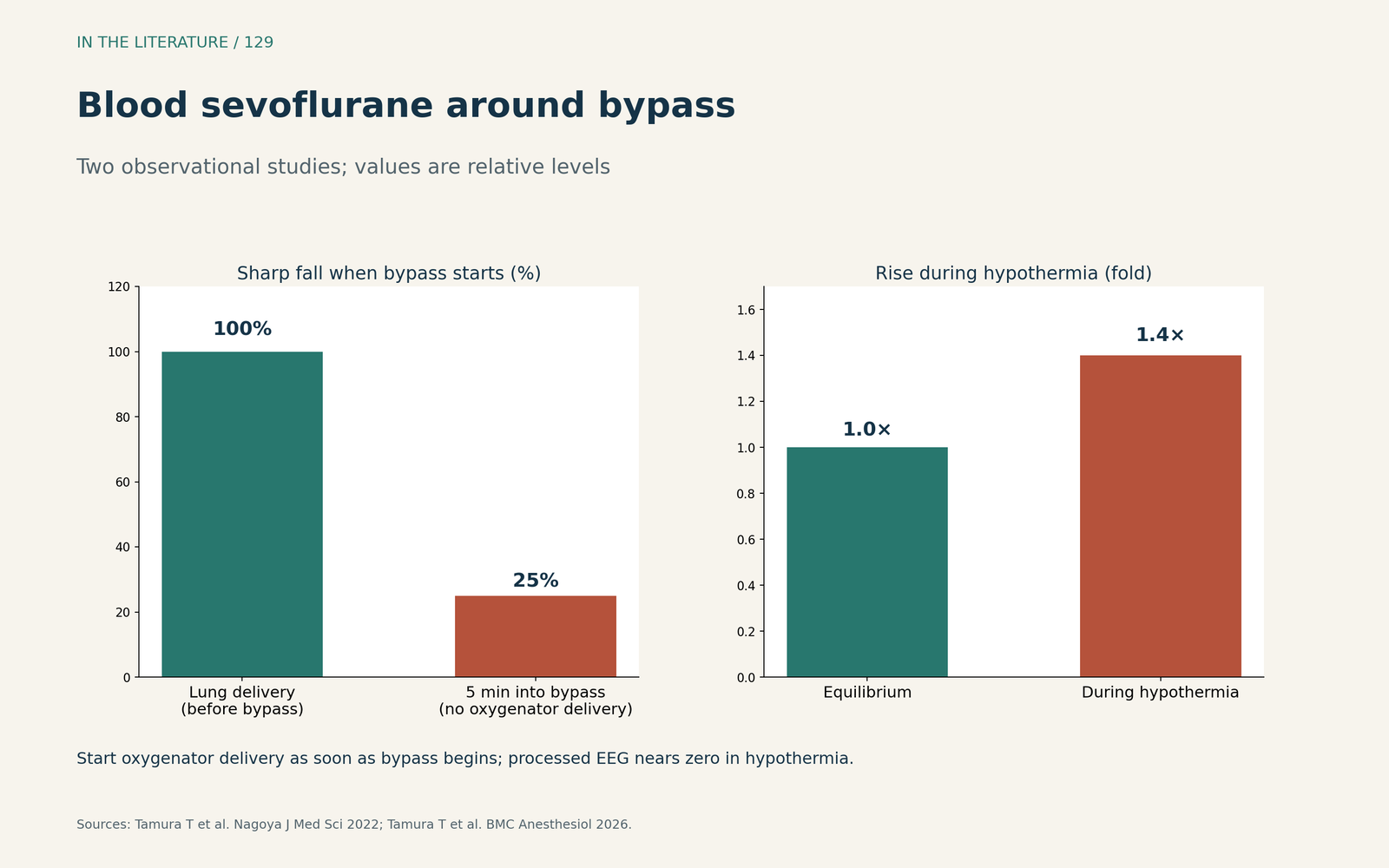
Figure 2. Blood sevoflurane around bypass. Redrawn from Tamura et al. 2022 and 2026.[2], [8] View larger.

Oxygenator and monitoring
Tamura and colleagues found no significant difference in blood desflurane or sevoflurane between polypropylene oxygenators, but noted that spilled liquid agent during vaporizer filling cracked a polycarbonate oxygenator shell.[3] Alston and colleagues randomized 25 patients to two polypropylene oxygenators of different designs and found no significant difference in arterial isoflurane; exhaust and arterial concentrations correlated strongly. They contrast this with polymethylpentene membranes, which are plasma-tight and limit transfer.[4] The guideline notes that processed EEG correlates with exhaust concentration during near-normothermic but not hypothermic bypass.[1] A meta-analysis of 5 studies with 129 patients estimated a sevoflurane requirement of 0.88 vol% during bypass, roughly 0.53 to 0.58 MAC, falling with age; the certainty was very low.[5]
Scavenging and safety
Nigro Neto and colleagues stress that proper scavenging is always necessary, cite an average exposure limit of 2 parts per million for halogenated agents, and advise that the technique be used only by skilled perfusionists and physicians.[6] De Simone and colleagues describe the hazard of connecting suction to the exhaust port: overpressurization can force gas into the blood and cause massive gas embolism, while depressurization can pull blood into the gas compartment. With a pressure-balanced scavenging device in more than 1300 patients, they reported no overpressurization or oxygenator cracking.[7]
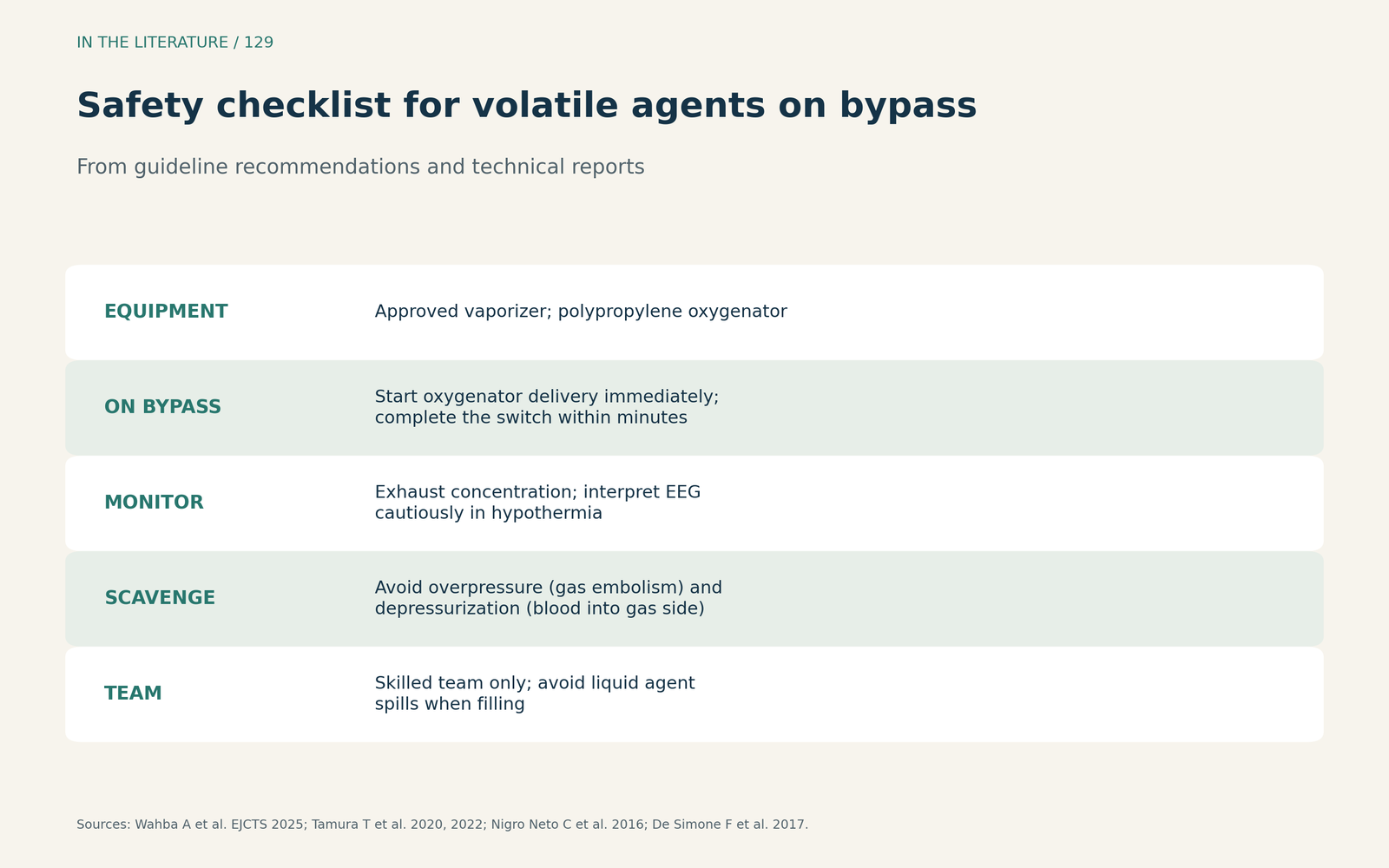
Figure 3. A safety checklist for volatile agents on bypass. Synthesized from the 2024 EACTS guideline, Tamura et al., Nigro Neto et al. and De Simone et al.[1], [2], [3], [6], [7] View larger.

Three takeaways
- Use the right hardware. An approved vaporizer, a polypropylene oxygenator and a scavenging system at the exhaust.[1], [4]
- Bridge the switch. Start delivery through the oxygenator as soon as bypass begins; concentrations fall within minutes.[2]
- Monitor and protect. Measure exhaust concentration, interpret EEG cautiously in hypothermia, and avoid pressurizing the oxygenator.[1], [7], [8]
References
- Wahba A, Kunst G, De Somer F, et al. 2024 EACTS/EACTAIC/EBCP guidelines on cardiopulmonary bypass in adult cardiac surgery. Eur J Cardiothorac Surg. 2025;67(2):ezae354. doi:10.1093/ejcts/ezae354
- Tamura T, Mori A, Ishii A, Nishiwaki K. The equilibrated blood sevoflurane concentrations show a rapid decrease after switching from ventilation for the human lung to cardiopulmonary bypass. Nagoya J Med Sci. 2022;84(1):163–168. doi:10.18999/nagjms.84.1.163
- Tamura T, Mori A, Ishii A, et al. Desflurane and sevoflurane concentrations in blood passing through the oxygenator during cardiopulmonary bypass: a randomized prospective pilot study. J Anesth. 2020;34(6):904–911. doi:10.1007/s00540-020-02844-1
- Alston RP, Kitchen C, McKenzie C, Homer N. A comparison of the arterial blood concentration of isoflurane during cardiopulmonary bypass between 2 polypropylene oxygenators. J Cardiothorac Vasc Anesth. 2020;34(5):1184–1190. doi:10.1053/j.jvca.2019.08.023
- Lee SH, Kang TH, Yoo S, Kim K. Estimated end-tidal sevoflurane concentration to maintain optimal anesthetic depth during cardiopulmonary bypass: a meta-analysis. Biomedicines. 2026;14(3):535. doi:10.3390/biomedicines14030535
- Nigro Neto C, De Simone F, Cassara L, et al. Tricks, tips, and literature review on the adapted vaporize system to deliver volatile agents during cardiopulmonary bypass. Ann Card Anaesth. 2016;19(2):240–244. doi:10.4103/0971-9784.179592
- De Simone F, Cassarà L, Sardo S, et al. An innovative technique to improve safety of volatile anesthetics suction from the cardiopulmonary bypass circuit. Ann Card Anaesth. 2017;20(4):399–402. doi:10.4103/aca.ACA_50_17
- Tamura T, Mori A, Imaizumi T, et al. Sevoflurane blood concentrations in patients undergoing mild and moderate hypothermic cardiac surgery: a prospective observational study. BMC Anesthesiol. 2026;26:577. doi:10.1186/s12871-026-04053-x