ITL-6dcd33e4e116
Juan Li, MD · Updated November 18, 2026
Key points
- A large, pragmatic test. CRT above 3 seconds triggered a phenotype-based protocol in 1467 analysed patients.[1]
- It won, but not on death. The win ratio was 1.16, driven by shorter vital support; 28-day mortality was 26.5% vs 26.6%.[1]
- The outcome rules matter. A stratified win ratio counted death first, and a later death within 28 days was not a benefit.[2]
- Guidelines already endorse CRT as an adjunct. Earlier trials of CRT vs lactate targeting gave a 28-day mortality RR of 0.82.[3]
- CRT is useful but imperfect. It does not equal cardiac output, varies by observer, and cutoffs differ between studies.[4], [5]
A patient in early septic shock has a mean arterial pressure of 70 mm Hg on noradrenaline, but the fingertip takes 5 seconds to refill. What did ANDROMEDA-SHOCK-2 test, and what did it show?
How the trial was built
The trial was conducted in 86 centres in 19 countries (Hernandez et al., JAMA 2025). Of 1501 randomized patients, 1467 were included in the primary analysis. CRT was measured with a chronometer, and a refill time longer than 3 seconds was abnormal; it then guided a stepwise protocol of vasopressor, fluid and inotrope tests.[1]
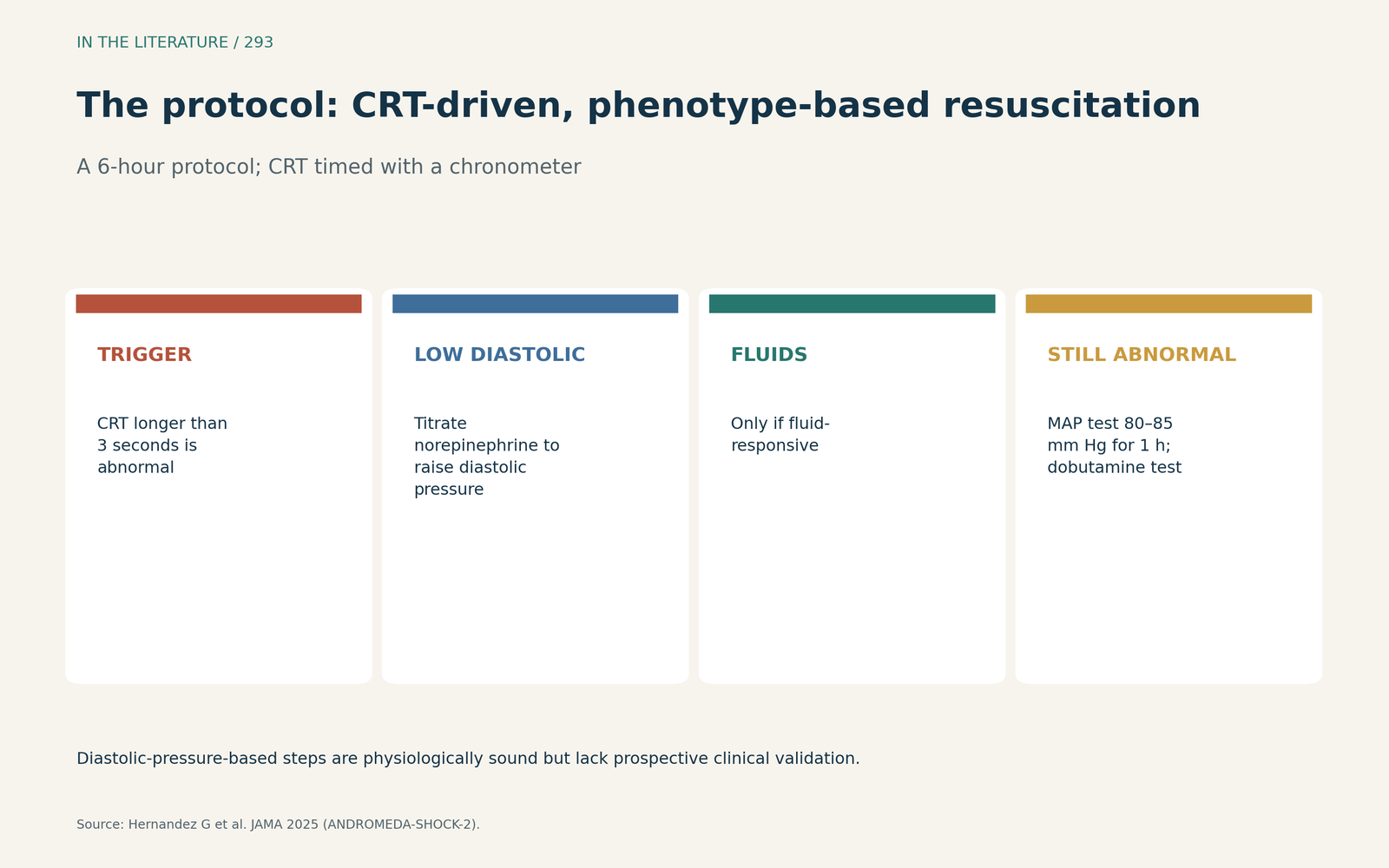
Figure 1. Abnormal CRT triggered phenotype-based steps for diastolic pressure, fluid responsiveness, MAP and dobutamine. Data from ANDROMEDA-SHOCK-2.[1] View larger.

What it found
The hierarchical primary outcome favoured CRT-targeted resuscitation, with a win ratio of 1.16, but 28-day mortality did not differ: 26.5% vs 26.6% (HR 0.99). The result was mainly driven by a shorter duration of vital support. CRT normalized more often with the protocol (85.9% vs 61.7%), and the protocol group received less resuscitation fluid (595 vs 847 mL). Diastolic-pressure-based steps lack prospective clinical validation.[1]
The pre-specified plan (Orozco et al., Crit Care Sci 2025) analysed the primary outcome with a stratified win ratio; in this approach, a later death within 28 days would not count as a benefit. The planners assumed a 28-day control mortality of 39%, well above the 26.6% observed.[2]
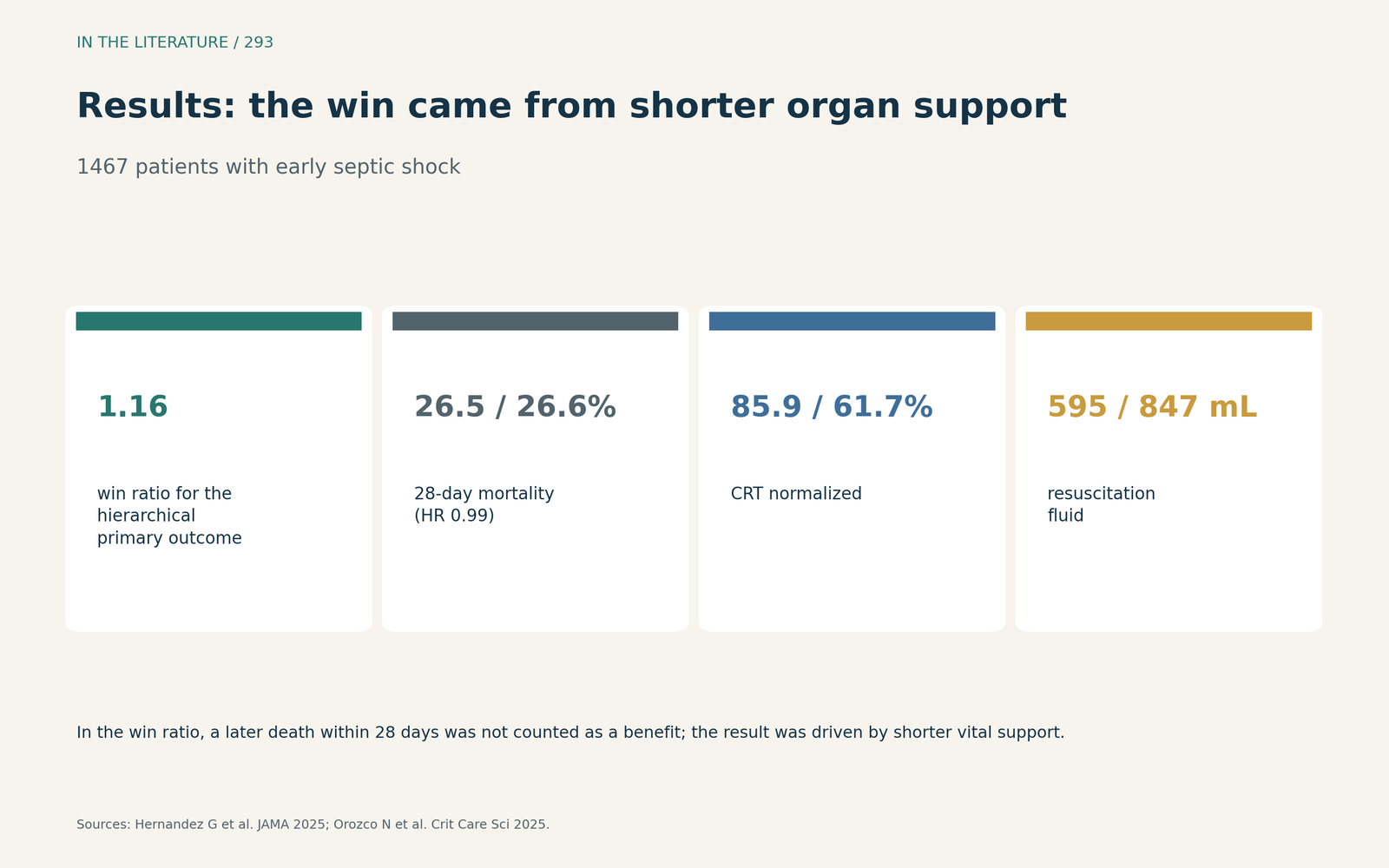
Figure 2. The protocol won on the hierarchical outcome without a mortality difference. Data from ANDROMEDA-SHOCK-2 and its analysis plan.[1], [2] View larger.

How it fits with guidelines and physiology
The Surviving Sepsis Campaign suggests using CRT to guide resuscitation as an adjunct to other perfusion measures (Prescott et al., Intensive Care Med 2026). In two earlier RCTs comparing CRT with lactate targeting, the 28-day mortality RR was 0.82, and CRT can change within about 10 minutes, allowing timely assessment of response.[3]
CRT cannot predict absolute cardiac output values and may remain prolonged despite significant increases in cardiac output; patients whose CRT normalized within two hours could safely stop resuscitation, but CRT measurement has significant intra- and inter-observer variability (Hernandez et al., Ann Intensive Care 2025).[4] A meta-analysis pooled 22 studies with 2,727 patients on skin perfusion signs in sepsis; CRT cutoffs varied from 3.25 to 4.85 seconds across studies, and all included studies were observational (Shi et al., Shock 2026).[5]
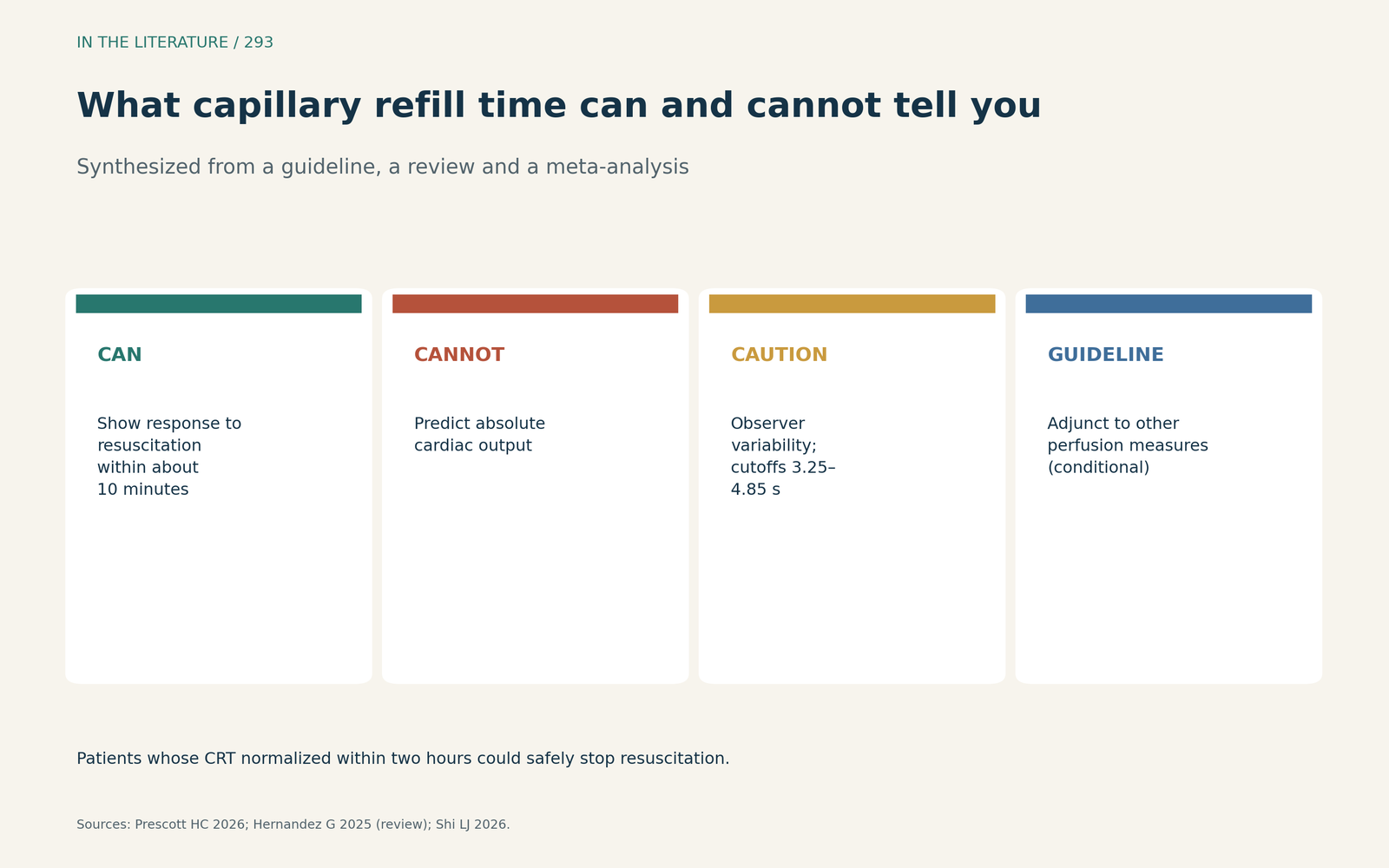
Figure 3. CRT is fast and cheap, but is an adjunct with known limits. Synthesized from the Surviving Sepsis Campaign, Hernandez et al. and Shi et al.[3], [4], [5] View larger.

Three takeaways
- ANDROMEDA-SHOCK-2 showed that a CRT-driven protocol shortened organ support and used less fluid, without changing 28-day mortality.[1]
- Read the win ratio carefully: the benefit came from secondary components of the hierarchy.[1], [2]
- Use CRT, timed properly, as one of several perfusion markers rather than the only target.[3], [4], [5]
References
- Hernandez G, Ospina-Tascón GA, Kattan E, et al.; ANDROMEDA-SHOCK-2 Investigators. Personalized hemodynamic resuscitation targeting capillary refill time in early septic shock: the ANDROMEDA-SHOCK-2 randomized clinical trial. JAMA. 2025;334(22):1988–1999. doi:10.1001/jama.2025.20402
- Orozco N, García-Gallardo G, Cavalcanti AB, et al. Statistical analysis plan for hemodynamic phenotype-based, capillary refill time-targeted resuscitation in early septic shock: the ANDROMEDA-SHOCK-2 randomized clinical trial. Crit Care Sci. 2025;37:e20250140. doi:10.62675/2965-2774.20250140
- Prescott HC, Antonelli M, Alhazzani W, et al. Surviving Sepsis Campaign: international guidelines for management of sepsis and septic shock 2026. Intensive Care Med. 2026;52:863–936. doi:10.1007/s00134-026-08361-1
- Hernandez G, Kattan E, Ospina-Tascón G, et al. The intricate relationship between capillary refill time and systemic hemodynamics in septic shock. Ann Intensive Care. 2025;15:135. doi:10.1186/s13613-025-01563-8
- Shi LJ, Ke SF, Fu LS, et al. Meta-analysis of the prognostic value of skin perfusion parameters in sepsis patients: evidence integration based on the mottling score, capillary refill time, and peripheral perfusion index. Shock. 2026;66(2):303–314. doi:10.1097/SHK.0000000000002885