ITL-7c33d8929046
Juan Li, MD · Updated November 18, 2026
Key points
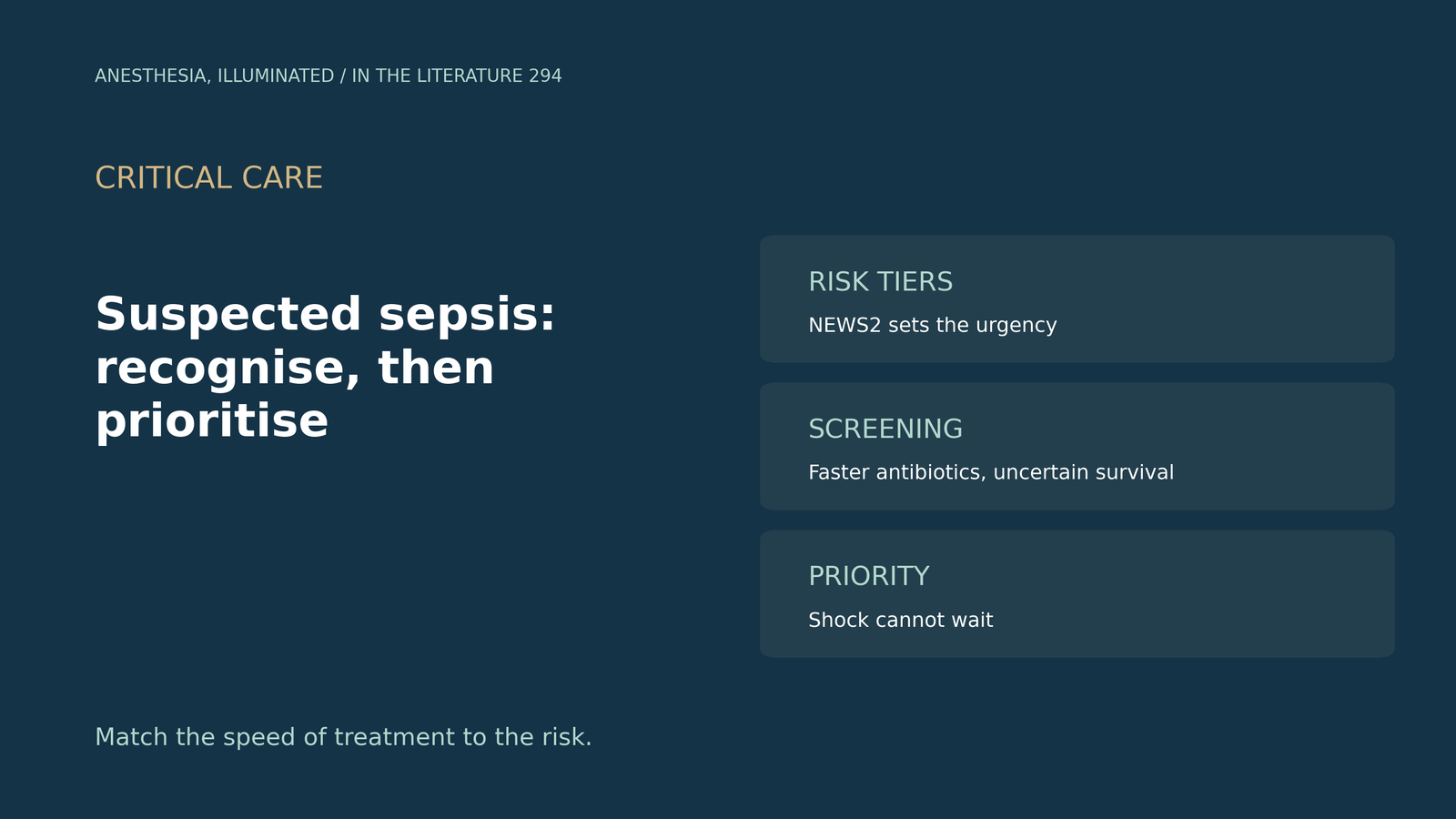
- Risk sets the clock. NICE uses NEWS2 tiers, with antibiotics within one, three or six hours as maximum times, not targets.[1]
- qSOFA alone misses too many. Its sensitivity was only 0.46, and SIRS suits screening better.[2]
- Screening helps speed, maybe survival. Electronic ward screening lowered adjusted mortality in one trial, while manual screening and pathways mainly sped up antibiotics.[3], [4], [5]
- Shock cannot wait. Each hour of antibiotic delay raised the odds of death in septic shock but not in sepsis without shock.[6]
- Bundles are not the goal in themselves. Full compliance with the US bundle measure was not linked to better outcomes; early antibiotics were.[7]
A ward patient with pneumonia has a respiratory rate of 26, new confusion and a NEWS2 of 8. What do guidelines say should happen first, and how fast?
Recognition and risk tiers
NICE now uses NEWS2 to stratify an adult's risk of severe illness or death from sepsis, and a NEWS2 score of 7 or more suggests high risk of severe illness (Gildea et al., BMJ 2024). NICE sets antibiotics within one hour for high risk, three hours for moderate risk and six hours for low risk; each timeframe is a maximum time until prescription, not a target, and these timings rest on very low certainty evidence and expert consensus.[1]
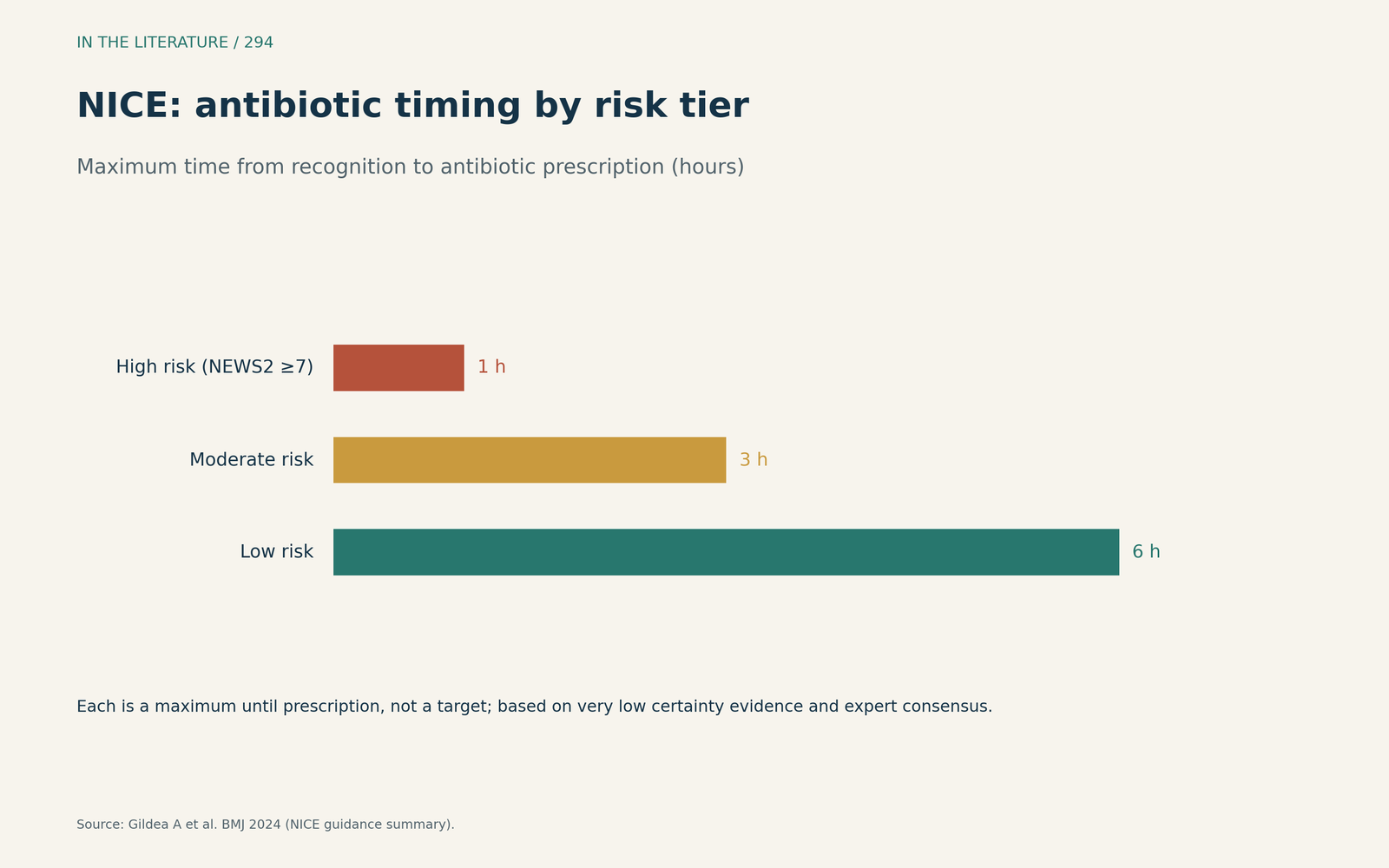
Figure 1. The higher the risk, the shorter the maximum time to antibiotics. Data from the NICE guidance summary.[1] View larger.

A meta-analysis pooled 26 studies with 62338 patients with suspected sepsis (Wang et al., PLoS One 2022). qSOFA had a pooled sensitivity of only 0.46 for mortality, and the authors judge SIRS more suitable as a screening tool for early care.[2]
Screening programmes and pathways
In the SCREEN stepped-wedge trial (Arabi et al., JAMA 2025), electronic qSOFA screening on wards was associated with lower 90-day in-hospital mortality (aRR 0.85), corresponding to a number needed to screen of 206. The benefit was seen only in adjusted, not crude, analysis, and a potential unintended consequence of screening is antibiotic overuse.[3]
A systematic review found 17 studies of manual sepsis screening; none of the ward studies reported improvement in any process of care, and conclusions were limited by high risk of bias, mainly confounding (Hechtman et al., J Hosp Med 2026).[4] Emergency department sepsis pathways shortened time to antibiotics by 43 minutes (pooled), but evidence is insufficient to show a reduction in mortality (McKinlay et al., Healthcare 2026).[5]
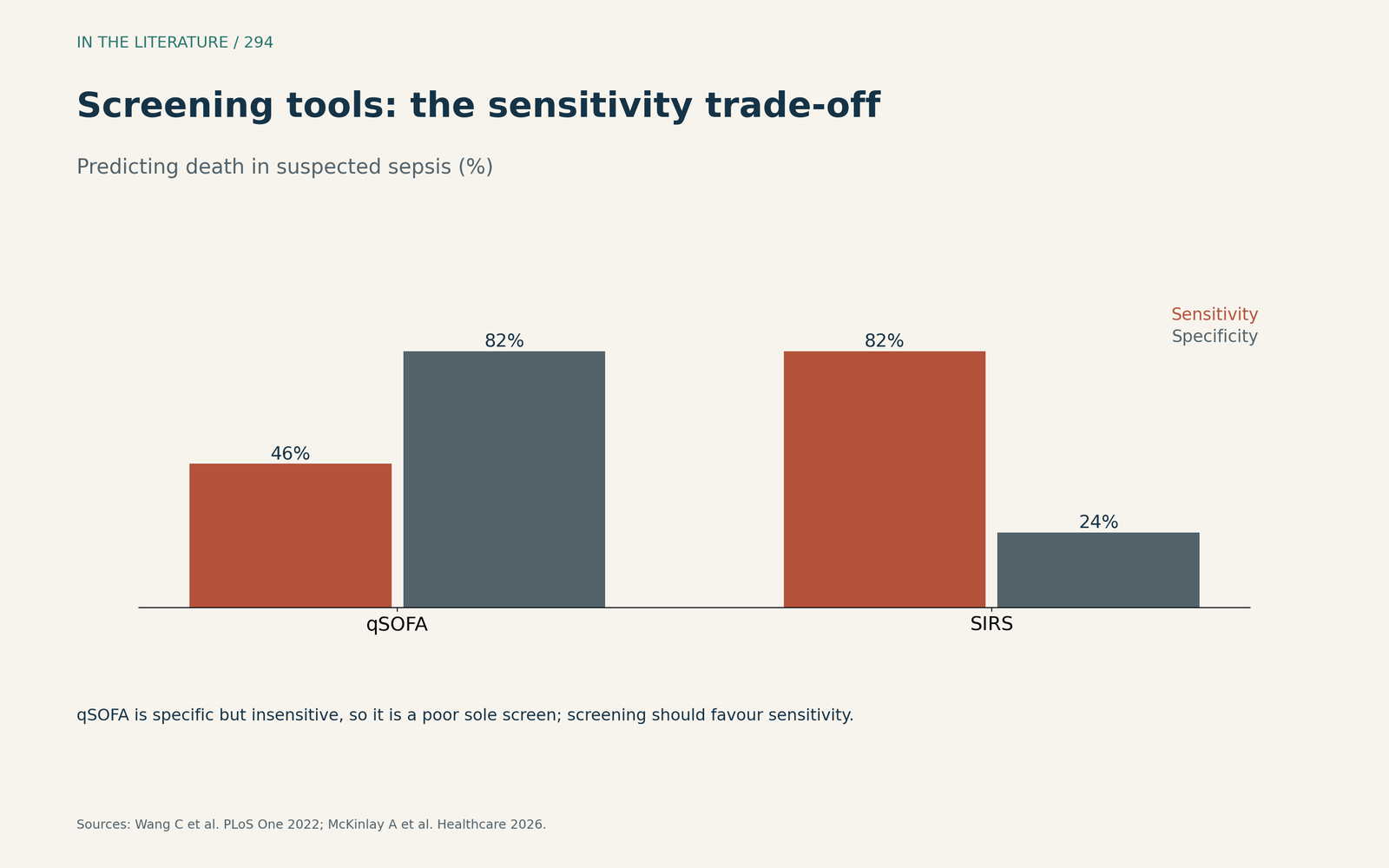
Figure 2. qSOFA is specific but insensitive; SIRS is the reverse. Data from Wang et al. and McKinlay et al.[2], [5] View larger.

What to prioritise: antibiotics, especially in shock
In a Korean nationwide cohort (Im et al., Crit Care 2022), in septic shock each hour of antibiotic delay raised the odds of death by 35% (OR 1.35), but no such trend was seen in patients without shock (OR 1.01).[6] In a US cohort (Baghdadi et al., JAMA Intern Med 2020), full adherence to the US sepsis bundle measure was not associated with improved outcomes; early broad-spectrum antibiotics were the only bundle component associated with any improved outcome, and the authors suggest prioritizing antibiotics when measuring quality.[7]
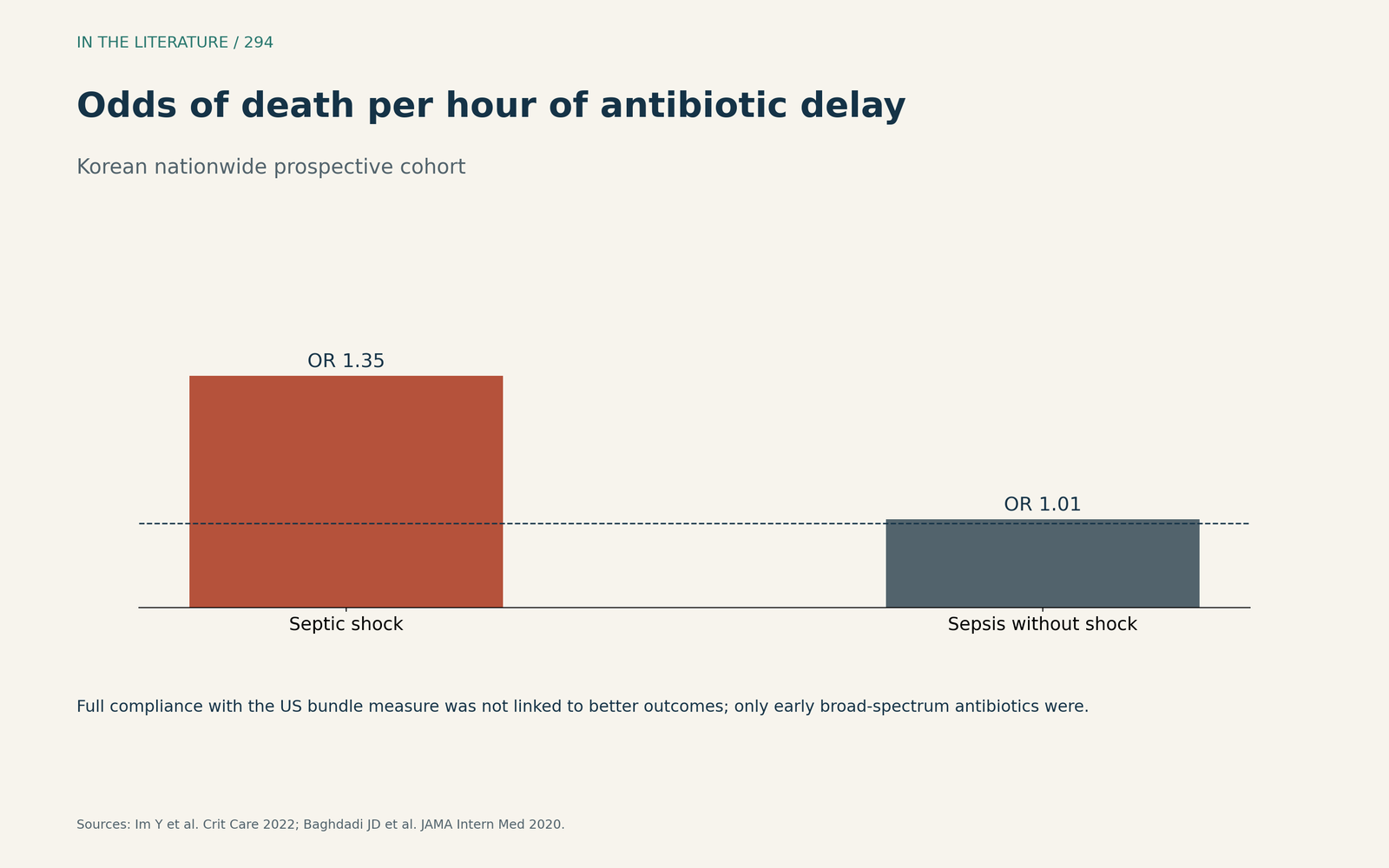
Figure 3. Antibiotic delay mattered in septic shock, not in sepsis without shock. Data from Im et al. and Baghdadi et al.[6], [7] View larger.

Three takeaways
- Stratify risk first (for example with NEWS2) and let the risk set the maximum time to antibiotics.[1], [2]
- Use screening and pathways to speed treatment, but expect modest proven benefit and watch for antibiotic overuse.[3], [4], [5]
- Give antibiotics fastest in septic shock; completing every bundle item is less important than that.[6], [7]
References
- Gildea A, Mulvihill C, McFarlane E, Gray A, Singer M; guideline committee. Recognition, diagnosis, and early management of suspected sepsis: summary of updated NICE guidance. BMJ. 2024;385:q1173. doi:10.1136/bmj.q1173
- Wang C, Xu R, Zeng Y, Zhao Y, Hu X. A comparison of qSOFA, SIRS and NEWS in predicting the accuracy of mortality in patients with suspected sepsis: a meta-analysis. PLoS One. 2022;17(4):e0266755. doi:10.1371/journal.pone.0266755
- Arabi YM, Alsaawi A, Alzahrani M, et al.; SCREEN Trial Group. Electronic sepsis screening among patients admitted to hospital wards: a stepped-wedge cluster randomized trial. JAMA. 2025;333(9):763–773. doi:10.1001/jama.2024.25982
- Hechtman RK, Garamani N, Anabtawi YR, et al. Impact of manual sepsis screening in hospitalized adult patients: a systematic review. J Hosp Med. 2026;21(5):539–548. doi:10.1002/jhm.70284
- McKinlay A, Barrington G, Prior SJ, Tran V. Clinical outcomes for emergency department presentations of sepsis managed on a clinical pathway: a systematic review and meta-analysis. Healthcare (Basel). 2026;14(11):1509. doi:10.3390/healthcare14111509
- Im Y, Kang D, Ko RE, et al.; Korean Sepsis Alliance investigators. Time-to-antibiotics and clinical outcomes in patients with sepsis and septic shock: a prospective nationwide multicenter cohort study. Crit Care. 2022;26:19. doi:10.1186/s13054-021-03883-0
- Baghdadi JD, Brook RH, Uslan DZ, et al. Association of a care bundle for early sepsis management with mortality among patients with hospital-onset or community-onset sepsis. JAMA Intern Med. 2020;180(5):707–716. doi:10.1001/jamainternmed.2020.0183