ITL-828680ce1f84
Juan Li, MD · Updated November 17, 2026
Watch the video
Key points
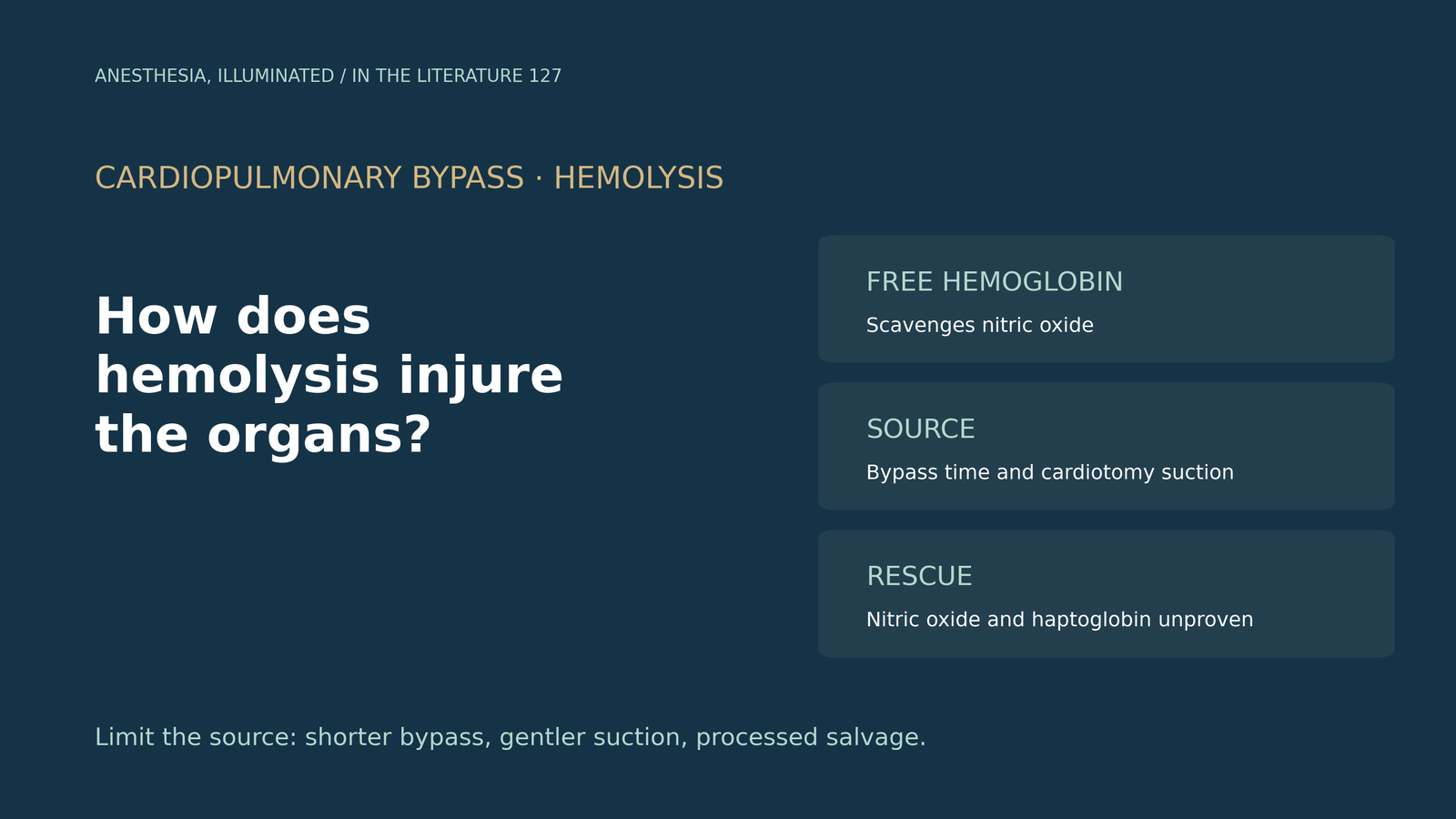
- Free hemoglobin released by damaged red cells scavenges nitric oxide. In 67 adults, hemolysis correlated closely with nitric oxide consumption (r² = 0.75) and with kidney and intestinal injury markers.[1]
- Hemolysis is common and rises with bypass time. In a point-of-care study, 24.4% of patients had plasma-free hemoglobin above 50 mg/dL at the end of bypass, and high values were associated with bypass longer than 100 minutes.[2]
- The circuit matters. A meta-analysis found less hemolysis with centrifugal than roller pumps and with separate handling of suctioned blood, and more with vacuum-assisted venous drainage; bypass time and cardiotomy suction were the major causes.[3]
- The link to AKI is not consistent. In 179 children, AKI occurred in 41%, but free hemoglobin was not an independent risk factor once bypass time was considered.[4]
- Treatments are investigational. Nitric oxide during and after bypass reduced AKI in one randomized trial (64% to 50%) and in a meta-analysis, while pre-emptive haptoglobin worsened creatinine in a trial stopped early.[5], [6], [7]
During a long double-valve operation, the perfusionist notices pink plasma in the blood gas syringe. What does hemolysis do to the patient, and what can the team change during and after bypass?[1], [2]
How free hemoglobin causes harm
When haptoglobin is saturated, free hemoglobin and heme accumulate. Schiavoni and colleagues summarize the consequences: free hemoglobin scavenges nitric oxide, increasing systemic and pulmonary vascular resistance and promoting thrombin formation, and iron overload has been associated with acute renal failure.[2] Vermeulen Windsant and colleagues measured this directly in 67 patients: hemolysis and nitric oxide consumption correlated strongly, renal and intestinal injury both tracked the extent of hemolysis, and the 9 patients (13.4%) who developed AKI had higher free hemoglobin and urinary tubular injury markers. Clinical events were few.[1]
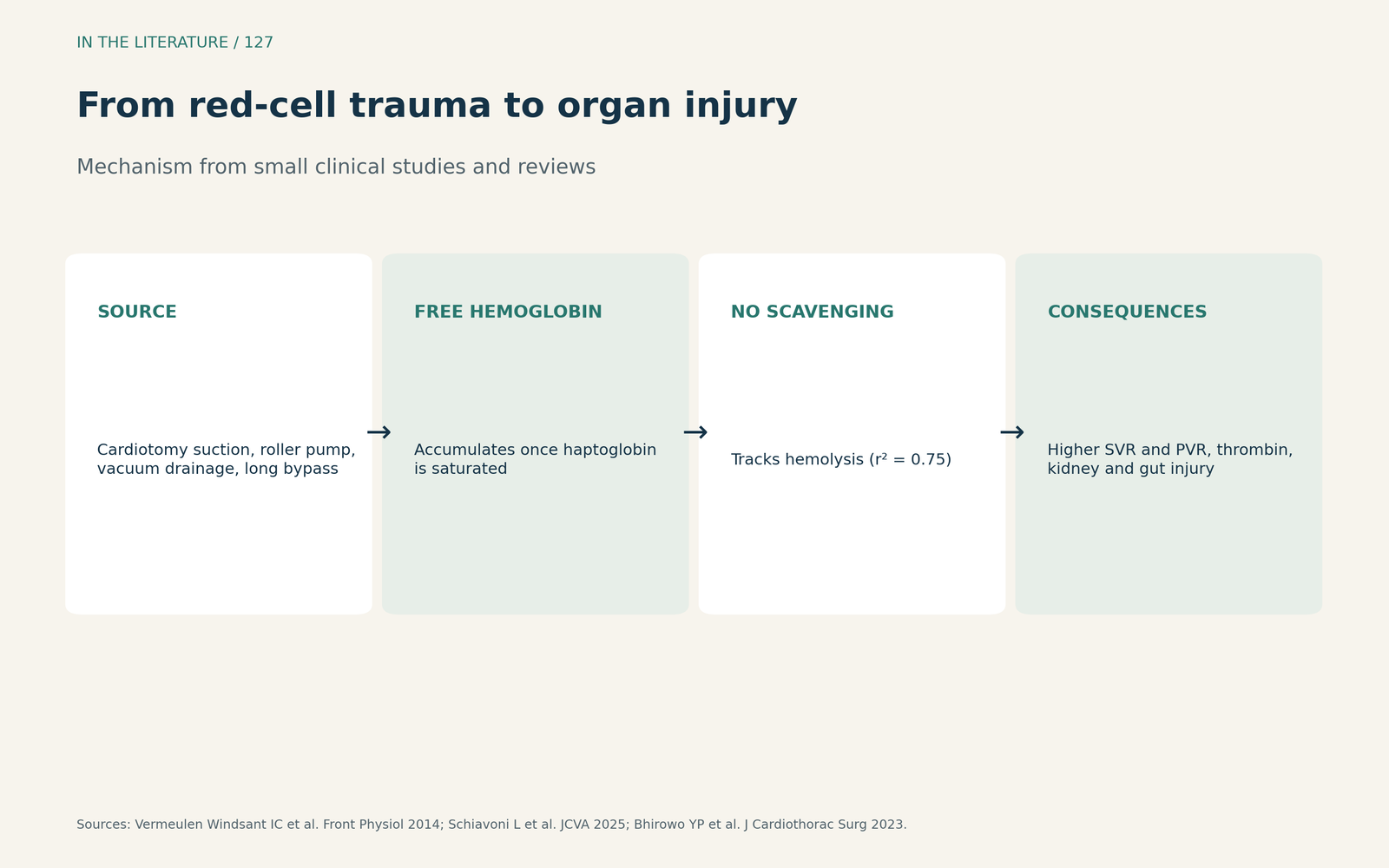
Figure 1. From red-cell trauma to organ injury. Synthesized from Vermeulen Windsant et al., Schiavoni et al. and Bhirowo et al.[1], [2], [3] View larger.

How much, and from where
In 78 adults monitored with a point-of-care analyzer, free hemoglobin above 50 mg/dL was found in 5.1% of patients during bypass and 24.4% at its end; hemolysis appeared after as little as 35 minutes, and high values were associated with bypass longer than 100 minutes.[2] Bhirowo and colleagues pooled 64 studies with 3434 patients: centrifugal pumps lowered free hemoglobin by about 22 mg/dL compared with roller pumps, separate reservoirs for suctioned blood lowered it by about 22.5 mg/dL, and vacuum-assisted drainage raised it by about 5 mg/dL. They identified bypass time and cardiotomy suction as the major causes.[3]
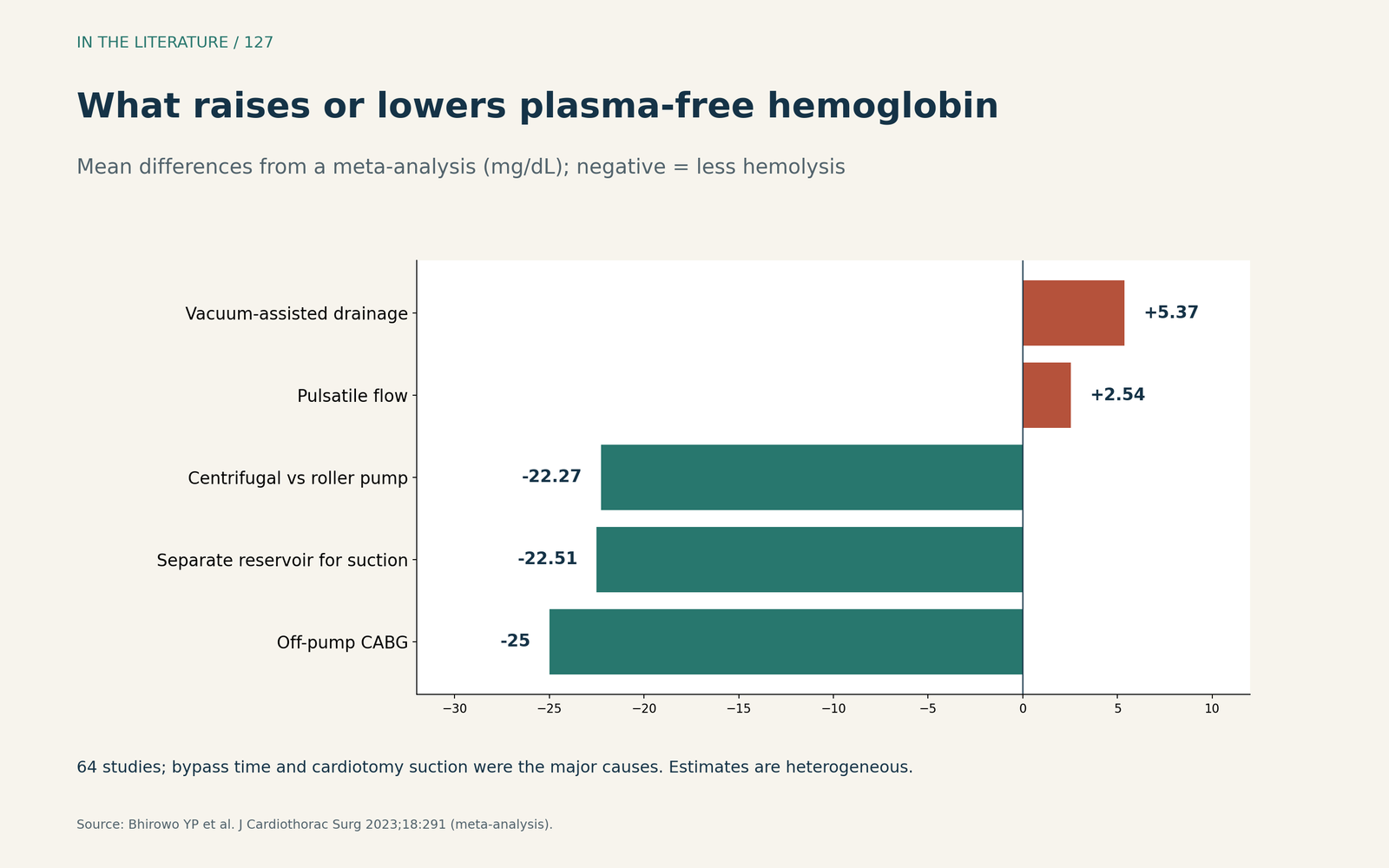
Figure 2. Factors that raise or lower plasma-free hemoglobin. Redrawn from the meta-analysis by Bhirowo et al.[3] View larger.

Does it cause AKI?
The association is real but not settled. In 179 children having bypass, 41% developed AKI; peak free hemoglobin was higher in those with AKI, but after adjustment only bypass time remained an independent risk factor.[4] Adult data are small and observational.[1]
What can be done
Practical measures target the source: keep the suction tip below the blood level rather than aspirating air, and process salvaged blood with a cell-saver, which can remove up to 90% of free hemoglobin.[2] The STS/SCA/AmSECT/SABM guideline recommends routine red-cell salvage with centrifugation (Class I A) and advises against direct reinfusion of shed mediastinal blood (Class III Harm).[8]
Drug strategies remain investigational. Lei and colleagues randomized 244 patients having multiple valve replacement to nitric oxide via the oxygenator and by inhalation for 24 hours, or nitrogen; AKI fell from 64% to 50%.[5] A meta-analysis of 10 trials with 838 patients found a relative risk for AKI of 0.78, but the authors judged the effect small and its clinical significance uncertain.[6] In contrast, Miyazaki and colleagues gave haptoglobin pre-emptively when free hemoglobin reached 0.05 g/dL; the trial was stopped early for safety because creatinine rose more with pre-emptive treatment.[7]
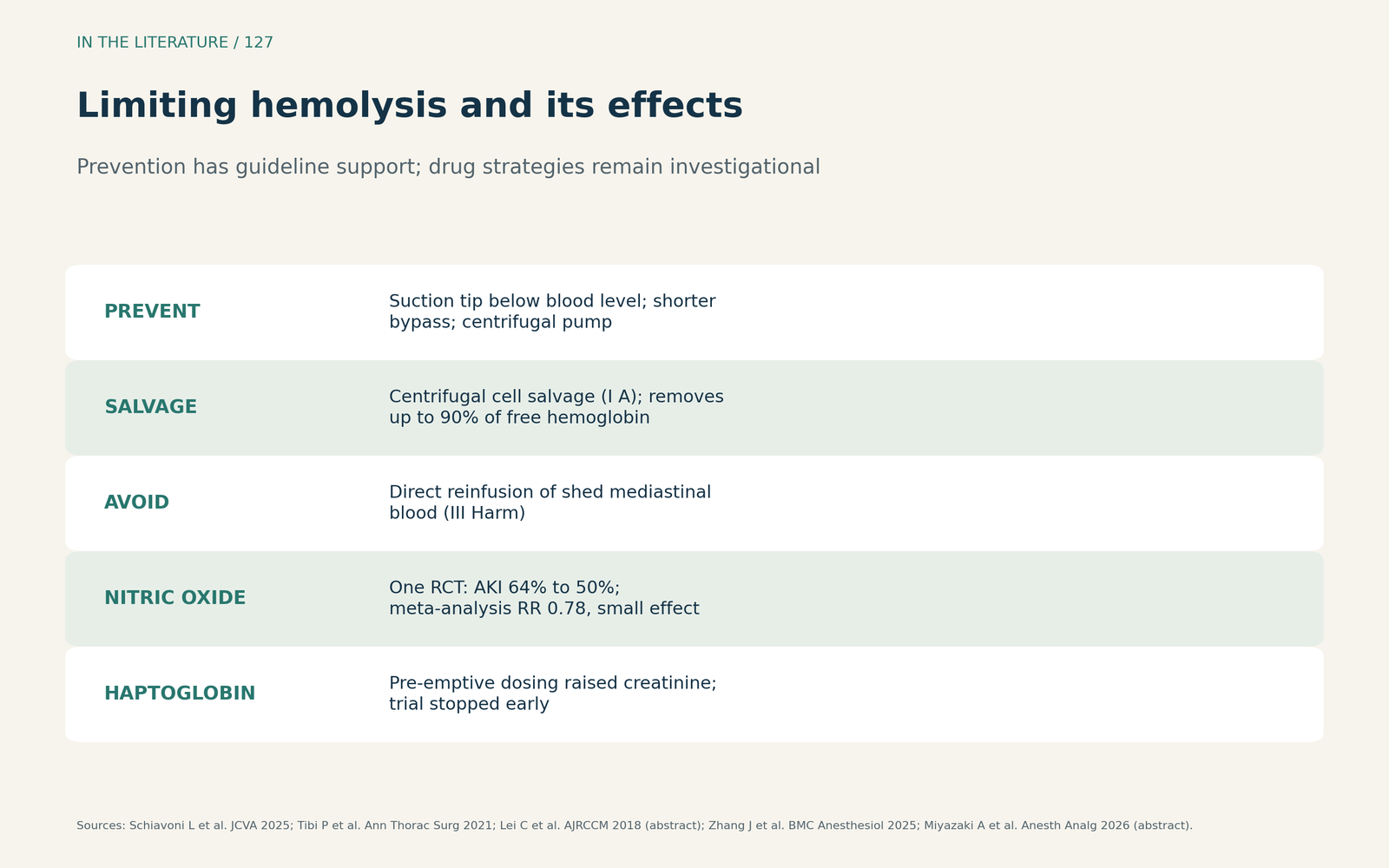
Figure 3. Limiting hemolysis and its effects. Synthesized from Schiavoni et al., the STS/SCA/AmSECT/SABM guideline, Lei et al., Zhang et al. and Miyazaki et al.[2], [8], [5], [6], [7] View larger.

Three takeaways
- Hemolysis is a dose of free hemoglobin. It scavenges nitric oxide and tracks kidney and gut injury markers.[1], [2]
- Limit the source. Shorter bypass, gentler suction, centrifugal pumps and processed salvage reduce free hemoglobin.[2], [3], [8]
- Treat rescue drugs as experimental. Nitric oxide shows a modest kidney signal; pre-emptive haptoglobin worsened creatinine.[5], [6], [7]
References
- Vermeulen Windsant IC, de Wit NCJ, Sertorio JTC, et al. Hemolysis during cardiac surgery is associated with increased intravascular nitric oxide consumption and perioperative kidney and intestinal tissue damage. Front Physiol. 2014;5:340. doi:10.3389/fphys.2014.00340
- Schiavoni L, Stifano M, La Verde F, et al. Intraoperative hemolysis monitoring by real-time point-of-care in patients undergoing cardiopulmonary bypass in cardiac surgery: a single-centre prospective observational study. J Cardiothorac Vasc Anesth. 2025;39(6):1432–1440. doi:10.1053/j.jvca.2025.02.048
- Bhirowo YP, Raksawardana YK, Setianto BY, et al. Hemolysis and cardiopulmonary bypass: meta-analysis and systematic review of contributing factors. J Cardiothorac Surg. 2023;18:291. doi:10.1186/s13019-023-02406-y
- Sakura T, Kanazawa T, Shimizu T, et al. Association between plasma-free haemoglobin and postoperative acute kidney injury in paediatric cardiac surgery: a prospective observational study. BJA Open. 2024;12:100348. doi:10.1016/j.bjao.2024.100348
- Lei C, Berra L, Rezoagli E, et al. Nitric oxide decreases acute kidney injury and stage 3 chronic kidney disease after cardiac surgery. Am J Respir Crit Care Med. 2018;198(10):1279–1287. Abstract only. doi:10.1164/rccm.201710-2150OC
- Zhang J, Zhang H, Wang J, et al. The organ-protective effects of nitric oxide in adult patients undergoing cardiac surgery with cardiopulmonary bypass: a systematic review and meta-analysis. BMC Anesthesiol. 2025;25:335. doi:10.1186/s12871-025-03207-7
- Miyazaki A, Hokka M, Mizobuchi S. Influence of pre-emptive haptoglobin on postoperative acute kidney injury in cardiac surgical patients: a randomized controlled trial. Anesth Analg. 2026;142(6):1180–1188. Abstract only. doi:10.1213/ANE.0000000000007827
- Tibi P, McClure RS, Huang J, et al. STS/SCA/AmSECT/SABM update to the clinical practice guidelines on patient blood management. Ann Thorac Surg. 2021;112(3):981–1004. doi:10.1016/j.athoracsur.2021.03.033