
ITL-1a777ddad60b
Juan Li, MD · Updated November 18, 2026
Key points
- Plan for futility from the start. When native function does not recover and no advanced therapy exists, stopping support should be considered.[1]
- Name the end-point and the time frame. ECMO is a temporary bridge, and the risk that it only delays death should be raised early.[2]
- Make it a team process. A UK consensus put expectation management, capacity assessment and psychological support among its essentials.[3]
- Stopping is not different from not starting. Time-limited trials and palliative care integration are core elements.[4]
- Explain clearly to families. Most families felt the severity of illness and the need for ECMO were not explained well.[5]
A patient has been on VA-ECMO for three weeks with no cardiac recovery and is not a transplant candidate. The family asks to "keep going." How should the team talk about what comes next?
Define the goal and reassess it
The post-cardiotomy ECLS consensus (Lorusso et al., J Thorac Cardiovasc Surg 2021) states that termination of support for futility should be considered when native function does not recover and no advanced therapy exists. A timeline for reassessing benefits and burdens should be set, including objective indicators of recovery and futility, and conversations about futility should guide surrogates within a framework of shared decision-making.[1]
The ERAS Cardiac Society consensus (Griffee et al., ASAIO J 2026) recommends that ECMO be described as a temporary intervention directed to an end-point, with benefits, burdens, goals and progress reassessed regularly and honestly. At one US hospital, ethics consultation became routine for all ECMO patients within 72 hours of cannulation. When recovery milestones are not met, the team should reassess at regular intervals, such as weekly, and should set an expectation of how long it is reasonable to try ECMO. The risk that ECMO simply delays an unavoidable death should be emphasized early, and it is ethically appropriate to recommend compassionate discontinuation when the purpose of ECMO is not feasible.[2]
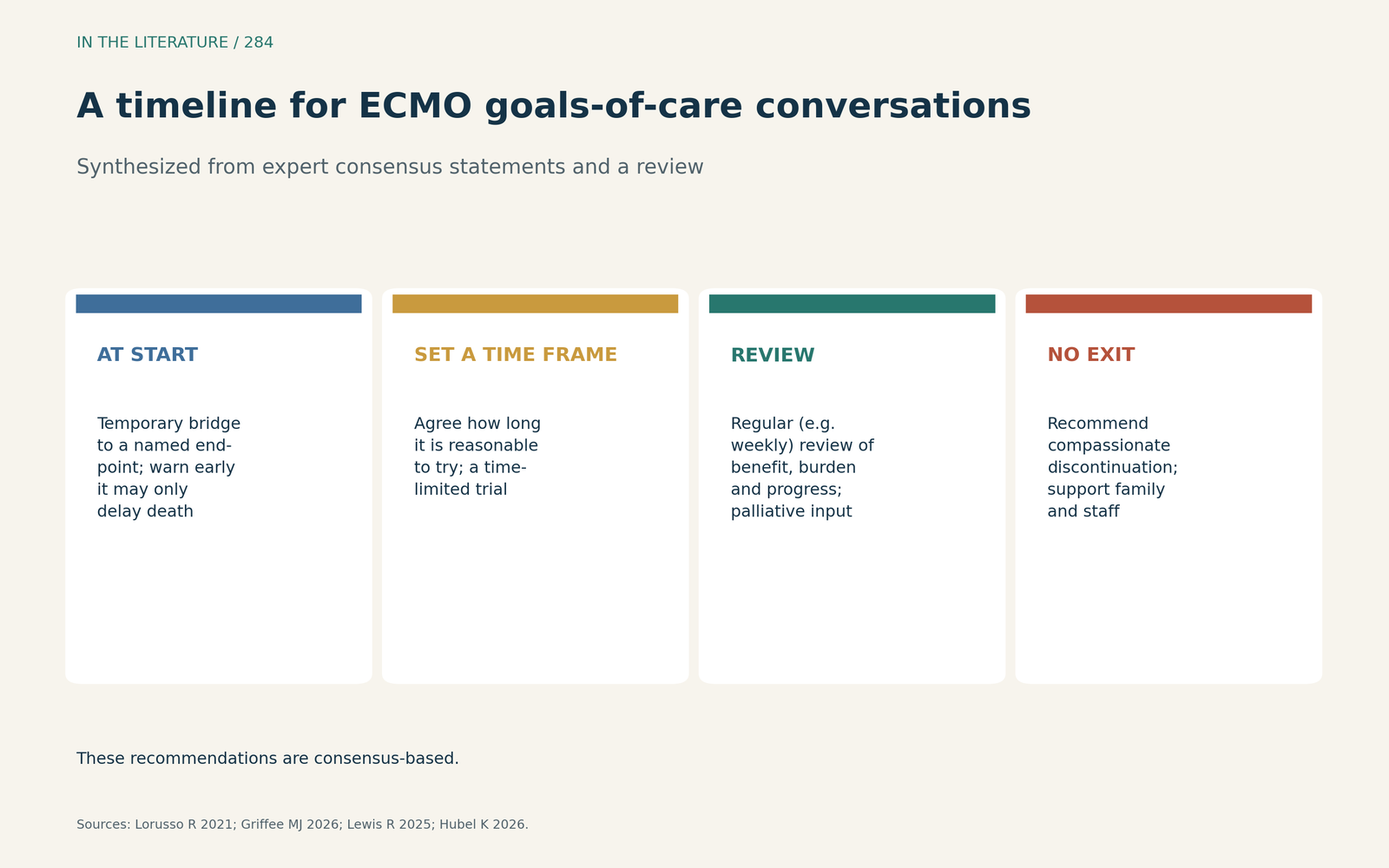
Figure 1. Frame ECMO as temporary, set a time frame, review regularly, and recommend compassionate discontinuation when no exit remains. Synthesized from Lorusso et al., Griffee et al., Lewis et al. and Hubel et al.[1], [2], [3], [4] View larger.

Communication and support
A UK panel of 17 voted on 16 priority statements for withdrawal of VV-ECMO (Lewis et al., Br J Anaesth 2025). Eight statements (50%) were voted essential and six (38%) desirable. Communication about withdrawal should include managing expectations from ECMO initiation, mental capacity assessment was seen as fundamental when involving awake ECMO patients in decisions, and access to psychological support should be standard.[3]
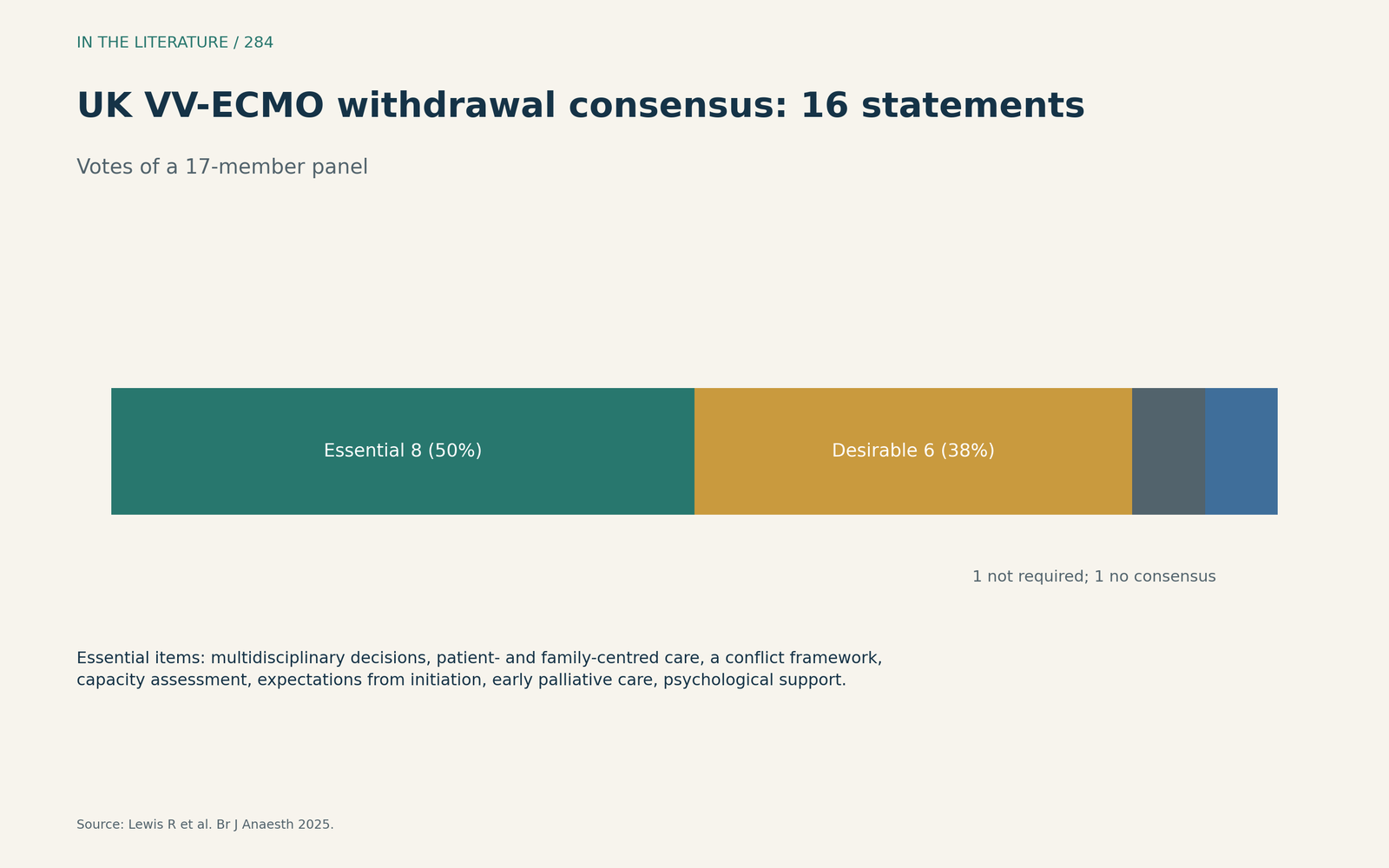
Figure 2. Half of the 16 statements were voted essential. Data from Lewis et al.[3] View larger.

A narrative review of compassionate ECMO discontinuation (Hubel et al., Healthcare 2026) lists structured shared decision-making, early expectation setting, time-limited trials and palliative care integration as core elements. Withdrawal of life-sustaining therapy accounts for 53–76% of ECMO-associated deaths; ethically, there is no distinction between not starting and stopping ECMO, and the team establishes negotiated, time-limited trials with the patient and family. The evidence base for compassionate ECMO discontinuation remains limited.[4]
The family's view
Interviews with 19 family members explored ECMO decision-making in a Chinese ICU (Yang et al., BMC Med Inform Decis Mak 2025). Most family members said clinicians did not adequately explain the severity of illness and the need for ECMO, and only 3 family members considered the patient's own wishes and religious beliefs; the other 16 did not.[5]
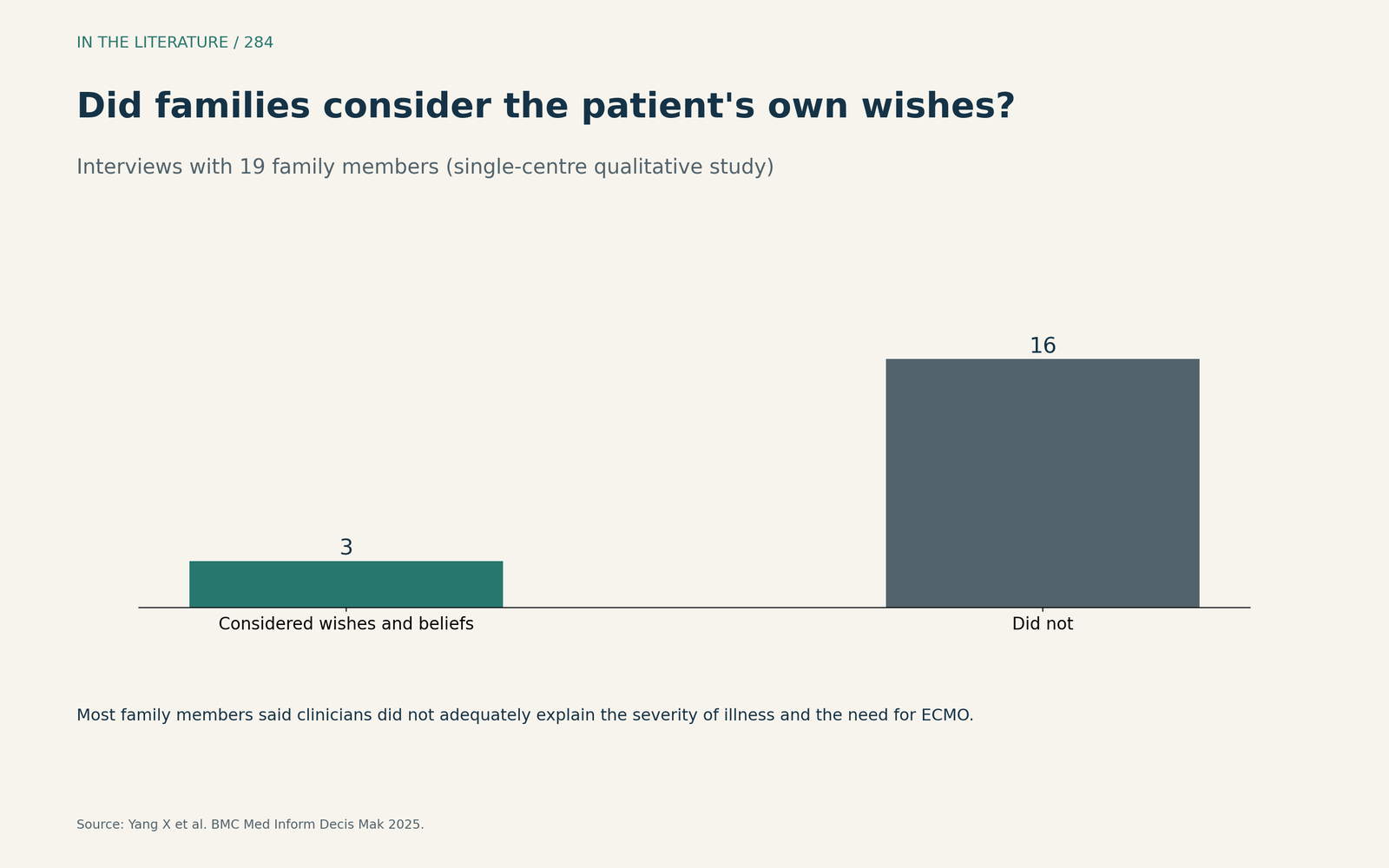
Figure 3. Few families based the ECMO decision on the patient's own wishes. Data from Yang et al.[5] View larger.

Three takeaways
- At cannulation, describe ECMO as a temporary bridge to a named end-point and say early that it may only delay death.[1], [2]
- Agree a time frame, review progress regularly with palliative and multidisciplinary input, and support families and staff.[2], [3], [4]
- Explain severity in plain words and ask what the patient would want; when no exit remains, recommend compassionate discontinuation.[2], [5]
References
- Lorusso R, Whitman G, Milojevic M, et al. 2020 EACTS/ELSO/STS/AATS expert consensus on post-cardiotomy extracorporeal life support in adult patients. J Thorac Cardiovasc Surg. 2021;161(4):1287–1331. doi:10.1016/j.jtcvs.2020.09.045
- Griffee MJ, Kirsch RE, Rubin J, et al. Ethical challenges of extracorporeal membrane oxygenation: Enhanced Recovery After Surgery Cardiac Society consensus on key issues and practical recommendations. ASAIO J. 2026;72(7):544–552. doi:10.1097/MAT.0000000000002707
- Lewis R, Jackson E, Collins P, et al. UK consensus statement on priorities to support the process of withdrawal of veno-venous extracorporeal membrane oxygenation. Br J Anaesth. 2025;135(5):1223–1230. doi:10.1016/j.bja.2025.07.091
- Hubel K, Reddy R, Khan A, Pak J, Sher N. Compassionate extracorporeal membrane oxygenation discontinuation: a narrative review and practical process model for reliable end-of-life care. Healthcare (Basel). 2026;14(9):1249. doi:10.3390/healthcare14091249
- Yang X, Lin Y, Tang A, et al. Tough choices: the experience of family members of critically ill patients participating in ECMO treatment decision-making: a descriptive qualitative study. BMC Med Inform Decis Mak. 2025;25:65. doi:10.1186/s12911-025-02876-1