ITL-5f196af4f88b
Juan Li, MD · Updated November 17, 2026
Watch the video
Key points
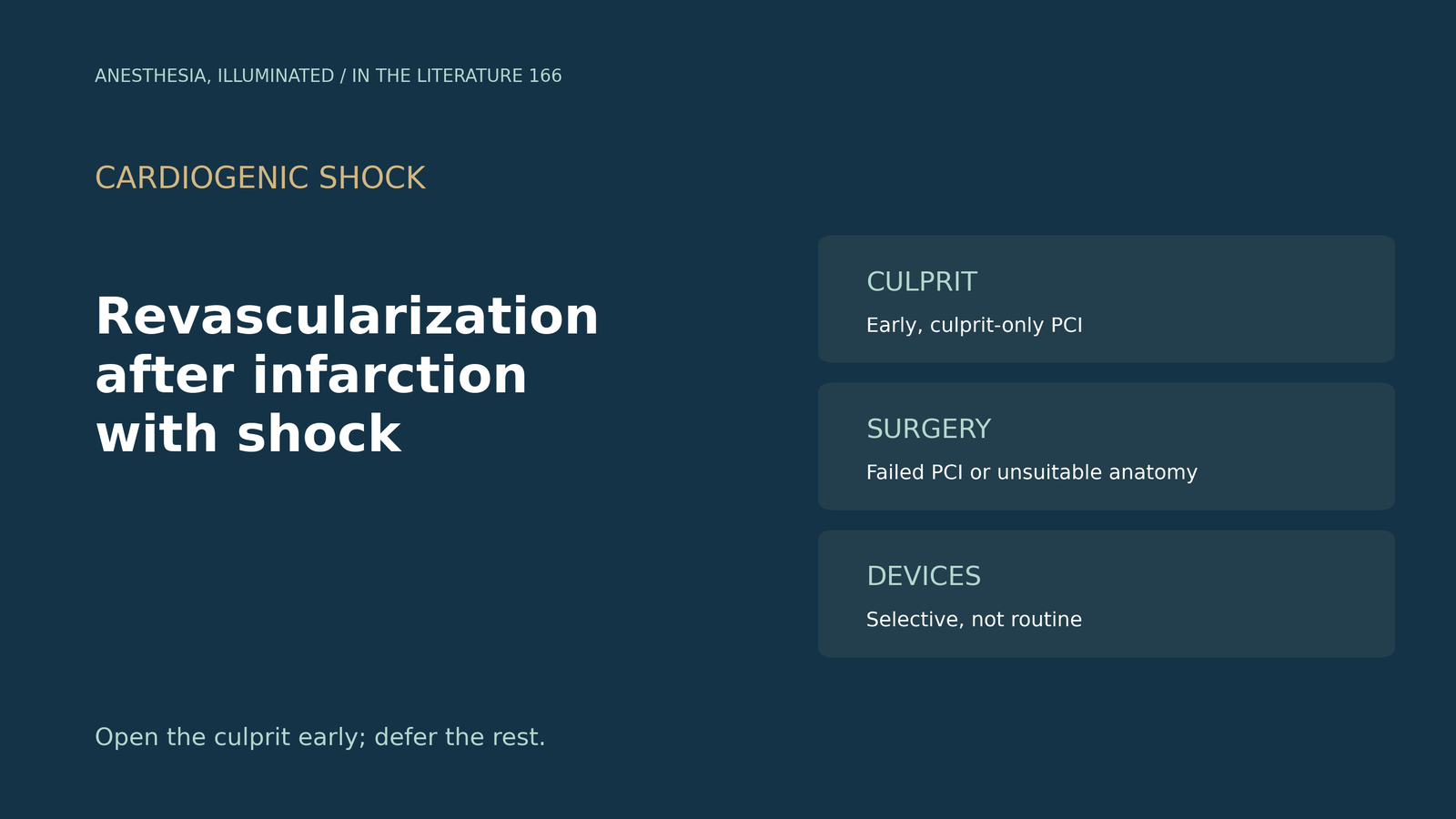
- Open the culprit early. Trials support early revascularization of the culprit vessel, ideally within 12 hours of shock onset, even though about 75% of patients have multivessel disease.[1]
- Treat only the culprit at first. Culprit-only PCI lowered the composite outcome compared with immediate multivessel PCI (45.9% vs 55.4%), and early invasive therapy lowered six-month mortality (50% vs 63%).[2]
- Surgery has a narrow but real role. No RCT compares PCI and bypass surgery; only 4.9% undergo surgery, which is favored by left main or triple-vessel disease and used when PCI fails.[2], [3]
- Support devices are not routine. Routine balloon pumps are not recommended, early ECLS did not reduce 30-day mortality, and Impella CP helped only in a selected population at the cost of more complications.[1], [4]
- ECMO brings harm with it. In ECLS-SHOCK, mortality was 47.8% vs 49.0%, while bleeding (23.4% vs 9.6%) and vascular complications (11% vs 3.8%) increased.[5]
A patient with an anterior STEMI arrives hypotensive, with lactate rising and three-vessel disease on angiography. Should the team stent the culprit, stent everything, or call the surgeon, and does a support device help?[1], [2]
Early, culprit-only revascularization
Lüsebrink and colleagues summarize trials supporting early revascularization of the culprit vessel, recommending emergency percutaneous or surgical revascularization within 12 hours of shock onset; multivessel disease is present in about 75% of patients.[1] Cormican and colleagues, analysing the European position statement, report that early invasive therapy lowered six-month mortality (50% vs 63%) and that culprit-only PCI lowered the composite outcome (45.9% vs 55.4%); PCI in this setting should be limited to the culprit lesion.[2] Odeh and colleagues confirm that current practice favors culprit-vessel revascularization during the unstable phase.[4]
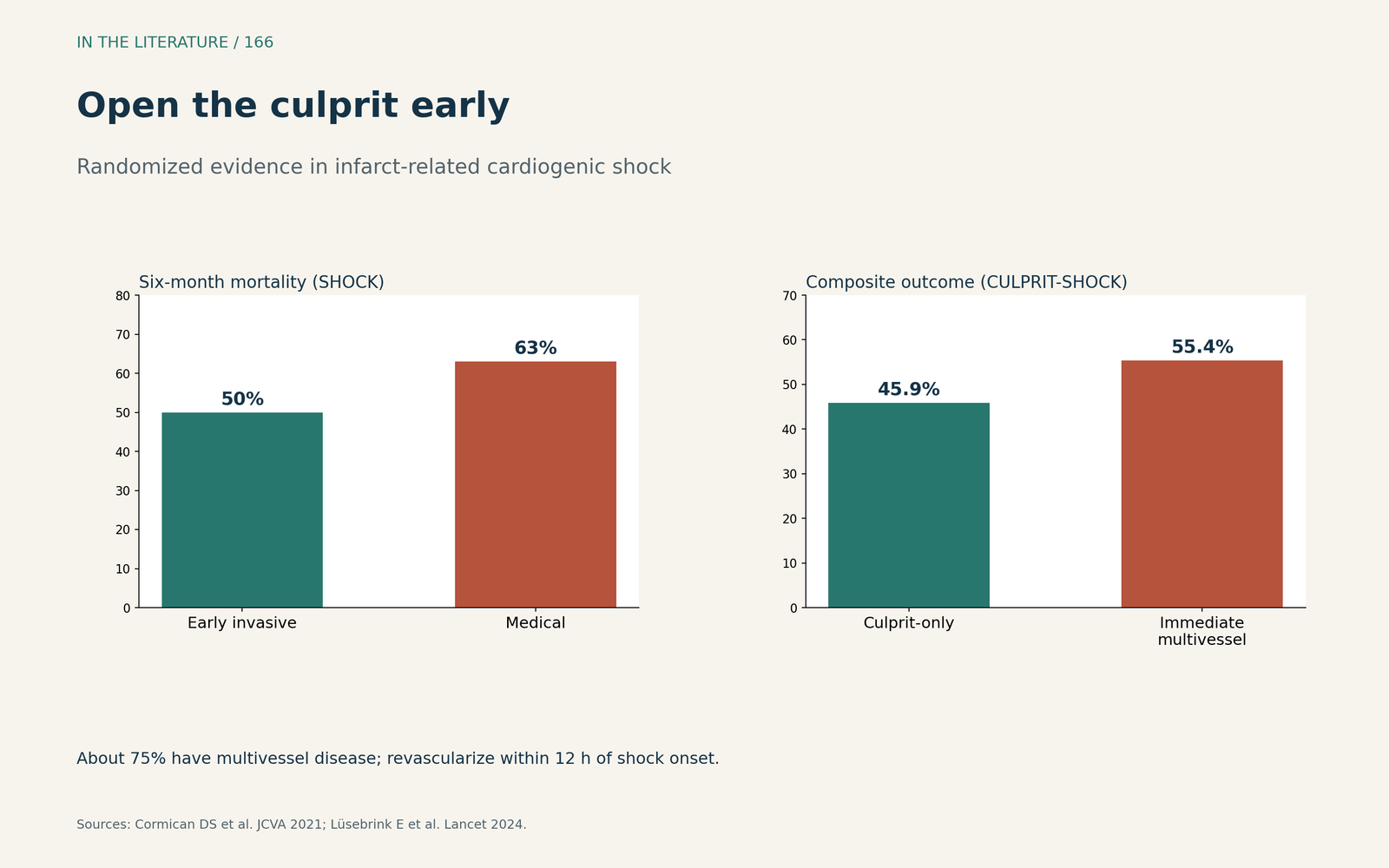
Figure 1. Open the culprit early. Redrawn from Cormican et al. and Lüsebrink et al.[2], [1] View larger.

PCI or bypass surgery?
No randomized trial compares PCI and bypass surgery in this setting, and surgery is reserved for failed PCI or unsuitable anatomy.[2] Use of bypass surgery in shock has fallen to under 5%, but it remains essential when PCI is unsuccessful or infeasible.[1] Ibrahim and colleagues note that more than two-thirds of patients have multivessel disease, that only 4.9% undergo surgery, and that left main and triple-vessel disease may favor it; in the SHOCK trial, 30-day mortality was 45.3% after PCI and 42.1% after surgery in a nonrandomized comparison, and early revascularization of either kind is associated with survival.[3]
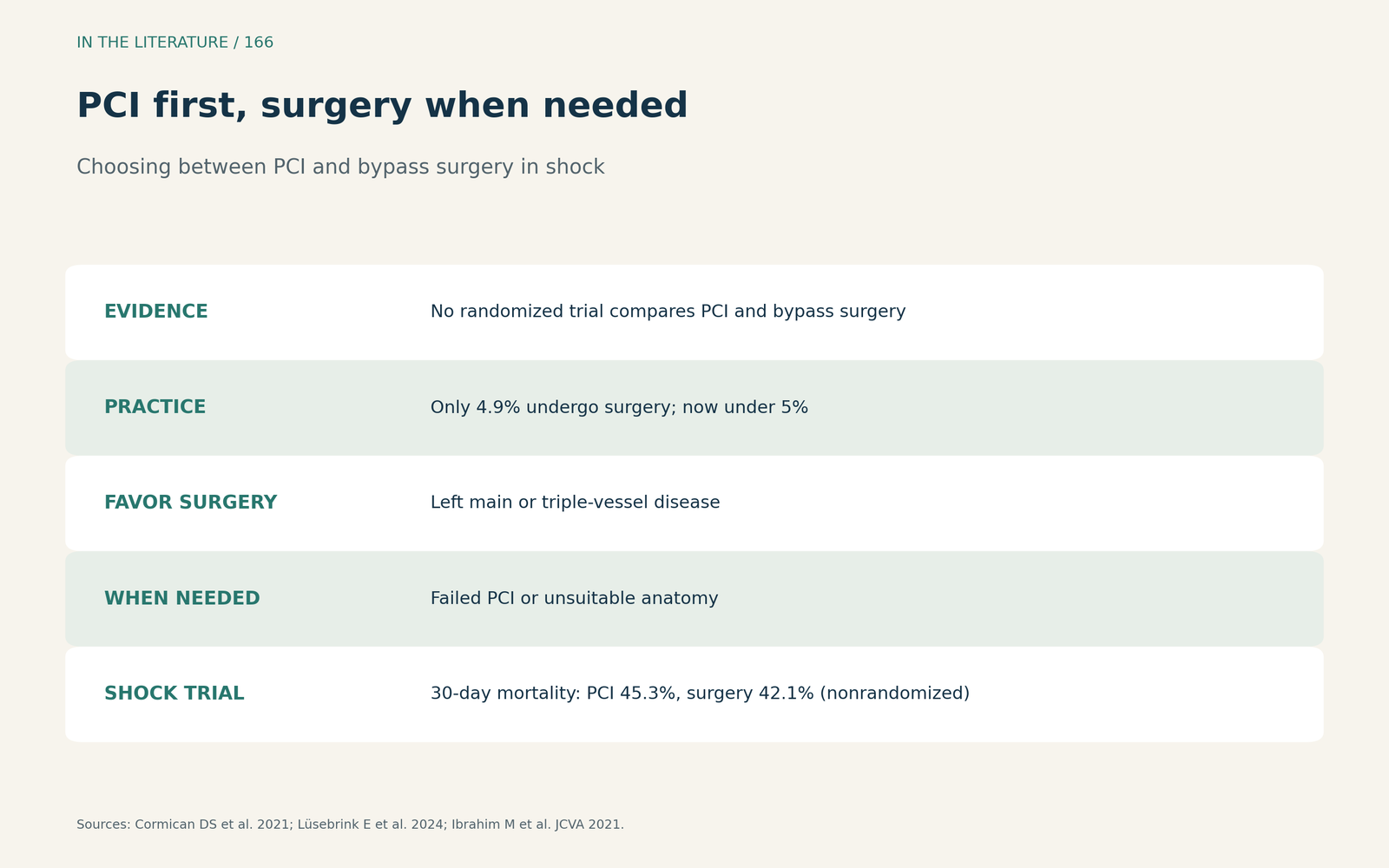
Figure 2. PCI first, surgery when needed. Synthesized from Cormican et al., Lüsebrink et al. and Ibrahim et al.[2], [1], [3] View larger.

Where support devices fit
Routine balloon pump use is not recommended, and ECMO and percutaneous support should be reserved for refractory shock.[1], [2] Odeh and colleagues conclude that no temporary support device benefits all patients: routine Impella CP reduced 180-day mortality in a selected trial but increased limb ischemia (5.6% vs 1.1%) and renal replacement therapy (41.9% vs 26.7%), and early routine ECLS did not reduce 30-day mortality.[4] In ECLS-SHOCK, 30-day mortality was 47.8% with ECMO and 49.0% without, while bleeding and vascular complications increased.[5]
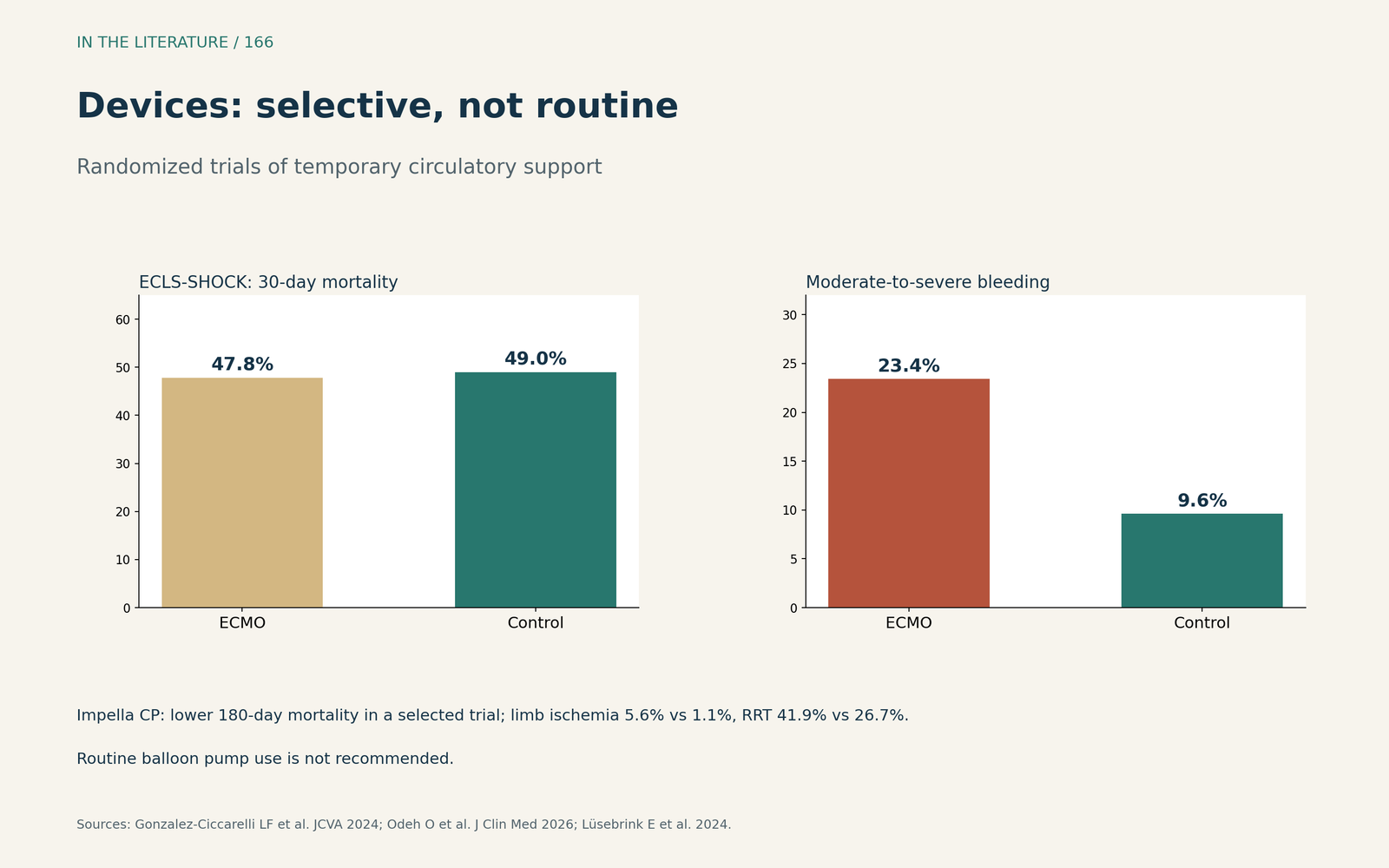
Figure 3. Devices: selective, not routine. Redrawn from Gonzalez-Ciccarelli et al., Odeh et al. and Lüsebrink et al.[5], [4], [1] View larger.

Three takeaways
- Culprit first, and early. Defer non-culprit lesions in the unstable phase.[1], [2]
- Call the surgeon when PCI cannot do the job. Failed PCI, left main or triple-vessel anatomy.[3]
- Choose devices for the patient, not by routine. Weigh benefit against bleeding, limb and kidney injury.[4], [5]
References
- Lüsebrink E, Binzenhöfer L, Adamo M, et al. Cardiogenic shock. Lancet. 2024;404(10466):2006–2020. doi:10.1016/S0140-6736(24)01818-X
- Cormican DS, Sonny A, Crowley J, et al. Acute myocardial infarction complicated by cardiogenic shock: analysis of the position statement from the European Society of Cardiology Acute Cardiovascular Care Association, with perioperative implications. J Cardiothorac Vasc Anesth. 2021;35(10):3098–3104. doi:10.1053/j.jvca.2020.10.062
- Ibrahim M, Spelde AE, Gutsche JT, et al. Coronary artery bypass grafting in cardiogenic shock: decision-making, management options, and outcomes. J Cardiothorac Vasc Anesth. 2021;35(7):2144–2154. doi:10.1053/j.jvca.2020.09.108
- Odeh O, Al-Bayati M, Abdulrazzaq A, et al. Temporary mechanical circulatory support in acute myocardial infarction-related cardiogenic shock: lessons from contemporary randomized trials. J Clin Med. 2026;15(19):7664. doi:10.3390/jcm15197664
- Gonzalez-Ciccarelli LF, Nabzdyk C, Bohman JK, et al. Venoarterial extracorporeal membrane oxygenation for myocardial infarction-related cardiogenic shock: not a time to sit idly by. J Cardiothorac Vasc Anesth. 2024;38(2):358–360. doi:10.1053/j.jvca.2023.10.027