ITL-a2785c43a7b9
Juan Li, MD · Updated November 17, 2026
Watch the video
Key points
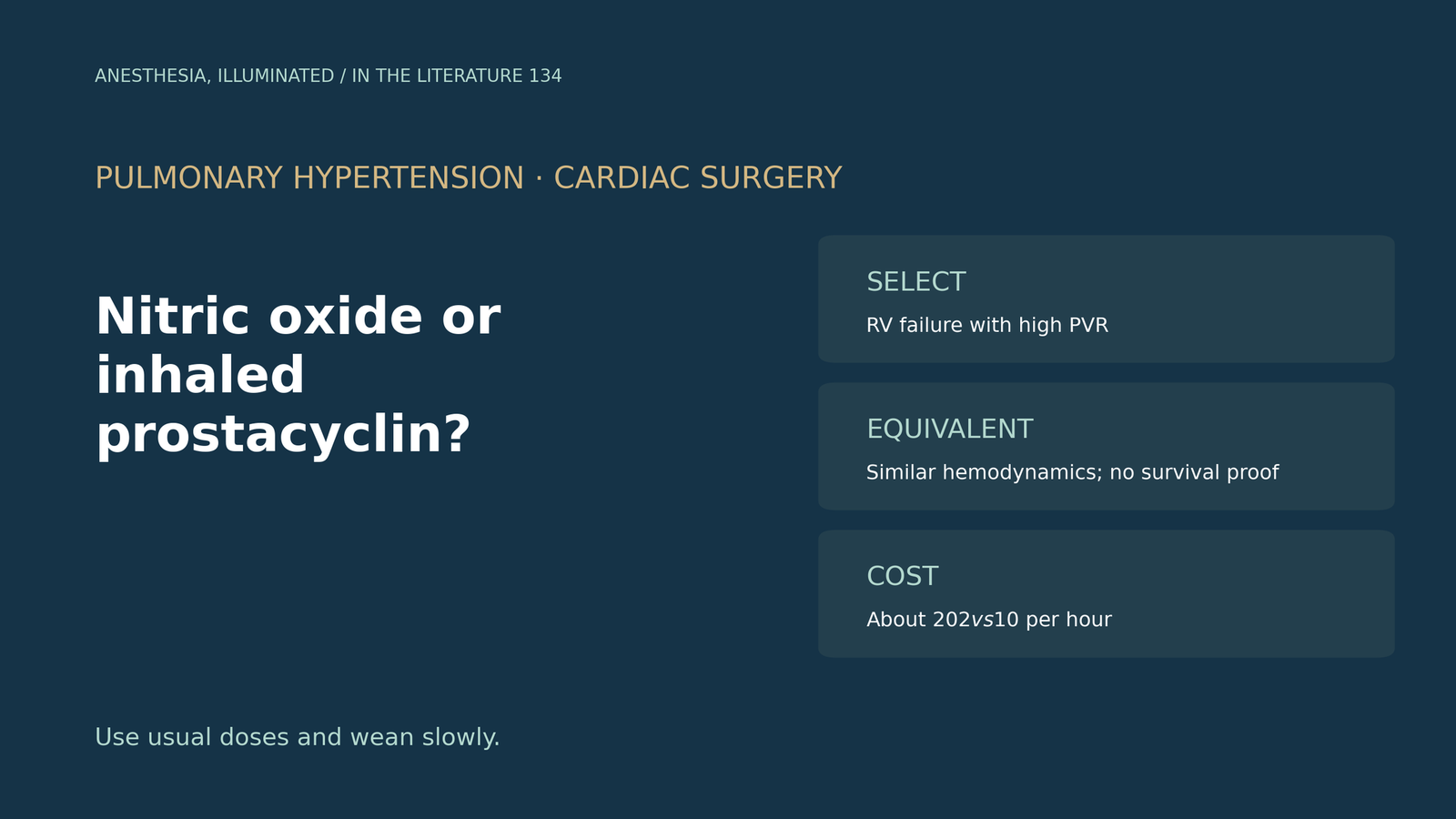
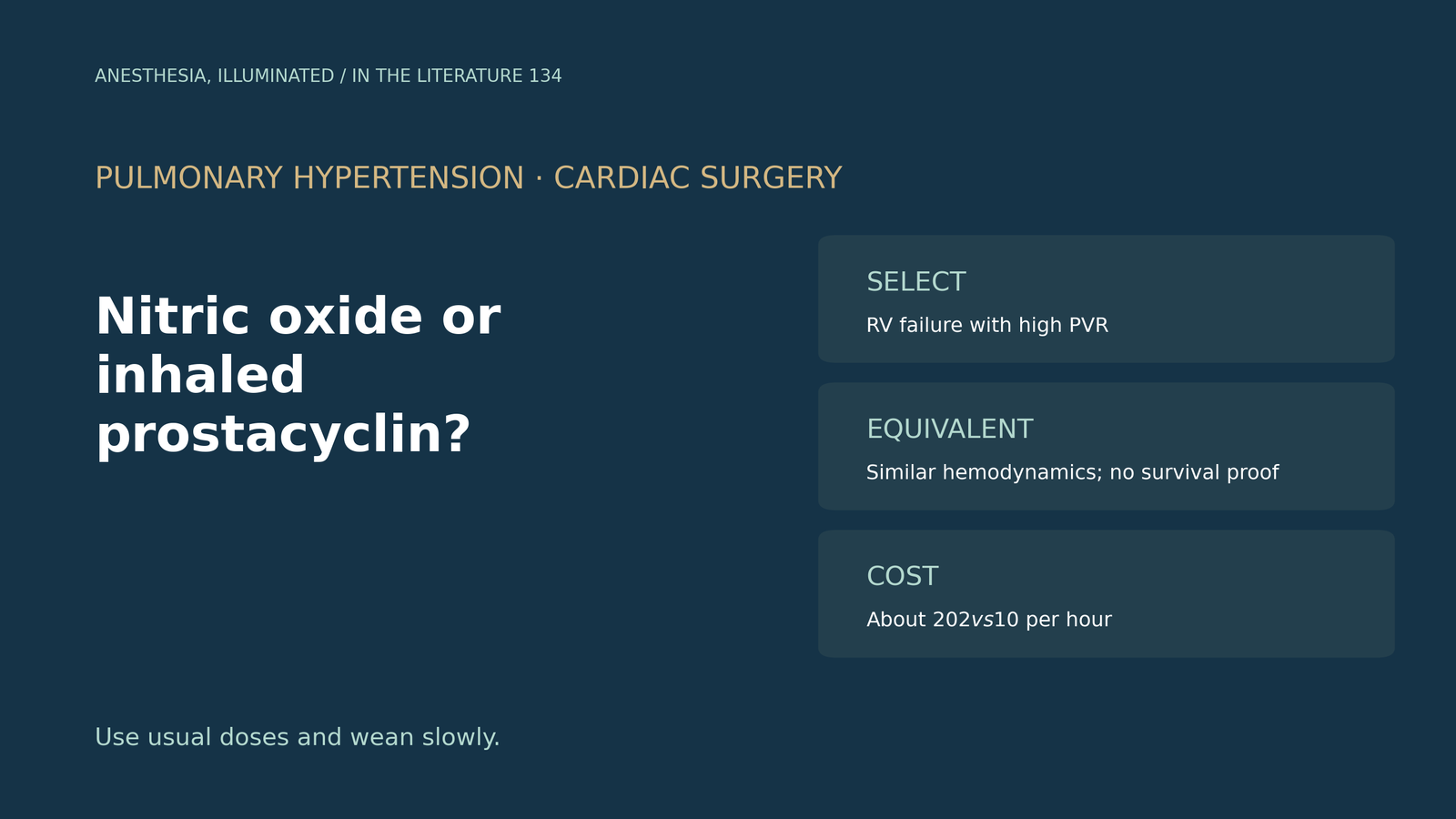
- Choose the patient before the drug. A 2024 review concludes that inhaled vasodilators are the preferred first agents when right ventricular failure occurs with elevated pulmonary vascular resistance or a transpulmonary gradient above 12 mmHg, whereas inotropes should suffice when resistance is normal.[1]
- Inhaled nitric oxide and inhaled prostacyclins act similarly. A meta-analysis of 7 trials with 195 patients found them comparable, and another of 13 trials with 734 patients found no effect of inhaled prostacyclins on mortality.[2], [3]
- Neither has proven outcome benefit. Across 18 trials with 958 patients, nitric oxide shortened ICU stay and ventilation by clinically negligible amounts; a network meta-analysis found a fragile mortality signal only for inhaled prostacyclin.[4], [5]
- Typical doses are nitric oxide up to 20 to 40 ppm in most centers and inhaled epoprostenol 10 to 50 ng/kg/min.[6]
- Cost often decides. One heart center paid $202.24 per hour for nitric oxide vs $9.76 for inhaled prostacyclin, and a prostacyclin-first protocol projected $1.18 million in annual savings; inhaled milrinone is a low-certainty alternative.[7], [8]
After mitral valve surgery in a patient with long-standing pulmonary hypertension, separation from bypass is difficult: the right ventricle is dilated and pulmonary artery pressure is high despite inotropes. Should the team add a pulmonary vasodilator, and which one?[1], [6]
When a pulmonary vasodilator helps
Benedetto and colleagues reviewed inhaled vasodilators for right ventricular failure in cardiothoracic surgery. They conclude that when failure occurs with normal pulmonary vascular resistance, inotropes should be sufficient, but when resistance is elevated or the transpulmonary gradient exceeds 12 mmHg, inhaled vasodilators should be the first agents, combined with inotropes or inodilators if failure is severe and refractory.[1] Inhaled delivery acts on ventilated lung and avoids much of the systemic hypotension of intravenous vasodilators. Sardo and colleagues caution that using pulmonary vasodilators in cardiac surgery patients whose pulmonary hypertension is not pulmonary arterial hypertension remains controversial; most such patients have left heart disease.[5]
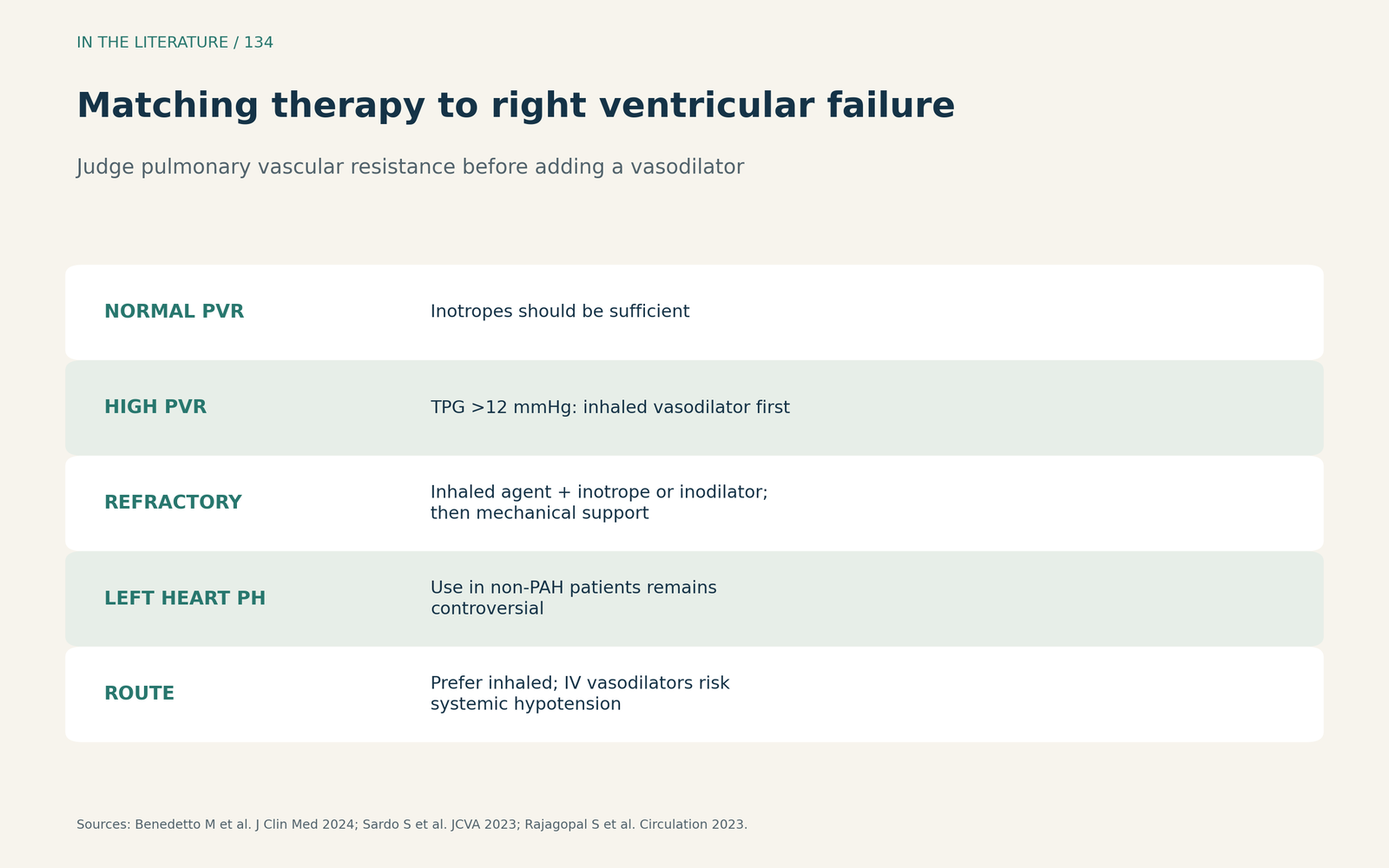
Figure 1. Matching therapy to right ventricular failure. Synthesized from Benedetto et al., Sardo et al. 2023 and the AHA statement.[1], [5], [6] View larger.

Nitric oxide versus inhaled prostacyclin
Chen and colleagues pooled 7 trials with 195 patients comparing inhaled nitric oxide with inhaled prostacyclin or analogues after surgery and found the two comparable for pulmonary pressure, resistance, heart rate and cardiac output.[2] Marcus and colleagues pooled 13 trials with 734 patients: inhaled prostacyclins lowered pulmonary pressure compared with placebo, performed like other inhaled agents and did not affect mortality.[3] Benedetto and colleagues cite a large randomized trial in which primary graft dysfunction after lung transplant occurred in 39.8% with nitric oxide and 44.7% with inhaled epoprostenol, which they interpret as supporting equivalence.[1]
What the outcome data show
Sardo and colleagues analyzed 18 trials with 958 cardiac surgical patients: nitric oxide shortened ICU stay and ventilation, but the effect size was small and clinically negligible, with no effect on mortality.[4] In a Bayesian network meta-analysis of 28 trials with 1,879 patients, only inhaled prostacyclin showed a statistically discernible improvement in mortality; the credible interval was very wide, many arms had no events, and the signal disappeared in a sensitivity analysis. Nitric oxide had no evident effect on mortality (relative risk 1.01).[5]
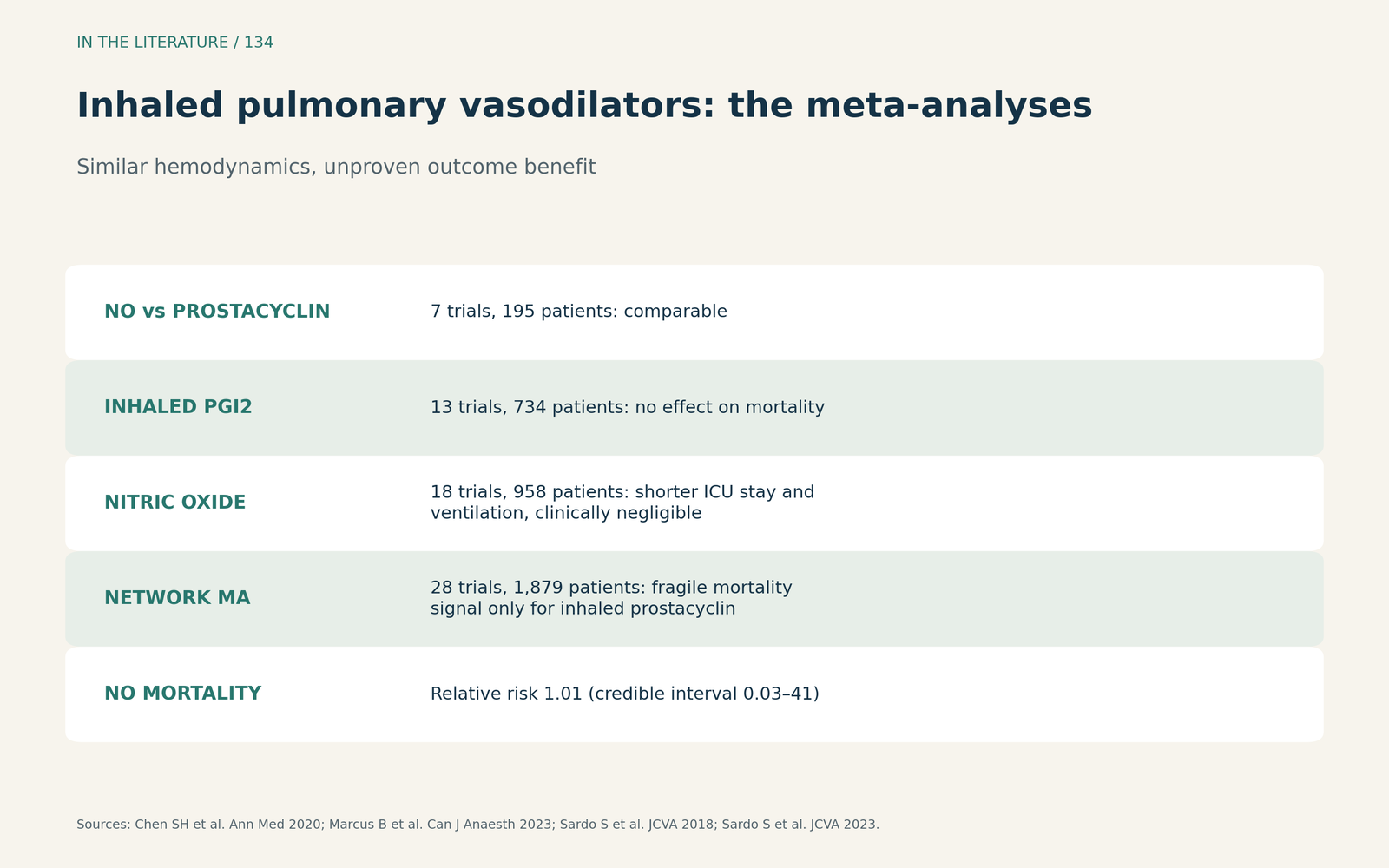
Figure 2. What the meta-analyses show. Redrawn from Chen et al., Marcus et al., Sardo et al. 2018 and Sardo et al. 2023.[2], [3], [4], [5] View larger.

Doses, safety and cost
The 2023 AHA statement notes that nitric oxide can be given at 1 to 80 ppm, although most centers use maximum doses of 20 to 40 ppm, and inhaled epoprostenol is commonly delivered at 10 to 50 ng/kg/min; efficacy and safety are comparable in many small studies, but nitric oxide costs more.[6] Nitric oxide causes dose-related methemoglobinemia, can be oxidized to nitrogen dioxide and poses an environmental pollution risk.[4] Inhaled prostacyclin depends on a nebulizer, and interruption of delivery can abruptly raise pulmonary vascular resistance.[7]
Austin and colleagues reported drug costs of $202.24 per hour for nitric oxide and $9.76 per hour for inhaled prostacyclin; after a prostacyclin-first protocol, projected annual savings were about $1,180,000, with no change in ICU length of stay, although only direct drug costs were counted.[7] Inhaled milrinone is a further option: a meta-analysis of 400 patients in 5 studies found less difficult separation from bypass than with intravenous milrinone (relative risk 0.16) and higher systemic vascular resistance, but the studies were small.[8]
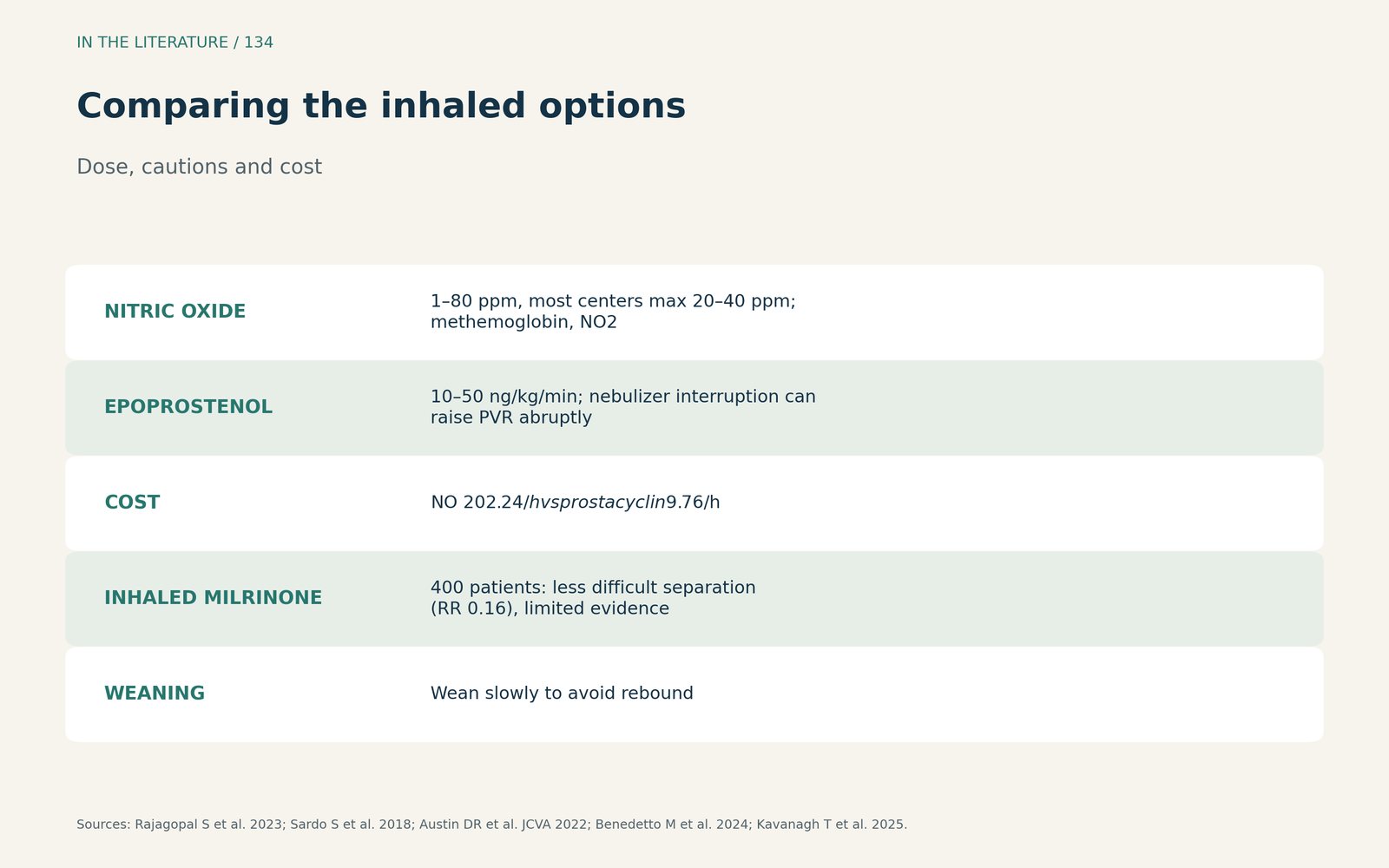
Figure 3. Comparing the inhaled options. Synthesized from the AHA statement, Sardo et al. 2018, Austin et al., Benedetto et al. and Kavanagh et al.[6], [4], [7], [1], [8] View larger.

Three takeaways
- Treat high resistance, not just high pressure. Use an inhaled vasodilator when right ventricular failure comes with elevated pulmonary vascular resistance.[1], [5]
- Nitric oxide and inhaled prostacyclin are interchangeable for most patients. Neither has proven survival benefit.[2], [3], [4], [5]
- Let dose, safety and cost guide the choice. Use usual doses, wean slowly, and consider the lower cost of inhaled prostacyclin.[6], [7]
References
- Benedetto M, Piccone G, Gottin L, Castelli A, Baiocchi M. Inhaled pulmonary vasodilators for the treatment of right ventricular failure in cardio-thoracic surgery: is one better than the others? J Clin Med. 2024;13(2):564. doi:10.3390/jcm13020564
- Chen SH, Chen LK, Teng TH, Chou WH. Comparison of inhaled nitric oxide with aerosolized prostacyclin or analogues for the postoperative management of pulmonary hypertension: a systematic review and meta-analysis. Ann Med. 2020;52(3–4):120–130. doi:10.1080/07853890.2020.1746826
- Marcus B, Marynen F, Fieuws S, et al. The perioperative use of inhaled prostacyclins in cardiac surgery: a systematic review and meta-analysis. Can J Anaesth. 2023;70(8):1381–1393. doi:10.1007/s12630-023-02520-4
- Sardo S, Osawa EA, Finco G, et al. Nitric oxide in cardiac surgery: a meta-analysis of randomized controlled trials. J Cardiothorac Vasc Anesth. 2018;32(6):2512–2519. doi:10.1053/j.jvca.2018.02.003
- Sardo S, Tripodi VF, Guerzoni F, et al. Pulmonary vasodilator and inodilator drugs in cardiac surgery: a systematic review with Bayesian network meta-analysis. J Cardiothorac Vasc Anesth. 2023;37(11):2261–2271. doi:10.1053/j.jvca.2023.07.041
- Rajagopal S, Ruetzler K, Ghadimi K, et al. Evaluation and management of pulmonary hypertension in noncardiac surgery: a scientific statement from the American Heart Association. Circulation. 2023;147(17):1317–1343. doi:10.1161/CIR.0000000000001136
- Austin DR, Lai Y, Mueller A, Shelton KT. Inhaled pulmonary vasodilator utilization and cost following initiation of a protocol in a quaternary academic heart center intensive care unit. J Cardiothorac Vasc Anesth. 2022;36(5):1343–1349. doi:10.1053/j.jvca.2021.11.005
- Kavanagh T, Kilpatrick T, Hardy B, et al. Intravenous versus inhaled milrinone in patients with known pulmonary hypertension undergoing cardiac surgery: a systematic review and meta-analysis. Ann Card Anaesth. 2025;28(4):364–378. doi:10.4103/aca.aca_271_24