
ITL-d34eaa37e503
Juan Li, MD · Updated November 18, 2026
Key points
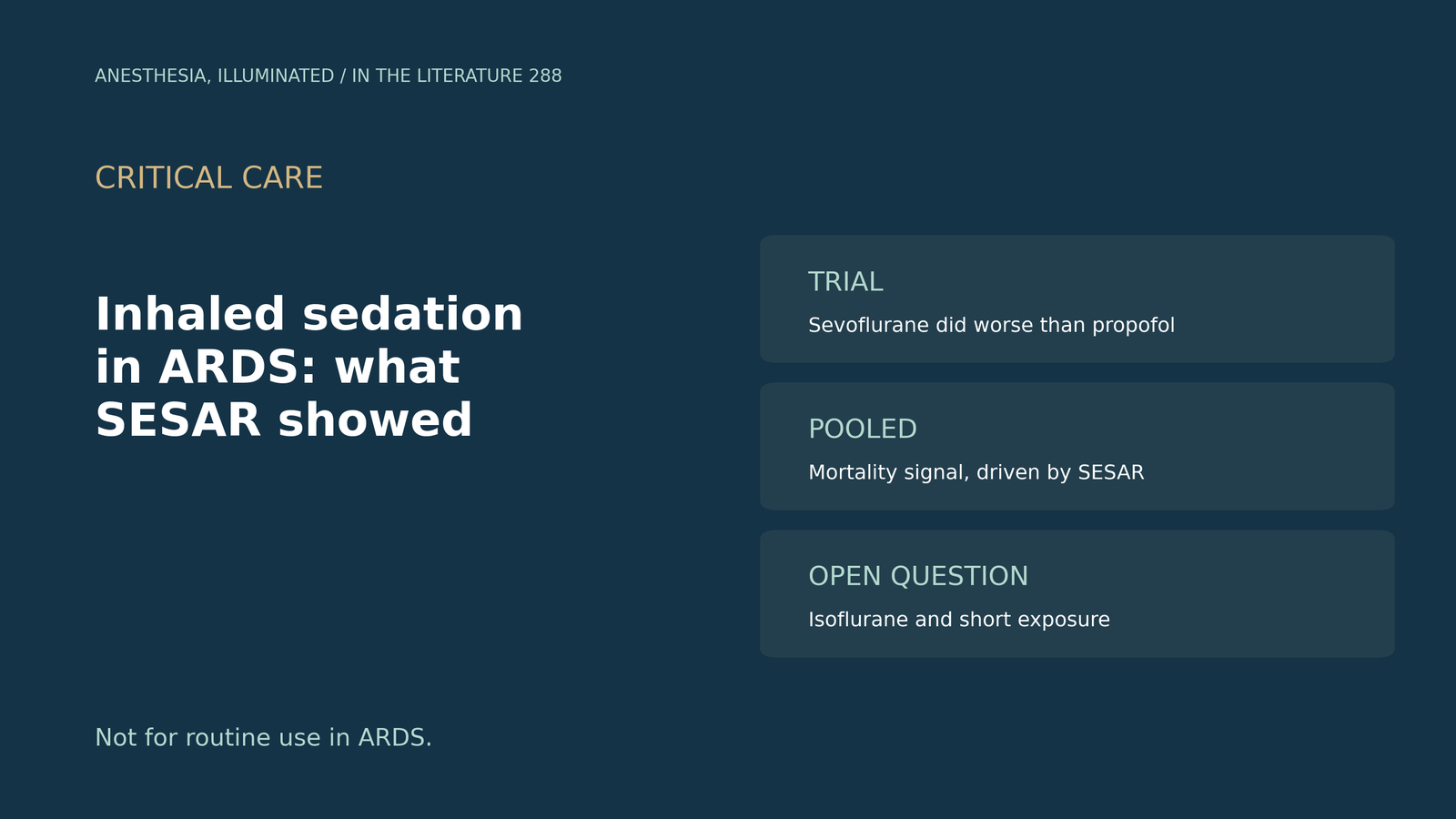
- The main trial favoured propofol. In SESAR, sevoflurane gave fewer ventilator-free days and lower 90-day survival.[1]
- Pooled trials show a mortality signal. Across 21 RCTs, volatile sedation was associated with higher mortality, driven mainly by SESAR.[2]
- Small trials and cohorts do not overturn this. A 17-patient ARDS trial was inconclusive, and an isoflurane cohort showed no excess mortality but was observational.[3], [4]
- Lung protection is not a reason to use it. Reviews find it hard to recommend volatile sedation for lung protection, and reflectors add dead space.[5], [6]
A ventilated patient with moderate ARDS needs deep sedation, and propofol doses are rising. Is switching to inhaled sedation a better choice?
The SESAR trial
SESAR randomized 687 adults with moderate-to-severe ARDS to sevoflurane or propofol for up to 7 days (Jabaudon et al., JAMA 2025). Sevoflurane resulted in fewer ventilator-free days at day 28. Survival at 90 days was 47.1% with sevoflurane vs 55.7% with propofol, and sevoflurane was associated with higher 7-day mortality (19.4% vs 13.5%). Additional sedation was used in 148 sevoflurane and 64 propofol patients; higher arterial carbon dioxide and lower pH suggest dead-space problems. COVID pneumonia was the predominant ARDS cause, which limits generalizability.[1]
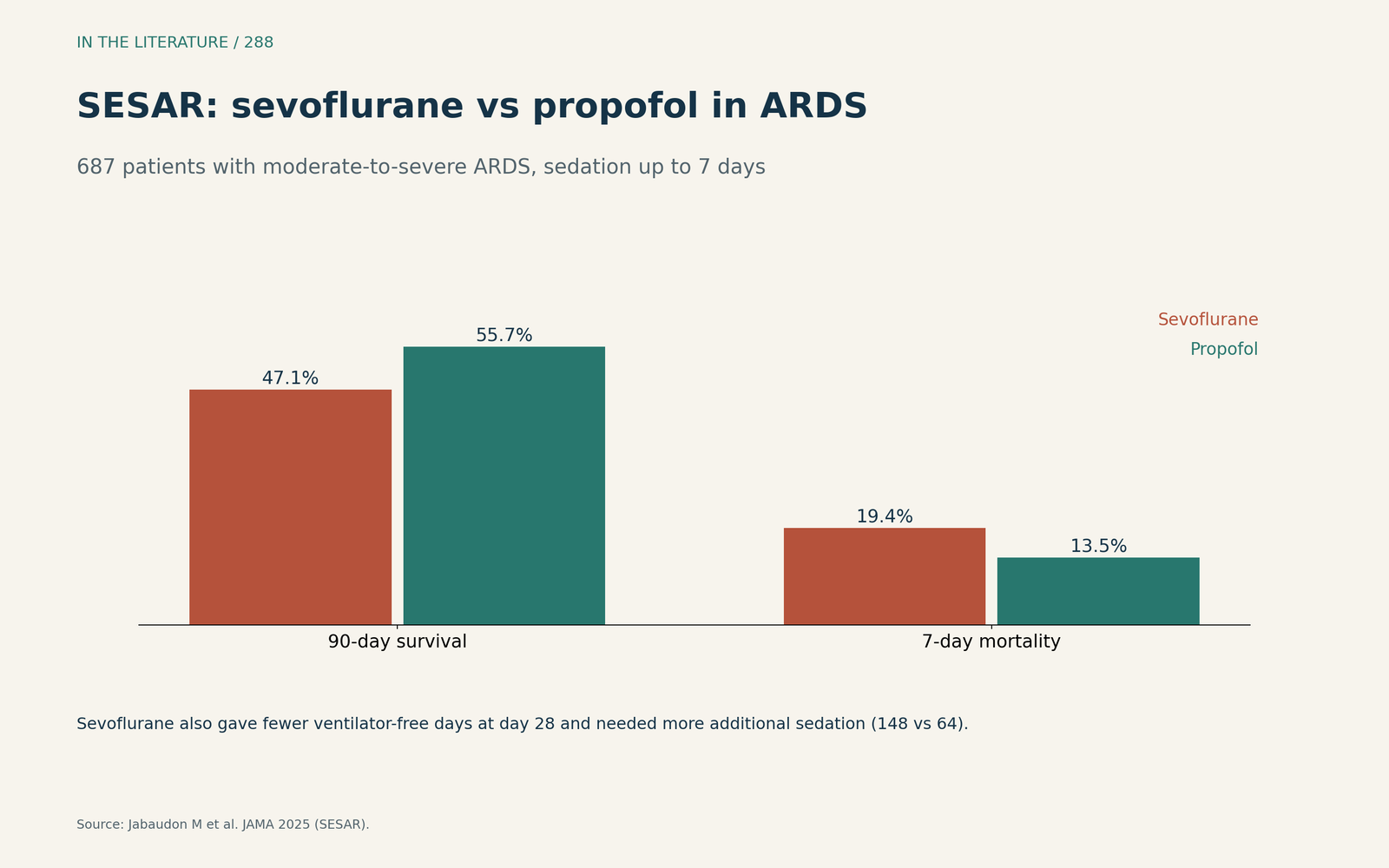
Figure 1. Sevoflurane had lower 90-day survival and higher early mortality than propofol. Data from SESAR.[1] View larger.

Pooled evidence
A meta-analysis included 21 RCTs with 2367 ventilated ICU patients (Yamamoto et al., Crit Care 2025). Mortality was 262/1107 with volatile vs 218/1106 with IV sedation (RR 1.17), and the mortality signal was largely driven by SESAR. Trial sequential analysis was inconclusive, with a required sample size of 12,080, and the authors conclude that routine volatile sedation should be avoided in ventilated ICU patients.[2]
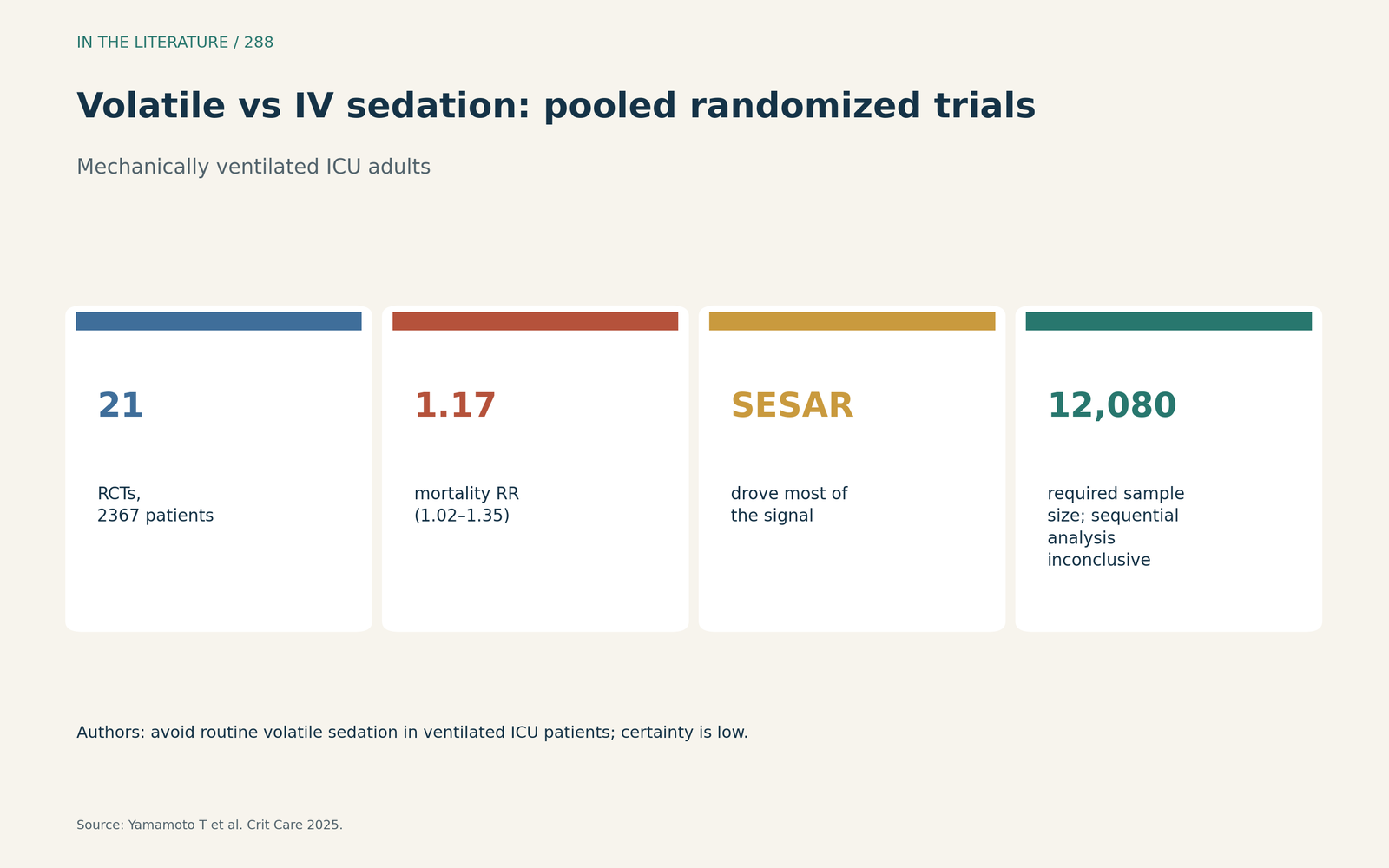
Figure 2. Volatile sedation was associated with higher mortality, but the evidence is not yet conclusive. Data from Yamamoto et al.[2] View larger.

Smaller trials, other agents, and mechanism
A small RCT of sevoflurane vs propofol in COVID ARDS analysed only 17 patients; its survival difference did not reach statistical significance, and respiratory acidosis developed in the sevoflurane group (Martínez-Castro et al., J Pers Med 2023).[3]
A single-centre cohort matched 216 isoflurane patients with 432 IV-sedation patients (Tymen et al., Ann Intensive Care 2026). ICU and hospital mortality with isoflurane were 40.6% and 43.5%, not higher than with IV sedation. The authors argue that volatile anaesthetics should not be considered interchangeable, but isoflurane was preferentially used after cardiac arrest, a source of indication bias.[4]
A post-SESAR review found evidence of harm from prolonged deep sedation with sevoflurane, while published trials have not shown increased mortality with short-term isoflurane; it finds it challenging to recommend volatile sedation for lung protection (Alape Moya et al., Crit Care 2026).[5] All volatile anaesthetic reflectors increase dead-space ventilation (Müller-Wirtz et al., Crit Care 2024).[6]
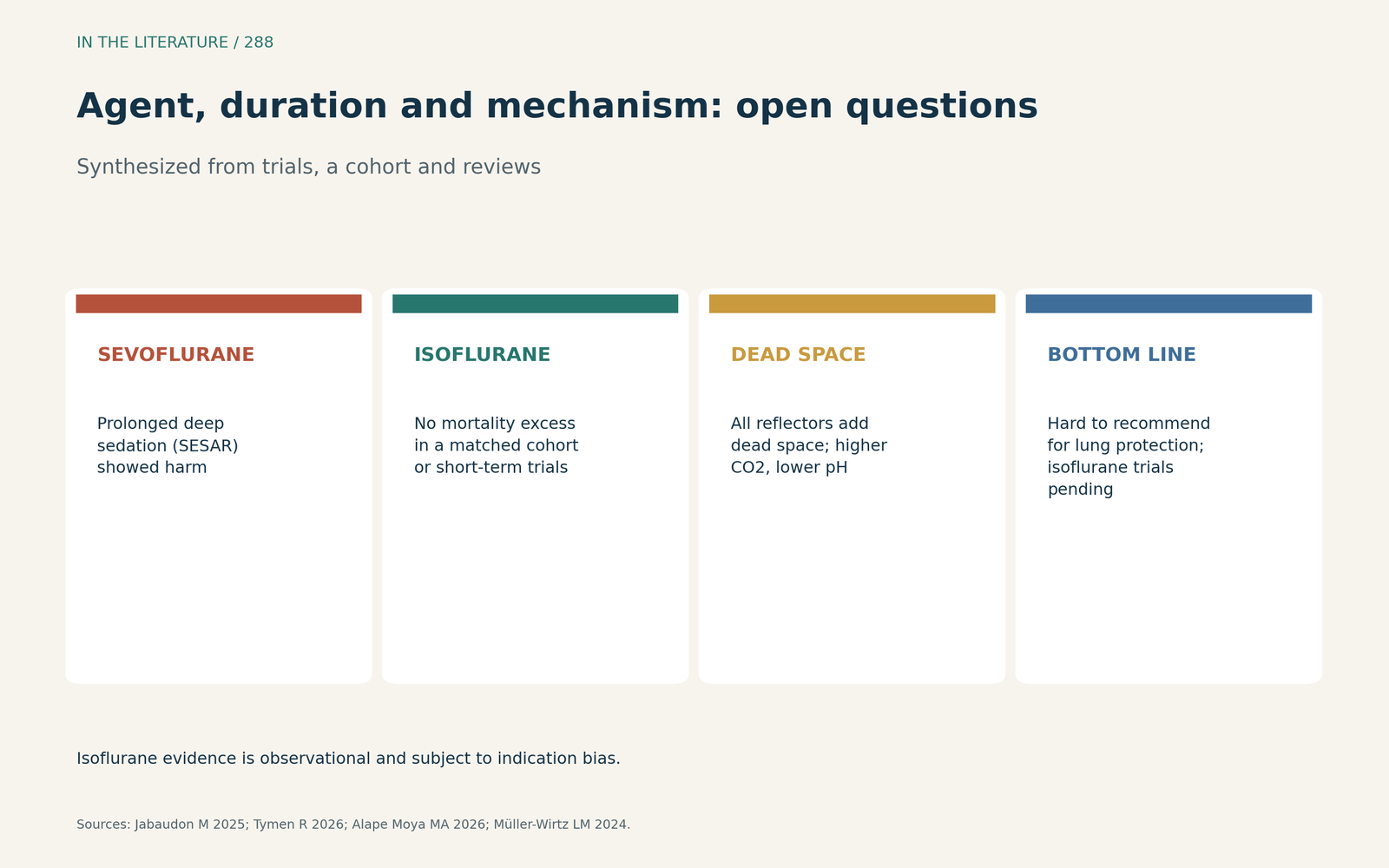
Figure 3. Sevoflurane harm is established for prolonged deep sedation; isoflurane remains uncertain. Synthesized from SESAR, Tymen et al., Alape Moya et al. and Müller-Wirtz et al.[1], [4], [5], [6] View larger.

Three takeaways
- For ARDS, propofol-based IV sedation is supported by the largest trial; prolonged deep sevoflurane is not.[1], [2]
- Do not use volatile sedation for "lung protection"; watch CO2 and pH because reflectors add dead space.[5], [6]
- Isoflurane or short exposure may differ, but current evidence is observational or small.[3], [4]
References
- Jabaudon M, Quenot JP, Badie J, et al.; SESAR Trial Investigators. Inhaled sedation in acute respiratory distress syndrome: the SESAR randomized clinical trial. JAMA. 2025;333(18):1608–1617. doi:10.1001/jama.2025.3169
- Yamamoto T, Kotani Y, Akutagawa K, et al. Volatile sedation in critically ill adults undergoing mechanical ventilation: a meta-analysis of randomized controlled trials. Crit Care. 2025;29:227. doi:10.1186/s13054-025-05467-8
- Martínez-Castro S, Monleón B, Puig J, et al. Sedation with sevoflurane versus propofol in COVID-19 patients with acute respiratory distress syndrome: results from a randomized clinical trial. J Pers Med. 2023;13(6):925. doi:10.3390/jpm13060925
- Tymen R, De Longeaux K, Bailly P, L'Her E. Volatile sedation using isoflurane versus intravenous sedation in intensive care unit: a propensity matched case control study. Ann Intensive Care. 2026;16:100118. doi:10.1016/j.aicoj.2026.100118
- Alape Moya MA, Chen L, Otaluka N, et al. Lung protective characteristics of volatile anesthetic sedation. Crit Care. 2026;30:274. doi:10.1186/s13054-026-05998-8
- Müller-Wirtz LM, O'Gara B, Gama de Abreu M, et al. Volatile anesthetics for lung- and diaphragm-protective sedation. Crit Care. 2024;28:269. doi:10.1186/s13054-024-05049-0