ITL-73c2edc57506
Juan Li, MD · Updated November 18, 2026
Key points
- No survival gain. In PARAMEDIC-3, 30-day survival was 4.5% with intraosseous-first and 5.1% with intravenous-first access.[1]
- Easier to place, same result. In IVIO, access succeeded in 92% versus 80%, but sustained circulation was 30% versus 29%.[2]
- A small signal against IO. Pooled sustained return of circulation was less likely with intraosseous access (OR 0.89).[3]
- Any difference is small. Bayesian analyses found a high probability that any difference was small.[4]
- Long-term data are imprecise. At 1 year, 11% versus 9% were alive, and a type 2 error cannot be ruled out.[5]
Paramedics arrive at an out-of-hospital cardiac arrest, and the first two attempts at a peripheral line fail. Should the next step be an intraosseous needle, and does it matter?
The two large randomized trials
In PARAMEDIC-3 (Couper et al., N Engl J Med 2025), 30-day survival was 4.5% with intraosseous-first and 5.1% with intravenous-first access, so the intraosseous-first strategy did not improve 30-day survival; return of spontaneous circulation at any time occurred in 36.0% versus 39.1%. The intraosseous-first strategy did not reduce time to drug administration, and the authors suggest that cannulae may be malpositioned, leading to suboptimal drug absorption.[1] In IVIO (Vallentin et al., N Engl J Med 2025), 1479 adults were included: vascular access succeeded within two attempts in 92% with intraosseous and 80% with intravenous access, yet sustained return of spontaneous circulation occurred in 30% and 29%; humeral and tibial sites gave similar results (RR 0.98, 95% CI 0.79–1.22).[2]
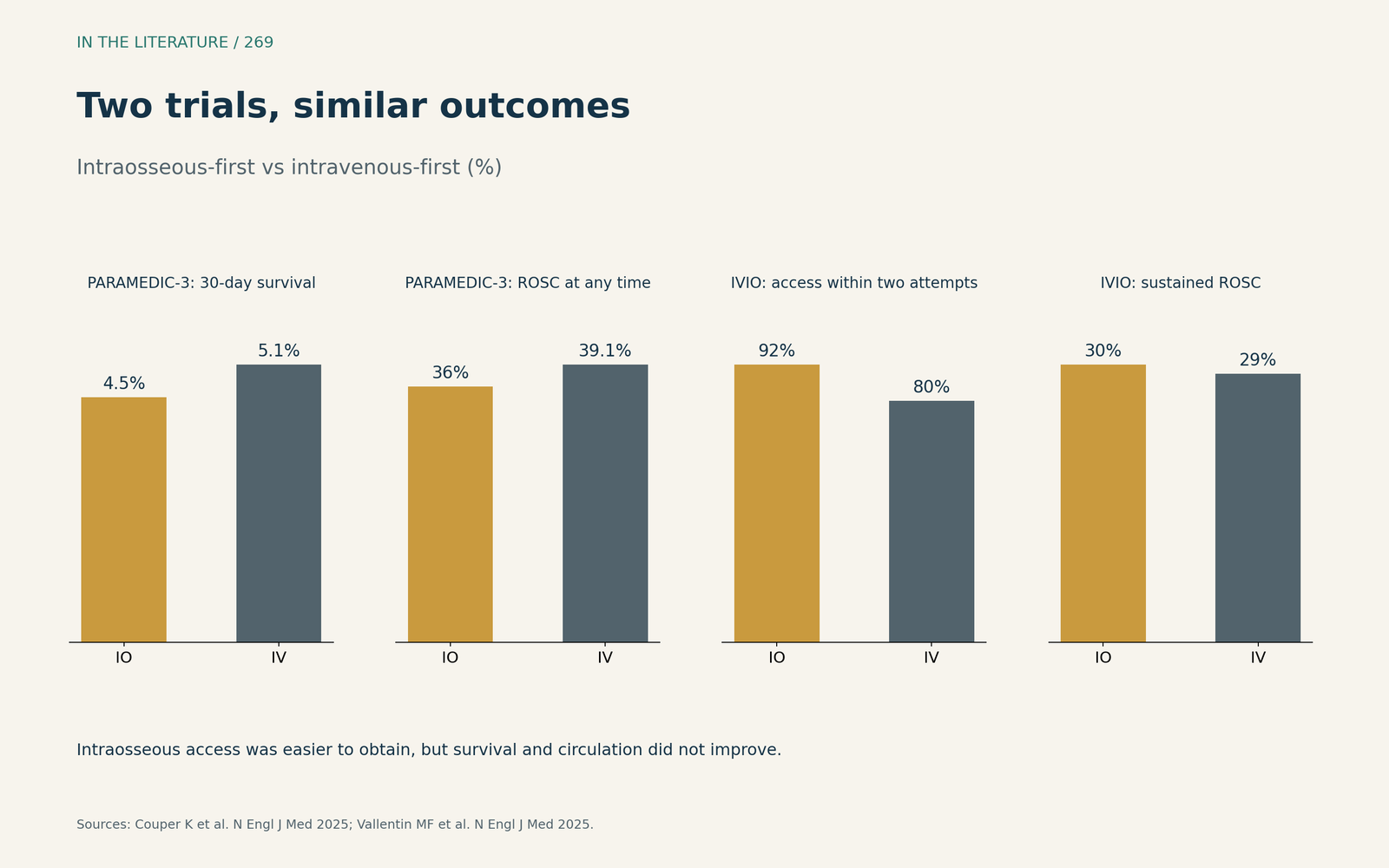
Figure 1. Intraosseous access was easier to obtain but did not improve survival or circulation. Data from PARAMEDIC-3 and IVIO.[1], [2] View larger.

Pooled and long-term evidence
The ILCOR review (Couper et al., Resuscitation 2026) originally included three randomised trials, but one was later retracted; the two remaining trials randomised 7561 patients in Denmark and the UK. Intraosseous access did not change survival (OR 0.97, 95% CI 0.80–1.18; moderate certainty), but sustained return of spontaneous circulation was less likely (OR 0.89, 0.80–0.99).[3] An individual participant data meta-analysis of the same 7561 patients (Holmberg et al., Resuscitation 2026) found no survival difference (OR 1.01, 0.81–1.25) and an odds ratio of 0.90 (0.81–1.01) for return of circulation, with low certainty; Bayesian analyses found a high probability that any difference was small.[4] At 1 year in IVIO (Vallentin et al., Resuscitation 2026), 11% of the intraosseous group and 9% of the intravenous group were alive (RR 1.24, 0.91–1.67), and the authors note that a type 2 error cannot be ruled out.[5]
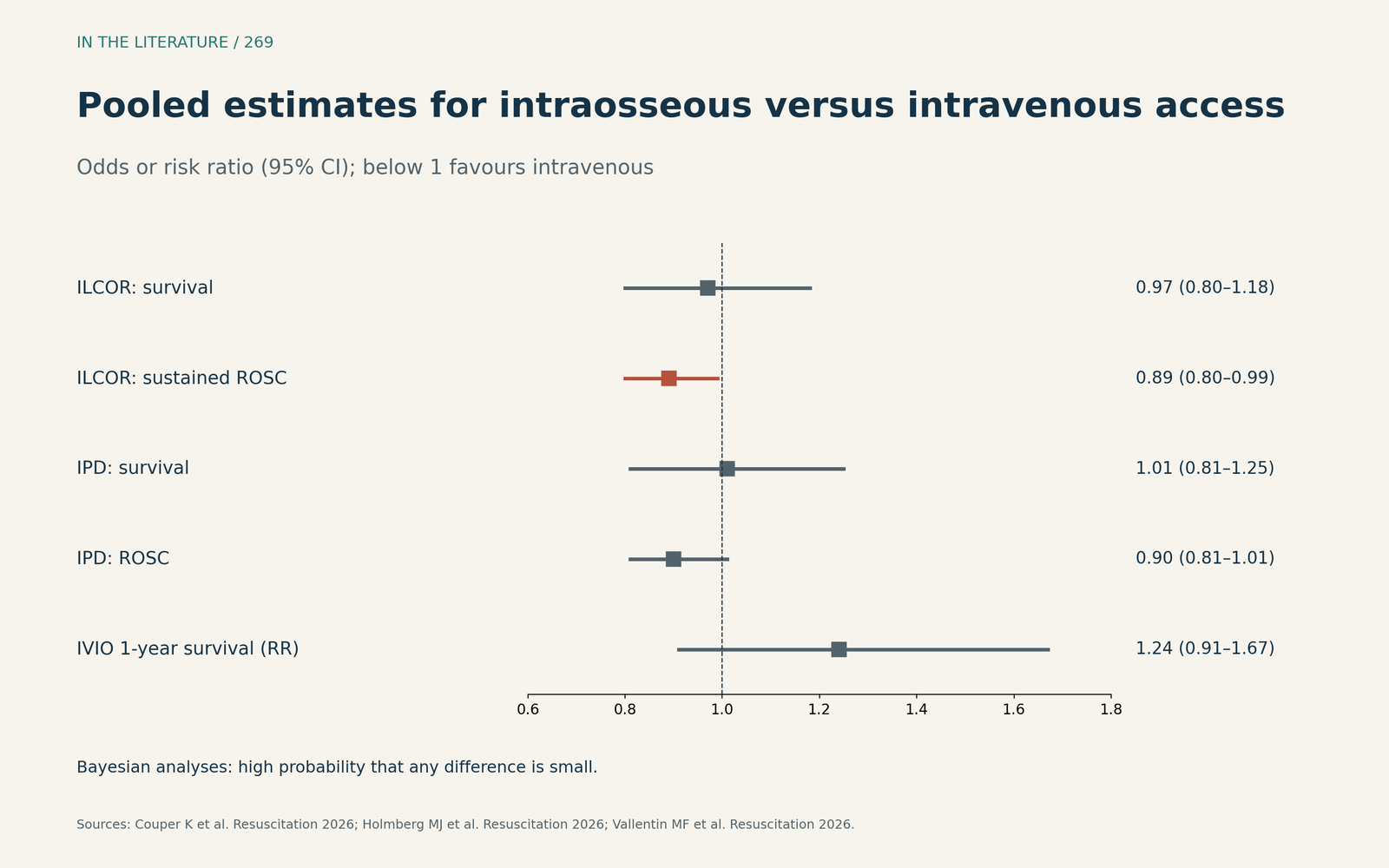
Figure 2. Survival estimates cross 1; return of circulation leans slightly against intraosseous access. Data from the ILCOR review, the IPD meta-analysis and IVIO long-term follow-up.[3], [4], [5] View larger.

Observational and animal data
A meta-analysis of 18 mostly observational studies (Waseem et al., Medicine 2026) included 245,132 patients; lower return of circulation with intraosseous access was not statistically significant in the RCT subgroup.[6] Pharmacokinetic data on injection site come only from swine studies of 15 to 49 animals (Zagalioti et al., J Clin Med 2025): tibial intraosseous dosing tended to yield lower peak drug concentrations than intravenous dosing, and proximal intraosseous routes may offer advantages under normovolemic conditions.[7]
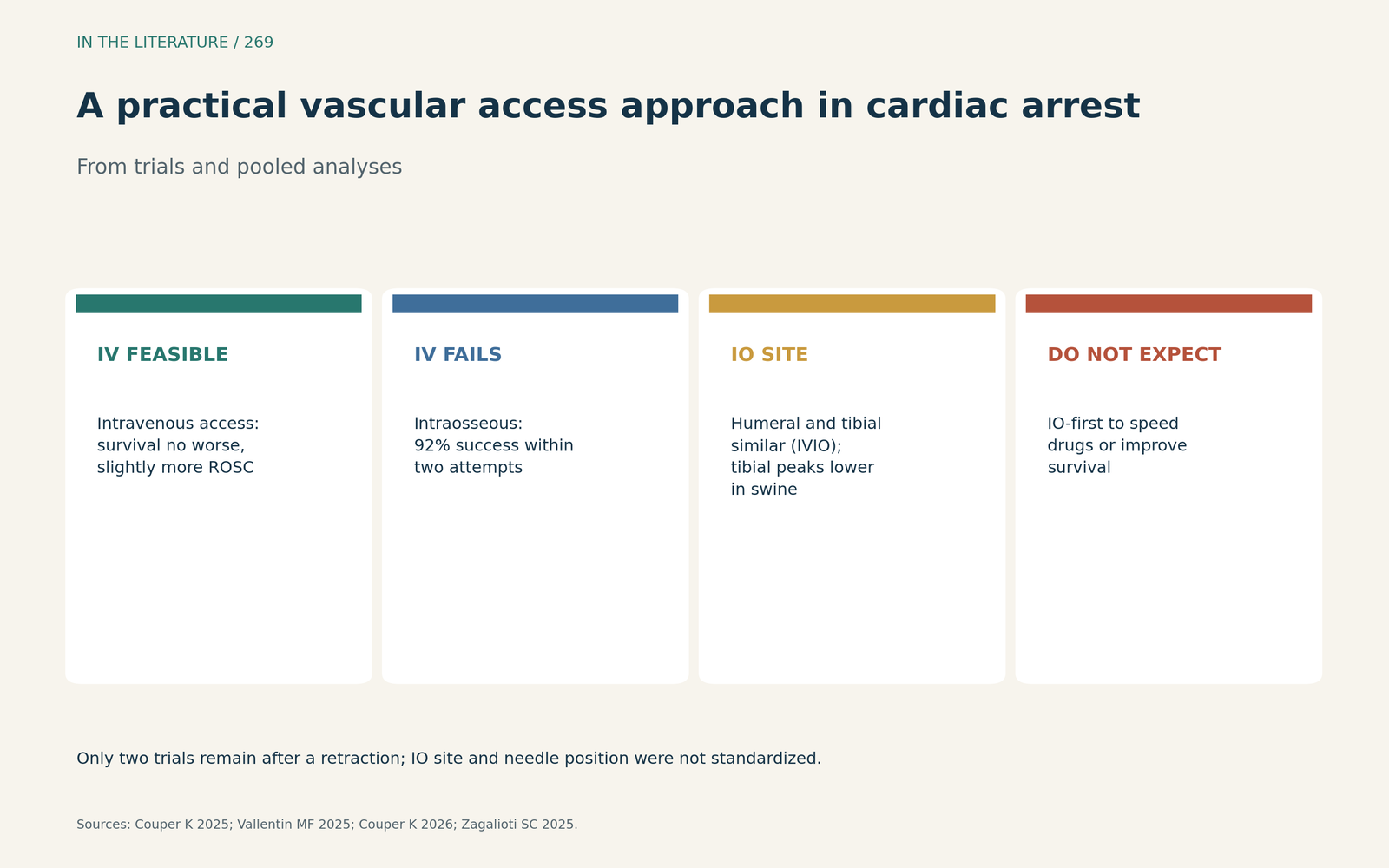
Figure 3. Choosing a route during resuscitation. Synthesized from PARAMEDIC-3, IVIO, the ILCOR review and Zagalioti et al.[1], [2], [3], [7] View larger.

Three takeaways
- An intraosseous-first strategy does not improve survival after out-of-hospital cardiac arrest.[1], [3], [4]
- Intraosseous access is placed more reliably, so it remains a sound backup when intravenous attempts fail.[2]
- If using intraosseous access, a proximal site may deliver drugs better, though human data are lacking.[2], [7]
References
- Couper K, Ji C, Deakin CD, et al. A randomized trial of drug route in out-of-hospital cardiac arrest. N Engl J Med. 2025;392(4):336–348. doi:10.1056/NEJMoa2407780
- Vallentin MF, Granfeldt A, Klitgaard TL, et al. Intraosseous or intravenous vascular access for out-of-hospital cardiac arrest. N Engl J Med. 2025;392(4):349–360. doi:10.1056/NEJMoa2407616
- Couper K, Andersen LW, Drennan IR, et al. Intraosseous and intravenous vascular access during adult cardiac arrest: a systematic review and meta-analysis. Resuscitation. 2026;223:111015. doi:10.1016/j.resuscitation.2026.111015
- Holmberg MJ, Couper K, Andersen LW, et al. Intravenous or intraosseous vascular access in cardiac arrest: an individual participant data meta-analysis. Resuscitation. 2026;228:111304. doi:10.1016/j.resuscitation.2026.111304
- Vallentin MF, Holmberg MJ, Granfeldt A, et al. Effect of vascular access strategy on long-term outcomes in patients with out-of-hospital cardiac arrest: a randomised clinical trial. Resuscitation. 2026;223:111087. doi:10.1016/j.resuscitation.2026.111087
- Waseem MH, Abideen ZU, Kashif MAB, et al. Comparing intraosseous versus intravenous access for resuscitation in out-of-hospital cardiac arrest: a systematic review and GRADE meta-analysis. Medicine (Baltimore). 2026;105(19):e48624. doi:10.1097/MD.0000000000048624
- Zagalioti SC, Gkarmiri S, Karagiannidis E, et al. Does the injection site matter during CPR? A systematic review and meta-analysis of drug pharmacokinetics and pharmacodynamics. J Clin Med. 2025;14(21):7497. doi:10.3390/jcm14217497