
ITL-224b586da129
Juan Li, MD · Updated November 18, 2026
Key points
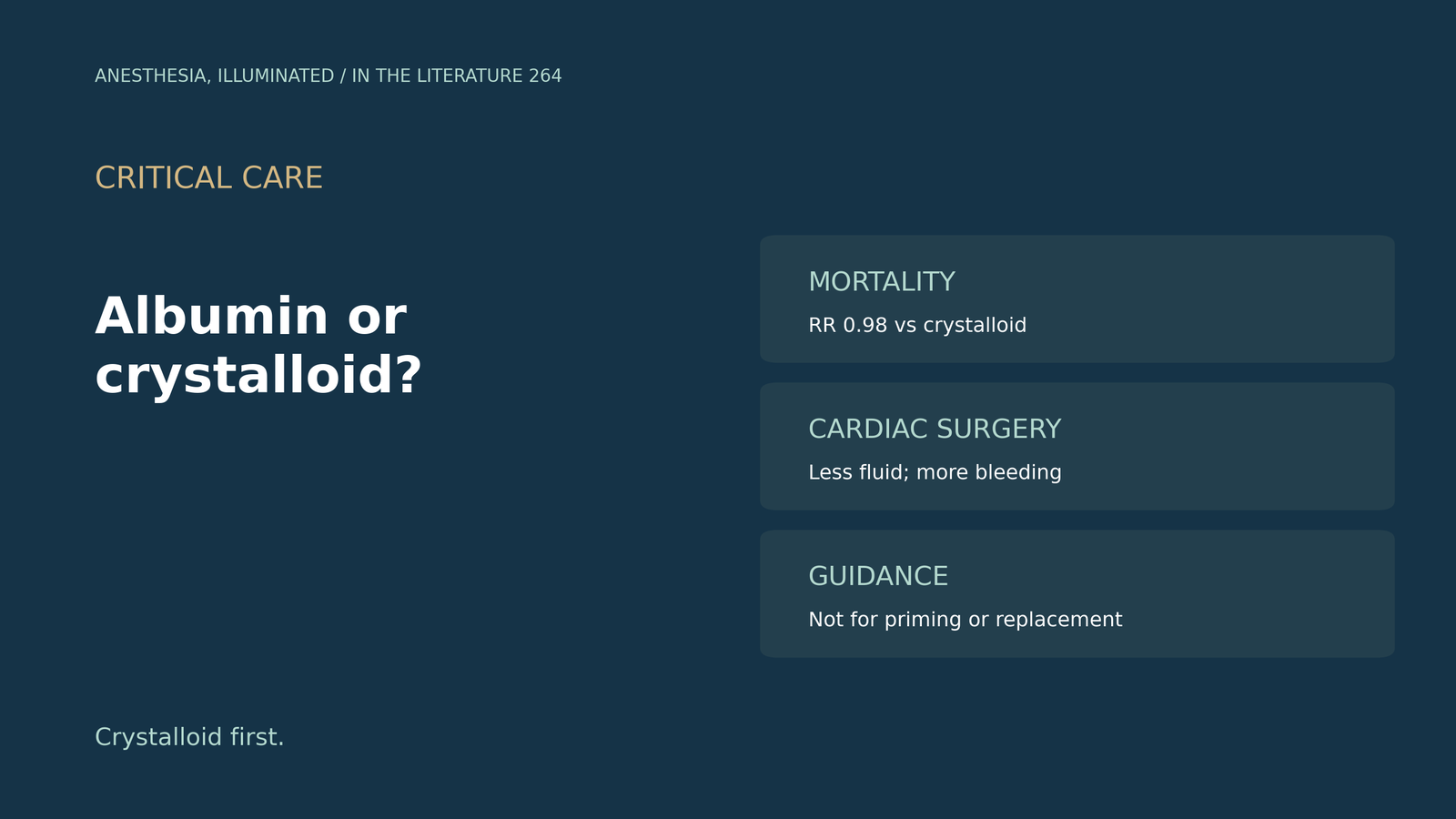
- No survival advantage. Across critically ill trials, mortality RR was 0.98 with albumin or plasma versus crystalloid.[1]
- Guidance says no. Albumin is not suggested for bypass priming or volume replacement in adult cardiovascular surgery.[2]
- No kidney benefit in major surgery. Kidney dysfunction was 4.58% with albumin and 5.03% with crystalloid.[3]
- Less fluid, not less vasopressor. After cardiac surgery, 20% albumin cut day-one fluid balance by 701 mL, and AKI was similar.[4], [5]
- A bleeding signal. In ALBICS, major bleeding and resternotomy were more frequent with 4% albumin.[6]
A patient is hypotensive in the ICU two hours after coronary bypass, and the team plans a fluid bolus. Is albumin a better choice than crystalloid?
Outcome trials and guidance
Across trials in critically ill people (Lewis et al., Cochrane Database Syst Rev 2018), albumin or plasma did not reduce mortality versus crystalloid (RR 0.98, 95% CI 0.92–1.06; 13,047 participants); the review excluded elective surgical patients.[1] The ICTMG guideline (Callum et al., CHEST 2024) did not suggest albumin in twelve of 14 recommendations, and in adult cardiovascular surgery it does not suggest albumin for bypass priming or volume replacement (conditional recommendation, moderate certainty); albumin costs approximately US$130 per 25 g.[2] In major surgery (Lee et al., Sci Rep 2024; twelve studies, 2311 patients), kidney dysfunction occurred in 4.58% with albumin and 5.03% with crystalloid, a non-significant difference (OR 0.99); intraoperative red cell transfusion was higher with albumin, and certainty was low for kidney dysfunction and high for mortality and ICU stay.[3]
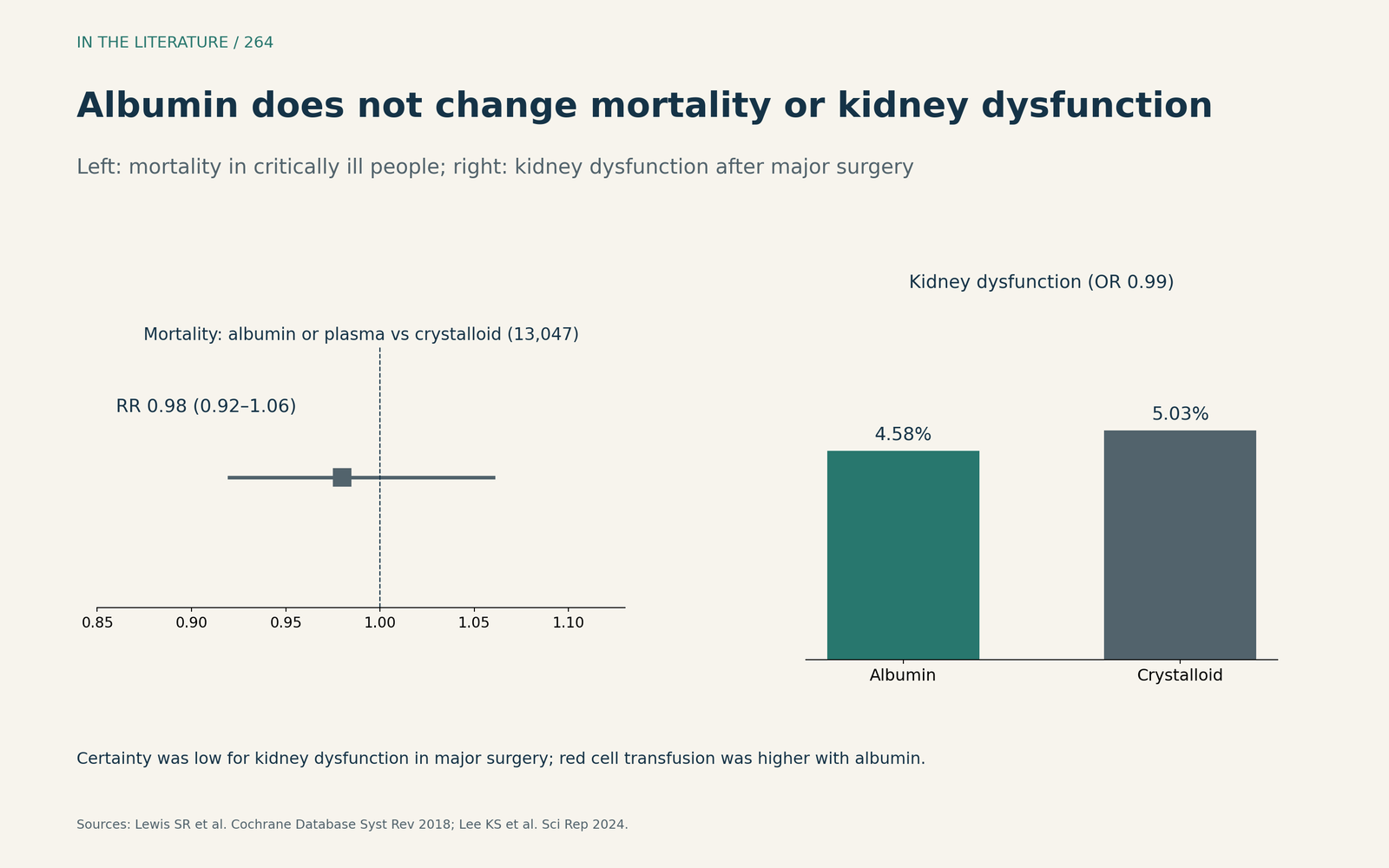
Figure 1. Mortality and kidney outcomes were similar with albumin and crystalloid. Data from the Cochrane review and Lee et al.[1], [3] View larger.

Cardiac surgery trials
HAS FLAIR-II (Wigmore et al., Intensive Care Med 2024) randomized 480 cardiac surgery patients needing fluid boluses to 20% albumin or crystalloid. Median vasopressor duration was 7 hours with 20% albumin and 10.8 hours with crystalloids, not a significant difference, while day-one fluid balance was 701 mL less positive with albumin; the trial was supported by CSL Behring, an albumin manufacturer.[4] In its secondary renal analysis, AKI occurred in 24% with 20% albumin and 22% with crystalloid (OR 1.13), although stage 2 and 3 AKI was less severe and shorter with albumin.[5] In ALBICS, 1,386 on-pump cardiac surgery patients received 4% albumin or Ringer acetate for priming and volume replacement; major bleeding, resternotomy and severe infections were more frequent with albumin, and the authors concluded that routine systemic albumin should be avoided in cardiac surgery.[6]
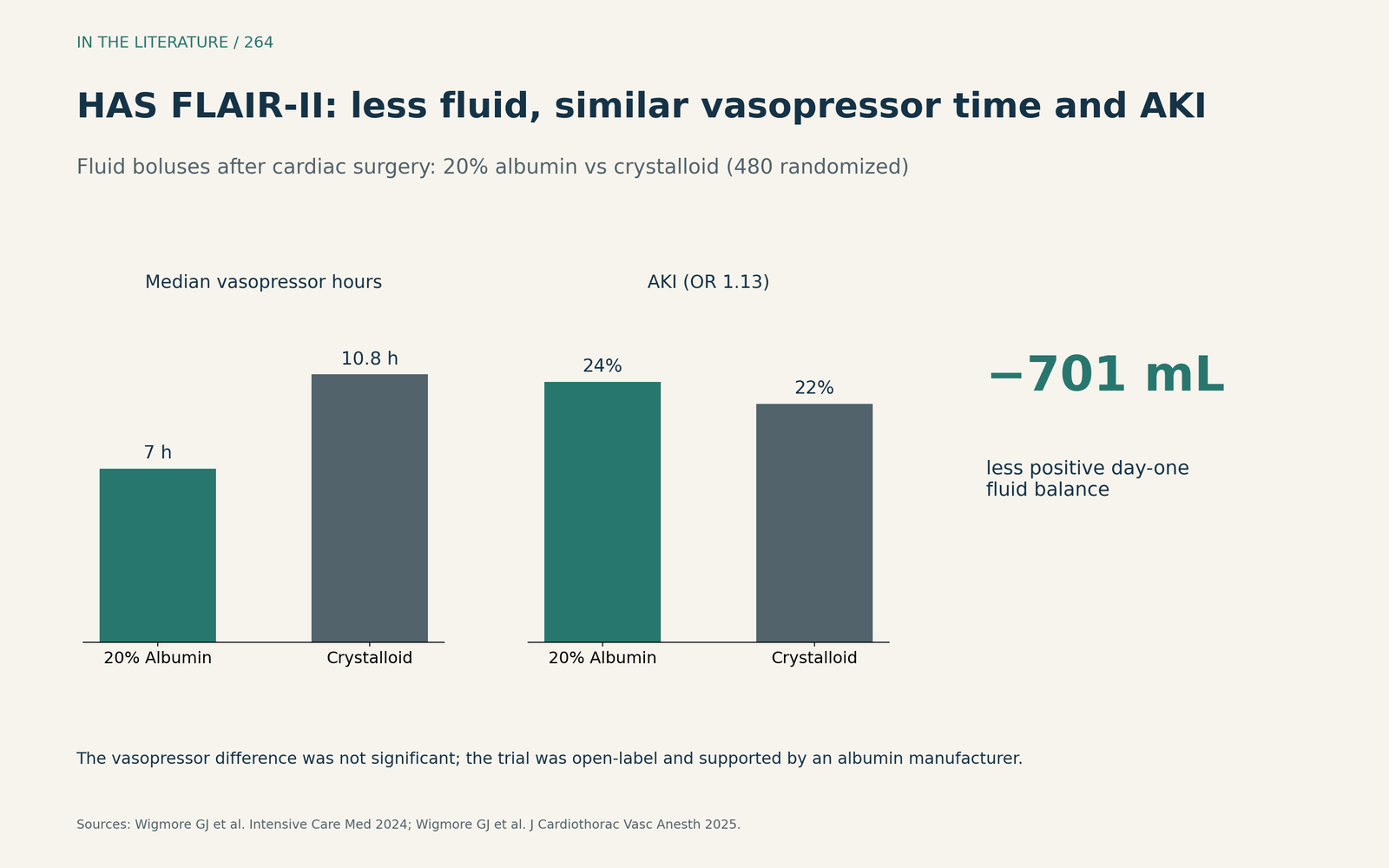
Figure 2. Twenty percent albumin reduced fluid balance but not vasopressor duration or AKI. Data from HAS FLAIR-II.[4], [5] View larger.

Observational signals and physiology
In a retrospective cohort of 8,136 cardiac surgery patients (Thang et al., J Cardiothorac Vasc Anesth 2022), 54.6% received albumin in the first 24 hours of ICU care; early albumin was associated with lower adjusted mortality (OR 0.68, 95% CI 0.48–0.97), but albumin given at any time during the ICU admission was associated with higher mortality.[7] A recent review (Hahn et al., Crit Care 2026) notes that despite the physiological advantages of 20% albumin, including less tissue oedema, overall outcomes are not changed, and that hyper-oncotic albumin is currently not the first-line fluid choice in surgery.[8]
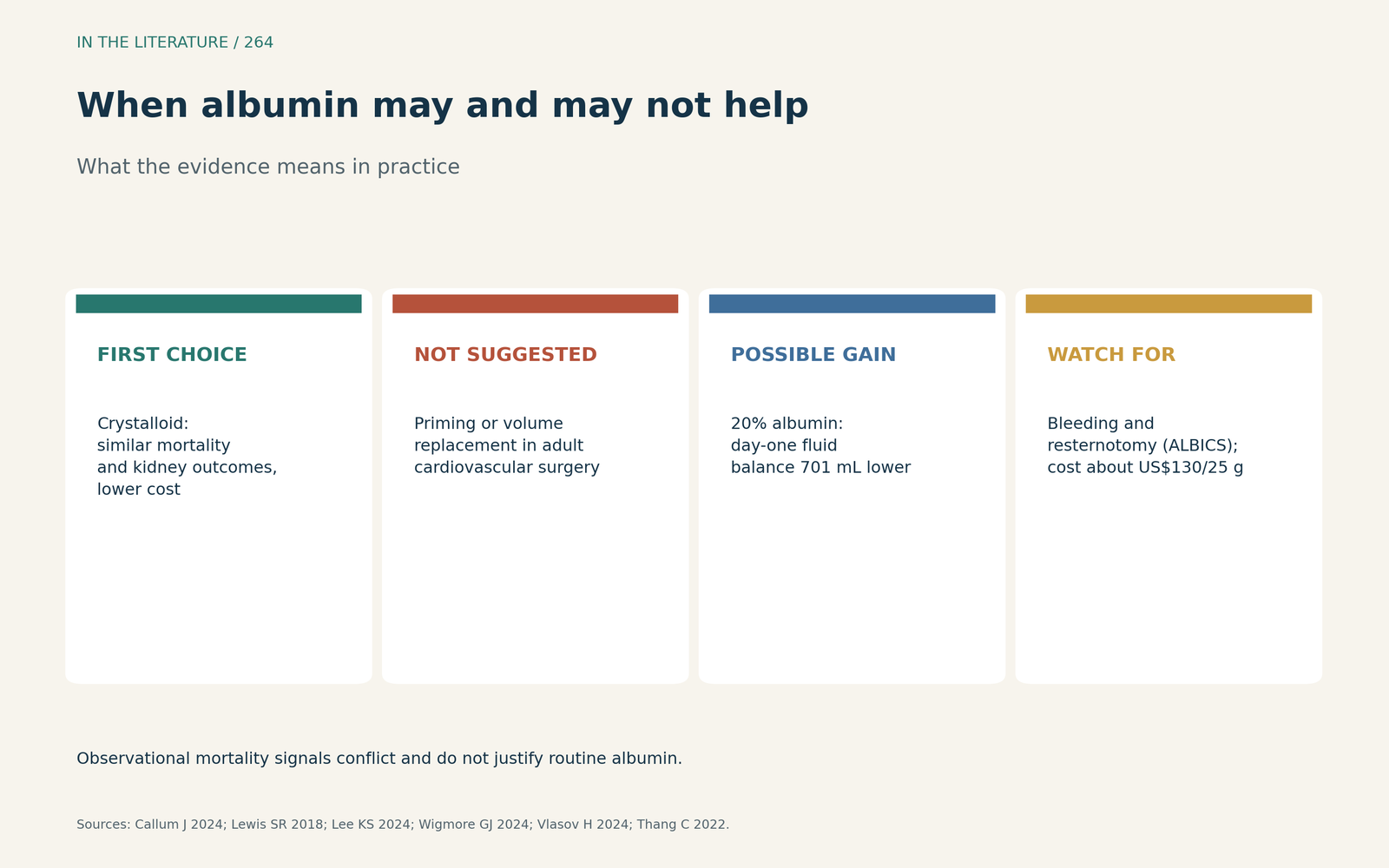
Figure 3. Crystalloid first; albumin only for specific goals. Synthesized from the ICTMG guideline, HAS FLAIR-II, ALBICS, Lee et al. and Hahn et al.[2], [4], [6], [3], [8] View larger.

Three takeaways
- Albumin does not lower mortality or kidney dysfunction compared with crystalloid, and it costs more.[1], [2], [3]
- In cardiac surgery, 20% albumin spares fluid but not vasopressor time, and 4% albumin for priming and replacement increased bleeding.[4], [6]
- Observational mortality signals conflict; use crystalloid first and reserve albumin for specific goals such as limiting fluid balance.[7], [8]
References
- Lewis SR, Pritchard MW, Evans DJW, et al. Colloids versus crystalloids for fluid resuscitation in critically ill people. Cochrane Database Syst Rev. 2018;8(8):CD000567. doi:10.1002/14651858.CD000567.pub7
- Callum J, Skubas NJ, Bathla A, et al. Use of intravenous albumin: a guideline from the International Collaboration for Transfusion Medicine Guidelines. Chest. 2024;166(2):321–338. doi:10.1016/j.chest.2024.02.049
- Lee KS, Kim JE, Kang G, et al. The effect of human albumin administration on postoperative renal function following major surgery: a systematic review and meta-analysis. Sci Rep. 2024;14:16599. doi:10.1038/s41598-024-62495-0
- Wigmore GJ, Deane AM, Presneill JJ, et al. Twenty percent human albumin solution fluid bolus administration therapy in patients after cardiac surgery-II: a multicentre randomised controlled trial. Intensive Care Med. 2024;50(7):1075–1085. doi:10.1007/s00134-024-07488-3
- Wigmore GJ, Deane AM, Presneill JJ, et al. The renal effect of 20% human albumin solution fluid bolus therapy in patients after cardiac surgery: a secondary analysis of the HAS FLAIR II randomized clinical trial. J Cardiothorac Vasc Anesth. 2025;39(4):967–974. doi:10.1053/j.jvca.2024.12.041
- Vlasov H, Talvasto A, Hiippala S, et al. Albumin and cardioprotection in on-pump cardiac surgery: a post hoc analysis of a randomized trial. J Cardiothorac Vasc Anesth. 2024;38(1):86–92. doi:10.1053/j.jvca.2023.09.028
- Thang C, Marella P, Kumar A, et al. Early albumin exposure after cardiac surgery. J Cardiothorac Vasc Anesth. 2022;36(5):1310–1317. doi:10.1053/j.jvca.2021.07.011
- Hahn RG, Jardot F, Dull RO, et al. Albumin 20% in surgical and critically ill patients; a comprehensive review. Crit Care. 2026;30:165. doi:10.1186/s13054-026-05959-1