ITL-2a7f32d50614
Juan Li, MD · Updated November 17, 2026
Watch the video
Key points
- Timing decides success. Agents that open KATP channels may be ineffective when given only at reperfusion, because the target and the timing must match.[1]
- The prize is real: reperfusion itself may contribute up to 50% of final infarct size, yet recent trials failed to reduce infarct size on magnetic resonance.[2]
- Many models are too narrow. Most experimental approaches are cardiomyocyte-centered, and few effective therapies have reached routine practice.[3]
- Anesthetic preconditioning illustrates the gap. Translation of preclinical evidence remains uncertain, a large volatile-versus-intravenous trial was stopped for futility, and an early landmark study did not measure infarct size.[4], [5]
- Negative trials need reading too. A multimodal cardioprotection bundle showed no protection, but cross-clamp times of about 74 minutes did not reach the ischemic threshold needed to cause harm.[6]
A colleague proposes adding a new experimental cardioprotective strategy to a cardiac surgery protocol because it halved infarct size in rodents. How should such a target be judged before it changes practice?[1], [2]
Four questions for any target
Vinten-Johansen and Thourani argue that every agent needs a defined target and that timing, compartment and mechanism must line up. Calcium accumulation occurs mainly during reperfusion, neutrophils reach the ischemic myocardium only at reperfusion, and both the target molecule and its compartment matter; agents that open KATP channels may be ineffective if given only at reperfusion. Any future strategy must also be simple enough not to distract the surgical team.[1]
Pagliaro and colleagues add that the classic RISK-SAFE signaling framework is likely oversimplified, that most experimental approaches are cardiomyocyte-centered and overlook the vessels, and that timing is critical because irreversible injury begins rapidly.[3]
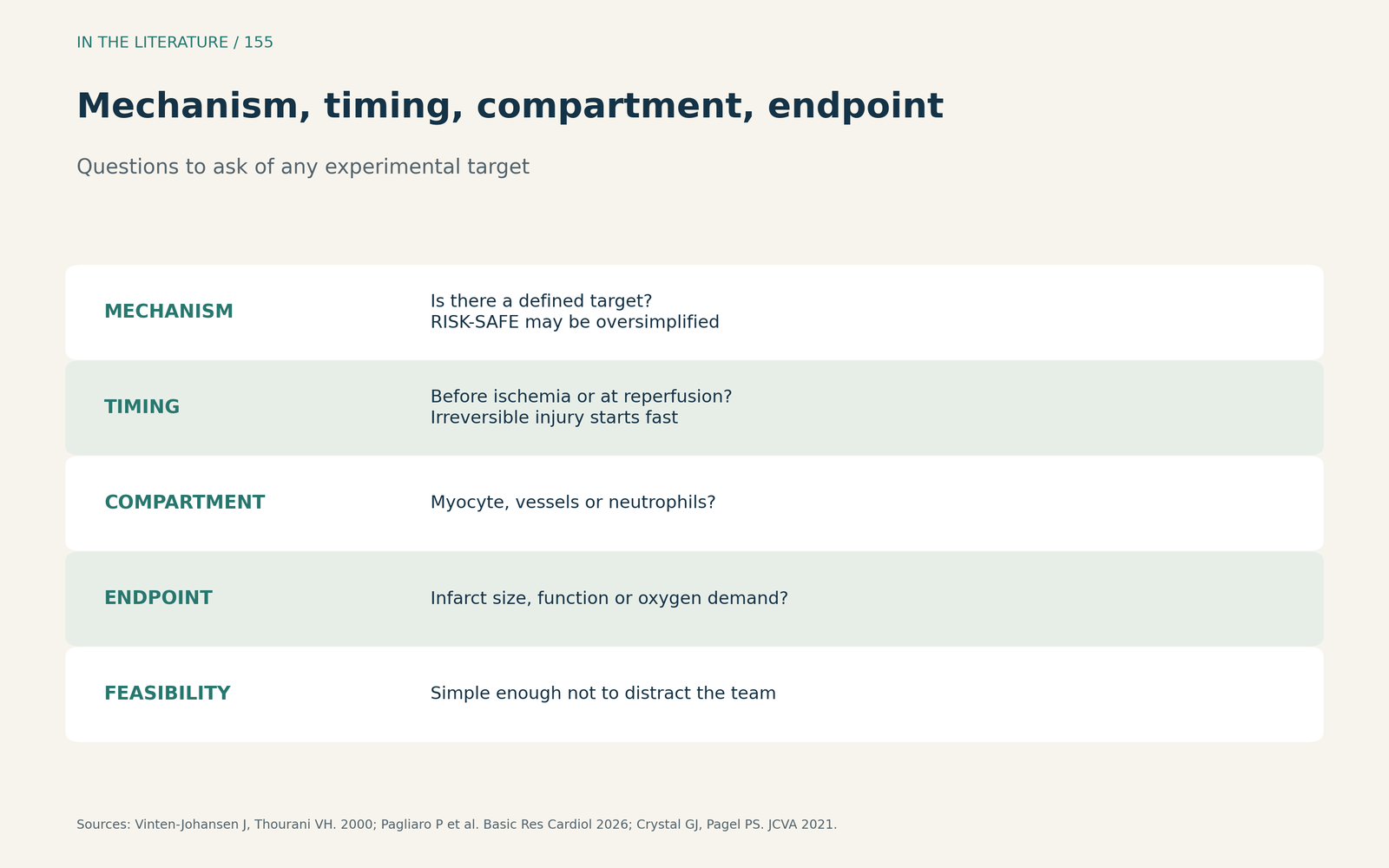
Figure 1. Mechanism, timing, compartment, endpoint. Synthesized from Vinten-Johansen and Thourani, Pagliaro et al. and Crystal and Pagel.[1], [3], [5] View larger.

Why translation has been difficult
Bulluck and Hausenloy note that reperfusion may contribute up to 50% of final infarct size, but recent trials in myocardial infarction failed to reduce magnetic resonance infarct size; in one, the drug engaged its target, yet the primary endpoint did not change. A biological ceiling is unlikely to be the main barrier.[2] Pagliaro and colleagues conclude that few effective therapies have reached routine practice.[3]
For anesthetic preconditioning, Sellers and colleagues write that translation of preclinical evidence remains uncertain and that a large randomized trial of volatile versus intravenous anesthesia found no outcome difference and was stopped for futility.[4] Crystal and Pagel point out that an early landmark experiment did not measure infarct size and that volatile anesthetics reduce oxygen demand, which can mimic protection; understanding the methods and limits of experiments is essential.[5]
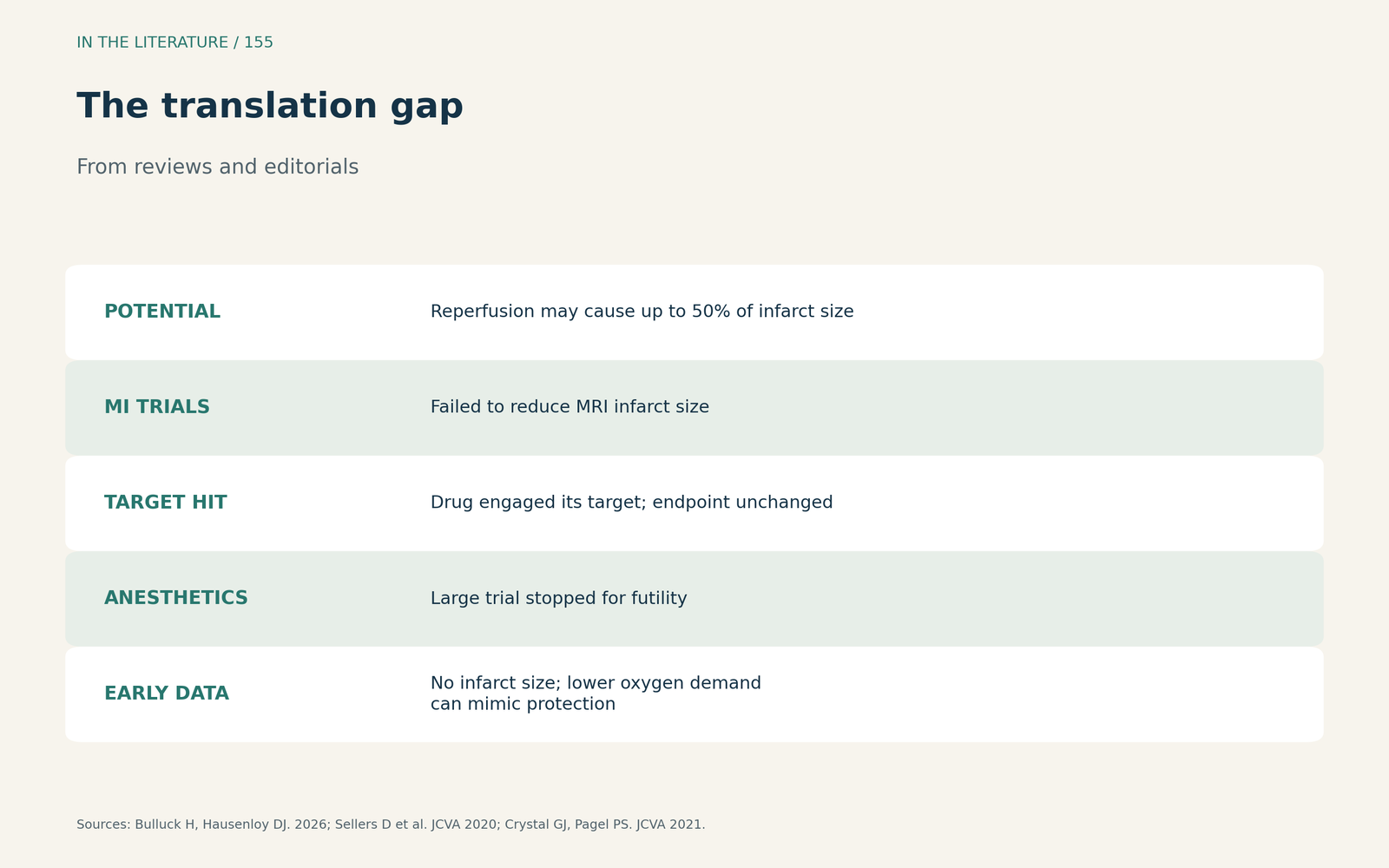
Figure 2. The translation gap. Synthesized from Bulluck and Hausenloy, Sellers et al. and Crystal and Pagel.[2], [4], [5] View larger.

Reading a neutral trial
The ProCCard trial combined several conditioning strategies during aortic valve surgery and found no protection. Pagel and Crystal argue that this was predictable: cross-clamp times were only 74 and 73 minutes, the ischemic threshold for adverse outcomes was not reached, graded reperfusion lasted one-tenth of the original 20 minutes, and major trials had already shown that remote ischemic preconditioning alone does not affect outcomes.[6]
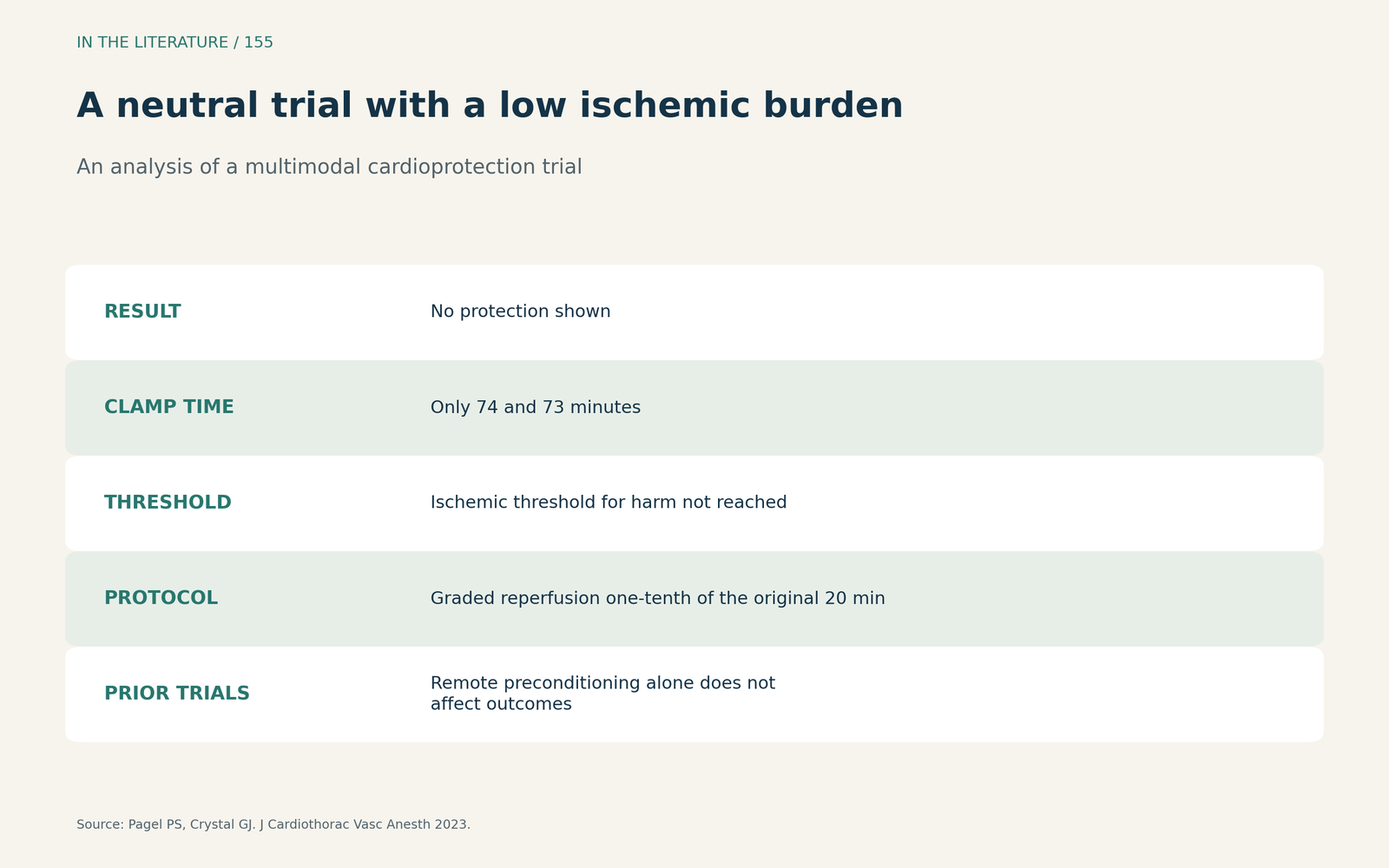
Figure 3. A neutral trial with a low ischemic burden. Synthesized from Pagel and Crystal.[6] View larger.

Three takeaways
- Check timing and compartment. A target that works before ischemia may fail at reperfusion.[1], [3]
- Check the endpoint and the model. Animal infarct size is not clinical outcome.[2], [5]
- Check the ischemic burden of the trial. Low-risk surgery cannot show protection.[6]
References
- Vinten-Johansen J, Thourani VH. Myocardial protection: an overview. J Extra Corpor Technol. 2000;32(1):38–48. doi:10.1051/ject/2000322038
- Bulluck H, Hausenloy DJ. Reperfusion injury and infarct size: why translation has been difficult, and how we move forward. Curr Cardiol Rep. 2026;28(1):78. doi:10.1007/s11886-026-02401-4
- Pagliaro P, Penna C, Femminò S, Welt FGP. Insights in ischemia/reperfusion injury and cardioprotection: neglected and emerging pathways and therapeutic targets for a personalized therapy. Basic Res Cardiol. 2026;121(3):321–350. doi:10.1007/s00395-026-01167-8
- Sellers D, Fedorko L, Djaiani G. Myocardial preconditioning with volatile anesthetics: goodbye to all that? J Cardiothorac Vasc Anesth. 2020;34(12):3257–3258. doi:10.1053/j.jvca.2020.08.032
- Crystal GJ, Pagel PS. The history of anesthetic-induced cardiac protection: there is more to the story! J Cardiothorac Vasc Anesth. 2021;35(11):3450–3451. doi:10.1053/j.jvca.2021.02.058
- Pagel PS, Crystal GJ. The multimodal cardioprotective strategy in a cardiac surgery trial: predictable neutral results from a questionable design. J Cardiothorac Vasc Anesth. 2023;37(11):2399–2401. doi:10.1053/j.jvca.2023.07.030