
ITL-a9ce58a33447
Watch the video

Figure 1. A useful analgesic adjunct should improve the child's recovery, not simply add another infusion. Conceptual illustration.
Key points
- A 2026 placebo-controlled trial found no reduction in recovery-room opioid use with a lidocaine bolus followed by a one-hour infusion.
- Pain and emergence-delirium scores also did not differ significantly between groups.
- The findings apply to the studied regimen in children aged 4–10 years; children with severe obstructive sleep apnea requiring overnight observation were excluded.
- Earlier evidence of less vomiting and fewer analgesic rescues came from a different regimen and background care. It does not establish an opioid-sparing benefit for the infusion protocol.
- The practical priority remains a procedure-specific basic analgesic regimen and a clear rescue plan.
A child is scheduled for tonsillectomy, and the team wants to limit opioid exposure without leaving the child in pain. Intravenous lidocaine is an appealing option: it is familiar, inexpensive, and has plausible analgesic mechanisms. The relevant question, however, is whether adding it improves outcomes in this operation and age group.
Benzon and colleagues tested that question directly. Their results do not support routine adoption of the studied infusion solely to reduce pain or opioid use after pediatric tonsillectomy.[1]
What was actually added to the anesthetic?
The double-blind trial randomized 90 children aged 4–10 years undergoing total tonsillectomy, with or without adenoidectomy. Eighty-eight received the intended intervention and were analyzed, 44 per group. The study regimen was a 1.5 mg/kg IV lidocaine bolus followed by 2 mg/kg/h for one hour, spanning the operation and early recovery, compared with equivalent-volume saline. These are the trial doses, not a recommended routine protocol.[1]
All children received fentanyl before incision, dexamethasone, and ondansetron. Morphine rescue in the postanesthesia care unit (PACU) followed a standardized pain-assessment approach. The primary outcome was PACU opioid consumption expressed as milligrams of morphine equivalents per kilogram (MME/kg).
This design tests the additional benefit of lidocaine in that anesthetic pathway. It does not test lidocaine as a replacement for all other analgesics, a prolonged postoperative infusion, or treatment of children with severe sleep apnea requiring overnight observation.[1]
The recovery-room result was clinically unconvincing
Estimated mean PACU opioid use was 0.20 MME/kg in each group. The unadjusted difference was 0.00 MME/kg, with a 95% confidence interval from −0.06 to 0.06. The adjusted analysis likewise did not demonstrate a difference. Pain scores and emergence-delirium scores improved over time in both groups, without a significant between-group difference; discharge time also did not improve.[1]
That is a negative efficacy finding, not proof that the true effect is exactly zero. The interval still allows differences in either direction. For a clinician deciding whether to add a routine infusion, however, the trial offers no demonstrated opioid reduction or faster recovery to justify that addition.
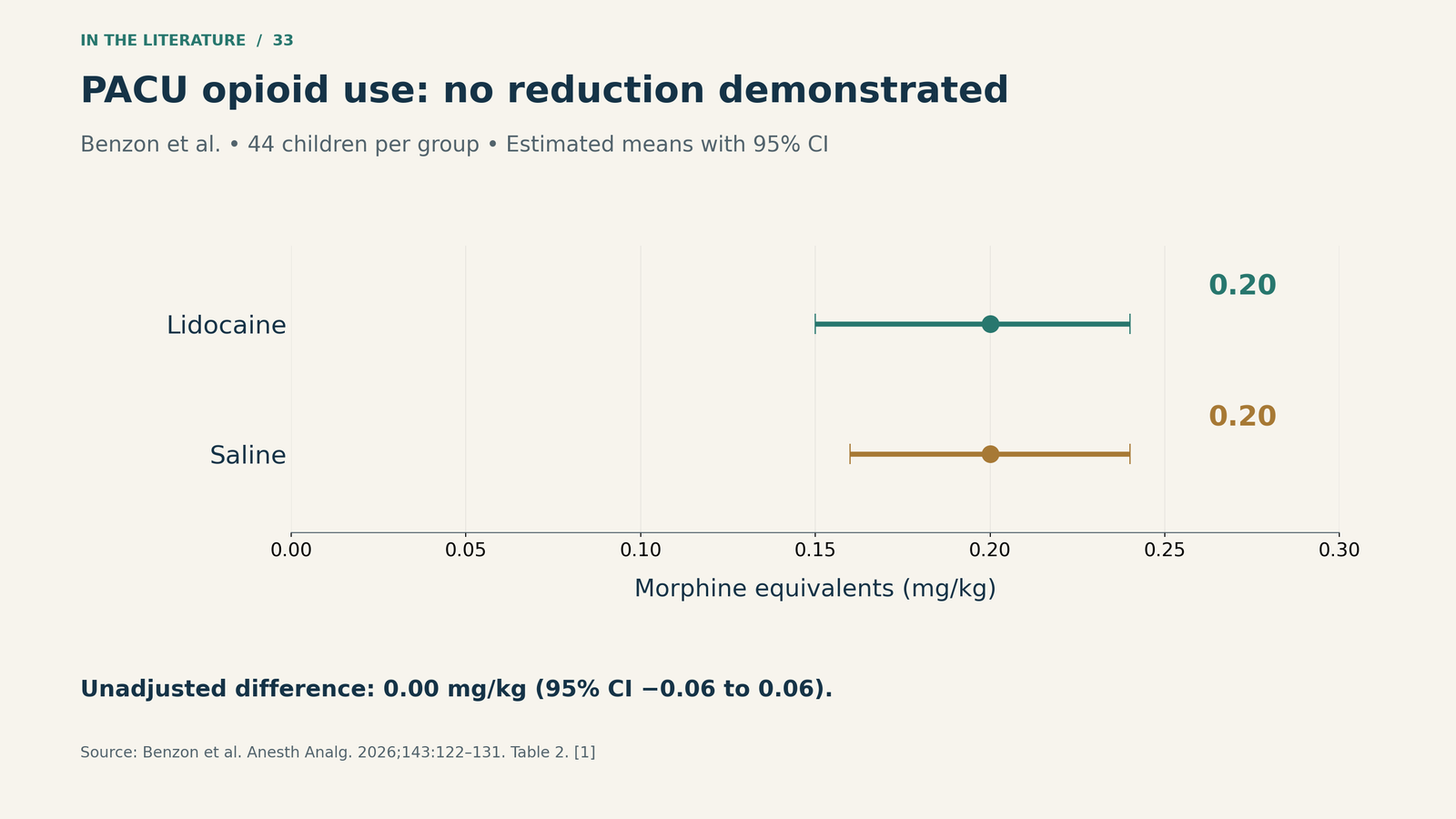
Figure 2. PACU opioid consumption in 44 children per group. Points and error bars represent estimated means and 95% confidence intervals from Table 2; the difference shown is unadjusted.[1]

The first postoperative week is harder to judge. Only 43 of 88 families returned the pain and medication journal. Those incomplete follow-up data are less secure than the observed PACU endpoint and should not be used to claim that lidocaine has been definitively ruled out for every aspect of recovery. No adverse medication events were observed, but a trial of this size cannot establish the absence of uncommon toxicity.[1]
Why does another tonsillectomy study look positive?
Hu and colleagues studied a single pre-induction dose of lidocaine—0, 1, 1.5, or 2 mg/kg—in children aged 3–12 years. Its primary outcome was vomiting within 24 hours. The reported vomiting incidence was 20% with 2 mg/kg versus 46% with placebo. Fewer children in the higher-dose group also required rescue analgesia.[2]
Those findings deserve recognition, but the rescue medication was IV propacetamol, not a measure of opioid consumption. Dexamethasone and ondansetron were used for vomiting rescue rather than routinely given prophylactically, and the background analgesic regimen differed. Thus, this trial asks a different question from adding a lidocaine infusion to an anesthetic that already includes both antiemetics. The studies did not directly compare the two lidocaine regimens, and their differences cannot establish that simply increasing the dose will improve analgesia.[1, 2]
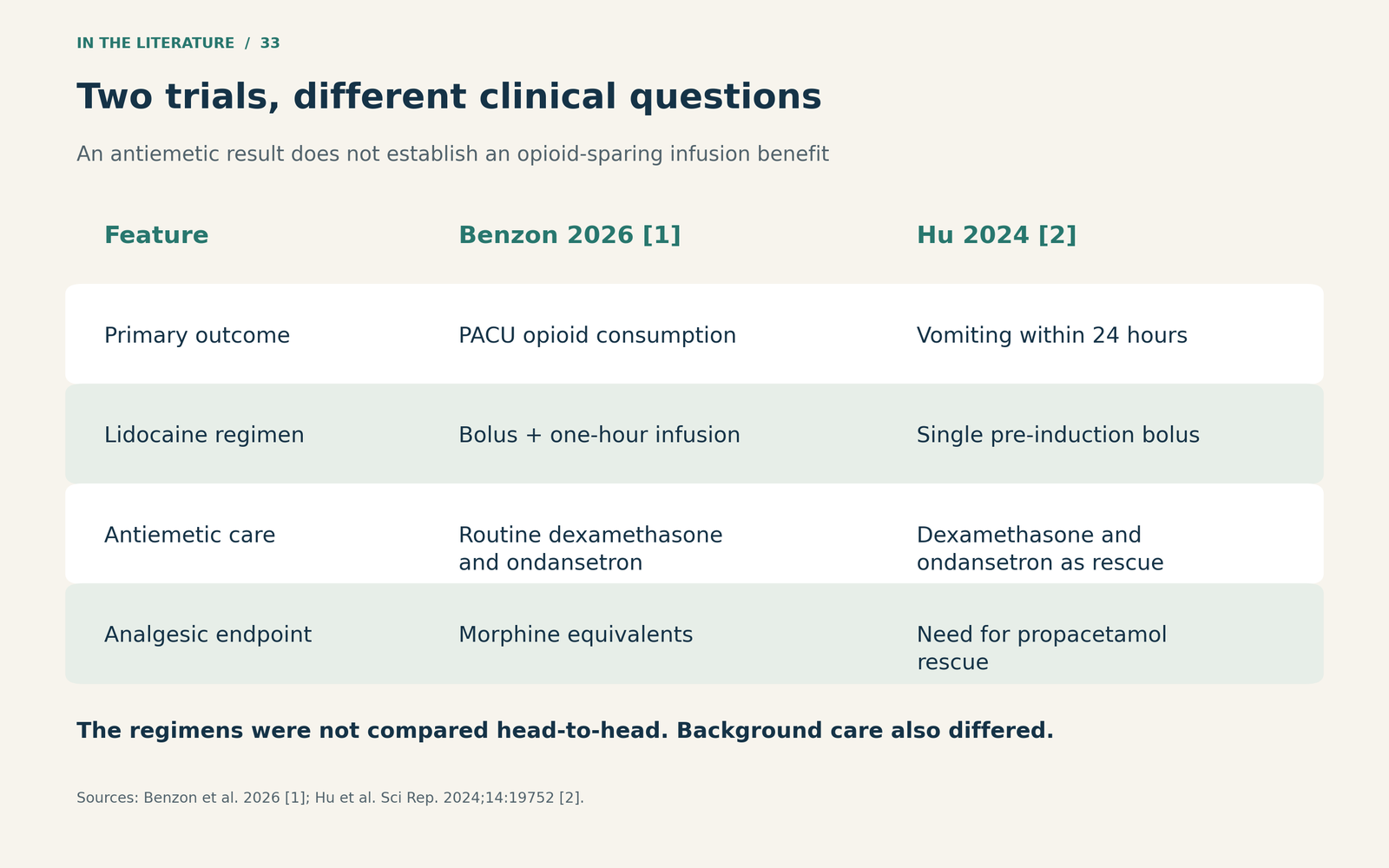
Figure 3. Before carrying a positive result into practice, match the outcome, regimen, and accompanying treatment. Less vomiting and fewer nonopioid rescues are not the same endpoint as lower PACU opioid consumption.[1, 2]

Put the basic regimen first
The PROSPECT tonsillectomy guideline recommends paracetamol and an NSAID before or during surgery and continued postoperatively, unless contraindicated, together with a single intraoperative dose of IV dexamethasone. Postoperative opioids are reserved for rescue. This provides a practical foundation for assessing whether an additional intervention contributes anything useful.[3]
At the bedside, review whether the planned basic analgesics have been given, whether the child can take the postoperative medicines, and whether the family understands the schedule and rescue instructions. Reassess pain alongside sedation, breathing, and oral intake. The aim is adequate pain relief with a workable recovery plan.
For IV lidocaine, an alternative dose or longer duration remains a question for further study. A negative one-hour trial is not a reason to escalate the regimen empirically, particularly when the population of greatest respiratory concern was not included.
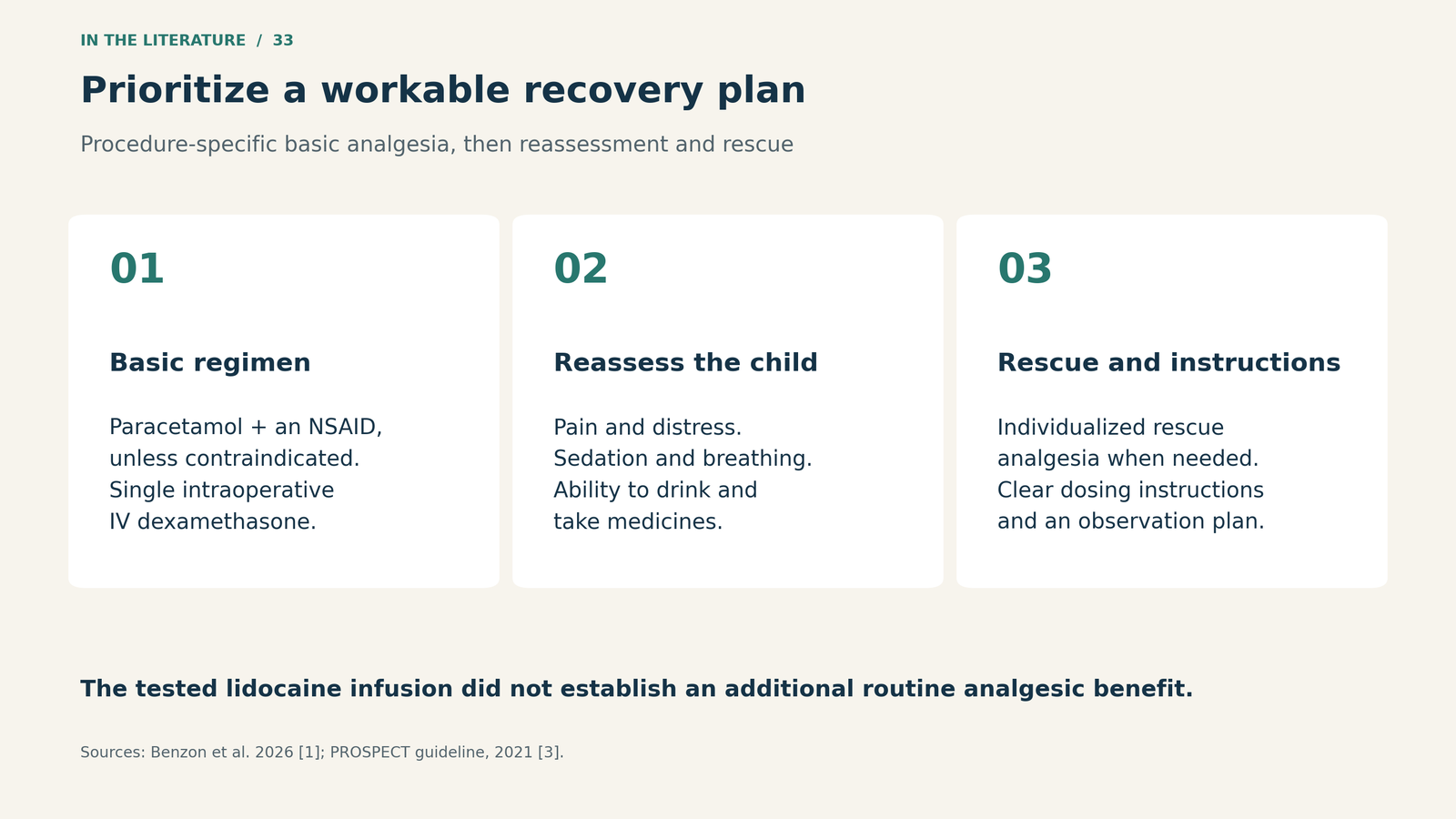
Figure 4. Clinical priorities for postoperative pain care. The basic regimen is supported by PROSPECT; the lidocaine trial does not establish an additional routine role for its tested infusion.[1, 3]

Three takeaways
- Routine IV lidocaine for this purpose has no demonstrated benefit from the 2026 trial. PACU opioid use and pain outcomes did not improve with the tested regimen.
- Keep the endpoints separate. Antiemetic effects and nonopioid rescue requirements cannot substitute for evidence of opioid sparing.
- Optimize the recovery plan first. Deliver the procedure-specific basic regimen, reassess the child, and provide an individualized rescue plan.
References
- Benzon HA, King MR, Kilner KJ, Shah RD, Billings KR, Hoff SR, et al. Intravenous lidocaine for postoperative pain in children undergoing tonsillectomies: a double-blinded, randomized, placebo-controlled trial. Anesth Analg. 2026;143(1):122–131. doi:10.1213/ANE.0000000000007786.
- Hu Y, Du MC, Chen Y, Long X, Jiang JJ, Gong Y. Lidocaine and risk of postoperative vomiting in children undergoing tonsillectomy: a randomised clinical trial. Sci Rep. 2024;14:19752. doi:10.1038/s41598-024-70804-w.
- Aldamluji N, Burgess A, Pogatzki-Zahn E, Raeder J, Beloeil H; PROSPECT Working Group collaborators. PROSPECT guideline for tonsillectomy: systematic review and procedure-specific postoperative pain management recommendations. Anaesthesia. 2021;76(7):947–961. doi:10.1111/anae.15299.