
ITL-2b3cc6b55ea8
Watch the video

Figure 1. The pressure trend and the response to treatment belong in the handover. Conceptual illustration; monitor traces are not patient data.
Key points
- Depth and duration both matter. A 2026 transplant cohort linked cumulative exposure below MAP 65 mmHg with delayed graft function. [1]
- A study threshold is not an established optimum. The cohort did not prove that 65 mmHg is sufficient for every graft or that routinely targeting higher pressure improves outcomes. [1]
- Restoring pressure does not directly measure graft blood flow. A transplant editorial highlights this unresolved distinction. [2]
- Treat the mechanism of hypotension. Fluid responsiveness alone is not an indication to give fluid; the clinical need and response matter. [3]
- Continue surveillance after surgery. A separate cohort associated hypotension through postoperative day 2 with delayed graft function. [4]
When a kidney transplant recipient's MAP falls and then returns above 65 mmHg, the latest number answers only part of the clinical question. How deep and prolonged was the episode? What caused it? Did the chosen treatment correct that cause, and will the improvement persist after transfer? The literature supports asking these questions while leaving the optimal transplant-specific pressure target unresolved. [1–4]
Read the low-pressure episode as an exposure
Delaporte and colleagues reported a single-center retrospective cohort of 3,825 first kidney transplants from living or deceased donors. The primary outcome was delayed graft function (DGF), defined as dialysis within the first postoperative week. DGF occurred in 1,007 recipients (26.3%), with reported rates of 37.5% after deceased-donor and 3.1% after living-donor transplantation. [1]
The exposure was the area below a MAP threshold of 65 mmHg: how far pressure fell below that threshold, multiplied by time and accumulated across the anesthetic. Each additional 50 mmHg·min was associated with an adjusted odds ratio for DGF of 1.08 (95% CI 1.02–1.14). That is an 8% increase in odds, not an eight-percentage-point increase in absolute risk. It is also an association, not the measured benefit of preventing that exposure. [1]
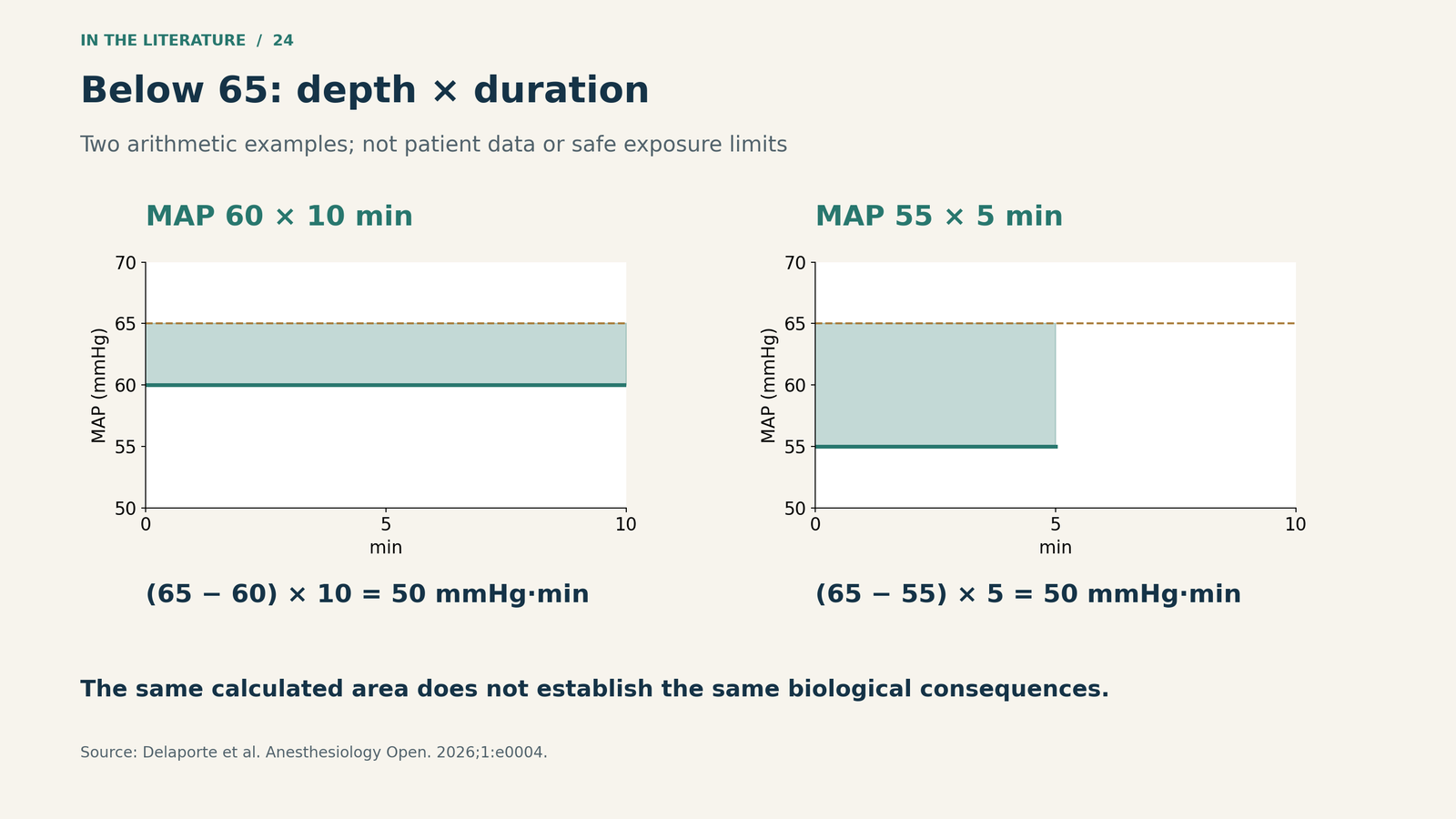
Figure 2. How depth and duration contribute to the exposure metric. These are arithmetic examples, not patient observations, permissible exposure limits or proof of identical biological consequences. [1] Enlarge figure.

The analysis used pressure readings over the entire anesthetic and could not separate episodes before and after graft reperfusion. Most measurements were intermittent cuff readings, carried forward to one-minute intervals for analysis. Brief episodes could therefore be missed. The result supports attention to cumulative hypotension; it cannot identify a uniquely safe pressure immediately after reperfusion. [1]
Do not turn 65 into a guarantee—or an automatic higher target
The investigators chose 65 mmHg as a commonly used threshold and the lower limit of their institutional practice. They did not randomize patients to different pressure goals. Greater hypotension burden remained associated with DGF after adjustment, but residual confounding and the effects of treatments could not be eliminated. The study therefore does not tell us which higher target, if any, improves graft outcomes. [1]
The association was statistically significant in deceased-donor recipients. In living-donor recipients, the estimate was imprecise, with relatively few DGF events; the formal interaction by donor type was not significant. It would be incorrect to conclude that living-donor kidneys are immune to hypotension simply because that subgroup's confidence interval crossed the null. [1]
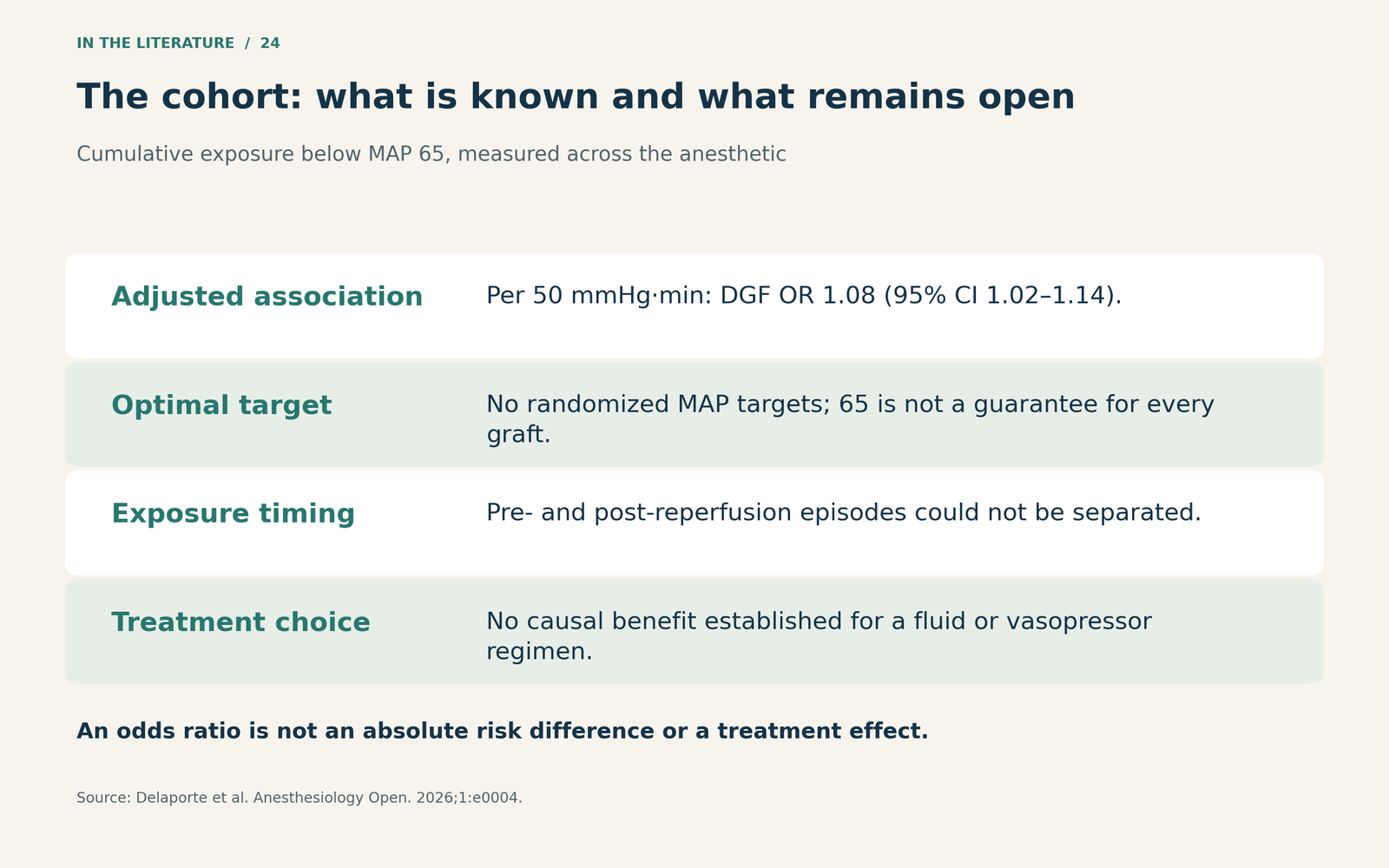
Figure 3. What the cohort establishes and what it leaves open. The adjusted association is reported per 50 mmHg·min; it does not compare fluid treatment with vasopressors or establish a causal treatment effect. [1] Enlarge figure.

Choose treatment from the hemodynamics, not the threshold alone
Shen and Shaw's accompanying editorial emphasizes that pressure and flow are different. Its concern that vasopressors might normalize systemic pressure without restoring renal microcirculation is a physiological caution, not a trial demonstrating that vasopressors harm transplant recipients. It should prompt assessment of perfusion, not reflexive avoidance of needed circulatory support. [2]
The 2025 ESAIC statement for adults undergoing noncardiac surgery recommends identifying and treating the cause of hypotension—such as vasodilation, hypovolemia, bradycardia or myocardial depression—and reassessing the response. It specifically advises against using arterial pressure as a surrogate for cardiac output. It also advises giving fluids for clinical or metabolic evidence of hypovolemia or hypoperfusion, rather than simply because a patient is fluid responsive. These are general perioperative principles, not a kidney-transplant trial proving one resuscitation regimen superior. [3]
Applied at the bedside, this means confirming the pressure measurement, assessing volume loss and cardiac performance, and matching fluid or vasoactive support to the likely mechanism. Persistent instability or an unclear mechanism can justify additional monitoring and focused echocardiography. The endpoint is a coherent improvement in the patient's hemodynamic state, not an isolated number reached through progressively more fluid or vasopressor. [3]
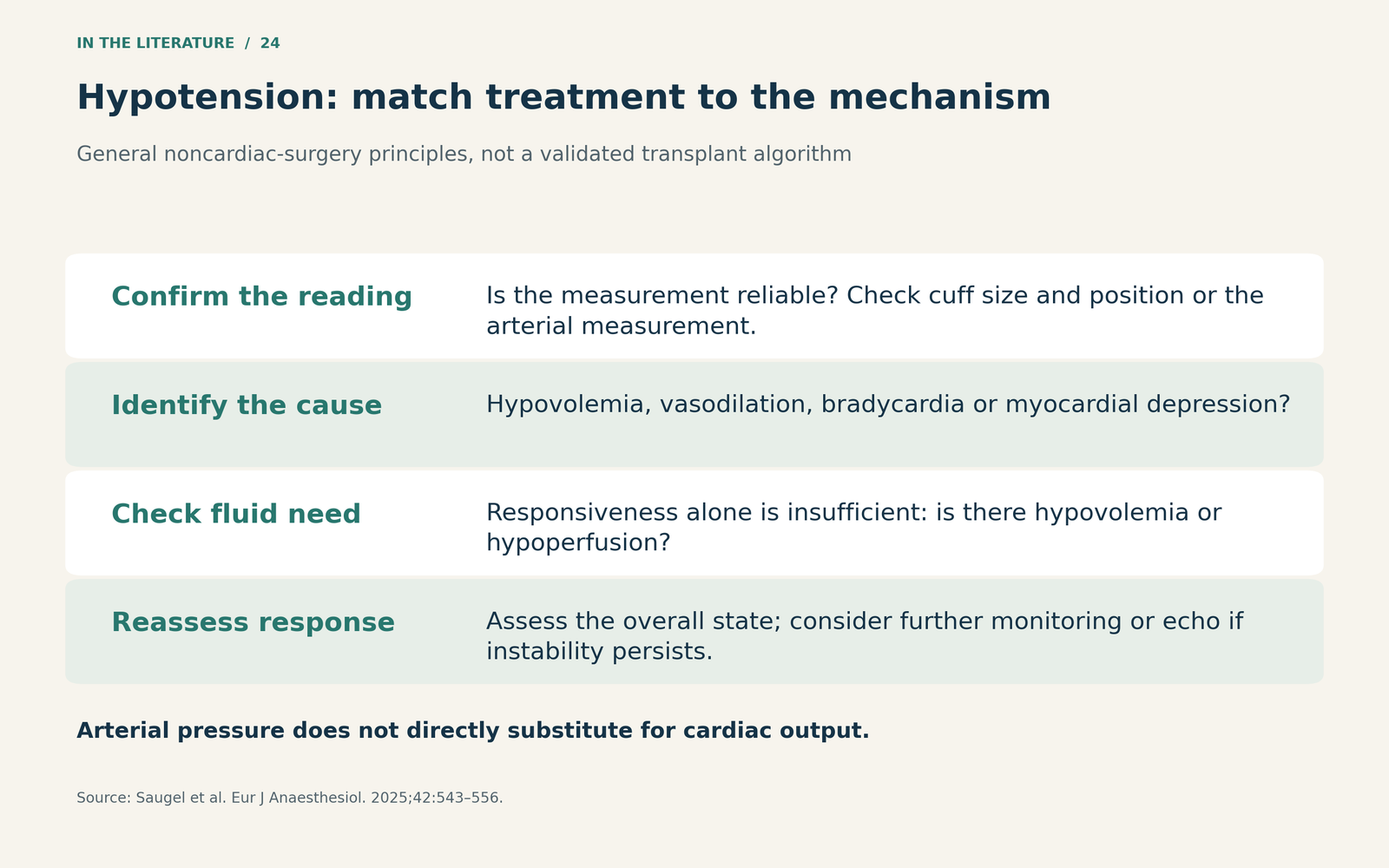
Figure 4. A cause-directed assessment based on ESAIC principles. This is not a validated transplant-specific treatment algorithm and does not prescribe a universal MAP or drug dose. [3] Enlarge figure.

The postoperative period remains part of the problem
Morrison and colleagues studied 1,020 recipients using a different definition: systolic pressure of 90 mmHg or lower during the last operative hour, or from recovery-room admission through postoperative day 2. Postoperative hypotension was associated with DGF (adjusted OR 4.01; 95% CI 2.24–7.19); the last-hour intraoperative exposure was not (1.02; 0.61–1.72). [4]
These findings cannot be directly compared with an area below MAP 65: the pressure variable, exposure window and analysis differ. Nor does the postoperative association prove that a particular intervention prevents DGF. Treatment details were unavailable, and hypotension may also mark bleeding, infection or cardiac illness. The practical implication is to hand over the pressure course, suspected cause, treatment response and continuing support requirements, with a clear monitoring and escalation plan. This is a clinical application of the findings and hemodynamic guidance. [3, 4]
Three takeaways
- Read the whole pressure episode. Depth, duration and context convey more than one recovered MAP value.
- Use 65 mmHg correctly when interpreting this study. It defines the measured exposure; it does not establish a universal transplant target or the benefit of a higher one.
- Correct the cause and continue the plan after surgery. Reassess perfusion and treatment response, then communicate the unresolved risk at transfer. [1–4]
References
- Delaporte A, Wingert T, Weinberg L, Grogan T, Tan K, Chen M, et al. Intraoperative hypotension and delayed graft function after kidney transplantation: a retrospective cohort analysis. Anesthesiology Open. 2026;1(1):e0004. doi:10.1097/ao9.0000000000000004.
- Shen S, Shaw A. New kidneys do not tolerate hypotension. Anesthesiology Open. 2026;1(1):e0005. doi:10.1097/ao9.0000000000000005.
- Saugel B, Buhre W, Chew MS, Cholley B, Coburn M, Cohen B, et al. Intra-operative haemodynamic monitoring and management of adults having noncardiac surgery: a statement from the European Society of Anaesthesiology and Intensive Care. Eur J Anaesthesiol. 2025;42(6):543–556. doi:10.1097/EJA.0000000000002174.
- Morrison SA, Thanamayooran A, Tennankore K, Vinson AJ. Association between perioperative hypotension and graft function in kidney transplantation. Kidney Int Rep. 2025;10(6):1819–1828. doi:10.1016/j.ekir.2025.03.055.