ITL-c5ea2eaab733
Juan Li, MD · Updated November 17, 2026
Watch the video
Key points
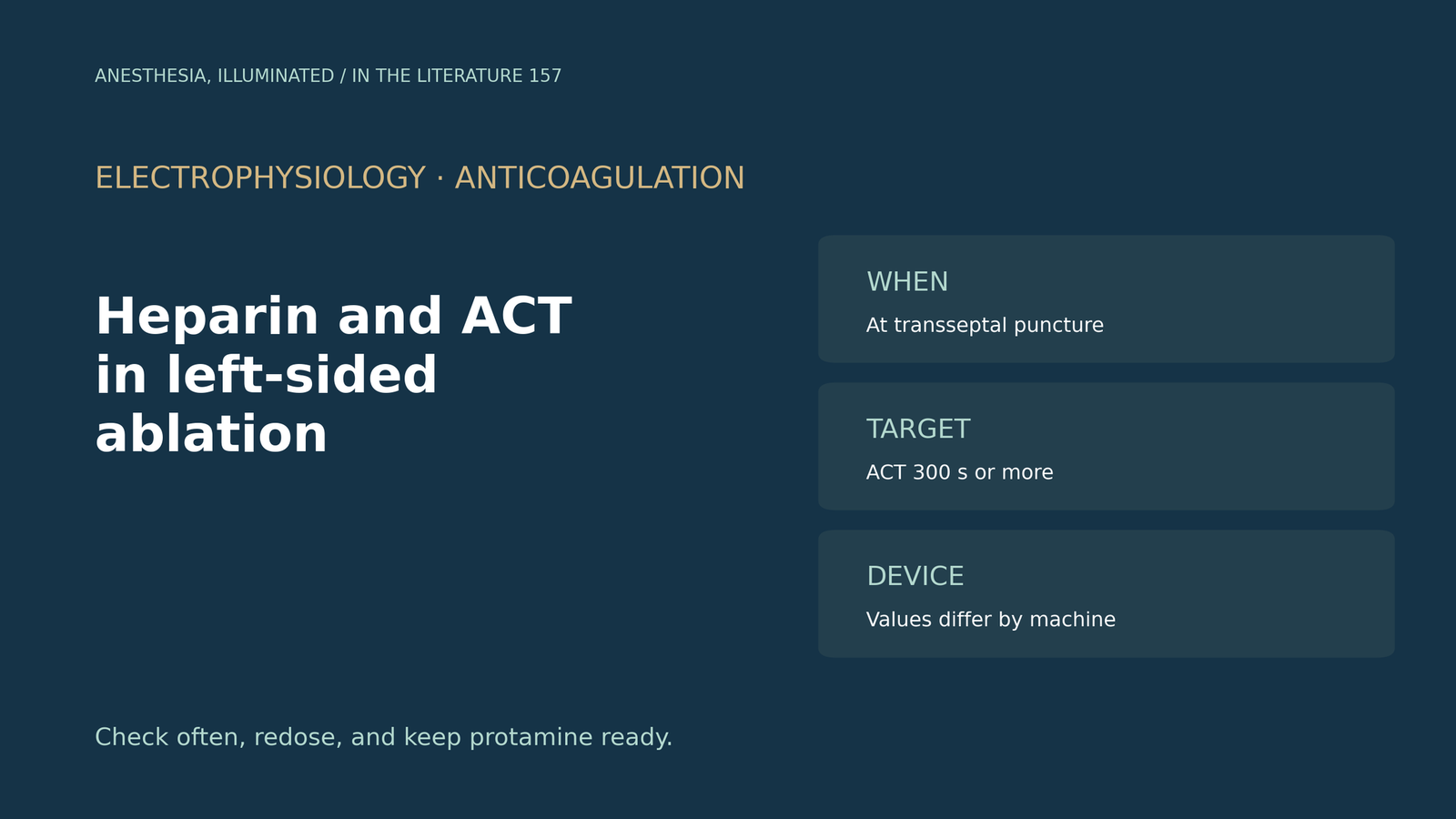
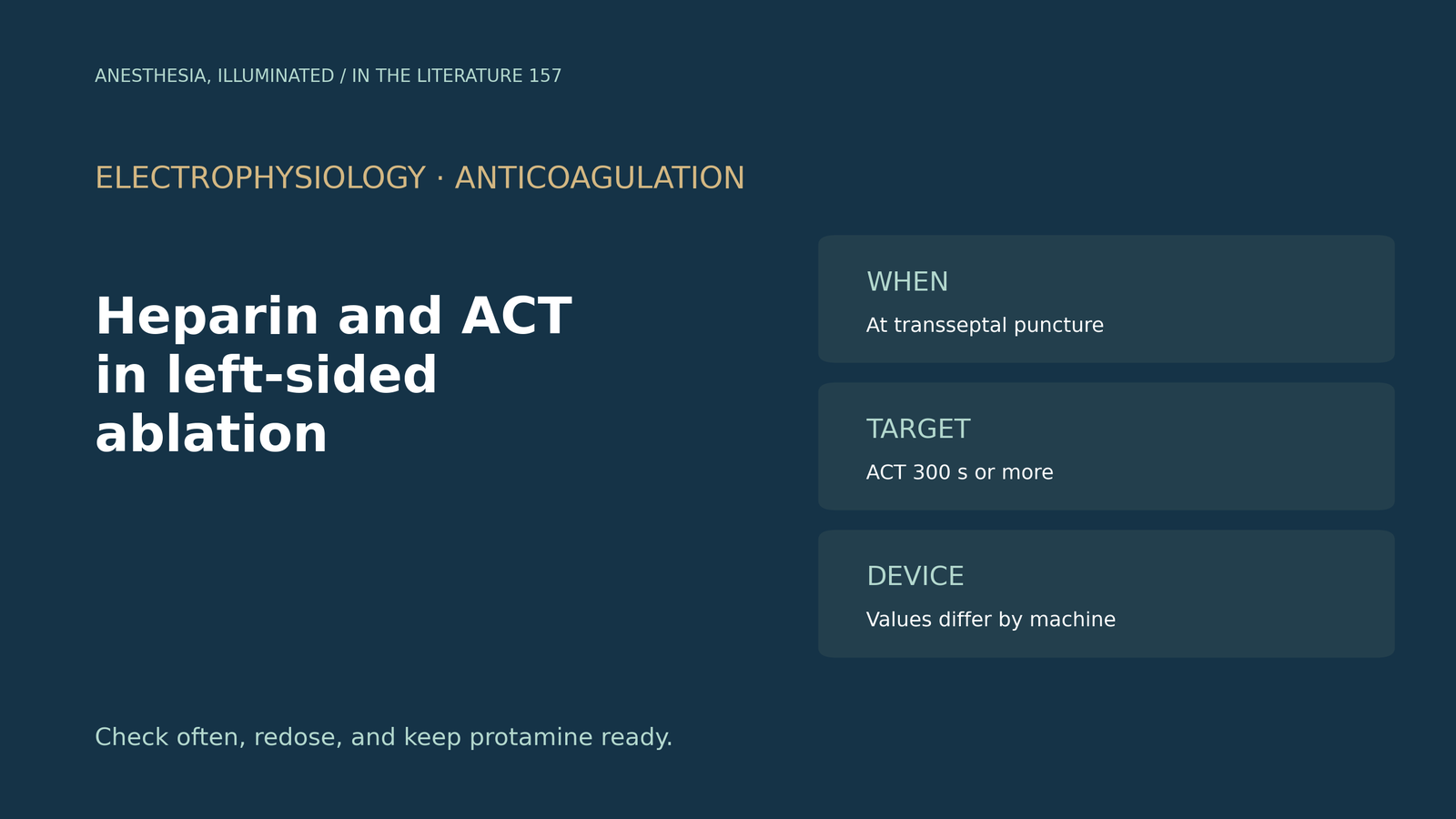
- Start early. Heparin should be given before or immediately after transseptal puncture.[1]
- Aim high. Consensus targets an activated clotting time (ACT) of 300 seconds or more, maintained at 300 to 350 seconds throughout; one-third of the writing group targets above 350.[1]
- Check often. ACT should be measured every 15 minutes until therapeutic, and the infusion can stop once catheters leave the left heart.[2]
- Heparin is needed even if patients are already anticoagulated, and tamponade occurs in about 1% of pulmonary vein isolations; protamine and specific reversal agents should be available.[2], [3]
- Expect to redose and know your device. In one study 78.4% of patients needed extra heparin, and two point-of-care ACT devices differed by about 51 seconds, changing the decision in 42% of measurements.[4], [5]
During a pulmonary vein isolation under general anesthesia, the first ACT after heparin is 260 seconds on the laboratory's point-of-care device. Is this adequate, and how should heparin be adjusted?[1], [5]
What the consensus statements recommend
The 2017 atrial fibrillation ablation consensus recommends heparin before or immediately after transseptal puncture, adjusted to a target ACT of 300 seconds or greater (class I) and maintained at 300 to 350 seconds throughout; loading protocols vary greatly, and one-third of the writing group targets above 350 seconds.[1] The 2019 ventricular arrhythmia consensus recommends intravenous heparin for left-sided ablation, suggests a bolus of 5000 to 10,000 IU or 50 to 100 IU/kg, checks ACT every 15 minutes until therapeutic, notes that about 20% use a higher target with transseptal access, stops the infusion once catheters leave the left chambers, and uses protamine to reverse heparin for tamponade.[2]
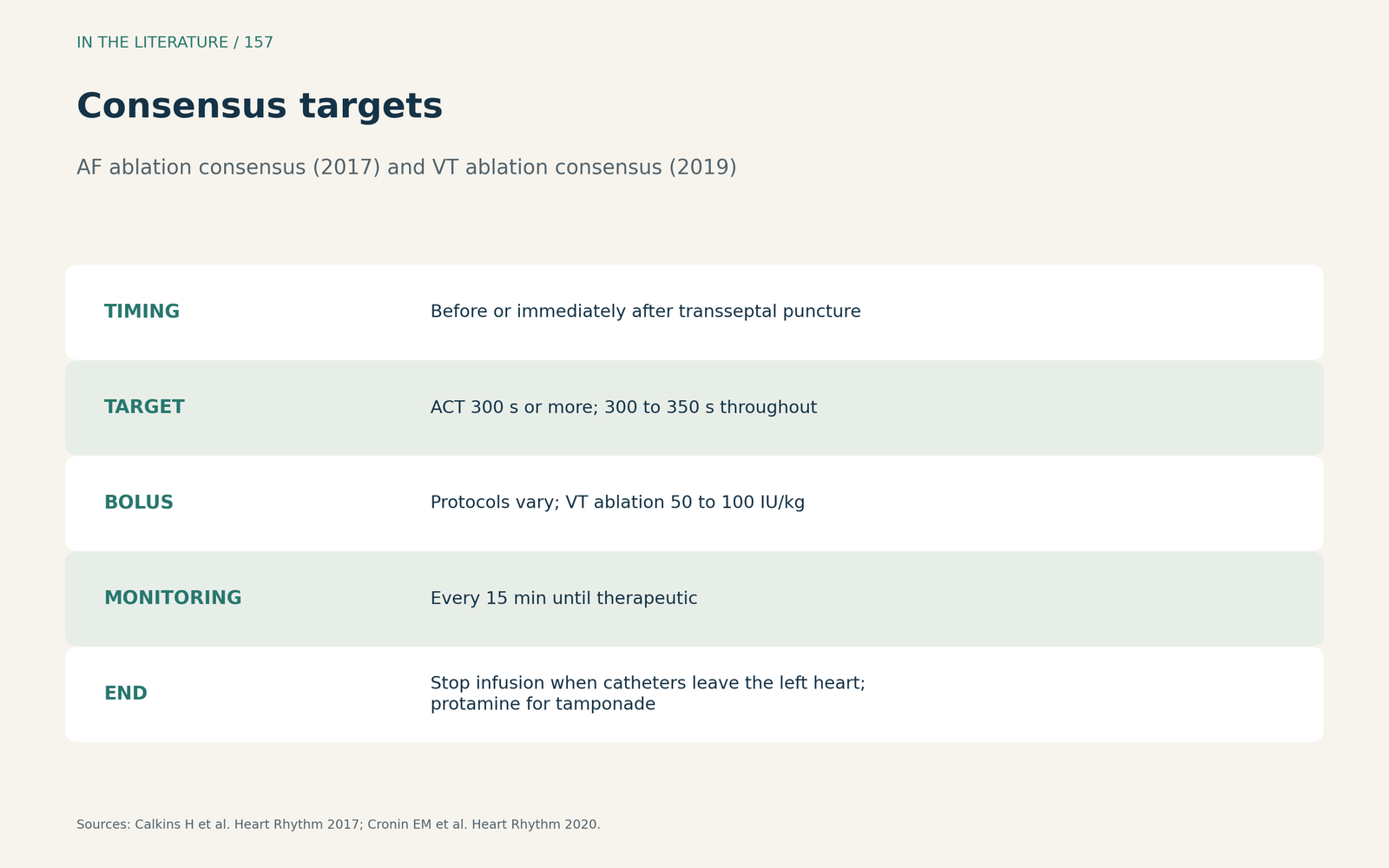
Figure 1. Consensus targets. Synthesized from the 2017 and 2019 consensus statements.[1], [2] View larger.

The anesthesiologist's role
Alvarez and colleagues remind anesthesiologists that heparin is given during the procedure regardless of prior anticoagulation, that tamponade has an incidence of about 1% in pulmonary vein isolation, that protamine may be given at the end, and that specific reversal agents exist for dabigatran and factor Xa inhibitors.[3] In a study of pulsed field and radiofrequency ablation, 78.4% of patients needed additional heparin, and silent cerebral ischemia was not evaluated.[4]
ACT values depend on the device
Fülkell and colleagues measured ACT simultaneously with two point-of-care devices in 29 patients: the mean difference was 50.86 seconds, correlation was only moderate (0.463), and in 42% of measurements the two devices would have led to different dosing decisions. They emphasize device-specific reference ranges.[5]
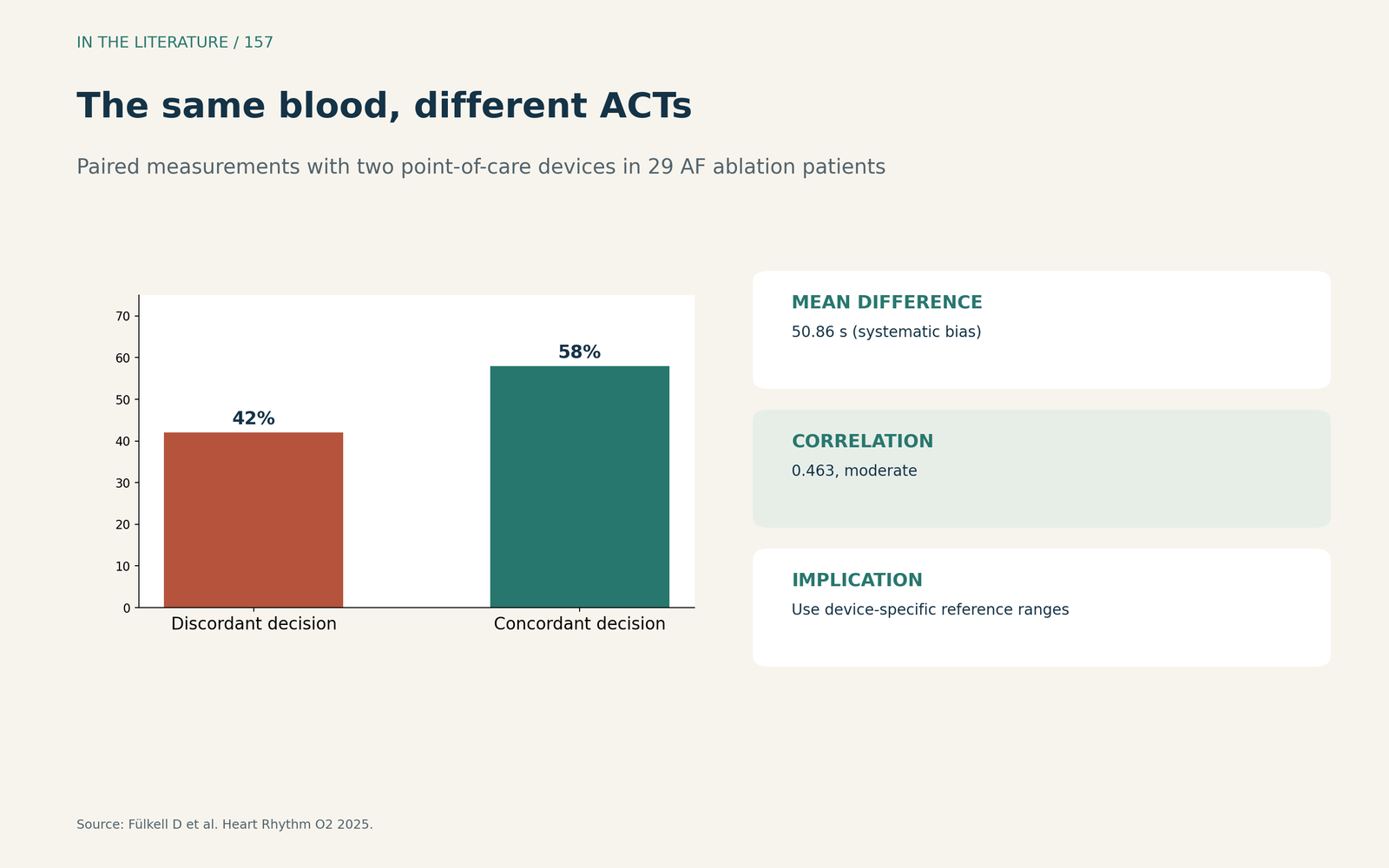
Figure 2. The same blood, different ACTs. Redrawn from Fülkell et al.[5] View larger.

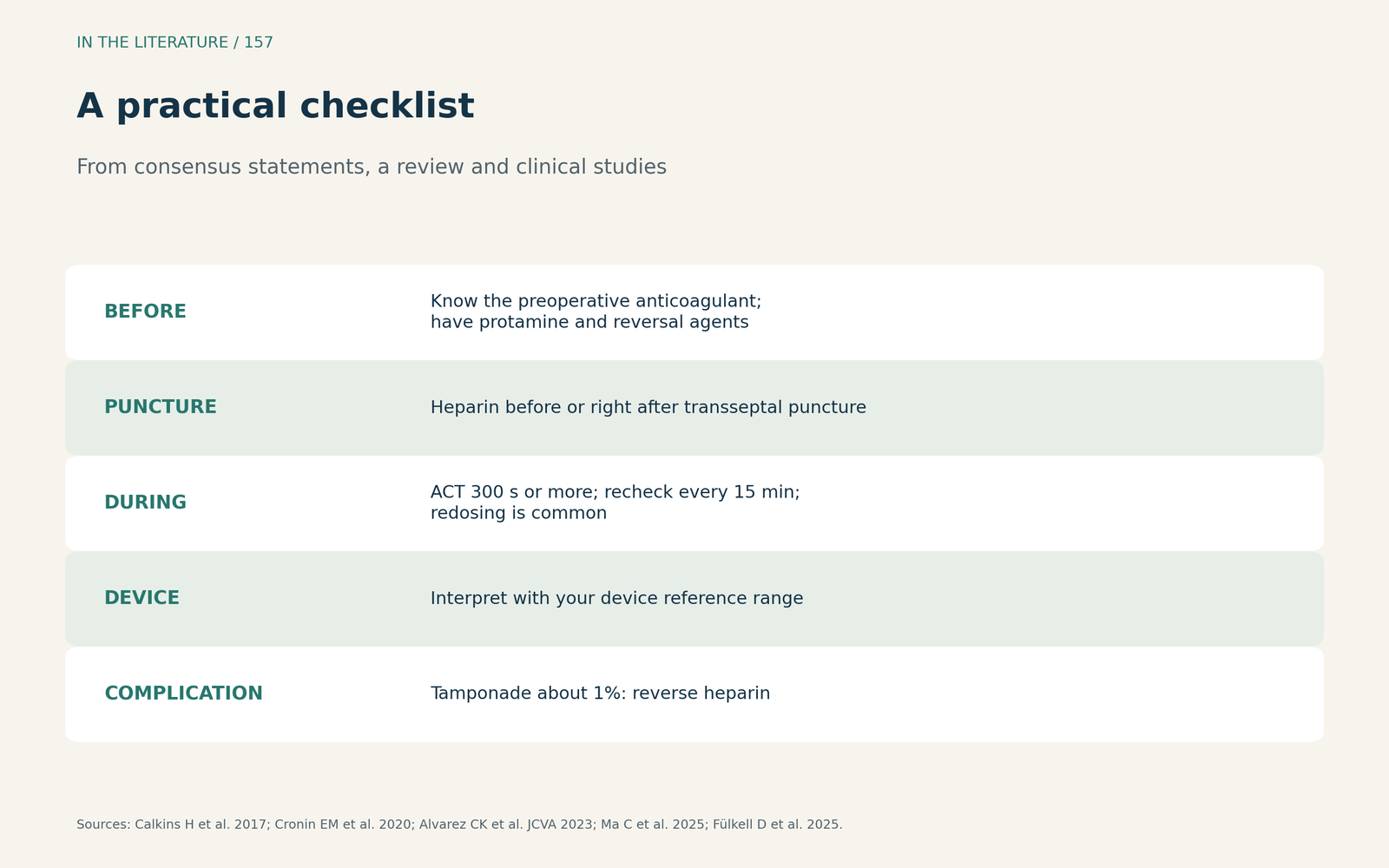
Figure 3. A practical checklist. Synthesized from the consensus statements, Alvarez et al., Ma et al. and Fülkell et al.[1], [2], [3], [4], [5] View larger.

Three takeaways
- Heparin goes in at the transseptal puncture. Target ACT 300 seconds or more and keep it there.[1]
- Check every 15 minutes and expect to redose. Many patients need extra heparin.[2], [4]
- Know your ACT machine. Devices can disagree by about 50 seconds.[5]
References
- Calkins H, Hindricks G, Cappato R, et al. 2017 HRS/EHRA/ECAS/APHRS/SOLAECE expert consensus statement on catheter and surgical ablation of atrial fibrillation. Heart Rhythm. 2017;14(10):e275–e444. doi:10.1016/j.hrthm.2017.05.012
- Cronin EM, Bogun FM, Maury P, et al. 2019 HRS/EHRA/APHRS/LAHRS expert consensus statement on catheter ablation of ventricular arrhythmias. Heart Rhythm. 2020;17(1):e2–e154. doi:10.1016/j.hrthm.2019.03.002
- Alvarez CK, Zweibel S, Stangle A, et al. Anesthetic considerations in the electrophysiology laboratory: a comprehensive review. J Cardiothorac Vasc Anesth. 2023;37(1):96–111. doi:10.1053/j.jvca.2022.10.013
- Ma C, Xiao X, Chen Q, et al. Intraprocedural activated clotting time and heparin dosage in pulsed field ablation of paroxysmal atrial fibrillation. Front Cardiovasc Med. 2025;12:1501716. doi:10.3389/fcvm.2025.1501716
- Fülkell D, Koltzau A, Dinshaw L. Activated clotting time for anticoagulation management during catheter ablation of left atrial arrhythmias: comparison of point-of-care devices in clinical routine. Heart Rhythm O2. 2025;6(6):903–905. doi:10.1016/j.hroo.2025.03.014