ITL-ad6520dacada
Juan Li, MD · Updated November 17, 2026
Watch the video
Key points
- Severe LV dysfunction is a reason for careful planning, not an automatic indication for prophylactic mechanical support.[1]
- CHIP-BCIS3 did not demonstrate better clinical outcomes with routine elective microaxial-pump support during complex PCI.[2]
- Better procedural hemodynamics do not, by themselves, establish patient benefit; PROTECT II illustrates this distinction.[3]
- Decide the purpose, timing and risks of support before PCI, including large-bore access and a bailout plan.[1]
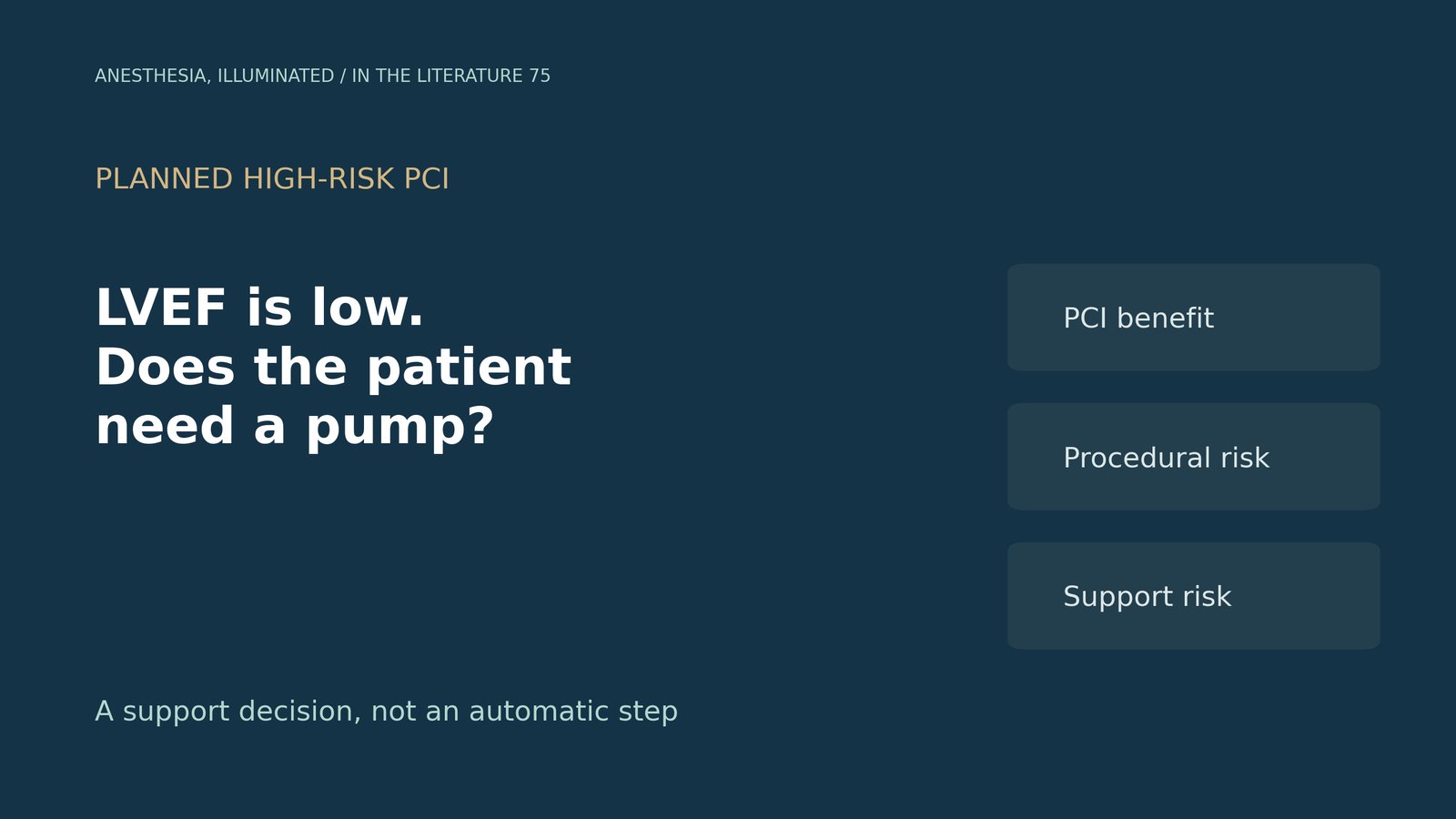
The patient has markedly reduced LVEF, extensive coronary disease and a technically demanding PCI ahead. It is tempting to make the device decision from those features alone. A more useful starting point is: what specific problem is planned support expected to prevent, and is that expected benefit greater than the added risk? This discussion concerns planned support for high-risk PCI, rather than treatment of established cardiogenic shock.[1]
What did the randomized comparisons actually establish?
CHIP-BCIS3 randomized 300 patients with severe LV dysfunction and extensive coronary disease to elective microaxial-flow-pump support or standard care during planned complex PCI. The following results are from its formal published abstract. The primary outcome prioritized death, disabling stroke, spontaneous myocardial infarction, cardiovascular hospitalization and periprocedural myocardial injury, with at least 12 months of follow-up.[2]
At a median 22 months, the win ratio was 0.85 (95% CI 0.63–1.15; P=0.30). Routine support therefore did not demonstrate superiority. A win ratio compares patients across groups using the outcome hierarchy; it is not an ordinary event-rate ratio. The abstract's 36.6% and 43.0% represent pairwise comparisons favoring each strategy, not percentages of patients having an event.[2]
Deaths numbered 47 with pump support and 33 with standard care; the hazard ratio was 1.54 (95% CI 0.99–2.41). This warrants attention, but does not establish a definitive mortality increase. Nor does the primary result prove equivalence or exclude benefit in every selected clinical situation.[2]
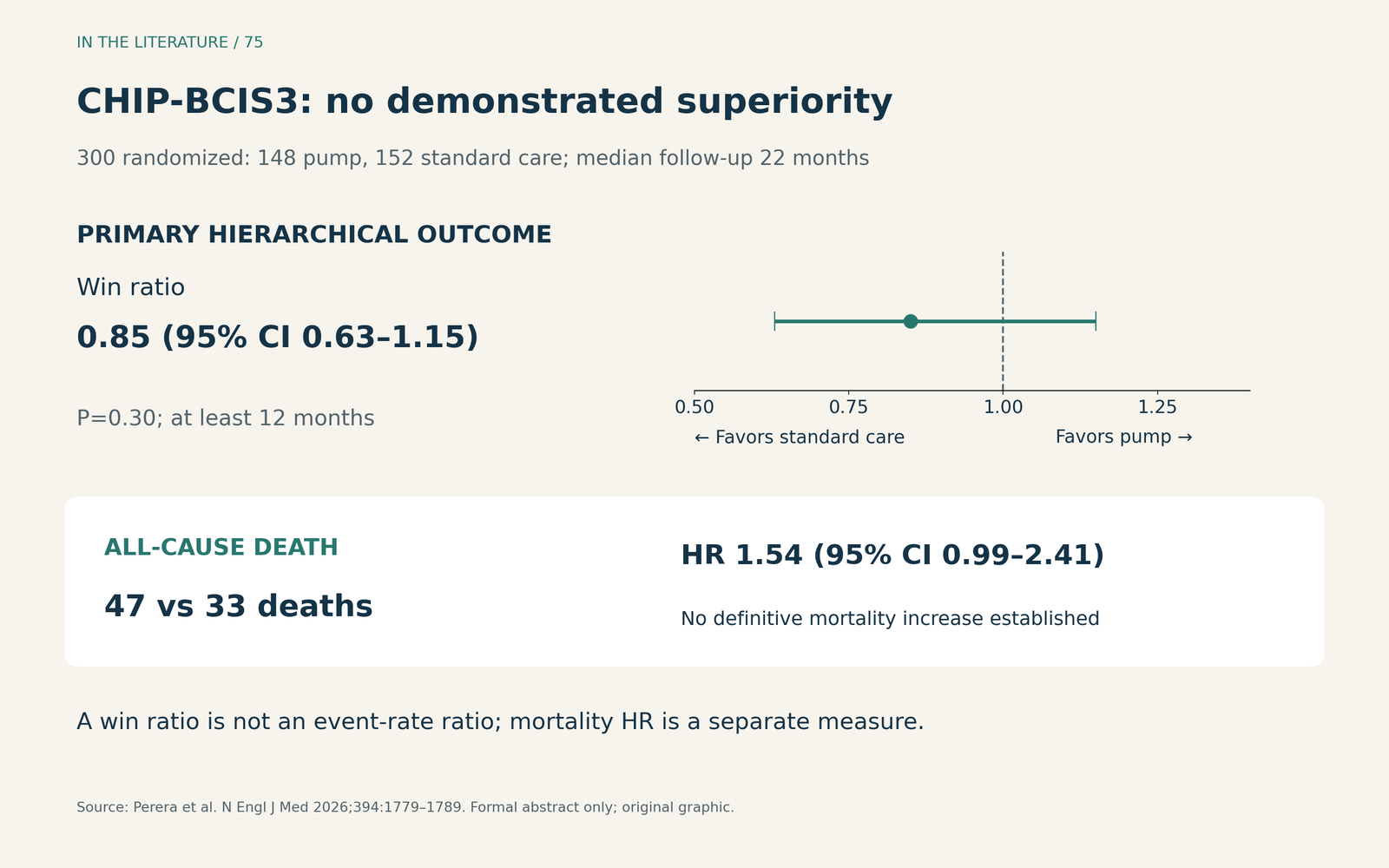
Figure 1. CHIP-BCIS3 did not establish superiority of elective pump support. The primary win ratio and the all-cause mortality hazard ratio describe different outcomes and must not be pooled. Values are from the formal abstract; the primary outcome was assessed over at least 12 months, with median follow-up of 22 months.[2] View larger.

PROTECT II asked a different question: Impella 2.5 versus IABP, with 452 patients randomized, rather than pump support versus standard care. Its formal abstract reports better preservation of cardiac power with Impella, but no significant difference in the primary 30-day intention-to-treat major-adverse-event endpoint: 35.1% versus 40.1% (P=0.227). The 90-day intention-to-treat comparison also did not reach significance; a positive per-protocol comparison cannot replace the primary result.[3]
Unloading can improve without a validated selection threshold
ELVIS provides a useful physiological example. This prospective, nonrandomized pilot included 62 patients with LVEF ≤35%, allocated by clinical selection to Impella-supported PCI or PCI without pump support, 31 in each group. Mean LV end-diastolic pressure (LVEDP) changed by −4.7 ± 9 versus +3.1 ± 7.5 mmHg (mean ± SD; P<0.001). Final measurements were obtained after the procedure and pump removal.[4]
That is evidence of different unloading responses, not proof of improved survival. The 90-day major adverse cardiac and cerebrovascular event rate was 12.9% in each group; a small nonrandomized cohort cannot establish equivalence. The proposed 19 mmHg baseline LVEDP cutoff was derived iteratively from the data. It remains an exploratory hypothesis, not a validated threshold for selecting patients for prophylactic support.[4]
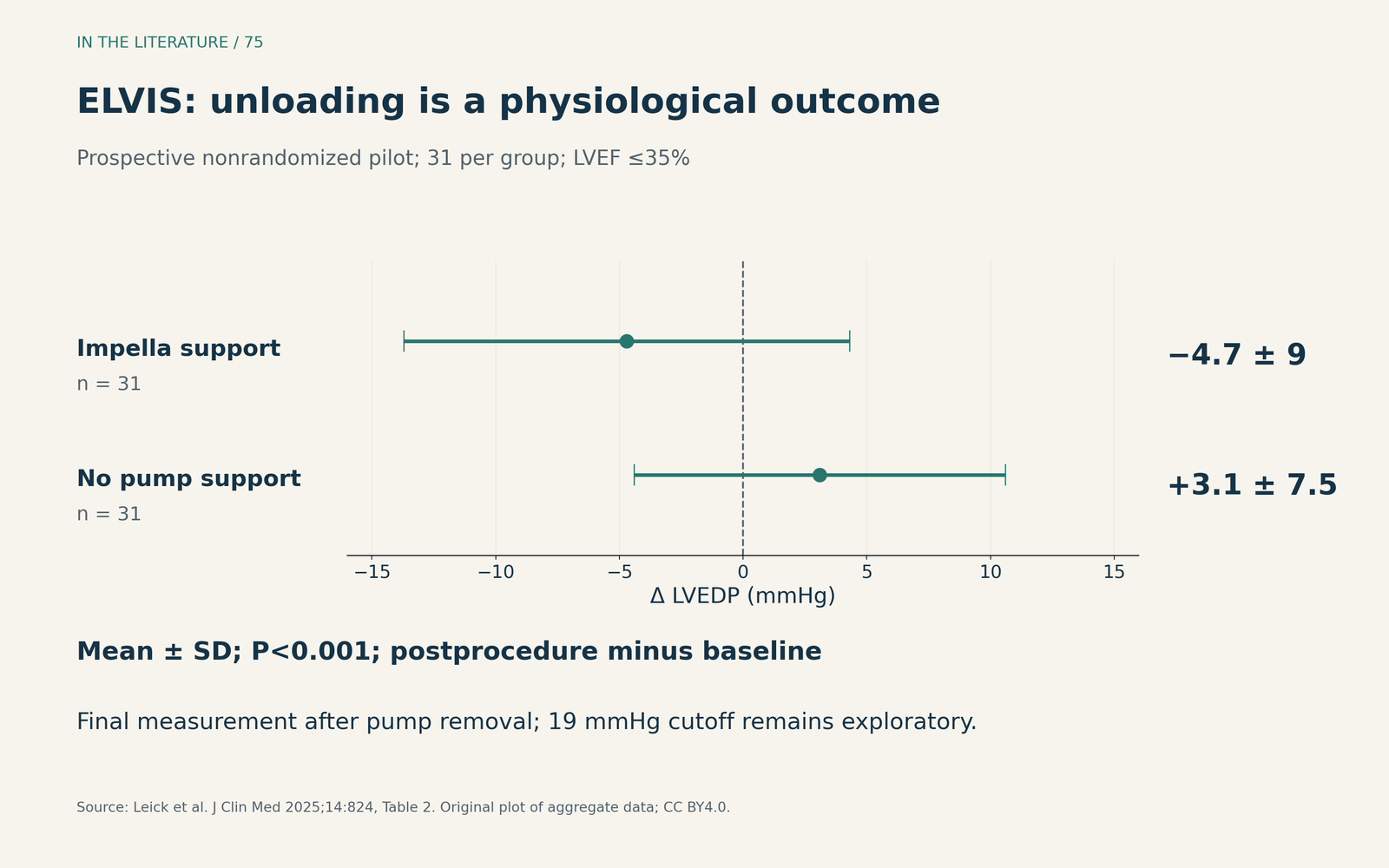
Figure 2. ELVIS measured a physiological response in 31 patients per group. Bars show mean ± SD, not confidence intervals. The change is postprocedure minus baseline; the supported group's final measurement followed pump removal. The exploratory LVEDP cutoff does not establish a treatment-benefit rule.[4] View larger.

Make the support decision before entering the difficult part of PCI
The 2025 EAPCI consensus places optimal medical therapy and a Heart Team decision about revascularization before device selection. For patients considered unsuitable for CABG, anticipated PCI benefit, coronary jeopardy, physiological reserve and comorbidity must be considered together. Low LVEF alone does not settle the decision.[1]
If support is considered, agree on whether it will be placed upfront or reserved for bailout, assess vascular access and bleeding and renal risks, and establish escalation and postoperative-care arrangements. The consensus favors the least invasive device that provides adequate support, used for the shortest necessary duration. These are planning principles, rather than a validated score that proves who will benefit.[1]
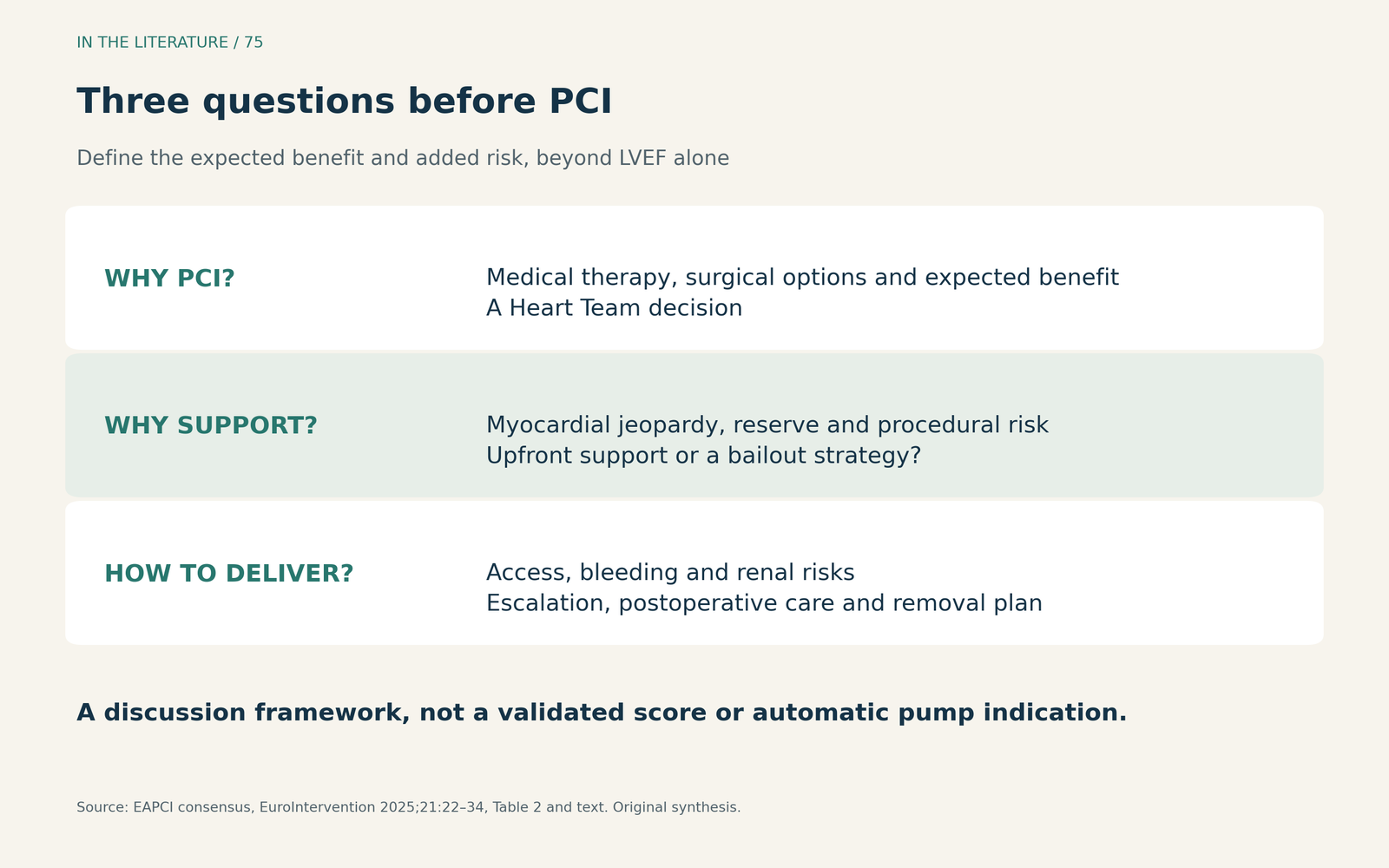
Figure 3. Questions for the pre-PCI team discussion, based on the EAPCI consensus. Procedural complexity and physiological vulnerability inform the discussion; none of these boxes is an automatic indication for a pump.[1] View larger.

PROTECT IV is intended to clarify the elective-support question. Its design planned 1,252 patients, comparing Impella CP-supported PCI with PCI with optional IABP, excluding cardiogenic shock. Allocated support starts before PCI, after access assessment; follow-up extends to three years, with at least one year for each participant. The design publication is not an outcome report. As checked on November 17, 2026, the official registry still listed active, not recruiting, with no posted results; an estimated completion date is not evidence of benefit.[5]
Three takeaways
- Justify the PCI, then justify the pump. A low LVEF cannot substitute for either decision.[1]
- Keep physiology and patient outcomes separate. Neutral primary trials and an exploratory LVEDP cutoff do not support routine prophylaxis.[2], [3], [4]
- Individualize the plan before PCI begins. Specify the support goal, access strategy, bailout arrangements and stopping point.[1]
References
- Schäfer A, Alasnag M, Giacoppo D, et al. High-risk percutaneous coronary intervention in patients with reduced left ventricular ejection fraction deemed not suitable for surgical revascularisation. A clinical consensus statement from the European Association of Percutaneous Cardiovascular Interventions (EAPCI) in collaboration with the ESC Working Group on Cardiovascular Surgery. EuroIntervention. 2025;21(1):22–34. doi:10.4244/EIJ-D-23-01100
- Perera D, Ryan M, Ezad SM, et al. Left Ventricular Unloading in High-Risk Percutaneous Coronary Intervention. N Engl J Med. 2026;394(18):1779–1789. doi:10.1056/NEJMoa2515704 Abstract only.
- O’Neill WW, Kleiman NS, Moses J, et al. A prospective, randomized clinical trial of hemodynamic support with Impella 2.5 versus intra-aortic balloon pump in patients undergoing high-risk percutaneous coronary intervention: the PROTECT II study. Circulation. 2012;126(14):1717–1727. doi:10.1161/CIRCULATIONAHA.112.098194 Abstract only.
- Leick J, Gjata A, Pulz J, et al. Evaluation of LVEDP Change During High-Risk PCI With and Without Impella Support (ELVIS)—A Pilot Trial. J Clin Med. 2025;14(3):824. doi:10.3390/jcm14030824
- Mangner N, Sharma SK, O’Connor C, et al. Mechanical circulatory support in high-risk elective PCI: rationale and design of the PROTECT IV trial. EuroIntervention. 2025;21(21):e1244–e1258. doi:10.4244/EIJ-D-25-00486