
ITL-1bedeb4caa70
Juan Li, MD · Updated November 18, 2026
Key points
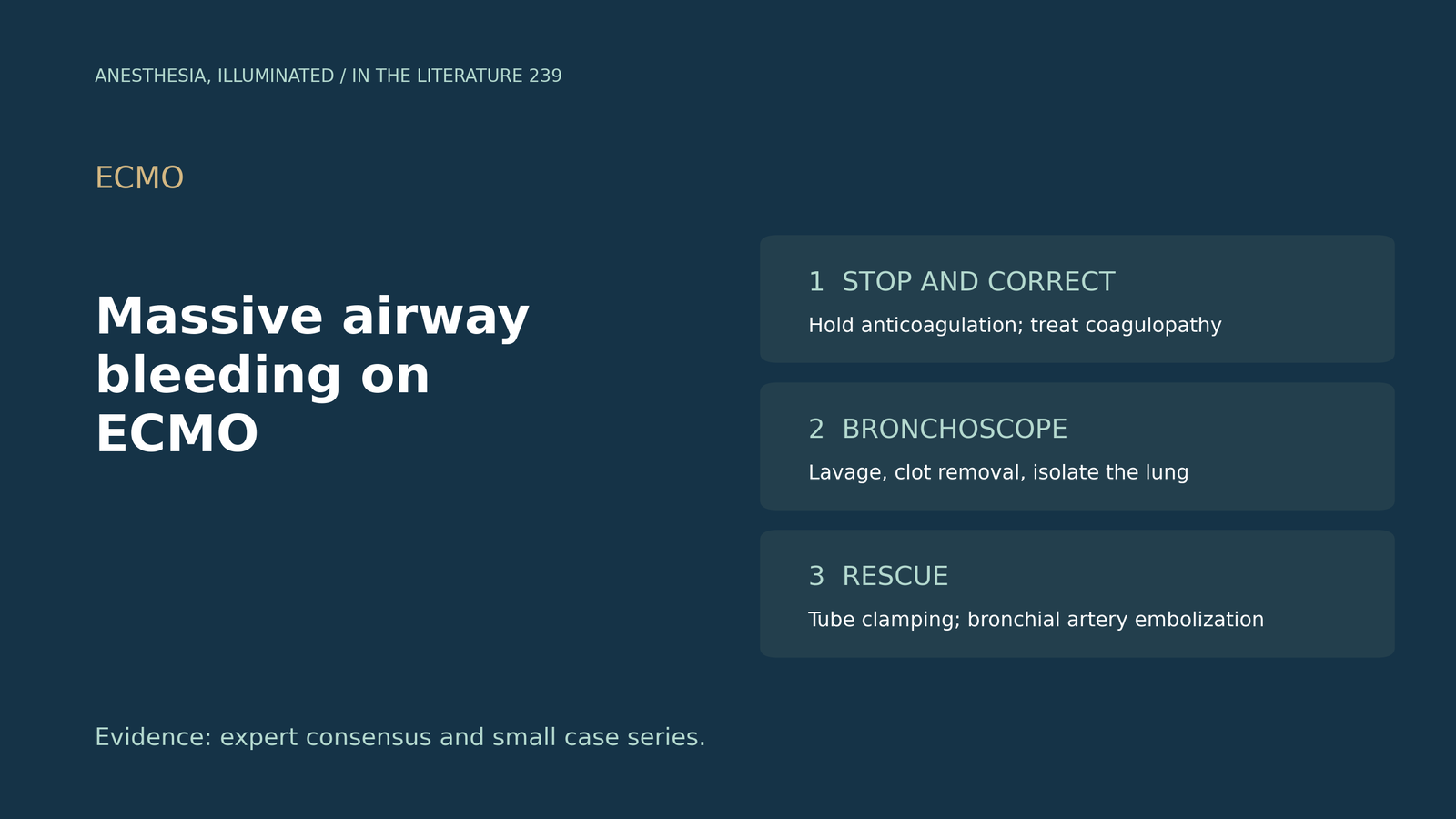
- Not rare on VA ECMO. Airway hemorrhage occurs in up to 10% of VA ECMO patients, and massive hemoptysis is not always immediately apparent.[1]
- First steps. In severe hemorrhage, hold anticoagulation, treat coagulopathy and consider bronchoscopy; lowering left atrial pressure also helps.[1]
- Bronchoscopy helps but can fail. Bleeding control failed in 12% of procedures in one series.[2]
- Rescue. Case series clamped the tracheal tube for 13 to 72 h and used bronchial artery embolization.[3]
- Outcomes are poor. ICU mortality was 62.5%, with pulmonary haemorrhage directly causing death in 25%.[2]
A patient on ECMO suddenly has bright blood filling the endotracheal tube and the tidal volumes fall. Heparin is running. What should be done, and in what order?[1], [3]
First steps
The Society of Cardiovascular Anesthesiologists consensus (Mazzeffi et al., J Cardiothorac Vasc Anesth 2021) reports airway hemorrhage in up to 10% of VA ECMO patients, with contributing factors including elevated left atrial pressure, anticoagulation and thrombocytopenia.[1] In severe hemorrhage, anticoagulation should be held, coagulopathy treated and bronchoscopy considered; lowering left atrial pressure with fluid removal also helps treat airway bleeding.[1] In the series of Zhou et al. (Health Sci Rep 2023), anticoagulants were discontinued immediately in all patients, but the authors warn that prolonged interruption may increase oxygenator dysfunction and thromboembolism.[3] In contrast, Valiyaveettil et al. (J Clin Med 2026) continued unfractionated heparin in 22 procedures and halted it in five.[2]
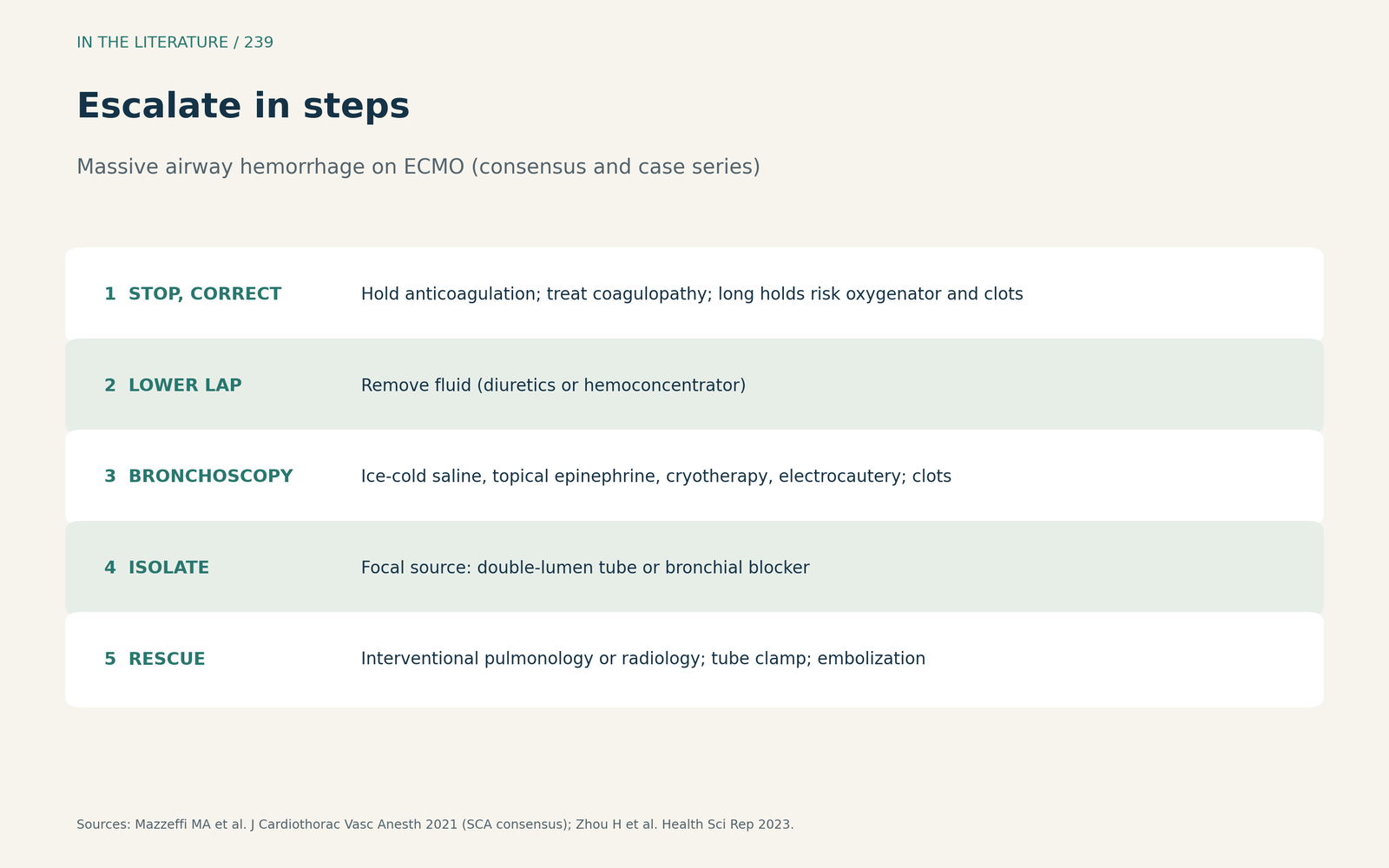
Figure 1. Escalate in steps. Synthesized from the SCA consensus and Zhou et al.[1], [3] View larger.

Bronchoscopy and lung isolation
Therapies for active hemorrhage include ice-cold saline lavage, topical epinephrine, cryotherapy and electrocautery, and for focal hemorrhage a double-lumen tube or bronchial blocker can isolate the lung.[1] In 16 patients who underwent 34 flexible bronchoscopies on ECMO, clot removal was attempted in 85%, a bronchial blocker was required in 26%, local haemostasis included topical vasoconstrictors and tranexamic acid 500 mg, and bleeding control failed in 12%.[2] Tanaka et al. (Medicine 2024) removed large clots with flexible bronchoscopy, grasping forceps and net retrieval devices; cryoextraction has a reported success rate of 93%.[4] ECMO can also be planned ahead of bronchoscopy: for near-total carinal obstruction, VV-ECMO can be started in the operating room before any sedation to allow rigid bronchoscopy (Hang et al., Anesthesiology 2020).[5]
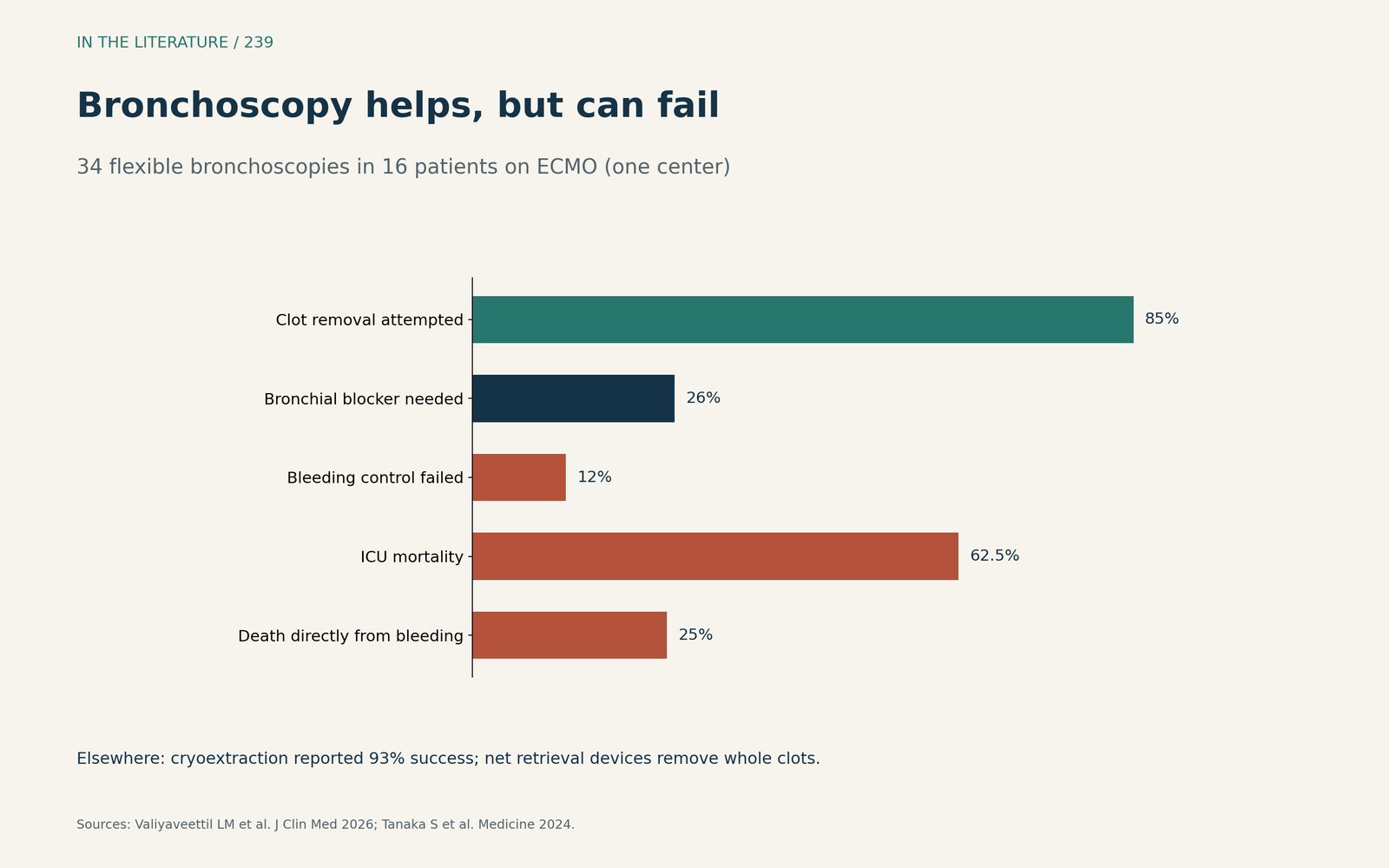
Figure 2. Bronchoscopy on ECMO in one case series. Data from Valiyaveettil et al. and Tanaka et al.[2], [4] View larger.

When bleeding is refractory
Refractory airway hemorrhage may require an interventional pulmonologist or radiologist.[1] Zhou et al. defined massive hemorrhage as tube bleeding above 300 mL/day not controlled by conventional measures; patients were disconnected from the ventilator and the tracheal tube was clamped for 13 to 72 h, and all four adults underwent bronchial artery embolization, which in reported series controls bleeding immediately in 82% to 100%.[3] Massive airway hemorrhage is rare but carries high mortality.[3]
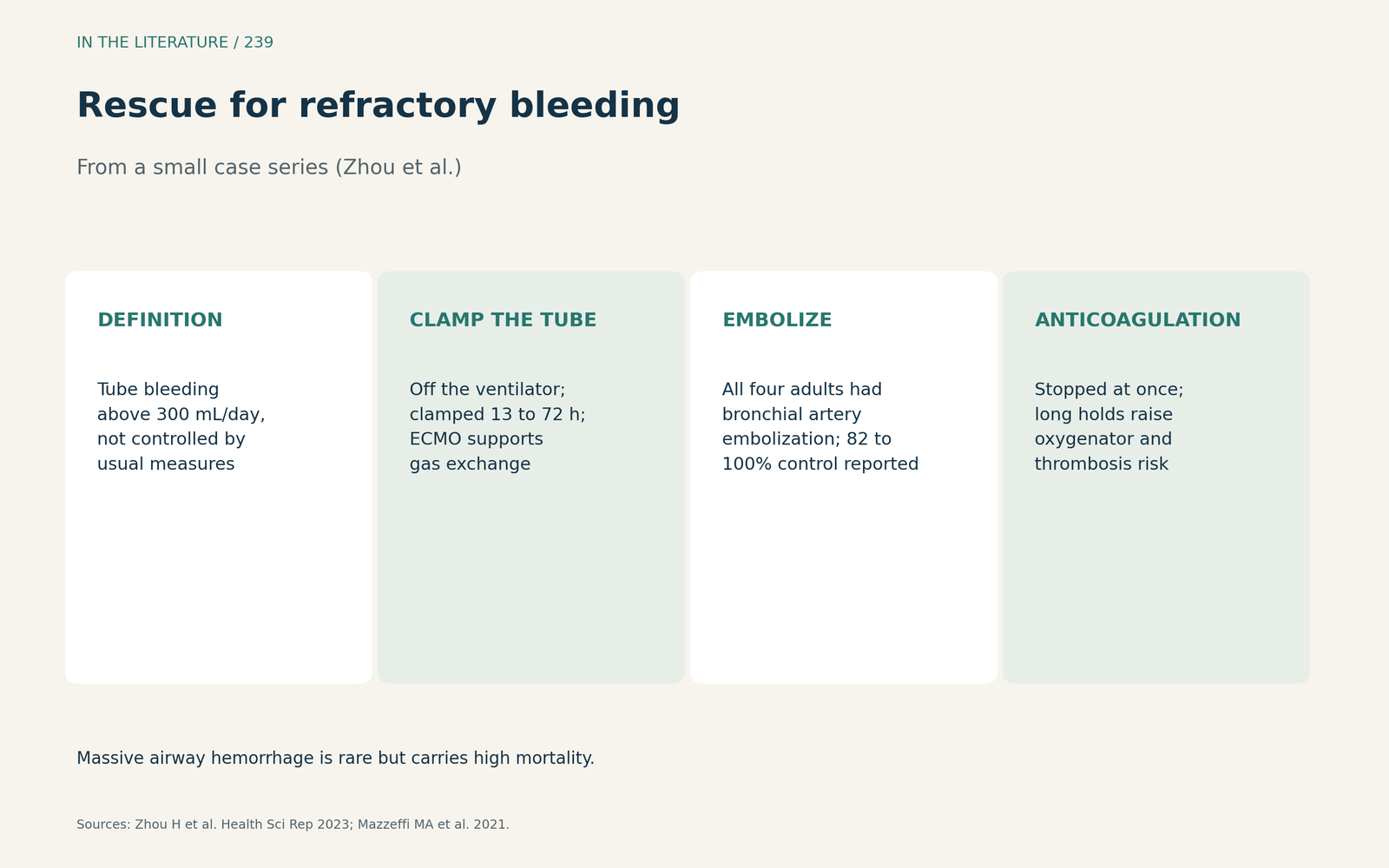
Figure 3. Rescue measures come from small case series. Synthesized from Zhou et al. and the SCA consensus.[3], [1] View larger.

Three takeaways
- Hold anticoagulation, correct coagulopathy and bring the bronchoscope early.[1]
- Isolate a focal source and clear clots; know that bronchoscopy can fail.[1], [2]
- For refractory bleeding, consider tube clamping on full ECMO support and bronchial artery embolization, and restart anticoagulation when it is safe.[3]
References
- Mazzeffi MA, Rao VK, Dodd-o J, et al. Intraoperative management of adult patients on extracorporeal membrane oxygenation: an expert consensus statement from the Society of Cardiovascular Anesthesiologists—Part II, intraoperative management and troubleshooting. J Cardiothorac Vasc Anesth. 2021;35(12):3513–3527. doi:10.1053/j.jvca.2021.07.047
- Valiyaveettil LM, Steinack C, Kohler M, et al. Flexible bronchoscopy for pulmonary bleeding and endobronchial blood clot obstruction in patients on extra-corporeal membrane oxygenation: a case series. J Clin Med. 2026;15(17):6759. doi:10.3390/jcm15176759
- Zhou H, Shi Q, Guo L. Management of massive airway hemorrhage associated with extracorporeal membrane oxygenation: a retrospective case series study. Health Sci Rep. 2023;6(6):e1325. doi:10.1002/hsr2.1325
- Tanaka S, Yoshimura N, Asakawa R, et al. Usefulness of net retrieval devices for central airway obstruction caused by blood clots during extracorporeal membrane oxygenation: case series. Medicine (Baltimore). 2024;103(30):e39094. doi:10.1097/MD.0000000000039094
- Hang D, Tawil JN, Fierro MA. Venovenous extracorporeal membrane oxygenation for rigid bronchoscopy and carinal tumor resection in decompensating patients. Anesthesiology. 2020;132(1):156. doi:10.1097/ALN.0000000000002967